
As filed with the Securities and Exchange Commission on March 31, 2023.
Registration No. 333-
UNITED STATES
SECURITIES AND EXCHANGE COMMISSION
Washington, D.C. 20549
FORM F-1
REGISTRATION STATEMENT
UNDER
THE SECURITIES ACT OF 1933
| SIMPPLE LTD. |
| (Exact Name of Registrant as Specified in its Charter) |
Not Applicable
(Translation of Registrant’s Name into English)
__________________________________________
| Cayman Islands | 8744 | Not Applicable | ||
| (State or other jurisdiction of incorporation or organization) | (Primary Standard Industrial Classification Code Number) | (I.R.S. Employer Identification No.) |
71 Ayer Rajah Crescent
#03-07
Singapore 139951
+65 6816 2194
(Address, including zip code, and telephone number, including area code, of registrant’s principal executive offices)
COGENCY GLOBAL INC.
122 East 42nd Street, 18th Floor
New York, NY 10168
+1-800-221-0102
(Name, address, including zip code, and telephone number, including area code, of agent for service)
__________________________________________
Copies of all communications, including communications sent to agent for service, should be sent to:
| Lawrence S. Venick, Esq. Loeb & Loeb LLP 2206-19 Jardine House 1 Connaught Road Central Hong Kong SAR Telephone: +852-3923-1111 Facsimile: +852-3923-1100 |
| Joan Wu, Esq. Louis E. Taubman, Esq. Hunter Taubman Fischer & Li LLC 950 Third Avenue, 19th Floor New York, NY 10022 USA Telephone: +1 (212) 530-2208 |
__________________________________________
Approximate date of commencement of proposed sale to the public: As soon as practicable after this Registration Statement becomes effective.
If any of the securities being registered on this Form are to be offered on a delayed or continuous basis pursuant to Rule 415 under the Securities Act of 1933, check the following box: ☐
If this Form is filed to register additional securities for an offering pursuant to Rule 462(b) under the Securities Act, check the following box and list the Securities Act registration statement number of the earlier effective registration statement for the same offering. ☐
If this Form is a post-effective amendment filed pursuant to Rule 462(c) under the Securities Act, check the following box and list the Securities Act registration statement number of the earlier effective registration statement for the same offering. ☐
If this Form is a post-effective amendment filed pursuant to Rule 462(d) under the Securities Act, check the following box and list the Securities Act registration number of the earlier effective registration statement for the same offering. ☐
Emerging growth company. ☒
If an emerging growth company that prepares its financial statements in accordance with U.S. GAAP, indicate by check mark if the registrant has elected not to use the extended transition period for complying with any new or revised financial accounting standards provided pursuant to Section 7(a)(2)(B) of the Securities Act. ☐
The registrant hereby amends this registration statement on such date or dates as may be necessary to delay its effective date until the registrant shall file a further amendment which specifically states that this registration statement shall thereafter become effective in accordance with Section 8(a) of the Securities Act of 1933, as amended, or until the registration statement shall become effective on such date as the U.S. Securities and Exchange Commission, acting pursuant to said Section 8(a), may determine.
The information in this preliminary prospectus is not complete and may be changed. These securities may not be sold until the registration statement filed with the Securities and Exchange Commission is effective. This preliminary prospectus is not an offer to sell these securities nor does it seek an offer to buy these securities in any jurisdiction where the offer or sale is not permitted.
|
PRELIMINARY PROSPECTUS (Subject to Completion) Dated March 31, 2023 |
SIMPPLE LTD.
2,000,000 Ordinary Shares
This is the initial public offering of SIMPPLE LTD. Prior to this Offering, there has been no public market for our ordinary shares (the “Shares” or “Ordinary Shares”). We are offering 2,000,000 of our Ordinary Shares, par value $0.0001 per share, on a firm commitment basis. The estimated initial public offering price is expected to be between $4.00 and $5.00 per share. We have applied to list our Shares on the Nasdaq Capital Market under the symbol “SPPL.”
SIMPPLE LTD. was incorporated as an exempted company in the Cayman Islands on August 24, 2022 as a holding company of our businesses. Immediately after this offering, assuming an offering size as set forth above, our Controlling Shareholder will own approximately 72.49% of our outstanding Shares (or 71.19% of our outstanding Shares if the underwriters option to purchase additional shares is exercised in full). As a result, we expect to be a “controlled company” within the meaning of the corporate governance standards of Nasdaq. See section titled “Prospectus Summary — Implications of Being a Controlled Company”.
Investing in the shares involves risks. See section titled “Risk Factors” of this prospectus.
We are both an “emerging growth company” and a “foreign private issuer” under applicable U.S. Securities and Exchange Commission rules and will be eligible for reduced public company disclosure requirements. See section titled “Prospectus Summary — Implications of Being an ‘Emerging Growth Company’ and a ‘Foreign Private Issuer’” for additional information.
Neither the Securities and Exchange Commission nor any other regulatory body has approved or disapproved of these securities or passed upon the adequacy or accuracy of this prospectus. Any representation to the contrary is a criminal offense.
|
|
| PER SHARE |
| TOTAL | ||
| Initial public offering price |
| $ | $ |
| ||
| Underwriting discounts(1)(2) |
| $ | $ |
| ||
| Proceeds, before expenses, to us |
| $ |
|
| $ |
|
____________
(1) The underwriters will receive compensation in addition to the discounts. For a description of compensation payable to the underwriters, see “Underwriting” beginning on page [106].
(2) Does not include a non-accountable expense allowance equal to $[*], payable to the underwriters, or the reimbursement of certain expenses of the underwriters. For a description of other terms of compensation to be received by the underwriters, see “Underwriting” beginning on page [106].
We expect our total cash expenses for this offering (including cash expenses payable to our underwriters for their out-of-pocket expenses) to be approximately $[*], exclusive of the above discounts. These payments will further reduce proceeds available to us before expenses. See “Underwriting.”
We will not consummate and close this offering without a listing approval letter from Nasdaq Capital Market. This offering is being conducted on a firm commitment basis. The underwriters are obligated to take and pay for all of the shares if any such shares are taken. We have granted the underwriters an option for a period of forty-five (45) days after the closing of this offering to purchase up to 15% of the total number of our Shares to be offered by us pursuant to this offering (excluding shares subject to this option), solely for the purpose of covering over-allotments, at the initial public offering price less the underwriting discounts and commissions. If we complete this offering, net proceeds will be delivered to us on the closing date.
The underwriters expect to deliver the shares to purchasers against payment on [*], 2023.
MAXIM GROUP, LLC
Prospectus dated , 2023
|
|
|
|
| Page |
|
|
| 7 |
| |
|
| 19 |
| |
|
| 36 |
| |
|
| 37 |
| |
|
| 37 |
| |
|
| 38 |
| |
|
| 39 |
| |
| MANAGEMENT’S DISCUSSION AND ANALYSIS OF FINANCIAL CONDITION AND |
| 40 |
|
|
| 57 |
| |
|
| 58 |
| |
|
| 71 |
| |
|
| 75 |
| |
|
| 80 |
| |
|
| 82 |
| |
|
| 83 |
| |
| DESCRIPTION OF SHARE CAPITAL AND MEMORANDUM AND ARTICLES OF ASSOCIATION |
| 84 |
|
|
| 96 |
| |
|
| 97 |
| |
|
| 98 |
| |
|
| 106 |
| |
|
| 113 |
| |
|
| 113 |
| |
|
| 113 |
| |
|
| 114 |
| |
|
| 114 |
| |
|
| F-1 |
| |
|
| F-2 |
|
For investors outside the United States: neither we nor the underwriters have done anything that would permit this Offering or possession or distribution of this prospectus in any jurisdiction, other than the United States, where action for that purpose is required. Persons outside the United States who come into possession of this prospectus must inform themselves about, and observe any restrictions relating to, the offering of the shares and the distribution of this prospectus outside the United States.
Until , 2023 (the 25th day after the date of this prospectus), all dealers that buy, sell or trade ordinary shares, whether or not participating in this offering, may be required to deliver a prospectus. This is in addition to the obligation of dealers to deliver a prospectus when acting as an underwriter and with respect to their unsold allotments or subscriptions.
Neither we nor the underwriters have authorized anyone to provide you with any information or to make any representations other than those contained in this prospectus, any amendment or supplement to this prospectus, or in any free writing prospectus we have prepared, and neither we nor the underwriters take responsibility for, and can provide no assurance as to the reliability of, any other information others may give you. Neither we nor the underwriters are making an offer to sell, or seeking offers to buy, these securities in any jurisdiction where the offer or sale is not permitted. The information contained in this prospectus is accurate only as of the date on the cover page of this prospectus, regardless of the time of delivery of this prospectus or the sale of shares. Our business, financial condition, results of operations and prospects may have changed since the date on the cover page of this prospectus.
| 3 |
| Table of Contents |
Conventions That Apply to this Prospectus
Throughout this prospectus, we use a number of key terms and provide a number of key performance indicators used by management. Unless the context otherwise requires, the following definitions apply throughout where the context so admits:
Other Companies, Organizations and Agencies
| “BCA” |
| : |
| Building & Construction Authority of Singapore |
| “Independent Registered Public Accounting Firm” |
| : |
| B F Borgers CPA PC |
| “IRAS” |
| : |
| Inland Revenue Authority of Singapore |
| “ISO” |
| : |
| International Organization for Standardization |
| “JTC” |
| : |
| JTC Corporation, a statutory board under the Singapore Ministry of Trade and Industry |
| “MOM” |
| : |
| Ministry of Manpower of Singapore |
| “NEA” |
| : |
| National Environment Agency of Singapore |
| “Underwriters” |
| : |
| The underwriters for the Offering, of which Maxim Group, LLC is serving as representative. |
| “URA” |
| : |
| The Singapore Urban Redevelopment Authority |
General
| “APP” |
| : |
| An application, especially as downloaded by a user to a mobile device |
| “Audit Committee” |
| : |
| The audit committee of our Board of Directors |
| “BLE” |
| : |
| Bluetooth low energy |
| “Board” or ”Board of Directors” |
| : |
| The board of Directors of our Company |
| “Companies Act” |
| : |
| The Companies Act (Revised) of the Cayman Islands, as amended, supplemented, or modified from time to time |
| “Company” |
| : |
| SIMPPLE LTD., the issuer in this prospectus |
| “Compensation Committee” |
| : |
| The compensation committee of our Board of Directors |
| “Controlling Shareholder” |
| : |
| Mains d’Or, our largest Major Shareholder |
| “CCTV” |
| : |
| Closed Circuit Television |
| “COVID-19” |
| : |
| Coronavirus disease 2019 |
| “CRS” |
| : |
| Contractors Registration System of the BCA |
| “Directors” |
| : |
| The directors of our Company |
|
|
| 4 |
| Table of Contents |
| “EFMA” |
| : |
| The Employment of Foreign Manpower Act 1990 of Singapore, as amended, supplemented or modified from time to time |
| “Employment Act” |
| : |
| The Employment Act 1968 of Singapore, as amended, supplemented or modified from time to time |
| “Executive Officers” |
| : |
| The executive officers of our Company. See section titled “General Information On Our Group — Our Business Overview — Management.” |
| “FASB” |
| : |
| The Financial Accounting Standards Board |
| “Fiscal Year” or “FY” |
| : |
| Financial year ended or, as the case may be, ending December 31 |
| “FM” |
| : |
| The facilities management sector |
| “GAAP” |
| : |
| Accounting principles generally accepted in the United States of America |
| “Group” |
| : |
| Our Company and our subsidiaries |
| “GST” |
| : |
| Goods and Services Tax |
| “IFSC Founders” |
| : |
| IFSC Founders Pte. Ltd., a Major Shareholder |
| “IoT” |
| : |
| Internet-of-Things |
| “Listing” |
| : |
| The listing and quotation of our Shares on Nasdaq |
| “Mains d’Or” |
| : |
| Mains d’Or Investments Limited, our largest Major Shareholder and a Controlling Shareholder |
| “Major Shareholder” |
| : |
| A person who has an interest or interests (whether by record or beneficial ownership) in one or more voting Shares in our Company, and the total votes attached to that share, or those Shares, is not less than 5.0% of the total votes attached to all the voting Shares in our Company |
| “Nasdaq” |
| : |
| The Nasdaq Stock Market LLC |
| “Nasdaq Listing Rules” |
| : |
| The Nasdaq rules governing listed companies |
| “Nominating and Corporate Governance Committee” |
| : |
| The nominating and corporate governance committee of our Board of Directors |
| “Offer Price” |
| : |
| US$_____ for each share being offered in this Offering |
| “Offering” |
| : |
| The Offering of Shares by the Underwriter on behalf of our Company for subscription at the Offer Price, subject to and on the terms and conditions set out in this prospectus |
| “PropTech” |
| : |
| Property Technology |
| “SaaS” |
| : |
| Software as a service |
| “Share(s)” or “Ordinary Shares” |
| : |
| Ordinary share(s) in the share capital of our Company |
| 5 |
| Table of Contents |
| “Shareholders” |
| : |
| Registered holders of Shares |
| “Smart Building” |
| : |
| An industry term for any building that is equipped with advanced and integrated building technology systems, such as building automation, life safety, telecommunications, user systems, and facility management systems |
| “Top-Tier” |
| : |
| The top 39 Singapore facilities management contractors as of the date of this prospectus. These Level 6 contractors are registered with the BCA and categorized under the Workhead and Grading certification of FM02-L6, which enables them to bid for public sector project tenders of unlimited contract value |
| “Underwriting Agreement” |
| : |
| The Underwriting Agreement dated [•] 2023 entered into between our Company and Maxim Group, LLC, acting as the representative of the Underwriters, pursuant to which the Underwriters have severally but not jointly agreed to purchase, and we have agreed to sell to them, 2,000,000 of our Shares at the Offer Price, less the underwriting discounts, as described in the sections titled “Underwriting” of this prospectus |
| “WICA” |
| : |
| Work Injury Compensation Act 2019 of Singapore |
| “WSHA” |
| : |
| Workplace Safety and Health Act 2006 of Singapore |
| “WSHIR” |
| : |
| Workplace Safety and Health (Incident Reporting) Regulations of Singapore |
| “YA” |
| : |
| Year of assessment |
Currencies, Units and Others
| “S$” |
| : |
| Singapore dollars, the lawful currency of the Republic of Singapore |
| “US$” or “$” |
| : |
| U.S. dollars and cents respectively, the lawful currency of the U.S. |
| “%” or “per cent.” |
| : |
| Per centum |
| “RMB” |
|
|
| Renminbi, lawful currency of China |
Any discrepancies in tables included herein between the total sum of amounts listed and the totals thereof are due to rounding. Accordingly, figures shown as totals in certain tables may not be an arithmetic aggregation of the figures that precede them.
In this prospectus, references to “our Company” or to “the Company” are to SIMPPLE LTD. and, unless the context otherwise requires, a reference to “we”, “our”, “us,” “the Company”, “our Company” or “our Group” or their other grammatical variations is a reference to our Company and our subsidiaries taken as a whole.
Certain of our customers and suppliers are referred to in this prospectus by their trade names. Our contracts with these customers and suppliers are typically with an entity or entities in the relevant customer or supplier’s group of companies.
Internet site addresses in this prospectus are included for reference only and the information contained in any website, including our website, is not incorporated by reference into, and does not form part of, this prospectus.
| 6 |
| Table of Contents |
| 7 |
| Table of Contents |
| Our Industry
Our business is to support facility owners and managers. Our industry is growing due to advances in technology and the continued growth of the real estate market generally. As the world emerges from the COVID-19 pandemic, there will be a strong focus towards digital hygiene and sanitation solutions including property technology, as well as workforce optimization. According to an industry report released by Fortune Business Insights, the global facilities management market is projected to grow from US$1.3 trillion in 2022 to US$1.9 trillion by 2029, a CAGR of 5.7%.
We currently compete in Singapore and are expanding our global presence through the setting up of satellite offices and onboarding of distributors in cities where we do not have a physical presence. According to Gen Consulting Company (source: https://gen-cons.com/store/facility-management-market-in-singapore/) the facilities management market in Singapore was valued at US$966 million in 2021 and is projected to grow at 2.1% CAGR from 2022 to 2028, to a value of US$1.1 billion. The growing emphasis on outsourcing non-core operations and growth in the real estate sector is expected to drive the Singapore market for facility management services. Moreover, the government regulation on safety measures and environmental concerns to follow green practices is expected to drive the market.
SIMPPLE has also established strong sales channels with distributors of our products and services, including with a recognized brand, in their respective industries. The distributor network extends beyond Singapore and covers Australia, Hong Kong, Japan and Malaysia, providing us the ability to compete globally and the opportunity to expand globally in the future. SIMPPLE intends to set up satellite offices in Australia, Malaysia, and North America so that we are better able to penetrate the market. In addition, global partnerships with IoT manufacturers, network providers as well as FM providers allow SIMPPLE to tap on their networks to cross-sell multiple and new product lines, which are relevant to the end-clients.
Being software driven, we are able to remotely access and set up software services for our clients, currently with hardware set up being performed by distributors, or with our planned satellite offices in the future. We have also partnered with global network providers to ensure our IoT devices have connectivity in the territories we intend to establish a presence in. Moreover, the distributors that we are partnering with are typically distributors of robotic equipment for facilities services and find SIMPPLE Software a complementary solution that they can also distribute. We believe that these factors will help enable us to compete globally.
Technology. The FM industry is moving into the era of Smart Building Automation. Deployment of CCTV cameras and IoT sensors throughout facilities is becoming prevalent as facilities management companies and their managers want to monitor work progress across multiple sites simultaneously while ensuring proper execution of maintenance tasks by vendors all from their office. The growing acceptance by facility owners enables peace of mind to manage the facility. Through a central command center, mobile facilities management teams can respond to any incident on-site faster and more accurately. Moreover, with increased automation, facility and engineering professionals will be able to spend more time managing tenants and occupiers’ needs, while reducing personnel required on-site, and potentially be able to oversee a bigger portfolio of buildings than prior technology would have permitted.
Real Estate and Facilities Management. Demand across commercial office and retail buildings, industrial facilities and residential buildings in Singapore has grown moderately over the past five years and will continue to grow at a faster pace as the country (and the world) reopens its borders. Facilities management, including cleaning and security services, will continue to be a key focus in Singapore and around the world. According to an industry report released by Fortune Business Insights, the global facilities management market is projected to grow from US$1.3 trillion in 2022 to US$1.9 trillion by 2029, at a CAGR of 5.7%. Government bodies, not just in Singapore but globally, are accelerating the shift towards technology automation and green buildings. In Singapore, we see government initiatives and incentives spearheading technology adoption across different industries. Workforce productivity continues to be a key focus area as companies transform and grow to stay competitive in the global landscape. As such, technology automation and artificial intelligence will remain top of mind for companies with primary operations in Singapore and other developed nations. See “Industry Overview.”
Our Competitive Strengths
We believe our main competitive strengths are as follows:
Strong market presence with established track record
We have a strong foothold in the Singapore facilities management market, serving over 60 clients in both the public and private sectors. We service 20 out of the 39 Top-Tier Singapore facilities management contractors as of the date of this prospectus.
Automated Building Management with fully integrated and customized solutions
With SIMPPLE.AI, SIMPPLE automates the way facilities are managed. The SIMPPLE Ecosystem is currently the only solution in Singapore that fully integrates a customized mix of IoT sensors, robotics technologies and facility management software. Of the above, SIMPPLE has the ability to not only read and visualize robotic data, but also to perform command and control via a proprietary device, thus allowing for a fully automated process based on sensor and data input without human intervention.
Strong Channels and Partnerships
SIMPPLE has also established strong sales channels with distributors of our products and services, including a recognized brand. The distributor network extends beyond Singapore and covers Australia, Hong Kong, Japan and Malaysia, providing us the ability to compete globally and the opportunity to expand globally in the future. SIMPPLE intends to set up satellite offices in Australia, Malaysia, and North America so that we are better able to penetrate the market. In addition, global partnerships with IoT manufacturers, network providers as well as FM providers allow SIMPPLE to tap on their networks to cross-sell multiple and new product lines, which are relevant to the end-clients.
The SIMPPLE Ecosystem has market penetration across various industries in Singapore, including being adopted by 209 out of 432, or slightly less than half of the schools in Singapore as of April 2021. Out of the 29 hospitals in Singapore as of 2021, 7 hospitals have adopted the SIMPPLE Ecosystem in the past. Furthermore, 4 out of 6 autonomous universities in Singapore, and leading property developers and facilities services companies in Singapore have also adopted the SIMPPLE Ecosystem in the past.
Proprietary technology platform powered by AI and machine learning
We have built the SIMPPLE Ecosystem as an operating system layer that integrates seamlessly with our robots, IoT sensors and the human workforce, where operations will be autonomous in the future while having minimal human intervention. SIMPPLE was also built to be future-ready, with the architecture being able to integrate with multiple third party IoT devices and robotics as well as other software platforms if required.
See “Our Business Overview – Our Competitive Strengths” for more information. |
| 8 |
| Table of Contents |
| Our Business Strategies and Future Plans
Our business strategies and future plans are as follows:
Product Improvement through Research and Development
We plan to refine our SIMPPLE.AI’s capabilities through extensive training on the Artificial Intelligence model to detect new and more objects through enhanced video analytics and build scenarios to act upon based on the requirements of building owners and facility managers.
On the hardware front with robots, we intend to expand our service capacity through the use of technology as opposed to increasing reliance on human intervention. We also aim to secure intellectual properties in relation to the development of robotics.
Expansion Through Organic Growth and Acquisitions
Organic Growth. We intend to grow into new market segments such as aviation spaces, healthcare centers and hospitals, hotels, industrial centers and residential estates.
Acquisitions. We also intend to pursue suitable inorganic growth opportunities such as acquisitions, joint ventures, and strategic alliances to expand our suite of solutions in the facilities management space. For example, potential acquisition or strategic investment targets may include: (1) companies with deep technical capabilities in artificial intelligence, vision analytics and computer visioning, (2) companies with a large customer user base in the facilities management sector, (3) companies that the Company can vertically or horizontally integrate with to bring more value to property developers and facility owners and (4) distributors of technology and equipment in the facilities management space. We may also acquire or team up with companies that provide complementary services in new markets segments such as those described above. We believe that building up a comprehensive suite of facilities services technologies will enable us to maintain our competitive edge and attract building owners to adopt our integrated and holistic solution.
Strategic Alliances. Strategic alliances with complementary businesses and organizations such as property developers, facility management companies, building services contractors, robotic distributors and governmental agencies can be an economically efficient means to entering new markets and service offerings. For example, we recently signed a memorandum of understanding with a large IoT manufacturer with market presence in over 70 countries, enabling us to build our partner’s software analytics platform based on SIMPPLE Software. The potential partnership will support SIMPPLE’s market penetration globally into various facilities by complementing our software with physical sensors as a product when marketed to potential customers. The scope of the memorandum of understanding includes integrating and marketing each party’s solutions to end-users in Singapore and overseas, and the development of joint commercial sales kit to market the party’s sensors and software as an ecosystem solution as part of both party’s internationalization plans. The memorandum of understanding does not provide certain key financial terms, such as the costs to be borne by each party and the share of any revenues to be realized from the project; these terms are to be negotiated and reflected in the definitive agreement.
Global Expansion: The Company is currently operating predominantly in Singapore. SIMPPLE has also established strong sales channels with distributors of our products and services, including with a recognized brand, in their respective industries. The distributor network extends beyond Singapore and covers Australia, Hong Kong, Japan and Malaysia, providing us the ability to compete globally and the opportunity to expand globally in the future.
The Company also intends to strengthen its overseas presence by establishing offices in Australia, Malaysia and North America as well as by hiring local industry veterans to be spokespersons for SIMPPLE. Each local market may contain different market preferences and labor regulations or policies, and establishing the right business connections to scale in the market and understanding the country’s labor situation and law are critical paths to success for SIMPPLE’s internationalization strategy in overcoming such challenges. As such, the addition of overseas industry veterans may provide the Company with insights to the local market, which includes labor unions and identification of clients who are primed for technology adoption, which we hope will translate to a higher probability of closing new sales. Through distributorships and global partnerships, the Company would be able to deploy solutions in these markets for clients who have already utilized SIMPPLE’s products and services in Singapore. Our current strategy in Singapore can be replicated through remote software set-up and support while satellite offices and distributors would provide hardware set up and training. This allows us to scale our solutions globally and sustainably
We plan to expand into overseas regions such as Southeast Asia (Malaysia), Hong Kong, Japan, Australia and North America. The Company has started business discussions with distributors and clients operating from such regions with the intention to enter into distribution and/or strategic partnership agreements. Some of these overseas clients have also placed purchase orders with the Company as we pursue growth and expansion overseas. The Company understands the challenges of global expansion including labor laws, working with unions and cultural differences, and intends to hire local staff in each location to better solution our product offering for the market.
Our road map for future growth
Guided by mega-trends such as rising populations and increased world-wide technology adoption, we see ourselves leading the change in the facility management industry delivering the next-generation PropTech solution to meet the needs of building owners and facility managers, which includes technological advances such as data and analytics, artificial intelligence and machine learning. As such, we have outlined four key strategic thrusts to expand the business in this growing market for connected systems in facilities management industry:
| ||
|
| · | Contribute to Industry Transformation |
|
|
|
|
|
| · | Accelerate Focused Innovation and Technology |
|
|
|
|
|
| · | Develop Strategic Partnerships |
|
|
|
|
|
| · | Focus on Rapid and Rational Growth |
|
|
|
|
| See “Our Business Overview – Our Business Strategies and Future Plans” for more information
| ||
| 9 |
| Table of Contents |
|
Summary Risk Factors
An investment in the Ordinary Shares involves a high degree of risk. Before deciding whether to invest in the Ordinary Shares, you should consider carefully the risks described below, together with all of the other information set forth in this prospectus, including the section titled “Management’s Discussion and Analysis of Financial Condition and Results of Operation” and our consolidated financial statements and related notes. If any of these risks actually occurs, our business, financial condition, results of operations or cash flow could be materially and adversely affected, which could cause the trading price of the Ordinary Shares to decline, resulting in a loss of all or part of your investment. Further, if we fail to meet the expectations of the public market in any given period, the market price of the Ordinary Shares could decline. Our business involves significant risks and uncertainties, some of which are outside of our control. If any of these risks actually occurs, our business and financial condition could suffer and the price of the Ordinary Shares could decline. The risks described below are not the only ones that we face. Additional risks not presently known to us or that we currently deem immaterial may also affect our business. You should only consider investing in the Ordinary Shares if you can bear the risk of loss of your entire investment.
Risks Relating to Our Business | ||
|
|
|
|
|
| · | We may incur losses in the future; |
|
|
|
|
|
| · | Our financial statements contain an explanatory paragraph regarding substantial doubt about our ability to continue as a going concern, which could prevent us from obtaining new financing on reasonable terms or at all. |
|
|
|
|
|
| · | There is no assurance that our future expansion and other growth plans will be successful; |
|
|
|
|
|
| · | There is no assurance that our existing agreements with our customers or suppliers will be renewed upon expiry or that we will be successful in securing new customer or distribution agreements. |
|
|
|
|
|
| · | We are exposed to the credit risks of our customers and we may experience delays or defaults in collecting our receivables, and thus we face liquidity risks; |
|
|
|
|
|
| · | We depend on a limited number of manufacturers and our reputation and results of operations would be harmed if these manufacturers fail to meet our requirements. While we have not yet experienced any material disruptions due to our dependence on the limited number of manufacturers, we cannot assure you that this will not occur in the future; |
|
|
|
|
|
| · | If critical components of the robotics products that we currently purchase from our current single supplier of such products become unavailable, we may incur delays in shipment, which could damage our business; |
| 10 |
| Table of Contents |
|
| · | We depend on certain equipment to perform our services, and we therefore are subject to associated risks of maintenance and obsolescence; |
|
|
|
|
|
| · | A significant portion of our historical revenues have come from the distribution, deploying, and maintaining FM-related robotics such as robotic sweepers, scrubbers, Automated Guided Vehicles and security bots through our distribution agreement with Shanghai Gaoxian Automation Technology Development Co., Ltd. (“Shanghai Gaoxian”). Failure to maintain and extend this distribution agreement likely will result in a decrease in our revenue; |
|
|
|
|
|
| · | Our insurance coverage may not cover all our damages and losses; |
|
|
|
|
|
| · | We are subject to risks associated with debt financing, including rising interest rates |
|
|
|
|
|
| · | We are dependent on our ability to retain existing senior management personnel and to attract new qualified management personnel; |
|
|
|
|
|
| · | We are exposed to risks of infringement of our intellectual property rights and the unauthorized use of our trademarks by third parties and we may face litigation suits for intellectual property infringement; |
|
|
|
|
|
| · | Any inability by us to consummate and effectively incorporate acquisitions into our business operations may adversely affect our results of operations; |
|
|
|
|
|
| · | If we fail to maintain an effective system of disclosure controls and internal control over financial reporting, our ability to produce timely and accurate financial statements or comply with applicable regulations could be impaired; |
|
|
|
|
|
| · | Any adverse material changes to the Singapore market (whether localized or resulting from global economic or other conditions) such as the occurrence of an economic recession, pandemic or widespread outbreak of an infectious disease (such as COVID-19), could have a material adverse effect on our business, results of operations and financial condition; |
|
|
|
|
|
| · | Many of the economies in Asia, including Singapore, are experiencing substantial inflationary pressures which may prompt the governments to take action to control the growth of the economy and inflation that could lead to a significant decrease in our profitability in the future; and |
|
|
|
|
|
| · | Our subsidiaries are subject to the laws of Singapore, which differ in certain material respects from the laws of the United States. |
|
|
|
|
| Risks Relating to The Industry In Which We Operate | ||
|
|
|
|
|
| · | Our products and software are highly technical and may contain undetected software bugs or vulnerabilities, which could manifest in ways that could seriously harm our reputation and our business; |
|
|
|
|
|
| · | We face intense competition from other providers of robots, including diversified technology providers, as well as competition from providers offering alternative products, which could negatively impact our results of operations and cause our market share to decline; |
|
|
|
|
|
| · | The technology industry serving FM companies in Singapore is highly competitive; |
|
|
|
|
|
| · | It may be difficult to enforce any judgment obtained in the United States against us, our Directors, Executive Officers, or our affiliates; and |
|
|
|
|
|
| · | We are incorporated in Cayman Islands and subject to relevant Cayman Islands laws. |
| 11 |
| Table of Contents |
| Risks Relating to Our Corporate Structure and to An Investment In Our Shares | ||
|
|
|
|
|
| · | We are incorporated in the Cayman Islands and subject to relevant Cayman Islands laws; |
|
|
|
|
|
| · | We are incorporated under the laws of the Cayman Islands and conduct substantially all of our operations, and all of our directors and executive officers reside, outside of the United States. You may face difficulties in protecting your interests, and your ability to protect your rights through U.S. courts may be limited; |
|
|
|
|
|
| · | An active trading market for our Shares may not develop and could affect the trading price of our Shares; |
|
|
|
|
|
| · | Our share price may fluctuate significantly in the future, and you may lose all or part of your investment, and litigation may be brought against us; |
|
|
|
|
|
| · | Investors in our Shares will face immediate and substantial dilution in the net tangible book value per Share and may experience future dilution; |
|
|
|
|
|
| · | We will be a “controlled company” within the meaning of the Nasdaq Listing Rules and, as a result, may rely on exemptions from certain corporate governance requirements that provide protection to shareholders of other companies; |
|
|
|
|
|
| · | Our Shares may trade below $5.00 per share, and thus would be known as “penny stock”. Trading in penny stocks has certain restrictions and these restrictions could negatively affect the price and liquidity of our Shares; |
|
|
|
|
|
| · | If we fail to meet applicable listing requirements, Nasdaq may delist our Shares from trading, in which case the liquidity and market price of our Shares could decline; |
|
|
|
|
|
| · | We qualify as a foreign private issuer and, as a result, we will not be subject to U.S. proxy rules and will be subject to Exchange Act reporting obligations that permit less detailed and less frequent reporting than that of a U.S. domestic public company; and |
|
|
|
|
|
| · | We may lose our foreign private issuer status in the future, which could result in significant additional costs and expenses. |
| 12 |
| Table of Contents |
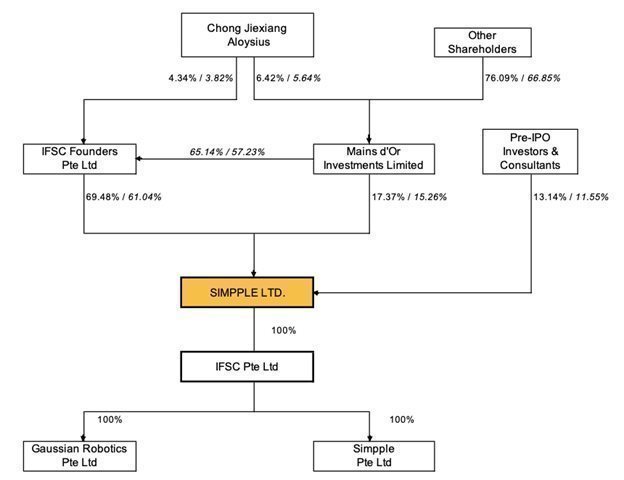
| Our Corporate Structure and History
The chart below illustrates our corporate structure and identifies our subsidiaries (i) as of the date of this prospectus and (ii) after giving effect to the Offering:
*Chart shows shareholding before/after the Offering
The above chart assumes an Offering of 2,000,000 Ordinary Shares, and assumes that the Underwriters’ over-allotment option has not been exercised. | ||
| Name | Background | Ownership |
|
|
|
|
| IFSC Pte. Ltd. | Incorporated on March 18, 2016 as a private company limited by shares under the laws of Singapore | 100% owned by SIMPPLE LTD. |
|
|
|
|
| Gaussian Robotics Pte. Ltd. | Incorporated on May 18, 2017 as a private company limited by shares under the laws of Singapore. Acquired by IFSC Pte. Ltd. on August 15, 2017 | 100% owned by IFSC Pte. Ltd. |
|
|
|
|
| SIMPPLE Pte. Ltd. | Incorporated on October 13, 2020 as a private company limited by shares under the laws of Singapore | 100% owned by IFSC Pte. Ltd. |
| 13 |
| Table of Contents |
| SIMPPLE LTD., the issuer in this Offering, was incorporated in the Cayman Islands on August 24, 2022 as an exempted company under the name “SIMPPLE LTD.”
IFSC was incorporated in Singapore on March 18, 2016 as a private company limited by shares under the name “IFSC Pte. Ltd.”
Gaussian Robotics was incorporated in Singapore on May 18, 2017 as a private company limited by shares under the name “Gaussian Robotics Pte. Ltd.”. Gaussian Robotics became a wholly owned subsidiary of IFSC on August 15, 2017.
SIMPPLE Pte. Ltd. was incorporated in Singapore on October 13, 2020 as a wholly owned subsidiary of IFSC under the name “SIMPPLE Pte. Ltd.”.
On October 21, 2022, we consummated a reorganization (the “Reorganization”), pursuant to which SIMPPLE LTD., our Cayman Islands issuer, became the 100% owner of IFSC. IFSC is the 100% owner of both Gaussian Robotics and SIMPPLE Pte. Ltd., and also is engaged in our facilities management software business, including in connection with the SIMPPLE Ecosystem and SIMPPLE.AI. In connection with the Reorganization, the former shareholders of IFSC exchanged their IFSC ordinary shares for Ordinary Shares of the Company.
POO Chong Hee, who is a principal of a certain customer, is an indirect beneficial owner of 17.37% our Ordinary Shares. See “Principal Shareholders.” All of our customer contracts with the customer affiliated with Mr. POO have been negotiated at arm’s length. See “Related Party Transactions.”
Our Controlling Shareholder currently both directly and indirectly owns 82.51% of our Ordinary Shares and, upon consummation of this Offering, our Controlling Shareholder will own 72.49% of our Ordinary Shares, which represent 72.49% of the total voting power of our outstanding Ordinary Shares. See “Risk Factors - Risks Relating to Management, Governance and Ownership.”
Corporate Information
Our principal place of business is 71 Ayer Rajah Crescent #03-07, Singapore 139951. Our registered office in the Cayman Islands is Harneys Fiduciary (Cayman) Limited, 4th Floor, Harbour Place, 103 South Church Street, P.O. Box 10240, Grand Cayman KY1-1002, Cayman Islands. The telephone and facsimile numbers of our registered office are +65 6816 2194 and +65 6909 6936, respectively. Our agent for service of process in the United States is Cogency Global Inc., located at 122 East 42nd Street, 18th Floor, New York, NY 10168. Our corporate website is https://www.simpple.com.sg/ Information contained on our website does not constitute part of this prospectus
Implications of Being an “Emerging Growth Company” and a “Foreign Private Issuer”
Emerging Growth Company
We are an “emerging growth company” as defined in the Jumpstart Our Business Startups Act of 2012 (the “JOBS Act”). As such, we are eligible, for up to five years, to take advantage of certain exemptions from various reporting requirements that are applicable to other publicly traded entities that are not emerging growth companies. These exemptions include: | ||
|
|
|
|
|
| · | the ability to include only two years of audited financial statements and only two years of related Management’s Discussion and Analysis of Financial Condition and Results of Operations disclosure; |
|
|
|
|
|
| · | exemptions from the auditor attestation requirements of Section 404 of the Sarbanes-Oxley Act of 2002, as amended (the “Sarbanes-Oxley Act”), in the assessment of our internal control over financial reporting; |
|
|
|
|
|
| · | to the extent that we no longer qualify as a foreign private issuer, (i) reduced disclosure obligations regarding executive compensation in our periodic reports and proxy statements and (ii) exemptions from the requirement to hold a non-binding advisory vote on executive compensation, including golden parachute compensation. |
| 14 |
| Table of Contents |
| We may take advantage of these provisions until the last day of our fiscal year following the fifth anniversary of the consummation of this Offering or such earlier time that we are no longer an emerging growth company.
As a result, the information contained in this prospectus may be different from the information you receive from other public companies in which you hold shares. We do not know if some investors will find the Shares less attractive because we may rely on these exemptions. The result may be a less active trading market for the Shares, and the price of the Shares may become more volatile.
We will remain an emerging growth company until the earliest of: (1) the last day of the first fiscal year in which our annual gross revenue exceeds $1.235 billion; (2) the last day of the fiscal year following the fifth anniversary of the date of this Offering; (3) the date that we become a “large accelerated filer” as defined in Rule 12b-2 under the Exchange Act, which would occur if the market value of the Shares that is held by non-affiliates exceeds $700 million as of the last business day of our most recently completed second fiscal quarter; or (4) the date on which we have issued more than $1.00 billion in non-convertible debt securities during any three-year period.
Section 107 of the JOBS Act provides that an “emerging growth company” can take advantage of the extended transition period provided in Section 7(a)(2)(B) of the Securities Act of 1933, as amended, or the Securities Act, for complying with new or revised accounting standards. We have elected to take advantage of the extended transition period for complying with new or revised accounting standards and acknowledge such election is irrevocable pursuant to Section 107 of the JOBS Act.
Foreign Private Issuer
Upon consummation of this Offering, we will report under the Exchange Act as a non-U.S. company with foreign private issuer status. Even after we no longer qualify as an emerging growth company, as long as we qualify as a foreign private issuer under the Exchange Act, we will be exempt from certain provisions of the Exchange Act that are applicable to U.S. domestic public companies, including: | ||
|
|
|
|
|
| · | the rules under the Exchange Act requiring domestic filers to issue financial statements prepared under U.S. GAAP; |
|
|
|
|
|
| · | the sections of the Exchange Act regulating the solicitation of proxies, consents or authorizations in respect of a security registered under the Exchange Act; |
|
|
|
|
|
| · | the sections of the Exchange Act requiring insiders to file public reports of their stock ownership and trading activities and liability for insiders who profit from trades made in a short period of time; and |
|
|
|
|
|
| · | the rules under the Exchange Act requiring the filing with the Securities and Exchange Commission (the “SEC”) of quarterly reports on Form 10-Q containing unaudited financial and other specific information, or current reports on Form 8-K, upon the occurrence of specified significant events. |
|
|
|
|
| Notwithstanding these exemptions, we will file with the SEC, within four months after the end of each fiscal year, or such applicable time as required by the SEC, an annual report on Form 20-F containing financial statements audited by an independent registered public accounting firm.
We may take advantage of these exemptions until such time as we are no longer a foreign private issuer. We would cease to be a foreign private issuer at such time as more than 50% of our outstanding voting securities are held by U.S. residents and any of the following three circumstances applies: (i) the majority of our Executive Officers or members of our Board of Directors are U.S. citizens or residents, (ii) more than 50% of our assets are located in the United States, or (iii) our business is administered principally in the United States.
Both foreign private issuers and emerging growth companies are also exempt from certain more extensive executive compensation disclosure rules. Thus, even if we no longer qualify as an emerging growth company, but remain a foreign private issuer, we will continue to be exempt from the more extensive compensation disclosures required of companies that are neither an emerging growth company nor a foreign private issuer and will continue to be permitted to follow our home country practice on such matters. | ||
| 15 |
| Table of Contents |
| Implications of Being a Controlled Company
Upon the completion of this Offering, we will be a “controlled company” as defined under the Nasdaq Listing Rules because our Controlling Shareholder will hold 72.49% of our total issued and outstanding Shares and will be able to exercise 72.49% of the total voting power of our issued and outstanding share capital. For so long as we remain a “controlled company,” we are permitted to elect not to comply with certain corporate governance requirements. If we rely on these exemptions, you will not have the same protection afforded to shareholders of companies that are subject to these corporate governance requirements. See section titled “Risk Factors — Risks Relating to an Investment in our Shares.”
Even if we cease to be a controlled company, we may still rely on exemptions available to foreign private issuers.
Market and Industry Data
We obtained certain industry, market and competitive position data in this prospectus from our own internal estimates, surveys and research and from publicly available information, including industry and general publications and research, surveys and studies conducted by third parties, such as reports by governmental agencies, for example, the Singapore Department of Statistics, the Singapore Ministry of Trade and Industry and the Singapore Urban Redevelopment Authority, among others, and by private entities. None of these governmental agencies and private entities are affiliated with our Company, and the information contained in this report has not been reviewed or endorsed by any of them.
Industry publications, research, surveys, studies and forecasts generally state that the information they contain has been obtained from sources believed to be reliable but that the accuracy and completeness of such information is not guaranteed. Forecasts and other forward-looking information obtained from these sources are subject to the same qualifications and uncertainties as the other forward-looking statements in this prospectus. These forecasts and forward-looking information are subject to uncertainty and risk due to a variety of factors, including those described under “Risk Factors”. These and other factors could cause results to differ materially from those expressed in the forecasts or estimates from independent third parties and us.
Trademarks, Service Marks and Tradenames
We have proprietary rights to trademarks used in this prospectus that are important to our business, many of which are registered under applicable intellectual property laws. Solely for convenience, the trademarks, service marks, logos and trade names referred to in this prospectus are without the ® and ™ symbols, but such references are not intended to indicate, in any way, that we will not assert, to the fullest extent under applicable law, our rights or the rights of the applicable licensors to these trademarks, service marks and trade names.
This prospectus contains additional trademarks, service marks and trade names of others, which are the property of their respective owners. All trademarks, service marks and trade names appearing in this prospectus are, to our knowledge, the property of their respective owners. We do not intend our use or display of other companies’ trademarks, service marks, copyrights, or trade names to imply a relationship with, or endorsement or sponsorship of us by, any other companies.
Presentation of Financial and Other Information
Unless otherwise indicated, all financial information contained in this prospectus is prepared and presented in accordance with U.S. GAAP.
All references in this prospectus to “U.S. dollars,” “US$,” “$” and “USD” refer to the currency of the United States of America and all references to “S$,” “Singapore dollar,” or “SGD” refer to the currency of Singapore. Unless otherwise indicated, all references to currency amounts in this prospectus are in USD.
We have made rounding adjustments to some of the figures contained in this prospectus. Accordingly, numerical figures shown as totals in some tables may not be exact arithmetic aggregations of the figures that preceded them. |
| 16 |
| Table of Contents |
| Impact of COVID-19
The COVID-19 outbreak has adversely affected (and a significant outbreak of other infectious diseases could result in an additional widespread health crisis that could adversely affect) the economies and financial markets worldwide, and the business of the Company could be materially and adversely affected by the COVID-19 outbreak and any such other outbreak. Furthermore, our business may be adversely affected if continued concerns relating to COVID-19 continue to restrict travel, or result in the Company’s personnel, vendors and services providers being unavailable to pursue their business objectives free of COVID-19 related restrictions. The extent to which COVID-19 impacts our business in the future will depend on future developments, which are highly uncertain and cannot be predicted, including for example new information which may emerge concerning the severity of COVID-19 and the actions to contain COVID-19 or treat its impact. If the disruptions posed by COVID-19 or other matters of global concern continue for an extended period of time, our ability to pursue our business objectives may be materially adversely affected. In addition, our ability to raise equity and debt financing which may be adversely impacted by COVID-19 and other events, including as a result of increased market volatility, decreased market liquidity and third-party financing being unavailable on terms acceptable to us or at all.
THE OFFERING | |||
|
|
|
| |
| Shares offered by us: |
| 2,000,000 Ordinary Shares (or 2,300,000 Ordinary Shares if the Underwriters exercise their option to purchase additional Shares within 45 days of the date of this prospectus from us in full). | |
| Offer Price: |
| $____ per Share. | |
| Number of Shares outstanding before this Offering: |
| 14,463,661 Shares are outstanding as of the date of this prospectus. | |
| Shares to be outstanding immediately after this Offering: |
| 16,463,661 Shares (or 16,763,661 Shares if the Underwriters exercise their option to purchase additional Shares within 45 days of the date of this prospectus from us in full). | |
| Over-allotment option to purchase additional Shares: |
| We have granted the Underwriters an option to purchase up to 300,000 additional Shares from us within 45 days of the date of this prospectus. | |
| Use of proceeds: |
| We estimate that our net proceeds from this Offering will be approximately US$ million, or approximately US$ million if the Underwriters’ option to purchase additional shares is exercised in full, assuming an initial public Offer Price of US$[___] per Share, which is the midpoint of the estimated price range set forth on the cover page of this prospectus, and after deducting the underwriting discount and estimated offering expenses payable by us. | |
|
|
| We plan to use the net proceeds of this Offering as follows (assuming no exercise of the over-allotment option): | |
|
|
| · | Approximately $4.0 million for research and development of products and technology as well as intellectual property strategy and implementation. |
|
|
| · | Approximately $2.5 million for scaling up sales and marketing into overseas markets and for opening selected satellite offices. |
|
|
| · | Approximately $1.5 million for potential acquisitions and strategic investments. See “Acquisition Opportunities” for a description of our acquisition and strategic investment opportunities. We have no specific acquisition or strategic investment targets at this time. |
|
|
| · | The remaining net proceeds will be used for working capital and general corporate purposes. |
| Lock-up: |
| We have agreed with the Underwriters that for a period of six (6) months following the date of execution of the underwriting agreement, the Company will not (a) offer, sell or otherwise transfer or dispose of, directly or indirectly, any Shares, or any securities convertible into or exchangeable or exercisable for Shares; or (b) file or cause to be filed any registration statement with the SEC relating to the Offering of any Shares or any securities convertible into or exchangeable or exercisable for Shares. In addition, our Directors, Executive Officers and Major Shareholders have agreed with the underwriter not to sell, transfer or dispose of, directly or indirectly, any of our Shares or securities convertible into or exercisable or exchangeable for our Shares for a period of six (6) months after the date of this prospectus. See sections titled “Shares Eligible for Future Sale” and “Underwriting” for more information. | |
|
|
|
| |
| Controlled company |
| After this Offering, assuming an offering size as set forth in this section, our Controlling Shareholder will own approximately 72.49% of our Shares (or 71.19% of our Shares if the Underwriters’ option to purchase additional shares is exercised in full). As a result, we expect to be a controlled company within the meaning of the corporate governance standards of the Nasdaq Capital Market, or Nasdaq. See section titled “Prospectus Summary — Implications of Being a Controlled Company”. |
|
|
|
|
| Listing |
| We intend to list the Shares on the Nasdaq Capital Market under the symbol “SPPL.” We will not consummate and close this offering without a listing approval letter from Nasdaq Capital Market. |
|
|
|
|
| Risk factors |
| See section titled “Risk Factors” and other information included in this prospectus for a discussion of factors you should carefully consider before deciding to invest in the Shares. |
|
|
|
|
| SUMMARY FINANCIAL INFORMATION
The following summary presents consolidated balance sheet data as of Dec 31, 2021 and 2020 and summary consolidated statements of operations data for the year ended Dec 31, 2021 and 2020, which have been derived from our audited financial statements included elsewhere in this prospectus. Our consolidated financial statements are prepared and presented in accordance with U.S. GAAP. The summary consolidated balance sheet data as of June 30, 2022 and the summary consolidated statements of operations data for the six months ended June 30, 2022 and 2021 are derived from our unaudited six months financial statements included elsewhere in this prospectus. Our consolidated financial statements are prepared and presented in accordance with U.S. GAAP. You should read this “Summary Financial Information” section together with our consolidated financial statements and the related notes and the “Management’s Discussion and Analysis of Financial Condition and Results of Operations” section included elsewhere in this prospectus. | ||
| 17 |
| Table of Contents |
| The following table presents our summarized consolidated statements of income data for the periods indicated. | |||||||||||||||||||||||||||||||||
|
|
|
|
|
|
|
| |||||||||||||||||||||||||||
|
|
| Audited for the years ended December, 31 |
|
| Unaudited for six months ended June, 30 |
| |||||||||||||||||||||||||||
|
|
| 2020 |
|
| 2021 |
|
| 2021 |
|
| 2021 |
|
| 2022 |
|
| 2022 |
| |||||||||||||||
|
|
| S$ |
|
| S$ |
|
| US$ |
|
| S$ |
|
| S$ |
|
| US$ |
| |||||||||||||||
|
|
|
|
|
|
|
|
|
|
|
|
|
|
|
|
|
|
|
| |||||||||||||||
| Revenues |
|
| 3,544,396 |
|
|
| 4,179,300 |
|
|
| 3,091,198 |
|
|
| 1,999,518 |
|
|
| 2,570,890 |
|
|
| 1,849,162 |
| |||||||||
| Cost of revenues |
|
| (1,608,153 | ) |
|
| (1,852,751 | ) |
|
| (1,370,378 | ) |
|
| (1,092,178 | ) |
|
| (1,236,090 | ) |
|
| (889,082 | ) | |||||||||
| Gross profit |
|
| 1,936,243 |
|
|
| 2,326,549 |
|
|
| 1,720,820 |
|
|
| 907,340 |
|
|
| 1,334,800 |
|
|
| 960,080 |
| |||||||||
| Operating expenses: |
|
|
|
|
|
|
|
|
|
|
|
|
|
|
|
|
|
|
|
|
|
|
|
| |||||||||
| Research and development expenses |
|
| - |
|
|
| - |
|
|
| - |
|
|
| - |
|
|
| - |
|
|
| - |
| |||||||||
| Selling and marketing expenses |
|
| (8,480 | ) |
|
| - |
|
|
| - |
|
|
| - |
|
|
| - |
|
|
| - |
| |||||||||
| General and administrative expenses |
|
| (2,320,002 | ) |
|
| (2,270,830 | ) |
|
| (1,679,608 | ) |
|
| (1,058,443 | ) |
|
| (2,055,737 | ) |
|
| (1,478,628 | ) | |||||||||
| (Loss) Income from operations |
|
| (392,239 | ) |
|
| 55,719 |
|
|
| 41,212 |
|
|
| (151,103 | ) |
|
| (720,937 | ) |
|
| 518,548 | ) | |||||||||
| Other income (loss): |
|
|
|
|
|
|
|
|
|
|
|
|
|
|
|
|
|
|
|
|
|
|
|
| |||||||||
| Other income |
|
| 415,254 |
|
|
| 390,013 |
|
|
| 288,471 |
|
|
| 118,389 |
|
|
| 145,664 |
|
|
| 104,772 |
| |||||||||
| Interest expense |
|
| (117,832 | ) |
|
| (157,147 | ) |
|
| (116,233 | ) |
|
| (50,777 | ) |
|
| (48,875 | ) |
|
| (35,154 | ) | |||||||||
| Other expense |
|
| (250,577 | ) |
|
| (55,694 | ) |
|
| (41,194 | ) |
|
| (64 | ) |
|
| (1,148 | ) |
|
| (826 | ) | |||||||||
| (Loss) Income before tax expense |
|
| (345,394 | ) |
|
| 232,891 |
|
|
| 172,256 |
|
|
| (83,555 | ) |
|
| (625,296 | ) |
|
| (449,756 | ) | |||||||||
| Income tax expense |
|
| (78,226 | ) |
|
| (167,072 | ) |
|
| (123,574 | ) |
|
| - |
|
|
| (22,097 | ) |
|
| (15,894 | ) | |||||||||
| Net (loss) income |
|
| (423,620 | ) |
|
| 65,819 |
|
|
| 48,682 |
|
|
| (83,555 | ) |
|
| (647,393 | ) |
|
| (465,650 | ) | |||||||||
|
| |||||||||||||||||||||||||||||||||
| The following table presents our summarized consolidated balance sheet data for the periods indicated. | |||||||||||||||||||||||||||||||||
|
|
|
|
|
|
|
| |||||||||||||||||||||||||||
|
|
| Audited as of December, 31 |
|
| Unaudited as of June, 30 |
| |||||||||||||||||||||||||||
|
|
| 2020 |
|
| 2021 |
|
| 2021 |
|
| 2021 |
|
| 2022 |
|
| 2022 |
| |||||||||||||||
|
|
| S$ |
|
| S$ |
|
| US$ |
|
| S$ |
|
| S$ |
|
| US$ |
| |||||||||||||||
|
|
|
|
|
|
|
|
|
|
|
|
|
|
|
|
|
|
|
| |||||||||||||||
| Cash |
|
| 1,423,342 |
|
|
| 757,736 |
|
|
| 560,456 |
|
|
| 1,242,311 |
|
|
| 302,885 |
|
|
| 217,856 |
| |||||||||
| Total current assets |
|
| 4,663,168 |
|
|
| 4,708,775 |
|
|
| 3,482,822 |
|
|
| 5,694,047 |
|
|
| 5,898,902 |
|
|
| 4,242,898 |
| |||||||||
| Total non-current assets |
|
| 1,038,616 |
|
|
| 221,566 |
|
|
| 163,879 |
|
|
| 979,668 |
|
|
| 224,131 |
|
|
| 161,211 |
| |||||||||
| Total Assets |
|
| 5,701,784 |
|
|
| 4,930,341 |
|
|
| 3,646,701 |
|
|
| 6,673,715 |
|
|
| 6,123,033 |
|
|
| 4,404,109 |
| |||||||||
| Total current liabilities |
|
| 4,002,967 |
|
|
| 3,563,852 |
|
|
| 2,635,984 |
|
|
| 4,889,726 |
|
|
| 5,361,595 |
|
|
| 3,856,430 |
| |||||||||
| Total non-current liabilities |
|
| 3,404,083 |
|
|
| 2,255,936 |
|
|
| 1,668,592 |
|
|
| 2,822,811 |
|
|
| 2,298,278 |
|
|
| 1,653,081 |
| |||||||||
| Total Liabilities |
|
| 7,407,050 |
|
|
| 5,819,788 |
|
|
| 4,304,576 |
|
|
| 7,712,537 |
|
|
| 7,659,873 |
|
|
| 5,509,511 |
| |||||||||
| Working Capital (Deficiency) |
|
| 660,201 |
|
|
| 1,144,923 |
|
|
| 846,838 |
|
|
| 804,321 |
|
|
| 537,307 |
|
|
| 386,468 |
| |||||||||
| Total shareholders’ Equity (Deficit) |
|
| (1,705,266 | ) |
|
| (889,447 | ) |
|
| (657,875 | ) |
|
| (1,038,822 | ) |
|
| (1,536,840 | ) |
|
| (1,105,402 | ) | |||||||||
|
| |||||||||||||||||||||||||||||||||
| The following table presents our summarized consolidated cash flows data for the periods indicated. | ||||||||||||||||||||||||
|
|
|
|
|
|
|
| ||||||||||||||||||
|
|
| Audited for the years ended December, 31 |
|
| Unaudited for six months ended June, 30 |
| ||||||||||||||||||
|
|
| 2020 |
|
| 2021 |
|
| 2021 |
|
| 2021 |
|
| 2022 |
|
| 2022 |
| ||||||
|
|
| S$ |
|
| S$ |
|
| US$ |
|
| S$ |
|
| S$ |
|
| US$ |
| ||||||
|
|
|
|
|
|
|
|
|
|
|
|
|
|
|
|
|
|
|
| ||||||
| Net cash used in operating activities |
|
| (171,604 | ) |
|
| (293,764 | ) |
|
| (217,281 | ) |
|
| 294,426 |
|
|
| (379,183 | ) |
|
| (272,734 | ) |
| Net cash (used in)/ from investing activities |
|
| (53,943 | ) |
|
| 794,262 |
|
|
| 587,472 |
|
|
| (30,013 | ) |
|
| (25,914 | ) |
|
| (18,638 | ) |
| Net cash from/ (used in) financial activities |
|
| 1,509,925 |
|
|
| (1,166,104 | ) |
|
| (862,503 | ) |
|
| (445,444 | ) |
|
| (49,754 | ) |
|
| (35,788 | ) |
|
|
|
|
|
|
|
|
|
|
|
|
|
|
|
|
|
|
|
|
|
|
|
|
|
|
| Net change in cash flows |
|
| 1,284,378 |
|
|
| (665,606 | ) |
|
| (492,312 | ) |
|
| (181,031 | ) |
|
| (454,851 | ) |
|
| (327,160 | ) |
| 18 |
| Table of Contents |
Prospective investors should carefully consider and evaluate each of the following considerations and all other information set forth in this prospectus before deciding to invest in our Shares. The following section describes some of the significant risks known to us now that could directly or indirectly affect us and the value or trading price of our Shares and should not be construed as a comprehensive listing of all risk factors. The following section does not state risks unknown to us now but which could occur in the future and risks which we currently believe to be not material but may subsequently turn out to be so. Should these risks occur and/or turn out to be material, they could materially and adversely affect our business, financial condition, results of operations and prospects. To the best of our Directors’ knowledge and belief, the risk factors that are material to investors in making an informed judgment have been set out below. If any of the following considerations and uncertainties develops into actual events, our business, financial condition, results of operations and prospects could be materially and adversely affected. In such cases, the trading price of our Shares could decline and investors may lose all or part of their investment in our Shares. Prospective investors are advised to apprise themselves of all factors involving the risks of investing in our Shares from their professional advisers before making any decision to invest in our Shares.
This prospectus also contains forward-looking statements having direct and/or indirect implications on our future performance. Our actual results could differ materially from those anticipated in these forward-looking statements as a result of certain factors, including the risks and uncertainties faced by us described below and elsewhere in this prospectus.
RISKS RELATING TO OUR BUSINESS
We may incur losses in the future.
We anticipate that our operating expenses, together with the increased general administrative expenses of a public company upon completion of this offering, will increase in the foreseeable future as we seek to maintain and continue to grow our business, attract potential customers and further enhance our service offering. These efforts may prove more expensive than we currently anticipate, and we may not succeed in increasing our revenue sufficiently to offset these higher expenses. As a result of the foregoing and other factors, we may incur net losses in the future and may be unable to achieve or maintain profitability on a quarterly or annual basis for the foreseeable future.
Our financial statements contain an explanatory paragraph regarding substantial doubt about our ability to continue as a going concern, which could prevent us from obtaining new financing on reasonable terms or at all.
The accompanying consolidated financial statements contemplate continuation of our Company as a going concern. We have an accumulated deficit of S$2,986,840 as of June 30, 2022 and the continuation of our Company as a going concern is dependent upon our ability to raise additional funds and/or through the attainment of profitable operations. We are presently raising funds through a public offering of our Ordinary Shares. We also note that non-current liabilities primarily include amounts payable to related parties with no stated maturity. If our working capital needs are not met and we are unable to obtain adequate capital, it will affect our abilities to make these payments when they fall due. We cannot be certain that additional funding will be available to us on acceptable terms, if at all. If funds are not available, we may be required to delay, reduce the scope of our services and business operations. Despite the above, the shareholders of the Company pledged to provide continuing financial support to enable the Company to meet its liabilities as and when they fall due.
There is no assurance that our future expansion and other growth plans will be successful.
As part of our future plans, we intend to expand our SIMPPLE Ecosystem through the further development of SIMPPLE.AI. We may expand our range of services organically, or inorganically through licensing, joint ventures, acquisitions and/or strategic alliances.
As such, we may be subject to risks related to the expansion of our Group such as, among others:
|
| · | the availability of sufficient funds; |
|
|
|
|
|
| · | difficulties arising from operating a significantly larger and more complex organization; |
|
|
|
|
|
| · | difficulties in entering into new businesses for which we may not be as or at all familiar; |
|
|
|
|
|
| · | difficulties in integrating the assets and the business operations of the subsidiaries and strategic alliances cohesively; |
|
|
|
|
|
| · | failure to realize expected profitability or growth; |
|
|
|
|
|
| · | failure to realize expected synergies and cost savings; and |
|
|
|
|
|
| · | unforeseen legal, regulatory, contractual, labor or other issues, whether in Singapore or elsewhere. |
| 19 |
| Table of Contents |
We may also enter into new geographic markets such as Australia, Canada, Hong Kong, Japan, the Middle East, the United Kingdom and the United States depending on the demand for our services as well as opportunities for growth. See section titled “General Information on our Group — Our Business Overview — Our Business Strategies and Future Plans” for further details. Overseas expansion involves numerous risks, including but not limited to legal and regulatory risks and financial costs. We cannot assure you that our operations in new geographic markets will be profitable. In addition to the above, geographic expansion will require substantial management dedication and efforts which may require significant additional expenditures. The successful implementation of our growth strategies depends on a variety of factors including our ability to hire and retain key management personnel, negotiate attractive terms for such acquisitions or expansions that may command high valuations, and obtain sufficient financing for our capital expenditures. There is no assurance that we will be able to obtain the required financing or that we will continue to have sufficient cash flow to fund our Group’s expansion. The above-mentioned challenges associated with our growth plans may place increased demands on our management and on our operational systems and other resources, and could also increase our exposure to unanticipated risks and liabilities.
As such, there is no assurance that our Group will be successful in implementing our future plans or that we will be able to realize the profits, growth, or synergies expected from our Group’s expansion. In the event that we are unable to effectively or successfully execute our expansion strategies, our business, financial condition, results of operations and prospects may be materially and adversely affected.
There is no assurance that our existing agreements with our customers or suppliers will be renewed upon expiry or that we will be successful in securing new customer or distribution agreements.
To the extent that the demand for facilities management, particularly in Singapore, is adversely affected for any reasons, our business, financial condition and results of operations could be materially and adversely affected.
Our agreements with our customers and suppliers are typically for a term of two to three years.
We are currently the exclusive and master distributor of Shanghai Gaoxian’s FM-related robotics such as robotic sweepers, scrubbers, Automated Guided Vehicles and security bots in Singapore and Qatar. Our exclusivity rights are derived from the Exclusive Distribution and Partnership Agreement effective as of December 1, 2020 with Shanghai Gaoxian (the “Distribution Agreement”). The Distribution Agreement grants to the Company a three-year exclusive right to distribute Shanghai Gaoxian’s Ecobot product line in Singapore and Qatar, and these exclusive rights will automatically renew if certain minimum ordering volume (“MOV”) milestones in “Tier 1 Markets”, including Singapore and Qatar, are achieved. The milestones for renewal are RMB 12 million in 2020, RMB 31 million in 2021 and RMB 31 million in 2022. If these MOV milestones are met, the terms for renewal will be subject to separate discussion and agreement. Failure to achieve these milestones will result in Shanghai Gaoxian having certain enumerated rights over the sales team and sales strategy of Gaussian Robotics. These include the right to establish a sales team within Gaussian Robotics if 2020 MOV milestones are not met and/or to take charge of Gaussian Robotics’s sales strategy if 2021 MOV milestones are not set.
The outbreak of COVID-19 contributed to an increase in revenue in 2020, and the Company was able to meet the milestone for year 2020 with revenue from the sale of products under the Distribution Agreement being S$3,294,033 (approximately RMB 16,470,165), contributing to approximately 93% of our revenue for the year.
However, due to shortages of chip components and port closures in China, the Company was unable to meet the milestone for year 2021, with revenues from the sale of products under the Distribution Agreement being S$2,728,261 (approximately RMB 13,641,305) in 2021, contributing to approximately 65% of our revenue for the year.
The Company had revenue from the sale of products under the Distribution Agreement of S$1,818,380 (approximately RMB 9,091,900) for the first half of 2022, contributing to approximately 70% of our revenue. While the revenue for the first half of 2022 represented a positive trajectory in sales compared to sales for the year 2021, the aggressive 2022 target may mean that the Company will require a longer runway to achieve the 2022 milestone.
While the Company had been in initial discussion with Shanghai Gaoxian, and based on written communications with Shanghai Gaoxian, as at the date of this prospectus, believes that its exclusive distribution rights under the Distribution Agreement will be renewed at the end of the first three-year term, failure to maintain or extend the Distribution Agreement likely will result in a decrease in our distribution related revenues. See “Business – Exclusive Distribution and Partnership Agreement with Shanghai Gaoxian” on page 62 for more information.
Besides the disclosure above, we are not aware of any information or arrangement which would lead to a cessation or termination of any existing agreements or relationships with our customers or suppliers. However, there is no assurance that our existing customer or distribution contracts will be renewed or extended by our customers or suppliers on the exact same terms, or at all. To the extent that we are unable to secure new customer or distribution agreements as our existing customer or distribution agreements expire, our profitability and prospects could be materially and adversely affected. We do not currently hold any intellectual property rights or licenses associated with our robotic products in relation to our distribution agreements. However, to the extent that we obtain any intellectual property rights or licenses associated with our robotic products in the future, such intellectual property rights or licenses may be materially and adversely affected in the event that our existing distribution agreements expire.
Further, our customer agreements typically permit our customers to terminate our service without cause by providing an agreed upon prior notice, and for full payment to us (even when terminated prematurely by the customer). However, if a substantial number of our customer agreements are terminated early for any reason, and we are unable to secure new customer agreements in a timely manner, this could have a material adverse effect on our business, financial condition, results of operations and prospects.
We are exposed to the credit risks of our customers and we may experience delays or defaults in collecting our receivables, and thus we face liquidity risks.
We face uncertainties over the timeliness of our customers’ payments and their ability to pay. Our customers’ ability to pay may be affected by events or circumstances that are difficult to foresee or anticipate, such as a decline in their business or an economic downturn. Hence, there can be no assurance that we will be able to collect our trade debts fully or within a reasonable period of time.
As such, our financial condition and results of operations are dependent, to a certain extent, on the creditworthiness of our customers. If there are any unforeseen circumstances affecting our customers’ ability or willingness to pay us, we may experience payment delays or non-payment. In such events, our Group’s liquidity, cash flows and working capital may be adversely affected.
| 20 |
| Table of Contents |
We depend on a limited number of manufacturers, and our reputation and results of operations would be harmed if these manufacturers fail to meet our requirements.
We depend on a limited number of manufacturers. In particular, one of our main products, the Gaussian Robots, are manufactured by Shanghai Gaoxian, a third-party manufacturer based in China. Shanghai Gaoxian’s manufacturing efforts have been, and may continue to be, materially impacted as a result of COVID-19 and related port and customs delays, or for other reasons. If Shanghai Gaoxian fails to provide us with the required capacity and quality on a timely basis, there would be a disruption in manufacturing our products until volume is transferred to an alternative manufacturing partner, which would be a costly and time-consuming process. We have not yet experienced any material disruptions due to our dependence on the limited number of manufacturers, but we cannot assure you that this will not occur in the future. We have put into place plans to mitigate supply chain disruption, including sales cycle planning and the option to utilize existing demo units during set up phase to minimize downtime for customers, but we cannot assure you that we would be able to establish alternative manufacturing arrangements on acceptable terms or in a timely manner. We experienced some manufacturing, logistics and parts delays from Shanghai Gaoxian during the COVID-19 pandemic, including one delay of four weeks, but we adequately managed our clients’ expectations during that period and neither that delay or any others have materially adversely affected our results of operations. While we have not yet experienced any material disruptions due to our dependence on Shanghai Gaoxian or the limited number of other manufacturers, we cannot assure you that this would not occur in the future.
We are dependent on a limited number of suppliers for various components used in our products, and we may from time to time have sole source suppliers. The cost, quality and availability of these components are essential to the successful production and sale of our products. We are subject to the risk of industry-wide shortages, price fluctuations and long lead times in the supply of these components and other materials. If the supply of these components were to be delayed or constrained, or if one or more of our main suppliers were to go out of business, alternative sources or suppliers may not be available on acceptable terms or at all. In the event that any of our suppliers were to discontinue production of our key product components, developing alternate sources of supply for these components would be time consuming, difficult and costly. In the event we are unable to obtain components in sufficient quantities on a timely basis and on commercially reasonable terms, our ability to sell our products in order to meet market demand would be affected and could materially and adversely affect our brand, image, business prospects, financial condition and operating results.
Any interruption in the manufacture of our products would be likely to result in delays in shipment, lost sales and revenue and damage to our reputation in the market, all of which would harm our business and results of operations. In addition, because our purchase contracts with suppliers are typically denominated in Singapore dollars, changes in currency exchange rates may impact our suppliers who operate in local currency, which may cause our suppliers to seek price concessions on future orders.
If critical components of the robotics products that we currently purchase from our current single supplier of such products become unavailable, we may incur delays in shipment, which could damage our business.
We and our outsourced manufacturers obtain hardware components, various subsystems and other materials from a limited group of suppliers, some of which are sole suppliers. If we or our outsourced manufacturers are unable to obtain components from third-party suppliers in the quantities and of the quality that we require, on a timely basis and at acceptable prices, we may not be able to deliver our products on a timely or cost-effective basis to our customers, which could cause customers to terminate their contracts with us, reduce our gross margin and seriously harm our business, results of operations and financial condition. Moreover, if any of our suppliers become financially unstable, we may have to find new suppliers. It may take several months to locate alternative suppliers, if required, or to re-tool our products to accommodate components from different suppliers. We may experience significant delays in manufacturing and shipping our products to customers and incur additional development, manufacturing and other costs to establish alternative sources of supply if we lose any of these sources. We cannot predict if we will be able to obtain replacement components within the time frames that we require at an affordable cost, or at all.
We depend on certain equipment to perform our services and are subject to associated risks of maintenance and obsolescence.
We utilize various types of cleaning robots, security robots and android robots, along with our SIMPPLE Ecosystem. Our robots may face obsolescence due to rapid technological developments and the emergence of alternative innovations. To the extent that our equipment faces obsolescence before the end of its expected useful lives, we may be subject to impairment losses. Changes and advancements in technology may require us to replace and upgrade our equipment at an earlier stage than expected. As a result, we may incur significant additional capital expenditure.
A significant portion of our historical revenues have come from the distribution, deploying, and maintaining FM-related robotics such as robotic sweepers, scrubbers, Automated Guided Vehicles and security bots through our distribution agreement with Shanghai Gaoxian. Failure to maintain and extend this distribution agreement likely will result in a decrease in our distribution related revenues.
We are currently the exclusive and master distributor of Shanghai Gaoxian’s FM-related robotics such as robotic sweepers, scrubbers, Automated Guided Vehicles and security bots in Singapore and Qatar. Our exclusivity rights are derived from the Exclusive Distribution and Partnership Agreement effective as of December 1, 2020 with Shanghai Gaoxian (the “Distribution Agreement”). The Distribution Agreement grants to the Company a three-year exclusive right to distribute Shanghai Gaoxian’s Ecobot product line in Singapore and Qatar, and these exclusive rights will automatically renew if certain minimum ordering volume (“MOV”) milestones in “Tier 1 Markets”, including Singapore and Qatar, are achieved. The milestones for renewal are RMB 12 million in 2020, RMB 31 million in 2021 and RMB 31 million in 2022. If these MOV milestones are met, the terms for renewal will be subject to separate discussion and agreement. Failure to achieve these milestones will result in Shanghai Gaoxian having certain enumerated rights over the sales team and sales strategy of Gaussian Robotics. These include the right to establish a sales team within Gaussian Robotics if 2020 MOV milestones are not met and/or to take charge of Gaussian Robotics’s sales strategy if 2021 MOV milestones are not set.
The outbreak of COVID-19 contributed to an increase in revenue in 2020, and the Company was able to meet the milestone for year 2020 with revenue from the sale of products under the Distribution Agreement being S$3,294,033 (approximately RMB 16,470,165), contributing to approximately 93% of our revenue for the year.
However, due to shortages of chip components and port closures in China, the Company was unable to meet the milestone for year 2021, with revenues from the sale of products under the Distribution Agreement being S$2,728,261 (approximately RMB 13,641,305) in 2021, contributing to approximately 65% of our revenue for the year.
The Company had revenue from the sale of products under the Distribution Agreement of S$1,818,380 (approximately RMB 9,091,900) for the first half of 2022, contributing to approximately 70% of our revenue. While the revenue for the first half of 2022 represented a positive trajectory in sales compared to sales for the year 2021, the aggressive 2022 target may mean that the Company will require a longer runway to achieve the 2022 milestone.
While the Company had been in initial discussion with Shanghai Gaoxian, and based on written communications with Shanghai Gaoxian, as at the date of this prospectus, believes that its exclusive distribution rights under the Distribution Agreement will be renewed at the end of the first three-year term, failure to maintain or extend the Distribution Agreement likely will result in a decrease in our distribution related revenues. See “Business – Exclusive Distribution and Partnership Agreement with Shanghai Gaoxian” on page 62 for more information.
| 21 |
| Table of Contents |
We are exposed to legal or other proceedings or to other disputes or claims.
In the event that our customers do not make payment in a timely manner, we may seek to enforce our contractual rights and seek recourse via litigation or arbitration. These legal procedures are time-consuming and the settlement of a contract dispute may require additional financial and other resources. Failure to secure adequate payments in time or to manage past due receivables effectively could have a material and adverse effect on our business, financial condition, results of operations and prospects.
Further, disputes and claims may arise, from time to time, between our Group and our customers, suppliers or sub-contractors for various reasons such as delays, unsatisfactory service delivery and alleged breaches of service contracts. To date, we have not been the subject of workplace safety and/or negligence claims from employees and/or members of the public, but there is a risk that such claims may be made against us in the future. These disputes, if remain unresolved or worsen, may eventually result in legal or other proceedings and therefore cause disruptions and delays to our operations, in addition to the extra costs that may be incurred in their settlement or other resolution. Our resources may also be diverted to defend the claims, thereby adversely affecting our Group’s business, financial condition, results of operations and prospects.
In the event that we are unable to resolve the aforementioned disputes or claims satisfactorily in a timely manner or at all, our Group’s business, financial condition and results of operation may be materially and adversely affected. Please refer to the section titled “General Information on our Group — Our Business Overview — Legal Proceedings” of this prospectus for further details.
Our insurance coverage may not cover all our damages and losses.
We maintain insurance policies to provide insurance coverage of our business operations. We expect to renew our insurance policies, such as our insurance policy for work injury compensation on an annual basis and there is no assurance that we will be able to renew all of our policies or obtain new policies on similar terms.
The nature of our business operations entails inherent risks such as risk of fire, theft and property loss at the worksites during the course of our customer agreements or during the delivery of our services. Also, we do not have key man insurance to cover the loss of key personnel. While our Directors believe that we have sufficient insurance coverage for our business operations in line with industry standards and business practices in Singapore and although we may be able to increase our insurance coverage when required, there is no assurance that our existing or future insurance coverage will be sufficient to indemnify us against all potential losses.
As a public company, we expect the laws, rules and regulations governing U.S. public companies will make it more expensive for us to obtain director and officer liability insurance, and we may be required to accept reduced policy limits and coverage or incur substantially higher costs to obtain the same or similar coverage.
In the event that our existing insurance coverage is insufficient to indemnify us against all or any losses, our business, financial condition, results of operations and prospects may be materially and adversely affected.
We are subject to risks associated with debt financing, including rising interest rates.
Due to our working capital requirements in support of our day-to-day operations and business expansion, we may finance all or a substantial portion of our costs through bank loans and credit facilities, in addition to Shareholders’ equity and internally generated funds. Details on our total indebtedness is set forth in the section titled “Management’s Discussion and Analysis of Financial Condition and Results of Operations” of this prospectus.
While we believe that we have sufficient capital from our available cash resources, our cash generated from our business operations and our credit facilities to meet our current working capital and capital expenditure requirements, we may require additional debt financing to operate our business, implement our future business strategies and/or acquire complementary businesses or develop new technologies.
Our ability to obtain debt financing depends on a number of factors including our financial strength, creditworthiness and prospects, as well as other factors beyond our control, including general economic, liquidity and political conditions. There is no assurance that we will be able to secure adequate debt financing on terms acceptable to us, or at all. In the event that we are unable to secure adequate debt financing on terms acceptable to us, we may not be able to implement our business strategies and our business and prospects could be materially and adversely affected as a result.
Rising interest rates may increase the Company’s operational costs of funds; however, the effect of these increases are mitigated by the fixed rated terms of the Company’s material loans. Future borrowings will likely carry higher interest rates, but we currently do not have any plans to increase our borrowings at this time.
Bank interest rates have been steadily on the rise for the past 24 months, but much more aggressively since April 2022. Based on Singapore’s official borrowing and lending rates benchmark indicated by SIBOR (Singapore interbank offered rate) /SORA (Singapore overnight rate average), interest rates have increased from 0.36% on April 29, 2022 to 3.18% on October 31, 2022. (https://housingloansg.com/hl/charts/sibor-sor-historical-chart). The interest rate in Singapore is currently one of the lowest among the G20 countries and our operations have not been materially affected as of the date of this prospectus. Our temporary bridging loan carries a fixed rate of 2.75% that has been factored into our operational costs since 2020.
Regarding the factoring of interest rate increases against our sales model, we believe that our SIMPPLE Software product is relatively inelastic in price, and as such we expect to be able to pass on any increased borrowing costs to our clients.
Any disruptions, volatility or uncertainty of the credit markets could limit our ability to borrow funds or cause our borrowings to become more expensive. As such, we may be forced to pay unattractive interest rates, thereby increasing our interest expense, decreasing our profitability and reducing our financial flexibility if we take on additional debt financing. Any material increase in interest rates would also increase our cost of borrowing and debt financing costs, which may weaken our ability to obtain further future debt financing.
| 22 |
| Table of Contents |
Further, debt financing may restrict our freedom to operate our business as it may require conditions and/or covenants that:
|
| a. | limit our ability to pay dividends or require us to seek consent for the payment of dividends; |
|
|
|
|
|
| b. | require us to dedicate a portion of our cash flow from operations to repayments of our debt, thereby reducing the availability of our cash flow for capital expenditures, working capital and other general corporate purposes; and |
|
|
|
|
|
| c. | limit our flexibility in planning for, or reacting to, changes in our business and our industry. |
We are dependent on our ability to retain existing senior management personnel and to attract new qualified management personnel.
Our continued success is highly dependent on our ability to retain our senior management personnel, who are responsible for key aspects of our business, including but not limited to maintaining customer relationships, developing new business opportunities, finance and project management. Our CEO and COO have an average of approximately five years of experience in the facilities management industry, and their knowledge, skills and extensive experience in our industry, business relationships with our customers, and ability to manage existing and develop new customer relationships have been important to the growth of our Group. If any of our key management personnel cease to be involved with our Group in the future and we are unable to find suitable replacements in a timely manner, this may cause disruptions to our business operations and our business, financial condition, results of operations and prospects may be adversely affected.
The success and growth of our Group also depend on our ability to identify, hire, train and retain suitable, skilled and qualified key management personnel. If we are unable to hire and retain employees from different sectors apart from the facilities management industry, such as hires with technology, finance, human resources and business development capabilities, our ability to build up our key management personnel team may be limited to a certain extent.
The appeal of our services is reliant, to some extent, on maintaining and protecting the brand names and trademarks in our business.
Our business is sensitive to customer perception of the quality of our services and products. In the event of any misuse of our brand and/or trademarks (which may include misuse by our sub-contractors, our employees or unrelated third parties), or in the event we fail to detect, deter and prevent trademark, related misconduct, or otherwise fail to effectively protect our brand and/or trademarks, our reputation could be damaged, resulting in our business, financial condition, results of operations and prospects being materially and adversely affected.
We are exposed to risks of infringement of our intellectual property rights and the unauthorized use of our trademarks, patents or copyrights by third parties, and we may face litigation suits for intellectual property infringement.
We believe our trademarks are well recognized by our customers and in the industries we are operating in, which reflects our reliable and quality services that have contributed to our success. It is possible that our competitors or other third parties may adopt trademarks similar to ours, which may lead to brand confusion. If we fail to effectively protect our trademarks and other intellectual property, such as our copyrights and any patents that are issued to us in the future, generally or against specific third party infringement, our intellectual property rights could be negatively affected and our customers may have a negative impression of our service quality which in turn may have an adverse impact on our Group’s reputation, prospects, business and financial results.
There is also no assurance that we will not be sued for any potential infringement of any intellectual property rights of third parties in the future. In the event of any claims or litigation involving infringement of the intellectual property rights of third parties, whether with or without merit, we may be required to divert a significant amount of our time and resources to defend or attend to any possible litigation or legal proceedings. As a result, our reputation, business and financial results may be adversely affected.
We could incur substantial costs as a result of data protection concerns or IT systems disruption or failure.
While we have not been the subject of any cyber-attacks or IT system failures that have had a material impact on our Group, our business may be impacted by such attacks or system failures in the future. Cybersecurity attacks, in particular, are evolving and include, but are not limited to, malicious software, attempts to gain unauthorized access to data and other electronic security breaches that could lead to disruptions in systems, unauthorized release of confidential or otherwise protected information and corruption of data. A cyberattack or system failure may result in operational downtimes and/or delays, which may have a detrimental impact on our ability to provide services to our customers. In addition, we utilize cleaning robots and our SIMPPLE Ecosystem in the provision of our facilities management services, and any failure of these systems could disrupt our daily operations and lead to delays of our provision of services or loss in our revenues.
| 23 |
| Table of Contents |
We handle the personal data of the personnel of customers in the ordinary course of providing our products and services. The collection and use of such personal data is governed by personal data protection laws in Singapore, in particular the Personal Data Protection Act 2012. While we have implemented measures to protect sensitive information and confidential and personal data and comply with applicable laws, rules and regulations, our facilities and systems may be vulnerable to security breaches and other data loss, including cyber-attacks. In addition, it is not possible to predict the impact on our business of any future loss, alteration or misappropriation of information in our possession related to us, our employees, former employees, customers, suppliers or others. This could lead to negative publicity, legal claims, theft, modification or destruction of proprietary or other key information, damage to or inaccessibility of critical systems, operational downtimes and/or delays and other significant costs, which could adversely affect our business, financial condition, results of operations and prospects.
The value of our intangible assets and costs of investment may become impaired.
Our intangible assets are amortized over their estimated useful lives. In accordance with applicable accounting standards, we periodically evaluate our goodwill and other intangible assets to determine whether all or a portion of their carrying values may no longer be recoverable, in which case a charge to the profit or loss statement may be necessary. Such impairment testing is complex and requires us to make assumptions and judgments regarding the estimated recoverable amount of our cash-generating units to which the goodwill is allocated. If estimated recoverable amounts are less than the carrying values for goodwill in future annual impairment tests, we may be required to record impairment losses in future periods. Any future evaluations requiring an impairment of our goodwill could materially affect our results of operations and shareholders’ equity in the period in which the impairment occurs. A material decrease in shareholders’ equity could, in turn, potentially impact our ability to pay dividends.
Our historical financial and operating results are not a guarantee of our future performance.
Our annual and periodic financial results vary from year to year and from period to period, in response to a number of factors that we cannot predict, such as general business outlook and sentiment, economic market conditions, employment rates, inflation and interest rates and consumer confidence. As such, we believe that our annual and periodic financial results are not a guarantee of our future economic performance and undue reliance should not be placed on such results for future speculative purposes.
We may be exposed to liabilities under applicable anti-corruption laws and any determination that we violated these laws could have a materially adverse effect on our business.
We are subject to various anti-corruption laws that prohibit companies and their agents from making improper payments or offers of payments for the purpose of obtaining or retaining business. We may conduct business in countries and regions that are generally recognized as potentially more corrupt business environments. Activities in these countries create the risk of unauthorized payments or offers of payments by one of our employees or agents that could be in violation of various anti-corruption laws, including the United States Foreign Corrupt Practices Act (the “FCPA”) and the Singapore Prevention of Corruption Act 1960 (the “POCA”). We have implemented safeguards and policies to discourage these practices by our employees and agents but we cannot provide assurance that our internal controls and compliance systems will always protect us from acts committed by our employees or agents. If our employees or agents violate our policies or we fail to maintain adequate record keeping and internal accounting practices to accurately record our transactions, we may be subject to regulatory sanctions. Violations of the FCPA POCA or other anti-corruption laws, or allegations of any such acts, could damage our reputation and subject us to civil or criminal investigations in the United States and in other jurisdictions. Those and any related shareholder lawsuits could lead to substantial civil and criminal, monetary and nonmonetary penalties and cause us to incur significant legal and investigatory fees which could adversely affect our business, combined financial condition and results of operations.
Any inability by us to consummate and effectively integrate acquisitions into our business operations may adversely affect our results of operations.
We may in the future invest time and resources into carefully assessing opportunities for acquisitions and/or strategic investments, and we continue to evaluate potential acquisition opportunities to support, strengthen and grow our business, including potentially in the near term. For example, potential acquisition or strategic investment targets may include: (1) companies with deep technical capabilities in artificial intelligence, vision analytics and computer visioning, (2) companies with a large customer user base in the facilities management sector, (3) companies that the Company can vertically or horizontally integrate with to bring more value to property developers and facility owners and (4) distributors of technology and equipment in the facilities management space.
Despite diligence and integration planning, acquisitions still present certain risks, including the time and economic costs of integrating an acquisition’s technology, control and financial systems, unforeseen liabilities, and difficulties in bringing together different work cultures and personnel. There can be no assurance that we will be able to locate suitable acquisition candidates, acquire possible acquisition candidates, acquire such candidates on commercially reasonable terms, or integrate acquired businesses successfully in the future. Future acquisitions, including those we may consummate in the near term, may require us to incur additional debt and contingent liabilities, which may adversely affect our business, results of operations and combined financial condition. The process of integrating acquired businesses into our existing operations may result in operating, contractual and supply chain difficulties, such as the failure to retain customers or management personnel. Such difficulties may divert significant financial, operational and managerial resources from our existing operations, and make it more difficult to achieve our operating and strategic objectives.
| 24 |
| Table of Contents |
We may be subject to claims against us relating to any acquisition or business combination.
There may be liabilities assumed in any acquisition or business combination that we did not discover or that we underestimated in the course of performing our due diligence. Although a seller generally will have indemnification obligations in favor of us under an acquisition or merger agreement, these obligations will usually be subject to financial limitations, such as general deductibles and maximum recovery amounts, as well as time limitations. We cannot ensure that our right to indemnification from any sellers will be enforceable, collectible or sufficient in amount, scope or duration to fully offset the amount of any undiscovered or underestimated liabilities that we may incur. Any such liabilities, individually or collectively, could have a material and adverse effect on our prospects, business and financial results.
We will incur significant expenses and devote other significant resources and management time as a result of being a public company, which may negatively impact our financial performance and could cause our results of operations and financial condition to suffer.
We will incur significant legal, accounting, insurance and other expenses as a result of being a public company. Laws, regulations and standards relating to corporate governance and public disclosure for public companies, including the Dodd-Frank Act of 2010, the Sarbanes-Oxley Act, regulations related thereto and the rules and regulations of the SEC and Nasdaq, will significantly increase our costs as well as the time that must be devoted to compliance matters. We expect that compliance with these laws, rules, regulations and standards will substantially increase our expenses, including our legal and accounting costs, and make some of our operating activities more time-consuming and costly. These new public company obligations also will require attention from our senior management and could divert their attention away from the day-to-day management of our business. We also expect these laws, rules, regulations and standards to make it more expensive for us to obtain director and officer liability insurance, and we may be required to accept reduced policy limits and coverage or incur substantially higher costs to obtain the same or similar coverage. As a result, it may be more difficult for us to attract and retain qualified persons to serve on our Board of Directors or as officers. As a result of the foregoing, we expect a substantial increase in legal, accounting, insurance and certain other expenses in the future, which will negatively impact our financial performance and could cause our results of operations and financial condition to suffer. Furthermore, if we are unable to satisfy our obligations as a public company, we could be subject to delisting of our Shares, fines, sanctions and other regulatory actions and potential civil litigation.
If we fail to maintain an effective system of disclosure controls and internal controls over financial reporting, our ability to timely produce accurate financial statements or comply with applicable regulations could be impaired.
The Sarbanes-Oxley Act requires, among other things, that we maintain effective internal disclosure controls and procedures over our financial reporting. We are continuing to develop and refine our disclosure controls and other procedures that are designed to ensure that information required to be disclosed by us in our reports that we will file with the SEC will be recorded, processed, summarized, and reported within the time periods and as otherwise specified in SEC rules, and that information required to be disclosed in reports under the Exchange Act is accumulated and communicated to our principal Executive Officers and financial officers. We are also continuing to improve our internal controls over financial reporting.
Ensuring that we have effective disclosure controls and procedures and internal controls over financial reporting in place so that we can produce accurate financial statements on a timely basis is a costly and time-consuming effort that will need to be re-evaluated frequently. Our internal controls over financial reporting is a process designed to provide reasonable assurance regarding the reliability of financial reporting and the preparation of financial statements in accordance with GAAP. Beginning with our second annual report on Form 20-F after we become a company whose securities are publicly listed in the United States, we will be required, pursuant to Section 404 of the Sarbanes-Oxley Act, to make a formal assessment of the effectiveness of our internal controls over financial reporting, and once we cease to be an emerging growth company, we will be required to include an attestation report on internal controls over financial reporting issued by our Independent Registered Public Accounting Firm. During our evaluation of our internal controls, if we identify one or more material weaknesses in our internal controls over financial reporting, we will be unable to assert that our internal controls over financial reporting are effective. We cannot assure you that there will not be material weaknesses or significant deficiencies in our internal controls over financial reporting in the future. Any failure to maintain internal controls over financial reporting could severely inhibit our ability to accurately report our financial condition, or results of operations.
We do not expect to be subject to certain Nasdaq corporate governance rules applicable to U.S. listed companies.
As a foreign private issuer, we are entitled to rely on a provision in Nasdaq’s corporate governance rules that allows us to follow Cayman Islands corporate law with regards to certain aspects of corporate governance. This allows us to follow certain corporate governance practices that differ in significant respects from the corporate governance requirements applicable to U.S. companies listed on Nasdaq.
| 25 |
| Table of Contents |
In addition, our Audit Committee is not subject to additional Nasdaq requirements applicable to listed U.S. companies, including an affirmative determination that all members of the Audit Committee are “independent,” using more stringent criteria than those applicable to the Company under relevant SEC rules. Nasdaq’s corporate governance rules require listed U.S. companies to, among other things, seek shareholder approval for the implementation of certain equity compensation plans and issuances of shares, which the Company is not required to follow as a foreign private issuer. However, effective upon the consummation of this Offering, we will have a majority of independent Directors and our Audit Committee will consist of three independent Directors.
Negative publicity relating to our Group or our Directors, Executive Officers or Major Shareholders may materially and adversely affect our reputation and Share price.
Negative publicity or announcements relating to our Group or any of our Directors, Executive Officers or Major Shareholders, whether with or without merit, may materially and adversely affect the reputation and goodwill of our Group in our industry, consequently affecting our relationships with our customers, suppliers and sub-contractors. In addition, such negative publicity may affect market perception of our Group and the performance of our Share price.
Negative publicity or announcements may include, among others, newspaper reports of accidents at our work sites, unsuccessful attempts in joint ventures, acquisitions or take-overs, any involvement we may have in litigation or insolvency proceedings, and unfavorable or negative articles on any of our Directors, Executive Officers or Major Shareholders. Any claims and legal actions brought forward by our customers may also have a negative impact on our brand image. If our customers, suppliers and sub-contractors subsequently lose confidence in us, this could result in the termination of business relationships or fewer referrals or invitations to tender or quote for facilities management or other contracts. To this end, our business, financial condition, results of operations and prospects may be adversely impacted.
Any adverse material changes to the Singapore market (whether localized or resulting from global economic or other conditions) such as the occurrence of an economic recession, pandemic or widespread outbreak of an infectious disease (such as COVID-19), could have a material adverse effect on our business, results of operations and financial condition.
During FY 2021 and FY 2020, substantially all of our revenue was derived from our operations in Singapore. Any adverse circumstances affecting the Singapore market, such as an economic recession, epidemic outbreak or natural disaster or other adverse incidents may adversely affect our business, financial condition, results of operations and prospects. Any downturn in the industry which we operate in resulting in the postponement, delay or cancellation of contracts and delay in recovery of receivables is likely to have an adverse impact on our business and profitability.
Uncertain global economic conditions have had and may continue to have an adverse impact on our business in the form of lower net sales due to weakened demand, unfavorable changes in product price/mix, or lower profit margins. In addition, the effect of inflation often results in reduced spending.
During economic downturns or recessions, there can be a heightened competition for sales and increased pressure to reduce selling prices as our customers may reduce their demand for our services. If we lose significant sales volume or reduce selling prices significantly, then there could be a negative impact on our combined financial condition or results of operations, profitability and cash flows.
Reduced availability of credit may also adversely affect the ability of some of our customers and suppliers to obtain funds for operations and capital expenditures. This could negatively impact our ability to obtain necessary supplies as well as our sales of equipment to affected customers. This could additionally result in reduced or delayed collections of outstanding accounts receivable.
The outbreak of COVID-19 contributed to an increase in revenue from our services, from $2.62 million in FY 2020 to $3.09 million in FY 2021.
COVID-19 has impacted Singapore’s economy resulting in significant economic contraction and high unemployment rates during FY 2020. The general economic downturn may affect the ability of our counterparties to perform their obligations in a timely manner or at all. Singapore government measures to alleviate the economic impact of COVID-19 such as the imposition of relief from actions for inability to perform scheduled contracts, or relief for financially distressed individuals, firms and other businesses could adversely affect our ability to enforce and require our counterparties to perform their obligations under our contracts.
| 26 |
| Table of Contents |
Our revenue and profitability may be materially impacted if COVID-19 (or any health epidemic or virus outbreak) affects or continues to affect the overall economic and market conditions in Singapore for a prolonged period of time. Such an economic slowdown and/or negative business sentiment could potentially have an adverse impact on our business and operations. We are uncertain as to when the outbreak of COVID-19 will be contained, and we also cannot predict if the impact of an outbreak will be short-lived or long-lasting or when the Singapore market will be able to fully recover to pre-COVID-19 levels. If these disruptions are for a prolonged period of time, or if there are further outbreaks of infectious diseases, these may have a material adverse effect on our Group’s business, financial condition, results of operations, and prospects.
Many of the economies in Asia, including Singapore, are experiencing substantial inflationary pressures which may prompt the governments to take action to control the growth of the economy and inflation that could lead to a significant decrease in our profitability in the future.
While many of the economies in Asia have experienced rapid growth over the last two decades, they currently are experiencing inflationary pressures. As governments take steps to address the current inflationary pressures, there may be significant changes in the availability of bank credit, interest rate increases, limitations on loans, or restrictions on currency conversions and foreign investment. There also may be imposition of price controls. If prices for the products we source or if wages rise at a rate that is insufficient to compensate for the rise in these costs, it may have an adverse effect on our profitability. If these or other similar restrictions are imposed by a government to influence the economy, it may lead to a slowing of economic growth. Singapore’s core inflation rose to 5.3% on a year-on-year (y-o-y) basis in September 2022, compared to 5.1% in August 2022. The pickup in core inflation was on account of larger increases in the prices of food, services and retail & other goods. CPI (consumer price index)--All Items inflation was 7.5% year-over-year in September 2022, unchanged from that in August.
(source: https://www.mas.gov.sg/-/media/MAS/EPG/CPD/2022/Inflation202209.pdf)
While this inflationary trend will result in higher operational costs, we believe that this also strengthens our value proposition by emphasizing potential savings to customers through improved productivity and workflow efficiency derived from our technology solutions. To mitigate inflationary pressures, we will be regularly review our pricing structure to ensure sustainable profitability.
Our subsidiaries are subject to the laws of Singapore, which differ in certain material respects from the laws of the United States.
As our subsidiaries, namely IFSC, SIMPPLE Pte Ltd. and Gaussian Robotics, are Singapore incorporated companies, they are required to comply with the laws of Singapore, certain of which are capable of extra-territorial application, as well as their Constitution. In particular, these subsidiaries are required to comply with certain provisions of the Securities and Futures Act 2001 of Singapore (the “SFA”), which prohibit certain forms of market conduct and information disclosures, and impose criminal and civil penalties on corporations, directors and officers in respect of any breach of such provisions.
RISKS RELATING TO THE INDUSTRY IN WHICH WE OPERATE
Our products and software are highly technical and may contain undetected software bugs or vulnerabilities, which could manifest in ways that could seriously harm our reputation and our business.
Our products and software are highly technical and complex. Our services and products include our SIMPPLE Ecosystem, SIMPPLE.AI and our robotic software. Bugs and errors can manifest in any number of ways in our products, including through diminished performance, security vulnerabilities, malfunctions, or even permanently disabled products. We have a practice of rapidly updating our products and some errors in our products may be discovered only after a product has been used by our customers, and may in some cases be detected only under certain circumstances or after extended use. Any errors, bugs, or other vulnerabilities discovered in our code or backend after release could damage our reputation, drive away customers, allow third parties to manipulate or exploit our data, lower our revenue, and expose us to claims for damages, any of which could seriously harm our business.
We also could face claims for product liability, tort, or breach of warranty. Defending a lawsuit, regardless of its merit, is costly and may divert management’s attention and seriously harm our reputation and our business. In addition, if our liability insurance coverage proves inadequate or future coverage is unavailable on acceptable terms or at all, our business could be seriously harmed.
We face competition from diversified technology providers, as well as competition from providers offering alternative products, which could negatively impact our results of operations and cause our market share to decline.
A number of companies are developing software platforms that integrate robotics with their IoT platforms that will compete directly with our product offerings. Our competition includes software companies such as Team Software and IoT manufacturers such as Unabiz and new market entrants. There can be no assurance that our current and future competitors will not be more successful than us. We also face competition from distributors of lower-cost robots, which has, and may continue to, further drive down the average selling price in the marketplace for floor cleaning products. Moreover, while we believe many of our customers purchase our floor vacuuming robots as a supplement to, rather than a replacement for, their traditional vacuum cleaners, we also compete with providers of traditional vacuum cleaners.
The global market for robots is highly competitive, rapidly evolving and subject to changing technologies, shifting customer needs and expectations and the likely increased introduction of new products. Our ability to remain competitive will depend to a great extent upon ongoing performance of our suppliers in the areas of product development, operating efficiency and customer support.
| 27 |
| Table of Contents |
We expect that competition will continue to intensify as additional competitors enter the market and current competitors expand their product lines. Companies competing with us have, and may continue to, introduce products that are competitively priced, have increased performance or functionality, or incorporate technological advances that we have not yet developed or implemented. Increased competitive pressure could result in a loss of sales or market share or cause us to lower prices for our products, any of which would harm our business and operating results.
We cannot assure you that the products we sell will continue to compete favorably or that we will be successful in the face of increasing competition from new products and enhancements introduced by existing competitors or new companies entering the markets in which we provide products. Our failure to compete successfully could cause our revenue and market share to decline, which would negatively impact our results of operations and financial condition.
The technology industry serving FM companies in Singapore is highly competitive.
Our success in providing technology and other services to the facilities management industry will depend on our ability to compete effectively against our competitors on factors such as pricing, quality of services, reliability, reputation and size of operations. We may face more intensive competition in the future from existing competitors and new market entrants, who may be in a better position to expand their market share due to their longer operating histories, larger customer base, ready access to sub-contractors, wider range of services offered, greater financial resources or other factors. See section titled “General Information on our Group — Our Business Overview — Competition” for further details.
In order to expand service capacity, certain of our competitors have been exploring the use of new technology that will improve their business. If we are unable to adapt to and acquire such advances in technology, we cannot remain competitive, and this may result in lower profit margins and a loss of market share for our Group. There is no assurance that we will be able to compete against our competitors effectively in the future and this could have a material and adverse effect on the business, financial condition, results of operations and prospects of our Group.
Industry consolidation may give our competitors advantage over us, which could result in a loss of customers and/or a reduction of our revenue.
Some of our competitors have made or may make acquisitions or enter into partnerships or other strategic relationships in order to offer more comprehensive services or achieve greater economies of scale. In addition, new entrants not currently considered competitors may enter our market through acquisitions, partnerships or strategic relationships. Many potential entrants may have competitive advantages over us, such as greater name recognition, longer operating histories, more varied services and larger marketing budgets, as well as greater financial, technical and other resources. Industry consolidation may result in practices that make it more difficult for us to compete effectively, including on the basis of price, sales and marketing programs, technology or services functionality. These pressures could result in a reduction in our revenue.
New legislation and regulations may affect our business, financial condition and results of operations.
Our business requires compliance with many laws and regulations. Increased legislative and regulatory activity and burden, and a more stringent manner in which any of them are applied could significantly impact our business. Failure to comply with these laws and regulations could subject us to lawsuits and other proceedings, and could also lead to damage awards, fines and penalties. We may become involved in a number of legal proceedings and audits, including Singapore government and agency investigations, and consumer, employment, tort and other litigation. The outcome of some of these legal proceedings, audits, and other contingencies could require us to take, or refrain from taking, actions that could harm our operations or require us to pay substantial amounts of money, harming our financial condition. Additionally, defending against these lawsuits and proceedings may be necessary, which could result in substantial costs and diversion of our senior management’s attention and resources, harming our financial condition. There can be no assurance that any pending or future legal or regulatory proceedings and audits will not harm our business, financial condition and results of operations.
Furthermore, the regulatory environment in which we operate is still developing, and the potential exists for future legislation and regulations to be adopted. These developments may adversely affect the customers to whom, and the markets into which, we sell our products, increase our costs, require additional expenditures to ensure continued regulatory compliance and otherwise negatively affect our business, combined financial condition or results of operations, including in ways that cannot yet be foreseen.
| 28 |
| Table of Contents |
RISKS RELATING TO OUR CORPORATE STRUCTURE AND TO AN INVESTMENT IN OUR SHARES
It may be difficult for you to enforce any judgment obtained in the United States against us, our Directors, Executive Officers or our affiliates.
All of our Directors and Executive Officers reside outside the United States. In addition, all of our assets are located outside the United States. As a result, it may be difficult to enforce in the United States any judgment obtained in the United States against us or any of these persons, including judgments based upon the civil liability provisions of the U.S. securities laws. In addition, in original actions brought in courts in jurisdictions located outside the United States, it may be difficult for investors to enforce liabilities based upon U.S. securities laws.
There is no treaty between the United States and Singapore providing for the reciprocal recognition and enforcement of judgments in civil and commercial matters and a final judgment for the payment of money rendered by any federal or state court in the United States based on civil liability, whether or not predicated solely upon the federal securities laws, would, therefore, not be automatically enforceable in Singapore. It is not clear whether a Singapore court may impose civil liability on our Directors and officers who reside in Singapore in an action brought in the Singapore courts against such persons with respect to a violation solely of the federal securities laws of the United States.
Accordingly, there can be no assurance that the Singapore courts would enforce against us, our Directors or our Executive Officers, judgments obtained in the United States which are predicated upon the civil liability provisions of the federal securities laws of the United States.
An active trading market for our Shares may not develop and could affect the trading price of our Shares.
Prior to the Offering, there has been no public market for our Shares. Although an application has been made to Nasdaq Capital Market for the listing and quotation of our Shares, there can be no assurance that there will be an active, liquid public market for our Shares after the Offering at or above the initial public offering price.
The lack of an active market may impair your ability to sell your Shares at the time you wish to sell them or at a price that you consider reasonable. The lack of an active market may also reduce the fair market value of your shares. An inactive market may also impair our ability to raise capital to continue to fund operations by selling shares and may impair our ability to acquire other companies or technologies by using our shares as consideration. The initial public Offering Price was determined by negotiations between us and the Underwriters and may not be indicative of the future prices of our Shares.
Our Share price may fluctuate significantly in the future and you may lose all or part of your investment, and litigation may be brought against us.
There is no assurance that the market price for our Shares will not decline below the Offer Price. The Offer Price was determined after consultation between our Company and the underwriter, after taking into consideration, among others, market conditions and estimated market demand for our Shares. The Offer Price may not necessarily be indicative of the market price for our Shares after the completion of the Offering. Investors may not be able to sell their Shares at or above the Offer Price. The prices at which our Shares will trade after the Offering may fluctuate significantly and rapidly as a result of, among others, the following factors, some of which are beyond our control:
|
| · | variation in our results of operations; |
|
|
|
|
|
| · | perceived prospects and future plans for our business and the general outlook of our industry; |
|
|
|
|
|
| · | changes in securities analysts’ estimates of our results of operations and recommendations; |
|
|
|
|
|
| · | announcements by us of significant contracts, acquisitions, strategic alliances or joint ventures or capital commitments; |
|
|
|
|
|
| · | the valuation of publicly-traded companies that are engaged in business activities similar to ours; |
|
|
|
|
|
| · | additions or departures of key personnel; |
|
|
|
|
|
| · | fluctuations in stock market prices and volume; |
|
|
|
|
|
| · | involvement in litigation; |
|
|
|
|
|
| · | general economic and stock market conditions; and |
|
|
|
|
|
| · | discrepancies between our actual operating results and those expected by investors and securities analysts. |
| 29 |
| Table of Contents |
There is no guarantee that our Shares will appreciate in value after this Offering or even maintain the price at which you purchased the Shares. You may not realize a return on your investment in our Shares and you may even lose your entire investment in our Shares.
In addition, the stock markets have from time-to-time experienced significant price and volume fluctuations that have affected the market prices of securities. These fluctuations often have been unrelated or disproportionate to the operating performance of publicly traded companies. In the past, following periods of volatility in the market price of a particular company’s securities, an investor may lose all or part of his or her investment, and litigation has sometimes been brought against that company. If similar litigation is instituted against us, it could result in substantial costs and divert our senior management’s attention and resources from our core business.
Investors in our Shares will face immediate and substantial dilution in the net tangible book value per Share and may experience future dilution.
The Offer Price is substantially higher than our Group’s audited net tangible book value per Share as at of approximately US$ based on the post-Offering share capital and after adjusting for the estimated net proceeds due to our Company from the Offering. If we were liquidated immediately following this Offering, each investor subscribing for this Offering would receive less than the price they paid for their Shares. Please refer to the section titled “Dilution” of this prospectus for more information.
We will be a “controlled company” within the meaning of the Nasdaq Listing Rules and, as a result, may rely on exemptions from certain corporate governance requirements that provide protection to shareholders of other companies.
Upon the completion of the Offering, we will be a “controlled company” as defined under the Nasdaq Listing Rules because our Controlling Shareholder will own more than 50% of our total voting power. For so long as we remain a controlled company under that definition, we are permitted to elect to rely, and may rely, on certain exemptions from corporate governance rules, including an exemption from the rule that a majority of our Board of Directors must be independent directors or that we have to establish a nominating committee and a compensation committee composed entirely of independent directors. As a result, you will not have the same protection afforded to shareholders of companies that are subject to these corporate governance requirements. However, following this Offering, we will voluntarily have a majority of independent directors and our Audit Committee will consist of three independent directors.
Our Shares may trade under $5.00 per share and thus would be known as “penny stock”. Trading in penny stocks has certain restrictions and these restrictions could negatively affect the price and liquidity of our Shares.
Our Shares may trade below $5.00 per share. As a result, our Shares would be known as “penny stock”, which is subject to various regulations involving disclosures to be given to you prior to the purchase of any penny stock. The SEC has adopted regulations which generally define a “penny stock” to be any equity security that has a market price of less than $5.00 per share, subject to certain exceptions. Depending on market fluctuations, our Shares could be considered to be “penny stock”. A penny stock is subject to rules that impose additional sales practice requirements on broker/dealers who sell these securities to persons other than accredited investors. For transactions covered by these rules, the broker/dealer must make a special suitability determination for the purchase of these securities. In addition, a broker/dealer must receive the purchaser’s written consent to the transaction prior to the purchase and must also provide certain written disclosures to the purchaser. Consequently, the “penny stock” rules may restrict the ability of broker/dealers to sell our Shares, and may negatively affect the ability of holders of our Shares to resell them. These disclosures require you to acknowledge that you understand the risks associated with buying penny stocks and that
you can absorb the loss of your entire investment. Penny stocks generally do not have a very high trading volume. Consequently, the price of the shares is often volatile and you may not be able to buy or sell your shares when you want to.
We may have conflicts of interest with our Controlling Shareholder or any of its controlling shareholders and, because of our Controlling Shareholder’s controlling ownership interest in our company, we may not be able to resolve such conflicts on terms favorable to us.
Immediately upon the completion of this Offering, our Controlling Shareholder will beneficially own 72.49% of our outstanding Ordinary Shares, representing 72.49% of our total voting power in the aggregate, assuming the Underwriters do not exercise their option to purchase additional Shares. Accordingly, our Controlling Shareholder will continue to be our controlling shareholder immediately upon the completion of this Offering and may have significant influence in determining the outcome of any corporate actions or other matters that require shareholder approval, such as mergers, consolidations, change of our name, and amendments of our memorandum and articles of association (and shall be referred to below as “memorandum and articles of association”).
| 30 |
| Table of Contents |
The concentration of ownership and voting power may cause transactions to occur in a way that may not be beneficial to you as a holder of our Ordinary Shares in this Offering and may prevent us from doing transactions that would be beneficial to you. Conflicts of interest may arise between our Controlling Shareholder or any of its controlling shareholders and us in a number of areas relating to our past and ongoing relationships. Potential conflicts of interest that we have identified include the following:
|
|
● |
Our Directors or Executive Officers may have conflicts of interest. Our Chief Executive Officer and director, CHONG Jiexiang Aloysius, Chief Operating Officer, PAT Kah Kit Daryl, Chief Technology Officer, SOO Qikai and Executive Chairman, LEE Soon Sze Kelvin are also affiliated with our Controlling Shareholder as equity owners thereof. As a result, these overlapping relationships could create, or appear to create, conflicts of interest when these persons are faced with decisions with potentially different implications for our Controlling Shareholder and us. |
|
|
● |
Sale of Shares or assets in our company. Upon expiration of the lock-up period and subject to certain restrictions under relevant securities laws and stock exchange rules, as well as other relevant restrictions, our Controlling Shareholder may decide to sell all or a portion of our Shares that it holds to a third party, including to one of our competitors, thereby giving that third party substantial influence over our business and our affairs. In addition, our Controlling Shareholder may decide to sell all or a portion of our Shares or our assets in the event of default of our Controlling Shareholder or any of its controlling shareholders under any applicable debt or other obligations or otherwise becomes insolvent. Such a sale of our Shares or our assets could be contrary to the interests of our employees or our other shareholders. In addition, our Controlling Shareholder may also discourage, delay, or prevent a change in control of our company, which could deprive our shareholders of an opportunity to receive a premium for their Shares as part of a sale of our company and might reduce the price of our Shares. |
|
|
● |
Allocation of business opportunities. Business opportunities may arise that both we and our Controlling Shareholder find attractive, and which would complement our respective businesses. Our Controlling Shareholder may discourage, delay, or prevent a profitable investment opportunity before our Board of Directors or shareholders and subsequently decide to pursue investment opportunities or take business opportunities for itself, which would prevent us from taking advantage of those opportunities. These actions may be taken even if they are opposed by our other shareholders, including those who purchase Shares in this Offering. |
We may require additional funding in the form of equity or debt for our future growth which will cause dilution in Shareholders’ equity interest.
We may pursue opportunities to grow our business through joint ventures, strategic alliance, acquisitions, or investment opportunities, following the Offering. However, there can be no assurance that we will be able to obtain additional funding on terms that are acceptable to us or at all. If we are unable to do so, our future plans and growth may be adversely affected.
An issue of Shares or other securities to raise funds will dilute Shareholders’ equity interests and may, in the case of a rights issue, require additional investments by Shareholders. Further, an issue of Shares below the then prevailing market price will also affect the value of Shares then held by investors.
Dilution in Shareholders’ equity interests may occur even if the issue of shares is at a premium to the market price. In addition, any additional debt funding may restrict our freedom to operate our business as it may have conditions that:
|
| · | limit our ability to pay dividends or require us to seek consents for the payment of dividends; |
|
|
|
|
|
| · | increase our vulnerability to general adverse economic and industry conditions; |
|
|
|
|
|
| · | require us to dedicate a portion of our cash flow from operations to repayments of our debt, thereby reducing the availability of our cash flow for capital expenditures, working capital and other general corporate purposes; and |
|
|
|
|
|
| · | limit our flexibility in planning for, or reacting to, changes in our business and our industry. |
The current disruptions, volatility or uncertainty of the credit markets could limit our ability to borrow funds or cause our borrowings to be more expensive in the future. As such, we may be forced to pay unattractive interest rates, thereby increasing our interest expense, decreasing our profitability and reducing our financial flexibility if we take on additional debt financing.
| 31 |
| Table of Contents |
We may not be able to pay dividends in the future.
Subject to the Companies Act and our memorandum and articles of association, our Board of Directors has complete discretion as to whether to declare and distribute dividends. Our ability to declare dividends to our Shareholders in the future will be contingent on multiple factors, including our future financial performance, distributable reserves of our Company, current and anticipated cash needs, capital requirements, our ability to implement our future plans, contractual, legal and tax restrictions, regulatory, competitive, technical and other factors such as general economic conditions, demand for and selling prices of our products and services, the ability of our subsidiaries to distribute funds to us, and other factors exclusive to the facilities management industry. Our existing and future loan arrangements with any financial institutions may also limit when and how much dividends we can declare and pay out. Any of these factors could have a material adverse effect on our business, financial position and results of operations, and hence there is no assurance that we will be able to pay dividends to our Shareholders after the completion of the Offering. We currently intend to retain all available funds and any future earnings to fund the development and growth of our business and to repay indebtedness and, therefore, we do not anticipate paying any cash dividends in the foreseeable future.
If we fail to meet applicable listing requirements, Nasdaq may delist our Shares from trading, in which case the liquidity and market price of our Shares could decline.
Assuming our Shares are listed on Nasdaq, we cannot assure you that we will be able to meet the continued listing standards of Nasdaq in the future. If we fail to comply with the applicable listing standards and Nasdaq delists our Shares, we and our Shareholders could face significant material adverse consequences, including:
|
| · | a limited availability of market quotations for our Shares; |
|
|
|
|
|
| · | reduced liquidity for our Shares; |
|
|
|
|
|
| · | a determination that our Shares are “penny stock”, which would require brokers trading in our Shares to adhere to more stringent rules and possibly result in a reduced level of trading activity in the secondary trading market for our Shares; |
|
|
|
|
|
| · | a limited amount of news about us and analyst coverage of us; and |
|
|
|
|
|
| · | a decreased ability for us to issue additional equity securities or obtain additional equity or debt financing in the future. |
The National Securities Markets Improvement Act of 1996, which is a federal statute, prevents or pre-empts the states from regulating the sale of certain securities, which are referred to as “covered securities.” Because we expect that our Shares will be listed on Nasdaq, such securities will be covered securities. Although the states are pre-empted from regulating the sale of our securities, the federal statute does allow the states to investigate companies if there is a suspicion of fraud, and, if there is a finding of fraudulent activity, then the states can regulate or bar the sale of covered securities in a particular case. Further, if we were no longer listed on Nasdaq, our securities would not be covered securities and we would be subject to regulations in each state in which we offer our securities.
We are an emerging growth company within the meaning of the Securities Act and may take advantage of certain reduced reporting requirements.
We are an “emerging growth company,” as defined in the JOBS Act, and we may take advantage of certain exemptions from requirements applicable to other public companies that are not emerging growth companies, including, most significantly, not being required to comply with the auditor attestation requirements of Section 404 of the Sarbanes-Oxley Act for so long as we remain an emerging growth company. As a result, if we elect not to comply with such auditor attestation requirements, our investors may not have access to certain information they may deem important.
The JOBS Act also provides that an emerging growth company does not need to comply with any new or revised financial accounting standards until such date that a private company is otherwise required to comply with such new or revised accounting standards. We do not plan to “opt out” of such exemptions afforded to an emerging growth company. As a result of this election, our financial statements may not be comparable to those of companies that comply with public company effective dates.
| 32 |
| Table of Contents |
We qualify as a foreign private issuer and, as a result, we will not be subject to U.S. proxy rules and will be subject to Exchange Act reporting obligations that permit less detailed and less frequent reporting than that of a U.S. domestic public company.
Upon the closing of this Offering, we will report under the Exchange Act as a non-U.S. company with foreign private issuer status. Because we qualify as a foreign private issuer under the Exchange Act, we are exempt from certain provisions of the Exchange Act that are applicable to U.S. domestic public companies, including (i) the sections of the Exchange Act regulating the solicitation of proxies, consents or authorizations in respect of a security registered under the Exchange Act; (ii) the sections of the Exchange Act requiring insiders to file public reports of their stock ownership and trading activities and liability for insiders who profit from trades made in a short period of time; and (iii) the rules under the Exchange Act requiring the filing with the SEC of quarterly reports on Form 10-Q containing unaudited financial and other specified information, or current reports on Form 8-K upon the occurrence of specified significant events. In addition, our officers, Directors and principal Shareholders are exempt from the reporting and “short-swing” profit recovery provisions of Section 16 of the Exchange Act and the rules thereunder. Therefore, our Shareholders may not know on a timely basis when our officers, Directors and principal Shareholders purchase or sell our Shares. In addition, foreign private issuers are not required to file their annual report on Form 20-F until one hundred twenty (120) days after the end of each fiscal year, while U.S. domestic issuers that are accelerated filers are required to file their annual report on Form 10-K within seventy-five (75) days after the end of each fiscal year. Foreign private issuers also are exempt from Regulation Fair Disclosure, aimed at preventing issuers from making selective disclosures of material information. As a result of the above, you may not have the same protections afforded to shareholders of companies that are not foreign private issuers.
If we lose our status as a foreign private issuer, we would be required to comply with the Exchange Act reporting and other requirements applicable to U.S. domestic issuers, which are more detailed and extensive than the requirements for foreign private issuers. We may also be required to make changes in our corporate governance practices in accordance with various SEC and Nasdaq rules. The regulatory and compliance costs to us under U.S. securities laws if we are required to comply with the reporting requirements applicable to a U.S. domestic issuer may be significantly higher than the cost we would incur as a foreign private issuer. As a result, we expect that a loss of foreign private issuer status would increase our legal and financial compliance costs and would make some activities highly time consuming and costly. We also expect that if we were required to comply with the rules and regulations applicable to U.S. domestic issuers, it would make it more difficult and expensive for us to obtain and maintain directors and officers liability insurance, and we may be required to accept reduced coverage or incur substantially higher costs to obtain coverage. These rules and regulations could also make it more difficult for us to attract and retain qualified members of our Board of Directors.
We may lose our foreign private issuer status in the future, which could result in significant additional costs and expenses.
As discussed above, we are a foreign private issuer, and therefore, we are not required to comply with all of the periodic disclosure and current reporting requirements of the Exchange Act. The determination of foreign private issuer status is made annually on the last business day of an issuer’s most recently completed second fiscal quarter. We would lose our foreign private issuer status if, for example, more than 50% of our Shares are directly or indirectly held by residents of the United States and we fail to meet additional requirements necessary to maintain our foreign private issuer status. If we lose our foreign private issuer status on this date, we will be required to file with the SEC periodic reports and registration statements on U.S. domestic issuer forms, which are more detailed and extensive than the forms available to a foreign private issuer. We will also have to mandatorily comply with U.S. federal proxy requirements, and our officers, Directors and Major Shareholders will become subject to the short-swing profit disclosure and recovery provisions of Section 16 of the Exchange Act. In addition, we will lose our ability to rely upon exemptions from certain corporate governance requirements under the Nasdaq rules. As a U.S. listed public company that is not a foreign private issuer, we will incur significant additional legal, accounting and other expenses that we will not incur as a foreign private issuer, and accounting, reporting and other expenses in order to maintain a listing on a U.S. securities exchange.
There can be no assurance that we will not be a passive foreign investment company, or PFIC, for U.S. federal income tax purposes for any taxable year, which could result in adverse U.S. federal income tax consequences to U.S. holders of our Ordinary Shares.
A non-U.S. corporation will be a PFIC for any taxable year if either (i) at least 75% of its gross income for such year consists of certain types of “passive” income; or (ii) at least 50% of the value of its assets (based on an average of the quarterly values of the assets) during such year is attributable to assets that produce passive income or are held for the production of passive income, or the asset test. Based on our current and expected income and assets (taking into account the expected cash proceeds and our anticipated market capitalization following this Offering), we do not presently expect to be a PFIC for the current taxable year or the foreseeable future. However, no assurance can be given in this regard because the determination of whether we are or will become a PFIC is a fact-intensive inquiry made on an annual basis that depends, in part, upon the composition of our income and assets. In addition, there can be no assurance that the Internal Revenue Service, or IRS, will agree with our conclusion or that the IRS would not successfully challenge our position. Fluctuations in the market price of our Ordinary Shares may cause us to become a PFIC for the current or subsequent taxable years because the value of our assets for the purpose of the asset test may be determined by reference to the market price of our Ordinary Shares. The composition of our income and assets may also be affected by how, and how quickly, we use our liquid assets and the cash raised in this Offering. If we were to be or become a PFIC for any taxable year during which a U.S. Holder holds our Ordinary Shares, certain adverse U.S. federal income tax consequences could apply to such U.S. Holder. See “Taxation — Passive Foreign Investment Company Consequences.”
| 33 |
| Table of Contents |
We are incorporated under the laws of the Cayman Islands and conduct substantially all of our operations, and all of our directors and executive officers reside, outside of the United States. Our Shareholders may have more difficulty in protecting their interests than they would as shareholders of a corporation incorporated in the United States.
We are a Cayman Islands exempted company, and our corporate affairs are governed by our memorandum and articles of association, the Companies Act and the common law of the Cayman Islands. The rights of shareholders to take action against our Directors, actions by our minority shareholders and the fiduciary duties of our Directors to us under Cayman Islands law are to a large extent governed by the common law of the Cayman Islands. The common law of the Cayman Islands is derived in part from comparatively limited judicial precedent in the Cayman Islands as well as from the common law of England and Wales, the decisions of whose courts are of persuasive authority, but are not binding, on a court in the Cayman Islands. The rights of our shareholders and the fiduciary duties of our Directors under Cayman Islands law are not as clearly established as they would be under statutes or judicial precedent in some jurisdictions in the United States. In particular, the Cayman Islands have a less developed body of securities laws than the United States. Some U.S. states, such as Delaware, have more fully developed and judicially interpreted bodies of corporate law than the Cayman Islands. In addition, Cayman Islands companies may not have standing to initiate a shareholder derivative action in a federal court of the United States.
We have been advised by Harney Westwood & Riegels Singapore LLP, our Cayman Islands legal counsel, that there is uncertainty as to whether the courts of the Cayman Islands would:
|
| · | recognize or enforce against us judgments of courts of the United States based on certain civil liability provisions of U.S. securities laws; and |
|
|
|
|
|
| · | entertain original actions brought in each respective jurisdiction against us or our Directors or officers predicated upon the securities laws of the United States or any state in the United States. |
In addition, there is uncertainty regarding Cayman Islands law related to whether a judgment obtained from the U.S. courts under civil liability provisions of U.S. securities laws will be determined by the courts of the Cayman Islands as penal or punitive in nature. If such a determination is made, the courts of the Cayman Islands will not recognize or enforce the judgment against a Cayman Islands company, such as our company. As the courts of the Cayman Islands have yet to rule on making such a determination in relation to judgments obtained from U.S. courts under civil liability provisions of U.S. securities laws, it is uncertain whether such judgments would be enforceable in the Cayman Islands.
There is no statutory enforcement in the Cayman Islands of judgments obtained in the United States, although the courts of the Cayman Islands will in certain circumstances recognize and enforce a foreign judgment, without any re-examination or re-litigation of matters adjudicated upon, provided such judgment:
|
|
| (a) | is given by a foreign court of competent jurisdiction; |
|
|
|
|
|
|
|
| (b) | imposes on the judgment debtor a liability to pay a liquidated sum for which the judgment has been given; |
|
|
|
|
|
|
|
| (c) | is final; |
|
|
|
|
|
|
|
| (d) | is not in respect of taxes, a fine or a penalty; |
|
|
|
|
|
|
|
| (e) | was not obtained by fraud; and |
|
|
|
|
|
|
|
| (f) | is not of a kind the enforcement of which is contrary to natural justice or the public policy of the Cayman Islands. |
Subject to the above limitations, in appropriate circumstances, a Cayman Islands court may give effect in the Cayman Islands to other kinds of final foreign judgments such as declaratory orders, orders for performance of contracts and injunctions.
Moreover, while under Delaware law, controlling shareholders owe fiduciary duties to the companies they control and their minority shareholders, under Cayman Islands law, our controlling shareholders do not owe any such fiduciary duties to our company or to our minority shareholders. Accordingly, our controlling shareholders may exercise their powers as shareholders, including the exercise of voting rights in respect of their shares, in such manner as they think fit.
| 34 |
| Table of Contents |
Shareholders of Cayman Islands exempted companies like us have no general rights under Cayman Islands law to inspect corporate records (other than the memorandum and articles of association) or to obtain copies of lists of shareholders of these companies. Our amended and restated memorandum and articles of association will become effective and replace our current memorandum and articles of association in its entirety immediately prior to the completion of this Offering. Our Directors have discretion under our memorandum and articles of association to determine whether or not, and under what conditions, our corporate records may be inspected by our shareholders, but are not obliged to make them available to our shareholders unless required by the Companies Act of the Cayman Islands or other applicable law or authorized by the Directors or by ordinary resolution. This may make it more difficult for you to obtain the information needed to establish any facts necessary for a shareholder motion or to solicit proxies from other shareholders in connection with a proxy contest.
Certain corporate governance practices in the Cayman Islands, which is our home country, differ significantly from requirements for companies incorporated in other jurisdictions such as the United States. Currently, we do not plan to rely on home country practices with respect to any corporate governance matter. To the extent we choose to follow home country practices with respect to corporate governance matters, our shareholders may be afforded less protection than they otherwise would under rules and regulations applicable to U.S. domestic issuers.
As a result of all of the above, our public shareholders may have more difficulty in protecting their interests in the face of actions taken by our management, members of our Board of Directors or controlling shareholders than they would as public shareholders of a company incorporated in the United States. For a discussion of significant differences between the provisions of the Companies Act of the Cayman Islands and the laws applicable to companies incorporated in the United States and their shareholders, see section titled “Description of Share Capital and Memorandum and Articles of Association — Comparison of Shareholder Rights”.
Subject to the Companies Act and our amended and restated memorandum and articles of association, we may allot and issue new Shares on terms and conditions and for such purposes as may be determined by our Board of Directors in its sole discretion. Any issuance of new Shares would dilute the percentage ownership of existing Shareholders and could adversely impact the market price of our Shares.
According to our amended and restated memorandum and articles of association, all Shares for the time being unissued shall be under the control of our Directors who may, in their absolute discretion and without the approval of the shareholders, cause the Company to, amongst others, issue, allot and dispose of Shares (including, without limitation, preferred shares) (whether in certificated form or non-certificated form) to such persons, in such manner, on such terms and having such rights and being subject to such restrictions as they may from time to time determine. Moreover, the Company shall have power to redeem or purchase any of its Shares and to increase or reduce its authorized share capital and to sub-divide or consolidate the said Shares or any of them and to issue all or any part of its capital whether original, redeemed, increased or reduced with or without any preference, priority, special privilege or other rights or subject to any postponement of rights or to any conditions or restrictions whatsoever. Since we may seek to raise capital in the future, including to fund acquisitions, future investments and other growth opportunities, and for these and other purposes, issue additional Shares or securities convertible into Shares, any additional issuances of new Shares could dilute the percentage ownership of our existing Shareholders and may also adversely impact the market price of our Shares.
We will have broad discretion in the use of proceeds of this Offering.
We currently intend to use the net proceeds from this Offering for scaling up sales and marketing into overseas markets, for potential acquisitions and strategic investments, for research and development of products and technology, for intellectual property strategy and implementation, and for working capital and other general corporate purposes. Our management will have broad discretion over the use and investment of the net proceeds of this Offering within and also potentially among those categories. Accordingly, investors in this Offering have only limited information concerning management’s specific intentions and will need to rely upon the judgment of our management with respect to the use of proceeds.
We have not determined a specific use for a portion of the net proceeds of this Offering now earmarked for working capital and other general corporate purposes, and our management will have considerable discretion in deciding how to apply these proceeds, including for any of the purposes described in the section entitled “Use of Proceeds”. Because of the number and variability of factors that will determine our full use of our net proceeds from this Offering, their ultimate use may vary substantially from their currently intended use. This creates uncertainty for our Shareholders and could adversely affect our Company’s business, prospects, financial condition and results of operations. You will not have the opportunity to assess whether the proceeds are being used appropriately before you make your investment decision. You must rely on the judgment of our management regarding the application of the net proceeds of this Offering. We cannot assure you that the net proceeds will be used in a manner that would improve our results of operations or increase the share price, nor that these net proceeds will be placed only in investments that generate income or appreciate in value.
Securities analysts may not publish favorable research or reports about our business or may publish no information at all, which could cause our stock price or trading volume to decline.
If a trading market for our securities develops, the trading market will be influenced to some extent by the research and reports that industry or financial analysts publish about us and our business. We do not control these analysts. As a newly public company, we may be slow to attract research coverage and the analysts who publish information about our securities will have had relatively little experience with us or our industry, which could affect their ability to accurately forecast our results and could make it more likely that we fail to meet their estimates. In the event we obtain securities or industry analyst coverage, if any of the analysts who cover us provide inaccurate or unfavorable research or issue an adverse opinion regarding our stock price, our stock price could decline. If one or more of these analysts cease coverage of us or fail to publish reports covering us regularly, we could lose visibility in the market, which in turn could cause our stock price or trading volume to decline and result in the loss of all or a part of your investment in us.
| 35 |
| Table of Contents |
SPECIAL NOTE REGARDING FORWARD-LOOKING STATEMENTS
This prospectus contains forward-looking statements that involve risks and uncertainties. All statements other than statements of current or historical facts are forward-looking statements. These statements involve known and unknown risks, uncertainties and other factors, including those listed under “Risk Factors,” that may cause our actual results, performance or achievements to be materially different from those expressed or implied by the forward-looking statements.
In some cases, you can identify these forward-looking statements by words or phrases such as “may,” “will,” “expect,” “anticipate,” “aim,” “estimate,” “intend,” “plan,” “believe,” “likely to” or other similar expressions. We have based these forward-looking statements largely on our current expectations and projections about future events and financial trends that we believe may affect our financial condition, results of operations, business strategy and financial needs. These forward-looking statements include statements about:
|
| · | changes in political, social and economic conditions, the regulatory environment, laws and regulations and interpretation thereof in the jurisdictions where we conduct business or expect to conduct business; |
|
|
|
|
|
| · | the risk that we may be unable to realize our anticipated growth strategies and expected internal growth; |
|
|
|
|
|
| · | changes in the availability and cost of professional staff which we require to operate our business; |
|
|
|
|
|
| · | changes in customers’ preferences and needs; |
|
|
|
|
|
| · | changes in competitive conditions and our ability to compete under such conditions; |
|
|
|
|
|
| · | changes in our future capital needs and the availability of financing and capital to fund such needs; |
|
|
|
|
|
| · | changes in currency exchange rates or interest rates; |
|
|
|
|
|
| · | projections of revenue, earnings, capital structure and other financial items; |
|
|
|
|
|
| · | changes in our plan to enter into certain new business sectors; and |
|
|
|
|
|
| · | other factors beyond our control. |
You should read this prospectus and the documents that we refer to in this prospectus with the understanding that our actual future results may be materially different from and worse than what we expect. Other sections of this prospectus include additional factors which could adversely impact our business and financial performance. Moreover, we operate in an evolving environment. New risk factors and uncertainties emerge from time to time and it is not possible for our management to predict all risk factors and uncertainties, nor can we assess the impact of all factors on our business or the extent to which any factor, or combination of factors, may cause actual results to differ materially from those contained in any forward-looking statements. We qualify all of our forward-looking statements by these cautionary statements.
You should not rely upon forward-looking statements as predictions of future events. The forward-looking statements made in this prospectus relate only to events or information as of the date on which the statements are made in this prospectus. Except as required by law, we undertake no obligation to update or revise any forward-looking statements, whether as a result of new information, future events or otherwise. You should read this prospectus and the documents that we refer to in this prospectus and have filed as exhibits to our registration statement on Form F-1, of which this prospectus is a part, completely and with the understanding that our actual future results may be materially different from what we expect.
This prospectus also contains statistical data and estimates that we obtained from industry publications and reports generated by government or third-party providers of market intelligence. Although we have not independently verified the data, we believe that the publications and reports are reliable.
| 36 |
| Table of Contents |
We estimate that we will receive net proceeds from this Offering of approximately $[*] million, after deducting underwriting discounts and estimated offering expenses payable by us. These estimates are based upon an assumed initial Offer Price of $4.50 per share, the midpoint of the estimated range of the initial public Offer Price shown on the front cover of this prospectus. A $1.00 change in the assumed initial public Offer Price of $[*] per share would, in the case of an increase, increase and, in the case of a decrease, decrease the net proceeds of this Offering by $[*] million.
We plan to use the net proceeds of this Offering in the following order of priority:
|
| · | Approximately $4.0 million for research and development of products and technology as well as intellectual property strategy and implementation |
|
|
|
|
|
| · | Approximately $2.5 million for scaling up sales and marketing into overseas markets and for opening selected satellite offices. |
|
|
|
|
|
| · | Approximately $1.5 million for potential acquisitions and strategic investments See “Acquisition Opportunities” for a description of our acquisition and strategic investment objectives. We have no specific acquisition or strategic investment targets at this time. |
|
|
|
|
|
| · | The remaining net proceeds will be used for working capital and general corporate purposes. |
To the extent that our actual net proceeds is not sufficient to fund all of the proposed purposes, we will decrease our allocation of the net proceeds for the purposes set out above on a pro rata basis. We would anticipate raising additional capital through equity or debt financing sufficient to fund our proposed uses above.
The amounts and timing of any expenditures will vary depending on the amount of cash generated by our operations, and the rate of growth, if any, of our business, and our plans and business conditions. The foregoing represents our current intentions based upon our present plans and business conditions to use and allocate the net proceeds of this Offering. Our management will have significant flexibility in applying and discretion to apply the net proceeds of the Offering. If an unforeseen event occurs or business conditions change, we may use the proceeds of this Offering differently than as described in this prospectus.
Pending deployment of the net proceeds for the uses described above, the funds may be placed in short-term deposits with financial institutions or used to invest in short-term money market instruments.
We have not previously declared or paid any cash dividends and have no formal dividend policy. We currently intend to retain all available funds and any future earnings to fund the development and growth of our business and to repay indebtedness and, therefore, we do not anticipate paying any cash dividends in the foreseeable future. Additionally, our ability to pay dividends on our Shares is limited by various factors such as our future financial performance and bank covenants. Any future determination to pay dividends will be at the discretion of our Board of Directors, subject to compliance with covenants in current and future agreements governing our and our subsidiaries’ indebtedness, and will depend on our results of operations, financial condition, capital requirements and other factors that our Board of Directors may deem relevant.
| 37 |
| Table of Contents |
The following table sets forth our capitalization as of June 30, 2022:
| · | on an actual basis; |
| · | on an as-adjusted basis to reflect the capital injection of S$2 million subsequent to the year end; |
| · | on an as-adjusted basis to reflect the issuance and sale of 2,000,000 Ordinary Shares by us in this offering at an assumed initial public offering price of US$4.50 per share, the midpoint of the estimated range of the initial public offering price shown on the front cover of this prospectus, after deducting underwriting discounts and estimated offering expenses payable by us, assuming the underwriters do not exercise their option to purchase additional shares and |
You should read the following table together with our consolidated financial statements and the related notes included elsewhere in this prospectus and the information under “Management’s Discussion and Analysis of Financial Condition and Result of Operations.”
|
|
| As of June 30, 2022 |
| |||||||||||||
|
|
| (S$) |
|
| (US$) |
|
| (US$) |
|
| (US$) |
| ||||
|
|
| Actual |
|
| Actual |
|
| As Adjusted(1) |
|
| As Adjusted(2) |
| ||||
| Cash |
|
| 302,885 |
|
|
| 217,856 |
|
|
| [*] |
|
|
| [*] |
|
|
|
|
|
|
|
|
|
|
|
|
|
|
|
|
|
|
|
| Total long-term liabilities |
|
| 2,298,278 |
|
|
| 1,653,081 |
|
|
| [*] |
|
|
| [*] |
|
|
|
|
|
|
|
|
|
|
|
|
|
|
|
|
|
|
|
| Stockholder’s equity: |
|
|
|
|
|
|
|
|
|
|
|
|
|
|
|
|
| Ordinary shares |
|
| 1,050,000 |
|
|
| 755,233 |
|
|
| [*] |
|
|
| [*] |
|
| Retained earnings |
|
| (2,986,840 | ) |
|
| (2,148,342 | ) |
|
| [*] |
|
|
| [*] |
|
| Share application monies |
|
| 400,000 |
|
|
| 287,708 |
|
|
| [*] |
|
|
| [*] |
|
| Total stockholder’s equity |
|
| (1,536,840 | ) |
|
| (1,105,402 | ) |
|
| [*] |
|
|
| [*] |
|
| Total capitalization |
|
| (1,536,840 | ) |
|
| (1,105,402 | ) |
|
| [*] |
|
|
| [*] |
|
Notes:
| (1) | The as adjusted information discussed above is illustrative only. Our total as adjusted capitalization reflects the S$2 million capital injection subsequent to the year end. |
| (2) | The as adjusted information discussed above is illustrative only. Our total as adjusted capitalization following the completion of this offering is subject to adjustment based on the actual initial public offering price and other terms of this offering determined at pricing. |
You should read the tables together with our consolidated financial statements and the related notes included elsewhere in this prospectus and the information under “Management’s Discussion and Analysis of Financial Condition and Results of Operations.”
| 38 |
| Table of Contents |
DILUTION
If you invest in our Ordinary Shares, your interest will be diluted to the extent of the difference between the initial public offering price per share and our net tangible book value per share after this offering. Dilution results from the fact that the initial public offering price per Ordinary Share is substantially in excess of the book value per Ordinary Share attributable to the existing shareholders for our presently outstanding Ordinary Shares.
Our net tangible book value as of June 30, 2022 was approximately (US$1,105,402) or (US$0.087) per Ordinary Share as of the same date. Net tangible book value represents the amount of our total tangible assets, less the amount of our total consolidated liabilities. Dilution is determined by subtracting net tangible book value per Ordinary Share, after giving effect to the additional proceeds that we will receive from this offering, from the assumed initial public offering price of US$4.50 per share, which is the midpoint of the estimated initial public offering price rage set forth on the cover page of this prospectus, and after deducting underwriting discounts and estimated offering expenses payable by us.
|
|
| Post-Offering (1) |
|
| Full Exercise of Over-allotment Option (2) |
| ||
|
|
| US$ |
|
| US$ |
| ||
| Assumed initial public offering price per Ordinary Share |
|
| [* | ] |
|
| [* | ] |
| Net tangible book value per Ordinary Share as of June 30, 2022 |
|
|
|
|
|
|
|
|
| Increase in pro forma as adjusted net tangible book value per Ordinary Share attributable to new investors purchasing Ordinary Shares in this offering |
|
|
|
|
|
|
|
|
| Pro forma as adjusted net tangible book value per Ordinary Share after this offering |
|
|
|
|
|
|
|
|
| Dilution per Ordinary Share to new investors in this offering |
|
|
|
|
|
|
|
|
| (1) | Assumes gross proceeds from the offering of 2,000,000 Ordinary Shares, and assumes that the underwriters’ over-allotment option has not been exercised. |
| (2) | Assumes gross proceeds from the offering of 2,000,000 Ordinary Shares, and assumes that the underwriters’ over-allotment option has been exercised in full. |
A US$1.00 change in the assumed public Offer Price of US$[____] per share would, in the case of an increase, increase and, in the case of a decrease, decrease our pro forma as adjusted net tangible book value as described above by US$[____] million, the pro forma as adjusted net tangible book value per ordinary share by US$[____], and the dilution per ordinary share to investors in this Offering by US$[____], after deducting underwriting discounts and estimated Offering expenses payable by us. Our net tangible book value following the completion of this Offering is subject to adjustment based on the actual initial public Offer Price of the shares and other terms of this Offering determined at pricing.
The following table summarizes, on a as adjusted basis as of June 30, 2022, the differences between existing shareholders and the new investors with respect to the number of Ordinary Shares (in the form of Ordinary Shares) purchased from us, the total consideration paid, and the average price per Ordinary Share and per share paid before deducting underwriting discounts and estimated offering expenses. The total number of Ordinary Shares does not include Ordinary Shares underlying the Shares issuable upon the exercise of the option granted to the underwriters to purchase additional Shares.
|
|
| Ordinary Shares Purchased |
|
| Total Consideration |
|
| Average Price Per Share |
| |||||||||||
|
|
| Number |
|
| Percent |
|
| Amount (S$) |
|
| Percent |
|
| Share |
| |||||
|
|
|
|
|
|
|
|
|
|
|
|
|
|
|
|
| |||||
| Existing shareholders |
|
| 13,314,577 |
|
|
| 80.87 | % |
|
| 1,050,000 |
|
|
| % |
| S$ | 0.08 |
| |
|
|
|
|
|
|
|
|
|
|
|
|
|
|
|
|
|
|
|
|
|
|
| Pre-IPO investors |
|
| 1,149,084 |
|
|
| 6.98 | % |
|
| 2,400,000 |
|
|
| % |
| S$ | 2.09 |
| |
|
|
|
|
|
|
|
|
|
|
|
|
|
|
|
|
|
|
|
|
|
|
| New investors from public offering |
|
| 2,000,000 |
|
|
| 12.15 | % |
|
|
|
|
| % |
| S$ |
| |||
| Total |
|
| 16,463,661 |
|
|
| 100.00 | % |
|
|
|
|
| 100.00 | % |
|
|
|
| |
The dilution information in this section is presented for illustrative purposes only. Our as adjusted net tangible book value following the consummation of this Offering is subject to adjustment based on the actual initial public Offer Price of our Shares and other terms of this Offering determined at pricing.
| 39 |
| Table of Contents |
MANAGEMENT’S DISCUSSION AND ANALYSIS OF
FINANCIAL CONDITION AND RESULTS OF OPERATIONS
The following discussion and analysis of the Company’s financial condition and results of operations should be read in conjunction with the section of this prospectus titled “Summary Financial Information” and the Company’s consolidated financial statements and related notes appearing elsewhere in this prospectus. In addition to historical information, this discussion and analysis here and throughout this prospectus contains forward-looking statements that involve risks, uncertainties and assumptions. The Company’s actual results may differ materially from those anticipated in these forward-looking statements as a result of certain factors, including, but not limited to, those set forth under “Risk Factors” and elsewhere in this prospectus.
History and Overview
Headquartered in Singapore, we are an advanced technology solution provider in the emerging PropTech space focused on helping facility owners and managers manage their facilities autonomously. In its initial years, we were involved in the development of a cleaning robotic solution (ECOBOT). However, the company then saw the merits of a fully automated smart facility with the integration of robotic solutions. Therefore, the company decided to develop its own proprietary software system, the SIMPPLE Ecosystem.
IFSC was incorporated in Singapore on March 18, 2016 as a private company limited by shares under the name “IFSC Pte. Ltd.”
Gaussian Robotics was incorporated in Singapore on May 18, 2017 as a private company limited by shares under the name “Gaussian Robotics Pte. Ltd.”. Gaussian Robotics became a wholly owned subsidiary of IFSC on August 15, 2017.
SIMPPLE Pte. Ltd. was incorporated in Singapore on October 13, 2020 as a wholly owned subsidiary of IFSC under the name “SIMPPLE Pte. Ltd.”.
| 40 |
| Table of Contents |
Summary of Our Services and Products
Software solutions and Platform Hosting (SaaS)
SIMPPLE Software is a Facility management system developed to help businesses streamline their daily operations by eliminating any possibility of miscommunication or misallocation of work. It allows businesses to automate their workforce management in building maintenance, surveillance and cleaning services which significantly increases the efficiency, productivity and accountability of all managers and staff.
Our platform allows for subscription with prices from $164 to $1,127 per month depending on the size of the building.
Consultation and Project Management
Our subsidiary, IFSC, provides end-to-end service support, project management, consultation as well as solution design for various workflow processes and technology implementations. Thus, making the process of integrating advanced technology into a workplace seamless and efficient.
Hardware products
Gaussian Robotics redefines cleaning with ECOBOT which is sold directly to customers.
Key Factors Affecting the Results of Our Group’s Operations
Our operating results are primarily affected by those factors set out in the section headed ‘‘Risk Factors’’ in this prospectus and those set out below:
Growth arising from our strategic partnerships
We may meticulously pursue partnerships that we believe are strategic, complementing and adding value to our current operations and state-of-the-art technology. The contributions, experience, and connections that our partner can provide will directly impact the results of our operations and financial health in the future.
Industry adoption of solutions
Our business results of operations are highly dependent on the demand and adoption of our facilities management solutions by facilities in Singapore. While the facility management systems industry in Singapore is relatively small, it has barely reached its full capacity with potential demand expected to remain high. With limited human capital moving into the facility management industry and rising costs of labor due to the Singapore progressive wage model (similar to minimum wage implementation), the facility management industry in Singapore is one of the fastest adopters of technology to mitigate tight labor challenges. Government support through grants also eases the cost of technology adoption, which encourages competition.
Competition from industry players affecting our pricing and terms
Apart from us, there are numerous robot equipment suppliers here in Singapore and the region, making the competition high in the robot equipment supply industry. To compete against other manufacturers and to penetrate specific sectors, our pricing and terms will have to be fair and reasonable for us to gain a strong foothold in new market sectors, expanding our presence and customer base.
Fluctuations in the cost of sales
Freight charges and staff costs relating to our ECOBOT are one of the most significant components of our cost of sales, representing approximately 59% and 81% of our total cost of sales for the years ended 31 December 2021 and 2020. With the likely increase in demand for ECOBOTs in the future, the need for more inventory to be shipped from China would be inevitable. Subsequently, the increase in staff, and thus, staff costs to maintain and handle ECOBOT, will be unavoidable.
Therefore, shipping and staff costs will be determined by the demand for ECOBOT. An increase in demand for ECOBOT will significantly surge profits; however, an upward change in shipping and staff costs would negatively impact the results of our operations.
Inflationary pressure causing increase in staff costs
Singapore’s core inflation rose to 5.3% on a year-on-year (y-o-y) basis in September, from 5.1% in August. This pickup in core inflation was on account of larger increases in the prices of food, services and retail & other goods. CPI (consumer price index)-All Items inflation was 7.5% y-o-y in September, remaining unchanged from that in August.
(source: https://www.mas.gov.sg/-/media/MAS/EPG/CPD/2022/Inflation202209.pdf)
While this inflationary trend will result in higher operational costs, we believe that this also strengthens our value proposition by emphasizing potential savings to customers through improved productivity and workflow efficiency derived from our technology solutions. To mitigate inflationary pressures, we will be regularly review our pricing structure to ensure sustainable profitability.
With inflation continuing to rise, making goods and services more expensive, Singaporeans will undoubtedly demand an increase in salary and bonuses to counter these effects thus, increasing staff costs and negatively impacting the results of our operations.
| 41 |
| Table of Contents |
Strategic acquisitions and investments
We may meticulously pursue acquisitions and investments that we believe are strategic, complementing and adding value to our operations and state-of-the-art technology. The business or financial performance of the companies in which we have invested in, as well as our ability to seamlessly and successfully integrate these companies with our existing business, will directly impact our results of operations and financial health.
Critical Accounting Policies
Management’s discussion and analysis of our results of operations, liquidity and capital resources is based upon our financial statements. We prepare our financial statements in conformity with GAAP. Certain of our accounting policies require that we apply significant judgment in determining estimates and assumptions for calculating estimates. By their nature, these judgments are subject to an inherent degree of uncertainty. We use, in part, our historical experience, terms of existing contracts, observance of trends in the industry and information obtained from independent valuation experts or other outside sources to make our judgments. We cannot assure you that our actual results will conform to our estimates. We regularly evaluate these estimates and assumptions, particularly in areas we consider to be critical accounting estimates, where changes in estimates and assumptions could have a material impact on our results of operations, financial position and, generally to a lesser extent, cash flows.
The following critical accounting policies affect the more significant judgments and estimates used in the preparation of the Company’s financial statements.
Use of estimates
The preparation of financial statements in conformity with GAAP requires management to make certain estimates and assumptions that affect the reported amounts of assets, liabilities, revenues and expenses, and the disclosure of contingent assets and liabilities. Actual results could differ from those estimates. On an ongoing basis, management reviews its estimates and, if deemed appropriate, those estimates are adjusted. Significant estimates include those related to assumptions used in valuing reserves of uncollectible accounts receivable, assumptions used in valuing assets acquired in business acquisitions, impairment testing of goodwill and other long-term assets, the valuation allowance for deferred tax assets, accruals for potential liabilities, and assumptions used in the determination of the Company’s liquidity.
Revenue Recognition
The Company recognizes revenue in accordance with FASB Accounting Standards Codification (“ASC”) 606, Revenue from Contracts with Customers (“ASC 606”). The underlying principle of ASC 606 is to recognize revenue to depict the transfer of goods or services to customers at the amount expected to be collected. ASC 606 creates a five-step model that requires entities to exercise judgment when considering the terms of contract(s), which include (1) identifying the contract or agreement with a customer, (2) identifying our performance obligations in the contract or agreement, (3) determining the transaction price, (4) allocating the transaction price to the separate performance obligations, and (5) recognizing revenue as each performance obligation is satisfied.
For any service contracts where the performance obligation is not completed, deferred revenue is recorded for any payments received in advance of the performance obligation.
Government subsidies
Government subsidies are not recognized until there is reasonable assurance that the Company will comply with the conditions of the subsidy and the Company will receive the subsidy. Generally, government subsidies fall into two categories: subsidies related to income and subsidies related to assets. Subsidies related to income are recognized in the period that the recognition criteria are met, and are presented as a reduction of the related expense that they are intended to subsidize within operating expenses in the combined statements of operations and comprehensive income. Subsidies related to assets are for the purchase, construction or other acquisition of long-lived assets and are recognized as reductions to the capitalized costs of the related assets.
Business combinations
The Company accounts for its business combinations using the acquisition method of accounting where the purchase consideration is allocated to the tangible and intangible assets acquired, and liabilities assumed, based on their respective fair values as of the acquisition date. Contingent purchase consideration is recorded at fair value at the date of acquisition. The excess of the fair value of the purchase consideration over the estimated fair values of the net assets acquired is recorded as goodwill. When determining the fair values of assets acquired and liabilities assumed, management makes significant estimates and assumptions, especially with respect to intangible assets. Critical estimates in valuing intangible assets include, but are not limited to, expected future cash flows, which includes consideration of future growth and margins, future changes in technology, and discount rates. Fair value estimates are based on the assumptions that management believes a market participant would use in pricing the asset or liability.
| 42 |
| Table of Contents |
Impairment of long-lived assets
Long-lived assets primarily include property and equipment and intangible assets. In accordance with the provision of ASC 360, the Company usually conducts its annual impairment evaluation to its long-lived assets in the fourth quarter of each year, or more frequently if indicators of impairment exist, such as a significant sustained change in the business climate. The recoverability of long-lived assets is measured at the reporting unit level. If the total of the expected undiscounted future net cash flows is less than the carrying amount of the asset, a loss is recognized for the difference between the fair value and carrying amount of the asset. As of [*] and [*], the Company determined there were [no indicators of impairment of its long-lived assets].
Income Taxes
The Company accounts for income taxes using an asset and liability approach which allows for the recognition and measurement of deferred tax assets based upon the likelihood of realization of tax benefits in future years. Under the asset and liability approach, deferred taxes are provided in connection with the net tax effects of temporary differences between the carrying amounts of assets and liabilities for financial reporting purposes and the amounts used for income tax purposes. A valuation allowance is provided for deferred tax assets if it is more likely than not these items will either expire before the Company is able to realize their benefits, or that future deductibility is uncertain.
The Company conducts its businesses in Singapore and is subject to tax in the jurisdiction. As a result of its business activities, the Company will file separate tax returns in Singapore which is subject to examination by the foreign tax authorities.
Recent accounting pronouncements
In June 2016, the FASB issued Accounting Standards Update (“ASU”) No. 2016-13, Credit Losses — Measurement of Credit Losses on Financial Instruments. ASU 2016-13 requires entities to use a forward-looking approach based on current expected credit losses to estimate credit losses on certain types of financial instruments, including trade receivables. This may result in the earlier recognition of allowances for losses. ASU 2016-13 is effective for the Company beginning April 1, 2023, and early adoption is permitted. The Company does not believe the potential impact of the new guidance and related codification improvements will be material to its financial position, results of operations and cash flows.
The Company does not believe other recently issued but not yet effective accounting standards, if currently adopted, would have a material effect on the consolidated financial position, statements of operations and cash flows.
| 43 |
| Table of Contents |
Results of Operations
Comparison of Six Months Ended June 30, 2022 and 2021
The following table summarizes the consolidated results of our operations for the six months ended June 30, 2021 and 2021, respectively. Furthermore, providing information regarding the dollar and percentage increase or (decrease) during such periods.
|
|
| For Six Months Ended June 30 |
|
|
|
|
| |||||||||||||||||||||
|
|
| 2022 |
|
| 2022 |
|
|
|
| 2021 |
|
| Increase / (Decrease) |
| ||||||||||||||
|
|
| US$ |
|
| S$ |
|
| % of revenue |
|
| S$ |
|
| % of revenue |
|
| S$ |
|
| % |
| |||||||
| Revenue |
|
| 1,849,162 |
|
|
| 2,570,890 |
|
|
| 100 | % |
|
| 1,999,518 |
|
|
| 100 | % |
|
| 571,372 |
|
|
| 29 | % |
| Cost of revenues |
|
| (889,081 | ) |
|
| (1,236,090 | ) |
|
| (48 | )% |
|
| (1,092,178 | ) |
|
| (55 | )% |
|
| 143,912 |
|
|
| 13 | % |
| Gross profit |
|
| 960,081 |
|
|
| 1,334,800 |
|
|
| 52 | % |
|
| 907,340 |
|
|
| 45 | % |
|
| 427,460 |
|
|
| 47 | % |
|
|
|
|
|
|
|
|
|
|
|
|
|
|
|
|
|
|
|
|
|
|
|
|
|
|
|
|
|
|
| Operating expenses: |
|
|
|
|
|
|
|
|
|
|
|
|
|
|
|
|
|
|
|
|
|
|
|
|
|
|
|
|
| General and administrative expenses |
|
| (1,478,628 | ) |
|
| (2,055,737 | ) |
|
| (80 | )% |
|
| (1,058,443 | ) |
|
| (53 | )% |
|
| 997,294 |
|
|
| 94 | % |
| Total operating expenses |
|
| (1,478,628 | ) |
|
| (2,055,737 | ) |
|
| (80 | )% |
|
| (1,058,443 | ) |
|
| (53 | )% |
|
| 997,294 |
|
|
| 94 | % |
|
|
|
|
|
|
|
|
|
|
|
|
|
|
|
|
|
|
|
|
|
|
|
|
|
|
|
|
|
|
| Income / (Loss) from operation |
|
| (518,547 | ) |
|
| (720,937 | ) |
|
| (28 | )% |
|
| (151,103 | ) |
|
| (8 | )% |
|
| 569,834 |
|
|
| 377 | % |
|
|
|
|
|
|
|
|
|
|
|
|
|
|
|
|
|
|
|
|
|
|
|
|
|
|
|
|
|
|
| Other income (expense): |
|
|
|
|
|
|
|
|
|
|
|
|
|
|
|
|
|
|
|
|
|
|
|
|
|
|
|
|
| Other income |
|
| 104,772 |
|
|
| 145,664 |
|
|
| 6 | % |
|
| 118,389 |
|
|
| 6 | % |
|
| 27,275 |
|
|
| 23 | % |
| Interest expense |
|
| (35,154 | ) |
|
| (48,875 | ) |
|
| (2 | )% |
|
| (50,777 | ) |
|
| (3 | )% |
|
| (1,902 | ) |
|
| (4 | )% |
| Other expense |
|
| (826 | ) |
|
| (1,148 | ) |
|
| 0 | % |
|
| (64 | ) |
|
| 0 | % |
|
| 1,084 |
|
| 1694 | % | |
| Total other income |
|
| 68,792 |
|
|
| 95,641 |
|
|
| 4 | % |
|
| 67,548 |
|
|
| 3 | % |
|
| 28,093 |
|
|
| 42 | % |
|
|
|
|
|
|
|
|
|
|
|
|
|
|
|
|
|
|
|
|
|
|
|
|
|
|
|
|
|
|
| Loss before tax expense |
|
| (449,755 | ) |
|
| (625,296 | ) |
|
| (24 | )% |
|
| (83,555 | ) |
|
| (4 | )% |
|
| 541,741 |
|
|
| 648 | % |
| Income tax expense |
|
| (15,894 | ) |
|
| (22,097 | ) |
|
| (1 | )% |
|
| - |
|
|
| 0 | % |
|
| 22,097 |
|
|
| 100 | % |
| Net loss |
|
| (465,649 | ) |
|
| (647,393 | ) |
|
| (25 | )% |
|
| (83,555 | ) |
|
| (4 | )% |
|
| 563,838 |
|
|
| 675 | % |
Revenues
|
|
| For Six Months Ended June |
|
|
|
|
| |||||||||||||
|
|
| 2022 |
|
| 2022 |
|
| 2021 |
|
| Increase / (Decrease) |
| ||||||||
|
|
| US$ |
|
| S$ |
|
| S$ |
|
| S$ |
|
| % |
| |||||
|
|
|
|
|
|
|
|
|
|
|
|
|
|
|
|
| |||||
| Sale of robotics |
|
| 1,500,509 |
|
|
| 2,086,157 |
|
|
| 1,661,040 |
|
|
| 425,117 |
|
|
| 26 | % |
| Software revenue |
|
| 347,998 |
|
|
| 483,822 |
|
|
| 338,478 |
|
|
| 145,344 |
|
|
| 43 | % |
| Others |
|
| 665 |
|
|
| 911 |
|
|
| - |
|
|
| 911 |
|
|
|
|
|
|
|
|
|
|
|
|
|
|
|
|
|
|
|
|
|
|
|
|
|
|
|
|
|
|
| 1,849,172 |
|
|
| 2,570,890 |
|
|
| 1,999,518 |
|
|
| 571,372 |
|
|
| 29 | % |
We generate revenue from the sale of autonomous robotic cleaning equipment, which includes the warranty and maintenance of robots as well as software services rendered for facilities management. Our total revenue was S$2,570,890 for the six months ended June 30, 2022, compared to S$1,999,518 for the six months ended June 30, 2021, an increase of S$571,372 or by 29%. The rise in total revenue was primarily attributable to the S$426,028 increase in revenue from the sale of autonomous robotic cleaning equipment and a S$145,344 increase in revenue from our software services rendered.
Revenue from the sale of autonomous robotic cleaning equipment, which amounted to approximately 81% of total revenue, increased by S$426,028 or 26%. From S$1,661,040 to S$2,087,068 in the six months ended June 30, 2021, and June 30, 2022, respectively. Such an increase in sales was primarily attributable to the loosening of the Covid-19 restrictions, which led to more people visiting malls and going outdoors, increasing the demand for autonomous robotic cleaning equipment.
Revenue from the sale of software services increased by S$145,344 or 43%. From $338,478 to S$483,222 in the six months ended June 30, 2021, and June 30, 2022, respectively. The increase in software services is a flow-through effect of the curtailment of Covid-19 restrictions, with more businesses opening up and expanding, increasing the demand for facilities management software services.
| 44 |
| Table of Contents |
Cost of revenue
Our cost of revenue is primarily made up of the cost of selling autonomous robotic cleaning equipment, and freight charges. Our cost of revenue increased by S$143,912 or by 13%, from S$1,092,178 to S$1,236,090 in the six months ended June 30, 2021, and 2022 respectively. With the increase in revenue, there is a corresponding increase in the cost of revenue.
Gross profit
|
|
| For Six Months Ended June 30 |
|
|
|
|
| |||||||||||||||
|
|
| 2022 |
|
| 2022 |
|
| 2021 |
|
| Increase / (Decrease) |
| ||||||||||
|
|
| US$ |
|
| S$ |
|
| S$ |
|
| S$ |
|
| % |
| |||||||
| Gross profit |
|
|
|
|
|
|
| |||||||||||||||
| Sale of ECOBOT - GS |
|
| 733,791 |
|
|
| 1,020,190 |
|
|
| 905,697 |
|
|
| 114,493 |
|
|
| 13 | % | ||
| Software Services rendered - IFSC |
|
| 226,289 |
|
|
| 314,610 |
|
|
| 1,643 |
|
|
| 312,967 |
|
|
| 19049 | % | ||
|
| ||||||||||||||||||||||
| Total Gross Profit |
|
| 960,080 |
|
|
| 1,334,800 |
|
|
| 907,340 |
|
|
| 427,460 |
|
|
| 47 | % | ||
|
| ||||||||||||||||||||||
| Gross profit margin |
|
|
|
|
|
|
|
| ||||||||||||||
| Sale of ECOBOT - GS |
|
| 49 | % |
|
| 49 | % |
|
| 55 | % |
|
|
|
|
|
| (10) | % | ||
| Software Services rendered - IFSC |
|
| 65 | % |
|
| 65 | % |
|
| 0.5 | % |
|
|
|
|
|
| 13271 | % | ||
|
| ||||||||||||||||||||||
| Total Gross Profit Margin |
|
| 52 | % |
|
| 52 | % |
|
| 28 | % |
|
|
|
|
|
| 89 | % | ||
Our gross profit increased by S$427,460 or 47% from S$907,340 to S$1,334,800 in the six months ended June 30, 2021 and 2022 respectively. Gross profit margin increased by 7%. The increase of gross profit was in line with the increase of our revenue, with economies of scale and our increase in volume, our gross profit has also steadily increased.
General and administrative expenses
Our General and administrative expenses consist primarily of staff costs, administrative and distribution costs, professional and legal fees, advertising and promotion expenses, and depreciation expenses. Our general and administrative expenses increased by S$997,294 or 94%. From S$1,058,443 to S$2,055,737 in the six months ended June 30, 2021, and 2022 respectively. The rise in general and administrative expenses was primarily attributable to S$607,194 increase in staff costs as we continue to invest heavily in research and development of both our software and autonomous robotic equipment.
Loss from operation
As a result of the foregoing, we recorded an increase in the losses from operations of S$569,834 or 377%, from S$151,103 to S$720,937 in the six months ended June 30, 2021, and 2022 respectively.
Total other income (expense)
Total other income for the six months ended June 30, 2021, and 2022 was S$68,792 and S$95,641, respectively. The increase of S$28,093 or 42% was due mainly to the increase government grants of.
Income tax expense
We had income tax expense of S$22,097 in the six months ended 2022 due to availability of taxable income. Comparatively there was no tax expense in the six months ended June 30, 2021.
Net Income
As a result of the cumulative effect of the factors described above, our net loss increased by S$563,838 or 675%, from S$83,555 to S$647,393 for the six months ended June 30, 2021, and 2022 respectively.
| 45 |
| Table of Contents |
Results of Operations
Comparison of Years Ended December 31, 2021 and 2020
The following table summarizes the consolidated results of our operations for the six months ended June 30, 2021 and 2021, respectively. Furthermore, providing information regarding the dollar and percentage increase or (decrease) during such periods.
|
|
| For The Years Ended December, 31 |
|
|
|
|
|
|
| |||||||||||||||||||
|
|
| 2021 |
|
| 2021 |
|
|
|
|
| 2020 |
|
|
|
|
| Increase/(Decrease) |
| ||||||||||
|
|
| US$ |
|
| S$ |
|
| % of revenue |
|
| S$ |
|
| % of revenue |
|
| S$ |
|
| % |
| |||||||
|
|
|
|
|
|
|
|
|
|
|
|
|
|
|
|
|
|
|
|
|
|
| |||||||
| Revenues |
|
| 3,091,198 |
|
|
| 4,179,300 |
|
|
| 100 | % |
|
| 3,544,396 |
|
|
| 100 | % |
|
| 634,904 |
|
|
| 18 | % |
| Cost of revenues |
|
| (1,370,378 | ) |
|
| (1,852,751 | ) |
|
| (44) | % |
|
| (1,608,153 | ) |
|
| (45) | % |
|
| (244,598 | ) |
|
| 15 | % |
| Gross profit |
|
| 1,720,820 |
|
|
| 2,326,549 |
|
|
| 56 | % |
|
| 1,936,243 |
|
|
| 55 | % |
|
| 390,306 |
|
|
| 20 | % |
|
|
|
|
|
|
|
|
|
|
|
|
|
|
|
|
|
|
|
|
|
|
|
|
|
|
|
|
|
|
| Operating expenses: |
|
|
|
|
|
|
|
|
|
|
|
|
|
|
|
|
|
|
|
|
|
|
|
|
|
|
|
|
| Selling and marketing expenses |
|
| - |
|
|
| - |
|
|
| 0 | % |
|
| (8,480 | ) |
|
| 0 | % |
|
| 8,480 |
|
|
| (100) | % |
| General and administrative expenses |
|
| (1,679,608 | ) |
|
| (2,270,830 | ) |
|
| (54) | % |
|
| (2,320,002 | ) |
|
| (65) | % |
|
| 49,172 |
|
|
| (2) | % |
| Total operating expenses |
|
| (1,679,608 | ) |
|
| (2,270,830 | ) |
|
| (54) | % |
|
| (2,328,482 | ) |
|
| (66) | % |
|
| 57,652 |
|
|
| (2) | % |
|
|
|
|
|
|
|
|
|
|
|
|
|
|
|
|
|
|
|
|
|
|
|
|
|
|
|
|
|
|
| Income/(Loss) from operations |
|
| 41,212 |
|
|
| 55,719 |
|
|
| 1 | % |
|
| (392,239 | ) |
|
| (11) | % |
|
| 447,958 |
|
|
| 114 | % |
|
|
|
|
|
|
|
|
|
|
|
|
|
|
|
|
|
|
|
|
|
|
|
|
|
|
|
|
|
|
| Other income (loss): |
|
|
|
|
|
|
|
|
|
|
|
|
|
|
|
|
|
|
|
|
|
|
|
|
|
|
|
|
| Other income |
|
| 288,471 |
|
|
| 390,013 |
|
|
| 9 | % |
|
| 415,254 |
|
|
| 12 | % |
|
| (25,241 | ) |
|
| (6) | % |
| Interest expense |
|
| (116,233 | ) |
|
| (157,147 | ) |
|
| (4) | % |
|
| (117,832 | ) |
|
| (3) | % |
|
| (39,315 | ) |
|
| 33 | % |
| Other expense |
|
| (41,194 | ) |
|
| (55,694 | ) |
|
| (1) | % |
|
| (250,577 | ) |
|
| (7) | % |
|
| 194,883 |
|
|
| (78) | % |
| Total other income |
|
| 131,044 |
|
|
| 177,172 |
|
|
| 4 | % |
|
| 46,845 |
|
|
| 1 | % |
|
| 130,327 |
|
|
| 278 | % |
|
|
|
|
|
|
|
|
|
|
|
|
|
|
|
|
|
|
|
|
|
|
|
|
|
|
|
|
|
|
| Income/(Loss) before tax expense |
|
| 172,257 |
|
|
| 232,891 |
|
|
| 6 | % |
|
| (345,394 | ) |
|
| (10) | % |
|
| 578,285 |
|
|
| 167 | % |
| Income tax expense |
|
| (123,574 | ) |
|
| (167,072 | ) |
|
| (4) | % |
|
| (78,226 | ) |
|
| (2) | % |
|
| (88,846 | ) |
|
| 114 | % |
| Net (loss) income |
|
| 48,683 |
|
|
| 65,819 |
|
|
| 2 | % |
|
| (423,620 | ) |
|
| (12) | % |
|
| 489,439 |
|
|
| 116 | % |
Revenue
Our revenue from the sale of our ECOBOT and software services is detailed as below:
|
|
|
|
| For The Years Ended December, 31 |
|
|
|
|
| |||||||||||||||||||
|
|
| 2021 |
|
| 2021 |
|
| 2021 |
|
| 2020 |
|
| 2020 |
|
| Increase/ (Decrease) |
| ||||||||||
|
|
| US$ |
|
| S$ |
|
| % |
|
| S$ |
|
| % |
|
| S$ |
|
| % |
| |||||||
| Sale of ECOBOT |
|
| 2,138,078 |
|
|
| 2,890,682 |
|
|
| 69 | % |
|
| 3,294,033 |
|
|
| 93 | % |
|
| (403,351 | ) |
|
| (12) | % |
| Software Services* |
|
| 953,120 |
|
|
| 1,288,618 |
|
|
| 31 | % |
|
| 250,363 |
|
|
| 7 | % |
|
| 1,038,255 |
|
|
| 415 | % |
| Total Revenue |
|
| 3,091,198 |
|
|
| 4,179,300 |
|
|
| 100 | % |
|
| 3,544,396 |
|
|
| 100 | % |
|
| 634,904 |
|
|
| 18 | % |
*Software Services pertains to revenue earned from the subscription to our SIMPPLE Ecosystem
As our growth strategy takes flight through our strategic partnerships formed in year 2020, our total revenue in the year ended December 31, 2021, has increased by S$634,904, or by 18%, from S$3,544,396 in the year ended December 31, 2020 to S$4,179,300 in the year ended December 31, 2021. The increase in revenue was driven primarily by a S$1,038,255 or 414.6% increase in subscription for our Software Services. This was offset by a S$403,351 decrease in sale of ECOBOT. This is reflective of the company’s strategic shift from hardware distribution business to software services. The reason being software services will bring about the sale of ECOBOT as we focus on providing whole solutions comprising both the software and hardware to customers. We plan to continue to build on our strategic partnerships to penetrate new sectors and selling whole solutions comprising both the software solutions and ECOBOT to our future immediate target markets in Australia and Canada.
| 46 |
| Table of Contents |
Cost of revenue
Total cost of revenue increased by S$244,598 or 15.2% from year ended December 31, 2020 to year ended 31, 2021. This was primarily attributable to software services revenue increasing by 414.6%, leading to an increase in the cost of the robots and salary expenses.
Gross profit & Gross profit Margin
|
|
| As of December, 31 |
|
|
|
|
|
|
| |||||||||||
|
|
| 2021 |
|
| 2021 |
|
| 2020 |
|
| Increase / (Decrease) |
| ||||||||
|
|
| US$ |
|
| S$ |
|
| S$ |
|
| S$ |
|
| % |
| |||||
| Gross profit |
|
|
|
|
|
|
|
|
|
|
|
|
|
|
| |||||
| Sale of ECOBOT - GS |
|
| 1,180,728 |
|
|
| 1,596,345 |
|
|
| 1,860,211 |
|
|
| (263,866 | ) |
|
| (14) | % |
| Software Services rendered - IFSC |
|
| 540,092 |
|
|
| 730,204 |
|
|
| 76,032 |
|
|
| 654,172 |
|
|
| 860 | % |
|
|
|
|
|
|
|
|
|
|
|
|
|
|
|
|
|
|
|
|
|
|
| Total Gross Profit |
|
| 1,720,820 |
|
|
| 2,326,549 |
|
|
| 1,936,243 |
|
|
| 390,306 |
|
|
| 20 | % |
|
|
|
|
|
|
|
|
|
|
|
|
|
|
|
|
|
|
|
|
|
|
| Gross profit margin |
|
|
|
|
|
|
|
|
|
|
|
|
|
|
|
|
|
|
|
|
| Sale of ECOBOT - GS |
|
| 55.2 | % |
|
| 55.2 | % |
|
| 56.5 | % |
|
|
|
|
|
| (1) | % |
| Software Services rendered - IFSC |
|
| 56.7 | % |
|
| 56.7 | % |
|
| 30.4 | % |
|
|
|
|
|
| 26 | % |
|
|
|
|
|
|
|
|
|
|
|
|
|
|
|
|
|
|
|
|
|
|
| Total Gross Profit Margin |
|
| 55.7 | % |
|
| 55.7 | % |
|
| 54.6 | % |
|
|
|
|
|
| 1 | % |
Gross profit for the year ended December 31, 2021 increased by 20% or S$390,306 from the year ended December 31, 2020. Total gross profit margin increased by 1% from 54.6% in the year ended December 31, 2020 to 55.7% in the year ended December 31, 2021. This was due mainly both to the increase in profit margins from the software services rendered and the increase in sales from software services rendered.
General and Administrative expenses
Overall general and administrative expenses decreased by S$49,172, or 2%, from S$2,320,002 for the year ended December 31, 2020 to S$2,270,830 for the year ended December 31, 2021. General and administrative expenses is predominantly made up of salary expenses, depreciation and professional fees.
The company took a position in 2020 not capitalize its R&D efforts as we were still developing multiple proofs-of-concept that did not appear to have immediate large commercialization value. As a result majority of our R&D man-hours were expensed off as salaries.
The company will, however be capitalizing R&D costs in 2022 as the core software product has reached our commercialization threshold.
| 47 |
| Table of Contents |
Other operating income, net
Other operating income comprise predominantly government grants, one off gain on sale of fixed assets and management income. It reduced by S$25,241 or 6% from the year ended December 31, 2020 of S$415,254 to S$390,013 for the ended December 31, 2021. This was attributed mainly to the reduction in government grants.
Interest expense
While bank borrowings as of December 31, 2020 have reduced due to repayments of certain loans as of December 31, 2021, the interest expense on borrowings increased from S$117,832 to S$157,147 by S$39,315 or 3% for the year ended December 31, 2020 to the year ended December 31, 2021. This increase was due to a bank loan of S$2,000,000 taken up by the Group in August 2020 where principal repayment will only commence during 2022. Therefore the increase in interest expense over 2020 was attributable to this loan where the group incurred four months of interest in 2020 as opposed to twelve months of interest in 2021.
Income tax expenses
Income tax expenses increased from S$78,226 to S$167,072 from the year ended December 31, 2020 to the year ended December 31, 2021 by S$88,846 due to the increase in chargeable income.
Liquidity and Capital Resources
Cash Flow Summary
|
|
| For The Year Ended December, 31 |
|
| For Six Months Ended June, 30 |
| ||||||||||
|
|
| 2021 |
|
| 2020 |
|
| 2022 |
|
| 2021 |
| ||||
|
|
| S$ |
|
| S$ |
|
| S$ |
|
| S$ |
| ||||
|
|
|
|
|
|
|
|
|
|
|
|
|
| ||||
| Cash and cash equivalents at the beginning of the period |
|
| 1,423,342 |
|
|
| 138,964 |
|
|
| 757,736 |
|
|
| 1,423,342 |
|
|
|
|
|
|
|
|
|
|
|
|
|
|
|
|
|
|
|
| Net cash (used in)/generated by operating activities |
|
| (287,779 | ) |
|
| (171,604 | ) |
|
| (379,183 | ) |
|
| 294,426 |
|
| Net cash provided by / (used in) investing activities |
|
| 795,241 |
|
|
| (53,943 | ) |
|
| (25,914 | ) |
|
| (30,013 | ) |
| Net cash (used in)/provided by financing activities |
|
| (1,173,068 | ) |
|
| 1,509,925 |
|
|
| (49,754 | ) |
|
| (445,444 | ) |
|
|
|
|
|
|
|
|
|
|
|
|
|
|
|
|
|
|
| Net (decrease)/ increase in cash and cash equivalents |
|
| (665,606 | ) |
|
| 1,284,378 |
|
|
| (454,851 | ) |
|
| (181,031 | ) |
|
|
|
|
|
|
|
|
|
|
|
|
|
|
|
|
|
|
| Cash and cash equivalents as at the end of the period |
|
| 757,736 |
|
|
| 1,423,342 |
|
|
| 302,885 |
|
|
| 1,242,311 |
|
Operating Activities
During the years ended December 31, 2020 and 2021 and periods ended June 30 ,2022 and 2021, the cash inflows from our operating activities were primarily derived from the revenue generated from our sale of ECOBOT and software services. Our cash outflow for our operating activities comprised of payments for inventories and operational expenses of the Group.
For the year December 31, 2020, we had net cash used in operating activities of S$171,604 mainly arises from the collections from our sale of ECOBOT and advances from customers, offset by the reduction of account payables, accruals and other payables and the increase in inventory.
For the year December 31, 2021, the net cash used in operating activities of S$293,764 was mainly due to the increase in inventory and the slowdown in payments from customers during this COVID-19 period.
For the period ended June 30, 2022, the net cash used in operating activities of S$379,183 was primarily attributable to the net loss of S$647,393 and changes in operating assets and liabilities primarily contributed by changes in accounts receivables of S$506,730 and deposits, prepaid expenses and other assets of S$1,001,577.
For the period ended June 30, 2021, net cash generated by operating activities mainly resulted from changes in operating asset and liabilities consisting mainly of deposits, prepaid expenses and other current assets to the amount of S$579,120 and the reduction in accounts payables of S$1,815,907.
Investing Activities
Our cash flows used in investing activities primarily consisted of purchases and disposal of our property and equipment and proceeds from disposal of our equity investment.
For the year ended December 31, 2020, our net cash used in investing activities was S$53,943 due to the purchase of property and equipment.
For the year ended December 31, 2021, our net cash from investing activities was S$794,262, primarily attributable to the proceeds from both disposal of property and equipment, and disposal of equity investment of S$656,182 and S$250,000 respectively. However, this was slightly mitigated by the S$111,920 used for the purchase of property and equipment.
For the periods ended June 30, 2022, and 2021, net cash used in investing activities consisted entirely of purchases of property and equipment with the exception of cash inflow amounting to S$9,793 of proceeds from the disposal of property and equipment for the six months ended June 30, 2021.
| 48 |
| Table of Contents |
Financing Activities
Our cash flows used in financing activities primarily consisted of repayment of bank loans, proceeds from issuance of shares, proceeds from bank loans, proceeds from issuance of convertible loan and principal payment of lease liabilities.
For the year ended December 31, 2020, our group recorded net cash provided by financing activities of S$1,508,925, primarily attributable to the proceeds of bank loans and issuance of convertible loan of S$3,750,000 and S$400,000 respectively. However, this was offset by the payment of borrowings of S$2,559,254 and principal payment of lease liabilities of S$80,821.
For the year ended December 31, 2021, our group recorded net cash used in financing activities of S$1,166,104, primarily attributable to the repayment of borrowings of S$1,827,614 and payment of lease liabilities amounting to S$88,490. However, this was heavily offset against capital contribution by shareholders of S$750,000.
For the period ended June 30, 2022, net cash used in financing activities of S$49,754 mainly resulted from the proceeds from bank loans amounting to S$719,176, repayment of bank loans and other payables to related parties in the amounts of S$500,577 and S$201,768 respectively, and principal repayment of lease liabilities amounting to S$66,585.
For the six months ended June 30, 2021,net cash used in financing activities of S$445,444 mainly resulted from the repayment of bank loans, other payables to related parties and lease liabilities in the amounts of S$51,915, S$1,095,838 and S$47,691 respectively, offset by proceeds from the issuance of shares amounting to S$750,000.
Working Capital
We believe that our Group has sufficient working capital for our requirements for at least the next 12 months from the date of this prospectus, in the absence of unforeseen circumstances, taking into account the financial resources presently available to us, including cash and cash equivalents on hand, cash flows from our operations and the estimated net proceeds from this offering.
The Company expects to continue as a going concern as the shareholders pledged to provide continuing financial support to enable the Company to meet its liabilities as and when they fall due. See “Risk Factor - Our financial statements contain an explanatory paragraph regarding substantial doubt about our ability to continue as a going concern, which could prevent us from obtaining new financing on reasonable terms or at all.” For more information.
Notwithstanding the above, subsequent to the year end, the Group raised additional funds of S$2,000,000 by way of private offerings. Compared to the revenue for the year ended December 31, 2020, that of December 31, 2021 has increased from S$3,544,396 to S$4,179,300, and the Group’s operations turned profitable for the year ended December 31, 2021.
Discussion of Certain Balance Sheet Items
The following table sets forth selected information from our consolidated balance sheets as of December 31, 2021, December 31, 2020 and June 30, 2022. This information should be read together with our consolidated financial statements and related notes included elsewhere in this prospectus.
Accounts Receivable
|
|
| As of June 30, |
|
| As of December 31, |
| ||||||
|
|
| 2022 |
|
| 2021 |
|
| 2020 |
| |||
|
|
| S$ |
|
| S$ |
|
| S$ |
| |||
|
|
|
|
|
|
|
|
|
|
| |||
| Current |
|
| 818,085 |
|
|
| 209,782 |
|
|
| 17,556 |
|
| Within 30 days |
|
| (8,663 | ) |
|
| 792,394 |
|
|
| 190,564 |
|
| Between 31 and 60 days |
|
| 322,887 |
|
|
| 28,315 |
|
|
| 449 |
|
| Between 61 and 90 days |
|
| 120,229 |
|
|
| 2,343 |
|
|
| 73,733 |
|
| More than 90 days |
|
| 932,595 |
|
|
| 645,570 |
|
|
| 863,267 |
|
|
|
|
|
|
|
|
|
|
|
|
|
|
|
| Trade receivables |
|
| 2,185,134 |
|
|
| 1,678,404 |
|
|
| 1,145,569 |
|
Account receivables increased by S$506,730 or 30% from S$1,678,404 for the year ended December 31, 2021, to S$2,185,134 for the six months ended June 30, 2022. The increase in accounts receivables is a flow-through effect of the increase in revenue.
Accounts receivables increased by 46.5% from S$1,145,569 to S$1,678,404 as of December 31, 2020 to December 31, 2021 respectively. The increase of accounts receivables was primarily attributable to the increase in revenue by S$634,904, or 17.9% from S$3,544,396 as of December 31, 2020, to S$4,179,300 as of December 31, 2021.
| 49 |
| Table of Contents |
The following table sets forth our accounts receivable turnover days for the six month ended June 30, 2022 and year ended December 31, 2021:
|
|
| As of June 30, |
|
| As of December 31, |
| ||||||
|
|
| 2022 |
|
| 2021 |
|
| 2020 |
| |||
|
|
| Days |
|
| Days |
|
| Days |
| |||
|
|
|
|
|
|
|
|
|
|
| |||
| Account receivable turnover days(1) |
|
| 155 |
|
|
| 147 |
|
|
| 118 |
|
(1) Accounts receivable turnover days is calculated as the accounts receivables as of the respective period ends divided by the revenue for the respective period multiplied by the number of days in the respective periods.
Our accounts receivable turnover days was 147 days and 155 days for the year ended December 31, 2021 and the six months ended June 30, 2022. With active monitoring by our credit department of the receivables, with the increase in sales, the account receivable turnover days continued to stay relatively constant at approximately 5 months.
Our accounts receivable turnover days was 118 days and 147 days for the years ended December 31, 2020 and December 31, 2021 respectively. The increase in accounts receivables turnover days for the year ended December 31, 2021 was mainly due to the relaxed credit terms of 90 days given to some customers during this COVID-19 outbreak.
Inventory
|
|
| As of June 30, |
|
| As of December 31, |
| ||||||
|
|
| 2022 |
|
| 2021 |
|
| 2020 |
| |||
|
|
| S$ |
|
| S$ |
|
| S$ |
| |||
|
|
|
|
|
|
|
|
|
|
| |||
| Total Inventory |
|
| 996,038 |
|
|
| 1,109,367 |
|
|
| 333,632 |
|
The group’s total inventory decreased by S$113,329 from S$1,109,367 for the year ended December 31, 2021, to S$996,038 for the six months ended June 30, 2022. The decrease in inventory is in line with our increase in revenue for the six months ended June 30, 2022.
The Group’s total inventory increased by S$775,735 or 232.5% as of December 31, 2020, to December 31, 2021. The increase in inventory was due to the increase in purchases towards the last quarter of the year both for goods for which advances have been collected and in preparation of the anticipated increase in sales. The Group has also purchased in larger quantities to mitigate any slowdown in shipment from our suppliers due to the global issue of shipment delays and to take advantage of reduced purchase prices for the bulk purchase.
| 50 |
| Table of Contents |
The following table sets forth our total inventory turnover days for the six months ended June 30, 2022 and year ended December 31, 2021:
|
|
| As of June 30, |
|
| As of December 31, |
| ||||||
|
|
| 2022 |
|
| 2021 |
|
| 2020 |
| |||
|
|
| Days |
|
| Days |
|
| Days |
| |||
|
|
|
|
|
|
|
|
|
|
| |||
| Inventory turnover days(2) |
|
| 147 |
|
|
| 219 |
|
|
| 76 |
|
(2) Inventory turnover days is calculated as the inventories as of the respective period ends divided by cost of goods sold for the respective period multiplied by the number of days in the respective period.
Our inventory turnover days increased in December 31, 2021 from 76 days in December 31, 2020 to 219 days as of December 31, 2021, due mainly to the aforesaid bulk purchases of inventory. With rising staff costs and inflation, this drive an increased acceptance and adoption of our facilities management software and robots, the inventory turnover days quickly decreased by 72 days to 147 days as of June 30, 2022 from 219 days as of December 31, 2020.
Account payables
|
|
| As of June 30, |
|
| As of December 31, |
| ||||||
|
|
| 2022 |
|
| 2021 |
|
| 2020 |
| |||
|
|
| S$ |
|
| S$ |
|
| S$ |
| |||
|
|
|
|
|
|
|
|
|
|
| |||
| Account payables |
|
| 947,947 |
|
|
| 316,029 |
|
|
| 143,074 |
|
Account payables increased by S$631,918 or 200% from S$316,029 for the year ended December 31, 2021 to S$947,947 for the six months ended June 30, 2022.
Accounts payables increased by S$172,955 or 120.8% from S$143,074 to S$316,029 as of December 31, 2020 to December 31, 2021 respectively.
The following table sets forth our account payable turnover days for the six month ended June 30, 2022 and year ended December 31, 2021:
|
|
| As of June 30, |
|
| As of December 31, |
| ||||||
|
|
| 2022 |
|
| 2021 |
|
| 2020 |
| |||
|
|
| Days |
|
| Days |
|
| Days |
| |||
|
|
|
|
|
|
|
|
|
|
| |||
| Account payable turnover days(3) |
|
| 140 |
|
|
| 62 |
|
|
| 32 |
|
(3)Accounts payable turnover days is calculated as the account payables as of the respective period divided by the cost of revenue for the respective periods multiplied by the number of days in the respective period.
Accounts payable turnover increased by due mainly to the credit given by suppliers for the increase in purchase quantum.
| 51 |
| Table of Contents |
Borrowings
|
|
| As of June 30, |
|
| As of December 30, |
| ||||||
|
|
| 2022 |
|
| 2021 |
|
| 2020 |
| |||
|
|
| S$ |
|
| S$ |
|
| S$ |
| |||
| Current Liabilities |
|
|
|
|
|
|
|
|
| |||
| Other payables - related parties |
|
| 761,327 |
|
|
| 963,095 |
|
|
| 2,128,824 |
|
| Bank loans - current |
|
| 1,177,274 |
|
|
| 961,985 |
|
|
| 557,284 |
|
| Lease payables - current |
|
| 59,083 |
|
|
| 87,560 |
|
|
| 94,489 |
|
|
|
|
|
|
|
|
|
|
|
|
|
|
|
| Non-current Liabilities |
|
|
|
|
|
|
|
|
|
|
|
|
| Bank loans - non-current |
|
| 2,221,784 |
|
|
| 2,218,474 |
|
|
| 3,285,060 |
|
| Lease payable - non-current |
|
| 76,494 |
|
|
| 37,462 |
|
|
| 119,023 |
|
|
|
|
|
|
|
|
|
|
|
|
|
|
|
| Total borrowings |
|
| 4,295,962 |
|
|
| 4,268,576 |
|
|
| 6,184,680 |
|
Total borrowings comprise financing from related parties, bank loans and lease payables. The total borrowings of the Group reduced by S$1,507,324 from S$5,789,501 to S$4,282,177 as of December 31, 2020 and December 31, 2021 respectively. The decrease of borrowings is primarily attributable to the repayment of other payables and loans driven by the increase in profitability for the year ended December 31, 2021.
As of June 30, 2022 the Group repaid some loans while continuing to finance some larger projects with trade finance credits thereby causing the total borrowings to stay relatively constant at approximately S$4.2 million.
Off-Balance Sheet Arrangements
As of 31 December 2021, we have not entered into any material off-balance sheet transactions or arrangements.
| 52 |
| Table of Contents |
INDUSTRY OVERVIEW
Facilities management (“FM”) is described by the International Facility Management Association as integrating a physical workplace with an organization’s people and work, which includes tasks such as equipment maintenance, space planning and portfolio forecasting. FM includes tools and services that support the functionality, safety and sustainability of buildings, premises, infrastructure, and real estate
Property Technology (“PropTech”) provides opportunities to the real estate and built environment industry through positioning hard FM solutions, such as physical assets including plumbing, wiring, elevators, and heating and cooling, to take advantage of the wider digital transformation in the property industry, including the implementation of blockchain to improve the efficiency in transactions and Smart Buildings utilizing IoT technology to revolutionize FM, as well as the use of machine learning and extremely large data sets (“Big Data”) to understand the human interaction with the built environment.
Meanwhile, soft FM, such as cleaning services, has been one of the last to develop smart technologies and to automate and digitize its offerings, including integrated digital solutions, an increased reliance on IoT, dynamic monitoring and response as well as automation.
Further examples of the technological shifts in the FM industry include:
(1) Data Collection and Real-Time Visibility - An increasing number of data inputs from connected devices such as IoT sensors and CCTV cameras means that data quality and management become increasingly important to facility and asset managers. While these devices can gather extensive data from various sources, bringing them together into one platform that can analyze and visualize becomes vital to efficient strategic FM and engagement with key stakeholders. When paired with artificial intelligence programs, data measurement and dynamic monitoring can help facilities understand usage patterns in real-time and deploy solutions or issue alerts as needed.
(2) Smart FM and on-demand Cleaning and Maintenance - The rising trend in building system integration and computer vision analytics is fast becoming a crucial ingredient to the future of smart FM. Computer vision analytics is the capability of automatically analyzing videos to detect and decide temporal and spatial events. It makes surveillance systems more efficient and reduces workload on security, cleaning and FM staff. In the face of hygiene and sanitization, solutions are moving towards on-demand cleaning and maintenance to limit or reduce unnecessary staff exposure to viruses and bacteria. Businesses are also looking to automate processes, wherever feasible, combining personal observations with data facilitating better communication, problem-solving, and customer satisfaction to their end clients. Furthermore, digital solutions and automated processes help shape future strategies to optimize asset deployment and frequency to the right locations at the right time. This allows businesses to focus on higher revenue-generating tasks and redistributing the workforce with fewer staff hours and expenses.
(3) Predictive Cleaning and Maintenance - Big Data is useless without purposeful action and insights. Driven by powerful algorithms, predictive modeling tools can project future cleaning and maintenance needs. As information becomes more transparent between stakeholders, building owners and facility managers will be able to price and quote needed services based on a set of predetermined requirements such as square footage, staffing levels, activities, and visitor traffic. Facility managers can also accurately plan for and respond to seasonal variance to ensure a higher level of service delivery quality. This digital transformation journey means businesses can reduce costs, improve staffing, and result in smarter planning, resource allocation and scheduling.
COVID-19 Impact
Due to the COVID-19 pandemic outbreak, the FM market has grown significantly as Governments in the worst affected countries invested into facilities management services. During that period, FM managers manage their workforce either remotely or within a socially distant workplace. The facility management team has been responsible for the implementation of prevention and control strategies in the workplace, including evaluation of janitorial schedules, daily cleaning practices, spot sterilization, and workplace-specific sanitization standards.
In light of the COVID-19 developments, facility service providers developed their business model to include an end-to-end facility management solution, including adoption of technology to facilitate work-from-home. The adoption of cloud-based solutions saw accelerated uptake. A cloud-based platform is able to manage sensor-based bridge infrastructures and smart machinery, as well as support multiple facilities. This enables facility managers and building owners to optimize resource utilization and improve cooperation across teams, reduce operating expenses (e.g. repair and maintenance) as well as improving customer satisfaction.
In particular, one of our main product lines, the Gaussian Robots, are manufactured by Shanghai Gaoxian, a third-party manufacturer based in China. Shanghai Gaoxian’s manufacturing efforts have been, and may continue to be, materially impacted as a result of COVID-19 and related port and customs delays, or for other reasons. We experienced some manufacturing, logistics and parts delays from Shanghai Gaoxian, but they did not materially adversely affect our results of operations.
Global Facilities Management Market
According to an industry report released by Fortune Business Insights at https://www.fortunebusinessinsights.com/industry-reports/facility-management-market-101658, the global facilities management market is projected to grow from US$1.3 trillion in 2022 to US$1.9 trillion by 2029, at a CAGR of 5.7%. In terms of market size, North America is the largest contributor to the global facilities management market. Europe is expected to increase considerably in the next few years due to the adoption of preventive measures by governments in various nations in the region. Asia Pacific is also expected to witness significant growth during this forecast period, owing to the increased demand for facility management solutions and rise in adoption of cloud-based solutions. Among these regions, industry players in the FM sector are increasingly seeing the importance of digitalization and robotic solutions in light of the changing environment post COVID-19.
| 53 |
| Table of Contents |
Global Real Estate
The demand for facilities management services will continue to grow as more buildings are constructed worldwide. According to an industry analysis conducted by Grand View Research, the global real estate industry was valued at US$3.7 trillion in 2021 and is expected to grow at 5.2% CAGR from 2022 to 2030, spurred by rising population and income levels, tourism and revival of work-from-office norm, as well as rapid economic expansion in developed and developing countries. The growth in demand combined with increased competition for competent labor is expected to drive the growth of PropTech and integrated FM solutions, which will be an increasingly important factor not only in the upkeep of building quality but also from an investment standpoint due to rising costs and labor supply shortage. Governments and property developers are investing into PropTech to ensure that real estate remains a viable and sustainable source of income.
Singapore Facilities Management Market
According to Gen Consulting Company (source: https://gen-cons.com/store/facility-management-market-in-singapore/), the facilities management market in Singapore was valued at US$966 million in 2021 and is projected to grow at 2.1% CAGR from 2022 to 2028, to a value of US$1.1 billion. The growing emphasis on outsourcing non-core operations and growth in the real estate sector is expected to drive the Singapore market for facility management services. Moreover, the government regulation on safety measures and environmental concerns to follow green practices is expected to drive the market.
The Singapore Government has always made it a priority to invest in infrastructure and the built environment so that the city ranks amongst the most livable cities in the world. According to Cushman & Wakefield, the Singapore government’s policies have generally been consistent with the objective of incentivizing corporations, both local and global, to continue to invest in and operate out of their offices and plants in Singapore. To this end, the quality of buildings and facilities in Singapore is constantly being transformed to meet global standards in sustainability and livability.
Singapore FM industry is already witnessing incremental changes as part of its digital transformation journey:
Growing acceptance to technology adoption
Deployment of CCTV cameras and IoT sensors throughout premises is becoming prevalent as facilities management companies and their managers want to monitor work progress across multiple sites simultaneously while ensuring proper execution of maintenance tasks by vendors all from their office. The growing acceptance by facility owners enables peace of mind to manage the facility. Through a central command center, mobile facilities management teams can respond to any incident on-site faster and more accurately. Moreover, with increased automation, facility and engineering professionals will be able to spend more time managing tenants and occupiers’ needs, while reducing personnel required on-site, and potentially be able oversee a bigger portfolio of buildings than prior technology would have permitted.
Companies are increasingly trying to find value in the built environment space
Competition within the built environment is fiercer than ever before as upstream companies like real estate owners and downstream solution providers are struggling to find value and their spot in the value chain. There is a shift in the industry as the construction and building engineering firms start diversifying into facilities management services as a means to hedge against the slow growth construction economy. As a result, there are now more solution providers. In due course, facility management fees will become the main spotlight.
That said, the Singapore Government is aware that there is a healthy balance between price and quality which must be maintained during FM tender evaluation. In recent times, the government agencies have also reinforced its focus and vision towards industry innovation as they look for fresh approaches to facilities management. More emphasis towards innovative solutions as well as outcome-based tender requirements have driven procurement practices and further encouraged innovation in this sector.
Singapore Real Estate
According to Mordor Intelligence (source: https://www.mordorintelligence.com/industry-reports/singapore-real-estate-market#:~:text=The%20Singaporean%20Real%20Estate%20Market,market%20recorded%20growth%20in%202021), the Singapore Real Estate Market is projected to register a CAGR of 3.2% from 2022 to 2027. Real estate investment volume in Singapore amounted to $28 billion in 2021, which is more than double 2020’s volume and just 16.8% below the 2018 peak of $33 billion.
Office Spaces
The Singapore Government announced new easing measures on workplace restrictions where 100% of employees may return to office. Based on the Urban Redevelopment Authority of Singapore (URA) press release (source: https://www.cbre.com/press-releases/cbre-commentary-on-ura-q2-2022-real-estate-statistics), the office rental index in the Central Region increased for the third consecutive quarter by 2.4% Q-o-Q in Q2 2022. The long-term demand for office space is expected to remain resilient as the physical office remains relevant for firms to cultivate a social identity associated with their workspaces. There was a positive net absorption in Q2 2022 attributed to displacement activity and new set-ups in the legal and non-bank financial institutions. The total new supply of office buildings is estimated at 3.76 million square foot (sqft) over 2022 to 2024, which translates to an annual average supply of 1.25 million sqft. Based on the CBRE Market outlook (source: https://www.cbre.com.sg/insights/reports/singapore-market-outlook-2022), and JLL (source: https://www.jll.com.sg/en/newsroom/singapores-real-estate-market-embarking-on-an-exciting-new-growth-chapter-jll), new office supply pipeline in Singapore remain limited as there are no new government land sales expected in the district for the next decade. The Singapore government also is encouraging the conversion of older office developments into mixed-use and new redevelopments to agile spaces with digitally enabled solutions.
| 54 |
| Table of Contents |
Business Parks
According to CBRE, business parks (industrial sector) across Singapore recorded a positive net absorption in Q1 2022 and is expected to grow in the next few quarters. According to the Business Times Singapore (source: https://www.businesstimes.com.sg/hub-projects/property-2022-march-issue/industrial-property-market-growing-from-strength-to-0), Pharmaceutical and biomedical firms, as well as technology and chemical industries, remained as key drivers for business park demand. JTC, a statutory board under the Ministry of Trade and Industry that develops new infrastructure for Singapore industries, shared that they will be building more ready built facilities (RBFs), commercial facilities, buildings and business parks to ready the development of future high-tech, research and development, high value-added and knowledge-intensive centers.
Retail and other Commercial Spaces
According to CBRE (source: https://www.cbre.com/press-releases/cbre-commentary-on-ura-q2-2022-real-estate-statistics), the retail market registered a positive quarterly net absorption in Q2 2022 across Singapore, attributed to more pop-up stores openings, where F&B operators and Retail operators focused on collaborations and experiential concepts. On a similar note, according to an article by the Business Times Singapore (source: https://www.businesstimes.com.sg/government-economy/stb-to-focus-on-business-tourism-as-part-of-strategy-to-recapture-demand), Singapore has set aside S$500 million to support the business tourism sector to win back international visitors through various collaborations and activities. Based on an article by the Singapore Government (source: https://www.stb.gov.sg/content/stb/en/media-centre/media-releases/New-STBxCapitaLand-Investment-partnership-to-boost-Singapores-retail-scene-and-position-Singapore-as-top-lifestyle-destination.html), one of such collaborations include a multi-faceted partnership between the Singapore Tourism Board and major property developer CapitaLand to deliver new retail concepts and enhance Singapore’s destination appeal. These activities associated with business travels, meetings, travel conventions and exhibitions can lead to major sources of revenue for Singapore’s hotel real estate industry and spillover to the retail tenants.
| 55 |
| Table of Contents |
QUANTITATIVE AND QUALITATIVE DISCLOSURES ABOUT MARKET RISK
Inflation Risk
Inflationary factors, such as increases in personnel and overhead costs, could impair our operating results. Although we do not believe that inflation has had a material impact on our financial position or results of operations to date, a high rate of inflation in the future may have an adverse effect on our ability to maintain current levels of gross margin and operating expenses as a percentage of sales revenue if the revenues do not increase with such increased costs.
Interest Rate Risk
We are exposed to cash flow interest rate risk in relation to bank loans, bank overdrafts and a recourse receivables purchase facility with variable interest rates which is partially offset by bank balances held at variable rates. It is the Group’s policy to keep its borrowings at variable rates at a minimum so as to minimize the fair value interest rate risk.
The Group cash flow interest rate risk is mainly concentrated on the fluctuation of Singapore Interbank Offering Rate (“SIBOR”) and the prime lending rate of our lenders arising from the Group’s Singapore dollar denominated borrowings. Interest rates are subject to change upon renewal.
Credit Risk
Credit risk is controlled by the application of credit approvals, limits and monitoring procedures. We manage credit risk through regularly evaluating the collectability of financial assets, based on a combination of factors such as credit worthiness, past transaction history, current economic industry trends and changes in payment patterns. We identify credit risk collectively based on industry and customer type. In measuring the credit risk of our sales to our customers, we mainly reflect the “probability of default” by the customer on its contractual obligations and consider the current financial position of the customer and the current and likely future exposures to the customer.
Liquidity Risk
We are also exposed to liquidity risk, which is risk that we will be unable to provide sufficient capital resources and liquidity to meet our commitments and business needs. Liquidity risk is controlled by the application of financial position analysis and monitoring procedures. To manage liquidity risk, the Group monitors and maintains a level of cash and cash equivalents deemed adequate by the management to finance the Group’s operations and mitigate the effects of fluctuations in cash flows.
The Group relies on bank borrowings as a significant source of liquidity. As at December 31, 2021, the Group has available unutilized facilities of approximately $4.07 million. Management monitors the utilization of bank borrowings regularly.
Foreign Exchange Risk
While our reporting currency is the U.S. dollar, almost all of our combined revenues and combined costs and expenses are denominated in Singapore dollars. All of our assets are denominated in Singapore dollars. As a result, we are exposed to foreign exchange risk as our revenues and results of operations may be affected by fluctuations in the exchange rate between the U.S. dollar and the Singapore dollar. If the Singapore dollar depreciates against the U.S. dollar, the value of our Singapore dollar revenues, earnings and assets as expressed in our U.S. dollar financial statements will decline. We have not entered into any hedging transactions in an effort to reduce our exposure to foreign exchange risk.
| 56 |
| Table of Contents |
The chart below illustrates our corporate structure and identifies our subsidiaries (i) as of the date of this prospectus and (ii) after giving effect to the offering:
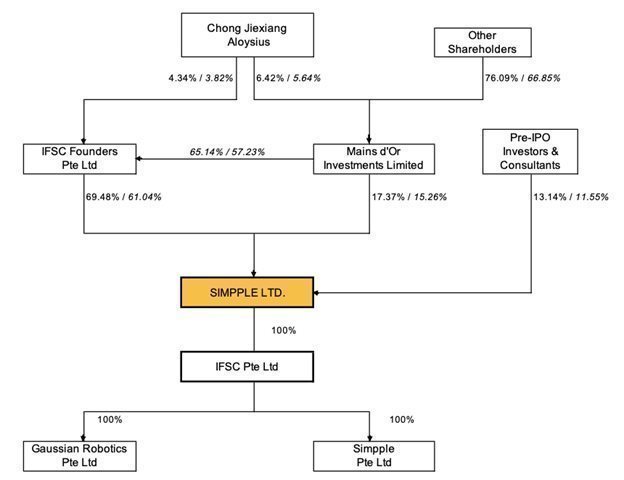
*Chart shows shareholding before/after the Offering
The above chart assumes an Offering of 2,000,000 Ordinary Shares, and assumes that the Underwriters’ over-allotment option has not been exercised.
| Name | Background | Ownership |
|
IFSC Pte. Ltd. |
Incorporated on March 18, 2016 as a private company limited by shares under the laws of Singapore |
100% owned by SIMPPLE LTD. |
|
Gaussian Robotics Pte. Ltd. |
Incorporated on May 18, 2017 as a private company limited by shares under the laws of Singapore. Acquired by IFSC Pte. Ltd. on August 15, 2017 |
100% owned by IFSC Pte. Ltd. |
|
SIMPPLE Pte. Ltd. |
Incorporated on October 13, 2020 as a private company limited by shares under the laws of Singapore |
100% owned by IFSC Pte. Ltd. |
| 57 |
| Table of Contents |
OVERVIEW
Headquartered in Singapore, we are an advanced technology solution provider in the emerging property technology (“PropTech”) space, focused on helping facility owners and managers manage their facilities autonomously. We have developed our proprietary SIMPPLE Ecosystem over 5 years, to create an automated workforce management tool for building maintenance, surveillance and cleaning comprised of a mix of software and hardware solutions such as robotics (both cleaning and security) and Internet-of-Things (“IoT”) devices.
We were founded in 2016 and our initial focus was on the development of a robotic cleaning solution. As cleaning operations usually cover a large area of space, the then-existing robotic solutions and machinery were bulky and not fit for Singapore’s infrastructure. Through the design and development of minimal human intervention cleaning robotics, the Company was able to build a solution to match the specific facility cleaning needs of Singapore’s skyscraper dominant environment. We understood that robotics should not be a standalone solution. Instead, we realized the merits of the fully automated Smart Building model with the integration of robotic solutions. We believe that our ecosystem-focused solution will create more value to building owners and facility managers as often times, data inputs alone are insufficient for efficient operations. Decision-making logic and intelligent task allocation to deployable assets must be built into the platform solution in order to achieve autonomous operations within a facility.
At present, the company’s reach extends out of Singapore and into Australia and the Middle East.
SIMPPLE LTD. is a Cayman Islands exempted company that has three subsidiaries, namely IFSC Pte. Ltd. (“IFSC”), SIMPPLE Pte. Ltd. (“SIMPPLE Pte Ltd”) and Gaussian Robotics Pte. Ltd. (“Gaussian Robotics” or GS”). IFSC is a wholly owned subsidiary of the issuer; and both SIMPPLE Pte Ltd and GS are wholly owned by IFSC. All three subsidiaries are Singapore companies. See “Our Group Structure.”
OUR COMPETITIVE STRENGTHS
We believe our main competitive strengths are as follows:
Strong market presence with established track record
We have a strong foothold in the Singapore facilities management market, serving over 60 clients in both the public and private sectors. We service 20 out of the 39 Top-Tier Singapore facilities management contractors. We view our management team’s collective industry knowledge and extensive project management experience as valuable in establishing stable relationships and providing strong and sound technical competency to our existing and prospective customers in the domain. We are often invited to industry related trade association events such as Facilities Management Expert Summit (FES 2021) as guest speakers. The management team was also invited for industry focus group consultations by relevant government bodies and major property developers to share on the latest technological developments within the facilities management industry.
Automated Building Management with fully integrated and customized solutions
We are able to identify and understand the specific needs of our customers, which is required to provide integrated and holistic solutions involving a customized integrated mix of IoT sensors, robotics technologies and facility management software. The SIMPPLE ecosystem is currently the only solution in Singapore that has a full integration of the above. With SIMPPLE.AI, SIMPPLE takes that competitive advantage a step further by automating the way facilities are managed.
Through our strong domain expertise in the field of facilities management, we understand the challenges that companies face when adopting standalone solutions that may not integrate with other solutions easily. With our tailored solutions approach, we are able to meet the needs of our clients while providing a user-friendly dashboard for every level of management. We also provide training and development to our clients to ensure that no employee, whether or not a digital native, is left behind as we move towards an era of Smart Building Automation.
SIMPPLE is not only able to integrate with third party IoT sensors and robotics, but we also sell these products under PLUS. This gives the assurance to clients that our technology is integrated out-of-the-box and makes procurement and deployment fuss-free, allowing our customers to deal with one party for all their technological needs for their facility.
Our primary competitors are software companies specializing in facilities management. These software companies focus on a workforce management-based solution with key objectives targeting solely building service contractors. In recent times, IoT devices that can help detect scenarios and trigger a work order to the workforce have become common and often are integrated with the solution. SIMPPLE does better by incorporating the input of robotics as well as the remote operations of robotics for a holistic facility management approach. SIMPPLE has is the ability to not only read and visualize robotic data, but also to perform command and control via a proprietary device, thus allowing for a full automated process based on sensor and data input without human intervention.
Our business model attracts not only building service contractors but also facility owners who demand accountability and cost savings through efficiency. This allows for building service contractors using SIMPPLE to secure contracts more easily when competing with other contractors using standard software solutions, as facility owners grow to prefer SIMPPLE over the competition in terms of their offerings.
| 58 |
| Table of Contents |
Strong Channels and Partnerships
SIMPPLE has established strong sales channels with distributors of our products and services, including recognized brands. This allows SIMPPLE to tap on their network to cross sell multiple and new product lines which are relevant to the end clients.
SIMPPLE’s strong partnerships with suppliers also mean that should clients approach our suppliers directly, they would be referred to SIMPPLE to adopt multiple product lines as an ecosystem rather than a procurement of only a singular technology. Approximately 10% of our new sales are generated from referrals made by suppliers.
Proprietary technology platform powered by AI and machine learning
We believe that technology in the field of facilities management will continue to advance from descriptive analytics to predictive, preventive and proactive analytics. Automation will be the new normal as humans and robots interact with one another to live, play and work. Our products are designed with the needs of the future workforce in mind. We have built the SIMPPLE ecosystem as an operating system layer that integrates seamlessly with our robots, IoT sensors and the human workforce, where operations will be autonomous in the future while having minimal human intervention. SIMPPLE was also built to be future-ready, with the architecture being able to integrate with multiple third party IoT devices and robotics as well as other software platforms if required.
OUR BUSINESS STRATEGIES AND FUTURE PLANS
Our business strategies and future plans are as follows:
Product Improvement through Research and Development
As our SIMPPLE Ecosystem is already able to integrate with off-the-rack IoT devices such as cameras and sensors, we intend to further explore other competent IoT equipment to potentially integrate with and enhance our product capabilities. We plan to refine our SIMPPLE.AI’s capabilities through extensive training on the Artificial Intelligence model to detect new and more objects through enhanced video analytics and build scenarios to act upon based on the requirements of building owners and facility managers. That said, we plan to embark on more pilot programs and customer engagements with service buyers to build our brand awareness and further improve our features suited to the end-users.
On the hardware front with robots, we intend to expand service capacity through the use of technology. Our past technology initiatives include the use of autonomous floor scrubbing robots equipped with real-time monitoring and self-docking capabilities to perform cleaning services. We have also explored the integration of security features on our cleaning robots, which would allow the robots to doubles up as a security guard when cleaning operations are not required. Such initiatives have allowed us to expand our service capacity by leveraging technology instead of increasing our reliance on manpower in a traditionally labor-intensive industry. We also aim to secure intellectual properties in relation to the development of robotics.
Geographic Expansion
We intend to establish ourselves as an international technology player in the facilities management industry. While our operations are currently almost exclusively based in Singapore, we are scaling our business into overseas markets by partnering with robot distributors and progressive facility owners. We have identified Australia, Canada, Hong Kong, Japan, the Middle East, the United Kingdom and the United States as target markets for expansion.
| 59 |
| Table of Contents |
Expansion Through Organic Growth and Acquisitions
Organic Growth into New Market Segments
We intend to grow our portfolio of clientele by expanding our coverage to include segments of the market where we currently do not have a presence or only have a small presence, such as aviation spaces, healthcare centers and hospitals, hotels, industrial centers and residential estates.
Strategic Alliances.
The Company has signed a memorandum of understanding (“MOU”) with a large IoT manufacturer with market presence in over 70 countries, enabling us to build our partner’s software analytics platform based on SIMPPLE Software. The potential partnership will support SIMPPLE’s market penetration globally into various facilities by complementing our software with physical sensors as a product when marketed to potential customers. The scope of the memorandum of understanding includes integrating and marketing each party’s solutions to end-users in Singapore and overseas, and the development of joint commercial sales kit to market the party’s sensors and software as an ecosystem solution as part of both party’s internationalization plans. The memorandum of understanding does not provide certain key financial terms, such as the costs to be borne by each party and the share of any revenues to be realized from the project; these terms are to be negotiated and reflected in the definitive agreement.
Acquisition Opportunities
We also intend to pursue suitable inorganic growth opportunities such as acquisitions, joint ventures, and strategic alliances to expand our suite of solutions in the facilities management space. For example, potential acquisition or strategic investment targets may include: (1) companies with deep technical capabilities in artificial intelligence, vision analytics and computer visioning, (2) companies with a large customer user base in the facilities management sector, (3) companies that the Company can vertically or horizontally integrate with to bring more value to property developers and facility owners and (4) distributors of technology and equipment in the facilities management space. We may also acquire or team up with companies that provide complementary services in new markets segments such as those described above. We believe that building up a comprehensive suite of facilities services technologies will enable us to maintain our competitive edge and attract building owners to adopt our integrated and holistic solution
Other Opportunities for Expansion
We plan to improve our product and service offerings, create more value for our customers and reach out to a global audience.
Guided by mega-trends such as rising population and increased world-wide technology adoption, the Company sees itself leading the change in the facility management industry delivering the next-generation PropTech solution to meet the needs of building owners and facility managers, which includes technological advances such as data and analytics, artificial intelligence and machine learning. As such, we have outlined four key strategic thrusts to expand the business in this growing market for connected systems in facilities management industry:
|
| · | Contribute to Industry Transformation |
|
|
|
|
|
| · | Accelerate Focused Innovation and Technology |
|
|
|
|
|
| · | Develop Strategic Partnerships |
|
|
|
|
|
| · | Grow Rapidly |
Contribute to Industry Transformation
The facilities management industry is rapidly transforming due to a wide range of applications that can now be addressed by the growing availability of cost-effective technologies such as IoT devices, building information modeling, surveillance cameras, among others; and these new technologies have become more easily accessible to the market. However, the Company has observed a lack of a singular A.I.-driven platform that harnesses the power of various technologies and can be applied to resolve issues that were never thought possible just a few years before.
From our inception, we have understood the importance of being at the core of the industry so that we can be a key enabler of transformation from within. We achieved this by being involved in relevant industry-leading forums such as industry associations and various sector-led government agencies. Our active contributions to the industry have made us a recognizable technology provider in Singapore as evidenced by the technology trials, innovation grant awards and press that we have been featured in. Such innovation grant awards (“Innovation Grants”) include the Enterprise Development Grants awarded to Gaussian Robotics Pte. Ltd. and SIMPPLE Pte. Ltd. by Enterprise Singapore. See: “Awards and Accreditations” for more information. The Company retains ownership to all intellectual property developed pursuant to these Innovation Grants.
Being at the core of the industry enabled us to gain an in-depth understanding of the domain, which proved to be critical to ensure that the end product not only addresses real-world industry issues, but also creates significant value for the end-users/clients.
We plan to continue to invest our time and resources in this area, especially as we expand to new markets and territories globally.
Accelerate Focused Innovation and Technology
The world is undergoing an era of rapid change in all aspects of life and business. In addition, the global response to the COVID-19 pandemic has further accelerated the adoption of technology to a point that businesses have no choice but to transform as well. The facilities management industry was one of the sectors that was the most impacted by this change and as such an overwhelming number of problem statements and use cases have surfaced. While this presents an unprecedented opportunity for our business to thrive, we understand the risks and opportunity costs associated with trying to solve everything for everyone.
| 60 |
| Table of Contents |
We focus on ‘innovation that matters’. This resulted in a gated approach in our Research & Development that we use to this day. Every module, functionality and feature of our technology stack is systematically proposed, assessed and prioritized based on the business imperatives for the year. This allows us to focus our resources in developing quality products that can be applied effectively in the industry.
Specifically on our current research and development efforts, we intend to further explore other competent IoT equipment to integrate and enhance our product capabilities. We plan to refine our SIMPPLE.AI’s operating system’s intelligence capabilities through extensive training on the Computer Vision model to detect new and more objects through enhanced video analytics and build scenarios to act upon based on the requirements of building owners and facility managers. On the hardware front with robotics, we intend to expand service capacity and reduce our environmental footprint through the use of technology. Our past technology initiatives include the use of autonomous floor cleaning robots equipped with real-time monitoring and self-docking capabilities to perform cleaning services. We have also developed security integration on the cleaning robots, which would add a security feature that doubles up as a security guard when cleaning operations are not required. Such initiatives have allowed us to expand our service capacity by leveraging technology instead of increasing our reliance on manpower in a traditionally labor-intensive industry.
Our focus on applied innovation has enabled us to make a significant impact on the industry despite our short history. We feel that this is a strategy that we must continue to employ to ensure that we deliver solutions that are valuable and sustainable.
Develop Strategic Partnerships
SIMPPLE’s competitive advantage and technological difference has allowed for many strategic partnerships to be formed at various levels:
a. Property Developers
Through Innovation Grant calls for proposals as well as commercial pitching, four of the largest property developers in Singapore have entered into partnerships with the Company to incorporate the various technologies of the SIMPPLE Ecosystem technology suite into their sites. Such Innovation Grants include the Enterprise Development Grants awarded to Gaussian Robotics Pte. Ltd. and SIMPPLE Pte. Ltd. by Enterprise Singapore. See: Awards and Accreditations for more information. The Company retains ownership to all intellectual property developed pursuant to these Innovation Grants. The objectives of the pilot phase are to automate cleaning, fault reporting and potentially security for their retail and commercial properties, leading to a reduction in outgoing costs as well as potentially decrease in insurance costs. The trials are expected to conclude in 2023 leading to commercial discussions.
While awaiting the results of the entire SIMPPLE Ecosystem, these property developers have also pushed for their FMCs and BSCs to adopt technologies from SIMPPLE including SIMPPLE Software and PLUS.
b. Facility Management Companies (FMC) and Building Services Contractors (BSC)
A facilities management contract lasting between 2-5 years often is put up in a tender, with large FMCs and BSCs competing fiercely for the lucrative contracts. Often, the differentiating point between the proposals lie with the technology implementation and deployment. Through SIMPPLE’s successful track record, FMCs and BSCs have partnered with SIMPPLE as their technology partner for these tenders as it puts them in an advantageous position.
c. Distributors
As the team behind SIMPPLE was heavily involved in the robotic commercialization, the relationships with global robotic distributors in Australia, Canada, Hong Kong, Japan, the Middle East, the United Kingdom and the United States remain strong. These distributors would already have in-country clients who are requesting for robotics and similar technology to SIMPPLE Software and PLUS. As such, equipping these distributors to also sell the technology as a suite of products and services as an Ecosystem benefits the distributors as opposed to selling robots as a stand-alone product. The Company intends to leverage on this advantageous position to rapidly expand its geographical presence.
d. Government Agencies
Through Innovation Grants, the Company is recognized by various Singapore government agencies as a frontier technology solution provider in the Built Environment / Facilities Management sector. Such Innovation Grants include the Enterprise Development Grants awarded to Gaussian Robotics Pte. Ltd. And SIMPPLE Pte. Ltd. by Enterprise Singapore. See: Awards and Accreditations for more information. As such, the management team in the Company is often invited to consult on industry transformation technologies and to speak at forums and showcase to Ministers and foreign dignitaries in Singapore. The Company’s products are also pre-approved for government grants and subsidies for its users, allowing for even easier adoption.
| 61 |
| Table of Contents |
Grow Rapidly
Business growth is imperative for our long-term success in this industry. While we have achieved considerable prominence and success in Singapore, being a global technology provider is one of the key pillars of our vision that we hope to achieve in the short term. We have identified developed countries such as Australia, Canada, Hong Kong, Japan, the United Kingdom and the USA as our target markets for expansion. Having completed our market study trip in Australia and Canada in 2022, we see potential opportunities in these markets where our solutions can meet the demands of end-users in the facilities management space. in the upcoming months.
Our strategy to venture in overseas markets is founded in sustainability. This is achieved by conducting deep market studies, risk management and creating cost-effective models to support new markets remotely. One example is the collaboration with local partners or distributors to render in-country services while using our follow-the-sun’ sales and support model that leverages on our center of excellence to deliver higher-level services seamlessly and cost-effectively.
Specific to our immediate plans, we intend to grow our portfolio of clientele by expanding our coverage to include segments of the market where we currently do not have a presence or only have a small presence, such as aviation spaces, healthcare centers and public hospitals, hotels, industrial centers and residential estates. We also intend to pursue suitable inorganic growth opportunities such as acquisitions, licensing, joint ventures, and strategic alliances to expand our suite of solutions in the facilities management space. Such opportunities include areas that complement our business, such as waste management, pest management, HVAC monitoring as well as energy and water analytics. We may also acquire or team up with companies that provide complementary services in new market segments such as those described above. We believe that building up a comprehensive suite of facilities services technologies will enable us to maintain our competitive edge and attract building owners to adopt our integrated and holistic solution.
Exclusive Distribution and Partnership Agreement with Shanghai Gaoxian
Gaussian Robotics and Shanghai Gaoxian are parties to an exclusive distribution and partnership agreement effective as of December 1, 2020 (the “Distribution Agreement”). This agreement grants to the Company a three-year exclusive right to distribute Shanghai Gaoxian’s Ecobot product line in Singapore and Qatar, and these exclusive rights will automatically renew if certain minimum ordering volume (“MOV”) milestones in “Tier 1 Markets”, including Singapore and Qatar, are achieved. The milestones for renewal are RMB 12 million in 2020, RMB 31 million in 2021 and RMB 31 million in 2022. If these MOV milestones are met, the terms for renewal will be subject to separate discussion and agreement. Failure to achieve these milestones will result in Shanghai Gaoxian having certain enumerated rights over the sales team and sales strategy of Gaussian Robotics. These include the right to establish a sales team within Gaussian Robotics if 2020 MOV milestones are not met and/or to take charge of Gaussian Robotics’s sales strategy if 2021 MOV milestones are not set.
The outbreak of COVID-19 contributed to an increase in revenue in 2020, and the Company was able to meet the milestone for year 2020 with revenue from the sale of products under the Distribution Agreement being S$3,294,033 (approximately RMB 16,470,165), contributing to approximately 93% of our revenue for the year.
However,due to shortages of chip components and port closures in China, the Company was unable to meet the milestone for year 2021,with revenues from the sale of products under the Distribution Agreement being S$2,728,261 (approximately RMB 13,641,305) in 2021, contributing to approximately 65% of our revenue for the year.
The Company had revenue from the sale of products under the Distribution Agreement of S$1,818,380 (approximately RMB 9,091,900) for the first half of 2022, contributing to approximately 70% of our revenue. While the revenue for the first half of 2022 represented a positive trajectory in sales compared to sales for the year 2021, the aggressive 2022 targetmay mean that the Company will require a longer runway to achieve the 2022 milestone.
The Company had communicated with Shanghai Gaoxian, and based on written communications with Shanghai Gaoxian, as at the date of this prospectus, the Company believes that its exclusive distribution rights under the Distribution Agreement will be renewed by Shanghai Gaoxian at the end of the first three-year term.
Under the Distribution Agreement, the distribution rights and partnership shall be extended until such time that Shanghai Gaoxian acquires Gaussian Robotics. However, the parties have not reached any agreement regarding the potential acquisition of Gaussian Robotics by Shanghai Gaoxian, the Distribution Agreement does not grant to Shanghai Gaoxian any options or other unilateral rights to acquire our Company, and the Company will not enter into any such agreement prior to the effectiveness of our registration statement on Form F-1, of which this prospectus is a part. As at the date of this prospectus, the Company believes the risks of an acquisition by Shanghai Gaoxian to be remote and immaterial.
The Distribution Agreement also references the possible expansion of exclusivity to include Hong Kong, Japan, South Korea, Southeast Asia and the Middle East excluding Israel. However, the Distribution Agreement does not provide Gaussian Robotics with exclusive rights to any of these additional territories.
The Distribution Agreement also references a proposed joint venture between the parties that would act as the exclusive sales agent for Shanghai Gaoxian in Australia. The initial term of this joint venture would be one year and renewed upon the achievement of certain milestones. The respective percentage share of the two parties in this joint venture, voting rights and the contract documents for this joint venture would be subject to mutual agreement.
| 62 |
| Table of Contents |
OUR BUSINESS OPERATIONS
The SIMPPLE ECOSYSTEM
The SIMPPLE Ecosystem represents the Company’s technology suite, which encompasses robotics hardware and a software system that can operate in unison to deliver a comprehensive workforce management solution to our clients. These technology components can be used individually or combined together, depending on the client’s objectives. These consist of:
“SIMPPLE Software” - a software platform that helps facilities owners, managers and contractors better manage their facility;
“PLUS” - complimentary peripherals such as IoT sensors and robotic solutions that add value to the entire ecosystem that the company distributes, sells and manages; and
“SIMPPLE.AI” - the next generation facilities management Autonomic Intelligence Engine that powers SIMPPLE Software and PLUS together to automate Smart Buildings of the future.
SIMPPLE Software
SIMPPLE Software is the Company’s proprietary facilities management-centric workforce and resource management system that enables clients to monitor, analyze and manage the use of their resources in any given facility. With three main modules - (a) Quality Management, (b) Workflow Management and (c) People Management, SIMPPLE Software is a real-time and closed-loop operations workflow system that efficiently manages the client’s facilities management team by increasing productivity, improving accountability and reducing cost.
The power of SIMPPLE Software lies in its analytics and data visualization. Developed over multiple iterations and amalgamating various client requirements and feedback, the latest evolution of the SIMPPLE Software visualization dashboard provides an intuitive and user-friendly view of a building’s operational status in real time. The Company also has developed “Insights”, which are short interpretation sentences for each key indicator to give facility managers a direct understanding of data. The power of ‘Insights’ lies in its correlation with Big Data and external variances so that it is able to eliminate outliers and/or predict trends through machine learning algorithms to alter the operations within a facility.
When integrated with other components within the SIMPPLE Ecosystem such as PLUS and SIMPPLE.AI, users of this system will be equipped with all the information required to manage and automate the facility in real-time.
Quality Management
The experience that a guest encounters at any facility is a direct representation of how well a building is maintained and managed. This translates to key performance indicators that building managers set on cleanliness, security and the upkeep of a building as well as measures to reduce risks and liabilities. A key component of SIMPPLE Software - the Quality Management module - was initially developed for Singapore’s largest metro provider and is currently used by many private hospital groups, public and private education institutions such as universities, junior and high schools and retail malls as the management software for services in their facility.
It is the Company’s core belief that the amount of resources and workforce dedicated to facilities management is directly correlated to the quality standards defined within the facility. The higher the service quality, the lower the number of ad hoc work tasks and incidents, which translates to lower liability and in turn lower insurance premiums. SIMPPLE’s Quality Management module in SIMPPLE Software is a purpose-built audit management system designed specifically for the facilities management industry. Utilizing this digitized system (compared to “pen-and-paper”), facility managers are now able to conduct independent or joint-contractor audits that can, among other things:
|
| · | Calculate scores based on client requirements; |
|
|
|
|
|
| · | Provide date & time stamp pictures with annotations; |
|
|
|
|
|
| · | Generate reports with geo-location; |
|
|
|
|
|
| · | Capture signatures for immediate accountability; |
|
|
|
|
|
| · | Schedule individual and joint inspections; |
|
|
|
|
|
| · | Acknowledge task completions; and |
|
|
|
|
|
| · | Provide automated task ticketing to internal personnel or external contractors |
| 63 |
| Table of Contents |
Gaining insights into a facility’s current quality status requires data inputs from static sensors such as IoT devices, inputs from facility staff as well as members of the public so that the community is constantly keeping the facility safe, clean and accountable.
SIMPPLE’s Feedback sub-module is an undemanding component of the SIMPPLE Ecosystem that leverages on IoT devices and QR codes to give a spatial awareness of a facility’s existing state and complete a myriad of tasks, such as:
|
| · | Feedback System – For members of public to easily provide feedback; |
|
|
|
|
|
| · | Digital Toilet Card – To record cleaner’s attendance and feedback for improvements; |
|
|
|
|
|
| · | Location tags for SIMPPLE’s Audit Forms – Incorporate QR Codes for ease of use and verification; |
|
|
|
|
|
| · | Smart Sensors – Automatically generate a guest experience index based on the usage of an area, as well as perception of toilets and specific areas based on smell and consumables available. |
In addition, the Quality Management module is fully integrated with the other modules within the SIMPPLE Ecosystem so that when a part of the facility is not satisfactory in terms of performance indicators, the Workflow Management module will automatically trigger a work rectification order and the response time and rectification results can be captured and presented in the same report.
The business analytics and technological insights helped a private hospital group in Singapore to achieve over 91% in service quality improvements and won the Royal Institute of Chartered Surveyors (RICS - SEA) Innovation award in 2020.
Workflow Management
Our Workflow Management module is the “muscle” behind the SIMPPLE Ecosystem, It streamlines the various workflows across multi disciplines and takes in the data input of IoT sensors, audits, CCTV infrastructure and Feedback modules to correlate with key performance indicators set forth in the Quality Management module. It then automates the workflows based on rules set by the facility manager.
SIMPPLE’s Workflow Management module goes beyond the typical workforce management modules as it not only tracks tasks by human workforce, but also integrates with existing robots and facility assets to automate the workflow, for an end-to-end deployment. Users have the options to utilize in-app notifications and widgets for functionality, as well as third party messaging platforms such as WhatsApp to notify resources or third party contractors of scheduled or outstanding tasks at hand. This allows for easy adoption across users of various skill sets.
To ensure a building’s upkeep is maintained to the desired quality, various workflows across multi disciplines need to work cohesively together to ensure that productivity and efficiency are optimized. The Workflow Management module includes the visualization and analysis of data from IoT sensors, the operations and scheduling of work staff as well as available assets on site such as robotics and other building assets such as ventilators, HVAC systems, elevators etc.
People Management
As much as smart facilities can be automated with workflows, the most important factors are the janitors, security guards and maintenance technicians who are key in ensuring that a facility is running smoothly. SIMPPLE’s People Management module consists of the following sub-modules:
Facial recognition attendance module
Staff Performance module
Through these two sub-modules, a facility utilizing the SIMPPLE Ecosystem is aware of the human resources the site has and can work together with the Workflow Management module to send tasks out to the right persons at the right times. The intertwined modules operate logically and are able to take in shift timings and task durations to ensure the most efficient and logical workflow, thus ensuring user buy-in and reducing scheduling difficulties.
A future development of the People Management module would extend into gamification, encouraging workers to complete tasks and take on additional tasks should their efficiency be above average. The rewards could come in the form of tokens which they would then be able to exchange for incentive rewards that the facility or the contractor has allocated for staff incentives. To spur adoption amongst users, SIMPPLE would also incentivize users through non-financial rewards such as recognition of skill sets and efficiency through badges. These badges could follow a user regardless of the facility or employer and would be a point of difference in their recruitment and performance evaluation. Once we complete our development of this gamification feature, we would explore expanding the system for the gig economy to fill short term load demands as well as expand the marketplace offering for complimentary services.
| 64 |
| Table of Contents |
The most important factors in building maintenance are the people who maintain it. The People Management module uses facial recognition capabilities to determine attendance so that workflows from the Workflow Management module can be automatically assigned to them and tracked for performance evaluation by their supervisors.
SIMPPLE PLUS
SIMPPLE PLUS is our product line that carries pre-approved third-party products that add value within the SIMPPLE Ecosystem. These are specially curated technology components that provide important functions within the Ecosystem that SIMPPLE does not produce but instead aggregates within existing systems for the benefit of its customers. Some examples of SIMPPLE PLUS products include video analytics-ready surveillance cameras and IoT sensors that help SIMPPLE visualize a spatial awareness of a facility. To ensure high quality and reliability of these components, these products undergo stringent testing and mandatory integration process from proof-of-concept to beta testing to systems integration testing. Commercially, the supply of these components is governed by a strict procurement process that minimizes supply chain issues. We mitigate any supply chain disruptions through careful demand planning as sales cycles are typically four months long and fulfillment of orders are normally fulfilled within two months, negating big disruptions in supply while maintaining sufficient stock. Should supply chain delays be longer than expected, we will utilize existing demo units (units provided to the client free-of-cost for demonstration or testing purposes and not to be re-sold) to perform all set up, tests and operations and porting the information to the new machine once it arrives to minimize downtimes to clients. We both sell and lease our SIMPPLE PLUS products.
SIMPPLE PLUS consists of peripherals which are integrated with SIMPPLE platform in order to add value above and beyond the standalone function of each peripheral technology. These specially curated technology components are pre-approved and sold to clients as a package, easing their convenience to purchase and reinforcing the Ecosystem concept that SIMPPLE provides as a one-stop-shop for all things facility technology. SIMPPLE PLUS consists of the following:
IoT Devices
IoT devices act as nodes for information collection and are placed in strategic locations within a facility so that SIMPPLE platform will be able to make use of these data to derive information so that appropriate action could be taken. Popular IoT devices include Smart Toilet Sensors that are people traffic counters and ammonia sensors to draw data on toilet usage and condition to optimize cleaning schedules. Other sensors that give information on facility assets such as water and electrical meters as well as CCTVs and their integration also help SIMPPLE platform be spatially aware of a facility. To date, SIMPPLE LTD. has deployed approximately 3,000 IoT Devices in almost 400 buildings.
Robotics
Since 2016, the Company has been distributing, deploying, and maintaining FM-related robots such as robotic sweepers, scrubbers, automated guided vehicles and security bots. When integrated within SIMPPLE Software, the robot becomes a seamless extended resource that can be managed alongside the human workforce. SIMPPLE currently is the exclusive and master distributor for Shanghai Gaoxian. The Company also plans to distribute other brands of robots and functions as part of the larger SIMPPLE robotics offering. Our customers have the option to purchase or lease our SIMPPLE robotics products.
The current product models currently distributed by our company are:
|
| · | Gaussian Robotics ECOBOT Scrub 75 – With operational times spanning over 6 hours, the ECOBOT Scrub 75 is suitable for large facilities in a single floor plate where it can clean up to almost 110,000 square feet in a single operation. |
|
|
|
|
|
| · | Gaussian Robotics ECOBOT Scrub 50 – With a cleaning width of approximately 50cm, the ECOBOT Scrub 50 is a fully automated and robotized hard floor scrubber that has the ability to charge itself, and reduce maintenance cycles when coupled with a base station. It is best suited for high rise buildings as the ECOBOT Scrub 50 has the ability to take elevators and open doors with the addition of SIMPPLE Command (a small CPU which enables the ECOBOT Scrub 50 to remotely control elevators and doors) for a combined cleaning capability of up to approximately 33,000 square feet in a single operation |
|
|
|
|
|
| · | Gaussian Robotics ECOBOT Sweep 40 – Built on the same concept as the ECOBOT Scrub 50 but as a carpet vacuum and hard floor sweeper, the ECOBOT Sweep 40 is able to cover up to slightly more than 20,000 square feet in a single operation. |
In addition, through our expertise in designing robotics and computer vision, the team has built a stand-alone security module that can be attached to two models of cleaning robots that we sell, so it adds value to clients by converting it into a “2-in-1” cleaning and security robot. The security video analysis is processed onboard for data security and future applications can be applied to any facility robot that has an API for integration, opening the opportunity to onboard and distribute a wider range of robots and increasing the value to end clients. The current product models for the add-on security modules are available for: the Gaussian Robotics ECOBOT Scrub 50 and the Gaussian Robotics ECOBOT Sweep 40 models.
| 65 |
| Table of Contents |
Facility Assets
SIMPPLE has integrated with various facility assets such as doors, elevators and CCTV infrastructure to enable autonomous movement of robotics and human workforce as well as to monitor a site through SIMPPLE.AI. Development plans include monitoring water, HVAC and other facility infrastructure so that facility owners and managers get a one-stop dashboard on all facility-related data which can then correlate with other information through SIMPPLE Software for more intelligent business intelligence.
SIMPPLE.AI
SIMPPLE.AI is the next generation facilities management software, when market ready, is expected to empower the SIMPPLE Software through an Autonomic Intelligence Engine (“A.I.E”) that can automate robotic and human workforce deployments. With the information processed through SIMPPLE Software and PLUS, the operations in the facility can be automated through incident detection and asset deployment. The A.I.E is expected to automatically detect issues, decide on remedial actions, and deploy assets such as robotics and the human workforce, thus dynamically managing a premise and often without human intervention. Instead of traditional multiple disparate software systems, building owners and facility managers are now able to easily integrate can simply plug-in SIMPPLE Software with SIMPPLE.AI into a standalone Building Management System and Facilities Maintenance Management System to manage their assets better in an integrated system.
We envision SIMPPLE.AI becoming the “brain” behind the SIMPPLE Software. SIMPPLE.AI is expected to increases the value offering that the SIMPPLE Software gives in letting a facility x“take care of itself”. The SIMPPLE.AI project is currently undergoing Proof-of-Value with some of the largest property developers in Singapore and is funded by the Singapore Government through an Innovation Grant call for proposals. Such Innovation Grants include the Enterprise Develop Grants awarded to Gaussian Robotics Pte. Ltd. and to SIMPPLE Pte. by Enterprise Singapore. See: Awards and Accreditations for more information. We anticipate launching SIMPPLE.AI by the end of 2023, and or expectation is that it will drastically change the way facilities are managed and maintained. SIMPPLE.AI is a natural progression for clients currently using SIMPPLE Software and the additional value is expected to exponentially increase revenues while providing facility owners even greater value.
| 66 |
| Table of Contents |
Revenue Streams
We are a provider of integrated solutions consisting of our SIMPPLE Software SaaS platform, FM-specific robotic hardware and 3rd party IoT devices. Our revenue streams are categorized as follows:
1. SIMPPLE Software SaaS Platform
The revenue model for SIMPPLE platform stems from two sources: (a) one-time professional services fee for project set-up, testing, training and commissioning; and (b) recurring software-as-a-Service (“SaaS”) user license subscription fees.
Our target customers are property developers or building owners, facilities management companies, and service contractors such as environmental services companies, security agencies, horticulture and maintenance companies. These customer segments account for almost all of SIMPPLE platform’s revenue stream. Our target customers include mostly Building Service Contractors (BSC), accounting for 99% of our SIMPLE Platform revenue in 2021. Other customer sources also include Facility Management Companies (FMC) and Building Owners.
Facility management and related contracts typically run from 2 to 5 years depending on the contract owner and our subscription duration usually runs back-to-back with the customer. Contract owners usually start planning for operational continuity 3 to 6 months for brownfield projects and up to 12 months for greenfield projects. Our average sales cycle for SIMPPLE platform is 4 months from lead qualification to booking. Our revenue model for SIMPPLE platform is a SaaS model consisting of monthly user-based subscriptions and a one-time professional service fee that includes project management, configuration and training. This model ensures cash flow optimization while minimizing ongoing contractual administration.
2. PLUS Business Model
PLUS is a product line that carries pre-approved third-party products that adds value to the SIMPPLE platform. These are specially curated technology components that the Company does not produce but instead aggregates on the platform to benefit its customers. Some examples of PLUS products include video analytics-ready surveillance cameras, people counter sensors and other FM-specific IoT devices. Beyond IoT and surveillance cameras, the Company also distributes, deploys, and maintains FM-related robots including ECOBOT products such as robotic sweepers, scrubbers, Automated Guided Vehicles and security bots which can be integrated with the SIMPPLE platform.
The PLUS product line complements SIMPPLE Software. Similar to the SIMPPLE Software, PLUS target customers are mainly building owners, facility management companies, as well as service contractors such as environmental services companies, security agencies, horticulture and maintenance companies. These customer segments account for almost all of PLUS revenue stream. Facility management and related contracts typically run from 2 to 5 years depending on the contract owner and the Company’s contract duration usually run back-to-back with the customer, unless they directly purchase the Company’s systems (e.g. robotics and cameras). Contract owners usually start planning for operational continuity 3 to 6 months for brownfield projects and up to 12 months for greenfield projects. Our average sales cycle for PLUS is 4 months from lead qualification to booking. Our revenue model for PLUS comprises hardware purchases (one-off capital expense), monthly user-based subscriptions and a one-time professional service fee that includes project management, platform configuration and training. This model ensures cash flow optimization while minimizing ongoing contractual administration.
3. SIMPPLE.AI Business Model
Upon the rollout of SIMPPLE.AI which is expected before end the of 2023, our software is anticipated to generate revenue from SaaS licensing based on each building. In certain markets where the emphasis may be on liability reduction rather than efficiency, we may explore a revenue model where we partake in a cost-savings sharing model on the reduction of insurance premiums, if that sum exceeds the SaaS licensing based on each building.
Building owners are the key customer target segment. SIMPPLE.AI is an optional artificial intelligence engine upgrade to the SIMPPLE platform. SIMPPLE.AI engine enables SIMPPLE platform to provide seamless workflow automation through the use of machine learning and additional algorithms, thus providing increased adaptability and productivity to everyday operations.
While this product has not been commercialized, the intended revenue model for SIMPPLE.AI consists of professional services costs such as setup installation and integration, training courses, and the recurring SaaS model building subscription license.
| 67 |
| Table of Contents |
OUR CONTRACTS AND PORTFOLIO
We typically enter into Purchase Orders with clients who use our SIMPPLE Ecosystem. Depending on the client’s requirements, we may charge our clients for (1) a one-time professional services fee for project set-up, testing, training and commissioning; and/or (2) recurring Software-as-a-Service (“SaaS”) user license subscription fees.
Salient Terms of Purchase Orders
Our purchase orders typically includes the following terms:
Billed Address and Shipping Address. We typically outline the billing address and shipping address.
Payment terms. We typically list the payment terms, which is normally 60 days.
Item and Quantity. We typically list our reference for the items, the quantity unit and per unit price.
We plan to roll out our SIMPPLE.AI autonomous operating system to facilities management clients by the end of 2023.
OUR MAJOR CUSTOMERS
Our major customers which accounted for 5.0% or more of our total revenue for FY 2021 and/or FY 2020 are as follows:
|
|
|
|
| Percentage of total revenue (%) | ||
| Customer |
| Service provided |
| FY 2021 |
| FY 2020 |
| Innovation Team Company Limited |
| Simpple Plus Robotics |
| - |
| 13% |
| UMW Equipment and Engineering Pte Ltd |
| Simpple Plus Robotics |
| - |
| 9% |
| Cleantools (S) Pte Ltd |
| Simpple Plus Robotics |
| - |
| 8% |
| A & P Maintenance Services Pte Ltd |
| Simpple Plus Robotics |
|
|
| 7% |
| ISS Facility Services Private Limited |
| Simpple Software, Simpple Plus IoT Sensors, Simpple Plus Robotics |
|
|
| 6% |
| Springmount Services Pte Ltd |
| Simpple Plus Robotics |
|
|
| 6% |
| Atalian Services Pte Ltd |
| Simpple Plus Robotics |
|
|
| 5% |
| Maint-Kleen Pte Ltd |
| Simpple Plus Robotics |
|
|
| 5% |
| Campaign Complete Solutions Pte Ltd |
| Simpple Software, Simpple Plus IoT Sensors, Simpple Plus Robotics |
|
|
| 5% |
| Multitask Development Pte Ltd |
| Simpple Plus Robotics |
|
|
| 5% |
| Weishen Industrial Services |
| Simpple Software, Simpple Plus IoT Sensors, Simpple Plus Robotics |
| 30% |
|
|
| Klenco |
| Simpple Plus Robotics |
| 19% |
| - |
| ISS Facility Services |
| Simpple Software, Simpple Plus IoT Sensors, Simpple Plus Robotics |
| 14% |
| - |
| Patec Pte Ltd |
| Simpple Plus Robotics |
| 8% |
| - |
| Anglo-Sima Janitorial Supplies Pte Ltd |
| Simpple Plus Robotics |
| 7% |
|
|
From 2021 onwards, the Company sought to distribute its products and services through distributors to widen the customer base. In addition, the company also onboarded more key accounts from the list of FM02-L6 contractors such as ISS Facility Services, which helped the company scale faster.
Except as disclosed above, our Directors are of the view that, as of Dec 31, 2021, our business and profitability are not materially dependent on any of our customers. To the best of our Directors’ knowledge, we are not aware of any information or arrangement which would lead to a cessation or termination of our current relationship with any of our major customers.
As at the date of this prospectus, none of the Directors or Major Shareholders of our Company or their respective associates has any interest, direct or indirect, in any of our customers.
None of these persons or entities owns 5% or more of our Shares; and all of our customer contracts with the customers affiliated with these principals are negotiated at arm’s length.
| 68 |
| Table of Contents |
OUR MAJOR SUPPLIERS
Our major suppliers (including sub-contractors) which accounted for 5.0% or more of our Group’s total supplies purchases and sub-contractor costs for FY 2021 and/or FY 2020 are as follows:
|
|
|
|
| Percentage of total purchases (%) | ||
| Supplier |
| Product or service supplied |
| FY 2021 |
| FY 2020 |
| Shanghai Gaoxian Automation Technology Development Co., Ltd. |
| Robots |
| 49% |
| 37% |
| BNF Engineering (S) Pte. Ltd. |
|
|
| - |
| 6% |
|
|
|
|
|
|
|
|
| Unabiz Pte. Ltd. |
| Hardware Sensors and Technology |
| 7% |
| - |
| Singapore Customs |
| Custom GST clearance for purchases |
| 5% |
| - |
We are currently the exclusive and master distributor of Shanghai Gaoxian’s FM-related robotics such as robotic sweepers, scrubbers, Automated Guided Vehicles and security bots in Singapore and Qatar. Our exclusivity rights are derived from the Exclusive Distribution and Partnership Agreement effective as of December 1, 2020 with Shanghai Gaoxian (the “Distribution Agreement”). The Distribution Agreement grants to the Company a three-year exclusive right to distribute Shanghai Gaoxian’s Ecobot product line in Singapore and Qatar, and these exclusive rights will automatically renew if certain minimum ordering volume (“MOV”) milestones in “Tier 1 Markets”, including Singapore and Qatar, are achieved. The milestones for renewal are RMB 12 million in 2020, RMB 31 million in 2021 and RMB 31 million in 2022. If these MOV milestones are met, the terms for renewal will be subject to separate discussion and agreement. Failure to achieve these milestones will result in Shanghai Gaoxian having certain enumerated rights over the sales team and sales strategy of Gaussian Robotics. These include the right to establish a sales team within Gaussian Robotics if 2020 MOV milestones are not met and/or to take charge of Gaussian Robotics’s sales strategy if 2021 MOV milestones are not set.
The outbreak of COVID-19 contributed to an increase in revenue in 2020, and the Company was able to meet the milestone for year 2020 with revenue from the sale of products under the Distribution Agreement being S$3,294,033 (approximately RMB 16,470,165), contributing to approximately 93% of our revenue for the year.
However, due to shortages of chip components and port closures in China, the Company was unable to meet the milestone for year 2021, with revenues from the sale of products under the Distribution Agreement being S$2,728,261 (approximately RMB 13,641,305) in 2021, contributing to approximately 65% of our revenue for the year.
The Company had revenue from the sale of products under the Distribution Agreement of S$1,818,380 (approximately RMB 9,091,900) for the first half of 2022, contributing to approximately 70% of our revenue. While the revenue for the first half of 2022 represented a positive trajectory in sales compared to sales for the year 2021, the aggressive 2022 target may mean that the Company will require a longer runway to achieve the 2022 milestone.
While, the Company had been in initial discussion with Shanghai Gaoxian, and based on written communications with Shanghai Gaoxian, as at the date of this prospectus, believes that its exclusive distribution rights under the Distribution Agreement will be renewed at the end of the first three-year term, failure to maintain or extend the Distribution Agreement likely will result in a decrease in our distribution related revenues. See “Business – Exclusive Distribution and Partnership Agreement with Shanghai Gaoxian” on page 62 for more information
Except as disclosed above, our Directors are of the view that, as of Dec 31, 2021, our business and profitability are not materially dependent on any of our suppliers. To the best of our Directors’ knowledge, we are not aware of any information or arrangement which would lead to a cessation or termination of our current relationship with any of our major suppliers.
As of the date of this prospectus, none of our Directors or Major Shareholders or their respective associates has any interest, direct or indirect, in any of our major suppliers.
COMPETITION
We operate in a competitive environment and face competition from new and existing competitors based in Singapore and elsewhere. We believe that our primary competitors are software companies serving approximately 1500 building services contractors licensed by NEA in Singapore such as Smart Clean, Gabkotech, Convergent and Swipe Task. These software companies operate in a similar space and offer software as a service as well as IoT sensors that could be linked to their platform.
Our competitive edge comes from our positioning as a holistic facilities management platform that not only includes software and IoT sensors, but also robotics. This has allowed for the majority of the large building services contractors in Singapore to deploy our solutions over our competition
Globally, we see major software companies such as Team Software and IoT manufacturers such as Unabiz to be our potential competition. We believe that our tried and tested holistic solution in Singapore would present a strong alternative to the existing competition and have started to partner with IoT manufacturers instead of competing with them to acquire market share.
INSURANCE
As of August 31, 2022, certain of our subsidiaries have taken out group hospital and surgical policies, foreign worker medical policies, and performance bond insurances, in respect of our employees, as well as insurance in accordance with WICA. We may be required to take up additional insurance policies in compliance with specific customer requirements as well. Such additional insurance include public liability insurance.
The above insurance policies are reviewed annually to ensure that our Group has sufficient insurance coverage. Our Directors believe that we have adequate insurance coverage for the purposes of our business operations and we will procure the necessary additional insurance coverage for our business operations, properties and assets as and when the need arises.
FACILITIES
Our principal place of business is 71 Ayer Rajah Crescent #03-07/08/09, Singapore 139951, where we lease approximately 2,959 square feet of office space. We also further leased offices at 71 Ayer Rajah Crescent #03-06, Singapore where we lease approximately 976 square feet of office space. Our offices are leased under two leases which both will expire on November 2, 2025. We believe that our facilities are adequate to meet our needs for the immediate future, and that, should it be needed, suitable additional space will be available on commercially reasonable terms to accommodate any expansion of our operations.
| 69 |
| Table of Contents |
INTELLECTUAL PROPERTY
The success and future revenue growth of the Company will depend, in part, on its ability to protect its intellectual property. The Company relies primarily on patents, copyrights, trademarks, as well as confidentiality procedures, to protect its intellectual properties. All of our intellectual property is currently held by IFSC Pte. Ltd.
As of the date of this prospectus, the Company had rights to two pending Singapore trademarks.
As of the date of this prospectus, the Company has a Singapore patent-pending for “SYSTEM AND METHOD FOR FACILITATING CLEANING AREA”, Patent No. 10202203801Q. The patent claims a system for facilitating cleaning an area comprising essentially an image capturing module, which would then be analyzed by the software system that decides which cleaning method/device would be suitable to perform the task or if it would require a human to perform the task instead. We cannot assure you when or if a patent will be issued to us.
The Company also developed its own proprietary Singapore patent-pending autonomic intelligence engine, SIMPPLE.AI, that powers SIMPPLE Software and PLUS to provide real-time facilities management (“FM”) services in a quicker, cheaper and more sustainable way.
As of the date of this prospectus, the Company has 6 registered domain names.
In addition to the current intellectual properties, the Company also earmarked 15 trademarks for various countries, 4 other patents as well as Graphical User Interface/Design Applications.
The Company has copyright protection in place in areas such as employment agreements, source codes that are stored on a GitHub account, company distribution agreements as well as copyright notices on affiliated companies’ websites.
EMPLOYEES
As of September 15, 2022, our Group had a workforce of 35 individuals, comprising employees who are all located within our offices at 71 Ayer Rajah Crescent #03-07, in Singapore.
COVID-19 Impact
Due to the COVID-19 pandemic outbreak, the FM market has grown significantly as Governments in the worst affected countries invested into facilities management services. During that period, FM managers manage their workforce either remotely or within a socially distant workplace. The facility management team has been responsible for the implementation of prevention and control strategies in the workplace, including evaluation of janitorial schedules, daily cleaning practices, spot sterilization, and workplace-specific sanitization standards.
In light of the COVID-19 developments, facility service providers developed their business model to include an end-to-end facility management solution, including adoption of technology to facilitate work-from-home. The adoption of cloud-based solutions saw an accelerated uptake. A cloud-based platform is able to manage sensor-based bridge infrastructures and smart machinery, as well as support multiple facilities. This enables facility managers and building owners to optimize resource utilization and improve cooperation across teams, reduce operating expenses (e.g. repair and maintenance) as well as improve customer satisfaction.
LEGAL PROCEEDINGS
To our knowledge, we are not a party to any legal or governmental proceedings (including any pending or known to be contemplated) which may have a material adverse effect on our business, financial condition, or results of operations.
LICENSES
As of the date of this prospectus, our Group does not hold any approvals or permissions from any governmental authority to conduct its business operations (collectively, “Licenses”) and we are not required to obtain any such Licenses as of the date of this prospectus. We may be required under the relevant laws and regulations of Singapore to hold certain Licenses in order to conduct our business operations in the future.
| 70 |
| Table of Contents |
As our material business operations are conducted in Singapore, we are subject to the relevant laws and regulations of Singapore and may be affected by policies which may be introduced by the Singaporean government from time to time. We have identified the main laws and regulations (apart from those pertaining to general business requirements) that materially affect our operations below. However, we believe that we comply with all these laws and regulations, and therefore none of them have materially affected the Company or operations in the past.
As of the date of this prospectus, our Directors believe that we are not in breach of any laws or regulations applicable to our business operations that would materially affect our business operations, and our Group is in compliance with all the applicable laws and regulations that are material to our business operations. The Group may be subject to certain fines/penalties arising from its ordinary course of business from time to time.
Singapore
Workplace Safety and Health Act 2006 of Singapore (the “WSHA”)
The WSHA provides that every employer has the duty to take, so far as is reasonably practicable, such measures as are necessary to ensure the safety and health of (a) his employees at work and (b) persons (not being his employees) who may be affected by any undertaking carried on by him in the workplace. These measures include, but are not limited to: (i) providing and maintaining for employees a work environment which is safe, without risk to health, and adequate as regards to facilities and arrangements for their welfare at work; (ii) ensuring that adequate safety measures are taken in respect of any machinery, equipment, plant, article or process used by the employees; (iii) ensuring that employees are not exposed to hazards arising out of the arrangement, disposal, manipulation, organization, processing, storage, transport, working or use of things in their workplace or near their workplace and under the control of the employer; (iv) developing and implementing procedures for dealing with emergencies that may arise while those employees are at work; and (v) ensuring that employees at work have adequate instruction, information, training and supervision as is necessary for them to perform their work. As an employer in Singapore, IFSC is required to adhere to the WSHA and adopt these measures to ensure the safety and health of its employees and persons (not being the IFSC’s employees) who may be affected by any undertaking carried on by him in IFSC’s office premises.
Under the WSHA, the Commissioner for Workplace Safety and Health (“Commissioner”) may serve a remedial or a stop-work order in respect of a workplace, for contravention or omission of any WSHA-specified condition. IFSC has never been served with such a remedial or stop-work order.
Workplace Safety and Health (Incident Reporting) Regulations (the “WSHIR”)
Under Regulation 4 of the WSHIR, where any accident at a workplace occurs which leads to the death of any employee, the employer shall, as soon as is reasonably practicable but no later than 10 days after the accident, submit a report to the Commissioner.
Under Regulation 6 of the WSHIR, where an employee meets with an accident at a workplace on or after September 1, 2020, and the employee is certified by a registered medical practitioner or registered dentist to be unfit for work, or to require hospitalization or to be placed on light duties, on account of the accident, the employer shall submit a report to the Commissioner of the accident within 10 days after the date the employer first has notice of the accident.
Being an employer in Singapore, IFSC is required to adhere to the WSHIR reporting requirements in the situation where any accident at IFSC’s office premises or workplace occurs which results in the injury or death of any employee.
IFSC has never been required to submit any such report under Regulation 4 of the WSHIR and has only submitted 1 report under Regulation 6 of the WSHIR since 2020.
Work Injury Compensation Act 2019 of Singapore (“WICA”)
WICA provides that if any employment personal injury by accident arises out of and in the course of the employment is caused to an employee, the employer shall be liable to pay compensation in accordance with the provisions of WICA. Any employer who fails to insure himself in accordance with WICA shall be guilty of an offence and shall be liable to, on conviction, a fine not exceeding S$10,000 or to imprisonment for a term not exceeding 12 months or to both.
In this regard, IFSC, being an employer in Singapore, has obtained a contract for insurance in accordance with WICA, the current term of which is until August 31, 2023. In the past 3 years, only one of our employees has experienced a workplace injury that is subject to WICA jurisdiction.
| 71 |
| Table of Contents |
Employment Act 1968 of Singapore (the “Employment Act”)
The rights of all employees employed under a contract of service with our subsidiaries are governed under the Employment Act in particular, their rights to annual leave, sick leave and maternity leave, amongst others. In respect of (a) workmen who receive salaries not exceeding S$4,500 a month and (b) employees (other than workmen or persons employed in a managerial or an executive position) who receive salaries not exceeding S$2,600 a month, the Employment Act governs additional aspects of their conditions of service such as hours of work, overtime and rest day, amongst others.
All of the 35 employees of IFSC are covered under the Employment Act and granted the aforementioned rights.
Employment of Foreign Manpower Act 1990 of Singapore
The employment of foreign workers in Singapore is governed by the EFMA and regulated by MOM. In Singapore, under Section 5(1) of the EFMA, no person shall employ a foreign worker unless he has obtained in respect of the foreign worker a valid work pass. The foreign worker has to be employed and carry out duties in respect of his or her work pass. Any person who fails to comply with or contravenes Section 5(1) of the EFMA shall be guilty of an offence and shall:
|
| (a) | be liable on conviction to a fine of not less than S$5,000 and not more than S$30,000 or to imprisonment for a term not exceeding 12 months or to both; and |
|
|
|
|
|
| (b) | on a second or subsequent conviction: |
|
|
| (i) | in the case of an individual, be punished with a fine of not less than S$10,000 and not more than S$30,000 and with imprisonment for a term of not less than one (1) month and not more than 12 months; and |
|
|
|
|
|
|
|
| (ii) | in any other case, be punished, with a fine not less than S$20,000 and not more than S$60,000. |
IFSC has one employee who is covered by the EFMA and has obtained a valid work pass. We believe that we are in compliance with its requirements.
Regulations on Data Protection and Information Security
The Personal Data Protection Act 2012 of Singapore (“PDPA”) governs the collection, use and disclosure of the personal data of individuals by organizations, and is administered and enforced by the regulator, the Personal Data Protection Commission. The PDPA sets out data protection obligations which all organizations are required to comply with in undertaking activities relating to the collection, use or disclosure of personal data. A failure to comply with any of the above can subject an organization to a fine of up to the higher of S$1,000,000 or, 10% of the organization’s annual turnover in Singapore (for an organization whose annual turnover in Singapore exceeds S$10,000,000).
In the course of operating their businesses, the Company’s subsidiaries collect and use personal data from consenting customers. The Company’s subsidiaries have implemented various processes to safeguard the personal data collected from its customers, which include the appointment of a Data Protection Officer with an appropriate level of knowledge and specific responsibilities to ensure data protection within the Group, as well as providing data protection training to all employees of the Company’s subsidiaries.
The Company’s subsidiaries believe that they are in compliance with all PDPA requirements. In addition, IFSC is undergoing an ISO 27001 certification project, which will demonstrate the company’s ability to meet the minimum threshold expected to protect personal data. IFSC is also ISO 9001 certified, which shows that the internal processes to ensure data security are in place.
Regulations on Anti-Money Laundering and Prevention of Terrorism Financing
The primary anti-money laundering legislation in Singapore is the Corruption, Drug Trafficking and Other Serious Crimes (Confiscation of Benefits) Act 1992 of Singapore, or CDSA, provides for the confiscation of benefits derived from, and to combat, corruption, drug dealing and other serious crimes. Generally, the CDSA criminalizes the concealment or transfer of the benefits of criminal conduct as well as the knowing assistance of the concealment, transfer or retention of such benefits.
The Terrorism (Suppression of Financing) Act 2002 of Singapore, or TSOFA, is the primary legislation for the combating of terrorism financing. It was enacted to give effect to the International Convention for the Suppression of the Financing of Terrorism. Besides criminalizing the laundering of proceeds derived from drug dealing and other serious crimes and terrorism financing, the CDSA and the TSOFA also require suspicious transaction reports to be lodged with the Suspicious Transaction Reporting Office. If any person fails to lodge the requisite reports under the CDSA and the TSOFA, it may be subject to criminal liability. The Company believes that it is in compliance with the provisions of the CDSA and the TSOFA.
As Singapore incorporated companies, the Company’s subsidiaries must generally comply with the provisions of the CDSA and TSOFA. The Company’s subsidiaries believe that they are in compliance with the provisions of the CDSA and the TSOFA.
| 72 |
| Table of Contents |
AWARDS AND ACCREDITATIONS
The following is a description of the material accreditations we have received:
|
| · | ISO 9001:2015 (Quality Management) which specifies requirements for a quality management system. Organizations use the standard to demonstrate the ability to consistently provide products and services that meet customer and regulatory requirements; |
|
|
|
|
|
| · | bizSAFE Level 3 status which is an accreditation under bizSAFE, a nationally recognized capability building program in Singapore designed to help companies build workplace safety and health capabilities. bizSAFE level 3 certificate is the minimum level required for any contracts and tenders with bizSAFE partners (selected organizations, typically larger organizations, that have influencing power in their business value chain), main construction firms, Singapore government sectors, etc. |
The Company is on track to obtain accreditations for ISO 27001, which manages information security.
Set out below is a list of the awards and accreditations our Group has received:
| Expiry Date |
|
Recipient |
|
Name of Award or Accreditation |
|
Awarding Organization |
|
|
|
|
|
|
|
|
| December 31, 2022 |
| Gaussian Robotics Pte. Ltd. |
| Enterprise Development Grant (Grant Quantum: not exceeding S$248,800) |
| Enterprise Singapore (A statutory board under the Ministry of Trade and Industry) |
| September 17, 2023 |
| SIMPPLE Pte. Ltd. |
| Enterprise Development Grant (Industry) for the Environmental Services IoT National Innovation Challenge (Grant Quantum: not exceeding S$500,000) |
| Enterprise Singapore (A statutory board under the Ministry of Trade and Industry) |
| January 13, 2025 |
| IFSC Pte. Ltd. |
| ISO 9001:2015 (Quality Management) |
| QSCert, spol. sr.o. |
| June 8, 2025 |
| Gaussian Robotics Pte. Ltd. |
| bizSAFE Level 3 |
| Workplace Safety and Health Council |
MATERIAL TERMS OF ENTERPRISE GRANTS
Enterprise Development Grant
Under the NEA INCUBATE program, the Company was commissioned to develop a security module that seamlessly integrate the existing cleaning robots with security intelligence sensors and conduct security patrolling, abnormalities detection and communication broadcast capabilities.
There is no standard grant limit for an Enterprise Development Grant scheme; the maximum amount varies according to the approving authority. Gaussian Robotics Pte. Ltd. was awarded a grant with the maximum amount not exceeding S$248,800, approved by the Director of Enterprise Singapore.
Material terms under the grant include the following:
|
| · | Project qualifying period for expenses to be supported; |
|
| · | Submission deadlines of disbursements to external auditors; |
|
| · | Details of deliverables as condition to the grant; and |
|
| · | Other standard terms and conditions. |
| 73 |
| Table of Contents |
Enterprise Development Grant (Industry) for the Environmental Services IoT National Innovation Challenge
The NEA and Enterprise Singapore (ESG) have jointly launched the Call for Data-driven Environmental Services (ES) Operations as part of the National Innovation Challenges (NIC), to develop a digital platform for a seamless interpretation and analysis of data across formats to assist users to monitor conditions of their properties, improve service responses and optimize resource allocation in near real-time condition. The solution should translate to cost savings, improvement in productivity, service quality and performance for users.
There are is standard grant limit for the Enterprise Development Grant (Industry) for the Environmental Services IoT National Innovation Challenge; the maximum amount varies according to the approving authority. SIMPPLE Pte. Ltd. was awarded a grant with the maximum amount not exceeding S$500,000, approved by the Assistant CEO of Enterprise Singapore.
Material terms under the grant include the following:
|
| · | Project qualifying period for expenses to be supported; |
|
| · | Submission deadlines of disbursements to external auditors; |
|
| · | Details of deliverables as condition to the grant; and |
|
| · | Other standard terms and conditions. |
QUALITY CONTROL AND ASSURANCE
Our subsidiaries have obtained various ISO accreditations in relation to our quality management and OH&S systems, as described under the section titled “General Information on our Group — Our Business Overview — Awards and Accreditations”.
On a day-to-day management basis, our site supervisors and foremen are responsible for checking that our employees have complied with our procedures and guidelines regarding workplace safety and quality control during the course of the work on site. In the event that there are complaints from our customers, our site supervisors and foremen will typically rectify any such issues on site immediately. Given that our services involve a large workforce and that a substantial part of our services are provided in connection with public areas, our Directors believe that complaints from customers or members of the public are not uncommon in our industry. In the event that a written complaint is received, we will record the complaint and detail any remedial/corrective steps taken and forward the same to the responsible operations manager. Depending on the nature of the complaint — whether it related to quality of services or other environmental, health or safety issues, the operations manager shall decide on the appropriate responses or follow-up measures to take, oversee their implementation and follow up with the customer accordingly.
ENVIRONMENTAL MATTERS
Our Group’s environmental impacts are managed by our Environmental, Occupational Health & Safety (EHS) team, under the Human Resource department which and ensures that our Group is compliant with all applicable environmental laws and regulations. We employ the following measures to ensure compliance and mitigate the environmental impact across our business services:
| · | Air quality and noise control: In general, our development and deployment operations do not generate any air emissions, except from the use of company vehicles. Company vehicles are scheduled for routine inspection for emission compliance. In general, our development and deployment operations do not generate high noise levels. Regular maintenance is carried out on our company vehicles to ensure intended performance and ensure emissions are within acceptable level/ limits. |
|
|
|
| · | Waste and recyclables: Waste is segregated into general waste, e-waste and recyclables. Waste and recyclables will be collected by the respective licensed collectors. And we adopt a reuse and recycling by licensed collectors for our e-waste. |
|
|
|
| · | Energy: We generally consider energy-efficient products when procuring equipment and machinery. Such includes, but is not limited to, selecting products with low energy utilization through low bandwidth communication over conventional communication mediums and selecting air conditioning with good energy efficiency rating. |
|
|
|
| · | Wastewater management: For the equipment which we sell and use as demo machines, we minimize the use of water for cleaning and reuse water whenever possible. The design specifications of the machinery we sell has an element of water recycling or low water usage. Domestic wastewater is disposed of as soon as practicable at designated disposal points after collection to avoid the collection of stagnant water for breeding of vectors. |
IFSC is also currently a member of the Environmental Management Association of Singapore (“EMAS”). EMAS was established by service providers from contract cleaning, waste management and pest control industries, with an aim to provide a cohesive platform for companies in the environmental industry to raise the professionalism of the industry and to address the common concerns of environmental and hygienic services.
| 74 |
| Table of Contents |
The following table sets forth information regarding our Directors and Executive Officers as at the date of this prospectus.
| Name |
| Age |
| Position |
| CHONG Jiexiang Aloysius |
| 37 |
| Chief Executive Officer and Executive Director |
| CHAN Sok Fung |
| 47 |
| Financial Controller |
| LEE Kelvin Soon Sze |
| 48 |
| Executive Chairman and Director |
| CHUA Yeow Tong Clement |
| 48 |
| Independent Director |
| SCHROEDER Norman |
| 60 |
| Independent Director |
| TANG Shaun Youwei |
| 39 |
| Independent Director |
We expect to name four additional directors, three of them independent directors, upon the SEC’s declaration of effectiveness of our registration statement on Form F-1, of which this prospectus is a part.
Ms. Chan Sok Fung has been appointed as our chief financial officer on December 12, 2022, to be effective upon the SEC’s declaration of effectiveness of our registration statement on Form F-1, of which this prospectus is a part.
The business and working experience and areas of responsibility of our Directors and Executive Officers are set out below:
Mr. CHONG Jiexiang Aloysius is our co-founder and Chief Executive Officer. He has been serving as our director since our inception. Prior to founding our Group in 2016, Mr. Chong founded Homebots Pte Ltd, a distributor of consumer floor cleaning and window cleaning robots, in 2016. Mr. Chong is also a shareholder and a director of IFSC Founders Pte. Ltd. (our Major Shareholder) and a shareholder of Mains d’Or Investments Limited (our Controlling Shareholder and also a Major Shareholder). Mr. Chong is a graduate of the National University of Singapore (2005-2008) where he received his Bachelor of Business Administration. Mr. Chong is a shareholder of Mains d’Or, our Controlling Shareholder. We believe that Mr. Chong’s extensive experience in our industry make him a valuable addition to our Board.
Ms. CHAN Sok Fung has been our Financial Controller since November 2021 and was appointed as our Chief Financial Officer on October 26, 2022. Ms. Chan has over 23 years in finance and accounting. Prior to joining us, she worked as a financial controller at United Tea Capital Pte Ltd and was primarily responsible for cash flow management, budgeting and merger and acquisition, from January 2015 to November 2020. Ms. Chan is a Chartered Accountant. She received an MBA from the University of Bradford in 2006 and holds a professional qualification from The Association of Chartered Certified Accountants. She received a diploma in accountancy from Singapore Polytechnics in 1995.
Mr. LEE Kelvin Soon Sze has been our non-executive director since our inception. Mr. Lee has been the Chief Commercial Officer of WIS Holdings Pte. Ltd., a commercial marketing firm, since July 2015, where he is responsible for commercial strategy planning, as well as provision of technology advice. Mr. Lee is a shareholder of Mains d’Or, our Controlling Shareholder. Mr. Lee received a Bachelor of Computing from Monash University in 1997. We believe that Mr. Lee’s extensive experience in commercial strategy planning makes him a valuable addition to our Board.
Mr. CHUA Yeow Tong Clement has been our independent director since December 1, 2022. Mr. Chua has had over 25 years of experience in the software and services industry. Mr. Chua has been a director and SEA practice leader at Deloitte Singapore Pte Ltd, since 2018, and director of The Boat Shop Pte Ltd, a company dealing with pleasure craft licensing and chartering, since 2013. Mr Chua started his career in the software services industry after graduating from Monash University in 1997 with a Bachelor’s degree. He was a software consultant since 2000 and had been taking on different roles in the software services industry including business consultant, project manager, practice manager, and the Managing Director of a Nasdaq listed company Ness Technologies in Asia Pacific. Clement managed and ran the Oracle practice for IBM Global Business Services from 2010 to 2015 in ASEAN and was responsible for developing large key accounts for Hitachi Consulting from 2015 to 2017 before assuming his current role in Deloitte Consulting.
Mr. SCHROEDER Norman has been our independent director since December 1, 2022. Mr. Schroeder has had over 8 years of experience in the facilities management industry. Mr. Schroeder has been a strategic development manager at OCS since December 2022, where he has been in charge of strategic business development and relations management. Mr. Schroeder has worked at Trident Services Australia as chief executive officer where he was in charge of overall operational, strategic and business wide responsibilities from December 2021 to November 2022, and as chief operations officer from October 2017 to November 2022, where he was in charge of overall operational and business development responsibilities. From February 2014 to September 2017, Mr. Schroeder has been director in strategic development and aviation services at SECUREcorp, where he was in charge of overall operational and business development responsibilities, including aviation services. From 2002 to 2013, Mr. Schroeder worked at Spotless Group, where he was a regional manager from 2002 to 2006, and general manager from 2006 to 2013. From 1997 to 2002, Mr. Schroeder has been a national operations manager at Gate Gourmet, and from 1990 to 1997 Mr. Schroeder has been an operations manager at Cathay Pacific Airways. Mr Schroeder completed higher school certificate level education from Fachhonschule Hamburg in 1981.
Mr. TANG Shaun Youwei has been our independent director since December 1, 2022. Mr. Tang has over 16 years of experience in the accounting industry and is currently Managing Partner at Thong & Lim Chartered Accountants. A Public Accountant and practicing member of the Institute of Singapore Chartered Accountants, Mr. Tang is in charge of the provision of external audit services and consultancy services as well as the overall management of the Firm. Since joining the Firm in 2009, Mr. Tang has held numerous appointments and Directorships in both its assurance and corporate services divisions. Mr. Tang also worked for a period of time in London from 2008 to 2009 in audit and assurance with a Firm of Chartered Accountants early in his career. Mr. Tang received his Bachelor of Science in Finance and Accounting Management in 2011 from Northeastern University in Boston Massachusetts, and has been a member of The Institute of Singapore Chartered Accountants since 2017.
Other Key Management
Mr. PAT Kah Kit Daryl is our co-founder and Chief Operating Officer of IFSC Pte. Ltd. . He is primarily responsible for charting the product roadmap, designing the stages for each modular capability and broadening the breadth of our services. Mr. Pat worked as a manager of strategic communications and digital engagement of the Singapore Prime Minister Office’s Overseas Singaporean Unit from 2014 to 2017. Mr. Pat received a Bachelor of Business Management from the University of Birmingham in 2011. Mr. Pat is a shareholder of Mains d’Or our Controlling Shareholder.
Mr. SOO Qikai has been our Chief Technology Officer of IFSC Pte. Ltd. since 2020. He is responsible for developing, implementing, managing and evaluating our technology resources. Mr. Soo has over 12 years of experience in the world of information technology. Since 2015, Mr. Soo has also been the founder and chief executive of Info Tech SG Mart, an IT concierge for small to medium enterprises providing consultation and management services for their software, hardware and networks.. Mr. Soo is a graduate of the National University of Singapore (2011-2015), where he received a Bachelor of Information Degree. He also attended Ngee Ann Polytechnic (2006-2009) where he received a Diploma of Information Technology with a specialization in software engineering. Mr. Soo is a shareholder of Mains d’Or, our Controlling Shareholder.
Employment Agreements and Director Agreements
Upon the SEC’s declaration of effectiveness of our registration statement on Form F-1, of which this prospectus is a part, we will enter into employment agreements with each of our Executive Officers, pursuant to which such individuals have agreed to serve as our Executive Officer for a period of three years from the effective date of the registration statement. We may terminate the employment for cause at any time for certain acts, such as conviction or plea of guilty to a felony or any crime involving moral turpitude, negligent or dishonest acts to our detriment, or misconduct or a failure to perform agreed duties. We may also terminate the employment without cause at any time upon three months’ advance written notice. Each Executive Officer may resign at any time upon three months’ advance written notice
| 75 |
| Table of Contents |
Each Executive Officer will agree to hold, both during and after the termination or expiry of his employment agreement, in strict confidence and not to use, except as required in the performance of his duties in connection with the employment or pursuant to applicable law, any of our confidential or proprietary information or the confidential or proprietary information of any third party received by us and for which we have confidential obligations. Each Executive Officer will agree to disclose in confidence to us all inventions, designs and trade secrets which he conceives, develops or reduces to practice during his employment with us and to assign all right, title and interest in them to us, and assist us in obtaining and enforcing patents, copyrights and other legal rights for these inventions, designs and trade secrets.
In addition, each Executive Officer will agree to be bound by non-competition and non-solicitation restrictions during the term of the employment and for one year following the last date of employment. Specifically, each Executive Officer will agree not to: (i) engage or assist others in engaging in any business or enterprise that is competitive with our business, (ii) solicit, divert or take away the business of our clients, customers or business partners, or (iii) solicit, induce or attempt to induce any employee or independent contractor to terminate his or her employment or engagement with us. The employment agreements will also contain other customary terms and provisions.
Before listing, we will also enter into director agreements with each of our Directors which agreements set forth the terms and provisions of their engagement.
Board of Directors
Composition of our Board of Directors
Our Board of Directors consists of five Directors, three of whom independent Directors. A director is not required to hold any shares in our Company to qualify to serve as a director. The Corporate Governance Rules of the Nasdaq generally require that a majority of an issuer’s board of directors must consist of independent directors, and our Board of Directors shall have three directors who are “independent directors” as defined under the Nasdaq rules. The full Board of Directors exercises oversight on the Company’s cybersecurity and data management matters, including with respect to cybersecurity risks relating to our suppliers, service providers, and our other supply chain partners. These topics are raised by the Board twice every year. At its meeting held on March 8, 2019, the Board instructed the Company’s IT team to obtain ISO 27001 certification in Information Security Management. The Company expects to obtain this certification by March 2023.
Committees of the Board of Directors
Upon the SEC’s declaration of effectiveness of our registration statement on Form F-1 of which this prospectus is a part, we intend to establish an audit committee, a compensation committee and a nominating and corporate governance committee under our Board of Directors. We intend to adopt a charter for each of the three committees upon the SEC’s declaration of effectiveness of our registration statement on Form F-1 of which this prospectus is a part. Each committee’s members and functions are described below.
Audit Committee.
Our audit committee consists of Mr. Chua Yeow Tong, Mr. Schroeder Norman and Mr. Tang Shaun Youwei and is chaired by Mr. Tang Shaun Youwei. We have determined that each member of our Audit Committee will satisfy the requirements of Section 303A of the Corporate Governance Rules/ Rule 5605(c)(2) of the Listing Rules of the Nasdaq and meet the independence standards under Rule 10A-3 under the Securities Exchange Act of 1934, as amended. We have determined that Mr. Tang Shaun Youwei qualifies as an “audit committee financial expert.” The Audit Committee oversees our accounting and financial reporting processes and the audits of the financial statements of our Company. The Audit Committee is responsible for, among other things:
| 76 |
| Table of Contents |
|
| · | reviewing and recommending to our board for approval, the appointment, re-appointment or removal of the independent auditor, after considering its annual performance evaluation of the independent auditor; |
|
|
|
|
|
| · | approving the remuneration and terms of engagement of the independent auditor and pre-approving all auditing and non-auditing services permitted to be performed by our independent auditors at least annually; |
|
|
|
|
|
| · | reviewing with the Independent Registered Public Accounting Firm any audit problems or difficulties and management’s response; |
|
|
|
|
|
| · | discussing with our independent auditor, among other things, the audits of the financial statements, including whether any material information should be disclosed, issues regarding accounting and auditing principles and practices; |
|
|
|
|
|
| · | reviewing and approving all proposed related party transactions, as defined in Item 404 of Regulation S-K under the Securities Act; |
|
|
|
|
|
| · | discussing the annual audited financial statements with management and the Independent Registered Public Accounting Firm; |
|
|
|
|
|
| · | reviewing the adequacy and effectiveness of our accounting and internal control policies and procedures and any special steps taken to monitor and control major financial risk exposures; |
|
|
|
|
|
| · | approving annual audit plans, and undertaking an annual performance evaluation of the internal audit function; |
|
|
|
|
|
| · | establishing and overseeing procedures for the handling of complaints and whistleblowing; and |
|
|
|
|
|
| · | meeting separately and periodically with management and the Independent Registered Public Accounting Firm. |
Compensation Committee.
Our compensation committee consists of Mr. Chua Yeow Tong, Mr. Schroeder Norman and Mr. Tang Shaun Youwei and is chaired by Mr. Schroeder Norman. We have determined that each member of our Compensation Committee will satisfy the “independence” requirements of Rule5605(c)(2) of the Listing Rules of the Nasdaq. Our Compensation Committee assists the board in reviewing and approving the compensation structure, including all forms of compensation, relating to our Directors and Executive Officers. Our Chief Executive Officer may not be present at any committee meeting during which their compensation is deliberated upon. Our Compensation Committee is responsible for, among other things:
|
| · | overseeing the development and implementation of compensation programs in consultation with our management; |
|
|
|
|
|
| · | at least annually, reviewing and approving, or recommending to the board for its approval, the compensation for our Executive Officers; |
|
|
|
|
|
| · | at least annually, reviewing and recommending to the board for determination with respect to the compensation of our non-executive Directors; |
|
|
|
|
|
| · | at least annually, reviewing periodically and approving any incentive compensation or equity plans, programs or other similar arrangements; |
|
|
|
|
|
| · | reviewing Executive Officer and director indemnification and insurance matters; and |
|
|
|
|
|
| · | overseeing our regulatory compliance with respect to compensation matters, including our policies on restrictions on compensation plans and loans to Directors and Executive Officers. |
Nominating and Corporate Governance Committee.
Our nominating and corporate governance committee consists of Mr. Chua Yeow Tong, Mr. Schroeder Norman and Mr. Tang Shaun Youwei and is chaired by Mr. Chua Yeow Tong. We have determined that each member of our Nominating and Corporate Governance Committee will satisfy the “independence” requirements of Rule5605(c)(2) of the Listing Rules of the Nasdaq. The nominating and corporate governance committee assists the board in selecting individuals qualified to become our Directors and in determining the composition of the Board and its committees. The Nominating and Corporate Governance Committee is responsible for, among other things:
| 77 |
| Table of Contents |
|
| · | recommending nominees to the Board for election or re-election to the Board, or for appointment to fill any vacancy on the Board; |
|
|
|
|
|
| · | reviewing annually with the Board the current composition of the Board with regards to characteristics such as independence, knowledge, skills, experience, expertise, diversity and availability of service to us; |
|
|
|
|
|
| · | developing and recommending to our Board such policies and procedures with respect to nomination or appointment of members of our Board and chairs and members of its committees or other corporate governance matters as may be required pursuant to any SEC or Nasdaq rules, or otherwise considered desirable and appropriate; |
|
|
|
|
|
| · | selecting and recommending to the Board the names of Directors to serve as members of the Audit Committee and the Compensation Committee, as well as of the Nominating and Corporate Governance Committee itself; and |
|
|
|
|
|
| · | evaluating the performance and effectiveness of the Board as a whole. |
Code of Business Conduct and Ethics
In connection with this Offering, we have adopted a code of business conduct and ethics, which is applicable to all of our Directors, executive officers and employees and is publicly available.
Duties of Directors
Under Cayman Islands law, all of our Directors owe fiduciary duties to our Company, including a duty of loyalty, a duty to act honestly and to use reasonable diligence in the discharge of their duties, and a duty to act in what they consider in good faith to be in our best interests. Our Directors must also exercise their powers only for a proper purpose. Our Directors also have a duty to exercise the skill they actually possess and such care and diligence that a reasonably prudent person would exercise in comparable circumstances. It was previously considered that a director need not exhibit in the performance of his duties a greater degree of skill than may reasonably be expected from a person of his knowledge and experience. However, English and Commonwealth courts have moved towards an objective standard with regard to the required skill and care and these authorities are likely to be followed in the Cayman Islands. In fulfilling their duty of care to us, our Directors must ensure compliance with our memorandum and articles of association, as amended from time to time. Our Company has the right to seek damages if a duty owed by any of our Directors is breached. In limited exceptional circumstances, a shareholder may have the right to seek damages in our name if a duty owed by our Directors is breached. You should refer to the section titled “Description of Share Capital and Memorandum and Articles of Association — Comparison of Shareholder Rights” for additional information on the standard of corporate governance under Cayman Islands law.
The functions and powers of our Board of Directors include, among others:
|
| · | convening shareholders’ annual general meetings and reporting its work to shareholders at such meetings; |
|
|
|
|
|
| · | declaring dividends and distributions; |
|
|
|
|
|
| · | appointing officers and determining the term of office of officers; |
|
|
|
|
|
| · | exercising the borrowing powers of our company and mortgaging the property of our company; and |
|
|
|
|
|
| · | approving the transfer of shares of our company, including the registering of such shares in our share register. |
You should refer to the section titled “Description of Share Capital and Memorandum and Articles of Association — Comparison of Shareholder Rights” for additional information on the standard of corporate governance under Cayman Islands law.
Interested Transactions
A director may, subject to any separate requirement for audit and risk committee approval under applicable law or applicable Nasdaq rules, vote in respect of any contract or transaction in which he or she is interested, provided that the nature of the interest of any directors in such contract or transaction is disclosed by him or her at or prior to its consideration and any vote in that matter.
| 78 |
| Table of Contents |
Foreign Private Issuer Exemption
We are a “foreign private issuer,” as defined by the SEC. As a result, in accordance with the rules and regulations of Nasdaq, we may choose to comply with home country governance requirements and certain exemptions thereunder rather than complying with Nasdaq corporate governance standards. We may choose to take advantage of the following exemptions afforded to foreign private issuers:
|
| · | Exemption from filing quarterly reports on Form 10-Q, from filing proxy solicitation materials on Schedule 14A or 14C in connection with annual or special meetings of shareholders, from providing current reports on Form 8-K disclosing significant events within four (4) days of their occurrence, and from the disclosure requirements of Regulation FD. |
|
|
|
|
|
| · | Exemption from Section 16 rules regarding sales of Shares by insiders, which will provide less data in this regard than shareholders of U.S. companies that are subject to the Exchange Act. |
|
|
|
|
|
| · | Exemption from the Nasdaq rules applicable to domestic issuers requiring disclosure within four (4) business days of any determination to grant a waiver of the code of business conduct and ethics to Directors and officers. Although we will require Board approval of any such waiver, we may choose not to disclose the waiver in the manner set forth in the Nasdaq rules, as permitted by the foreign private issuer exemption. |
|
|
|
|
|
| · | Exemption from the requirement that our Board of Directors have a compensation committee that is composed entirely of independent Directors with a written charter addressing the committee’s purpose and responsibilities. |
|
|
|
|
|
| · | Exemption from the requirements that director nominees are selected, or recommended for selection by our Board of Directors, either by (i) independent Directors constituting a majority of our Board of Directors’ independent Directors in a vote in which only independent Directors participate, or (ii) a committee comprised solely of independent Directors, and that a formal written charter or Board resolution, as applicable, addressing the nominations process is adopted. |
Furthermore, Nasdaq Rule 5615(a)(3) provides that a foreign private issuer, such as us, may rely on our home country corporate governance practices in lieu of certain of the rules in the Nasdaq Rule 5600 Series and Rule 5250(d), provided that we nevertheless comply with Nasdaq’s Notification of Noncompliance requirement (Rule 5625), the Voting Rights requirement (Rule 5640) and that we have an Audit Committee that satisfies Rule 5605(c)(3), consisting of committee members that meet the independence requirements of Rule 5605(c)(2)(A)(ii). If we rely on our home country corporate governance practices in lieu of certain of the rules of Nasdaq, our Shareholders may not have the same protections afforded to shareholders of companies that are subject to all of the corporate governance requirements of Nasdaq. If we choose to do so, we may utilize these exemptions for as long as we continue to qualify as a foreign private issuer.
Although we are permitted to follow certain corporate governance rules that conform to Singapore requirements in lieu of many of the Nasdaq corporate governance rules, we intend to comply with the Nasdaq corporate governance rules applicable to foreign private issuers, including the requirement to hold annual meetings of shareholders.
Other Corporate Governance Matters
The Sarbanes-Oxley Act of 2002, as well as related rules subsequently implemented by the SEC, requires foreign private issuers, including us, to comply with various corporate governance practices.
Because we are a foreign private issuer, our members of our Board of Directors, executive board members and senior management are not subject to short-swing profit and insider trading reporting obligations under section 16 of the Exchange Act. They will, however, be subject to the obligations to report changes in share ownership under section 13 of the Exchange Act and related SEC rules.
We may also be eligible to utilize the controlled company exemptions under the Nasdaq corporate governance rules if more than 50% of our voting power is held by an individual, a group or another company. Pursuant to the Nasdaq corporate governance rules, in order for a group to exist, such shareholders must have publicly filed a notice that they are acting as a group (i.e., a Schedule 13D). We do not currently expect that more than 50% of our voting power will be held by an individual, a group or another company immediately following the consummation of this Offering.
| 79 |
| Table of Contents |
COMPENSATION
For the years ended December 31, 2021 and 2020, we paid an aggregate of approximately $264,000 (S$357,000) and approximately $224,000 (S$303,000), respectively in cash and benefits in-kind granted to or accrued on behalf of all of our Directors and members of senior management for their services, in all capacities, and we did not pay any additional compensation to our Directors and members of senior management. We have not set aside or accrued any amount to provide pension, retirement or other similar benefits to our Executive Officers and Directors.
2023 Share Incentive Plan
The Company intends to approve the SIMPPLE Ltd. 2023 Omnibus Equity Incentive Plan on March [*], 2023, which we refer to as the Plan in this prospectus, to attract and retain the best available personnel, provide additional incentives to employees, directors and consultants, and promote the success of our business.
The maximum aggregate number of Ordinary Shares that may be issued under the Plan is 3,293,000 / 20% of the total outstanding Ordinary Shares on a fully diluted basis as of the completion of this offering. As of the date of this prospectus, no awards have been granted under the Plan.
The following paragraphs summarize the principal terms of the Plan.
Types of Awards. The Plan permits the award of non-qualified stock options, incentive stock options, restricted stock, unrestricted stock and any combination of the foregoing.
Plan Administration. The Plan will be administered by the Compensation Committee.
Eligibility. We may grant awards to employees, directors and/or consultants determined by the Compensation Committee to be eligible for participation in the Plan in accordance with its terms.
Vesting Schedule. In general, the Compensation Committee determines the vesting schedule, which is specified in the relevant award agreements.
Exercise of Awards. In general, the Compensation Committee determines the exercise or purchase price, as applicable, for each award, which is stated in the relevant award agreement. Options that are vested and exercisable will terminate if they are not exercised prior to the time as the Compensation Committee determines at the time of grant.
Transfer Restrictions. Awards may not be transferred in any manner by the participant other than in accordance with the exceptions provided in the plan or the relevant award agreement or otherwise determined by the Compensation Committee, such as transfers by will or the laws of descent and distribution.
Termination and Amendment of the Plan. The Plan will terminate on the 10 year anniversary of its adoption by the Board.
EMPLOYEES
As of September 15, 2022, our Group had a workforce of 35 individuals, comprising employees who are all located within our offices at 71 Ayer Rajah Crescent #03-07, in Singapore.
There were no material changes to the number of employees hired by our Group in the last three financial years. As of September 28, 2022, none of our employees are related to our Directors, officers or Major Shareholders. Any new employment of related employees and the proposed terms of their employment will be subject to the review and approval of our Compensation Committee. In the event that a member of our Compensation Committee is related to the employee under review, he will abstain from the review.
We do not employ a significant number of temporary employees. The relationship and co-operation between the management and staff have been good and are expected to continue and remain as such in the future. There has not been any incidence of work stoppages or labor disputes which affected our operations.
Our human capital resources objectives include, as applicable, identifying, recruiting, retaining, incentivizing and integrating our existing and new employees, advisors and consultants. The principal purposes of our equity incentive plans are to attract, retain and reward personnel through the granting of equity-based compensation awards in order to increase shareholder value and the success of our company by motivating such individuals to perform to the best of their abilities and achieve our objectives.
The table below sets out the names of each Major Shareholder and Director, and the number and percentage of Shares in which each of them has an interest (whether direct or deemed) as of the date of this prospectus and immediately after the completion of the Offering.
The following table sets forth information regarding the beneficial ownership of our Shares as of the date of this prospectus by our officers, Directors, and 5% or greater beneficial owners of our Shares. There is no other person or group of affiliated persons known by us to beneficially own more than 5% of our Shares. The following table assumes that none of our officers, Directors or 5% or greater beneficial owners of our Shares will purchase shares in this Offering. In addition, the following table assumes that the over-allotment option has not been exercised. Holders of our Shares are entitled to one (1) vote per share and vote on all matters submitted to a vote of our Shareholders, except as may otherwise be required by law.
We have determined beneficial ownership in accordance with the rules of the SEC. These rules generally attribute beneficial ownership of securities to persons who possess sole or shared voting power or investment power with respect to those securities. The person is also deemed to be a beneficial owner of any security of which that person has a right to acquire beneficial ownership within 60 days. Unless otherwise indicated, the person identified in this table has sole voting and investment power with respect to all shares shown as beneficially owned by him, subject to applicable community property laws.
| 80 |
| Table of Contents |
|
|
| Shares Beneficially Owned Prior to This Offering(2) |
|
| Shares Beneficially Owned After This Offering(3) |
| ||||||||||
| Name of Beneficial Owners(1) |
| Number |
|
| % |
|
| Number |
|
| % |
| ||||
| 5% Shareholders |
|
|
|
|
|
|
|
|
|
|
|
| ||||
| Mains d’Or Investments Limited (2) |
|
| 11,934,375 |
|
|
| 82.51 | % |
|
| 11,934,375 |
|
|
| 72.49 | % |
| IFSC Founders Pte. Ltd. (3) |
|
| 10,050,000 |
|
|
| 69.48 | % |
|
| 10,050,000 |
|
|
| 61.04 | % |
| SEAH Wei Quan (4) |
|
| 3,529,472 |
|
|
| 24.40 | % |
|
| 3,529,472 |
|
|
| 21.44 | % |
| POO Chong Hee (5) |
|
| 2,512,425 |
|
|
| 17.37 | % |
|
| 2,512,425 |
|
|
| 15.26 | % |
| CHONG Jiexiang Aloysius (3)(6) |
|
| 1,556,381 |
|
|
| 10.76 | % |
|
| 1,556,381 |
|
|
| 9.45 | % |
| LEE Kelvin Soon Sze (7) |
|
| 1,514,472 |
|
|
| 10.47 | % |
|
| 1,514,472 |
|
|
| 9.20 | % |
| LOA Wei Lun Eugene (8) |
|
| 941,861 |
|
|
| 6.51 | % |
|
| 941,861 |
|
|
| 5.72 | % |
| CHEN Mengqi (9) |
|
| 808,673 |
|
|
| 5.59 | % |
|
| 808,673 |
|
|
| 4.91 | % |
|
|
|
|
|
|
|
|
|
|
|
|
|
|
|
|
|
|
| Directors and Executive Officers(1): |
|
|
|
|
|
|
|
|
|
|
|
|
|
|
|
|
| CHONG Jiexiang Aloysius (3)(6) |
|
| 1,556,381 |
|
|
| 10.76 | % |
|
| 1,556,381 |
|
|
| 9.45 | % |
| LEE Kelvin Soon Sze (7) |
|
| 1,514,472 |
|
|
| 10.47 | % |
|
| 1,514,472 |
|
|
| 9.20 | % |
| PAT Kah Kit Daryl (10) |
|
| 503,153 |
|
|
| 3.48 | % |
|
| 503,153 |
|
|
| 3.06 | % |
| SOO Qikai (11) |
|
| 377,365 |
|
|
| 2.61 | % |
|
| 377,365 |
|
|
| 2.29 | % |
| CHAN Sok Fung |
|
| - |
|
|
| - |
|
|
| - |
|
|
| - |
|
___________
(1) Unless otherwise noted, the business address of each of the following entities or individuals is 71 Ayer Rajah Crescent #03-07 Singapore 139951.
(2) Mains d’Or Investments Limited owns 2,512,500 Shares directly and 9,421,875 Shares through IFSC Founders Pte. Ltd. of the outstanding shares of SIMPPLE LTD.. The registered address for Mains d’Or Investments Limited is Intershore Chambers, Road Town, Tortola, British Virgin Islands.
(3) IFSC Founders Pte. Ltd. is owned by CHONG Jiexiang Aloysius and Mains d’Or Investments Limited which hold 6.25% and 93.75%, respectively, of the outstanding shares of IFSC Founders Pte. Ltd.
(4) Mr. SEAH Wei Quan owns 29.57% of Mains d’Or Investments Limited and 27.73% indirect interest in IFSC Founders Pte. Ltd. As such, Mr. SEAH Wei Quan is deemed to beneficially own 3,529,472 Shares held through Mains d’Or Investments Limited and IFSC Founders Pte. Ltd. The mailing address for Mr. SEAH is 526D Pasir Ris Street 51, #09-549, Singapore 514526.
(5) Mr. POO Chong Hee owns 21.05% of Mains d’Or Investments Limited and 19.74% indirect interest in IFSC Founders Pte. Ltd. As such, Mr. POO Chong Hee is deemed to beneficially own 2,512,425 Shares held through Mains d’Or Investments Limited and IFSC Founders Pte. Ltd. The mailing address for Mr. POO is 59 Meyer Road, #22-14 The Seafront on Meyer, Singapore 437880.
(6) Mr. CHONG Jiexiang Aloysius owns 7.78% of Mains d’Or Investments Limited and 6.25% direct interest in IFSC Founders Pte. Ltd.. As such, Mr. CHONG Jiexiang Aloysius is deemed to beneficially own 1,556,381 Shares held through Mains d’Or Investments Limited and IFSC Founders Pte. Ltd. The mailing address for Mr. CHONG is 551 Ang Mo Kio Avenue 2, Horizon Gardens, Singapore 567931.
(7) Mr. LEE Kelvin Soon Sze owns 12.69% of Mains d’Or Investments Limited and 11.90% indirect interest in IFSC Founders Pte. Ltd. As such, Mr. LEE Kelvin Soon Sze is deemed to beneficially own 1,514,472 Shares held through Mains d’Or Investments Limited and IFSC Founders Pte. Ltd. The mailing address for Mr. Lee is 353 Woodlands Avenue 1, #11-450, Singapore 730353.
(8) Mr. LOA Wei Lun Eugene owns 7.89% of Mains d’Or Investments Limited and 7.40% indirect interest in IFSC Founders Pte. Ltd. As such, Mr. LOA Wei Lun Eugene is deemed to beneficially own 941,861 Shares held through Mains d’Or Investments Limited and IFSC Founders Pte. Ltd. The mailing address for Mr. LOA is 55 Pasir Ris Dr 1, #07-02 Singapore 519530.
(9) Mr. CHEN Mengqi owns 6.78% of Mains d’Or Investments Limited and 6.35% indirect interest in IFSC Founders Pte. Ltd. As such, Mr. CHEN Mengqi is deemed to beneficially own 808,673 Shares held through Mains d’Or Investments Limited and IFSC Founders Pte. Ltd. The mailing address for Mr. CHEN is 55 Jalan Asas, Singapore 678815.
(10) Mr. PAT Kah Kit Daryl owns 4.22% of Mains d’Or Investments Limited and 3.95% indirect interest in IFSC Founders Pte. Ltd. As such, Mr. PAT Kah Kit Daryl is deemed to beneficially own 503,153 Shares held through Mains d’Or Investments Limited and IFSC Founders Pte. Ltd. The mailing address for Mr. PAT is 130A Hillview Ave, #09-02 Singapore 669609.
(11) Mr. SOO Qikai owns 3.16% of Mains d’Or Investments Limited and 2.96% indirect interest in IFSC Founders Pte. Ltd. As such, Mr. SOO Qikai is deemed to beneficially own 377,365 Shares held through Mains d’Or Investments Limited and IFSC Founders Pte. Ltd. The mailing address for Mr. SOO is Blk 336 Bukit Batok St 32, #03-291 Singapore 650336.
| 81 |
| Table of Contents |
The following is a summary of transactions since 2018 to which we have been a party and in which any members of our Board of Directors, any Executive Officers, or Major Shareholder had, has or will have a direct or indirect material interest, other than compensation arrangements which are described under the section of this prospectus captioned “General Information on our Group — Management”.
CHONG Jiexiang Aloysius, our Chief Executive Officer, received a salary of US $104,000 in 2021. Mr. Chong is expected to receive an aggregate salary of US $134,000 in 2022.
Related Party Transactions with Subsidiaries
The table below sets forth the major related parties and their relationships with the Company as of December 31, 2021 and 2020:
| Name of related parties |
| Relationship with the Company |
| Transaction |
| Transaction Amount |
| |||||||||
|
|
|
|
|
|
|
| 2020 (S$) |
| 2021 (S$) |
|
| 2021 (US$) |
| |||
| WIS Holdings Pte. Ltd.1 |
| A common shareholder of Mains d’Or Investments Limited |
| Sale of investment in an unlisted equity to WIS Holdings Pte. Ltd. |
|
| - |
|
|
| 250,000 |
|
|
| 184,911 |
|
| Weishen Industrial Services Pte. Ltd.2 |
| Subsidiary of WIS Holdings Pte. Ltd. |
| Sales of Robots and Software to Weishen Industrial Services Pte. Ltd. |
|
| 338,193 |
|
|
| 1,122,695 |
|
|
| 830,396 |
|
__________
1) IFSC acquired a minority stake in Sensorla in 2019, an IOT device service provider, which complemented IFSC’s product line at that time. Sensorla’s products were mainly sold to Weishen Industrial Services Pte. Ltd. (“Weishen”), a cleaning services company of which Mr. Poo Chong Hee (a beneficial owner of 17.37% of our Shares) is a director. Weishen is a wholly owned subsidiary of WIS Holdings Pte. Ltd. (“WIS”). Sensorla sold products to Weishen as an integrated technology solution to serve Weishen’s end clients. In 2021, WIS purchased IFSC’s stake in Sensorla for S$250,000.
2) IFSC (and its subsidiary Gaussian Robotics Pte. Ltd.) supplies the SIMPPLE Ecosystem products and services to Weishen. Weishen is a wholly owned subsidiary of WIS Holdings Pte. Ltd. (“WIS”). The SIMPPLE Ecosystem was utilized by Weishen as an integrated technology solution to serve Weishen’s end clients.
Where software services under SIMPPLE Ecosystem were supplied, revenue was recognized based on the actual service provided to the end of the reporting period as a proportion of the total services to be provided. Payments for services rendered are not due from the customer until the services are complete and therefore a contract asset is recognized over the period in which the services are performed, representing IFSC’s right to consideration for the services performed to date. The aggregate value of all revenue received by IFSC from Weishen for products and services was S$338,193 in 2020, S$1,122,695 in 2021 and S$1,320,334.60 in the first half of 2022. All contracts for these purchases were negotiated at arms-length as there are robust procurement policies and segregation of duties policies in place.
| 82 |
| Table of Contents |
Bank Facilities and Personal and Corporate Guarantees
Our Company and its subsidiaries have entered into bank facilities to finance their operations from time to time. Certain of these facilities have been guaranteed by Major Shareholders, Directors, and/or Executive Officers, as further provided below.
The Company entered into a secured fixed rate bank facility in May 2020, with a local Singapore bank (the “Lender”) in an aggregate amount of approximately $3.59 million (S$4.85 million). This facility was drawn down in June 2020 and will mature in November 2025. Poo Chong Hee, an indirect shareholder of the Company, provided a personal guarantee to the Lender, and Campaign Complete Solutions Pte. Ltd. (fully owned by WIS Holdings Pte. Ltd. as at Dec 31, 2021) and WIS Holdings Pte. Ltd. (where Poo Chong Hee is a direct substantial shareholder as at Dec 31, 2021) provided corporate guarantees to the Lender in connection with this facility. The unpaid balance against these guarantees is approximately $2.34 million (S$3.17 million) as at August 31, 2022.
POTENTIAL CONFLICTS OF INTEREST
Save as disclosed below and in the section titled “Related Party Transactions” of this prospectus, none of our Directors, Major Shareholders or any of their associates has an interest, direct or indirect:
|
| (a) | in any transaction to which our Group was or is to be a party; |
|
|
|
|
|
| (b) | in any entity carrying on the same business or dealing in similar services which competes materially and directly with the existing business of our Group; and |
|
|
|
|
|
| (c) | in any enterprise or company that is our Group’s client or supplier of goods and services. |
| 83 |
| Table of Contents |
In addition, we believe that any potential conflicts of interest are further mitigated by the following:
|
| (a) | our Directors have a duty to disclose their interests in respect of any contract, proposal, transaction or any other matter whatsoever in which they have any personal material interest, directly or indirectly, or any actual or potential conflicts of interest (including conflicts of interest that arise from their directorship(s) or executive position(s) or personal investments in any other corporation(s)) that may involve them. Upon such disclosure, such Directors shall not participate in any proceedings of our Board of Directors, and shall in any event abstain from voting in respect of any such contract, arrangement, proposal, transaction or matter in which the conflict of interest arises, unless and until our Audit Committee has determined that no such conflict of interest exists; |
|
|
|
|
|
| (b) | our Audit Committee is required to examine the internal procedures put in place by our Company to determine if such procedures put in place have become inappropriate or insufficient in the event of changes to the nature of, or manner in which, the business activities of our Group, our joint ventures or the interested persons are conducted, or if they are sufficient to ensure that Related Party Transactions are conducted on normal commercial terms and will not be prejudicial to our Company and its Shareholders; |
|
|
|
|
|
| (c) | our Audit Committee will review any actual or potential conflicts of interest that may involve our Directors as disclosed by them to our Board. Upon disclosure of an actual or potential conflict of interests by a Director, our Audit Committee will consider whether a conflict of interests does in fact exist. A Director who is a member of our Audit Committee will not participate in any proceedings of our Audit Committee in relation to the review of a conflict of interests relating to him or her. The review will include an examination of the nature of the conflict and such relevant supporting data, as our Audit Committee may deem reasonably necessary; |
|
|
|
|
|
| (d) | our Audit Committee will also monitor the investments in our customers, suppliers and competitors made by our Directors, Major Shareholders and their respective associates who are involved in the management of or have shareholding interests in similar or related business of our Company (to the extent as disclosed by them to our Audit Committee) and make assessments on whether there are any potential conflicts of interest; and |
|
|
|
|
|
| (a) | our Directors owe fiduciary duties to us, including the duty to act in good faith and in our best interests. Our Directors are also subject to a duty of confidentiality that precludes a Director from disclosing to any third party (including any of our Shareholders or their associates) information that is confidential. |
DESCRIPTION OF SHARE CAPITAL AND MEMORANDUM AND ARTICLES OF ASSOCIATION
General
We are an exempted company incorporated with limited liability under the laws of the Cayman Islands and our affairs are governed by:
|
| · | Memorandum and Articles of Association; |
|
|
|
|
|
| · | The Companies Act (Revised) (as amended) of the Caymans Islands, which is referred to as the Companies Act below; and |
|
|
|
|
|
| · | Common law of the Cayman Islands. |
As of the date of this prospectus, (i) our authorized share capital is US$50,000 divided into 500,000,000 Ordinary Shares of $0.0001 par value each, and (ii) there are 14,463,661 Ordinary Shares issued and outstanding
We have included summaries of certain material provisions of our second amended and restated memorandum and articles of association (the “Memorandum” and “Articles”, respectively) and the Companies Act insofar as they relate to the material terms of our share capital. The summaries do not purport to be complete and are qualified in their entirety by reference to our Memorandum and Articles, which is filed as an exhibit to the registration statement on Form F-1, of which this prospectus forms a part.
Memorandum of Association
The Memorandum provides, inter alia, that the liability of members of our Company is limited and that the objects for which our Company is established are unrestricted (and therefore include acting as an investment company), and that our Company shall have and be capable of exercising any and all of the powers at any time or from time to time exercisable by a natural person or body corporate whether as principal, agent, contractor or otherwise and, since our Company is an exempted company, that our Company will not trade in the Cayman Islands with any person, firm or corporation except in furtherance of the business of our Company carried on outside the Cayman Islands.
By special resolution, our Company may alter the Memorandum with respect to any objects, powers or other matters specified in it.
| 84 |
| Table of Contents |
Ordinary Shares
General. Upon the completion of this Offering, our authorized share capital is US$50,000 divided into 500,000,000 Ordinary Shares of par value US$0.0001 each. All of our outstanding Ordinary Shares are fully paid and non-assessable. Certificates representing the Ordinary Shares are issued in registered form. Our shareholders, whether or not they are non-residents of the Cayman Islands, may freely hold and transfer their Ordinary Shares in accordance with our Memorandum and Articles.
Dividends. The holders of our Ordinary Shares are entitled to such dividends as may be declared by our Board of Directors. Our Articles provide that our Board of Directors may declare and pay dividends if justified by our financial position and permitted by law.
Voting Rights. Holders of our Ordinary Shares vote on all matters submitted to a vote of our shareholders, except as may otherwise be required by law. In respect of matters requiring shareholders’ vote, each ordinary share is entitled to one vote. At any general meeting a resolution put to the vote of the meeting shall be decided on a show of hands unless voting by poll is required by Nasdaq rules or demanded by the chairman of the meeting, by at least two shareholders having the right to vote on the resolutions, or by shareholder(s) together holding at least 10% of the total voting rights of all our shareholders having the right to vote at such general meeting. A quorum required for a meeting of shareholders consists of one shareholder who holds at least one-third of our issued voting shares. Shareholders’ meetings may be held annually. Each general meeting, other than an annual general meeting, shall be an extraordinary general meeting. Extraordinary general meetings may be called by a majority of our Board of Directors or upon a requisition of any one or more shareholders holding at the deposit of the requisition at least 10% of the aggregate share capital of our company that carries the right to vote at a general meeting, in which case on advance notice of at least 14 clear days is required for the convening of our annual general meeting and at least 7 clear days is required for the convening of other general meetings by requisition of our shareholders.
Any ordinary resolution to be made by the shareholders requires the affirmative vote of a simple majority of the votes attaching to the Ordinary Shares cast in a meeting, while a special resolution requires the affirmative vote of no less than two-thirds of the votes attaching to the Ordinary Shares cast in a meeting.
A special resolution will be required for important matters such as amending our memorandum and articles of association or changing the name of the Company.
There are no limitations on non-residents or foreign shareholders in the memorandum and articles of association to hold or exercise voting rights on the Ordinary Shares imposed by foreign law or by the charter or other constituent document of our company. However, no person will be entitled to vote at any general meeting or at any separate meeting of the holders of the Ordinary Shares unless the person is registered as of the record date for such meeting and unless all calls or other sums presently payable by the person in respect of Ordinary Shares in the Company have been paid.
Alternation of capital. Our Company may, by an ordinary resolution of its members: (a) increase its share capital by the creation of new shares of such amount as it thinks expedient; (b) consolidate or divide all or any of its share capital into shares of larger or smaller amount than its existing shares; (c) divide its unissued shares into several classes and attach to such shares any preferential, deferred, qualified or special rights, privileges or conditions; (d) subdivide its shares or any of them into shares of an amount smaller than that fixed by the Memorandum; (e) cancel any shares which, at the date of the resolution, have not been taken or agreed to be taken by any person and diminish the amount of its share capital by the amount of the shares so cancelled; (f) make provision for the allotment and issue of shares which do not carry any voting rights; (g) change the currency of denomination of its share capital; and (h) reduce its share premium account in any manner authorized and subject to any conditions prescribed by law.
| 85 |
| Table of Contents |
Transfer of Shares. Subject to the Companies Act and the requirements of the stock exchange, all transfers of shares shall be effected by an instrument of transfer in the usual or common form or in such other form as our Board may approve and may be under hand or, if the transferor or transferee is a Clearing House (as defined in the Articles) or its nominee(s), under hand or by machine imprinted signature, or by such other manner of execution as our Board may approve from time to time. Execution of the instrument of transfer shall be by or on behalf of the transferor and the transferee, provided that our Board may dispense with the execution of the instrument of transfer by the transferor or transferee or accept mechanically executed transfers. The transferor shall be deemed to remain the holder of a share until the name of the transferee is entered in the register of members of our Company in respect of that share. Our Board may, in its absolute discretion, at any time and from time to time remove any share on the principal register to any branch register or any share on any branch register to the principal register or any other branch register. Unless our Board otherwise agrees, no shares on the principal register shall be removed to any branch register nor shall shares on any branch register be removed to the principal register or any other branch register. All removals and other documents of title shall be lodged for registration and registered, in the case of shares on any branch register, at the relevant registration office and, in the case of shares on the principal register, at the place at which the principal register is located. Our Board may, in its absolute discretion, decline to register a transfer of any share (not being a fully paid up share) to a person of whom it does not approve or on which our Company has a lien. It may also decline to register a transfer of any share issued under any share option scheme upon which a restriction on transfer subsists or a transfer of any share to more than four joint holders. Our Board may decline to recognize any instrument of transfer unless a certain fee, up to such maximum sum as the stock exchange may determine to be payable, is paid to our Company, the instrument of transfer is properly stamped (if applicable), is in respect of only one class of share and is lodged at the relevant registration office or the place at which the principal register is located accompanied by the relevant share certificate(s) and such other evidence as our Board may reasonably require is provided to show the right of the transferor to make the transfer (and if the instrument of transfer is executed by some other person on his behalf, the authority of that person so to do). The register of members may, subject to the Nasdaq Listing Rules, be closed at such time or for such period not exceeding in the whole 30 days in each year as our Board may determine. Fully paid shares shall be free from any restriction on transfer (except when permitted by the stock exchange) and shall also be free from all liens.
Winding Up; Liquidation. A resolution that our Company be wound up by the court or be wound up voluntarily shall be a special resolution. Subject to any special rights, privileges or restrictions as to the distribution of available surplus assets on liquidation for the time being attached to any class or classes of shares:
(a) if our Company is wound up and the assets available for distribution among the members of the Company are more than sufficient to repay the whole of the capital paid up at the commencement of the winding up, then the excess shall be distributed pari passu among such members in proportion to the amount paid up on the shares held by them respectively; and
(b) if our Company is wound up and the assets available for distribution among the members as such are insufficient to repay the whole of the paid-up capital, such assets shall be distributed so that, as nearly as may be, the losses shall be borne by the members in proportion to the capital paid up on the shares held by them, respectively.
If our Company is wound up (whether the liquidation is voluntary or compelled by the court), the liquidator may, with the sanction of a special resolution and any other sanction required by the Companies Act, divide among the members in specie or kind the whole or any part of the assets of our Company, whether the assets consist of property of one kind or different kinds, and the liquidator may, for such purpose, set such value as he deems fair upon any one or more class or classes of property to be so divided and may determine how such division shall be carried out as between the members or different classes of members and the members within each class. The liquidator may, with the like sanction, vest any part of the assets in trustees upon such trusts for the benefit of members as the liquidator thinks fit, provided that no member shall be compelled to accept any shares or other property upon which there is a liability.
Calls on Ordinary Shares and Forfeiture of Ordinary Shares. Our Board may, from time to time, make such calls as it thinks fit upon the members in respect of any monies unpaid on the shares held by them respectively (whether on account of the nominal value of the shares or by way of premium) and not by the conditions of allotment of such shares made payable at fixed times. A call may be made payable either in one sum or by instalments. If the sum payable in respect of any call or instalment is not paid on or before the day appointed for payment thereof, the person or persons from whom the sum is due shall pay interest on the same at such rate not exceeding 20 per cent per annum as our Board shall fix from the day appointed for payment to the time of actual payment, but the Board may waive payment of such interest wholly or in part. Our Board may, if it thinks fit, receive from any member willing to advance the same, either in money or money’s worth, all or any part of the money uncalled and unpaid or instalments payable upon any shares held by him, and in respect of all or any of the monies so advanced our Company may pay interest at such rate (if any) not exceeding 20 per cent per annum as may be agreed upon between the member paying the sum in advance and our Board. If a member fails to pay any call or instalment of a call on the day appointed for payment, our Board may, for so long as any part of the call or instalment remains unpaid, serve not less than 14 days’ notice on the member requiring payment of so much of the call or instalment as is unpaid, together with any interest which may have accrued and which may still accrue up to the date of actual payment. The notice shall name a further day (not earlier than the expiration of 14 days from the date of the notice) on or before which the payment required by the notice is to be made, and shall also name the place where payment is to be made. The notice shall also state that, in the event of non-payment at or before the appointed time, the shares in respect of which the call was made will be liable to be forfeited. If the requirements of any such notice are not complied with, any share in respect of which the notice has been given may at any time thereafter, before the payment required by the notice has been made, be forfeited by a resolution of our Board to that effect. Such forfeiture will include all dividends and bonuses declared in respect of the forfeited share and not actually paid before the forfeiture. A person whose shares have been forfeited shall cease to be a member in respect of the forfeited shares but shall, nevertheless, remain liable to pay to our Company all monies which, as at the date of forfeiture, were payable by him to our Company in respect of the shares together with (if our Board shall in its discretion so require) interest thereon from the date of forfeiture until payment at such rate not exceeding 20 per cent per annum as our Board may prescribe.
| 86 |
| Table of Contents |
Redemption of Ordinary Shares. The Companies Act and our Memorandum and Articles permit us to purchase our own shares. In accordance with our Articles, provided the necessary shareholders or board approval have been obtained and requirements under the Companies Act have been satisfied, we may issue shares on terms that are subject to redemption at our option on such terms and in such manner as may be determined by our Board of Directors. Under the Companies Act, the redemption or repurchase of any share may be paid out of our Company’s profits or out of the proceeds of a new issue of shares made for the purpose of such redemption or repurchase, or out of capital (including share premium account and capital redemption reserve) if our Company can, immediately following such payment, pay its debts as they fall due in the ordinary course of business. In addition, under the Companies Act no such share may be redeemed or repurchased (a) unless it is fully paid up, (b) if such redemption or repurchase would result in there being no shares issued and outstanding or (c) if the company has commenced liquidation. In addition, our company may accept the surrender of any fully paid share for no consideration.
Inspection of Books and Records. Holders of our Ordinary Shares have no general right under our Articles to inspect or obtain copies of our list of shareholders or our corporate records. However, we will provide our shareholders with annual audited financial statements. See “Where You Can Find Additional Information.”
Issuance of Additional Shares. Our Memorandum and Articles authorize our Board of Directors to issue additional Ordinary Shares from time to time as our Board of Directors shall determine, to the extent of available authorized but unissued shares. Issuance of these shares may dilute the voting power of holders of Ordinary Shares.
Anti-Takeover Provisions. Some provisions of our Memorandum and Articles may discourage, delay or prevent a change of control of our company or management that shareholders may consider favorable. Our authorized, but unissued Ordinary Shares are available for future issuance without shareholders’ approval and could be utilized for a variety of corporate purposes, including future offerings to raise additional capital, acquisitions and employee benefit plans. The existence of authorized but unissued and unreserved Ordinary Shares could render more difficult or discourage an attempt to obtain control of us by means of a proxy contest, tender offer, merger or otherwise.
Exempted Company. We are an exempted company with limited liability under the Companies Act. The Companies Act distinguishes between ordinary resident companies and exempted companies. Any company that is registered in the Cayman Islands but conducts business mainly outside of the Cayman Islands may apply to be registered as an exempted company. The requirements for an exempted company are essentially the same as for an ordinary company except that an exempted company:
|
| · | does not have to file an annual return of its shareholders with the Registrar of Companies; |
|
|
|
|
|
| · | is not required to open its register of members for inspection; |
|
|
|
|
|
| · | does not have to hold an annual general meeting; |
|
|
|
|
|
| · | may not issue negotiable or bearer shares, but may issue shares with no par value; |
|
|
|
|
|
| · | may obtain an undertaking against the imposition of any future taxation (such undertakings are usually given for 20 years in the first instance); |
|
|
|
|
|
| · | may register by way of continuation in another jurisdiction and be deregistered in the Cayman Islands; |
|
|
|
|
|
| · | may register as a limited duration company; and |
|
|
|
|
|
| · | may register as a segregated portfolio company. |
| 87 |
| Table of Contents |
“Limited liability” means that the liability of each shareholder is limited to the amount unpaid by the shareholder on the shares of the company.
Nomination and Removal of Directors and Filling Vacancies on Board. Nomination and removal of directors and filling of board vacancies are governed by the terms of the memorandum and articles of association. At any time or from time to time, the Board shall have the power to appoint any person as a Director either to fill a casual vacancy on the Board or as an additional Director to the existing Board subject to any maximum number of Directors, if any, as may be determined by the members in general meeting. Any Director so appointed to fill a casual vacancy shall hold office only until the first general meeting of the company after his appointment and be subject to re-election at such meeting. Any Director so appointed as an addition to the existing Board shall hold office only until the first annual general meeting of the company after his appointment and be eligible for re-election at such meeting. Any Director so appointed by the Board shall not be taken into account in determining the Directors or the number of Directors who are to retire by rotation at an annual general meeting.
At each annual general meeting, one-third of the Directors for the time being shall retire from office by rotation. However, if the number of Directors is not a multiple of three, then the number nearest to but not less than one-third shall be the number of retiring Directors. The Directors to retire in each year shall be those who have been in office longest since their last re-election or appointment but, as between persons who became or were last re-elected Directors on the same day, those to retire shall (unless they otherwise agree among themselves) be determined by lot.
No person, other than a retiring Director, shall, unless recommended by the Board for election, be eligible for election to the office of Director at any general meeting, unless notice in writing of the intention to propose that person for election as a Director and notice in writing by that person of his willingness to be elected has been lodged at the head office or at the registration office of the company. The period for lodgment of such notices shall commence no earlier than the day after despatch of the notice of the relevant meeting and end no later than seven days before the date of such meeting and the minimum length of the period during which such notices may be lodged must be at least seven days.
A Director is not required to hold any shares in the company by way of qualification nor is there any specified upper or lower age limit for Directors either for accession to or retirement from the Board.
A Director may be removed by an ordinary resolution of the company before the expiration of his term of office (but without prejudice to any claim which such Director may have for damages for any breach of any contract between him and the company) and the company may by ordinary resolution appoint another in his place. Any Director so appointed shall be subject to the retirement by rotation provisions.
The office of a Director shall be vacated if he:
| (vi) | resigns; |
|
|
|
| (vii) | dies; |
|
|
|
| (viii) | is declared to be of unsound mind and the Board resolves that his office be vacated; |
|
|
|
| (ix) | becomes bankrupt or has a receiving order made against him or suspends payment or compounds with his creditors generally; |
|
|
|
| (x) | he is prohibited from being or ceases to be a director by operation of law; |
|
|
|
| (xi) | without special leave, is absent from meetings of the Board for six consecutive months, and the Board resolves that his office is vacated; |
|
|
|
| (xii) | has been required by the stock exchange of the Relevant Territory (as defined in the Articles) to cease to be a Director; or |
|
|
|
| (xiii) | is removed from office by the requisite majority of the Directors or otherwise pursuant to the Articles. |
| 88 |
| Table of Contents |
From time to time the Board may appoint one or more of its body to be managing director, joint managing director or deputy managing director or to hold any other employment or executive office with the company for such period and upon such terms as the Board may determine, and the Board may revoke or terminate any of such appointments. The Board may also delegate any of its powers to committees consisting of such Director(s) or other person(s) as the Board thinks fit, and from time to time it may also revoke such delegation or revoke the appointment of and discharge any such committees either wholly or in part, and either as to persons or purposes, but every committee so formed shall, in the exercise of the powers so delegated, conform to any regulations that may from time to time be imposed upon it by the Board.
Shareholder Proposals. Extraordinary general meetings shall be convened on the requisition of one or more members holding, as at the date of deposit of the requisition, not less than one-tenth of the paid up capital of the company having the right of voting at general meetings. Such requisition shall be made in writing to the board or the secretary of the company for the purpose of requiring an extraordinary general meeting to be called by the board for the transaction of any business specified in such requisition. Such meeting shall be held within two months after the deposit of such requisition. If within 21 days of such deposit, the board fails to proceed to convene such meeting, the requisitionist(s) himself (themselves) may do so in the same manner, and all reasonable expenses incurred by the requisitionist(s) as a result of the failure of the board shall be reimbursed to the requisitionist(s) by the company.
Approval of Corporate Matters by Written Consent. A special resolution of the company must be passed by a majority of not less than two-thirds of the votes cast by such members as, being entitled so to do, vote in person or by proxy or, in the case of members which are corporations, by their duly authorized representatives or by proxy at a general meeting of which notice specifying the intention to propose the resolution as a special resolution has been duly given.
Under the Companies Act, a copy of any special resolution must be forwarded to the Registrar of Companies in the Cayman Islands within 15 days of being passed.
An ordinary resolution, by contrast, is a resolution passed by a simple majority of the votes of such members of the company as, being entitled to do so, vote in person or, in the case of members which are corporations, by their duly authorized representatives or by proxy at a general meeting of which notice has been duly given.
A resolution in writing signed by or on behalf of all members shall be treated as an ordinary resolution duly passed at a general meeting of the company duly convened and held, and where relevant as a special resolution so passed.
Anti-Money Laundering — Cayman Islands
In order to comply with legislation or regulations aimed at the prevention of money laundering, we are required to adopt and maintain anti-money laundering procedures, and may require subscribers to provide evidence to verify their identity and source of funds. Where permitted, and subject to certain conditions, we may also delegate the maintenance of our anti-money laundering procedures (including the acquisition of due diligence information) to a suitable person.
We reserve the right to request such information as is necessary to verify the identity of a subscriber. In some cases the Directors may be satisfied that no further information is required since an exemption applies under the Anti-Money Laundering Regulations (Revised) of the Cayman Islands, as amended and revised from time to time (the “Regulations”) or any other applicable law. Depending on the circumstances of each application, a detailed verification of identity might not be required where:
|
| (a) | the subscriber makes the payment for their investment from an account held in the subscriber’s name at a recognized financial institution; or |
|
|
|
|
|
| (b) | the subscriber is regulated by a recognized regulatory authority and is based or incorporated in, or formed under the law of, a recognized jurisdiction; or |
|
|
|
|
|
| (c) | the application is made through an intermediary which is regulated by a recognized regulatory authority and is based in or incorporated in, or formed under the law of a recognized jurisdiction and an assurance is provided in relation to the procedures undertaken on the underlying investors. |
| 89 |
| Table of Contents |
For the purposes of these exceptions, recognition of a financial institution, regulatory authority or jurisdiction will be determined in accordance with the Regulations by reference to those jurisdictions recognized by the Cayman Islands Monetary Authority as having equivalent anti-money laundering regulations.
In the event of delay or failure on the part of the subscriber in producing any information required for verification purposes, we may refuse to accept the application, in which case any funds received will be returned without interest to the account from which they were originally debited.
We also reserve the right to refuse to make any payment to a shareholder if our Directors or officers suspect or are advised that the payment to such shareholder might result in a breach of applicable anti-money laundering or other laws or regulations by any person in any relevant jurisdiction, or if such refusal is considered necessary or appropriate to ensure our compliance with any such laws or regulations in any applicable jurisdiction.
If any person in the Cayman Islands knows or suspects or has reasonable grounds for knowing or suspecting that another person is engaged in criminal conduct or money laundering or is involved with terrorism or terrorist financing and property and the information for that knowledge or suspicion came to their attention in the course of business in the regulated sector, or other trade, profession, business or employment, the person will be required to report such knowledge or suspicion to (i) the Financial Reporting Authority (“FRA”) of the Cayman Islands, pursuant to the Proceeds of Crime Act (Revised) of the Cayman Islands if the disclosure relates to criminal conduct or money laundering, or (ii) a police officer of the rank of constable or higher, or the FRA, pursuant to the Terrorism Act (Revised) of the Cayman Islands, if the disclosure relates to involvement with terrorism or terrorist financing and property. Such a report shall not be treated as a breach of confidence or of any restriction upon the disclosure of information imposed by any enactment or otherwise.
Data Protection in the Cayman Islands — Privacy Notice
This privacy notice explains the manner in which the company collects, processes and maintains personal data about investors of our Company pursuant to the Data Protection Act (Revised), of the Cayman Islands, as amended from time to time and any regulations, codes of practice or orders promulgated pursuant thereto (“DPA”).
Our Company is committed to processing personal data in accordance with the DPA. In its use of personal data, our Company will be characterized under the DPA as a ‘data controller’, whilst certain of our Company’s service providers, affiliates and delegates may act as ‘data processors’ under the DPA. These service providers may process personal information for their own lawful purposes in connection with services provided to the company.
This privacy notice puts our shareholders on notice that, by virtue of making an investment in our Company, our Company and certain of our Company’s service providers may collect, record, store, transfer and otherwise process personal data by which individuals may be directly or indirectly identified.
Your personal data will be processed fairly and for lawful purposes, including (a) where the processing is necessary for our Company to perform a contract to which you are a party or for taking pre-contractual steps at your request (b) where the processing is necessary for compliance with any legal, tax or regulatory obligation to which the company is subject or (c) where the processing is for the purposes of legitimate interests pursued by the company or by a service provider to whom the data are disclosed. As a data controller, we will only use your personal data for the purposes for which we collected it. If we need to use your personal data for an unrelated purpose, we will contact you.
We anticipate that we will share your personal data with our Company’s service providers for the purposes set out in this privacy notice. We may also share relevant personal data where it is lawful to do so and necessary to comply with our contractual obligations or your instructions or where it is necessary or desirable to do so in connection with any regulatory reporting obligations. In exceptional circumstances, we will share your personal data with regulatory, prosecuting and other governmental agencies or departments, and parties to litigation (whether pending or threatened), in any country or territory including to any other person where we have a public or legal duty to do so (e.g. to assist with detecting and preventing fraud, tax evasion and financial crime or compliance with a court order).
Your personal data shall not be held by our Company for longer than necessary with regard to the purposes of the data processing.
We will not sell your personal data. Any transfer of personal data outside of the Cayman Islands shall be in accordance with the requirements of the DPA. Where necessary, we will ensure that separate and appropriate legal agreements are put in place with the recipient of that data.
| 90 |
| Table of Contents |
Our Company will only transfer personal data in accordance with the requirements of the DPA, and will apply appropriate technical and organizational information security measures designed to protect against unauthorized or unlawful processing of the personal data and against the accidental loss, destruction or damage to the personal data.
If you are a natural person, this will affect you directly. If you are a corporate investor (including, for these purposes, legal arrangements such as trusts or exempted limited partnerships) that provides us with personal data on individuals connected to you for any reason in relation to your investment into our Company, this will be relevant for those individuals and you should inform such individuals of the content.
You have certain rights under the DPA, including (a) the right to be informed as to how we collect and use your personal data (and this privacy notice fulfils our Company’s obligation in this respect) (b) the right to obtain a copy of your personal data (c) the right to require us to stop direct marketing (d) the right to have inaccurate or incomplete personal data corrected (e) the right to withdraw your consent and require us to stop processing or restrict the processing, or not begin the processing of your personal data (f) the right to be notified of a data breach (unless the breach is unlikely to be prejudicial) (g) the right to obtain information as to any countries or territories outside the Cayman Islands to which we, whether directly or indirectly, transfer, intend to transfer or wish to transfer your personal data, general measures we take to ensure the security of personal data and any information available to us as to the source of your personal data (h) the right to complain to the Office of the Ombudsman of the Cayman Islands and (i) the right to require us to delete your personal data in some limited circumstances.
If you consider that your personal data has not been handled correctly, or you are not satisfied with our Company’s responses to any requests you have made regarding the use of your personal data, you have the right to complain to the Cayman Islands’ Ombudsman. The Ombudsman can be contacted by calling +1 (345) 946-6283 or by email at info@ombudsman.ky.
Transfer Agent and Registrar
The transfer agent and branch registrar for our Shares, which will maintain our branch register located in the United States, will be [*]. Its address is [*].
Comparison of Shareholder Rights
We are incorporated under the laws of the Cayman Islands. The following discussion summarizes material differences between the rights of holders of our Shares (assuming we have been converted into a public company and the consummation of the Offering) and the rights of holders of the common stock of a typical corporation incorporated under the laws of the state of Delaware which result from differences in governing documents and the laws of the Cayman Islands and Delaware.
This discussion does not purport to be a complete or comprehensive statement of the rights of holders of our Shares under applicable law in the Cayman Islands and our memorandum and articles of association or the rights of holders of the common stock of a typical corporation under applicable Delaware law and a typical certificate of incorporation and bylaws.
| 91 |
| Table of Contents |
|
|
| Delaware |
| Cayman Islands | |
|
|
|
|
|
| |
| Title of Organizational Documents |
| Certificate of Incorporation and Bylaws |
| Certificate of Incorporation and Memorandum and Articles of Association | |
|
|
|
|
|
| |
| Duties of Directors |
| Under Delaware law, the business and affairs of a corporation are managed by or under the direction of its board of directors. In exercising their powers, directors owe fiduciary duties of care and loyalty to the corporation and its shareholders. The duty of care requires that directors act in an informed and deliberative manner and inform themselves, prior to making a business decision, of all material information reasonably available to them. The duty of care also requires that directors exercise care in all of their responsibilities, including overseeing and investigating the conduct of the corporation’s employees. The duty of loyalty requires that a director act in good faith, not out of self-interest, and in a manner that the director reasonably believes to be in the best interests of the shareholders and the corporation. |
| As a matter of Cayman Islands law, directors of Cayman Islands companies owe fiduciary duties to their respective companies to, amongst other things, act in good faith in their dealings with or on behalf of the company and exercise their powers and fulfill the duties of their office honestly. Core duties are:
· a duty to act in good faith in what the directors bona fide consider to be the best interests of the company (and in this regard, it should be noted that the duty is owed to the company and not to associate companies, subsidiaries or holding companies);
· a duty not to personally profit from opportunities that arise from the office of director;
· a duty of trusteeship of the company’s assets;
· a duty not to put himself in a position where the structures of a company conflict of his or her personal interest on his or her duty to a third party to avoid conflicts of interest; and
· a duty to exercise powers for the purpose for which such powers were conferred. | |
|
|
|
|
|
| |
|
|
|
|
| A director of a Cayman Islands company also owes the company a duty to act with skill, care and diligence. A director need not exhibit in the performance of his or her duties a greater degree of skill than may be reasonably expected from a person of his or her knowledge and experience. It was previously considered that a director need not exhibit in the performance of his duties a greater degree of skill than may reasonably be expected from a person of his knowledge and experience. However, English and Commonwealth courts have moved towards an objective standard with regard to the required skill and care and these authorities are likely to be followed in the Cayman Islands. | |
|
|
|
|
|
| |
| Limitations on Personal Liability of Directors |
| Subject to the limitations described below, a certificate of incorporation may provide for the elimination or limitation of the personal liability of a director to the corporation or its shareholders for monetary damages for a breach of fiduciary duty as a director. Such a provision cannot eliminate or limit liability for breach of the fiduciary duty of loyalty, bad faith, intentional misconduct, a knowing violation of law, a transaction from which the director derived an improper personal benefit, an unlawful payment of dividends or an unlawful share purchase or redemption. In addition, the certificate of incorporation cannot limit liability for any act or omission occurring prior to the date when such provision becomes effective. |
| The Companies Act does not limit the extent to which a company’s memorandum and articles of association may provide for indemnification of directors and officers. However, as a matter of public policy, Cayman Islands law will not allow the limitation of a director’s liability to the extent that the liability is a consequence of the director committing a crime or of the director’s own fraud, dishonesty or willful default. | |
| 92 |
| Table of Contents |
|
|
| Delaware |
| Cayman Islands | |
|
|
|
|
|
| |
| Indemnification of Directors, Officers, Agents, and Others |
| A corporation has the power to indemnify any director, officer, employee, or agent of corporation who was, is, or is threatened to be made a party to a proceeding (other than a derivative proceeding), by reason of the fact that such person is or was a director, officer, employee or agent of the corporation against all reasonably incurred expenses, judgments and amounts paid in settlement so long as the person acted in good faith and in a manner the person believed to be in, or not opposed to, the best interests of the corporation, and if with respect to a criminal proceeding, the person had no reasonable cause to believe that his or her conduct would be unlawful. |
| The Cayman Islands laws do not limit the extent to which a company’s articles of association may provide for indemnification of officers and directors, save to the extent any such provision may be held by the court to be contrary to public policy, for example, where a provision purports to provide indemnification against the consequences of committing a crime. | |
|
|
|
|
|
| |
|
|
|
A corporation has the power to indemnify a director, officer, employee or agent in connection with the defense or settlement of a derivative action against expenses reasonable and actually incurred provided such person acted in good faith and in a manner he or she reasonably believe to be in, or not opposed to, the corporation’s best interest and if such person has been adjudged liable only if a court determines that the person is fairly and reasonably entitled to indemnification. To the extent a present or former director or officer of a corporation has been successful on the merits or otherwise in defense of any proceeding, such person shall be indemnified against expenses actually and reasonably incurred. |
|
| |
|
|
|
|
|
| |
| Interested Directors |
| Under Delaware law, a transaction between a corporation and a director or with another organization in which a director has a financial interest shall not be void or voidable solely for that reason, solely because the director participates in the meeting at which the board authorizes the transaction, or solely because any such director’s votes are counted for such purpose, if (i) the material facts as to such interested director’s relationship or interests are disclosed or are known to the board of directors and the board in good faith authorizes the transaction by the affirmative vote of a majority of the disinterested directors, even though the disinterested directors are less than a quorum, (ii) such material facts are disclosed or are known to the shareholders entitled to vote on such transaction and the transaction is specifically approved in good faith by vote of the shareholders, or (iii) the transaction is fair as to the corporation as of the time it is authorized, approved or ratified. Under Delaware law, a director could be held liable for any transaction in which such director derived an improper personal benefit.
|
| Interested director transactions are governed by the terms of a company’s memorandum and articles of association. With the exception of the office of auditor of the Company, a Director may hold any other office or place of profit with the Company in conjunction with his office of Director for such period and upon such terms as the Board may determine, and may be paid such extra remuneration for that other office or place of profit, in whatever form, in addition to any remuneration provided for by or pursuant to any other Articles. A Director may be or become a director, officer or member of any other company in which the Company may be interested, and shall not be liable to account to the Company or the members for any remuneration or other benefits received by him as a director, officer or member of such other company. The Board may also cause the voting power conferred by the shares in any other company held or owned by the Company to be exercised in such manner in all respects as it thinks fit, including the exercise in favor of any resolution appointing the Directors or any of them to be directors or officers of such other company.
No Director or intended Director shall be disqualified by his office from contracting with the Company, nor shall any such contract or any other contract or arrangement in which any Director is in any way interested be liable to be avoided, nor shall any Director so contracting or being so interested be liable to account to the Company for any profit realized by any such contract or arrangement by reason only of such Director holding that office or the fiduciary relationship established by it. A Director who is, in any way, materially interested in a contract or arrangement or proposed contract or arrangement with the Company shall declare the nature of his interest at the earliest meeting of the Board at which he may practically do so.
There is no power to freeze or otherwise impair any of the rights attaching to any share by reason that the person or persons who are interested directly or indirectly in that share have failed to disclose their interests to the Company. A Director shall not vote or be counted in the quorum on any resolution of the Board in respect of any contract or arrangement or proposal in which he or any of his close associate(s) has/have a material interest, and if he shall do so his vote shall not be counted nor shall he be counted in the quorum for that resolution, but this prohibition shall not apply to any of the following matters:
(i) the giving of any security or indemnity to the Director or his close associate(s) in respect of money lent or obligations incurred or undertaken by him or any of them at the request of or for the benefit of the Company or any of its subsidiaries;
(ii) the giving of any security or indemnity to a third party in respect of a debt or obligation of the Company or any of its subsidiaries for which the Director or his close associate(s) has/have himself/themselves assumed responsibility in whole or in part whether alone or jointly under a guarantee or indemnity or by the giving of security;
(iii) any proposal concerning an offer of shares, debentures or other securities of or by the Company or any other company which the Company may promote or be interested in for subscription or purchase, where the Director or his close associate(s) is/are or is/are to be interested as a participant in the underwriting or sub- underwriting of the offer;
(iv) any proposal or arrangement concerning the benefit of employees of the Company or any of its subsidiaries, including the adoption, modification or operation of either: (i) any employees’ share scheme or any share incentive or share option scheme under which the Director or his close associate(s) may benefit; or (ii) any of a pension fund or retirement, death or disability benefits scheme which relates to Directors, their close associates and employees of the Company or any of its subsidiaries and does not provide in respect of any Director or his close associate(s) any privilege or advantage not generally accorded to the class of persons to which such scheme or fund relates; and
(v) any contract or arrangement in which the Director or his close associate(s) is/are interested in the same manner as other holders of shares, debentures or other securities of the Company by virtue only of his/their interest in those shares, debentures or other securities. | |
| 93 |
| Table of Contents |
|
|
| Delaware |
| Cayman Islands | |
|
|
|
|
|
| |
| Voting Requirements |
| Delaware’s default rule is that the affirmative vote of the majority of shares present in person or represented by proxy at the meeting and entitled to vote on the subject matter is needed for corporate action (other than the election of directors). Certain actions, such as charter amendments, most mergers, dissolution and sales of all or substantially all of the corporation’s assets, require the affirmative vote of the majority of the outstanding voting power of the shares of the corporation entitled to vote. The certificate of incorporation may include a provision requiring supermajority approval by the directors or shareholders for any corporate action.
In addition, under Delaware law, certain business combinations involving interested shareholders require approval by a supermajority of the non-interested shareholders unless the corporation’s board of directors approves the business combination or the transaction that resulted in the shareholder becoming an interested shareholder prior to the time the shareholder became an interested shareholder or another exemption applies. |
| For the protection of shareholders, certain matters must be approved by special resolution of the shareholders as a matter of Cayman Islands law, including alteration of the memorandum or articles of association, appointment of inspectors to examine company affairs, reduction of share capital (subject, in relevant circumstances, to court approval), change of name, authorization of a plan of merger or transfer by way of continuation to another jurisdiction or consolidation or voluntary winding up of the company.
The Companies Act requires that a special resolution be passed by a super majority of at least two-thirds or such higher percentage as set forth in the memorandum and articles of association, of shareholders being entitled to vote and do vote in person or by proxy at a general meeting, or by unanimous written consent of shareholders entitled to vote at a general meeting.
The Companies Act defines “special resolutions” only. A company’s memorandum and articles of association can therefore tailor the definition of “ordinary resolutions” as a whole, or with respect to specific provisions. | |
|
|
|
|
|
| |
| Voting for Directors |
| Under Delaware law, unless otherwise specified in the certificate of incorporation or bylaws of the corporation, directors are elected by a plurality of the votes of the shares present in person or represented by proxy at the meeting and entitled to vote on the election of directors. |
| Directors are appointed in accordance with the terms of the memorandum and articles of association of the company. | |
|
|
|
|
|
| |
| Cumulative Voting |
| There is no cumulative voting for the election of directors unless the corporation’s certificate of incorporation provides for cumulative voting. |
| No cumulative voting for the election of directors unless so provided in the memorandum and articles of association.
| |
|
|
|
|
|
| |
| Directors’ Powers Regarding Bylaws |
| The certificate of incorporation may grant the directors the power to adopt, amend or repeal the corporation’s bylaws. The shareholders of the corporation possess the inherent right to adopt, amend or repeal the bylaws. |
| Certain provisions of the memorandum and articles of association may only be amended by a special resolution of the shareholders. For example, by special resolutions of the company may alter the memorandum with respect to any objects, powers or other matters specified in it. | |
|
|
|
|
|
| |
| Mergers and Similar Arrangements |
| Under Delaware law, with certain exceptions, a merger, consolidation, or sale of all or substantially all of the assets of a corporation must be approved by the board of directors and by a majority of the outstanding voting power of the shares entitled to vote thereon. Under Delaware law, a shareholder of a corporation participating in certain mergers are entitled to appraisal rights pursuant to which such shareholder may receive cash in the amount of the fair value (as determined by the Delaware Court of Chancery) of the shares held by such shareholder in lieu of the consideration such shareholder would otherwise receive in the transaction. |
| The Companies Act provides for the merger or consolidation of two or more companies into a single entity. The legislation makes a distinction between a “consolidation” and a “merger.” In a consolidation, a new entity is formed from the combination of each participating company, and the separate consolidating parties, as a consequence, cease to exist and are each stricken by the Registrar of Companies. In a merger, one company remains as the surviving entity, having in effect absorbed the other merging parties that are then stricken and cease to exist.
| |
| 94 |
| Table of Contents |
|
|
| Delaware |
| Cayman Islands |
|
|
|
|
|
|
|
|
| Delaware law also provides that a parent entity, by resolution of its board of directors, may merge with any subsidiary corporation, of which it owns at least 90% of each class of capital stock without a vote by shareholders of such subsidiary. Upon any such merger, dissenting shareholders of the subsidiary would have appraisal rights unless the subsidiary is wholly owned.
|
| Two or more Cayman-registered companies may merge or consolidate. Cayman-registered companies may also merge or consolidate with foreign companies provided that the laws of the foreign jurisdiction permit such merger or consolidation.
Under the Companies Act, a plan of merger or consolidation shall be authorized by each constituent company by way of (i) a special resolution of the members of each such constituent company; and (ii) such other authorization, if any, as may be specified in such constituent company’s memorandum and articles of association.
A merger between a Cayman parent company and its Cayman subsidiary or subsidiaries does not require authorization by a resolution of shareholders of that Cayman subsidiary if a copy of the plan of merger is given to every member of that Cayman subsidiary to be merged unless that member agrees otherwise. For this purpose a subsidiary is a company of which at least ninety percent (90%) of the votes are owned by the parent company.
The consent of each holder of a fixed or floating security interest over a constituent company is required unless this requirement is waived by a court in the Cayman Islands.
Save in certain circumstances, a dissentient shareholder of a Cayman constituent company is entitled to payment of the fair value of his shares upon dissenting to a merger or consolidation. The exercise of appraisal rights will preclude the exercise of any other rights save for the right to seek relief on the grounds that the merger or consolidation is void or unlawful. |
|
|
|
|
|
|
|
|
|
|
| In addition, there are statutory provisions that facilitate the reconstruction and amalgamation of companies, provided that the arrangement is approved by a majority in number of each class of shareholders and creditors with whom the arrangement is to be made, and who must in addition represent seventy-five percent (75%) in value of each such class of shareholders or creditors, as the case may be, that are present and voting either in person or by proxy at a meeting, or meetings, convened for that purpose. The convening of the meetings and subsequently the arrangement must be sanctioned by the Grand Court of the Cayman Islands. While a dissenting shareholder has the right to express to the court the view that the transaction ought not to be approved, the court can be expected to approve the arrangement if it determines that:
· the statutory provisions as to the required majority vote have been met;
· the shareholders have been fairly represented at the meeting in question;
· the arrangement is such that may be reasonably approved by an intelligent and honest man of that class acting in respect of his interest; and
· the arrangement is not one that would more properly be sanctioned under some other provision of the Companies Act or that would amount to a “fraud on the minority”. |
|
|
|
|
|
|
|
|
|
|
| When a takeover offer is made and accepted by holders of not less than 90.0% of the shares affected within four (4) months, the offeror may, within a two (2) month period commencing on the expiration of such four (4) month period, require the holders of the remaining shares to transfer such shares on the terms of the offer. An objection can be made to the Grand Court of the Cayman Islands, but this is unlikely to succeed in the case of an offer which has been so approved unless there is evidence of fraud, bad faith or collusion.
If an arrangement and reconstruction is thus approved, the dissenting shareholder would have no rights comparable to appraisal rights, which would otherwise ordinarily be available to dissenting shareholders of Delaware corporations, providing rights to receive payment in cash for the judicially determined value of the shares. |
| 95 |
| Table of Contents |
|
|
| Delaware |
| Cayman Islands | |
|
|
|
|
|
| |
| Shareholder Suits |
| Class actions and derivative actions generally are available to shareholders under Delaware law for, among other things, breach of fiduciary duty, corporate waste and actions not taken in accordance with applicable law. In such actions, the court generally has discretion to permit the winning party to recover attorneys’ fees incurred in connection with such action but such discretion is rarely used. Generally, Delaware follows the American rule under which each party bears its own costs. |
| In principle, we will normally be the proper plaintiff and as a general rule a derivative action may not be brought by a minority shareholder. However, based on English authorities, which would in all likelihood be of persuasive authority in the Cayman Islands, there are exceptions to the foregoing principle, including when:
· a company acts or proposes to act illegally or ultra vires;
· the act complained of, although not ultra vires, could only be effected duly if authorized by more than a simple majority vote that has not been obtained; and
· those who control the company are perpetrating a “fraud on the minority | |
|
|
|
|
|
| |
| Inspection of Corporate Records |
| Under Delaware law, shareholders of a corporation, upon written demand under oath stating the purpose thereof, have the right during normal business hours to inspect for any proper purpose, and to make copies and extracts of list(s) of shareholders and other books and records of the corporation and its subsidiaries, if any, to the extent the books and records of such subsidiaries are available to the corporation. |
| Shareholders of a Cayman Islands exempted company have no general right under Cayman Islands law to inspect or obtain copies of a list of shareholders or other corporate records (other than copies of our memorandum and articles, the register of mortgages or charges, and any special resolutions passed by our shareholders) of the company. However, these rights may be provided in the company’s memorandum and articles of association. The Registrar of Companies shall make available the list of the names of the current directors of the Company (and where applicable the current alternate directors of the Company) for inspection by any person upon payment of a fee by such person. | |
|
|
|
|
|
| |
| Calling of Special Shareholders Meetings |
| Delaware law permits the board of directors or any person who is authorized under a corporation’s certificate of incorporation or bylaws to call a special meeting of shareholders. |
| The Companies Act does not have provisions governing the proceedings of shareholders meetings which are usually provided in the memorandum and articles of association. | |
SHARES ELIGIBLE FOR FUTURE SALE
Upon the completion of this Offering, we will have 16,463,661 Shares outstanding (or 16,763,661 Shares if the Underwriters’ overallotment option is exercised in full). All of the Shares sold in this Offering will be freely transferable by persons other than our “affiliates” without restriction or further registration under the Securities Act.
Prior to this Offering, there has been no public market for our Shares, and while we plan to apply to list our Shares on Nasdaq, we cannot assure you that a regular trading market for our Shares will develop or be sustained after this Offering. Future sales of substantial amounts of Shares in the public market, or the perception that such sales may occur, could adversely affect the market price of our Shares. Further, since a large number of our Shares will not be available for sale shortly after this Offering because of the contractual and legal restrictions on resale described below, sales of substantial amounts of our Shares in the public market after these restrictions lapse, or the perception that such sales may occur, could adversely affect the prevailing market price and our ability to raise equity capital in the future.
Our Board adopted an equity incentive plan to provide an additional means through the grant of awards to attract, motivate, retain and reward selected key employees and other eligible persons. A summary of the equity incentive plan terms are set forth herein under “Management — 2023 Equity Incentive Plan.”
Lock-Up Agreements
Our Executive Officers, Directors and Major Shareholders have agreed, subject to some exceptions, not to transfer or dispose of, directly or indirectly, any of our Shares, or any securities convertible into or exchangeable or exercisable for our Shares, for a period of six months following the date of execution of the underwriting agreement. After the expiration of the six months’ period, the Shares held by our Directors, Executive Officers and our existing Shareholders may be sold subject to the restrictions under Rule 144 under the Securities Act or by means of registered public offerings.
Rule 144
All of our Shares outstanding prior to this Offering are “restricted shares” as that term is defined in Rule 144 under the Securities Act and may be sold publicly in the United States only if they are subject to an effective registration statement under the Securities Act or pursuant to an exemption from the registration requirements. Under Rule 144 as currently in effect, a person who has beneficially owned our Shares for at least six months is generally entitled to sell the restricted securities without registration under the Securities Act beginning 90 days after the date of this prospectus, subject to certain additional restrictions.
| 96 |
| Table of Contents |
Subject to the Lock-Up Agreements, our affiliates may sell within any three-month period a number of Shares that does not exceed the greater of the following:
|
| · | 1% of the then outstanding Shares of the same class, which will equal approximately 164,637 Shares immediately after this Offering assuming the over-allotment option is not exercised and 167,637 Shares assuming the over-allotment option is exercised in full; or |
|
|
|
|
|
| · | the average weekly trading volume of our Shares on Nasdaq during the four calendar weeks preceding the date on which notice of the sale is filed with the SEC. |
Affiliates who sell restricted securities under Rule 144 may not solicit orders or arrange for the solicitation of orders, and they are also subject to notice requirements and the availability of current public information about us.
Persons who are not our affiliates are only subject to one of these additional restrictions, the requirement of the availability of current public information about us, and this additional restriction does not apply if they have beneficially owned our restricted shares for more than one year.
Rule 701
In general, under Rule 701 of the Securities Act as currently in effect, each of our employees, consultants or advisors who purchases our Shares from us in connection with a compensatory stock or option plan or other written agreement relating to compensation is eligible to resell such Shares 90 days after we became a reporting company under the Exchange Act in reliance on Rule 144, but without compliance with some of the restrictions, including the holding period, contained in Rule 144.
EXCHANGE CONTROLS AND LIMITATIONS AFFECTING SHAREHOLDERS
Singapore
There are no Singapore government laws, decrees, regulations or other legislation that may affect the import or export of capital, including the availability of cash and cash equivalents for use by our Group, and the remittance of dividends, interest or other payments to non-resident holders of our Company’s securities.
| 97 |
| Table of Contents |
The following are material Cayman Islands tax, Singapore tax and U.S. federal income tax considerations relevant to an investment in our Shares. This discussion does not address all of the tax consequences that may be relevant in light of the investor’s particular circumstances. Potential investors should consult their tax advisers regarding the Cayman Islands Singapore, U.S. federal, state and local, and non-U.S. tax consequences of owning and disposing of our Shares in their particular circumstances.
Cayman Islands Tax Considerations
Pursuant to Section 6 of the Tax Concessions Act (Revised) of the Cayman Islands, our Company has obtained an undertaking from the Financial Secretary: (a) that no law which is enacted in the Cayman Islands imposing any tax to be levied on profits, income, gains or appreciations shall apply to our Company or its operations; and (b) that the aforesaid tax or any tax in the nature of estate duty or inheritance tax shall not be payable on or in respect of the shares, debentures or other obligations of our Company or by way of withholding in whole or in part of any relevant payment as defined in section 6(3) of the Tax Concessions Act (Revised) of the Cayman Islands. The undertaking for our Company is for a period of 20 years from 29 August 2022.
The Cayman Islands currently levies no taxes on individuals or corporations based upon profits, income, gains or appreciation and there is no taxation in the nature of inheritance tax or estate duty. There are no other taxes likely to be material to us levied by the government of the Cayman Islands except for stamp duties which may be applicable on instruments executed in, or, after execution, brought within the jurisdiction of the Cayman Islands. The Cayman Islands is a party to a double tax treaty entered with the United Kingdom in 2010 but is otherwise is not party to any double tax treaties that are applicable to any payments made to or by our company. There are no exchange control regulations or currency restrictions in the Cayman Islands.
Payments of dividends and capital in respect of our Shares will not be subject to taxation in the Cayman Islands and no withholding will be required on the payment of a dividend or capital to any holder of our Shares, nor will gains derived from the disposal of our Shares be subject to Cayman Islands income or corporation tax.
No stamp duty is payable in the Cayman Islands in respect of the issue of our Shares or on an instrument of transfer in respect of our Shares except those which hold interests in land in the Cayman Islands.
Singaporean Tax Considerations
The statements made herein regarding taxation are general in nature and based on certain aspects of current tax laws of Singapore and administrative guidelines issued by the relevant authorities in force as of the date of this prospectus and are subject to any changes in such laws or administrative guidelines, or in the interpretation of these laws or guidelines, occurring after such date, which could be made on a retrospective basis. These laws and guidelines are also subject to various interpretations and the relevant tax authorities or the courts could later disagree with the explanations or conclusions set out below. The statements below are not to be regarded as advice on the tax position of any holder of our Shares or of any person acquiring, selling or otherwise dealing with our Shares or on any tax implications arising from the acquisition, sale or other dealings in respect of our Shares. The statements made herein do not purport to be a comprehensive or exhaustive description of all of the tax considerations that may be relevant to a decision to purchase, own or dispose of our Shares and do not purport to deal with the tax consequences applicable to all categories of investors, some of which (such as dealers in securities) may be subject to special rules. Prospective holders of our Shares are advised to consult their own tax advisers as to the Singapore or other tax consequences of the acquisition, ownership of or disposal of our Shares. The statements below regarding the Singapore tax treatment of dividends received in respect of our Shares are based on the assumption that the Company is tax resident in Singapore for Singapore income tax purposes. It is emphasized that neither the Company nor any other persons involved in this prospectus accepts responsibility for any tax consequences or liabilities resulting from the subscription for, purchase, holding or disposal of our Shares.
Corporate Income Tax
A company established outside Singapore but whose governing body, being the board of directors, usually exercises de facto control and management of its business in Singapore could be considered tax residents in Singapore. However, such control and management of the business should not be deemed to be in Singapore if physical board meetings are conducted outside of Singapore. Where board resolutions are passed in the form of written consent signed by the directors each acting in their own jurisdictions it is possible that the place of de facto control and management will be considered to be where the majority of the board are located when they sign such consent.
A Singapore tax resident company is subject to Singapore income tax on income accruing in or derived from Singapore and on foreign-sourced income received or deemed to be received in Singapore, unless certain exemptions apply.
Foreign-sourced income in the form of dividends, branch profits and service income received or deemed to be received in Singapore by a Singapore tax resident company is exempt from Singapore income tax if the following conditions are met:
|
| (i) | such income is subject to tax of a similar character to income tax (by whatever name called) under the law of the territory from which such income is received; |
|
|
|
|
|
| (ii) | at the time the income is received in Singapore, the highest rate of tax of a similar character to income tax (by whatever name called) levied under the law of the territory from which the income is received on any gains or profits from any trade or business carried on by any company in that territory at that time is not less than 15%; and |
|
|
|
|
|
| (iii) | the Comptroller is satisfied that the tax exemption would be beneficial to the Singapore tax resident company. |
|
|
|
|
| 98 |
| Table of Contents |
The corporate tax rate in Singapore is currently 17%. From YA 2020 onwards, three-quarters of a company’s first S$10,000 of its normal chargeable income, and half of its next S$190,000 of normal chargeable income are exempt from corporate tax.
Newly incorporated companies will also, subject to certain conditions and exceptions, be eligible for tax exemption on three-quarters of the company’s first S$100,000 of normal chargeable income, and half of its next $100,000 of normal chargeable income, for each of the company’s first three YAs falling in or after YA 2020.
Dividend Distributions
Under Singapore’s one-tier corporate tax system, dividends paid by a Singapore tax resident company are exempt from Singapore income tax in the hands of its shareholders, regardless of whether the shareholder is a company or an individual and whether or not the shareholder is a Singapore tax resident.
Gains on Disposal of our Shares
Singapore does not impose tax on capital gains. There are no specific laws or regulations which deal with the characterization of whether a gain is income or capital in nature. Gains arising from the disposal of our Shares may be construed to be of an income nature and subject to Singapore income tax, especially if they arise from activities which the IRAS regards as the carrying on of a trade or business in Singapore.
Holders of our Shares who apply, or who are required to apply, the Singapore Financial Reporting Standard (“FRS”) 39, FRS 109 or Singapore Financial Reporting Standard (International) 9 (“SFRS(I) 9”) (as the case may be) may for the purposes of Singapore income tax be required to recognize gains or losses (not being gains or losses in the nature of capital) in accordance with the provisions of FRS 39, FRS 109 or SFRS(I) 9 (as modified by the applicable provisions of Singapore income tax law) even though no sale or disposal of our Shares is made.
Holders of our Shares should consult their accounting and tax advisers regarding the Singapore income tax consequences of their acquisition, holding and disposal of our Shares.
| 99 |
| Table of Contents |
Estate Duty
Singapore estate duty was abolished with respect to all deaths occurring on or after February 15, 2008.
Material United States Federal Income Tax Considerations
The following discussion is a summary of U.S. federal income tax considerations generally applicable to U.S. Holders (as defined below) of the ownership and disposition of our Ordinary Shares. This summary applies only to U.S. Holders that hold our Ordinary Shares as capital assets (generally, property held for investment) and that have the U.S. dollar as their functional currency. This summary is based on U.S. federal tax laws in effect as of the date of this prospectus, on U.S. Treasury regulations in effect or, in some cases, proposed as of the date of this prospectus, and judicial and administrative interpretations thereof available on or before such date. All of the foregoing authorities are subject to change, which could apply retroactively and could affect the tax consequences described below. No ruling has been sought from the Internal Revenue Service (“IRS”) with respect to any U.S. federal income tax considerations described below, and there can be no assurance that the IRS or a court will not take a contrary position. Moreover, this summary does not address the U.S. federal estate, gift, backup withholding, and alternative minimum tax considerations, or any state, local, and non-U.S. tax considerations, relating to the ownership and disposition of our ordinary shares. The following summary does not address all aspects of U.S. federal income taxation that may be important to particular investors in light of their individual circumstances or to persons in special tax situations such as:
|
| · | financial institutions or financial services entities; |
|
|
|
|
|
| · | underwriters; |
|
|
|
|
|
| · | insurance companies; |
|
|
|
|
|
| · | pension plans; |
|
|
|
|
|
| · | cooperatives; |
|
|
|
|
|
| · | regulated investment companies and regulated investment companies; |
|
|
|
|
|
| · | real estate investment trusts; |
|
|
|
|
|
| · | grantor trusts; |
|
|
|
|
|
| · | broker-dealers; |
|
|
|
|
|
| · | traders that elect to use a mark-to-market method of accounting; |
| 100 |
| Table of Contents |
|
| · | governments or agencies or instrumentalities thereof; |
|
|
|
|
|
| · | certain former U.S. citizens or long-term residents; |
|
|
|
|
|
| · | tax-exempt entities (including private foundations); |
|
|
|
|
|
| · | persons liable for alternative minimum tax; |
|
|
|
|
|
| · | persons holding stock as part of a straddle, hedging, conversion or other integrated transaction; |
|
|
|
|
|
| · | persons whose functional currency is not the U.S. dollar; |
|
|
|
|
|
| · | passive foreign investment companies; |
|
|
|
|
|
| · | controlled foreign corporations; |
|
|
|
|
|
| · | persons that actually or constructively own 5% or more of the total combined voting power of all classes of our voting stock; or |
|
|
|
|
|
| · | partnerships or other entities taxable as partnerships for U.S. federal income tax purposes, or persons holding ordinary shares through such entities. |
PROSPECTIVE INVESTORS ARE URGED TO CONSULT THEIR OWN TAX ADVISORS REGARDING THE APPLICATION OF U.S. FEDERAL TAXATION TO THEIR PARTICULAR CIRCUMSTANCES, AND THE STATE, LOCAL, NON-U.S., OR OTHER TAX CONSEQUENCES OF THE OWNERSHIP AND DISPOSITION OF OUR ORDINARY SHARES.
For purposes of this discussion, a “U.S. Holder” is a beneficial owner of our ordinary shares that is, for U.S. federal income tax purposes:
|
| · | an individual who is a citizen or resident of the United States; |
|
|
|
|
|
| · | a corporation (or other entity taxable as a corporation for U.S. federal income tax purposes) created or organized in the United States or under the laws of the United States, any state thereof or the District of Columbia; |
|
|
|
|
|
| · | an estate, the income of which is subject to U.S. federal income taxation regardless of its source; or |
|
|
|
|
|
| · | a trust that (1) is subject to the primary supervision of a court within the United States and the control of one or more U.S. persons for all substantial decisions, or (2) has a valid election in effect under applicable U.S. Treasury regulations to be treated as a U.S. person. |
If a partnership (or other entity treated as a partnership for U.S. federal income tax purposes) is a beneficial owner of our Ordinary Shares, the tax treatment of a partner in the partnership will generally depend upon the status of the partner and the activities of the partnership. Partnerships holding our ordinary shares and their partners are urged to consult their tax advisors regarding an investment in our Ordinary Shares.
Taxation of Dividends and Other Distributions on Ordinary Shares
Subject to the discussion below under “Passive Foreign Investment Company Rules,” any cash distributions (including the amount of any UK tax withheld) paid on our Ordinary Shares out of our current or accumulated earnings and profits, as determined under U.S. federal income tax principles, will generally be includible in the gross income of a U.S. Holder as dividend income on the day actually or constructively received by the U.S. Holder. Because we do not intend to determine our earnings and profits on the basis of U.S. federal income tax principles, any distribution we pay will generally be treated as a “dividend” for U.S. federal income tax purposes. A non-corporate U.S. Holder will be subject to tax on dividend income from a “qualified foreign corporation” at a lower applicable capital gains rate rather than the marginal tax rates generally applicable to ordinary income provided that certain holding period requirements are met. A non-U.S. corporation (other than a corporation that is classified as a PFIC for the taxable year in which the dividend is paid or the preceding taxable year) will generally be considered to be a qualified foreign corporation (i) if it is eligible for the benefits of a comprehensive tax treaty with the United States that the U.S. Secretary of Treasury determines is satisfactory for purposes of this provision and includes an exchange of information program, or (ii) with respect to any dividend it pays on stock that is readily tradable on an established securities market in the United States, including Nasdaq. It is unclear whether dividends that we pay on our Shares will meet the conditions required for the reduced tax rate. If we are eligible for such benefits, dividends we pay on our Ordinary Shares, would be eligible for the reduced rates of taxation described in this paragraph. You are urged to consult your tax advisor regarding the availability of the lower rate for dividends paid with respect to our Ordinary Shares. Dividends received on our Ordinary Shares will not be eligible for the dividends-received deduction allowed to corporations.
| 101 |
| Table of Contents |
Dividends will generally be treated as income from foreign sources for U.S. foreign tax credit purposes and will generally constitute passive category income. Depending on the U.S. Holder’s individual facts and circumstances, a U.S. Holder may be eligible, subject to a number of complex limitations, to claim a foreign tax credit not in excess of any applicable treaty rate in respect of any foreign withholding taxes imposed on dividends received on our Ordinary Shares. A U.S. Holder who does not elect to claim a foreign tax credit for foreign tax withheld may instead claim a deduction, for U.S. federal income tax purposes, in respect of such withholding, but only for a year in which such U.S. Holder elects to do so for all creditable foreign income taxes. The rules governing the foreign tax credit are complex and their outcome depends in large part on the U.S. Holder’s individual facts and circumstances. Accordingly, U.S. Holders are urged to consult their tax advisors regarding the availability of the foreign tax credit under their particular circumstances.
Taxation of Sale or Other Disposition of Ordinary Shares
Subject to the discussion below under “Passive Foreign Investment Company Rules,” a U.S. Holder will generally recognize capital gain or loss upon the sale or other disposition of Ordinary Shares in an amount equal to the difference between the amount realized upon the disposition and the U.S. Holder’s adjusted tax basis in such Ordinary Shares. Any capital gain or loss will be long term if the Ordinary Shares have been held for more than one year and will generally be U.S.-source gain or loss for U.S. foreign tax credit purposes. Long-term capital gains of non-corporate taxpayers are currently eligible for reduced rates of taxation. In the event that gain from the disposition of the Ordinary Shares is subject to tax in the UK, such gain may be treated as UK-source gain under the United States-UK income tax treaty. The deductibility of a capital loss may be subject to limitations. U.S. Holders are urged to consult their tax advisors regarding the tax consequences if a foreign tax is imposed on a disposition of our Ordinary Shares, including the availability of the foreign tax credit under their particular circumstances.
Passive Foreign Investment Company Rules
A non-U.S. corporation, such as our company, will be classified as a PFIC, for U.S. federal income tax purposes for any taxable year, if either (i) 75% or more of its gross income for such year consists of certain types of “passive” income or (ii) 50% or more of the value of its assets (determined on the basis of a quarterly average) during such year is attributable to assets that produce or are held for the production of passive income. For this purpose, cash and cash equivalents are categorized as passive assets and the company’s goodwill and other unbooked intangibles are taken into account as non-passive assets. Passive income generally includes, among other things, dividends, interest, rents, royalties, and gains from the disposition of passive assets. We will be treated as owning a proportionate share of the assets and earning a proportionate share of the income of any other corporation in which we own, directly or indirectly, more than 25% (by value) of the stock.
No assurance can be given as to whether we may be or may become a PFIC, as this is a factual determination made annually that will depend, in part, upon the composition of our income and assets. Furthermore, the composition of our income and assets may also be affected by how, and how quickly, we use our liquid assets and the cash raised in this offering. Under circumstances where our revenue from activities that produce passive income significantly increase relative to our revenue from activities that produce non-passive income, or where we determine not to deploy significant amounts of cash for active purposes, our risk of becoming classified as a PFIC may substantially increase. In addition, because there are uncertainties in the application of the relevant rules, it is possible that the Internal Revenue Service may challenge our classification of certain income and assets as non-passive or our valuation of our tangible and intangible assets, each of which may result in our becoming a PFIC for the current or subsequent taxable years. If we were classified as a PFIC for any year during which a U.S. Holder held our Ordinary Shares, we generally would continue to be treated as a PFIC for all succeeding years during which such U.S. Holder held our Ordinary Shares even if we cease to be a PFIC in subsequent years, unless certain elections are made.
| 102 |
| Table of Contents |
If we are classified as a PFIC for any taxable year during which a U.S. Holder holds our Ordinary Shares, and unless the U.S. Holder makes a mark-to-market election (as described below), the U.S. Holder will generally be subject to special tax rules that have a penalizing effect, regardless of whether we remain a PFIC, on (i) any excess distribution that we make to the U.S. Holder (which generally means any distribution paid during a taxable year to a U.S. Holder that is greater than 125 percent of the average annual distributions paid in the three preceding taxable years or, if shorter, the U.S. Holder’s holding period for the Ordinary Shares), and (ii) any gain realized on the sale or other disposition of Ordinary Shares. Under these rules,
|
| · | the U.S. Holder’s gain or excess distribution will be allocated ratably over the U.S. Holder’s holding period for the Ordinary Shares; |
|
|
|
|
|
| · | the amount allocated to the current taxable year and any taxable years in the U.S. Holder’s holding period prior to the first taxable year in which we are classified as a PFIC (each, a “pre-PFIC year”), will be taxable as ordinary income; |
|
|
|
|
|
| · | the amount allocated to each prior taxable year, other than a pre-PFIC year, will be subject to tax at the highest tax rate in effect for individuals or corporations, as appropriate, for that year; and |
|
|
|
|
|
| · | an additional tax equal to the interest charge generally applicable to underpayments of tax will be imposed in respect of the tax attributable to each prior taxable year, other than a pre-PFIC year, of the U.S. Holder. |
If we are treated as a PFIC for any taxable year during which a U.S. Holder holds our Ordinary Shares, or if any of our subsidiaries is also a PFIC, such U.S. Holder would be treated as owning a proportionate amount (by value) of the shares of any lower-tier PFICs for purposes of the application of these rules. U.S. Holders are urged to consult their tax advisors regarding the application of the PFIC rules to any of our subsidiaries.
As an alternative to the foregoing rules, a U.S. Holder of “marketable stock” in a PFIC may make a mark-to-market election with respect to such stock, provided that such stock is “regularly traded” within the meaning of applicable U.S. Treasury regulations. If our Ordinary Shares qualify as being regularly traded, and an election is made, the U.S. Holder will generally (i) include as ordinary income for each taxable year that we are a PFIC the excess, if any, of the fair market value of Ordinary Shares held at the end of the taxable year over the adjusted tax basis of such Ordinary Shares and (ii) deduct as an ordinary loss the excess, if any, of the adjusted tax basis of the Ordinary Shares over the fair market value of such Ordinary Shares held at the end of the taxable year, but such deduction will only be allowed to the extent of the amount previously included in income as a result of the mark-to-market election. The U.S. Holder’s adjusted tax basis in the Ordinary Shares would be adjusted to reflect any income or loss resulting from the mark-to-market election. If a U.S. Holder makes a mark-to-market election in respect of a corporation classified as a PFIC and such corporation ceases to be classified as a PFIC, the U.S. Holder will not be required to take into account the gain or loss described above during any period that such corporation is not classified as a PFIC. If a U.S. Holder makes a mark-to-market election, any gain such U.S. Holder recognizes upon the sale or other disposition of our Ordinary Shares in a year when we are a PFIC will be treated as ordinary income and any loss will be treated as ordinary loss, but such loss will only be treated as ordinary loss to the extent of the net amount previously included in income as a result of the mark-to-market election.
Because a mark-to-market election cannot be made for any lower-tier PFICs that we may own, a U.S. Holder may continue to be subject to the PFIC rules with respect to such U.S. Holder’s indirect interest in any investments held by us that are treated as an equity interest in a PFIC for U.S. federal income tax purposes.
Furthermore, as another alternative to the foregoing rules, a U.S. Holder that owns stock of a PFIC generally may make a qualified electing fund (“QEF”) election regarding such corporation to elect out of the PFIC rules described above regarding excess distributions and recognized gains. If we are determined to be a PFIC for any taxable year (or portion thereof) that is included in the holding period of a U.S. Holder of our Ordinary Shares and the U.S. Holder did not make either (a) a timely QEF election under Section 1295 of the Code for our first taxable year as a PFIC in which the U.S. Holder held (or was deemed to hold) our Ordinary Shares or (b) a QEF election along with a “purging election,” both of which are discussed further below, such holder generally will be subject to special rules with respect to:
| 103 |
| Table of Contents |
|
| · | any gain recognized by the U.S. Holder on the sale or other disposition of its Ordinary Shares (including a redemption treated as a sale or exchange); and |
|
|
|
|
|
| · | any “excess distribution” made to the U.S. Holder (generally, any distributions to such U.S. Holder during a taxable year of the U.S. Holder that are greater than 125% of the average annual distributions received by such U.S. Holder in respect of the Ordinary Shares during the three preceding taxable years of such U.S. Holder or, if shorter, such U.S. Holder’s holding period for our Ordinary Shares). |
Under these rules,
|
| · | the U.S. Holder’s gain or excess distribution will be allocated ratably over the U.S. Holder’s holding period for our Ordinary Shares; |
|
|
|
|
|
| · | the amount allocated to the U.S. Holder’s taxable year in which the U.S. Holder recognized the gain or received the excess distribution, or to the period in the U.S. Holder’s holding period before the first day of our first taxable year in which it qualified as a PFIC, will be taxed as ordinary income; |
|
|
|
|
|
| · | the amount allocated to other taxable years (or portions thereof) of the U.S. Holder and included in its holding period will be taxed at the highest tax rate in effect for that year and applicable to the U.S. Holder; and |
|
|
|
|
|
| · | the interest charge generally applicable to underpayments of tax will be imposed in respect of the tax attributable to each such other taxable year of the U.S. Holder. |
In general, if we are determined to be a PFIC, a U.S. Holder may avoid the PFIC tax consequences described above with respect to its Ordinary Shares by making a timely QEF election (or a QEF election along with a purging election), as described below. Pursuant to the QEF election, a U.S. Holder will be required to include in income its pro rata share of our net capital gain (as long-term capital gain) and other earnings and profits (as ordinary income), on a current basis, whether or not distributed, in the taxable year of the U.S. Holder in which or with which our taxable year ends.
The impact of the PFIC rules on a U.S. Holder of our Ordinary Shares will depend on whether the U.S. Holder has made a timely and effective election to treat us as a QEF, for our first taxable year as a PFIC in which the U.S. Holder held (or was deemed to hold) Ordinary Shares, or if the U.S. Holder made an effective QEF election along with a “purging election,” as discussed below. A U.S. Holder’s ability to make an effective QEF election with respect to us is contingent upon, among other things, the provision by us of certain information that would enable the U.S. Holder to make and maintain a QEF election. If we determine we are a PFIC for any taxable year, we will endeavor to provide to a U.S. Holder upon request such information as the IRS may require, including a PFIC annual information statement, in order to enable the U.S. Holder to make and maintain a QEF election. However, there is no assurance that we will have timely knowledge of our status as a PFIC in the future or of the required information to be provided. A U.S. Holder of a PFIC that made a timely and effective QEF election for our first taxable year as a PFIC in which the U.S. Holder held (or was deemed to hold) Ordinary Shares, or that made a QEF election along with a purging election, as discussed below, is hereinafter referred to as an “Electing Shareholder.” A U.S. Holder that did not make a timely and effective QEF election for our first taxable year as a PFIC in which the U.S. Holder held (or was deemed to hold) Ordinary Shares, or that did not make a QEF election along with a purging election, is hereinafter referred to as a “Non-Electing Shareholder.”
As indicated above, if a U.S. Holder of our Ordinary Shares has not made a timely and effective QEF election with respect to our first taxable year as a PFIC in which the U.S. Holder held (or was deemed to hold) Ordinary Shares, such U.S. Holder generally may nonetheless qualify as an Electing Shareholder by filing on a timely filed U.S. income tax return (including extensions) a QEF election and a purging election to recognize under the rules of Section 1291 of the Code any gain that it would otherwise recognize if the U.S. Holder sold its Ordinary Shares for their fair market value on the “qualification date.” The qualification date is the first day of our tax year in which we qualifies as a QEF with respect to such U.S. Holder. The purging election can only be made if such U.S. Holder held Ordinary Shares on the qualification date. The gain recognized by the purging election will be subject to the special tax and interest charge rules treating the gain as an excess distribution, as described above. As a result of the purging election, the U.S. Holder will increase the adjusted tax basis in its Ordinary Shares by the amount of the gain recognized and will also have a new holding period in the Ordinary Shares for purposes of the PFIC rules.
| 104 |
| Table of Contents |
If a U.S. Holder owns our Ordinary Shares during any taxable year that we are a PFIC, the U.S. Holder must generally file an annual Internal Revenue Service Form 8621 and provide such other information as may be required by the U.S. Treasury Department, whether or not a QEF or mark-to-market election is or has been made. If we are or become a PFIC, you should consult your tax advisor regarding any reporting requirements that may apply to you.
The rules dealing with PFICs and with the QEF election and purging election (or a mark-to-market election) are very complex and are affected by various factors in addition to those described above. Accordingly, a U.S. Holder of our Ordinary Shares should consult its own tax advisor concerning the application of the PFIC rules to such securities under such holder’s particular circumstances.
Information Reporting and Backup Withholding
Certain U.S. Holders are required to report information to the Internal Revenue Service relating to an interest in “specified foreign financial assets,” including shares issued by a non-United States corporation, for any year in which the aggregate value of all specified foreign financial assets exceeds $50,000 (or a higher dollar amount prescribed by the Internal Revenue Service), subject to certain exceptions (including an exception for shares held in custodial accounts maintained with a U.S. financial institution). These rules also impose penalties if a U.S. Holder is required to submit such information to the Internal Revenue Service and fails to do so.
In addition, dividend payments with respect to our Ordinary Shares and proceeds from the sale, exchange or redemption of our Ordinary Shares may be subject to additional information reporting to the IRS and possible U.S. backup withholding. Backup withholding will not apply, however, to a U.S. Holder who furnishes a correct taxpayer identification number and makes any other required certification on IRS Form W-9 or who is otherwise exempt from backup withholding. U.S. Holders who are required to establish their exempt status generally must provide such certification on IRS Form W-9. U.S. Holders are urged to consult their tax advisors regarding the application of the U.S. information reporting and backup withholding rules.
Backup withholding is not an additional tax. Amounts withheld as backup withholding may be credited against your U.S. federal income tax liability, and you may obtain a refund of any excess amounts withheld under the backup withholding rules by filing the appropriate claim for refund with the IRS and furnishing any required information. We do not intend to withhold taxes for individual shareholders. However, transactions effected through certain brokers or other intermediaries may be subject to withholding taxes (including backup withholding), and such brokers or intermediaries may be required by law to withhold such taxes.
THE PRECEDING DISCUSSION OF U.S. FEDERAL TAX CONSIDERATIONS IS FOR GENERAL INFORMATION PURPOSES ONLY. IT IS NOT TAX ADVICE. EACH PROSPECTIVE INVESTOR SHOULD CONSULT ITS OWN TAX ADVISOR REGARDING THE PARTICULAR U.S. FEDERAL, STATE, LOCAL AND FOREIGN TAX CONSEQUENCES OF PURCHASING, HOLDING AND DISPOSING OF OUR ORDINARY SHARES, INCLUDING THE CONSEQUENCES OF ANY PROPOSED CHANGE IN APPLICABLE LAWS.
| 105 |
| Table of Contents |
In connection with this offering, we will enter into an underwriting agreement with Maxim Group LLC, as the representative of the Underwriters, or the Representative, in this offering. The Representative may retain other brokers or dealers to act as a sub-agents or selected dealers on their behalf in connection with this offering. The Underwriters have agreed to purchase from us, on a firm commitment basis, the number of ordinary shares set forth opposite its name below, at the offering price less the underwriting discounts set forth on the cover page of this prospectus:
| Name of Underwriter |
| Number of Ordinary Shares |
| |
| Maxim Group LLC |
|
| 2,000,000 |
|
The Representative is committed to purchase all the Ordinary Shares offered by this prospectus if it purchases any Ordinary Shares. The Representative is not obligated to purchase the Ordinary Shares covered by the Representative’s over-allotment option to purchase Ordinary Shares as described below. The Representative is offering the ordinary shares, subject to prior sale, when, as and if issued to and accepted by them, subject to approval of legal matters by their counsel, and other conditions contained in the underwriting agreement, such as the receipt by the Representative of officer’s certificates and legal opinions. The Representative reserves the right to withdraw, cancel or modify offers to the public and to reject orders in whole or in part.
Over-Allotment Option
We have granted to the Representative a 45-day option to purchase up to an aggregate of additional Ordinary Shares (equal to 15% of the number of Ordinary Shares sold in the offering), at the offering price per Ordinary Shares less underwriting discounts. The Representative may exercise this option for 45 days from the date of closing of this offering solely to cover sales of ordinary shares by the Representative in excess of the total number of Ordinary Shares set forth in the table above. If any of the additional Ordinary Shares are purchased, the Representative will offer the additional Ordinary Shares at $ per Ordinary Share, the offering price of each Ordinary Share.
Underwriters’ Compensation
Except as disclosed in this prospectus, the underwriters have not received and will not receive from us any other item of compensation or expense in connection with this Offering considered by the Financial Industry Regulatory Authority, Inc. (“FINRA”), to be underwriting compensation under its rule of fair price.
Discount
We will pay the Representative a discount equivalent to seven-and-a-half percent (7.5%) of the gross proceeds of this offering. The Representative proposes initially to offer the Ordinary Shares to the public at the offering price set forth on the cover page of this prospectus and to dealers at those prices less the aforesaid fee (“underwriting discount”) set forth on the cover page of this prospectus. If all of the Ordinary Shares offered by us are not sold at the offering price, the Representative may change the offering price and other selling terms by means of a supplement to this prospectus
The following table shows the underwriting fees/commission payable to the Representative with this offering:
|
|
| Per Ordinary Share |
| Total Without Over-Allotment Option |
| Total With Full Over-Allotment Option | |||
| Public offering price |
| $ |
|
| $ |
|
| $ |
|
| Underwriting discounts(1) |
| $ |
|
| $ |
|
| $ |
|
| Net proceeds before expenses to us |
| $ |
|
| $ |
|
| $ |
|
____________
(1) The fees do not include the expense reimbursement as described below.
Expenses Reimbursement
In addition to the cash commission, we will also reimburse the Representative for accountable out-of-pocket expenses not to exceed $200,000 in the event there is a closing of this offering, and not to exceed $100,000 in the event that this offering is not consummated. Such accountable out-of-pocket expenses include the Representative’s legal counsel fees, due diligence and other like expenses and road show, travel, on-boarding fees and other reasonable out-of-pocket accountable expenses, background checks expenses, and DTC eligibility fees and expenses. We have paid to the Representative $50,000 in accountable expenses as advance as of the date hereof, which will be refundable to us to the extent actually not incurred by the Underwriter in accordance with FINRA Rule 5110(f)(2)(C).
We estimate that the total expenses payable by us in connection with the offering, other than the underwriting fees, will be approximately $[*].
| 106 |
| Table of Contents |
Representative Warrants
We have agreed to issue to the Representative and to register herein warrants to purchase up to Ordinary Shares (equal to five percent (5%)) of the Ordinary Shares sold in this Offering and to also register herein such underlying Ordinary Shares. The Representative Warrants may be exercised at any time, and from time to time, in whole or in part, commencing from the commencement of sales of this Offering and expiring five (5) years from the commencement of sales of this Offering. The Representative Warrants are exercisable at a per share price of 120% of the offering price of the Ordinary Shares offered hereby. The Representative Warrants shall not be callable or cancellable.
The Representative Warrants may not be sold, transferred, assigned, pledged or hypothecated, or be the subject of any hedging, short sale, derivative, put, or call transaction that would result in the effective economic disposition of the securities by any person for a period of 180 days beginning on the date of commencement of sales of the Offering (in accordance with FINRA Rule 5110), except that they may be assigned, in whole or in part, to any successor, officer, manager, member, or partner of the Representative, and to members of the syndicate or selling group and their respective officers, managers, members or partners. The Representative Warrants may be exercised as to all or a lesser number of shares, will provide for cashless exercise and will contain provisions for immediate “piggyback” registration rights at our expense for a period of five years from the date of commencement of sales of this Offering.
Right of First Refusal
Until 12 months from the closing of this public offering, the Representative shall have a right of first refusal to act as lead or managing underwriter, exclusive or joint financial advisor or in any other similar capacity, on the representative’s customary terms and conditions, in the event we pursue a registered, underwritten public offering of securities (in addition to this offering), a public or private offering of securities (debt or equity), a merger, acquisition of another company or business, change of control, sale of substantially all assets, business combination, recapitalization or other similar transaction (regardless of whether we would be considered an acquiring party, a selling party or neither in such transaction). The Company should not offer to retain any entity or person in connection with any such offering on terms more favorable than terms on which it offers to retain the Representative. Such offer shall be made in writing in order to be effective. The Representative shall notify the Company within ten (10) business days of its receipt of the written offer contemplated above as to whether or not it agrees to accept such retention. If the Representative should decline such retention, the Company shall have no further obligations to the Representative with respect to the offering for which it has offered to retain the Representative, except as otherwise provided for herein. In accordance with FINRA Rule 5110(f)(2)(E)(i), such right of first refusal shall not have a duration of more than three years from the date of commencement of sales of the public offering or the termination date of the engagement between the us and the Representative.
The Representative intends to offer our Ordinary Shares to their retail customers only in states in which we are permitted to offer our Ordinary Shares. We have relied on an exemption to the blue sky registration requirements afforded to “covered securities.” Securities listed on a National Securities Exchange are “covered securities.” If we were unable to meet a National Securities Exchange listing standards, then we would be unable to rely on the covered securities exemption to blue sky registration requirements and we would need to register the offering in each state in which we planned to sell shares. Consequently, we will not complete this offering unless we meet a National Securities Exchange’s listing requirements and our application to list on the exchange is approved.
The foregoing does not purport to be a complete statement of the terms and conditions of the underwriting agreement and subscription agreement. A form of the underwriting agreement is included as an exhibit to the registration statement on Form F-1, of which this prospectus forms a part.
Lock-Up Agreements
We have agreed that, subject to certain exceptions set forth in the underwriting agreement, we will not, without the prior written consent of the Underwriter, for a period of six (6) months following the date of execution of the underwriting agreement, (i) offer, pledge, announce the intention to sell, sell, contract to sell, sell any option or contract to purchase, purchase any option or contract to sell, grant any option, right or warrant to purchase or otherwise transfer or dispose of, directly or indirectly, or file with the SEC a registration statement under the Securities Act relating to, any Ordinary Shares or any securities convertible into or exercisable or exchangeable for Ordinary Shares, or (ii) enter into any swap or other agreement that transfers, in whole or in part, any of the economic consequences of ownership of the Ordinary Shares or any such other securities.
| 107 |
| Table of Contents |
Our directors, executive officers, and our existing beneficial owners of 5% or more of our outstanding Ordinary Shares have agreed with the underwriter, subject to certain exceptions, not to sell, transfer or otherwise dispose of any Ordinary Shares for a period ending six (6) months after the closing date of this offering.
The Underwriter may in its sole discretion and at any time without notice release some or all of the ordinary shares subject to lock-up agreements prior to the expiration of the lock-up period. When determining whether or not to release shares from the lock-up agreements, the Underwriter will consider, among other factors, the security holder’s reasons for requesting the release, the number of shares for which the release is being requested and market conditions at the time.
Price Stabilization
The Underwriter will be required to comply with the Securities Act and the Exchange Act, including without limitation, Rule 10b-5 and Regulation M under the Exchange Act. These rules and regulations may limit the timing of purchases and sales of shares by the Underwriter acting as principal. Under these rules and regulations, the Underwriter:
|
| · | may not engage in any stabilization activity in connection with our securities; and |
|
|
|
|
|
| · | may not bid for or purchase any of our securities or attempt to induce any person to purchase any of our securities, other than as permitted under the Exchange Act, until it has completed its participation in the distribution. |
Determination of Offering Price
The public offering price of the Ordinary Shares we are offering was determined by us in consultation with the Representative based on discussions with potential investors in light of the history and prospects of our Company, the stage of development of our business, our business plans for the future and the extent to which they have been implemented, an assessment of our management, the public stock price for similar companies, general conditions of the securities markets at the time of the offering and such other factors as were deemed relevant.
Electronic Offer, Sale and Distribution of Securities.
A prospectus in electronic format may be delivered to potential investors by the Representative. The prospectus in electronic format will be identical to the paper version of such prospectus. Other than the prospectus in electronic format, the information on the Representative’s website and any information contained in any other website maintained by the Representative is not part of the prospectus or the registration statement on form F-1, of which this Prospectus forms a part.
Foreign Regulatory Restrictions on Purchase of our Ordinary Shares
We have not taken any action to permit a public offering of our ordinary shares outside the United States or to permit the possession or distribution of this prospectus outside the United States. People outside the United States who come into possession of this prospectus must inform themselves about and observe any restrictions relating to this offering of our ordinary shares and the distribution of this prospectus outside the United States.
Indemnification
We have agreed to indemnify the Representative against liabilities relating to the offering arising under the Securities Act and the Exchange Act and to contribute to payments that the Representative may be required to make for these liabilities. We have been advised that, in the opinion of the Securities and Exchange Commission, indemnification of liabilities under the Securities Act is against public policy as expressed in the Securities Act, and is therefore, unenforceable.
| 108 |
| Table of Contents |
Application for Nasdaq Listing
We plan to list our ordinary shares on Nasdaq under the symbol “SPPL”. We will not consummate and close this offering without a listing approval letter from Nasdaq Capital Market. Our receipt of a listing approval letter is not the same as an actual listing on the Nasdaq Capital Market. The listing approval letter will serve only to confirm that, if we sell a number of ordinary shares in this offering sufficient to satisfy applicable listing criteria, our ordinary shares will in fact be listed.
If our ordinary shares are listed on the Nasdaq Capital Market, we will be subject to continued listing requirements and corporate governance standards. We expect these new rules and regulations to significantly increase our legal, accounting and financial compliance costs.
Offer Restrictions Outside the United States
No action has been taken in any jurisdiction (except in the United States) that would permit a public offering of the ordinary shares the possession, circulation or distribution of this prospectus or any other material relating to us or the ordinary shares in any jurisdiction where action for that purpose is required. Accordingly, the ordinary shares may not be offered or sold, directly or indirectly, and neither this prospectus nor any other material or advertisements in connection with the ordinary shares may be distributed or published, in or from any country or jurisdiction except in compliance with any applicable laws, rules and regulations of any such country or jurisdiction.
Australia. This prospectus:
|
| · | does not constitute a product disclosure document or a prospectus under Chapter 6D.2 of the Corporations Act 2001 (Cth) (the “Corporations Act”); |
|
|
|
|
|
| · | has not been, and will not be, lodged with the Australian Securities and Investments Commission (“ASIC”), as a disclosure document for the purposes of the Corporations Act and does not purport to include the information required of a disclosure document under Chapter 6D.2 of the Corporations Act; |
|
|
|
|
|
| · | does not constitute or involve a recommendation to acquire, an offer or invitation for issue or sale, an offer or invitation to arrange the issue or sale, or an issue or sale, of interests to a “retail client” (as defined in section 761G of the Corporations Act and applicable regulations) in Australia; and |
|
|
|
|
|
| · | may only be provided in Australia to select investors who are able to demonstrate that they fall within one or more of the categories of investors, or Exempt Investors, available under section 708 of the Corporations Act. |
The Ordinary Shares may not be directly or indirectly offered for subscription or purchased or sold, and no invitations to subscribe for or buy the Ordinary Shares may be issued, and no draft or definitive offering memorandum, advertisement or other offering material relating to any Ordinary Shares may be distributed in Australia, except where disclosure to investors is not required under Chapter 6D of the Corporations Act or is otherwise in compliance with all applicable Australian laws and regulations. By submitting an application for the ordinary shares, you represent and warrant to us that you are an Exempt Investor.
As any offer of Ordinary Shares under this prospectus will be made without disclosure in Australia under Chapter 6D.2 of the Corporations Act, the offer of those securities for resale in Australia within 12 months may, under section 707 of the Corporations Act, require disclosure to investors under Chapter 6D.2 if none of the exemptions in section 708 applies to that resale. By applying for the ordinary shares, you undertake to us that you will not, for a period of 12 months from the date of issue of the ordinary shares, offer, transfer, assign or otherwise alienate those securities to investors in Australia except in circumstances where disclosure to investors is not required under Chapter 6D.2 of the Corporations Act or where a compliant disclosure document is prepared and lodged with ASIC.
This prospectus contains general information only and does not take account of the investment objectives, financial situation or particular needs of any particular person. It does not contain any securities recommendations or financial product advice. Before making an investment decision, investors need to consider whether the information in this prospectus is appropriate to their needs, objectives and circumstances, and, if necessary, seek expert advice on those matters.
| 109 |
| Table of Contents |
Canada. The Ordinary Shares may be sold only to purchasers purchasing, or deemed to be purchasing, as principal that are accredited investors, as defined in National Instrument 45-106 Prospectus Exemptions or subsection 73.3(1) of the Securities Act (Ontario), and are permitted clients, as defined in National Instrument 31-103 Registration Requirements, Exemptions and Ongoing Registrant Obligations. Any resale of the ordinary shares must be made in accordance with an exemption from, or in a transaction not subject to, the prospectus requirements of applicable securities laws.
Securities legislation in certain provinces or territories of Canada may provide a purchaser with remedies for rescission or damages if this prospectus (including any amendment thereto) contains a misrepresentation, provided that the remedies for rescission or damages are exercised by the purchaser within the time limit prescribed by the securities legislation of the purchaser’s province or territory. The purchaser should refer to any applicable provisions of the securities legislation of the purchaser’s province or territory for particulars of these rights or consult with a legal advisor.
Pursuant to section 3A.3 of National Instrument 33-105 Underwriting Conflicts (NI 33-105), the underwriters are not required to comply with the disclosure requirements of NI 33-105 regarding underwriter conflicts of interest in connection with this offering.
Cayman Islands. This prospectus does not constitute a public offer of the Ordinary Shares, whether by way of sale or subscription, in the Cayman Islands. Ordinary Shares have not been offered or sold, and will not be offered or sold, directly or indirectly, in the Cayman Islands.
Dubai International Financial Centre (“DIFC”). This prospectus relates to an Exempt Offer in accordance with the Markets Rules 2012 of the Dubai Financial Services Authority (the “DFSA”). This prospectus is intended for distribution only to persons of a type specified in the Markets Rules 2012 of the DFSA. It must not be delivered to, or relied on by, any other person. The DFSA has no responsibility for reviewing or verifying any documents in connection with Exempt Offers. The DFSA has not approved this prospectus nor taken steps to verify the information set forth herein and has no responsibility for this prospectus. The securities to which this prospectus relates may be illiquid and/or subject to restrictions on their resale. Prospective purchasers of the securities offered should conduct their own due diligence on the securities. If you do not understand the contents of this prospectus you should consult an authorized financial advisor.
In relation to its use in the DIFC, this prospectus is strictly private and confidential and is being distributed to a limited number of investors and must not be provided to any person other than the original recipient, and may not be reproduced or used for any other purpose. The interests in the securities may not be offered or sold directly or indirectly to the public in the DIFC.
European Economic Area. In relation to each Member State of the European Economic Area which has implemented the Prospectus Directive (each, a Relevant Member State), with effect from and including the date on which the Prospectus Directive was implemented in that Relevant Member State (the Relevant Implementation Date), an offer of the ordinary shares to the public may not be made in that Relevant Member State prior to the publication of a prospectus in relation to the ordinary shares which has been approved by the competent authority in that Relevant Member State or, where appropriate, approved in another Relevant Member State and notified to the competent authority in that Relevant Member State, all in accordance with the Prospectus Directive, except that, with effect from and including the Relevant Implementation Date, an offer of ordinary shares may be made to the public in that Relevant Member State at any time:
|
| · | to any legal entity which is a qualified investor as defined under the Prospectus Directive; |
|
|
|
|
|
| · | to fewer than 100 or, if the Relevant Member State has implemented the relevant provision of the 2010 PD Amending Directive, 150 natural or legal persons (other than qualified investors as defined in the Prospectus Directive); or |
|
|
|
|
|
| · | in any other circumstances falling within Article 3(2) of the Prospectus Directive, provided that no such offer of securities described in this prospectus shall result in a requirement for the publication by us of a prospectus pursuant to Article 3 of the Prospectus Directive. |
| 110 |
| Table of Contents |
For the purposes of the above paragraph, the expression “an offer of the ordinary shares to the public” in relation to any ordinary share in any Relevant Member State means the communication in any form and by any means of sufficient information on the terms of the offer and the ordinary shares to be offered so as to enable an investor to decide to purchase or subscribe the ordinary shares, as the same may be varied in that Member State by any measure implementing the Prospectus Directive in that Member State. The expression Prospectus Directive means Directive 2003/71/EC (and any amendments thereto, including the 2010 PD Amending Directive, to the extent implemented in the Relevant Member State) and includes any relevant implementing measure in each Relevant Member State, and the expression “2010 PD Amending Directive” means Directive 2010/73/EU.
Hong Kong. The Ordinary Shares may not be offered or sold by means of any document other than (i) in circumstances which do not constitute an offer to the public within the meaning of the Companies Ordinance (Cap.32, Laws of Hong Kong), (ii) to “professional investors” within the meaning of the Securities and Futures Ordinance (Cap.571, Laws of Hong Kong) and any rules promulgated thereunder, or (iii) in other circumstances which do not result in the document being a “prospectus” within the meaning of the Companies Ordinance (Cap.32, Laws of Hong Kong), and no advertisement, invitation or document relating to the ordinary shares may be issued or may be in the possession of any person for the purpose of issue (in each case whether in Hong Kong or elsewhere), which is directed at, or the contents of which are likely to be accessed or read by, the public in Hong Kong (except if permitted to do so under the laws of Hong Kong) other than with respect to ordinary shares which are or are intended to be disposed of only to persons outside Hong Kong or only to “professional investors” within the meaning of the Securities and Futures Ordinance (Cap. 571, Laws of Hong Kong) and any rules promulgated thereunder.
Japan. Ordinary Shares have not been and will not be registered under the Financial Instruments and Exchange Law of Japan (Law No. 25 of 1948, as amended) and, accordingly, will not be offered or sold directly or indirectly in Japan or to, or for the benefit of any Japanese person or to others, for re-offering or re-sale directly or indirectly in Japan or to any Japanese person, except in each case pursuant to an exemption from the registration requirements of, and otherwise in compliance with, the Securities and Exchange Law of Japan and any other applicable laws, rules and regulations of Japan. For purposes of this paragraph, “Japanese person” means any person resident in Japan, including any corporation or other entity organized under the laws of Japan.
Kuwait. Unless all necessary approvals from the Kuwait Ministry of Commerce and Industry required by Law No. 31/1990 “Regulating the Negotiation of Securities and Establishment of Investment Funds,” its Executive Regulations and the various Ministerial Orders issued pursuant thereto or in connection therewith, have been given in relation to the marketing and sale of the ordinary shares, these may not be marketed, offered for sale, nor sold in the State of Kuwait. Neither this prospectus (including any related document), nor any of the information contained therein is intended to lead to the conclusion of any contract of whatsoever nature within Kuwait.
Malaysia. No prospectus or other offering material or document in connection with the offer and sale of the ordinary shares has been or will be registered with the Securities Commission of Malaysia (the “Commission”) for the Commission’s approval pursuant to the Capital Markets and Services Act 2007. Accordingly, this prospectus and any other document or material in connection with the offer or sale, or invitation for subscription or purchase, of the ordinary shares may not be circulated or distributed, nor may the ordinary shares be offered or sold, or be made the subject of an invitation for subscription or purchase, whether directly or indirectly, to persons in Malaysia other than (i) a closed end fund approved by the Commission; (ii) a holder of a Capital Markets Services License; (iii) a person who acquires the ordinary shares, as principal, if the offer is on terms that the ordinary shares may only be acquired at a consideration of not less than RM250,000 (or its equivalent in foreign currencies) for each transaction; (iv) an individual whose total net personal assets or total net joint assets with his or her spouse exceeds RM3 million (or its equivalent in foreign currencies), excluding the value of the primary residence of the individual; (v) an individual who has a gross annual income exceeding RM300,000 (or its equivalent in foreign currencies) per annum in the preceding twelve months; (vi) an individual who, jointly with his or her spouse, has a gross annual income of RM400,000 (or its equivalent in foreign currencies), per annum in the preceding twelve months; (vii) a corporation with total net assets exceeding RM10 million (or its equivalent in a foreign currencies) based on the last audited accounts; (viii) a partnership with total net assets exceeding RM10 million (or its equivalent in foreign currencies); (ix) a bank licensee or insurance licensee as defined in the Labuan Financial Services and Securities Act 2010; (x) an Islamic bank licensee or takaful licensee as defined in the Labuan Financial Services and Securities Act 2010; and (xi) any other person as may be specified by the Commission; provided that, in the each of the preceding categories (i) to (xi), the distribution of the ordinary shares is made by a holder of a Capital Markets Services License who carries on the business of dealing in securities. The distribution in Malaysia of this prospectus is subject to Malaysian laws. This prospectus does not constitute and may not be used for the purpose of public offering or an issue, offer for subscription or purchase, invitation to subscribe for or purchase any securities requiring the registration of a prospectus with the Commission under the Capital Markets and Services Act 2007.
| 111 |
| Table of Contents |
People’s Republic of China. This prospectus may not be circulated or distributed in the PRC and the Ordinary Shares may not be offered or sold, and will not offer or sell to any person for re-offering or resale directly or indirectly to any resident of the PRC except pursuant to applicable laws, rules and regulations of the PRC. For the purpose of this paragraph only, the PRC does not include Taiwan and the special administrative regions of Hong Kong and Macau.
Qatar. In the State of Qatar, the offer contained herein is made on an exclusive basis to the specifically intended recipient thereof, upon that person’s request and initiative, for personal use only and shall in no way be construed as a general offer for the sale of securities to the public or an attempt to do business as a bank, an investment company or otherwise in the State of Qatar. This prospectus and the underlying securities have not been approved or licensed by the Qatar Central Bank or the Qatar Financial Centre Regulatory Authority or any other regulator in the State of Qatar. The information contained in this prospectus shall only be shared with any third parties in Qatar on a need to know basis for the purpose of evaluating the contained offer. Any distribution of this prospectus by the recipient to third parties in Qatar beyond the terms hereof is not permitted and shall be at the liability of such recipient.
Saudi Arabia. This prospectus may not be distributed in the Kingdom of Saudi Arabia except to such persons as are permitted under the Offers of Securities Regulations issued by the Capital Market Authority. The Capital Market Authority does not make any representation as to the accuracy or completeness of this prospectus, and expressly disclaims any liability whatsoever for any loss arising from, or incurred in reliance upon, any part of this prospectus. Prospective purchasers of the securities offered hereby should conduct their own due diligence on the accuracy of the information relating to the securities. If you do not understand the contents of this prospectus you should consult an authorized financial adviser.
Singapore. This prospectus or any other offering material relating to the ordinary shares has not been registered as a prospectus with the Monetary Authority of Singapore under the SFA. Accordingly, (a) the ordinary shares have not been, and will not be, offered or sold or made the subject of an invitation for subscription or purchase of such ordinary shares in Singapore, and (b) this prospectus or any other document or material in connection with the offer or sale, or invitation for subscription or purchase, of the ordinary shares have not been and will not be circulated or distributed, whether directly or indirectly, to persons in Singapore other than (i) to an institutional investor as specified in Section 274 of the SFA, (ii) to a relevant person (as defined in Section 275 of the SFA) and in accordance with the conditions specified in Section 275 of the SFA or (iii) otherwise pursuant to, and in accordance with the conditions of, any other applicable provision of the SFA.
Switzerland. The Ordinary Shares will not be publicly offered in Switzerland and will not be listed on the SIX Swiss Exchange, or SIX, or on any other stock exchange or regulated trading facility in Switzerland. This prospectus has been prepared without regard to the disclosure standards for issuance prospectuses under art. 652a or art. 1156 of the Swiss Code of Obligations or the disclosure standards for listing prospectuses under art. 27 ff. of the SIX Listing Rules or the listing rules of any other stock exchange or regulated trading facility in Switzerland. Neither this prospectus nor any other offering or marketing material relating to our company or the ordinary shares have been or will be filed with or approved by any Swiss regulatory authority. In particular, this prospectus will not be filed with, and the offer of the ordinary shares will not be supervised by, the Swiss Financial Market Supervisory Authority, and the offer of the ordinary shares has not been and will not be authorized under the Swiss Federal Act on Collective Investment Schemes (the “CISA”). The investor protection afforded to acquirers of interests in collective investment schemes under the CISA does not extend to acquirers of the ordinary shares.
Taiwan. The ordinary shares have not been and will not be registered with the Financial Supervisory Commission of Taiwan pursuant to relevant securities laws and regulations and may not be sold, issued or offered within Taiwan through a public offering or in circumstances which constitutes an offer within the meaning of the Securities and Exchange Act of Taiwan that requires a registration or approval of the Financial Supervisory Commission of Taiwan. No person or entity in Taiwan has been authorized to offer, sell, give advice regarding or otherwise intermediate the offering and sale of the ordinary shares in Taiwan.
United Arab Emirates. The ordinary shares have not been offered or sold, and will not be offered or sold, directly or indirectly, in the United Arab Emirates, except: (i) in compliance with all applicable laws and regulations of the United Arab Emirates; and (ii) through persons or corporate entities authorized and licensed to provide investment advice and/or engage in brokerage activity and/or trade in respect of foreign securities in the United Arab Emirates. The information contained in this prospectus does not constitute a public offer of securities in the United Arab Emirates in accordance with the Commercial Companies Law (Federal Law No. 8 of 1984 (as amended)) or otherwise and is not intended to be a public offer and is addressed only to persons who are sophisticated investors.
United Kingdom. This prospectus is only being distributed to and is only directed at, and any offer subsequently made may only be directed at: (i) persons who are outside the United Kingdom; (ii) investment professionals falling within Article 19(5) of the Financial Services and Markets Act 2000 (Financial Promotion) Order 2005 (the “Order”); or (iii) high net worth companies, and other persons to whom it may lawfully be communicated, falling within Article 49(2)(a) to (d) of the Order (all such persons falling within (1)-(3) together being referred to as “relevant persons”). The ordinary shares are only available to, and any invitation, offer or agreement to subscribe, purchase or otherwise acquire the ordinary shares will be engaged in only with, relevant persons. Any person who is not a relevant person should not act or rely on this prospectus or any of its contents.
| 112 |
| Table of Contents |
We estimate that our expenses in connection with this Offering, other than underwriting discounts, will be as follows:
| Expenses |
|
Amount | ||
| U.S. Securities and Exchange Commission registration fee |
| $ |
|
|
| FINRA filing fee |
| $ |
|
|
| Nasdaq listing fee |
| $ |
|
|
| Printing and engraving expenses |
| $ |
|
|
| Legal fees and expenses |
| $ |
|
|
| Accounting fees and expenses |
| $ |
|
|
| Underwriter Expense |
| $ |
|
|
| Total |
| $ |
|
|
____________
All amounts in the table are estimates except the SEC registration fee, Nasdaq listing fee and FINRA filing fee. We will pay all of the expenses of this Offering.
Certain legal matters as to Singapore law will be passed upon for us by Drew & Napier LLC, our Singapore counsel. Certain other legal matters as to United States Federal and New York State law in connection with this Offering will be passed upon for us by Loeb & Loeb LLP, New York, New York. Certain legal matters as to Cayman Islands law in connection with this Offering will be passed upon for us by Harney Westwood & Riegels Singapore LLP. Certain legal matters as to U.S. federal law in connection with this Offering will be passed upon for the Underwriters by Hunter Taubman Fischer & Li LLC.
The consolidated financial statements of IFSC Pte. Ltd. as of December 31, 2021 and 2020, and for the years then ended, have been audited by B F Borgers CPA PC, Independent Registered Public Accounting Firm, as set forth in their report elsewhere herein. Such consolidated financial statements have been so included in reliance upon such report given upon the authority of such firm as experts in accounting and auditing.
| 113 |
| Table of Contents |
SERVICE OF PROCESS AND ENFORCEMENT OF CIVIL LIABILITIES
We are incorporated under the laws of the Cayman Islands, and all of our Directors and Executive Officers are residents outside the United States. In addition, a significant portion of our operations and business is conducted, and a substantial portion of our assets are located, outside the United States.
Although we are incorporated outside the United States, we have agreed to accept service of process in the United States through Cogency Global Inc., our agent designated for that purpose, located at 122 East 42nd Street, 18th Floor, New York, NY 10168. Nevertheless, since a substantial portion of the assets owned by us are located outside the United States, any judgment obtained in the United States against us may not be collectible within the United States.
An investor may or may not be able to commence an original action against us or our Directors or officers, or any person, before the courts outside the United States to enforce liabilities under United States federal securities laws, depending on the nature of the action.
There is no statutory enforcement in the Cayman Islands of judgments obtained in the United States, although the courts of the Cayman Islands will in certain circumstances recognize and enforce a foreign judgment, without any re-examination or re-litigation of matters adjudicated upon, provided such judgment:
|
| (a) | is given by a foreign court of competent jurisdiction; |
|
|
|
|
|
| (b) | imposes on the judgment debtor a liability to pay a liquidated sum for which the judgment has been given; |
|
|
|
|
|
| (c) | is final; |
|
|
|
|
|
| (d) | is not in respect of taxes, a fine or a penalty; |
|
|
|
|
|
| (e) | was not obtained by fraud; and |
|
|
|
|
|
| (f) | is not of a kind the enforcement of which is contrary to natural justice or the public policy of the Cayman Islands. |
WHERE YOU CAN FIND MORE INFORMATION
We have filed with the SEC a Registration Statement on Form F-1 under the Securities Act, including amendments and relevant exhibits and schedules, covering the underlying Shares represented by the Shares to be sold in this Offering.
Our SEC filings, including the Registration Statement on Form F-1, are also available to you on the SEC’s website at http://www.sec.gov.
| 114 |
| Table of Contents |
SIMPPLE LTD. AND ITS SUBSIDIARIES
INDEX TO CONSOLIDATED FINANCIAL STATEMENTS
| F-1 |
| Table of Contents |
REPORT OF INDEPENDENT REGISTERED PUBLIC ACCOUNTING FIRM
To the Board of Directors and Shareholders of
SIMPPLE LTD. And Its Subsidiaries
Opinion on the Financial Statements
We have audited the accompanying consolidated balance sheets of IFSC Pte. Ltd. And Its Subsidiaries (collectively, the “Company”) as of December 31, 2021 and 2020, and the related consolidated statements of income, changes in shareholders’ equity, and cash flows for each of the years in the two-year period ended December 31, 2021 and the related notes (collectively referred to as the “consolidated financial statements”). In our opinion, the consolidated financial statements present fairly, in all material respects, the financial position of the Company as of December 31, 2021 and 2020, and the results of its operations and its cash flows for each of the years in the two-year period ended December 31, 2021, in conformity with accounting principles generally accepted in the United States of America.
Basis for Opinion
These consolidated financial statements are the responsibility of the Company’s management. Our responsibility is to express an opinion on the Company’s consolidated financial statements based on out audits. We are a public accounting firm registered with the Public Company Accounting Oversight Board (United States) (“PCAOB”) and are required to be independent with respect to the Company in accordance with the U.S. federal securities laws and the applicable rules and regulations of the Securities and Exchange Commission and the PCAOB.
We conducted our audits in accordance with the standards of the PCAOB. Those standards require that we plan and perform the audit to obtain reasonable assurance about whether the consolidated financial statements are free of material misstatement, whether due to error or fraud. The Company is not required to have, nor were we engaged to perform, an audit of its internal control over financial reporting. As part of our audits, we are required to obtain an understanding of internal control over financial reporting, but not for the purpose of expressing an opinion on the effectiveness of the Company’s internal control over financial reporting. Accordingly, we express no such opinion.
Our audit included performing procedures to assess the risks of material misstatement of the consolidated financial statements, whether due to error or fraud, and performing procedures that respond to those risks. Such procedures included examining, on a test basis, evidence regarding the amounts and disclosures in the consolidated financial statements. Our audits also included evaluating the overall presentation of the consolidated financial statements. We believe that our audits provide a reasonable basis for our opinion.
/S BF Borgers CPA PC
BF Borgers CPA PC (PCAOB ID 5041)
We have served as the Company’s auditor since 2022
November 21, 2022
| F-2 |
| Table of Contents |
SIMPPLE LTD. AND ITS SUBSIDIARIES
CONSOLIDATED BALANCE SHEETS
|
|
| As of December, 31 |
| |||||||||
|
|
| 2020 |
|
| 2021 |
|
| 2021 |
| |||
|
|
| S$ |
|
| S$ |
|
| US$ |
| |||
| ASSETS |
|
|
|
|
|
|
|
|
| |||
| Current assets |
|
|
|
|
|
|
|
|
| |||
| Cash and cash equivalents |
|
| 1,423,342 |
|
|
| 757,736 |
|
|
| 560,456 |
|
| Account receivables |
|
| 1,145,569 |
|
|
| 1,678,404 |
|
|
| 1,241,423 |
|
| Deposits, prepaid expenses and other current assets |
|
| 1,760,625 |
|
|
| 1,163,268 |
|
|
| 860,405 |
|
| Inventory |
|
| 333,632 |
|
|
| 1,109,367 |
|
|
| 820,538 |
|
| Total current assets |
|
| 4,663,168 |
|
|
| 4,708,775 |
|
|
| 3,482,822 |
|
|
|
|
|
|
|
|
|
|
|
|
|
|
|
| Non-current assets |
|
|
|
|
|
|
|
|
|
|
|
|
| Financial instrument |
|
| 250,000 |
|
|
| - |
|
|
| - |
|
| Property and equipment, net |
|
| 574,524 |
|
|
| 85,684 |
|
|
| 63,375 |
|
| Right-of-use assets |
|
| 214,091 |
|
|
| 135,881 |
|
|
| 100,503 |
|
| Equity method investment |
|
| 1 |
|
|
| 1 |
|
|
| 1 |
|
| Total non-current assets |
|
| 1,038,616 |
|
|
| 221,566 |
|
|
| 163,879 |
|
|
|
|
|
|
|
|
|
|
|
|
|
|
|
| TOTAL ASSETS |
|
| 5,701,784 |
|
|
| 4,930,341 |
|
|
| 3,646,701 |
|
|
|
|
|
|
|
|
|
|
|
|
|
|
|
| LIABILITIES |
|
|
|
|
|
|
|
|
|
|
|
|
| Current liabilities |
|
|
|
|
|
|
|
|
|
|
|
|
| Account payables |
|
| 143,074 |
|
|
| 316,029 |
|
|
| 233,749 |
|
| Accruals and other current liabilities |
|
| 166,674 |
|
|
| 255,641 |
|
|
| 189,084 |
|
| Other payables - related parties |
|
| 2,128,824 |
|
|
| 963,095 |
|
|
| 712,348 |
|
| Contract liabilities |
|
| 831,610 |
|
|
| 737,620 |
|
|
| 545,577 |
|
| Bank loans – current |
|
| 557,284 |
|
|
| 961,985 |
|
|
| 711,527 |
|
| Lease payable – current |
|
| 94,489 |
|
|
| 87,560 |
|
|
| 64,763 |
|
| Income tax payable |
|
| 81,012 |
|
|
| 241,922 |
|
|
| 178,936 |
|
| Total current liabilities |
|
| 4,002,967 |
|
|
| 3,563,852 |
|
|
| 2,635,984 |
|
|
|
|
|
|
|
|
|
|
|
|
|
|
|
| Non-current liabilities |
|
|
|
|
|
|
|
|
|
|
|
|
| Bank loans – non-current |
|
| 3,285,060 |
|
|
| 2,218,474 |
|
|
| 1,640,883 |
|
| Lease payable – non-current |
|
| 119,023 |
|
|
| 37,462 |
|
|
| 27,709 |
|
| Total non-current liabilities |
|
| 3,404,083 |
|
|
| 2,255,936 |
|
|
| 1,668,592 |
|
|
|
|
|
|
|
|
|
|
|
|
|
|
|
| TOTAL LIABILITIES |
|
| 7,407,050 |
|
|
| 5,819,788 |
|
|
| 4,304,576 |
|
|
|
|
|
|
|
|
|
|
|
|
|
|
|
| Commitments and contingencies |
|
| - |
|
|
| - |
|
|
| - |
|
|
|
|
|
|
|
|
|
|
|
|
|
|
|
| SHAREHOLDERS’ EQUITY |
|
|
|
|
|
|
|
|
|
|
|
|
| Ordinary shares, US$0.0001 par value, 500,000,000 shares authorized, 10,050,000 issued and outstanding as of December 31, 2020 and 12,562,500 issued and outstanding as of December 31, 2021* |
|
| 1,359 |
|
|
| 1,359 |
|
|
| 1,005 |
|
| Additional paid-in capital |
|
| 298,641 |
|
|
| 1,048,641 |
|
|
| 775,622 |
|
| Share application monies |
|
| 400,000 |
|
|
| 400,000 |
|
|
| 295,858 |
|
| Accumulated deficit |
|
| (2,405,266 | ) |
|
| (2,339,447 | ) |
|
| (1,730,360 | ) |
| Total shareholders’ equity |
|
| (1,705,266 | ) |
|
| (889,447 | ) |
|
| (657,875 | ) |
|
|
|
|
|
|
|
|
|
|
|
|
|
|
| TOTAL LIABILITIES AND SHAREHOLDERS’ EQUITY |
|
| 5,701,784 |
|
|
| 4,930,341 |
|
|
| 3,646,701 |
|
The accompanying notes are an integral part of these financial statements.
| F-3 |
| Table of Contents |
SIMPPLE LTD. AND ITS SUBSIDIARIES
CONSOLIDATED STATEMENTS OF INCOME
|
|
| For The Years Ended December, |
| |||||||||
|
|
| 2020 |
|
| 2021 |
|
| 2021 |
| |||
|
|
| S$ |
|
| S$ |
|
| US$ |
| |||
|
|
|
|
|
|
|
|
|
|
| |||
| Revenues |
|
| 3,544,396 |
|
|
| 4,179,300 |
|
|
| 3,091,198 |
|
| Cost of revenues |
|
| (1,608,153 | ) |
|
| (1,852,751 | ) |
|
| (1,370,378 | ) |
| Gross profit |
|
| 1,936,243 |
|
|
| 2,326,549 |
|
|
| 1,720,820 |
|
|
|
|
|
|
|
|
|
|
|
|
|
|
|
| Operating expenses: |
|
|
|
|
|
|
|
|
|
|
|
|
| Research and development expenses |
|
|
|
|
|
|
|
|
|
|
|
|
| Selling and marketing expenses |
|
| (8,480 | ) |
|
| - |
|
|
| - |
|
| General and administrative expenses |
|
| (2,320,002 | ) |
|
| (2,270,830 | ) |
|
| (1,679,608 | ) |
| Total operating expenses |
|
| (2,328,482 | ) |
|
| (2,270,830 | ) |
|
| (1,679,608 | ) |
|
|
|
|
|
|
|
|
|
|
|
|
|
|
| (Loss) Income from operations |
|
| (392,239 | ) |
|
| 55,719 |
|
|
| 41,212 |
|
|
|
|
|
|
|
|
|
|
|
|
|
|
|
| Other income (loss): |
|
|
|
|
|
|
|
|
|
|
|
|
| Other income |
|
| 415,254 |
|
|
| 390,013 |
|
|
| 288,471 |
|
| Interest expense |
|
| (117,832 | ) |
|
| (157,147 | ) |
|
| (116,233 | ) |
| Other expense |
|
| (250,577 | ) |
|
| (55,694 | ) |
|
| (41,194 | ) |
| Total other income (loss) |
|
| 46,845 |
|
|
| 177,172 |
|
|
| 131,044 |
|
|
|
|
|
|
|
|
|
|
|
|
|
|
|
| (Loss) Income before tax expense |
|
| (345,394 | ) |
|
| 232,891 |
|
|
| 172,256 |
|
| Income tax expense |
|
| (78,226 | ) |
|
| (167,072 | ) |
|
| (123,574 | ) |
| Net (loss) income |
|
| (423,620 | ) |
|
| 65,819 |
|
|
| 48,682 |
|
|
|
|
|
|
|
|
|
|
|
|
|
|
|
| Net (loss) income per share attributable to ordinary shareholders |
|
|
|
|
|
|
|
|
|
|
|
|
| Basic |
|
| (0.042 | ) |
|
| 0.005 |
|
|
| 0.004 |
|
| Diluted |
|
| (0.042 | ) |
|
| 0.005 |
|
|
| 0.004 |
|
|
|
|
|
|
|
|
|
|
|
|
|
|
|
| Weighted average number of ordinary shares used in computing net income per share |
|
|
|
|
|
|
|
|
|
|
|
|
| Basic |
|
| 10,050,000 |
|
|
| 12,562,500 |
|
|
| 12,562,500 |
|
| Diluted * |
|
| 10,163,331 |
|
|
| 12,675,831 |
|
|
| 12,675,831 |
|
* Includes dilutive effect of the potential ordinary shares from the convertible bond as if it had been at the beginning of the issuance date
The accompanying notes are an integral part of these financial statements.
| F-4 |
| Table of Contents |
SIMPPLE LTD. AND ITS SUBSIDIARIES
CONSOLIDATED STATEMENTS OF CHANGE IN SHAREHOLDERS’ EQUITY
|
|
| Ordinary shares |
|
|
|
|
| |||||||||||||||||||||
|
|
| No of Shares |
|
| Par value |
|
| Subscription receivable |
|
| Additional paid in capital |
|
| Share application monies |
|
| Accumulated Deficit |
|
| Total |
| |||||||
|
|
|
|
| S$ |
|
| S$ |
|
| S$ |
|
| S$ |
|
| S$ |
|
| S$ |
| ||||||||
| Balance as of January 1, 2020 |
|
| 10,050,000 |
|
|
| 1,359 |
|
|
| (1,359 | ) |
|
| - |
|
|
| 400,000 |
|
|
| (1,981,646 | ) |
|
| (1,581,646 | ) |
| Capital contribution by shareholders |
|
| - |
|
|
| - |
|
|
| 1,359 |
|
|
| 298,641 |
|
|
| - |
|
|
| - |
|
|
| 300,000 |
|
| Net loss |
|
| - |
|
|
| - |
|
|
| - |
|
|
| - |
|
|
| - |
|
|
| (423,620 | ) |
|
| (423,620 | ) |
| Balance as of December 31, 2020 |
|
| 10,050,000 |
|
|
| 1,359 |
|
|
| - |
|
|
| 298,641 |
|
|
| 400,000 |
|
|
| (2,405,266 | ) |
|
| (1,705,266 | ) |
| Capital contribution by shareholders |
|
| 2,512,500 |
|
|
| - |
|
|
| - |
|
|
| 750,000 |
|
|
| - |
|
|
| - |
|
|
| 750,000 |
|
| Net income |
|
| - |
|
|
| - |
|
|
| - |
|
|
| - |
|
|
| - |
|
|
| 65,819 |
|
|
| 65,819 |
|
| Balance as of December 31, 2021 |
|
| 12,562,500 |
|
|
| 1,359 |
|
|
| - |
|
|
| 1,048,641 |
|
|
| 400,000 |
|
|
| (2,339,447 | ) |
|
| (889,447 | ) |
|
|
|
|
|
|
|
|
|
|
|
|
|
|
|
|
|
|
|
|
|
|
|
|
|
|
|
|
|
|
|
|
|
|
|
|
| US$ |
|
| US$ |
|
| US$ |
|
| US$ |
|
| US$ |
|
| US$ |
| ||||||
| Balance as of December 31, 2021 |
|
| 12,562,500 |
|
|
| 1,005 |
|
|
| - |
|
|
| 775,622 |
|
|
| 295,858 |
|
|
| (1,730,360 | ) |
|
| (657,875 | ) |
The accompanying notes are an integral part of these financial statements.
| F-5 |
| Table of Contents |
SIMPPLE LTD. AND ITS SUBSIDIARIES
CONSOLIDATED STATEMENTS OF CASH FLOWS
|
|
| For The Years Ended December, 31 |
| |||||||||
|
|
| 2020 |
|
| 2021 |
|
| 2021 |
| |||
|
|
| S$ |
|
| S$ |
|
| US$ |
| |||
| CASH FLOWS FROM OPERATING ACTIVITIES: |
|
|
|
|
|
|
|
|
| |||
| Net (loss)/income |
|
| (423,620 | ) |
|
| 65,819 |
|
|
| 48,683 |
|
| Adjustments to reconcile net income to net cash provided by (used in) operating activities: |
|
|
|
|
|
|
|
|
|
|
|
|
| Depreciation and amortization |
|
| 184,698 |
|
|
| 175,074 |
|
|
| 129,493 |
|
| Provision of credit loss allowance |
|
| - |
|
|
| - |
|
|
| - |
|
| Gain on disposal of property |
|
| - |
|
|
| (152,286 | ) |
|
| (112,638 | ) |
| Change in operating assets and liabilities |
|
|
|
|
|
|
|
|
|
|
|
|
| Account receivables |
|
| 1,129,621 |
|
|
| (532,835 | ) |
|
| (394,109 | ) |
| Deposits, prepaid expenses and other current assets |
|
| (12,420 | ) |
|
| 597,357 |
|
|
| 441,832 |
|
| Inventory |
|
| (244,632 | ) |
|
| (775,735 | ) |
|
| (573,768 | ) |
| Account payables |
|
| (471,451 | ) |
|
| 172,955 |
|
|
| 127,925 |
|
| Accruals and other payables |
|
| (828,489 | ) |
|
| 88,967 |
|
|
| 65,804 |
|
| Income tax payable |
|
| 70,218 |
|
|
| 160,910 |
|
|
| 119,016 |
|
| Contract liabilities |
|
| 424,471 |
|
|
| (93,990 | ) |
|
| (69,520 | ) |
| Net cash used in operating activities |
|
| (171,604 | ) |
|
| (293,764 | ) |
|
| (217,281 | ) |
|
|
|
|
|
|
|
|
|
|
|
|
|
|
| CASH FLOWS FROM INVESTING ACTIVITIES: |
|
|
|
|
|
|
|
|
|
|
|
|
| Purchase of property and equipment |
|
| (53,942 | ) |
|
| (111,920 | ) |
|
| (82,781 | ) |
| Proceeds from disposal of property and equipment |
|
| - |
|
|
| 656,182 |
|
|
| 485,342 |
|
| Proceeds from disposal of financial instrument |
|
| - |
|
|
| 250,000 |
|
|
| 184,911 |
|
| Formation of equity-accounted investee |
|
| (1 | ) |
|
| - |
|
|
| - |
|
| Net cash (used in)/ from investing activities |
|
| (53,943 | ) |
|
| 794,262 |
|
|
| 587,472 |
|
|
|
|
|
|
|
|
|
|
|
|
|
|
|
| CASH FLOWS FROM FINANCING ACTIVITIES: |
|
|
|
|
|
|
|
|
|
|
|
|
| Proceeds from bank loan |
|
| 3,750,000 |
|
|
| - |
|
|
| - |
|
| Repayment of bank loans |
|
| (622,056 | ) |
|
| (661,885 | ) |
|
| (489,560 | ) |
| Repayment of other payables to related parties |
|
| (1,937,198 | ) |
|
| (1,165,729 | ) |
|
| (862,226 | ) |
| Proceeds from issuance of shares |
|
| - |
|
|
| 750,000 |
|
|
| 554,734 |
|
| Proceeds from issuance of convertible loans |
|
| 400,000 |
|
|
| - |
|
|
| - |
|
| Principal payment of lease liabilities |
|
| (80,821 | ) |
|
| (88,490 | ) |
|
| (65,451 | ) |
| Net cash from/ (used in) financial activities |
|
| 1,509,925 |
|
|
| (1,166,104 | ) |
|
| (862,503 | ) |
|
|
|
|
|
|
|
|
|
|
|
|
|
|
| Net change in cash and cash equivalents |
|
| 1,284,378 |
|
|
| (665,606 | ) |
|
| (492,312 | ) |
| Cash and cash equivalents as of beginning of the year |
|
| 138,964 |
|
|
| 1,423,342 |
|
|
| 1,052,768 |
|
| Cash and cash equivalents as of end of the year |
|
| 1,423,342 |
|
|
| 757,736 |
|
|
| 560,456 |
|
|
|
|
|
|
|
|
|
|
|
|
|
|
|
| SUPPLEMENTAL CASH FLOW INFORMATION: |
|
|
|
|
|
|
|
|
|
|
|
|
| Cash paid for income tax |
|
| 8,008 |
|
|
| 6,162 |
|
|
| 4,558 |
|
| Cash paid for interest |
|
| 117,832 |
|
|
| 157,147 |
|
|
| 116,233 |
|
The accompanying notes form an integral part of these financial statements.
| F-6 |
| Table of Contents |
SIMPPLE LTD. AND ITS SUBSIDIARIES
NOTED TO CONSOLIDATED FINANCIAL STATEMENTS
1 Organization and business overview
SIMPPLE LTD. (“SIMPPLE” or “Company”) was incorporated in the Cayman Islands on August 24, 2022 as an exempted company. SIMPPLE is an investment holding company. Through its wholly owned subsidiaries, SIMPPLE is principally engaged in the provision of i) sale of facilities management software and ii) trading and maintenance of robotics equipment.
The consolidated financial statements of the Company include the following entities:
SIMPPLE owns 100% interest in its subsidiaries which are in the table as below:
| Name |
| Date of incorporation |
| Percentage of direct or indirect interests |
| Place of incorporation |
| Principal activities |
| IFSC Pte. Ltd. (“IFSC”) |
| March 18, 2016 |
| 100% |
| Singapore |
| Sale of facilities management software |
| Gaussian Robotics Pte. Ltd. |
| May 18, 2017 |
| 100% |
| Singapore |
| Provision of trading and maintenance of robotic equipment |
| Simpple Pte. Ltd. |
| October 13, 2020 |
| 100% |
| Singapore |
| Research and experimental development on environment and clean technologies |
A reorganization of the Company’s legal structure (the “Reorganization”) was completed on October 21, 2022. The Reorganization involved the transfer of 100% of the equity interests in IFSC and its wholly owned subsidiaries from its original shareholders to SIMPPLE. Consequently, SIMPPLE became the ultimate holding company of all the entities mentioned above.
The Reorganization has been accounted for as a recapitalization among entities under common control since the same controlling shareholders controlled all these entities before and after the Reorganization. The consolidation of the Company and its subsidiaries has been accounted for at historical cost and prepared on the basis as if the aforementioned transactions had become effective as of the beginning of the first period presented in the accompanying consolidated financial statements. Results of operations for the periods presented comprise those of the previously separate entities combined from the beginning of the period to the end of the period eliminating the effects of intra-entity transactions.
2 Summary of significant accounting policies
Basis of presentation
The accompanying consolidated financial statements have been prepared in accordance with accounting principles generally accepted in the United States of America (“US GAAP”) and pursuant to the rules and regulations of the Securities and Exchange Commission (“SEC”).
Consolidation
The consolidated financial statements include the accounts of the Company and its wholly owned subsidiaries. A subsidiary is an entity (including a structured entity), directly or indirectly, controlled by the Company. The financial statements of the subsidiaries are prepared for the same reporting period as the Company, using consistent accounting policies. All intra-group assets and liabilities, equity, income, expenses and cash flows relating to transactions between members of the Group are eliminated on consolidation.
| F-7 |
| Table of Contents |
SIMPPLE LTD. AND ITS SUBSIDIARIES
NOTED TO CONSOLIDATED FINANCIAL STATEMENTS
2 Summary of significant accounting policies (cont’d)
Going concern
The accompanying consolidated financial statements have been prepared assuming the Group will continue as a going concern, which contemplates, among other things, the realization of assets and satisfaction of liabilities in the normal course of business. The Group had shareholders’ deficit of S$889,447 (US$657,875) as at December 31, 2021. The Company expects to continue as a going concern as the shareholders pledged to provide continuing financial support to enable the Company to meet its liabilities as and when they fall due.
Notwithstanding this, subsequent to the year end, the Group raised additional funds of S$2,000,000 by way of private offerings. Compared to the revenue for the year ended December 31, 2020, that of December 31, 2021 has increased from S$3,544,396 to S$4,179,300, and the Group’s operations turned profitable for the year ended December 31, 2021.
The consolidated financial statements do not include any adjustments that might be necessary if the Company is unable to continue as a going concern.
Equity method investment
The Group uses the equity method to account for its investment in the joint venture as the Group has the ability to exercise significant influence over operating and financial policies of the investee but do not have a controlling financial interest. Our judgment regarding the level of influence over an equity method investment includes considering key factors such as our ownership interest, representation on the board of directors, participation in policy making decisions and material intercompany transactions. Under this method of accounting, the Group records its proportionate share of the net earnings or losses of the equity method investee and a corresponding increase or decrease to the investment balance. The Group evaluates its equity method investments for impairment whenever events or changes in circumstances indicate that the carrying amounts of such investments may not be recoverable. For the years ended December 31, 2021 and 2020, the 50% owned joint venture entity by IFSC Pte. Ltd., Vertiklean Pte Ltd, is dormant.
Foreign currency translation
The functional currency for SIMPPLE is the Singapore Dollar (“S$”), which is also the subsidiaries IFSC Pte. Ltd., Gaussian Robotics Pte. Ltd. and Simpple Pte. Ltd.’s functional currency. The Group uses Singapore Dollar (“S$”) as its reporting currency.
In the consolidated financial statements of the Company, transactions in currencies other than the functional currency are measured and recorded in the functional currency using the exchange rate in effect at the date of the transaction. At the balance sheet date, monetary assets and liabilities that are denominated in currencies other than the functional currency are translated into the functional currency using the exchange rate at the balance sheet date. All gains and losses arising from foreign currency transactions are recorded in the income statements during the year in which they occur.
Translations of the consolidated balance sheet, consolidated statement of income and consolidated statements of cash flow from S$ into US$ as of and for the year ended December 31, 2021 are solely for the convenience of the reader and were calculated at the rate of US$0.7396 = S$1, as set forth in the statistical release of the Federal Reserve System on December 30,2021. No representation is made that the SGD amounts could have been, or could be, converted, realized or settled into US$ at that rate on December 31,2021, or at any other rate.
| F-8 |
| Table of Contents |
SIMPPLE LTD. AND ITS SUBSIDIARIES
NOTED TO CONSOLIDATED FINANCIAL STATEMENTS
2 Summary of significant accounting policies (cont’d)
Use of estimates
The preparation of consolidated financial statements in conformity with US GAAP requires management to make judgements, estimates and assumptions that affect the application of policies and reported amounts of assets, liabilities, income and expenses. The estimates and associated assumptions are based on historical experience and various other factors that are believed to be reasonable under the circumstances, the results of which form the basis of making the judgements about carrying values of assets and liabilities that are not readily apparent from other sources. Significant accounting estimates reflected in the Group’s consolidated financial statements include allowance for credit losses on receivables, the useful lives of property and equipment, and interest rate of leases. Actual results may differ from these estimates.
Cash and cash equivalents
Cash and cash equivalents mainly represent cash at bank and demand deposits which have original maturities less than three months and are unrestricted as to withdrawal or use.
Account receivables
Account receivables mainly represent amounts due from clients for sale of goods and services fees which are recorded net of allowance. Management reviews its receivables on a regular basis to determine if the bad debt allowance is adequate and provides allowance when necessary. The allowance is based on management's best estimates of specific losses on individual customer exposures, as well as the historical trends of collections. Account balances are charged off against the allowance after all means of collection have been exhausted and the likelihood of collection is not probable. As of June 30, 2021 and 2020, the Company did not made any allowance for doubtful accounts for accounts receivable, respectively.
Deposits and prepayments
Deposits and prepayments are classified as either current or non-current based on the terms of the respective agreements. These advances are unsecured and are reviewed periodically to determine whether their carrying value has become impaired. As of December 31, 2021 and 2020, management believes that the Company’s prepayments and deposits are not impaired.
Inventory
Inventories are measured at the lower of cost and net realizable value. The cost of inventories is based on the first-in, first-out principle, and includes expenditure incurred in acquiring the inventories, production or conversion costs and other costs incurred in bringing them to their existing location and condition.
Property and equipment, net
Property and equipment are stated at cost less accumulated depreciation and impairment if applicable. The Group computes depreciation using the straight-line method over the estimated useful lives of the assets as follows:
| Properties | 3 – 39 years |
| Computers | 1 year |
| Furniture and fittings | 3 years |
| Machineries | 3 years |
| Office equipment | 1 year |
| Motor vehicles | 8 – 9 years |
| Renovation | 3 years |
| F-9 |
| Table of Contents |
SIMPPLE LTD. AND ITS SUBSIDIARIES
NOTED TO CONSOLIDATED FINANCIAL STATEMENTS
2 Summary of significant accounting policies (cont’d)
Property and equipment, net (cont’d)
The cost and related accumulated depreciation of assets sold or otherwise retired are eliminated from the accounts and any gain or loss is included in the consolidated statement of income. Expenditures for maintenance and repairs are charged to earnings as incurred, while additions renewals and betterments, which are expected to extend the useful life of assets, are capitalized. The Company also re-evaluates the periods of depreciation to determine whether subsequent events and circumstances warrant revised estimates of useful lives.
Impairment of long-lived assets
The Group evaluates the recoverability of its long-lived assets (asset groups), including property and equipment and operating lease right-of-use assets, for impairment whenever events or changes in circumstances indicate that the carrying amount of its asset (asset group) may not be fully recoverable. When these events occur, the Group measures impairment but comparing the carrying amount of the assets to the estimated undiscounted future cash flows expected to result from the use of the asset (asset group) and their eventual disposition. If the sum of the expected undiscounted cash flows is less than the carrying amount of the asset (asset group), the Group recognizes an impairment loss based on the excess of the carrying amount of the asset (asset group) over their fair value. Fair value is generally determined by discounting the cash flows expected to be generated by the asset (asset group), when the market prices are not readily available. The adjusted carrying amount of the asset is the new cost basis and is depreciated over the asset’s remaining useful life. Long-lived assets are grouped with other assets and liabilities at the lowest level for which identifiable cash flows are largely independent of the cash flows of other assets and liabilities. For the years ended December 31, 2021 and 2020, no impairment of long-lived assets was recognized.
Contract liabilities
The Group bills its clients based upon contractual schedules. The timing of revenue recognition, billings and cash collections result in accounts receivable and contract liabilities.
Leases
The Group is a lessee of non-cancellable operating leases for its corporate office premise and vehicles. The Group determines if an arrangement is a lease at inception. Lease assets and liabilities are recognized at the present value of the future lease payments at the lease commencement date. The interest rate used to determine the present value of the future lease payments is the Group’s incremental borrowing rate based on the information available at the lease commencement date. The Group generally uses the base, non-cancellable lease term in calculating the right-of-use assets and liabilities.
The Group adopted the practical expedient that allows lessees to treat the lease and non-lease components of a lease as a single lease component. Non-lease components include payments for building management, utilities and property tax. It separates the non-lease components from the lease components to which they relate.
The Group evaluates the impairment of its right-of-use assets consistent with the approach applied for its other long-lived assets. The Group reviews the recoverability of its long-lived assets when events or changes in circumstances occur that indicate that the carrying value of the asset may not be recoverable. The assessment of possible impairment is based on its ability to recover the carrying value of the asset from the expected undiscounted future pre-tax cash flows of the related operations. The Group has elected to include the carrying amount of finance and operating lease liabilities in any tested asset group and include the associated lease payments in the undiscounted future pre-tax cash flows. For the years ended December 31, 2021 and 2020, the Group did not have any impairment loss against its operating lease right-of-use assets.
| F-10 |
| Table of Contents |
SIMPPLE LTD. AND ITS SUBSIDIARIES
NOTED TO CONSOLIDATED FINANCIAL STATEMENTS
2 Summary of significant accounting policies (cont’d)
Fair value measurements
ASC 820 defines fair value as the price that would be received from selling an asset or paid to transfer a liability in an orderly transaction between market participants at the measurement date. When determining the fair value measurements for assets and liabilities required or permitted to be recorded at fair value, the Group considers the principal or most advantageous market in which pricing the asset or liability. ASC 820 establishes a three-tier fair value hierarchy, which prioritizes the inputs used in measuring fair value as follows:
|
| Level 1 | - observable inputs that reflect quoted prices (unadjusted) for identical assets or liabilities in active markets. |
|
| Level 2 | - Other inputs that are directly or indirectly observable in the marketplace. |
|
| Level 3 | - Unobservable inputs which are supported by little or no market activity. |
The carrying amounts of cash and cash equivalents, account receivables, account payables, other payables to related parties, and accruals and other payables approximate their fair values because of their generally short maturities.
Revenue recognition
The Group applied ASC Topic 606 “Revenue from Contracts with Customers” (“ASC 606”) for all periods presented.
The five-step model defined by ASC 606 required the Group to (1) identify its contracts with customers, (2) identify its performance obligations under those contracts, (3) determine the transaction prices of those contracts, (4) allocate the transaction prices to its performance obligations in those contracts, and (5) recognize revenue when each performance obligation under those contracts is satisfied. Revenue is recognized when promised goods or services are transferred to the customer in an amount that reflects the consideration expected in exchange for those goods or services.
The Group has elected to apply the practical expedient in paragraph ASC 606-10-50-14 and does not disclose information about remaining performance obligations that have original expected durations of one year or less.
The Group elected a practical expedient that it does not adjust the promised amount of consideration for the effects of a significant financing component if the Group expects that, upon inception of revenue contracts, the period between when the Group transfers its promised services or deliverables to its clients and when the clients pay for those services or deliverables will be one year or less.
Revenue is measured based on the consideration to which the Group expects to be entitled in exchange for transferring promised goods or services to a customer, excluding amounts collected on behalf of third parties.
Revenue is recognised when the Group satisfies a performance obligation by transferring a promised good or service to the customer, which is when the customer obtains control of the good or service. A performance obligation may be satisfied at a point in time or over time. The amount of revenue recognised is the amount allocated to the satisfied performance obligation.
The Group’s principal revenue streams include:
Sale of goods – Commercial customers
The Group supplies autonomous robotic cleaning equipment for commercial applications.
Revenue is recognised when the goods are delivered to the customer and all criteria for acceptance have been satisfied. No element of financing is deemed present as the sales are made with credit terms consistent with market practice. The Group recognizes contract liabilities for consideration received in respect of unsatisfied performance obligations and reports these amounts in its balance sheet.
| F-11 |
| Table of Contents |
SIMPPLE LTD. AND ITS SUBSIDIARIES
NOTED TO CONSOLIDATED FINANCIAL STATEMENTS
2 Summary of significant accounting policies (cont’d)
Revenue recognition (cont’d)
Sale of goods– Distributors
The Group also sells the above products wholesale to third party distributors. Sales are recognised when control of the products have transferred to these distributors, being when the products are delivered and accepted. The third party distributors have limited discretion over sales channels and price to sell the products, and there are no unfulfilled obligations that could affect the distributors’ acceptance of the products. No element of financing is deemed present as the sales are made with a credit term of 30 days, which is consistent with market practice.
Software services rendered
Revenue from software services rendered is recognised in the accounting period in which the services are rendered, as a performance obligation satisfied over time. For fixed-price contracts, revenue is recognised based on the actual service provided to the end of the reporting period as a proportion of the total services to be provided. Payments for services rendered are not due from the customer until the services are complete and therefore a contract asset is recognised over the period in which the services are performed, representing the Group’s right to consideration for the services performed to date.
Employee benefits
Employee benefits are recognized as an expense, unless the cost qualifies to be capitalized as an asset.
i) Defined contribution plans
Defined contribution plans are post-employment benefit plans under which the Group pays fixed contributions into separate entities such as the Central Provident Fund on a mandatory, contractual or voluntary basis. The Group has no further payment obligations once the contributions have been paid.
ii) Short-term compensated absences
Employee entitlements to annual leave are recognized when they accrue to employees. A provision is made for the estimated liability for annual leave as a result of services rendered by employees up to the balance sheet date.
iii) Key management personnel
Key management personnel are those persons having authority and responsibility for planning, directing and controlling the activities of the entity. Directors are considered key management personnel.
Related parties
Parties are considered to be related if one party has the ability, directly or indirectly, to control the other party or exercise significant influence over the other party in making financial and operating decisions. Parties are also considered to be related if they are subject to common control or significant influence of the same party, such as a family member or relative, shareholder, or a related corporation.
Income taxes
The Group accounts for income taxes under ASC 740. Deferred tax assets and liabilities are recognized for the future tax consequences attributable to differences between the consolidated financial statement carrying amounts of existing assets and liabilities and their respective tax bases.
Deferred tax assets and liabilities are measured using enacted tax rates expected to apply to taxable income in the years in which those temporary differences are expected to be recovered or settled. The effect on deferred tax assets and liabilities of a change in tax rates is recognized in income in the period including the enactment date. Valuation allowances are established, when necessary, to reduce deferred tax assets to the amount expected to be realized. Current income taxes are provided for in accordance with the laws of the relevant taxing authorities.
| F-12 |
| Table of Contents |
SIMPPLE LTD. AND ITS SUBSIDIARIES
NOTED TO CONSOLIDATED FINANCIAL STATEMENTS
2 Summary of significant accounting policies (cont’d)
Income taxes (cont’d)
The provisions of ASC 740-10-25, “Accounting for Uncertainty in Income Taxes,” prescribe a more-likely-than-not threshold for consolidated financial statement recognition and measurement of a tax position taken (or expected to be taken) in a tax return. This interpretation also provides guidance on the recognition of income tax assets and liabilities, classification of current and deferred income tax assets and liabilities, accounting for interest and penalties associated with tax positions, and related disclosures.
The Company did not accrue any liability, interest or penalties related to uncertain tax positions in its provision for income taxes line of its consolidated statements of income for the years ended December 31, 2021 and 2020, respectively. The Company does not expect that its assessment regarding unrecognized tax positions will materially change over the next 12 months.
Earnings per share
Basic earnings per share is computed by dividing net earnings attributable to ordinary shareholders by the weighted average number of ordinary shares outstanding during the year. Diluted earnings per share reflect the potential dilution that could occur if convertible bonds to issue ordinary shares were exercised or converted into ordinary shares.
Credit risk
Assets that potentially subject the Group to a significant concentration of credit risk primarily consist of cash, accounts receivable and other current assets.
The Group has designed their credit policies with an objective to minimize their exposure to credit risk. The Group’s accounts receivable are short term in nature and the associated risk is minimal. The Group conducts credit evaluations on its clients and generally does not require collateral or other security from such clients. The Group periodically evaluates the creditworthiness of the existing clients in determining an allowance for doubtful accounts primarily based upon the age of the receivables and factors surrounding the credit risk of specific clients.
Interest rate risk
Interest rate risk is the risk that the fair value or future cash flows of the Group's financial instruments will fluctuate because of changes in market interest rates. The Group's exposure to interest rate risk arises mainly from its interest-bearing financial liabilities. The Group periodically reviews its liabilities and monitors interest rate fluctuations to ensure that the exposure to interest rate risk is within acceptable levels. The interest-bearing financial liabilities are carrying at fixed interest rate except for Bank loan 1, Bank loan 3 and trade loan. There is no impact on the other comprehensive income.
Recent Accounting Pronouncements
The Company is an " emerging growth company " (“EGC “) as defined in the Jumpstart Our Business Startups Act of 2012 (the " JOBS Act “). Under the JOBS Act, EGC can delay adopting new or revised accounting standards issued subsequent to the enactment of the JOBS Act until such time as those standards apply to private companies.
In October 2020, the FASB issued ASU 2020-10, “Codification Improvements to Subtopic 205-10, presentation of financial statements”. The amendments in this Update improve the codification by ensuring that all guidance that requires or provides an option for an entity to provide information in the notes to financial statements is codified in the disclosure section of the codification. That reduce the likelihood that the disclosure requirement would be missed. The amendments also clarify guidance so that an entity can apply the guidance more consistently. ASU 2020-10 is effective for the Company for annual and interim reporting periods begging January 1, 2022. Early application of the amendments is permitted for any annual or interim period which financial statements are available to be issued. The amendments in this Update should be applied retrospectively. An entity should apply the amendments at the beginning of the period that includes the adoption date. The Company is currently evaluating the impact of this new standard on Company’s consolidated financial statements and related disclosures.
| F-13 |
| Table of Contents |
SIMPPLE LTD. AND ITS SUBSIDIARIES
NOTED TO CONSOLIDATED FINANCIAL STATEMENTS
2 Summary of significant accounting policies (cont’d)
Recent Accounting Pronouncements (cont’d)
In June 2016, the FASB amended guidance related to the impairment of financial instruments as part of ASU2016-13 Financial Instruments - Credit Losses (Topic 326): Measurement of Credit Losses on Financial Instruments, which will be effective January 1, 2020. The guidance replaces the incurred loss impairment methodology with an expected credit loss model for which a company recognizes an allowance based on the estimate of expected credit loss. In November 2018, the FASB issued ASU No. 2018-19, Codification Improvements to Topic 326, Financial Instruments - Credit Losses, which clarified that receivables from operating leases are not within the scope of Topic 326 and instead, impairment of receivables arising from operating leases should be accounted for in accordance with Topic 842. On May 15, 2019, the FASB issued ASU 2019-05, which provides transition relief for entities adopting the Board's credit losses standard, ASU 2016-13. Specifically, ASU 2019-05 amends ASU 2016-13 to allow companies to irrevocably elect, upon adoption of ASU 2016-13, the fair value option for financial instruments that (1) were previously recorded at amortized cost and (2) are within the scope of the credit losses guidance in ASC 326-20, (3) are eligible for the fair value option under ASC 825-10, and (4) are not held - to - maturity debt securities. For entities that have adopted ASU 2016-13, the amendments in ASU 2019-05 are effective for fiscal years beginning after December 15, 2019, including interim periods therein. An entity may early adopt the ASU in any interim period after its issuance if the entity has adopted ASU 2016-13. For all other entities, the effective date will be the same as the effective date of ASU 2016-13. In November 2019, the FASB issued ASU 2019-11. "Codification Improvements to Topic 326, Financial Instruments - Credit Losses." ASU 2019-11 is an accounting pronouncement that amends ASU 2016-13, "Financial Instruments - Credit Losses (Topic 326): Measurement of Credit Losses on Financial Instruments." The ASU 2019-11 amendment provides clarity and improves the codification to ASU 2016-03. The pronouncement would be effective concurrently with the adoption of ASU 2016-03. The pronouncement is effective for fiscal years beginning after December 15, 2019, and interim periods within those fiscal years. In February 2020, the FASB issued ASU No. 2020-02, which provides clarifying guidance and minor updates to ASU No. 2016-13- Financial Instruments - Credit Loss (Topic 326) (“ASU 2016-13 “) and related to ASU No. 2016-02 Leases (Topic 842), ASU 2020-02 amends the effective date of ASU 2016-13, such that ASU 2016-13 and its amendments will be effective for the Company for interim and annual periods in fiscal years beginning after December 15, 2022. The Company is currently evaluating the impact this ASU will have on its consolidated financial statements and related disclosures.
Except as mentioned above, the Group does not believe other recently issued but not yet effective accounting standards, if currently adopted, would have a material effect on the Group’s consolidated balance sheets, statements of income and statements of cash flows.
3 Deposits, prepaid expenses and other current assets
|
|
| As of December, 31 |
| |||||||||
|
|
| 2020 |
|
| 2021 |
|
| 2021 |
| |||
|
|
| S$ |
|
| S$ |
|
| US$ |
| |||
|
|
|
|
|
|
|
|
|
|
| |||
| Deposits |
|
| 28,736 |
|
|
| 28,631 |
|
|
| 21,177 |
|
| GST receivables |
|
| 2,496 |
|
|
| - |
|
|
| - |
|
| Prepaid expenses |
|
| 1,092,263 |
|
|
| 682,103 |
|
|
| 504,514 |
|
| Other receivables |
|
| 637,130 |
|
|
| 452,534 |
|
|
| 334,714 |
|
|
|
|
| 1,760,625 |
|
|
| 1,163,268 |
|
|
| 860,405 |
|
4 Inventory
|
|
| As of December, 31 |
| |||||||||
|
|
| 2020 |
|
| 2021 |
|
| 2021 |
| |||
|
|
| S$ |
|
| S$ |
|
| US$ |
| |||
|
|
|
|
|
|
|
|
|
|
| |||
| Finished goods |
|
| 333,632 |
|
|
| 1,109,367 |
|
|
| 820,538 |
|
| F-14 |
| Table of Contents |
SIMPPLE LTD. AND ITS SUBSIDIARIES
NOTED TO CONSOLIDATED FINANCIAL STATEMENTS
5 Plant and equipment, net
|
|
| As of December, 31 |
| |||||||||
|
|
| 2020 |
|
| 2021 |
|
| 2021 |
| |||
|
|
| S$ |
|
| S$ |
|
| US$ |
| |||
|
|
|
|
|
|
|
|
|
|
| |||
| Furniture and fittings |
|
| 19,982 |
|
|
| 20,932 |
|
|
| 15,482 |
|
| Leasehold properties |
|
| 445,077 |
|
|
| - |
|
|
| - |
|
| Machinery |
|
| 142,419 |
|
|
| 142,419 |
|
|
| 105,339 |
|
| Office equipment and computers |
|
| 119,182 |
|
|
| 183,333 |
|
|
| 135,601 |
|
| Renovation |
|
| 29,556 |
|
|
| 49,406 |
|
|
| 36,543 |
|
| Total |
|
| 756,216 |
|
|
| 396,090 |
|
|
| 292,965 |
|
| Less: Accumulated depreciation |
|
| (181,692 | ) |
|
| (310,406 | ) |
|
| (229,590 | ) |
| Net book value |
|
| 574,524 |
|
|
| 85,684 |
|
|
| 63,375 |
|
Depreciated expenses recognized for the years ended December 31, 2021 and 2020 were S$95,885 (US$70,921) and S$86,608 respectively.
6 Right-of-use assets and lease liabilities
As Of December 31, 2021, the Group subsisted of the following non-cancellable lease contracts.
| Description of lease |
| Lease term |
| Motor vehicles |
| 8 to 9 years |
| Corporate office premises |
| 1.5 years |
(a) Amount recognized in the consolidated balance sheet:
|
|
| As of December, 31 |
| |||||||||
|
|
| 2020 |
|
| 2021 |
|
| 2021 |
| |||
|
|
| S$ |
|
| S$ |
|
| US$ |
| |||
|
|
|
|
|
|
|
|
|
|
| |||
| Right-of-use assets |
|
| 214,091 |
|
|
| 135,881 |
|
|
| 100,503 |
|
| Lease liabilities |
|
|
|
|
|
|
|
|
|
|
|
|
| Current |
|
| 94,489 |
|
|
| 87,560 |
|
|
| 64,763 |
|
| Non-current |
|
| 119,023 |
|
|
| 37,462 |
|
|
| 27,709 |
|
|
|
|
| 213,512 |
|
|
| 125,022 |
|
|
| 92,472 |
|
(b) A summary of lease cost recognized in the Group’s consolidated statements of income is as follows:
|
|
| As of December, 31 |
| |||||||||
|
|
| 2020 |
|
| 2021 |
|
| 2021 |
| |||
|
|
| S$ |
|
| S$ |
|
| US$ |
| |||
|
|
|
|
|
|
|
|
|
|
| |||
| Amortization charge of right-of-use assets |
|
| 84,500 |
|
|
| 79,189 |
|
|
| 58,571 |
|
| Interest of lease liabilities |
|
| 13,348 |
|
|
| 8,206 |
|
|
| 6,070 |
|
| F-15 |
| Table of Contents |
SIMPPLE LTD. AND ITS SUBSIDIARIES
NOTED TO CONSOLIDATED FINANCIAL STATEMENTS
7 Accruals and other current liabilities
|
|
| As of December, 31 |
| |||||||||
|
|
| 2020 |
|
| 2021 |
|
| 2021 |
| |||
|
|
| S$ |
|
| S$ |
|
| US$ |
| |||
|
|
|
|
|
|
|
|
|
|
| |||
| Accruals |
|
| 32,701 |
|
|
| 94,800 |
|
|
| 70,118 |
|
| Amount due to director |
|
| 8,417 |
|
|
| - |
|
|
| - |
|
| Deposit received |
|
| 2,500 |
|
|
| 5,000 |
|
|
| 3,698 |
|
| GST payables |
|
| 19,129 |
|
|
| 84,701 |
|
|
| 62,649 |
|
| Interest payable |
|
| 362 |
|
|
| 12,362 |
|
|
| 9,144 |
|
| Other payables |
|
| 103,565 |
|
|
| 58,778 |
|
|
| 43,475 |
|
|
|
|
| 166,674 |
|
|
| 255,641 |
|
|
| 189,084 |
|
8 Related party transactions and balances
The table below sets forth the major related parties and their relationships with the Company as of December 31, 2021 and 2020:
| Name of related parties |
| Relationship with the Company |
| Mains d' Or Investments Ltd |
| The Company’s controlling shareholder |
| WIS Holdings Pte. Ltd. |
| Common shareholder |
| Campaign Complete Solutions Pte. Ltd. |
| Subsidiary of WIS Holdings Pte. Ltd. |
| Weishen Industrial Services Pte Ltd |
| Subsidiary of WIS Holdings Pte. Ltd. |
| WIS ICT Private Limited |
| Subsidiary of WIS Holdings Pte. Ltd. |
i) Significant transactions with related parties were as follows:
|
|
| Year Ended December, 31 |
| |||||||||
|
|
| 2020 |
|
| 2021 |
|
| 2021 |
| |||
|
|
| S$ |
|
| S$ |
|
| US$ |
| |||
|
|
|
|
|
|
|
|
|
|
| |||
| Sales1 to Campaign Complete Solutions Pte. Ltd. |
|
| 142,590 |
|
|
| 79,917 |
|
|
| 59,110 |
|
| Sales2 to Weishen Industrial Services Pte Ltd |
|
| 338,193 |
|
|
| 1,122,695 |
|
|
| 830,396 |
|
| Sales3 to WIS Holdings Pte. Ltd. |
|
| 103,036 |
|
|
| 46,100 |
|
|
| 34,098 |
|
| Sales4 to WIS ICT Private Limited |
|
| 17,584 |
|
|
| - |
|
|
| - |
|
| Consultancy fees5 - Campaign Complete Solutions Pte. Ltd. |
|
| (25,472 | ) |
|
| - |
|
|
| - |
|
| Interest charges - Weishen Industrial Services Pte Ltd |
|
| (42,342 | ) |
|
| - |
|
|
| - |
|
| Management fee6 - WIS Holdings Pte. Ltd. |
|
| (97,100 | ) |
|
| - |
|
|
| - |
|
| Sale of financial instrument7 |
|
| - |
|
|
| 250,000 |
|
|
| 184,911 |
|
______________
1 Sales comprise sales of robots of S$67,384 (2020: S$3,060) and software revenue of S$12,533 (2020: S$139,530)
2 Sales comprise sales of robots of S$1,103,395 (2020: S$21,040) and software revenue of S$38,000 (2020: S$89,153)
3 Sales comprise sales of robots of S$ Nil (2020: S$22,500) and software revenue of S$46,100 (2020: S$80,536)
4 Sales comprise sales of robots of S$ Nil (2020: S$17,584) and software revenue of S$ Nil (2020: S$ Nil)
5 The Group entered into an agreement for consultancy fees to be paid to Campaign Complete Solutions Pte. Ltd. supply of labor
6 During the year 2020, the Group paid management fees to WIS Holdings Pte. Ltd. for consultancy services
7 In 2021, the Group sold its investment in an unlisted equity investment to related party WIS Holdings Pte. Ltd.
| F-16 |
| Table of Contents |
SIMPPLE LTD. AND ITS SUBSIDIARIES
NOTED TO CONSOLIDATED FINANCIAL STATEMENTS
8 Related party transactions and balances (cont’d)
ii) Significant balances with related parties were as follows:
|
|
| Year Ended December, 31 |
| |||||||||
|
|
| 2020 |
|
| 2021 |
|
| 2021 |
| |||
|
|
| S$ |
|
| S$ |
|
| US$ |
| |||
|
|
|
|
|
|
|
|
|
|
| |||
| Trade receivable - related parties |
|
|
|
|
|
|
|
|
| |||
| Campaign Complete Solutions Pte. Ltd. |
|
| 114,107 |
|
|
| 39,518 |
|
|
| 29,229 |
|
| Weishen Industrial Services Pte Ltd |
|
| 94,907 |
|
|
| 507,383 |
|
|
| 375,283 |
|
| WIS Holdings Pte. Ltd. |
|
| 553,569 |
|
|
| 602,896 |
|
|
| 445,929 |
|
|
|
|
|
|
|
|
|
|
|
|
|
|
|
| Other payable - related parties8 |
|
|
|
|
|
|
|
|
|
|
|
|
| Campaign Complete Solutions Pte. Ltd. |
|
| (86,377 | ) |
|
| (42,950 | ) |
|
| (31,768 | ) |
| Weishen Industrial Services Pte Ltd |
|
| (653,611 | ) |
|
| (530,976 | ) |
|
| (392,734 | ) |
| WIS Holdings Pte. Ltd. |
|
| (638,836 | ) |
|
| (389,169 | ) |
|
| (287,847 | ) |
| Aloysius Chong |
|
| (6,775 | ) |
|
| - |
|
|
| - |
|
| Kelvin Lee |
|
| (1,239 | ) |
|
| - |
|
|
| - |
|
| Soo Qikai |
|
| (3,025 | ) |
|
| - |
|
|
| - |
|
| Mains d’Or Investments Limited |
|
| (750,000 | ) |
|
| - |
|
|
| - |
|
|
|
|
|
|
|
|
|
|
|
|
|
|
|
| Advance billing - related parties |
|
|
|
|
|
|
|
|
|
|
|
|
| Campaign Complete Solutions Pte. Ltd. |
|
| (38,807 | ) |
|
| (54,741 | ) |
|
| (40,489 | ) |
| Weishen Industrial Services Pte Ltd |
|
| (77,453 | ) |
|
| (199,081 | ) |
|
| (147,249 | ) |
9 Shareholders’ Equity
The Company was incorporated under the laws of the Cayman Islands on August 24, 2022. The original authorized share capital of the Company was US$50,000 divided into 500,000,000 shares comprising of 500,000,000 ordinary shares, par value US$0.0001 per share.
10 Bank loans
The bank loans as of December 31, 2020 and 2021 are set out below:
| 2020 |
|
|
|
|
|
|
|
|
|
|
|
|
| |
| Bank loans |
| Currency |
| Period |
| Interest |
| Third party guarantee |
| Collateral/ Related party/ Directors' personal guarantee |
| Carrying amount (S$) |
| |
| Secured floating rate bank loans |
| SGD |
| 2020 - 2025 |
| 1st and 2nd year - Enterprise Financing Rate less 4.02%; EFR onwards from year 3 |
| Guarantee from Poo Kow Peok, Poo Chen Boon and Poo Chong Hee |
| Corporate guarantee from Campaign Complete Solutions Pte. Ltd. and leasehold property |
|
| 133,661 |
|
_______________
8 The Group borrows money from the related parties for operation purposes. The loans carry interest of 5.25% interest fee, unsecured and with no fixed term of repayment.
| F-17 |
| Table of Contents |
SIMPPLE LTD. AND ITS SUBSIDIARIES
NOTED TO CONSOLIDATED FINANCIAL STATEMENTS
10 Bank loans (cont’d)
| 2020 (cont’d) |
|
|
|
|
|
|
|
|
|
|
|
|
| |
| Bank loans |
| Currency |
| Period |
| Interest |
| Third party guarantee |
| Collateral/ Related party/ Directors' personal guarantee |
| Carrying amount (S$) |
| |
| Secured fixed rate bank loans |
| SGD |
| 2020 - 2025 |
| 2.75% -6.75%p P.a. |
| Guarantee from Poo Kow Peok, Poo Chen Boon and Poo Chong Hee |
| Corporate guarantee from Campaign Complete Solutions Pte. Ltd. and WIS Holdings Pte. Ltd. |
|
| 3,708,682 |
|
| 2021 |
|
|
|
|
|
|
|
|
|
|
|
|
|
|
|
| ||
| Bank loans |
| Currency |
| Period |
| Interest |
| Third party guarantee |
| Directors' personal guarantee |
| Carrying amount (S$) |
|
| Carrying amount (US$) |
| ||
| Secured fixed rate bank loans |
| SGD |
| 2020 - 2025 |
| 2.75% -6.75%p P.a. |
| Guarantee from Poo Kow Peok, Poo Chen Boon and Poo Chong Hee |
| Corporate guarantee from Campaign Complete Solutions Pte Ltd and WIS Holdings Pte. Ltd. |
|
| 3,180,459 |
|
|
| 2,352,411 |
|
| 2020 (All amounts in S$) | ||||||||||||||||||||||||||||
| Bank loans |
| Carrying amount |
|
| Within 1 year |
|
| 2022 |
|
| 2023 |
|
| 2024 |
|
| 2025 |
|
| Thereafter |
| |||||||
| Secured floating rate bank loans |
|
| 133,661 |
|
|
| 29,060 |
|
|
|
|
|
|
|
|
|
|
|
|
|
|
|
| |||||
| Secured fixed rate bank loans |
|
| 3,708,683 |
|
|
| 528,224 |
|
|
| 958,675 |
|
|
| 944,173 |
|
|
| 756,011 |
|
|
| 521,600 |
|
|
| -- |
|
| F-18 |
| Table of Contents |
SIMPPLE LTD. AND ITS SUBSIDIARIES
NOTED TO CONSOLIDATED FINANCIAL STATEMENTS
10 Bank loans (cont’d)
| 2021 (All amounts in S$) | ||||||||||||||||||||||||||||
| Bank loans |
| Carrying amount |
|
| Within 1 year |
|
| 2023 |
|
| 2024 |
|
| 2025 |
|
| 2026 |
|
| Thereafter |
| |||||||
| Secured fixed rate bank loans |
|
| 3,180,460 |
|
|
| 958,675 |
|
|
| 944,173 |
|
|
| 756,011 |
|
|
| 521,601 |
|
|
| - |
|
|
| - |
|
| 2021 (All amounts in US$) | ||||||||||||||||||||||||||||
| Bank loans |
| Carrying amount |
|
| Within 1 year |
|
| 2023 |
|
| 2024 |
|
| 2025 |
|
| 2026 |
|
| Thereafter |
| |||||||
| Secured fixed rate bank loans |
|
| 2,318,120 |
|
|
| 698,743 |
|
|
| 688,173 |
|
|
| 551,028 |
|
|
| 380,176 |
|
|
| - |
|
|
| - |
|
11 Share application monies
On 3 December 2020, the subsidiary IFSC issued a convertible bond denominated in Singapore Dollars with a nominal value of S$400,000 to a third party. The note was converted to 3,383 ordinary shares of IFSC on October 11, 2022.
12 Revenues
|
|
| Years Ended December, 31 |
| |||||||||
|
|
| 2020 |
|
| 2021 |
|
| 2021 |
| |||
|
|
| S$ |
|
| S$ |
|
| US$ |
| |||
|
|
|
|
|
|
|
|
|
|
| |||
| Sale of robotics |
|
| 3,294,033 |
|
|
| 2,890,682 |
|
|
| 2,138,078 |
|
|
|
|
|
|
|
|
|
|
|
|
|
|
|
| Software revenue |
|
| 250,363 |
|
|
| 1,288,618 |
|
|
| 953,120 |
|
|
|
|
| 3,544,396 |
|
|
| 4,179,300 |
|
|
| 3,091,198 |
|
An operating segment is a component of the Company that engages in business activities from which it may earn revenues and incur expenses, and is identified on the basis of the internal financial reports that are provided to and regularly reviewed by the Company’s chief operating decision maker in order to allocate resources and assess performance of the segment.
In accordance with ASC 280, Segment Reporting, operating segments are defined as components of an enterprise about which separate financial information is available that is evaluated regularly by the chief operating decision maker (“CODM”), or decision making group, in deciding how to allocate resources and in assessing performance. The Company uses the “management approach” in determining reportable operating segments. The management approach considers the internal organization and reporting used by the Company’s chief operating decision maker for making operating decisions and assessing performance as the source for determining the Company’s reportable segments. Management, including the chief operating decision maker, reviews operation results by the revenue of different services. Based on management’s assessment, the Company has determined that it has two operating segments as defined by ASC 280 as follow:
1. Sale of autonomous robotic cleaning equipment: Sale, warranty and maintenance of robots (“Robots”)
2. Sale of facilities management software (“Facilities management software”)
| F-19 |
| Table of Contents |
SIMPPLE LTD. AND ITS SUBSIDIARIES
NOTED TO CONSOLIDATED FINANCIAL STATEMENTS
12 Revenues (cont’d)
The following tables present summary information by segment for the years ended December 31, 2021 and 2020, respectively:
|
|
| Years Ended December 31, 2021 |
| |||||||||||||
|
|
| Robots |
|
| Software services rendered |
|
| Others |
|
| Total |
| ||||
|
|
| SGD |
|
| SGD |
|
| SGD |
|
| SGD |
| ||||
| Revenue |
|
| 2,890,682 |
|
|
| 1,288,618 |
|
|
| - |
|
|
| 4,179,300 |
|
| Interest income |
|
| 45 |
|
|
| 18 |
|
|
| - |
|
|
| 63 |
|
| Finance costs |
|
| 38,269 |
|
|
| 118,878 |
|
|
| - |
|
|
| 157,147 |
|
| Depreciation and amortisation |
|
| 113,754 |
|
|
| 61,320 |
|
|
| - |
|
|
| 175,074 |
|
| Operating costs |
|
| (176,235 | ) |
|
| (2,093,068 | ) |
|
| (1,527 | ) |
|
| (2,270,830 | ) |
|
|
|
|
|
|
|
|
|
|
|
|
|
|
|
|
|
|
| (Loss)/Income before tax |
|
| (811,609 | ) |
|
| 1,046,027 |
|
|
| (1,527 | ) |
|
| 232,891 |
|
| Income tax expenses |
|
| - |
|
|
| (167,072 | ) |
|
| - |
|
|
| (167,072 | ) |
| Net (loss)/income |
|
| (811,609 | ) |
|
| 878,955 |
|
|
| (1,527 | ) |
|
| 65,819 |
|
|
|
|
|
|
|
|
|
|
|
|
|
|
|
|
|
|
|
| Contract liabilities |
|
| 391,698 |
|
|
| 345,922 |
|
|
| - |
|
|
| 737,620 |
|
| Total assets |
|
| 2,797,153 |
|
|
| 2,133,223 |
|
|
| (35 | ) |
|
| 4,930,341 |
|
|
|
| Years Ended December 31, 2020 |
| |||||||||||||
|
|
| Robots |
|
| Software services rendered |
|
| Others |
|
| Total |
| ||||
|
|
| SGD |
|
| SGD |
|
| SGD |
|
| SGD |
| ||||
| Revenue |
|
| 3,294,033 |
|
|
| 250,363 |
|
|
| - |
|
|
| 3,544,396 |
|
| Interest income |
|
| 68 |
|
|
| 42 |
|
|
| - |
|
|
| 110 |
|
| Finance costs |
|
| 48,956 |
|
|
| 68,876 |
|
|
| - |
|
|
| 117,832 |
|
| Depreciation and amortisation |
|
| 121,449 |
|
|
| 63,249 |
|
|
| - |
|
|
| 184,698 |
|
| Operating costs |
|
| (503,432 | ) |
|
| (1,825,050 | ) |
|
| - |
|
|
| (2,328,482 | ) |
|
|
|
|
|
|
|
|
|
|
|
|
|
|
|
|
|
|
| Income /(loss) before tax |
|
| 476,923 |
|
|
| (822,317 | ) |
|
| - |
|
|
| (345,394 | ) |
| Income tax expenses |
|
| (78,226 | ) |
|
| - |
|
|
| - |
|
|
| (78,226 | ) |
| Net income /(loss) |
|
| 398,697 |
|
|
| (822,317 | ) |
|
| - |
|
|
| (423,620 | ) |
|
|
|
|
|
|
|
|
|
|
|
|
|
|
|
|
|
|
| Contract liabilities |
|
| 550,410 |
|
|
| 281,200 |
|
|
| - |
|
|
| 831,610 |
|
| Total assets |
|
| 2,812,937 |
|
|
| 2,888,847 |
|
|
| - |
|
|
| 5,701,784 |
|
The Group sells to one geographical location which is Singapore.
________________
9 Operating costs arise from the investment holding segment which does meet any quantitative thresholds for determining reportable segments.
| F-20 |
| Table of Contents |
SIMPPLE LTD. AND ITS SUBSIDIARIES
NOTED TO CONSOLIDATED FINANCIAL STATEMENTS
12 Revenues (cont’d)
In the following table, revenue is disaggregated by the timing of revenue recognition.
|
|
| Years Ended December 31, 2021 |
| |||||||||
|
|
| Robots |
|
| Facilities Management Software |
|
| Total |
| |||
|
|
| SGD |
|
| SGD |
|
| SGD |
| |||
| Point in time |
|
| 2,890,682 |
|
|
| - |
|
|
| 2,890,682 |
|
| Over time |
|
| - |
|
|
| 1,288,618 |
|
|
| 1,288,618 |
|
|
|
| Years Ended December 31, 2020 |
| |||||||||
|
|
| Robots |
|
| Facilities Management Software |
|
| Total |
| |||
|
|
| SGD |
|
| SGD |
|
| SGD |
| |||
| Point in time |
|
| 3,294,033 |
|
|
| - |
|
|
| 3,294,033 |
|
| Over time |
|
| - |
|
|
| 250,363 |
|
|
| 250,363 |
|
13 Income tax
Cayman Islands
Under the current tax laws of Cayman Islands, SIMPPLE is not subject to tax on income or capital gain. Additionally, the Cayman Islands does not impose a withholding tax on payment of dividends to shareholders.
The Company’s subsidiaries are governed by the income tax laws in Singapore. The tax on the Group’s loss before tax differs from theoretical amount that would arise using the Singapore standard rate of income tax as follows:
|
|
| Years Ended December, 31 |
| |||||||||
|
|
| 2020 |
|
| 2021 |
|
| 2021 |
| |||
|
|
| S$ |
|
| S$ |
|
| US$ |
| |||
| Tax expense attributable to loss is made up of: |
|
|
|
|
|
|
|
|
| |||
| Current income tax |
|
| 74,850 |
|
|
| 167,072 |
|
|
| 123,574 |
|
| Under provision current taxation in respect of prior year |
|
| 3,376 |
|
|
| - |
|
|
| - |
|
|
|
|
| 78,226 |
|
|
| 167,072 |
|
|
| 123,574 |
|
|
|
|
|
|
|
|
|
|
|
|
|
|
|
| (Loss) Income before tax |
|
| (345,394 | ) |
|
| 232,891 |
|
|
| 172,256 |
|
| F-21 |
| Table of Contents |
SIMPPLE LTD. AND ITS SUBSIDIARIES
NOTED TO CONSOLIDATED FINANCIAL STATEMENTS
13 Income tax (cont’d)
|
|
| As of December, 31 |
| |||||||||
|
|
| 2020 |
|
| 2021 |
|
| 2021 |
| |||
|
|
| S$ |
|
| S$ |
|
| US$ |
| |||
|
|
|
|
|
|
|
|
|
|
| |||
| Tax calculated at tax rate @17% (2020: 17%) |
|
| (58,717 | ) |
|
| 39,540 |
|
|
| 29,283 |
|
| Effects of: |
|
|
|
|
|
|
|
|
|
|
|
|
| - Tax effect on expense not deductible for tax purposes |
|
| 35,439 |
|
|
| 26,701 |
|
|
| 19,749 |
|
| - Income not subject to tax |
|
| (36,701 | ) |
|
| (33,198 | ) |
|
| (24,555 | ) |
| - Singapore statutory stepped income exemption |
|
| (17,425 | ) |
|
| (17,425 | ) |
|
| (12,888 | ) |
| - Utilisation of capital allowance |
|
| (8,365 | ) |
|
| (2,994 | ) |
|
| (2,214 | ) |
| - Deferred tax assets on temporary differences not recognized |
|
| 160,619 |
|
|
| 154,448 |
|
|
| 114,199 |
|
| - Under provision of current taxation in respect of prior year |
|
| 3,376 |
|
|
| - |
|
|
| - |
|
| Tax charge |
|
| 78,226 |
|
|
| 167,072 |
|
|
| 123,574 |
|
As at the end of the financial year, the Group has capital allowances and tax loss carry forwards of approximately S$90,011 (2020: S$72,800) and S$2,924,000 (2020: S$2,010,600) respectively. The related benefits have not been recognised in the financial statements. This is due to the unpredictability of future profit streams. The realisation of the future income tax benefits from the above is available for an unlimited future period subject to the conditions imposed by law including the retention of majority shareholders as defined.
14 Other income
|
|
| As of December, 31 |
| |||||||||
|
|
| 2020 |
|
| 2021 |
|
| 2021 |
| |||
|
|
| S$ |
|
| S$ |
|
| US$ |
| |||
|
|
|
|
|
|
|
|
|
|
| |||
| Management fees |
|
| 86,472 |
|
|
| 87,972 |
|
|
| 65,068 |
|
| Government grant |
|
| 254,451 |
|
|
| 100,402 |
|
|
| 74,262 |
|
| Rental income |
|
| 49,533 |
|
|
| 30,148 |
|
|
| 22,299 |
|
| Sales of assets |
|
| - |
|
|
| 152,286 |
|
|
| 112,637 |
|
| Others |
|
| 24,798 |
|
|
| 19,205 |
|
|
| 14,205 |
|
|
|
|
| 415,254 |
|
|
| 390,013 |
|
|
| 288,471 |
|
15 Subsequent events
On August 15, 2022 and September 14, 2022, IFSC Pte. Ltd. issued 53,368 ordinary shares for total cash proceeds of S$2,000,000 to a group of investors as direct equity investment in IFSC Pte. Ltd.
On October 11, 2022, IFSC Pte. Ltd. issued 3,383 ordinary shares in relation to the conversion of a S$400,000 convertible note issued on December 3, 2020.
On October 21, 2022, the Company issued 14,463,660 ordinary shares each with US$0.0001 par value to a group of investors, where the purchase consideration was satisfied by the transfer of the total 431,751 ordinary shares in IFSC Pte. Ltd to the Company.
| F-22 |
| Table of Contents |
SIMPPLE LTD. AND ITS SUBSIDIARIES
UNAUDITED CONSOLIDATED BALANCE SHEETS
AS OF JUNE 30, 2022 AND DECEMBER 31, 2021
|
|
| As of December 31, 2021 |
|
| As of June 30, 2022 |
|
| As of June 30, 2022 |
| |||
|
|
| S$ |
|
| S$ |
|
| US$ |
| |||
| ASSETS |
|
|
|
|
|
|
|
|
| |||
| Current assets |
|
|
|
|
|
|
|
|
| |||
| Cash and cash equivalents |
|
| 757,736 |
|
|
| 302,885 |
|
|
| 217,856 |
|
| Account receivables |
|
| 1,678,404 |
|
|
| 2,185,134 |
|
|
| 1,571,700 |
|
| Contract asset |
|
| - |
|
|
| 250,000 |
|
|
| 179,817 |
|
| Deposits, prepaid expenses and other current assets |
|
| 1,163,268 |
|
|
| 2,164,845 |
|
|
| 1,557,106 |
|
| Inventory |
|
| 1,109,367 |
|
|
| 996,038 |
|
|
| 716,419 |
|
| Total current assets |
|
| 4,708,775 |
|
|
| 5,898,902 |
|
|
| 4,242,898 |
|
|
|
|
|
|
|
|
|
|
|
|
|
|
|
| Non-current assets |
|
|
|
|
|
|
|
|
|
|
|
|
| Property and equipment, net |
|
| 85,684 |
|
|
| 56,228 |
|
|
| 40,443 |
|
| Right-of-use assets |
|
| 135,881 |
|
|
| 167,902 |
|
|
| 120,767 |
|
| Equity method investment |
|
| 1 |
|
|
| 1 |
|
|
| 1 |
|
| Total non-current assets |
|
| 221,566 |
|
|
| 224,131 |
|
|
| 161,211 |
|
|
|
|
|
|
|
|
|
|
|
|
|
|
|
| TOTAL ASSETS |
|
| 4,930,341 |
|
|
| 6,123,033 |
|
|
| 4,404,109 |
|
|
|
|
|
|
|
|
|
|
|
|
|
|
|
| LIABILITIES |
|
|
|
|
|
|
|
|
|
|
|
|
| Current liabilities |
|
|
|
|
|
|
|
|
|
|
|
|
| Account payables |
|
| 316,029 |
|
|
| 947,947 |
|
|
| 681,829 |
|
| Accruals and other current liabilities |
|
| 255,641 |
|
|
| 897,958 |
|
|
| 645,874 |
|
| Other payables - related parties |
|
| 963,095 |
|
|
| 761,327 |
|
|
| 547,599 |
|
| Contract liabilities |
|
| 737,620 |
|
|
| 1,276,084 |
|
|
| 917,848 |
|
| Bank loans – current |
|
| 961,985 |
|
|
| 1,177,274 |
|
|
| 846,777 |
|
| Lease payable – current |
|
| 87,560 |
|
|
| 59,083 |
|
|
| 42,497 |
|
| Income tax payable |
|
| 241,922 |
|
|
| 241,922 |
|
|
| 174,006 |
|
| Total current liabilities |
|
| 3,563,852 |
|
|
| 5,361,595 |
|
|
| 3,856,430 |
|
|
|
|
|
|
|
|
|
|
|
|
|
|
|
| Non-current liabilities |
|
|
|
|
|
|
|
|
|
|
|
|
| Bank loans – non-current |
|
| 2,218,474 |
|
|
| 2,221,784 |
|
|
| 1,598,061 |
|
| Lease payable – non-current |
|
| 37,462 |
|
|
| 76,494 |
|
|
| 55,020 |
|
| Total non-current liabilities |
|
| 2,255,936 |
|
|
| 2,298,278 |
|
|
| 1,653,081 |
|
|
|
|
|
|
|
|
|
|
|
|
|
|
|
| TOTAL LIABILITIES |
|
| 5,819,788 |
|
|
| 7,659,873 |
|
|
| 5,509,511 |
|
|
|
|
|
|
|
|
|
|
|
|
|
|
|
| Commitments and contingencies |
|
| - |
|
|
| - |
|
|
| - |
|
|
|
|
|
|
|
|
|
|
|
|
|
|
|
| SHAREHOLDERS’ EQUITY |
|
|
|
|
|
|
|
|
|
|
|
|
| Ordinary shares, US$0.0001 par value, 500,000,000 shares authorized, 12,562,500 issued and outstanding as of December 31, 2021 and June 30, 2022 |
|
| 1,359 |
|
|
| 1,359 |
|
|
| 978 |
|
| Additional paid-in capital |
|
| 1,048,641 |
|
|
| 1,048,641 |
|
|
| 754,255 |
|
| Share application monies |
|
| 400,000 |
|
|
| 400,000 |
|
|
| 287,708 |
|
| Accumulated deficit |
|
| (2,339,447 | ) |
|
| (2,986,840 | ) |
|
| (2,148,343 | ) |
| Total shareholders’ equity |
|
| (889,447 | ) |
|
| (1,536,840 | ) |
|
| (1,105,402 | ) |
|
|
|
|
|
|
|
|
|
|
|
|
|
|
| TOTAL LIABILITIES AND SHAREHOLDERS’ EQUITY |
|
| 4,930,341 |
|
|
| 6,123,033 |
|
|
| 4,404,109 |
|
The accompanying notes are an integral part of these financial statements.
| F-23 |
| Table of Contents |
SIMPPLE LTD. AND ITS SUBSIDIARIES
UNAUDITED CONSOLIDATED STATEMENTS OF INCOME
FOR THE SIX MONTHS ENDED JUNE 30, 2022 AND 2021
|
|
| For Six Months Ended June 30 |
| |||||||||
|
|
| 2021 |
|
| 2022 |
|
| 2022 |
| |||
|
|
| S$ |
|
| S$ |
|
| US$ |
| |||
|
|
|
|
|
|
|
|
|
|
| |||
| Revenues |
|
| 1,999,518 |
|
|
| 2,570,890 |
|
|
| 1,849,162 |
|
| Cost of revenues |
|
| (1,092,178 | ) |
|
| (1,236,090 | ) |
|
| (889,082 | ) |
| Gross profit |
|
| 907,340 |
|
|
| 1,334,800 |
|
|
| 960,080 |
|
|
|
|
|
|
|
|
|
|
|
|
|
|
|
| Operating expenses: |
|
|
|
|
|
|
|
|
|
|
|
|
| Research and development expenses |
|
| - |
|
|
| - |
|
|
| - |
|
| Selling and marketing expenses |
|
| - |
|
|
| - |
|
|
| - |
|
| General and administrative expenses |
|
| (1,058,443 | ) |
|
| (2,055,737 | ) |
|
| (1,478,628 | ) |
| Total operating expenses |
|
| (1,058,443 | ) |
|
| (2,055,737 | ) |
|
| (1,478,628 | ) |
|
|
|
|
|
|
|
|
|
|
|
|
|
|
| Loss from operations |
|
| (151,103 | ) |
|
| (720,937 | ) |
|
| (518,548 | ) |
|
|
|
|
|
|
|
|
|
|
|
|
|
|
| Other income (loss): |
|
|
|
|
|
|
|
|
|
|
|
|
| Other income |
|
| 118,389 |
|
|
| 145,664 |
|
|
| 104,772 |
|
| Interest expense |
|
| (50,777 | ) |
|
| (48,875 | ) |
|
| (35,154 | ) |
| Other expense |
|
| (64 | ) |
|
| (1,148 | ) |
|
| (826 | ) |
| Total other income (loss) |
|
| 67,548 |
|
|
| 95,641 |
|
|
| 68,792 |
|
|
|
|
|
|
|
|
|
|
|
|
|
|
|
| Loss before tax expense |
|
| (83,555 | ) |
|
| (625,296 | ) |
|
| (449,756 | ) |
| Income tax expense |
|
| - |
|
|
| (22,097 | ) |
|
| (15,894 | ) |
| Net loss |
|
| (83,555 | ) |
|
| (647,393 | ) |
|
| (465,650 | ) |
|
|
|
|
|
|
|
|
|
|
|
|
|
|
| Net (loss) income per share attributable to ordinary shareholders |
|
|
|
|
|
|
|
|
|
|
|
|
| Basic |
|
| (0.007 | ) |
|
| (0.052 | ) |
|
| (0.037 | ) |
| Diluted |
|
| (0.007 | ) |
|
| (0.051 | ) |
|
| (0.037 | ) |
|
|
|
|
|
|
|
|
|
|
|
|
|
|
| Weighted average number of ordinary shares used in computing net income per share |
|
|
|
|
|
|
|
|
|
|
|
|
| Basic |
|
| 12,562,500 |
|
|
| 12,562,500 |
|
|
| 12,562,500 |
|
| Diluted * |
|
| 12,675,831 |
|
|
| 12,675,831 |
|
|
| 12,675,831 |
|
* Includes dilutive effect of the potential ordinary shares from the convertible bond as if it had been at the beginning of the issuance date
The accompanying notes are an integral part of these financial statements.
| F-24 |
| Table of Contents |
SIMPPLE LTD. AND ITS SUBSIDIARIES
UNAUDITED CONSOLIDATED STATEMENTS OF CHANGE IN SHAREHOLDERS’ EQUITY
FOR THE SIX MONTHS ENDED JUNE 30, 2021
|
|
| Ordinary shares |
|
| Additional |
|
|
|
|
| Share |
|
|
|
|
|
|
| ||||||||||
|
|
| No of Shares* |
|
| Par value |
|
| Subscription receivable |
|
| paid in capital |
|
| application monies |
|
| Accumulated Deficit |
|
| Total |
| |||||||
|
|
|
|
|
| S$ |
|
| S$ |
|
| S$ |
|
| S$ |
|
| S$ |
|
| S$ |
| |||||||
| Balance as of December 31, 2020 |
|
| 10,050,000 |
|
|
| 1,359 |
|
|
| - |
|
|
| 298,641 |
|
|
| 400,000 |
|
|
| (2,405,266 | ) |
|
| (1,705,266 | ) |
| Capital contribution by shareholders |
|
| 2,512,500 |
|
|
| - |
|
|
| - |
|
|
| 750,000 |
|
|
| - |
|
|
| (83,555 | ) |
|
| (83,555 | ) |
| Net Loss |
|
| - |
|
|
| - |
|
|
| - |
|
|
| - |
|
|
| - |
|
|
| - |
|
|
| 750,000 |
|
| Balance as of June 30, 2021 |
|
| 12,562,500 |
|
|
| 1,359 |
|
|
| - |
|
|
| 1,048,641 |
|
|
| 400,000 |
|
|
| (2,488,821 | ) |
|
| (1,038,821 | ) |
FOR THE SIX MONTHS ENDED JUNE 30, 2022
|
|
| Ordinary shares |
|
|
|
| Additional |
|
| Share |
|
|
|
|
| |||||||||||||
|
|
| No of Shares* |
|
| Par value |
|
| Subscription receivable |
|
| paid in capital |
|
| application monies |
|
| Accumulated Deficit |
|
| Total |
| |||||||
|
|
|
|
| S$ |
|
| S$ |
|
| S$ |
|
| S$ |
|
| S$ |
|
| S$ |
| ||||||||
| Balance as of December 31, 2021 |
|
| 12,562,500 |
|
|
| 1,359 |
|
|
| - |
|
|
| 1,048,641 |
|
|
| 400,000 |
|
|
| (2,339,447 | ) |
|
| (889,447 | ) |
| Net loss |
|
| - |
|
|
| - |
|
|
| - |
|
|
| - |
|
|
| - |
|
|
| (647,393 | ) |
|
| (647,393 | ) |
|
|
|
|
|
|
|
|
|
|
|
|
|
|
|
| ||||||||||||||
| Balance as of June 30, 2022 |
|
| 12,562,500 |
|
|
| 1,359 |
|
|
| - |
|
|
| 1,048,641 |
|
|
| 400,000 |
|
|
| (2,986,840 | ) |
|
| (1,536,840 | ) |
|
|
|
|
|
|
|
|
|
|
|
|
|
|
|
|
|
|
|
|
|
|
|
|
|
|
|
|
|
|
|
|
|
|
|
|
| US$ |
|
| US$ |
|
| US$ |
|
| US$ |
|
| US$ |
|
| US$ |
| ||||||
| Balance as of June 30, 2022 |
|
| 12,562,500 |
|
|
| 978 |
|
|
| - |
|
|
| 754,255 |
|
|
| 287,708 |
|
|
| (2,148,343 | ) |
|
| (1,105,402 | ) |
The accompanying notes are an integral part of these financial statements.
| F-25 |
| Table of Contents |
SIMPPLE LTD. AND ITS SUBSIDIARIES
UNAUDITED CONSOLIDATED STATEMENTS OF CASH FLOWS
FOR THE SIX MONTHS ENDED JUNE 30,2022 AND 2021
|
|
| For the six months ended June 30 |
| |||||||||
|
|
| 2021 |
|
| 2022 |
|
| 2022 |
| |||
|
|
| S$ |
|
| S$ |
|
| US$ |
| |||
| CASH FLOWS FROM OPERATING ACTIVITIES: |
|
|
|
|
|
|
|
|
| |||
| Net loss |
|
| (83,555 | ) |
|
| (647,393 | ) |
|
| (465,650 | ) |
| Adjustments to reconcile net income to net cash provided by (used in) operating activities: |
|
|
|
|
|
|
|
|
|
|
|
|
| Depreciation and amortization |
|
| 99,063 |
|
|
| 100,489 |
|
|
| 72,279 |
|
| Lease modification |
|
| (2,222 | ) |
|
| - |
|
|
| - |
|
| Change in operating assets and liabilities |
|
|
|
|
|
|
|
|
|
|
|
|
| Account receivables |
|
| (1,085,356 | ) |
|
| (506,730 | ) |
|
| (364,475 | ) |
| Deposits, prepaid expenses and other current assets |
|
| 579,120 |
|
|
| (1,001,577 | ) |
|
| (720,404 | ) |
| Inventory |
|
| (705,674 | ) |
|
| 113,329 |
|
|
| 81,514 |
|
| Account payables |
|
| 1,815,907 |
|
|
| 631,918 |
|
|
| 454,519 |
|
| Accruals and other payables |
|
| 18,145 |
|
|
| 642,317 |
|
|
| 461,999 |
|
| Income tax payable |
|
| (81,012 | ) |
|
| - |
|
|
| - |
|
| Contract liabilities |
|
| (259,990 | ) |
|
| 538,464 |
|
|
| 387,301 |
|
| Contract asset |
|
| - |
|
|
| (250,000 | ) |
|
| (179,817 | ) |
|
|
|
|
|
|
|
|
|
|
|
|
|
|
| Net cash provided by / (used in) operating activities |
|
| 294,426 |
|
|
| (379,183 | ) |
|
| (272,734 | ) |
|
|
|
|
|
|
|
|
|
|
|
|
|
|
| CASH FLOWS FROM INVESTING ACTIVITIES: |
|
|
|
|
|
|
|
|
|
|
|
|
| Purchase of property and equipment |
|
| (39,806 | ) |
|
| (25,914 | ) |
|
| (18,638 | ) |
| Proceeds from disposal of property and equipment |
|
| 9,793 |
|
|
| - |
|
|
| - |
|
|
|
|
|
|
|
|
|
|
|
|
|
|
|
| Net cash used in investing activities |
|
| (30,013 | ) |
|
| (25,914 | ) |
|
| (18,638 | ) |
|
|
|
|
|
|
|
|
|
|
|
|
|
|
| CASH FLOWS FROM FINANCING ACTIVITIES: |
|
|
|
|
|
|
|
|
|
|
|
|
| Proceeds from bank loan |
|
| - |
|
|
| 719,176 |
|
|
| 517,281 |
|
| Repayment of bank loans |
|
| (51,915 | ) |
|
| (500,577 | ) |
|
| (360,050 | ) |
| Repayment of other payables to related parties |
|
| (1,095,838 | ) |
|
| (201,768 | ) |
|
| (145,126 | ) |
| Proceeds from issuance of shares |
|
| 750,000 |
|
|
| - |
|
|
| - |
|
| Principal payment of lease liabilities |
|
| (47,691 | ) |
|
| (66,585 | ) |
|
| (47,893 | ) |
|
|
|
|
|
|
|
|
|
|
|
|
|
|
| Net cash used in financial activities |
|
| (445,444 | ) |
|
| (49,754 | ) |
|
| (35,788 | ) |
|
|
|
|
|
|
|
|
|
|
|
|
|
|
| Net change in cash and cash equivalents |
|
| (181,031 | ) |
|
| (454,851 | ) |
|
| (327,160 | ) |
| Cash and cash equivalents as of beginning of the year |
|
| 1,423,342 |
|
|
| 757,736 |
|
|
| 545,016 |
|
|
|
|
|
|
|
|
|
|
|
|
|
|
|
| Cash and cash equivalents as of end of the year |
|
| 1,242,311 |
|
|
| 302,885 |
|
|
| 217,856 |
|
|
|
|
|
|
|
|
|
|
|
|
|
|
|
| SUPPLEMENTAL CASH FLOW INFORMATION: |
|
|
|
|
|
|
|
|
|
|
|
|
| Cash paid for income tax |
|
| - |
|
|
| (22,097 | ) |
|
| (15,894 | ) |
| Cash paid for interest |
|
| (50,777 | ) |
|
| (48,875 | ) |
|
| (35,154 | ) |
The accompanying notes form an integral part of these financial statements.
| F-26 |
| Table of Contents |
1 Organization and business overview
SIMPPLE LTD. (“SIMPPLE” or “Company”) was incorporated in the Cayman Islands on August 24, 2002 as an exempted company. SIMPPLE is an investment holding company. Through its wholly owned subsidiaries, SIMPPLE is principally engaged in the provision of i) sale of facilities management software and ii) trading and maintenance of robotics equipment.
The consolidated financial statements of the Company include the following entities:
SIMPPLE owns 100% interest in its subsidiaries which are in the table as below:
|
Name |
| Date of incorporation |
| Percentage of direct or indirect interests |
| Place of incorporation |
| Principal activities |
| IFSC Pte. Ltd. (“IFSC”) |
| March 18, 2016 |
| 100% |
| Singapore |
| Sale of facilities management software |
| Gaussian Robotics Pte. Ltd. |
| May 18, 2017 |
| 100% |
| Singapore |
| Provision of trading and maintenance of robotic equipment |
| Simpple Pte. Ltd. |
| October 13, 2020 |
| 100% |
| Singapore |
| Research and experimental development on environment and clean technologies |
A reorganization of the Company’s legal structure (the “Reorganization”) was completed on October 21, 2022 The Reorganization involved the transfer of 100% of the equity interests in IFSC and its wholly owned subsidiaries from its original shareholders to SIMPPLE. Consequently, SIMPPLE became the ultimate holding company of all the entities mentioned above.
The Reorganization has been accounted for as a recapitalization among entities under common control since the same controlling shareholders controlled all these entities before and after the Reorganization. The consolidation of the Company and its subsidiaries has been accounted for at historical cost and prepared on the basis as if the aforementioned transactions had become effective as of the beginning of the first period presented in the accompanying consolidated financial statements. Results of operations for the periods presented comprise those of the previously separate entities combined from the beginning of the period to the end of the period eliminating the effects of intra-entity transactions.
2 Summary of significant accounting policies
Basis of presentation
The accompanying consolidated financial statements have been prepared in accordance with accounting principles generally accepted in the United States of America (“US GAAP”) and pursuant to the rules and regulations of the Securities and Exchange Commission (“SEC”).
Consolidation
The consolidated financial statements include the accounts of the Company and its wholly owned subsidiaries. A subsidiary is an entity (including a structured entity), directly or indirectly, controlled by the Company. The financial statements of the subsidiaries are prepared for the same reporting period as the Company, using consistent accounting policies. All intra-group assets and liabilities, equity, income, expenses and cash flows relating to transactions between members of the Group are eliminated on consolidation.
| F-27 |
| Table of Contents |
2 Summary of significant accounting policies (cont’d)
Going concern
The accompanying consolidated financial statements have been prepared assuming the Group will continue as a going concern, which contemplates, among other things, the realization of assets and satisfaction of liabilities in the normal course of business. The Group had shareholders’ deficit of S$1,536,840 (US$1,105,402) as at June 30, 2022. Notwithstanding this, subsequent to the year end, the Group raised additional funds of S$2,000,000 by way of private offerings. The Company expect to continue as a going concern as the shareholders pledged to provide continuing financial support to enable the Company to meet its liabilities as and when they fall due.
Equity method investment
The Groupuses the equity method to account for its investment in the joint venture as the Group has the ability to exercise significant influence over operating and financial policies of the investee but do not have a controlling financial interest. Our judgment regarding the level of influence over an equity method investment includes considering key factors such as our ownership interest, representation on the board of directors, participation in policy making decisions and material intercompany transactions. Under this method of accounting, the Group records its proportionate share of the net earnings or losses of the equity method investee and a corresponding increase or decrease to the investment balance. The Group evaluates its equity method investments for impairment whenever events or changes in circumstances indicate that the carrying amounts of such investments may not be recoverable. For the years ended December 31, 2021 and 2020, the 50% owned joint venture entity by IFSC Pte. Ltd., Vertiklean Pte Ltd, is dormant.
Foreign currency translation
The functional currency for SIMPPLE is the Singapore Dollar (“S$”), which is also the subsidiaries IFSC Pte. Ltd., Gaussian Robotics Pte. Ltd. and Simpple Pte. Ltd.’s functional currency. The Group uses Singapore Dollar (“S$”) as its reporting currency.
In the consolidated financial statements of the Company, transactions in currencies other than the functional currency are measured and recorded in the functional currency using the exchange rate in effect at the date of the transaction. At the balance sheet date, monetary assets and liabilities that are denominated in currencies other than the functional currency are translated into the functional currency using the exchange rate at the balance sheet date. All gains and losses arising from foreign currency transactions are recorded in the income statements during the year in which they occur.
Translations of the consolidated balance sheet, consolidated statement of income and consolidated statements of cash flow from S$ into US$ as of and for the six months ended June 30, 2022 are solely for the convenience of the reader and were calculated at the rate of US$0.7193 = S$1, as set forth in the statistical release of the Federal Reserve System on June 30,2022. No representation is made that the SGD amounts could have been, or could be, converted, realized or settled into US$ at that rate on June 30,2022, or at any other rate.
| F-28 |
| Table of Contents |
2 Summary of significant accounting policies (cont’d)
Use of estimates
The preparation of consolidated financial statements in conformity with US GAAP requires management to make judgements, estimates and assumptions that affect the application of policies and reported amounts of assets, liabilities, income and expenses. The estimates and associated assumptions are based on historical experience and various other factors that are believed to be reasonable under the circumstances, the results of which from the basis of making the judgements about carrying values of assets and liabilities that are not readily apparent from other sources. Significant accounting estimates reflected in the Group’s consolidated financial statements include allowance for credit losses on receivables, the useful lives of property and equipment, and interest rate of leases. Actual results may differ from these estimates.
Cash and cash equivalents
Cash and cash equivalents mainly represent cash at bank and demand deposits which have original maturities less than three months and are unrestricted as to withdrawal or use.
Account receivables
Account receivables mainly represent amounts due from clients for sale of goods and services fees which are recorded net of allowance. Management reviews its receivables on a regular basis to determine if the bad debt allowance is adequate and provides allowance when necessary. The allowance is based on management's best estimates of specific losses on individual customer exposures, as well as the historical trends of collections. Account balances are charged off against the allowance after all means of collection have been exhausted and the likelihood of collection is not probable. As of June 30, 2022 and December 31, 2021, the Company did not made any allowance for doubtful accounts for accounts receivable, respectively.
Deposits and prepayments
Deposits and prepayments are classified as either current or non-current based on the terms of the respective agreements. These advances are unsecured and are reviewed periodically to determine whether their carrying value has become impaired. As of June 30, 2022 and December 31, 2021, management believes that the Company’s prepayments and deposits are not impaired.
Inventory
Inventories are measured at the lower of cost and net realizable value. The cost of inventories is based on the first-in, first-out principle, and includes expenditure incurred in acquiring the inventories, production or conversion costs and other costs incurred in bringing them to their existing location and condition.
Property and equipment, net
Property and equipment are stated at cost less accumulated depreciation and impairment if applicable. The Group computes depreciation using the straight-line method over the estimated useful lives of the assets as follows:
| Properties |
| 3 – 39 years |
| Computers |
| 1 year |
| Furniture and fittings |
| 3 years |
| Machineries |
| 3 years |
| Office equipment |
| 1 year |
| Motor vehicles |
| 8 – 9 years |
| Renovation |
| 3 years |
| F-29 |
| Table of Contents |
2 Summary of significant accounting policies (cont’d)
Property and equipment, net (cont’d)
The cost and related accumulated depreciation of assets sold or otherwise retired are eliminated from the accounts and any gain or loss is included in the consolidated statement of income. Expenditures for maintenance and repairs are charged to earnings as incurred, while additions renewals and betterments, which are expected to extend the useful life of assets, are capitalized. The Company also re-evaluates the periods of depreciation to determine whether subsequent events and circumstances warrant revised estimates of useful lives.
Impairment of long-lived assets
The Group evaluates the recoverability of its long-lived assets (asset groups), including property and equipment and operating lease right-of-use assets, for impairment whenever events or changes in circumstances indicate that the carrying amount of its asset (asset group) may not be fully recoverable. When these events occur, the Group measures impairment but comparing the carrying amount of the assets to the estimated undiscounted future cash flows expected to result from the use of the asset (asset group) and their eventual disposition. If the sum of the expected undiscounted cash flows is less than the carrying amount of the asset (asset group), the Group recognizes an impairment loss based on the excess of the carrying amount of the asset (asset group) over their fair value. Fair value is generally determined by discounting the cash flows expected to be generated by the asset (asset group), when the market prices are not readily available. The adjusted carrying amount of the asset is the new cost basis and is depreciated over the asset’s remaining useful life. Long-lived assets are grouped with other assets and liabilities at the lowest level for which identifiable cash flows are largely independent of the cash flows of other assets and liabilities. For the six months ended June 30, 2022 and 2021, no impairment of long-lived assets was recognized.
Contract liabilities
The Group bills its clients based upon contractual schedules. The timing of revenue recognition, billings and cash collections result in accounts receivable and contract liabilities.
Leases
The Group is a lessee of non-cancellable operating leases for its corporate office premise and vehicles. The Group determines if an arrangement is a lease at inception. Lease assets and liabilities are recognized at the present value of the future lease payments at the lease commencement date. The interest rate used to determine the present value of the future lease payments is the Group’s incremental borrowing rate based on the information available at the lease commencement date. The Group generally uses the base, non-cancellable lease term in calculating the right-of-use assets and liabilities.
The Group adopted the practical expedient that allows lessees to treat the lease and non-lease components of a lease as a single lease component. Non-lease components include payments for building management, utilities and property tax. It separates the non-lease components from the lease components to which they relate.
The Group evaluates the impairment of its right-of-use assets consistent with the approach applied for its other long-lived assets. The Group reviews the recoverability of its long-lived assets when events or changes in circumstances occur that indicate that the carrying value of the asset may not be recoverable. The assessment of possible impairment is based on its ability to recover the carrying value of the asset from the expected undiscounted future pre-tax cash flows of the related operations. The Group has elected to include the carrying amount of finance and operating lease liabilities in any tested asset group and include the associated lease payments in the undiscounted future pre-tax cash flows. For the six months ended June 30, 2022 and 2021, the Group did not have any impairment loss against its operating lease right-of-use assets.
| F-30 |
| Table of Contents |
2 Summary of significant accounting policies (cont’d)
Fair value measurements
ASC 820 defines fair value as the price that would be received from selling an asset or paid to transfer a liability in an orderly transaction between market participants at the measurement date. When determining the fair value measurements for assets and liabilities required or permitted to be recorded at fair value, the Group considers the principal or most advantageous market in which pricing the asset or liability. ASC 820 establishes a three-tier fair value hierarchy, which prioritizes the inputs used in measuring fair value as follows:
|
| Level 1 | - observable inputs that reflect quoted prices (unadjusted) for identical assets or liabilities in active markets. |
|
| Level 2 | - Other inputs that are directly or indirectly observable in the marketplace. |
|
| Level 3 | - Unobservable inputs which are supported by little or no market activity. |
The carrying amounts of cash and cash equivalents, account receivables, account payables, other payables to related parties, and accruals and other payables approximate their fair values because of their generally short maturities.
Revenue recognition
The Group applied ASC Topic 606 “Revenue from Contracts with Customers” (“ASC 606”) for all periods presented.
The five-step model defined by ASC 606 required the Group to (1) identify its contracts with customers, (2) identify its performance obligations under those contracts, (3) determine the transaction prices of those contracts, (4) allocate the transaction prices to its performance obligations in those contracts, and (5) recognize revenue when each performance obligation under those contracts is satisfied. Revenue is recognized when promised goods or services are transferred to the customer in an amount that reflects the consideration expected in exchange for those goods or services.
The Group has elected to apply the practical expedient in paragraph ASC 606-10-50-14 and does not disclose information about remaining performance obligations that have original expected durations of one year or less.
The Group elected a practical expedient that it does not adjust the promised amount of consideration for the effects of a significant financing component if the Group expects that, upon inception of revenue contracts, the period between when the Group transfers its promised services or deliverables to its clients and when the clients pay for those services or deliverables will be one year or less.
Revenue is measured based on the consideration to which the Group expects to be entitled in exchange for transferring promised goods or services to a customer, excluding amounts collected on behalf of third parties.
Revenue is recognised when the Group satisfies a performance obligation by transferring a promised good or service to the customer, which is when the customer obtains control of the good or service. A performance obligation may be satisfied at a point in time or over time. The amount of revenue recognised is the amount allocated to the satisfied performance obligation.
The Group’s principal revenue streams include:
Sale of goods – Commercial customers
The Group supplies autonomous robotic cleaning equipment for commercial applications.
Revenue is recognised when the goods are delivered to the customer and all criteria for acceptance have been satisfied. No element of financing is deemed present as the sales are made with credit terms consistent with market practice. The Group recognises contract liabilities for consideration received in respect of unsatisfied performance obligations and reports these amounts in its balance sheet.
| F-31 |
| Table of Contents |
2 Summary of significant accounting policies (cont’d)
Revenue recognition (cont’d)
Sale of goods– Distributors
The Group also sells the above products wholesale to third party distributors. Sales are recognised when control of the products have transferred to these distributors, being when the products are delivered and accepted. The third party distributors have limited discretion over sales channels and price to sell the products, and there are no unfulfilled obligations that could affect the distributors’ acceptance of the products. No element of financing is deemed present as the sales are made with a credit term of 30 days, which is consistent with market practice.
Software services rendered
Revenue from software services rendered is recognised in the accounting period in which the services are rendered, as a performance obligation satisfied over time. For fixed-price contracts, revenue is recognised based on the actual service provided to the end of the reporting period as a proportion of the total services to be provided. Payments for services rendered are not due from the customer until the services are complete and therefore a contract asset is recognised over the period in which the services are performed, representing the Group’s right to consideration for the services performed to date.
Employee benefits
Employee benefits are recognized as an expense, unless the cost qualifies to be capitalized as an asset.
i) Defined contribution plans
Defined contribution plans are post-employment benefit plans under which the Group pays fixed contributions into separate entities such as the Central Provident Fund on a mandatory, contractual or voluntary basis. The Group has no further payment obligations once the contributions have been paid.
ii) Short-term compensated absences
Employee entitlements to annual leave are recognized when they accrue to employees. A provision is made for the estimated liability for annual leave as a result of services rendered by employees up to the balance sheet date.
iii) Key management personnel
Key management personnel are those persons having authority and responsibility for planning, directing and controlling the activities of the entity. Directors are considered key management personnel.
Related parties
Parties are considered to be related if one party has the ability, directly or indirectly, to control the other party or exercise significant influence over the other party in making financial and operating decisions. Parties are also considered to be related if they are subject to common control or significant influence of the same party, such as a family member or relative, shareholder, or a related corporation.
Income taxes
The Group accounts for income taxes under ASC 740. Deferred tax assets and liabilities are recognized for the future tax consequences attributable to differences between the consolidated financial statement carrying amounts of existing assets and liabilities and their respective tax bases.
Deferred tax assets and liabilities are measured using enacted tax rates expected to apply to taxable income in the years in which those temporary differences are expected to be recovered or settled. The effect on deferred tax assets and liabilities of a change in tax rates is recognized in income in the period including the enactment date. Valuation allowances are established, when necessary, to reduce deferred tax assets to the amount expected to be realized. Current income taxes are provided for in accordance with the laws of the relevant taxing authorities.
| F-32 |
| Table of Contents |
2 Summary of significant accounting policies (cont’d)
Income taxes (cont’d)
The provisions of ASC 740-10-25, “Accounting for Uncertainty in Income Taxes,” prescribe a more-likely-than-not threshold for consolidated financial statement recognition and measurement of a tax position taken (or expected to be taken) in a tax return. This interpretation also provides guidance on the recognition of income tax assets and liabilities, classification of current and deferred income tax assets and liabilities, accounting for interest and penalties associated with tax positions, and related disclosures.
The Company did not accrue any liability, interest or penalties related to uncertain tax positions in its provision for income taxes line of its consolidated statements of income for the years ended December 31, 2021 and 2020, respectively. The Company does not expect that its assessment regarding unrecognized tax positions will materially change over the next 12 months.
Earnings per share
Basic earnings per share is computed by dividing net earnings attributable to ordinary shareholders by the weighted average number of ordinary shares outstanding during the year. Diluted earnings per share reflect the potential dilution that could occur if convertible bonds to issue ordinary shares were exercised or converted into ordinary shares.
Credit risk
Assets that potentially subject the Group to a significant concentration of credit risk primarily consist of cash, accounts receivable and other current assets.
The Group has designed their credit policies with an objective to minimize their exposure to credit risk. The Group’s accounts receivable are short term in nature and the associated risk is minimal. The Group conducts credit evaluations on its clients and generally does not require collateral or other security from such clients. The Group periodically evaluates the creditworthiness of the existing clients in determining an allowance for doubtful accounts primarily based upon the age of the receivables and factors surrounding the credit risk of specific clients.
Interest rate risk
Interest rate risk is the risk that the fair value or future cash flows of the Group's financial instruments will fluctuate because of changes in market interest rates. The Group's exposure to interest rate risk arises mainly from its interest-bearing financial liabilities. The Group periodically reviews its liabilities and monitors interest rate fluctuations to ensure that the exposure to interest rate risk is within acceptable levels. The interest-bearing financial liabilities are carrying at fixed interest rate except for Bank loan 1, Bank loan 3 and trade loan. There is no impact on the other comprehensive income.
Recent Accounting Pronouncements
The Company is an " emerging growth company " (“EGC “) as defined in the Jumpstart Our Business Startups Act of 2012 (the " JOBS Act “). Under the JOBS Act, EGC can delay adopting new or revised accounting standards issued subsequent to the enactment of the JOBS Act until such time as those standards apply to private companies.
In October 2020, the FASB issued ASU 2020-10, “Codification Improvements to Subtopic 205-10, presentation of financial statements”. The amendments in this Update improve the codification by ensuring that all guidance that requires or provides an option for an entity to provide information in the notes to financial statements is codified in the disclosure section of the codification. That reduce the likelihood that the disclosure requirement would be missed. The amendments also clarify guidance so that an entity can apply the guidance more consistently. ASU 2020-10 is effective for the Company for annual and interim reporting periods begging January 1, 2022. Early application of the amendments is permitted for any annual or interim period which financial statements are available to be issued. The amendments in this Update should be applied retrospectively. An entity should apply the amendments at the beginning of the period that includes the adoption date. The Company is currently evaluating the impact of this new standard on Company’s consolidated financial statements and related disclosures.
| F-33 |
| Table of Contents |
2 Summary of significant accounting policies (cont’d)
Recent Accounting Pronouncements (cont’d)
In June 2016, the FASB amended guidance related to the impairment of financial instruments as part of ASU2016-13 Financial Instruments - Credit Losses (Topic 326): Measurement of Credit Losses on Financial Instruments, which will be effective January 1, 2020. The guidance replaces the incurred loss impairment methodology with an expected credit loss model for which a company recognizes an allowance based on the estimate of expected credit loss. In November 2018, the FASB issued ASU No. 2018-19, Codification Improvements to Topic 326, Financial Instruments - Credit Losses, which clarified that receivables from operating leases are not within the scope of Topic 326 and instead, impairment of receivables arising from operating leases should be accounted for in accordance with Topic 842. On May 15, 2019, the FASB issued ASU 2019-05, which provides transition relief for entities adopting the Board's credit losses standard, ASU 2016-13. Specifically, ASU 2019-05 amends ASU 2016-13 to allow companies to irrevocably elect, upon adoption of ASU 2016-13, the fair value option for financial instruments that (1) were previously recorded at amortized cost and (2) are within the scope of the credit losses guidance in ASC 326-20, (3) are eligible for the fair value option under ASC 825-10, and (4) are not held - to - maturity debt securities. For entities that have adopted ASU 2016-13, the amendments in ASU 2019-05 are effective for fiscal years beginning after December 15, 2019, including interim periods therein. An entity may early adopt the ASU in any interim period after its issuance if the entity has adopted ASU 2016-13. For all other entities, the effective date will be the same as the effective date of ASU 2016-13. In November 2019, the FASB issued ASU 2019-11. "Codification Improvements to Topic 326, Financial Instruments - Credit Losses." ASU 2019-11 is an accounting pronouncement that amends ASU 2016-13, "Financial Instruments - Credit Losses (Topic 326): Measurement of Credit Losses on Financial Instruments." The ASU 2019-11 amendment provides clarity and improves the codification to ASU 2016-03. The pronouncement would be effective concurrently with the adoption of ASU 2016-03. The pronouncement is effective for fiscal years beginning after December 15, 2019, and interim periods within those fiscal years. In February 2020, the FASB issued ASU No. 2020-02, which provides clarifying guidance and minor updates to ASU No. 2016-13- Financial Instruments - Credit Loss (Topic 326) (“ASU 2016-13 “) and related to ASU No. 2016-02 Leases (Topic 842), ASU 2020-02 amends the effective date of ASU 2016-13, such that ASU 2016-13 and its amendments will be effective for the Company for interim and annual periods in fiscal years beginning after December 15, 2022. The Company is currently evaluating the impact this ASU will have on its consolidated financial statements and related disclosures.
Except as mentioned above, the Group does not believe other recently issued but not yet effective accounting standards, if currently adopted, would have a material effect on the Group’s consolidated balance sheets, statements of income and statements of cash flows.
3 Deposits, prepaid expenses and other current assets
|
|
| As of December 31, 2021 |
|
| As of June 30, 2022 |
|
| As of June 30, 2022 |
| |||
|
|
| S$ |
|
| S$ |
|
| US$ |
| |||
|
|
|
|
|
|
|
|
|
|
| |||
| Deposits |
|
| 28,631 |
|
|
| 892 |
|
|
| 641 |
|
| Prepaid expenses |
|
| 682,103 |
|
|
| 1,664,988 |
|
|
| 1,197,575 |
|
| Other receivables |
|
| 452,534 |
|
|
| 498,965 |
|
|
| 358,890 |
|
|
|
|
| 1,163,268 |
|
|
| 2,164,845 |
|
|
| 1,557,106 |
|
4 Inventory
|
|
| As of December 31, 2021 |
|
| As of June 30, 2022 |
|
| As of June 30, 2022 |
| |||
|
|
| S$ |
|
| S$ |
|
| US$ |
| |||
|
|
|
|
|
|
|
|
|
|
| |||
| Finished goods |
|
| 1,109,367 |
|
|
| 996,038 |
|
|
| 716,419 |
|
| F-34 |
| Table of Contents |
5 Plant and equipment, net
|
|
| As of December 31, 2021 |
|
| As of June 30, 2022 |
|
| As of June 30, 2022 |
| |||
|
|
| S$ |
|
| S$ |
|
| US$ |
| |||
|
|
|
|
|
|
|
|
|
|
| |||
| Furniture and fittings |
|
| 20,932 |
|
|
| 22,496 |
|
|
| 16,181 |
|
| Machinery |
|
| 142,419 |
|
|
| 142,419 |
|
|
| 102,437 |
|
| Office equipment and computers |
|
| 183,333 |
|
|
| 207,683 |
|
|
| 149,380 |
|
| Renovation |
|
| 49,406 |
|
|
| 49,406 |
|
|
| 35,536 |
|
| Total |
|
| 396,090 |
|
|
| 422,004 |
|
|
| 303,534 |
|
| Less: Accumulated depreciation |
|
| (310,406 | ) |
|
| (365,776 | ) |
|
| (263,091 | ) |
| Net book value |
|
| 85,684 |
|
|
| 56,228 |
|
|
| 40,443 |
|
Depreciated expenses recognized for the six months ended June 30, 2022 and 2021 were S$55,370 (US$39,826) and S$55,174 respectively.
6 Right-of-use assets and lease liabilities
As of June 30, 2022, the Group subsisted of the following non-cancellable lease contracts.
| Description of lease |
| Lease term |
| Motor vehicles |
| 8 to 9 years |
| Corporate office premises |
| 1.5 years |
(a) Amount recognized in the consolidated balance sheet:
|
|
| As of December 31, 2021 |
|
| As of June 30, 2022 |
|
| As of June 30, 2022 |
| |||
|
|
| S$ |
|
| S$ |
|
| US$ |
| |||
|
|
|
|
|
|
|
|
|
|
| |||
| Right-of-use assets |
|
| 135,881 |
|
|
| 167,902 |
|
|
| 120,767 |
|
| Lease liabilities |
|
|
|
|
|
|
|
|
|
|
|
|
| Current |
|
| 87,560 |
|
|
| 59,083 |
|
|
| 42,497 |
|
| Non-current |
|
| 37,462 |
|
|
| 76,494 |
|
|
| 55,020 |
|
|
|
|
| 125,022 |
|
|
| 135,577 |
|
|
| 97,517 |
|
(b) A summary of lease cost recognized in the Group’s consolidated statements of income is as follows:
|
|
| For Six Months Ended June 30 |
| |||||||||
|
|
| 2021 |
|
| 2022 |
|
| 2022 |
| |||
|
|
| S$ |
|
| S$ |
|
| US$ |
| |||
|
|
|
|
|
|
|
|
|
|
| |||
| Amortization charge of right-of-use assets |
|
| 43,889 |
|
|
| 45,119 |
|
|
| 32,453 |
|
| Interest of lease liabilities |
|
| 4,779 |
|
|
| 1,911 |
|
|
| 1,375 |
|
| F-35 |
| Table of Contents |
7 Accruals and other current liabilities
|
|
| As of December 31, 2021 |
|
| As of June 30, 2022 |
|
| As of June 30, 2022 |
| |||
|
|
| S$ |
|
| S$ |
|
| US$ |
| |||
|
|
|
|
|
|
|
|
|
|
| |||
| Accruals |
|
| 94,800 |
|
|
| 823,731 |
|
|
| 592,484 |
|
| Deposit received |
|
| 5,000 |
|
|
| - |
|
|
| - |
|
| GST payables |
|
| 84,701 |
|
|
| 17,547 |
|
|
| 12,622 |
|
| Interest payable |
|
| 12,362 |
|
|
| 7,117 |
|
|
| 5,119 |
|
| Other payables |
|
| 58,778 |
|
|
| 49,563 |
|
|
| 35,649 |
|
|
|
|
| 255,641 |
|
|
| 897,958 |
|
|
| 645,874 |
|
8 Related party transactions and balances
The table below sets forth the major related parties and their relationships with the Company as of June 30, 2022 and 2021:
| Name of related parties |
| Relationship with the Company |
| Mains d’Or Investments Ltd |
| The Company’s controlling shareholder |
| WIS Holdings Pte. Ltd. |
| Common shareholder |
| Campaign Complete Solutions Pte. Ltd. |
| Subsidiary of WIS Holdings Pte. Ltd. |
| Weishen Industrial Services Pte Ltd |
| Subsidiary of WIS Holdings Pte. Ltd. |
| WIS ICT Private Limited |
| Subsidiary of WIS Holdings Pte. Ltd. |
i) Significant transactions with related parties were as follows:
|
|
| For Six Months Ended June 30 |
| |||||||||
|
|
| 2021 |
|
| 2022 |
|
| 2022 |
| |||
|
|
| S$ |
|
| S$ |
|
| US$ |
| |||
|
|
|
|
|
|
|
|
|
|
| |||
| Sales1 to Campaign Complete Solutions Pte. Ltd. |
|
| 14,068 |
|
|
| 31,379 |
|
|
| 22,570 |
|
| Sales2 to Weishen Industrial Services Pte Ltd |
|
| 573,486 |
|
|
| 1,320,335 |
|
|
| 949,676 |
|
| Interest charges - Weishen Industrial Services Pte Ltd |
|
| 11,339 |
|
|
| - |
|
|
| - |
|
_______________
1 Sales comprise sales of robots of S$1,161 (2021: S$7,948) and software revenue of S$30,218 (2021: S$6,120)
2 Sales comprise sales of robots of S$985,000 (2021: S$38,000) and software revenue of S$335,335 (2021: S$535,486)
| F-36 |
| Table of Contents |
8 Related party transactions and balances (cont’d)
ii) Significant balances with related parties were as follows:
|
|
| As of December 31, 2021 |
|
| As of June 30, 2022 |
|
| As of June 30, 2022 |
| |||
|
|
| S$ |
|
| S$ |
|
| US$ |
| |||
|
|
|
|
|
|
|
|
|
|
| |||
| Trade receivable - related parties |
|
|
|
|
|
|
|
|
| |||
| Campaign Complete Solutions Pte. Ltd. |
|
| 39,518 |
|
|
| 28,175 |
|
|
| 20,265 |
|
| Weishen Industrial Services Pte Ltd |
|
| 507,383 |
|
|
| 803,575 |
|
|
| 577,987 |
|
| WIS Holdings Pte. Ltd. |
|
| 602,896 |
|
|
| 602,896 |
|
|
| 433,645 |
|
|
|
|
|
|
|
|
|
|
|
|
|
|
|
| Other payable - related parties3 |
|
|
|
|
|
|
|
|
|
|
|
|
| Campaign Complete Solutions Pte. Ltd. |
|
| (42,950 | ) |
|
| (42,950 | ) |
|
| (30,892 | ) |
| Weishen Industrial Services Pte Ltd |
|
| (530,976 | ) |
|
| (529,248 | ) |
|
| (380,672 | ) |
| WIS Holdings Pte. Ltd. |
|
| (389,169 | ) |
|
| (189,129 | ) |
|
| (136,035 | ) |
| Aloysius Chong |
|
| - |
|
|
| - |
|
|
| - |
|
| Kelvin Lee |
|
| - |
|
|
| - |
|
|
| - |
|
| Soo Qikai |
|
| - |
|
|
| - |
|
|
| - |
|
| Mains d’Or Investments Limited |
|
| - |
|
|
| - |
|
|
| - |
|
|
|
|
|
|
|
|
|
|
|
|
|
|
|
| Advance billing - related parties |
|
|
|
|
|
|
|
|
|
|
|
|
| Campaign Complete Solutions Pte. Ltd. |
|
| (54,741 | ) |
|
| (30,946 | ) |
|
| (22,259 | ) |
| Weishen Industrial Services Pte Ltd |
|
| (199,081 | ) |
|
| (241,219 | ) |
|
| (173,501 | ) |
9 Shareholders’ Equity
The Company was incorporated under the laws of the Cayman Islands on August 24, 2002. The original authorized share capital of the Company was US$50,000 divided into 500,000,000 shares comprising of 500,000,000 ordinary shares, par value US$0.0001 per share.
10 Bank loans
The bank loans as of June 30, 2022 and December 31, 2021 are set out below:
| 2021 |
|
|
|
|
|
|
|
|
|
|
|
|
| |
| Bank loans |
| Currency |
| Period |
| Interest |
| Third party guarantee |
| Directors' personal guarantee |
| Carrying amount (S$) |
| |
| Secured fixed rate bank loans |
| SGD |
| 2020 - 2025 |
| 2.75% -6.75%p P.a. |
| Guarantee from Poo Kow Peok, Poo Chen Boon and Poo Chong Hee |
| Corporate guarantee from Campaign Complete Solutions Pte Ltd and WIS Holdings Pte Ltd |
|
| 3,180,459 |
|
|
|
|
|
|
|
|
|
|
|
|
|
|
| 3,180,459 |
|
____________
3The Group borrows money from the related parties for operation purposes. The loans carry interest of 5.25% interest fee, unsecured and with no fixed term of repayment. The balance are repaid during 2022.
| F-37 |
| Table of Contents |
10 Bank loans (cont’d)
| 2022 |
|
|
|
|
|
|
|
|
|
|
|
|
|
|
| |||
| Bank loans |
| Currency |
| Period |
| Interest |
| Third party guarantee |
| Directors' personal guarantee |
| Carrying amount (S$) |
|
| Carrying amount (US$) |
| ||
| Secured fixed rate bank loans |
| SGD |
| 2020 - 2025 |
| 2.75% -6.75%p P.a. |
| Guarantee from Poo Kow Peok, Poo Chen Boon and Poo Chong Hee |
| Corporate guarantee from Campaign Complete Solutions Pte Ltd and WIS Holdings Pte Ltd |
|
| 3,399,058 |
|
|
| 2,444,838 |
|
|
|
|
|
|
|
|
|
|
|
|
|
|
| 3,399,058 |
|
|
| 2,444,838 |
|
| 2021 (All amounts in S$) | ||||||||||||||||||||||||||||
| Bank loans |
| Carrying amount |
|
| Within 1 year |
|
| 2023 |
|
| 2024 |
|
| 2025 |
|
| 2026 |
|
| Thereafter |
| |||||||
| Secured fixed rate bank loans |
|
| 3,180,459 |
|
|
| 958,675 |
|
|
| 944,173 |
|
|
| 756,011 |
|
|
| 521,600 |
|
|
| - |
|
|
| - |
|
| 2022 (All amounts in S$) | ||||||||||||||||||||||||||||
| Bank loans |
| Carrying amount |
|
| Within 1 year |
|
| 2023 |
|
| 2024 |
|
| 2025 |
|
| 2026 |
|
| Thereafter |
| |||||||
| Secured fixed rate bank loans |
|
| 3,399,058 |
|
|
| 1,177,274 |
|
|
| 944,173 |
|
|
| 756,011 |
|
|
| 521,600 |
|
|
| - |
|
|
| - |
|
|
| ||||||||||||||||||||||||||||
| 2022 (All amounts in US$) | ||||||||||||||||||||||||||||
| Bank loans |
| Carrying amount |
|
| Within 1 year |
|
| 2023 |
|
| 2024 |
|
| 2025 |
|
| 2026 |
|
| Thereafter |
| |||||||
| Secured fixed rate bank loans |
|
| 2,444,838 |
|
|
| 846,777 |
|
|
| 679,115 |
|
|
| 543,775 |
|
|
| 375,171 |
|
|
| - |
|
|
| - |
|
11 Share application monies
On December 3, 2020, the subsidiary IFSC issued a convertible bond denominated in Singapore Dollars with a nominal value of S$400,000 to a third party. On October 21, 2022, the note was converted to 113,331 ordinary shares of the Company.
| F-38 |
| Table of Contents |
12 Revenues
|
|
| For Six Months Ended June 30 |
| |||||||||
|
|
| 2021 |
|
| 2022 |
|
| 2022 |
| |||
|
|
| S$ |
|
| S$ |
|
| US$ |
| |||
|
|
|
|
|
|
|
|
|
|
| |||
| Sale of robotics |
|
| 1,661,040 |
|
|
| 2,086,157 |
|
|
| 1,500,509 |
|
| Software revenue |
|
| 338,478 |
|
|
| 483,822 |
|
|
| 347,998 |
|
| Others |
|
| - |
|
|
| 911 |
|
|
| 655 |
|
|
|
|
| 1,999,518 |
|
|
| 2,570,890 |
|
|
| 1,849,162 |
|
An operating segment is a component of the Company that engages in business activities from which it may earn revenues and incur expenses, and is identified on the basis of the internal financial reports that are provided to and regularly reviewed by the Company’s chief operating decision maker in order to allocate resources and assess performance of the segment.
In accordance with ASC 280, Segment Reporting, operating segments are defined as components of an enterprise about which separate financial information is available that is evaluated regularly by the chief operating decision maker (“CODM”), or decision making group, in deciding how to allocate resources and in assessing performance. The Company uses the “management approach” in determining reportable operating segments. The management approach considers the internal organization and reporting used by the Company’s chief operating decision maker for making operating decisions and assessing performance as the source for determining the Company’s reportable segments. Management, including the chief operating decision maker, reviews operation results by the revenue of different services. Based on management’s assessment, the Company has determined that it has two operating segments as defined by ASC 280 as follow:
1. Sale of autonomous robotic cleaning equipment: Sale, warranty and maintenance of robots (“Robots”)
2. Sale of facilities management software (“Facilities management software”)
The following tables present summary information by segment for the six months ended June 30, 2022 and 2021, respectively:
|
|
| For Six Months Ended June 30, 2022 |
| |||||||||||||
|
|
| Robots |
|
| Software services rendered |
|
| Others |
|
| Total |
| ||||
|
|
| SGD |
|
| SGD |
|
| SGD |
|
| SGD |
| ||||
| Revenue |
|
| 2,086,157 |
|
|
| 483,822 |
|
|
| 911 |
|
|
| 2,570,890 |
|
| Interest income |
|
| 3 |
|
|
| 13 |
|
|
| - |
|
|
| 16 |
|
| Finance costs |
|
| (8,548 | ) |
|
| (40,327 | ) |
|
| - |
|
|
| (48,875 | ) |
| Depreciation and amortisation |
|
| (47,933 | ) |
|
| (52,556 | ) |
|
| - |
|
|
| (100,489 | ) |
| Operating costs |
|
| (191,726 | ) |
|
| (1,817,351 | ) |
|
| (46,660 | ) |
|
| (2,055,737 | ) |
|
|
|
|
|
|
|
|
|
|
|
|
|
|
|
|
|
|
| (Loss)/Income before tax |
|
| 609,811 |
|
|
| (1,189,359 | ) |
|
| (45,748 | ) |
|
| (625,296 | ) |
| Income tax expenses |
|
| (22,097 | ) |
|
| - |
|
|
| - |
|
|
| (22,097 | ) |
|
|
|
|
|
|
|
|
|
|
|
|
|
|
|
|
|
|
| Net (loss)/income |
|
| 587,714 |
|
|
| (1,189,359 | ) |
|
| (45,748 | ) |
|
| (647,393 | ) |
|
|
|
|
|
|
|
|
|
|
|
|
|
|
|
|
|
|
| Contract liabilities |
|
| 896,065 |
|
|
| 359,090 |
|
|
| 20,929 |
|
|
| 1,276,084 |
|
| Total assets |
|
| 3,867,924 |
|
|
| 2,243,446 |
|
|
| 11,663 |
|
|
| 6,123,033 |
|
| F-39 |
| Table of Contents |
12 Revenues (cont’d)
|
|
| For Six Months Ended June 30, 2021 |
| |||||||||||||
|
|
| Robots |
|
| Software services rendered |
|
| Others |
|
| Total |
| ||||
|
|
| SGD |
|
| SGD |
|
| SGD |
|
| SGD |
| ||||
| Revenue |
|
| 1,661,040 |
|
|
| 338,478 |
|
|
| - |
|
|
| 1,999,518 |
|
| Interest income |
|
| 35 |
|
|
| 11 |
|
|
| - |
|
|
| 46 |
|
| Finance costs |
|
| (3,772 | ) |
|
| (47,005 | ) |
|
| - |
|
|
| (50,777 | ) |
| Depreciation and amortisation |
|
| (58,981 | ) |
|
| (40,082 | ) |
|
| - |
|
|
| (99,063 | ) |
| Operating costs |
|
| (129,037 | ) |
|
| (928,642 | ) |
|
| (764 | ) |
|
| (1,058,443 | ) |
|
|
|
|
|
|
|
|
|
|
|
|
|
|
|
|
|
|
| Income /(loss) before tax |
|
| 562,859 |
|
|
| (645,650 | ) |
|
| (764 | ) |
|
| (83,555 | ) |
| Income tax expenses |
|
| - |
|
|
| - |
|
|
| - |
|
|
| - |
|
| Net income /(loss) |
|
| 562,859 |
|
|
| (645,650 | ) |
|
| (764 | ) |
|
| (83,555 | ) |
|
|
|
|
|
|
|
|
|
|
|
|
|
|
|
|
|
|
| Contract liabilities |
|
| 351,776 |
|
|
| 219,844 |
|
|
| - |
|
|
| 571,620 |
|
| Total assets |
|
| 3,572,294 |
|
|
| 3,101,438 |
|
|
| (17 | ) |
|
| 6,673,715 |
|
The Group sells to one geographical location which is Singapore.
In the following table, revenue is disaggregated by the timing of revenue recognition.
|
|
| For Six Months Ended June 30, 2022 |
| |||||||||
|
|
| Robots |
|
| Facilities Management Software |
|
| Total |
| |||
|
|
| SGD |
|
| SGD |
|
| SGD |
| |||
| Point in time |
|
| 2,087,068 |
|
|
| - |
|
|
| 2,087,068 |
|
| Over time |
|
| - |
|
|
| 483,822 |
|
|
| 483,822 |
|
|
|
| For Six Months Ended June 30, 2021 |
| |||||||||
|
|
| Robots |
|
| Facilities Management Software |
|
| Total |
| |||
|
|
| SGD |
|
| SGD |
|
| SGD |
| |||
| Point in time |
|
| 1,661,040 |
|
|
| - |
|
|
| 1,661,040 |
|
| Over time |
|
| - |
|
|
| 338,478 |
|
|
| 338,478 |
|
13 Income tax
Cayman Islands
Under the current tax laws of Cayman Islands, SIMPPLE is not subject to tax on income or capital gain. Additionally, the Cayman Islands does not impose a withholding tax on payment of dividends to shareholders.
The Company’s subsidiaries are governed by the income tax laws in Singapore. The tax on the Group’s loss before tax differs from theoretical amount that would arise using the Singapore standard rate of income tax as follows:
| F-40 |
| Table of Contents |
13 Income tax (cont’d)
|
|
| For Six Months Ended June 30 |
| |||||||||
|
|
| 2021 |
|
| 2022 |
|
| 2022 |
| |||
|
|
| S$ |
|
| S$ |
|
| US$ |
| |||
| Tax expense attributable to loss is made up of: |
|
|
|
|
|
|
|
|
| |||
| Current income tax |
|
| - |
|
|
| 22,097 |
|
|
| 15,894 |
|
| Under provision current taxation in respect of prior year |
|
| - |
|
|
| - |
|
|
| - |
|
|
|
|
| - |
|
|
| 22,097 |
|
|
| 15,894 |
|
|
|
|
|
|
|
|
|
|
|
|
|
|
|
| (Loss) Income before tax |
|
| (83,555 | ) |
|
| (625,296 | ) |
|
| (449,756 | ) |
|
|
| For Six Months Ended June 30 |
| |||||||||
|
|
| 2021 |
|
| 2022 |
|
| 2022 |
| |||
|
|
| S$ |
|
| S$ |
|
| US$ |
| |||
|
|
|
|
|
|
|
|
|
|
| |||
| Tax calculated at tax rate @17% (2021: 17%) |
|
| (14,204 | ) |
|
| (106,300 | ) |
|
| (76,459 | ) |
| Effects of: |
|
|
|
|
|
|
|
|
|
|
|
|
| - Tax effect on expense not deductible for tax purposes |
|
| 19,651 |
|
|
| 7,246 |
|
|
| 5,212 |
|
| - Income not subject to tax |
|
| (26,088 | ) |
|
| (9,619 | ) |
|
| (6,919 | ) |
| - Singapore statutory stepped income exemption |
|
| (12,824 | ) |
|
| (4,729 | ) |
|
| (3,400 | ) |
| - Utilisation of capital allowance |
|
| (2,204 | ) |
|
| (812 | ) |
|
| (584 | ) |
| - Deferred tax assets on temporary differences not recognized |
|
| 35,669 |
|
|
| 136,311 |
|
|
| 98,044 |
|
| - Under provision of current taxation in respect of prior year |
|
| - |
|
|
| - |
|
|
| - |
|
| Tax charge |
|
| - |
|
|
| 22,097 |
|
|
| 15,894 |
|
As at the end of the financial year, the Group has capital allowances and tax loss carry forwards of approximately S$90,011 (Dec 31, 2021: S$90,011) and S$2,924,000 (Dec 31, 2021: S$2,924,000) respectively. The related benefits have not been recognised in the financial statements. This is due to the unpredictability of future profit streams. The realization of the future income tax benefits from the above is available for an unlimited future period subject to the conditions imposed by law including the retention of majority shareholders as defined.
| F-41 |
| Table of Contents |
14 Other income
|
|
| For Six Months Ended June 30 |
| |||||||||
|
|
| 2021 |
|
| 2022 |
|
| 2022 |
| |||
|
|
| S$ |
|
| S$ |
|
| US$ |
| |||
|
|
|
|
|
|
|
|
|
|
| |||
| Management fees |
|
| 43,986 |
|
|
| 43,986 |
|
|
| 31,638 |
|
| Government grant |
|
| 68,087 |
|
|
| 101,661 |
|
|
| 73,122 |
|
| Others |
|
| 6,316 |
|
|
| 17 |
|
|
| 12 |
|
|
|
|
| 118,389 |
|
|
| 145,664 |
|
|
| 104,772 |
|
15 Subsequent events
On August 15, 2022 and September 14, 2022, IFSC Pte. Ltd. issued 53,368 ordinary shares for total cash proceeds of S$2,000,000 to a group of investors as direct equity investment in IFSC Pte. Ltd.
On October 11, 2022, IFSC Pte. Ltd. issued 3,383 ordinary shares in relation to the conversion of S$400,000 convertible note issued on December 3, 2020.
On October 21, 2022, the Company issued 14,463,660 ordinary shares each with US$0.0001 par value to a group of investors, where the purchase consideration was satisfied by the transfer of the total 431,751 ordinary shares in IFSC Pte. Ltd to the Company.
| F-42 |
SIMPPLE LTD.
2,000,000 Ordinary Shares
_________________________
PROSPECTUS
_________________________
MAXIM GROUP, LLC
, 2023
No dealer, salesperson or any other person is authorized to give any information or make any representations in connection with this Offering other than those contained in this prospectus and, if given or made, the information or representations must not be relied upon as having been authorized by us. This prospectus does not constitute an offer to sell or a solicitation of an offer to buy any security other than the securities offered by this prospectus, or an offer to sell or a solicitation of an offer to buy any securities by anyone in any jurisdiction in which the offer or solicitation is not authorized or is unlawful.
| Table of Contents |
Part II — Information Not Required in the Prospectus
Item 6. Indemnification of Directors and Officers.
The Cayman Islands laws do not limit the extent to which a company’s memorandum and articles of association may provide for indemnification of directors and officers, save to the extent any such provision may be held by the Cayman Islands courts to be contrary to public policy, for example, where a provision purports to provide indemnification against the consequences of committing a crime. Our memorandum and articles of association provide that, subject to applicable laws, every Director, secretary or other officer of the Company shall be entitled to be indemnified by the Company against all costs, charges, losses, expenses and liabilities incurred or to be incurred by him/her in the execution and discharge of his/her duties or in relation thereto. In particular, and without prejudice to the generality of the foregoing, no Director, secretary or other officer of the Company shall be liable for the acts, receipts, neglects or defaults of any other Director or officer or for joining in any receipt or other act for conformity or for any loss or expense happening to the Company through the insufficiency or deficiency of title to any property acquired by order of the Directors for or on behalf of the Company or for the insufficiency or deficiency of any security in or upon which any of the moneys of the Company shall be invested or for any loss or damage arising from the bankruptcy, insolvency or tortious act of any person with whom any moneys, securities or effects shall be deposited or left or for any other loss, damage or misfortune whatsoever which shall happen in the execution of the duties of his/her office or in relation thereto unless the same shall happen through his/her own negligence, willful default, breach of duty or breach of trust.
Notwithstanding the foregoing, a company may:
|
| · | purchase and maintain for an officer of the company insurance against any liability attaching to him/her in connection with any negligence, default, breach of duty or breach of trust in relation to the company; and |
|
|
|
|
|
| · | directly or indirectly provide an indemnity (to any extent) for an officer of the company against liability incurred by the officer to a person other than the company, except when the indemnity is against any liability of the officer (i) to pay a fine in criminal proceedings, or a sum payable to a regulatory authority by way of a penalty in respect of non-compliance with any requirement of a regulatory nature, or (ii) incurred in defending criminal proceedings in which he/she is convicted, in defending civil proceedings brought by the company or a related company in which judgment is given against him/her, or in connection with an application for relief under section 76A(13) or 391 of the Companies Act in which the court refuses to grant him/her relief. |
Item 7. Recent Sales of Unregistered Securities.
During the past three years, IFSC Pte. Ltd. sold the following Ordinary Shares without registration under the Securities Act. We believe that each of the following issuances was exempt from registration under the Securities Act pursuant to Section 4(a)(2) of the Securities Act regarding transactions not involving a public offering. No underwriters were involved in these issuances of ordinary shares of IFSC Pte. Ltd.
During the year ended December 31, 2021, IFSC issued an aggregate of 75,000 ordinary shares to Mains d’Or Investments Limited for cash proceeds of S$750,000.
During 2022, IFSC issued an aggregate of 11,225 ordinary shares to an advisor in consideration for services rendered.
During 2022, IFSC issued an aggregate of 11,225 ordinary shares to an advisor in consideration for services rendered.
During 2022, IFSC issued an aggregate of 15,898 ordinary shares to an investor for cash proceeds of S$1,000,000.
During 2022, IFSC issued an aggregate of 15,020 ordinary shares to an investor for cash proceeds of S$1,000,000.
During 2022, IFSC issued an aggregate of 3,383 ordinary shares to an investor for cash proceeds of S$400,000.
| II-1 |
| Table of Contents |
Item 8. Exhibits.
| (a) | Exhibits |
| See the Exhibit Index attached to this registration statement, which is incorporated by reference herein. | |
|
|
|
| (b) | Financial Statement Schedules |
|
| None. |
| II-2 |
| Table of Contents |
Item 9. Undertakings
|
| The undersigned registrant hereby undertakes: | |
|
|
|
|
|
| (a) | to provide to the underwriter at the closing specified in the underwriting agreements, certificates in such denominations and registered in such names as required by the underwriter to permit prompt delivery to each purchaser; |
|
|
|
|
|
| (b) | insofar as indemnification for liabilities arising under the Securities Act of 1933 may be permitted to directors, officers and controlling persons of the registrant pursuant to the foregoing provisions, or otherwise, the registrant has been advised that in the opinion of the U.S. Securities and Exchange Commission such indemnification is against public policy as expressed in the Act and is, therefore, unenforceable. In the event that a claim for indemnification against such liabilities (other than the payment by the registrant of expenses incurred or paid by a director, officer, or controlling person of the registrant in the successful defense of any action, suit or proceeding) is asserted by such director, officer or controlling person in connection with the securities being registered, the registrant will, unless in the opinion of its counsel the matter has been settled by controlling precedent, submit to a court of appropriate jurisdiction the question of whether such indemnification by it is against public policy as expressed in the Act and will be governed by the final adjudication of such issue; |
|
|
|
|
|
| (c) | for purposes of determining any liability under the Securities Act of 1933, the information omitted from the form of prospectus filed as part of this registration statement in reliance upon Rule 430A and contained in a form of prospectus filed by the Registrant pursuant to Rule 424(b)(1) or (4) or 497(h) under the Securities Act shall be deemed to be part of this registration statement as of the time it was declared effective; and |
|
|
|
|
|
| (d) | for the purpose of determining any liability under the Securities Act of 1933, each post-effective amendment that contains a form of prospectus shall be deemed to be a new registration statement relating to the securities offered therein, and the offering of such securities at that time shall be deemed to be the initial bona fide offering thereof. |
| II-3 |
| Table of Contents |
EXHIBIT INDEX
____________
*To be filed by amendment
**Previously filed
# Certain identified information redacted pursuant to Item 601(b)(10)(iv) of Regulation S-K.
| II-4 |
| Table of Contents |
Pursuant to the requirements of the Securities Act of 1933, the registrant certifies that it has reasonable grounds to believe that it meets all of the requirements for filing on Form F-1 and has duly caused this registration statement to be signed on its behalf by the undersigned, thereunto duly authorized, in the Republic of Singapore, on March 31, 2023.
|
| SIMPPLE LTD. | ||
|
|
|
|
|
|
| By: | /s/ CHONG Jiexiang Aloysius |
|
|
| Name: | CHONG Jiexiang Aloysius |
|
|
| Title: | Chief Executive Officer and Director |
|
POWER OF ATTORNEY
KNOW ALL PERSONS BY THESE PRESENTS, that each person whose signature appears below hereby constitutes and appoints CHONG Jiexiang Aloysius as his or her true and lawful attorney-in-fact and agent, with full power of substitution and re-substitution, for him or her and in his name or her name, place and stead, in any and all capacities, in connection with this registration statement, including to sign and file in the name and on behalf of the undersigned as director or officer of the registrant, any and all amendments or supplements (including any and all prospectus supplements, stickers and post-effective amendments) to this registration statement with all exhibits thereto, and sign any registration statement for the same offering covered by this registration statement that is to be effective upon filing pursuant to Rule 462(b) under the Securities Act of 1933, as amended, and all post-effective amendments thereto and to file the same, with all exhibits thereto, and other documents in connection therewith, with the Securities and Exchange Commission, and any applicable securities exchange, securities self-regulatory body or other regulatory authority, granting unto said attorney-in-fact and agent full power and authority to do and perform each and every act and thing requisite or necessary to be done in connection therewith and in and about the premises, as fully to all intents and purposes as he or she might or could do in person, hereby ratifying and confirming that said attorney-in-fact and agent, or his substitute or substitutes, may lawfully do or cause to be done by virtue hereof.
Pursuant to the requirements of the Securities Act of 1933, this registration statement has been signed by the following persons on behalf of the registrant and in the capacities and on the dates indicated
| Signature |
|
Title |
|
Date |
|
|
|
|
|
|
| /s/ CHONG Jiexiang Aloysius |
| Chief Executive Officer and Director |
| March 31, 2023 |
| CHONG Jiexiang Aloysius |
| (principal executive officer) |
|
|
|
|
|
|
|
|
| /s/ LEE Kelvin Soon Sze |
| Executive Chairman and Director |
| March 31, 2023 |
| LEE Kelvin Soon Sze |
|
|
|
|
|
|
|
|
|
|
| /s/ CHAN Sok Fung |
| Chief Financial Officer |
| March 31, 2023 |
| CHAN Sok Fung |
| (principal financial officer and principal accounting officer) |
|
|
|
|
|
|
|
|
| /s/ CHUA Yeow Tong Clement |
| Independent Director |
| March 31, 2023 |
| CHUA Yeow Tong Clement |
|
|
| |
|
|
|
|
|
|
| /s/ SCHROEDER Norman |
| Independent Director |
| March 31, 2023 |
| SCHROEDER Norman |
|
|
|
|
|
|
|
|
|
|
| /s/ TANG Shaun Youwei |
| Independent Director |
| March 31, 2023 |
| TANG Shaun Youwei |
|
|
|
|
| II-5 |
| Table of Contents |
Authorized U.S. Representative
Pursuant to the Securities Act of 1933, as amended, the undersigned, the duly authorized representative in the United States of IFSC Pte. Ltd., has signed this registration statement in New York, on March 31, 2023.
|
| Authorized U.S. Representative Cogency Global Inc. | ||
|
|
|
| |
|
| By: | /s/ Collen A. De Vries |
|
|
| Name: | Colleen A. De Vries |
|
|
| Title: | Senior Vice-President on behalf of Cogency Global Inc. |
|
| II-6 |
EXHIBIT 1.1
SIMPPLE LTD.
UNDERWRITING AGREEMENT
, 2023
MAXIM GROUP LLC
300 Park Avenue, 16th Floor
New York, NY 10022
As Representative of the Underwriters
named on Schedule I hereto
Ladies and Gentlemen:
The undersigned, SIMPPLE LTD., an exempted company duly incorporated with limited liability under the laws of the Cayman Islands (the “Company”), hereby confirms its agreement (this “Agreement”) to issue and sell to the underwriter or underwriters, as the case may be, named in Schedule I hereto (each, an “Underwriter” and, collectively, the “Underwriters;”), for whom Maxim Group LLC is acting as representative (in such capacity, the “Representative”), (A) an aggregate of __________ ordinary shares (the “Firm Shares”) par value $0.0001 per share of the Company (“Ordinary Shares”) and (B) at the election of the Representative, (i) up to an additional _______ Ordinary Shares (the “Option Shares”, and together with the Firm Shares, the “Shares”). The offering and sale of the Shares contemplated by this Agreement is referred to herein as the “Offering”.
1. Securities; Over-Allotment Option.
(a) Purchase of Firm Shares. On the basis of the representations and warranties herein contained, but subject to the terms and conditions herein set forth, the Company agrees to issue and sell, severally and not jointly, to the several Underwriters, an aggregate of __________ Firm Shares at a purchase price of $_____ per Firm Share which represents a 7.5% discount to the public offering price per Firm Share (the “Purchase Price”).
(b) The Underwriters, severally and not jointly, agree to purchase from the Company the number of Firm Shares set forth opposite their respective names on Schedule I attached hereto and made a part hereof.
(c) Payment and Delivery. Delivery and payment for the Firm Shares shall be made at 10:00 a.m., New York time, on the second Business Day following the effective date (the “Effective Date”) of the Registration Statement (as hereinafter defined) (or the third Business Day following the Effective Date, if the Registration Statement is declared effective after 4:30 p.m. New York time) or at such earlier time as shall be agreed upon by the Representative and the Company at the offices of the Representative or at such other place as shall be agreed upon by the Representative and the Company. The hour and date of delivery and payment for the Firm Shares is called the “Closing Date.” The closing of the payment of the purchase price for, and delivery of certificates representing, the Firm Shares is referred to herein as the “Closing.” Payment for the Firm Shares shall be made on the Closing Date by wire transfer in Federal (same day) funds upon delivery to you of certificates (in form and substance satisfactory to the Underwriters) representing the Firm Shares (or through the full fast transfer facilities of the Depository Trust Company (the “DTC”)) for the account of the Underwriters. The Firm Shares shall be registered in such name or names and in such authorized denominations as the Representative may request in writing at least one Business Day prior to the Closing Date. The Company will permit the Representative to examine and package the Firm Shares for delivery, at least one Business Day prior to the Closing Date. The Company shall not be obligated to sell or deliver the Firm Shares except upon tender of payment by the Representative for all the Firm Shares.
| 1 |
(d) Over-allotment Option. For the purposes of covering any over-allotments in connection with the distribution and sale of the Firm Shares, the Representative on behalf of the Underwriters are hereby granted an option (the “Over-Allotment Option”) to purchase up to an additional _______ Option Shares. The purchase price to be paid for the Option Shares subject to the Over-Allotment Option will be equal to $______ per Option Share.
(e) Exercise of Option. The Over-allotment Option granted pursuant to Section 1(d) hereof may be exercised by the Representative as to all (at any time) or any part (from time to time) of the Option Shares within 45 days after the Closing Date. The Underwriters will not be under any obligation to purchase any of such Option Shares prior to the exercise of the Over-allotment Option. The Over-allotment Option granted hereby may be exercised by the giving of written notice to the Company from the Representative, setting forth the number of Option Shares to be purchased and the date and time for delivery of and payment for such Option Shares, which will not be later than three Business Days after the date of the notice or such other time as shall be agreed upon by the Company and the Representative, at the offices of the Representative or at such other place as shall be agreed upon by the Company and the Representative. If such delivery and payment for all of the Option Shares does not occur on the Closing Date, the date and time of the closing for such Option Shares will be as set forth in the notice (hereinafter the “Option Closing Date”). Upon exercise of the Over-allotment Option, the Company will become obligated to convey to the Underwriters, and, subject to the terms and conditions set forth herein, the Underwriters will become obligated to purchase, the number of Option Shares specified in such notice. If any Option Shares are to be purchased, each Underwriter agrees, severally and not jointly, to purchase the number of Option Shares (subject to such adjustments to eliminate fractional securities as the Representative may determine) that bears the same proportion to the number of Firm Shares to be purchased as set forth on Schedule I opposite the name of such Underwriter bears to the total number of Firm Shares.
(f) Payment and Delivery of Option Shares. Payment for Option Shares shall be made on the Option Closing Date by wire transfer in Federal (same day) funds by deposit of the price for the Option Shares being purchased to the Company upon delivery to the Underwriters of certificates (in form and substance satisfactory to the Underwriters) representing such Option Shares (or through the full fast transfer facilities of DTC) for the account of the Underwriters. The certificates representing the Option Shares to be delivered will be in such denominations and registered in such names as the Representative requests not less than one Business Day prior to the Closing Date or the Option Closing Date, as the case may be, and will be made available to the Representative for inspection, checking and packaging at the aforesaid office of the Company’s transfer agent or correspondent not less than one Business Day prior to the Closing Date or the Option Closing Date, as the case may be.
| 2 |
(g) Representative’s Warrants. The Company hereby agrees to issue to the Representative (and/or its designees) on the Closing Date, Warrants to purchase ______ Ordinary Shares (the “Closing Representative’s Warrants”) and, on each Option Closing Date, Warrants to purchase a number of Ordinary Shares up to an aggregate of five percent (5%) of the number of Shares issued at such Option Closing Date (the “Option Representative’s Warrants” and, together with the Closing Representative’s Warrants, the “Representative’s Warrants”). The Representative’s Warrants shall be exercisable, in whole or in part, commencing 180 days from the sales of the offering and expiring on the five-year anniversary of the Effective Date at an initial exercise price of $____ per Ordinary Share, which is equal to one hundred and ten percent (120%) of the Offering price of a Share. The Representative’s Warrants and the Ordinary Shares issuable upon exercise of the Representative’s Warrants are hereinafter referred to collectively as the “Representative’s Securities.” The Representative’s Securities and the Shares shall be collectively referred to as the “Securities.”
2. Representations and Warranties of the Company. The Company represents, warrants and covenants to, and agrees with, each of the Underwriters that, as of the date hereof and as of the Closing Date:
(a) The Company has prepared and filed with the Securities and Exchange Commission (the “Commission”) a registration statement on Form F-1 (Registration No. 333-[ ]), and amendments thereto, and related preliminary prospectuses for the registration under the Securities Act of 1933, as amended (the “Securities Act”), of the Securities which registration statement, as so amended (including post-effective amendments, if any), has been declared effective by the Commission and copies of which have heretofore been delivered to the Underwriters. The registration statement, as amended at the time it became effective, including the prospectus, financial statements, schedules, exhibits and other information (if any) deemed to be part of the registration statement at the time of effectiveness pursuant to Rule 430A under the Securities Act, is hereinafter referred to as the “Registration Statement.” If the Company has filed or is required pursuant to the terms hereof to file a registration statement pursuant to Rule 462(b) under the Securities Act registering additional Securities (a “Rule 462(b) Registration Statement”), then, unless otherwise specified, any reference herein to the term “Registration Statement” shall be deemed to include such Rule 462(b) Registration Statement. Other than a Rule 462(b) Registration Statement, which, if filed, becomes effective upon filing, no other document with respect to the Registration Statement has heretofore been filed with the Commission. All of the Securities have been registered under the Securities Act pursuant to the Registration Statement or, if any Rule 462(b) Registration Statement is filed, will be duly registered under the Securities Act with the filing of such Rule 462(b) Registration Statement. The Company has responded to all requests of the Commission for additional or supplemental information. Based on communications from the Commission, no stop order suspending the effectiveness of either the Registration Statement or the Rule 462(b) Registration Statement, if any, has been issued and no proceeding for that purpose has been initiated or, to the Company’s knowledge, threatened by the Commission. The Company, if required by the Securities Act and the rules and regulations of the Commission (the “Rules and Regulations”), proposes to file the Prospectus with the Commission pursuant to Rule 424(b) under the Securities Act (“Rule 424(b)”). The prospectus, in the form in which it is to be filed with the Commission pursuant to Rule 424(b), or, if the prospectus is not to be filed with the Commission pursuant to Rule 424(b), the prospectus in the form included as part of the Registration Statement at the time the Registration Statement became effective, is hereinafter referred to as the “Prospectus,” except that if any revised prospectus or prospectus supplement shall be provided to the Underwriters by the Company for use in connection with the Offering which differs from the Prospectus (whether or not such revised prospectus or prospectus supplement is required to be filed by the Company pursuant to Rule 424(b)), the term “Prospectus” shall also refer to such revised prospectus or prospectus supplement, as the case may be, from and after the time it is first provided to the Underwriters for such use. Any preliminary prospectus or prospectus subject to completion included in the Registration Statement or filed with the Commission pursuant to Rule 424 under the Securities Act is hereafter called a “Preliminary Prospectus.” Any reference herein to the Registration Statement, any Preliminary Prospectus or the Prospectus shall be deemed to refer to and include the exhibits incorporated by reference therein pursuant to the Rules and Regulations on or before the Effective Date of the Registration Statement, the date of such Preliminary Prospectus or the date of the Prospectus, as the case may be. Any reference herein to the terms “amend”, “amendment” or “supplement” with respect to the Registration Statement, any Preliminary Prospectus or the Prospectus shall be deemed to refer to and include: (i) the filing of any document under the Securities Exchange Act of 1934, as amended, and together with the Rules and Regulations promulgated thereunder (the “Exchange Act”) after the Effective Date, the date of such Preliminary Prospectus or the date of the Prospectus, as the case may be, which is incorporated therein by reference, and (ii) any such document so filed. All references in this Agreement to the Registration Statement, the Rule 462(b) Registration Statement, a Preliminary Prospectus and the Prospectus, or any amendments or supplements to any of the foregoing, shall be deemed to include any copy thereof filed with the Commission pursuant to its Electronic Data Gathering, Analysis and Retrieval System (“EDGAR”). The Prospectus delivered to the Underwriters for use in connection with the Offering was or will be identical to the electronically transmitted copies thereof filed with the Commission pursuant to EDGAR, except to the extent permitted by Regulation S-T promulgated by the Commission.
| 3 |
(b) At the time of the effectiveness of the Registration Statement or any Rule 462(b) Registration Statement or the effectiveness of any post-effective amendment to the Registration Statement, when the Prospectus is first filed with the Commission pursuant to Rule 424(b), when any supplement to or amendment of the Prospectus is filed with the Commission, when any document filed under the Exchange Act was or is filed, at all other subsequent times until the completion of the public offer and sale of the Securities, and at the Closing Date, if any, the Registration Statement and the Prospectus and any amendments thereof and supplements or exhibits thereto complied or will comply in all material respects with the applicable provisions of the Securities Act, the Exchange Act and the Rules and Regulations, and did not and will not, as of the date of such amendment or supplement, contain an untrue statement of a material fact and did not and will not, as of the date of such amendment or supplement, omit to state any material fact required to be stated therein or necessary in order to make the statements therein: (i) in the case of the Registration Statement, not misleading, and (ii) in the case of the Prospectus, in light of the circumstances under which they were made as of its date, not misleading. When any Preliminary Prospectus was first filed with the Commission (whether filed as part of the registration statement for the registration of the Securities or any amendment thereto or pursuant to Rule 424(a) under the Securities Act) and when any amendment thereof or supplement thereto was first filed with the Commission, such Preliminary Prospectus and any amendments thereof and supplements thereto complied in all material respects with the applicable provisions of the Securities Act, the Exchange Act and the Rules and Regulations and did not contain an untrue statement of a material fact and did not omit to state any material fact required to be stated therein or necessary in order to make the statements therein, in light of the circumstances under which they were made, not misleading. No representation and warranty is made in this subsection (b), however, with respect to any information contained in or omitted from the Registration Statement or the Prospectus or any related Preliminary Prospectus or any amendment thereof or supplement thereto in reliance upon and in conformity with information furnished in writing to the Company by or on behalf of any Underwriter through the Representative specifically for use therein. The parties acknowledge and agree that such information provided by or on behalf of any Underwriter consists solely of: the statements set forth in the “Underwriting” section of the Prospectus only insofar as such statements relate to the names and corresponding share amounts set forth in the table of Underwriters, the amount of selling concession and re-allowance or to over-allotment and related activities that may be undertaken by the Underwriters and the paragraph relating to stabilization by the Underwriters (the “Underwriters’ Information”).
(c) Neither: (i) any Issuer-Represented General Free Writing Prospectus(es) (as defined below) issued at or prior to the Applicable Time (as defined below) and the Statutory Prospectus (as defined below), all considered together (collectively, the “General Disclosure Package”), nor (ii) any individual Issuer-Represented Limited-Use Free Writing Prospectus(es) (as defined below) when considered together with the General Disclosure Package, includes or included as of the Applicable Time any untrue statement of a material fact or omits or omitted as of the Applicable Time to state any material fact necessary in order to make the statements therein, in the light of the circumstances under which they were made, not misleading. The preceding sentence does not apply to statements in or omissions from any Statutory Prospectus included in the Registration Statement, the General Disclosure Package or any Issuer-Represented Limited-Use Free Writing Prospectus (as defined below) in conformity with the Underwriters’ Information. Each of (i) any electronic road show or investor presentation (including without limitation any “bona fide electronic road show” as defined in Rule 433(h)(5) under the Securities Act) delivered to and approved by the Underwriters for use in connection with the marketing of the Offering as of the time of their use and at the Closing Date and on each Option Closing Date, if any and (ii) any individual Written Testing-the-Waters Communication (as defined herein), when considered together with the General Disclosure Package at the Closing Date and on each Option Closing Date, if any, did not and will not contain any untrue statement of a material fact or omit to state a material fact required to be stated therein or necessary to make the statements therein, in the light of the circumstances under which they were made, not misleading.
| 4 |
(d) Each Issuer-Represented Free Writing Prospectus, as of its issue date and at all subsequent times until the Closing Date or until any earlier date that the Company notified or notifies the Representative as described in the next sentence, did not, does not and will not include any information that conflicted, conflicts or will conflict with the information contained in the then-current Registration Statement, Statutory Prospectus or Prospectus. If at any time following issuance of an Issuer-Represented Free Writing Prospectus there occurred or occurs an event or development as a result of which such Issuer-Represented Free Writing Prospectus conflicted or would conflict with the information contained in the then-current Registration Statement, Statutory Prospectus or Prospectus relating to the Securities or included or would include an untrue statement of a material fact or omitted or would omit to state a material fact necessary in order to make the statements therein, in the light of the circumstances prevailing at that subsequent time, not misleading, the Company has notified or will notify promptly the Representative so that any use of such Issuer-Represented Free Writing Prospectus may cease until it is promptly amended or supplemented by the Company, at its own expense, to eliminate or correct such conflict, untrue statement or omission. The preceding two sentences do not apply to statements in or omissions from any Issuer-Represented Free Writing Prospectus in conformity with the Underwriters’ Information.
(e) The Company has not distributed and will not distribute any prospectus or other offering material in connection with the offering and sale of the Securities other than the General Disclosure Package, any Issuer-Represented Limited-Use Free Writing Prospectus or the Prospectus or other materials permitted by the Securities Act to be distributed by the Company. Unless the Company obtains the prior consent of the Representative, the Company has not made and will not make any offer relating to the Securities that would constitute an “issuer free writing prospectus,” as defined in Rule 433 under the Securities Act, or that would otherwise constitute a “free writing prospectus,” as defined in Rule 405 under the Securities Act, required to be filed with the Commission; provided that the prior written consent of the Representative shall be deemed to have been given in respect of any free writing prospectus referenced on Schedule II attached hereto. The Company has complied and will comply with the requirements of Rules 164 and 433 under the Securities Act applicable to any Issuer-Represented Free Writing Prospectus as of its issue date and at all subsequent times through the Closing Date, including timely filing with the Commission where required, legending and record keeping. To the extent an electronic road show is used, the Company has satisfied and will satisfy the conditions in Rule 433 under the Securities Act to avoid a requirement to file with the Commission any electronic road show.
(f) The Representative agrees that, unless it obtains the prior written consent of the Company, it will not make any offer relating to the Securities that would constitute an Issuer-Represented Free Writing Prospectus or that would otherwise (without taking into account any approval, authorization, use or reference thereto by the Company) constitute a “free writing prospectus” required to be filed by the Company with the Commission or retained by the Company under Rule 433 of the Securities Act; provided that the prior written consent of the Company hereto shall be deemed to have been given in respect of any Issuer-Represented General Free Writing Prospectuses referenced on Schedule II attached hereto.
| 5 |
(g) As used in this Agreement, the terms set forth below shall have the following meanings:
(i) “Applicable Time” means __________, 2023, ____a.m/p.m. (Eastern time) on the date of this Agreement.
(ii) “Statutory Prospectus” as of any time means the prospectus that is included in the Registration Statement immediately prior to that time. For purposes of this definition, information contained in a form of prospectus that is deemed retroactively to be a part of the Registration Statement pursuant to Rule 430A or 430B shall be considered to be included in the Statutory Prospectus as of the actual time that form of prospectus is filed with the Commission pursuant to Rule 424(b) under the Securities Act.
(iii) “Issuer-Represented Free Writing Prospectus” means any “issuer free writing prospectus,” as defined in Rule 433 under the Securities Act, relating to the Securities that (A) is required to be filed with the Commission by the Company, or (B) is exempt from filing pursuant to Rule 433(d)(5)(i) under the Securities Act because it contains a description of the Securities or of the Offering that does not reflect the final terms or pursuant to Rule 433(d)(8)(ii) because it is a “bona fide electronic road show,” as defined in Rule 433 under the Securities Act, in each case in the form filed or required to be filed with the Commission or, if not required to be filed, in the form retained in the Company’s records pursuant to Rule 433(g) under the Securities Act.
(iv) “Issuer-Represented General Free Writing Prospectus” means any Issuer-Represented Free Writing Prospectus that is intended for general distribution to prospective investors, as evidenced by its being specified in Schedule II to this Agreement.
(v) “Issuer-Represented Limited-Use Free Writing Prospectus” means any Issuer-Represented Free Writing Prospectus that is not an Issuer-Represented General Free Writing Prospectus. The term Issuer-Represented Limited-Use Free Writing Prospectus also includes any “bona fide electronic road show,” as defined in Rule 433 under the Securities Act, that is made available without restriction pursuant to Rule 433(d)(8)(ii), even though not required to be filed with the Commission.
(vi) BF Borgers CPA PC (the “Auditor”), whose reports relating to the Company are included in the Registration Statement, the General Disclosure Package and the Prospectus is an independent registered public accounting firm as required by the Securities Act, the Exchange Act and the Rules and Regulations and the Public Company Accounting Oversight Board (the “PCAOB”). To the Company’s knowledge, the Auditor is not in violation of the auditor independence requirements of the Sarbanes-Oxley Act of 2002, as amended (“Sarbanes-Oxley”). The Auditor has not, during the periods covered by the financial statements included in the Registration Statement, the General Disclosure Package and the Prospectus, provided to the Company any non-audit services, as such term is used in Section 10A(g) of the Exchange Act.
| 6 |
(h) Subsequent to the respective dates as of which information is presented in the Registration Statement, the General Disclosure Package and the Prospectus, and except as disclosed in the Registration Statement, the General Disclosure Package and the Prospectus: (i) the Company has not declared, paid or made any dividends or other distributions of any kind on or in respect of its capital stock, and (ii) there has been no material adverse change (or, to the knowledge of the Company, any development which would reasonably be expected to result in a material adverse change in the future), whether or not arising from transactions in the ordinary course of business, in or affecting: (A) the business, condition (financial or otherwise), results of operations, shareholders’ equity, properties or prospects of the Company; (B) the long-term debt or capital stock of the Company; or (C) the Offering or consummation of any of the other transactions contemplated by this Agreement, the Representative Warrants, the Registration Statement, the General Disclosure Package and the Prospectus (a “Material Adverse Change”). Since the date of the latest balance sheet presented in the Registration Statement, the General Disclosure Package and the Prospectus, the Company has not incurred or undertaken any liabilities or obligations, whether direct or indirect, liquidated or contingent, matured or unmatured, or entered into any transactions, including any acquisition or disposition of any business or asset, which are material to the Company, except for liabilities, obligations and transactions which are disclosed in the Registration Statement, the General Disclosure Package and the Prospectus.
(i) As of the dates indicated in the Registration Statement, the General Disclosure Package and the Prospectus, the authorized, issued and outstanding shares of capital stock of the Company were as set forth in the Registration Statement, the General Disclosure Package and the Prospectus in the column headed “Actual” under the section thereof captioned “Capitalization” and, after giving effect to the Offering and the other transactions (excluding the offer and sale of the Option Shares) contemplated by this Agreement, the Registration Statement, the General Disclosure Package and the Prospectus, will be as set forth in the column headed “As Adjusted” in such section. All of the issued shares of capital stock of the Company, including the outstanding Ordinary Shares of the Company, have been duly authorized and validly issued and are fully paid and nonassessable and have been issued in compliance with all applicable state, federal and securities laws and none of those shares was issued in violation of any preemptive rights, rights of first refusal or other similar rights to the extent any such rights were not waived; the Shares have been duly authorized and, when issued and delivered against payment therefore as provided in this Agreement, will be validly issued, fully paid and non-assessable, and the issuance of the Securities is not subject to any preemptive rights, rights of first refusal or other similar rights that have not heretofore been waived (with copies of such waivers provided to the Underwriters); and no holder of any Shares or any Ordinary Shares is or will be subject to personal liability by reason of being such a holder. The Securities conform to the descriptions thereof contained in the Registration Statement, the General Disclosure Package and the Prospectus.
(j) Except as described in the Registration Statement, the General Disclosure Package and the Prospectus, (A) there are no outstanding rights (contractual or otherwise), warrants or options to acquire, or instruments convertible into or exchangeable for, or agreements or understandings with respect to the sale or issuance of, any shares of capital stock of or other equity interest in the Company or any of its Subsidiaries and (B) there are no contracts, agreements or understandings between the Company and/or any of its Subsidiaries and any person granting such person the right to require the Company to file a registration statement under the Securities Act or otherwise register any securities of the Company owned or to be owned by such person and any such rights so disclosed have been waived by the holders thereof in connection with this Agreement and the transactions contemplated hereby including the Offering;
(k) The Company is a “foreign private issuer” within the meaning of Rule 405 under the Securities Act.
| 7 |
(l) The Ordinary Shares underlying the Representative’s Warrants have been duly authorized and reserved for issuance, conform to the description thereof in the Registration Statement, the General Disclosure Package and the Prospectus and have been validly reserved for issuance and will, upon exercise of the Representative’s Warrants and payment of the exercise price thereof, be duly and validly issued, fully paid and non-assessable and will not have been issued in violation of or be subject to preemptive or similar rights to subscribe for or purchase securities of the Company and the holders thereof will not be subject to personal liability by reason of being such holders.
(m) The subsidiaries of the Company (the “Subsidiaries”), together with their respective jurisdictions of incorporation are listed on Schedule IV hereto. Each of the Subsidiaries is directly or indirectly wholly-owned by the Company and no person or entity has any right to acquire any equity interest in any of the Subsidiaries. Except as otherwise disclosed in the Registration Statement, the General Disclosure Package and the Prospectus, the Company holds no ownership or other interest, nominal or beneficial, direct or indirect, in any corporation, partnership, joint venture or other business.
(n) The Company and each of its Subsidiaries has been duly incorporated and validly exists as a company, in good standing under the laws of the jurisdiction of its incorporation or has been duly formed and validly exists as a limited liability company under the laws of the jurisdiction of its formation. The Company and each of its Subsidiaries has all requisite power and authority to carry on its business as it is currently being conducted and as described in the Registration Statement, the General Disclosure Package and the Prospectus, and to own, lease and operate its properties. The Company and each of its Subsidiaries is duly qualified to do business and is in good standing as a foreign corporation, partnership or limited liability company in each jurisdiction in which the character or location of its properties (owned, leased or licensed) or the nature or conduct of its business makes such qualification necessary, except, in each case, for those failures to be so qualified or in good standing which (individually and in the aggregate) would not reasonably be expected to have a material adverse effect on: (i) the business, condition (financial or otherwise), results of operations, shareholders’ equity, properties or prospects of the Company and its Subsidiaries, considered as a whole; (ii) the long-term debt or capital stock of the Company; or (iii) the Offering or consummation of any of the other transactions contemplated by this Agreement, the Registration Statement, the General Disclosure Package and the Prospectus (any such effect being a “Material Adverse Effect”).
(o) To the knowledge of the Company, neither the Company nor any of its Subsidiaries is: (i) in violation of its amended and restated memorandum and articles of incorporation or bylaws or other organizational documents (ii) in default under any indenture, mortgage, deed of trust, loan agreement or other agreement or instrument to which it is a party or by which it is bound or to which any of its property or assets is subject; and no event has occurred which, with notice or lapse of time or both, would constitute a default under or result in the creation or imposition of any lien, security interest, charge or other encumbrance (a “Lien”) upon any of its property or assets pursuant to, any indenture, mortgage, deed of trust, loan agreement or other agreement or instrument to which it is a party or by which it is bound or to which any of its property or assets is subject, or (iii) in violation in any respect of any law, rule, regulation, ordinance, directive, judgment, decree or order of any judicial, regulatory or other legal or governmental agency or body, foreign or domestic, except, in the case of subsections (ii) and (iii) above, for such violations or defaults which (individually or in the aggregate) would not reasonably be expected to have a Material Adverse Effect.
| 8 |
(p) The Company has full right, power and authority to execute and deliver this Agreement, the Representative’s Warrants and all other agreements, documents, certificates and instruments required to be delivered pursuant to this Agreement and the Representative’s Warrants. The Company has duly and validly authorized this Agreement, the Representative’s Warrants and each of the transactions contemplated thereby. This Agreement has been duly and validly executed and delivered by the Company and constitutes the legal, valid and binding obligations of the Company and are enforceable against the Company in accordance with their terms, except (i) as such enforceability may be limited by bankruptcy, insolvency, reorganization or similar laws affecting creditors’ rights generally; (ii) as enforceability of any indemnification or contribution provision may be limited under federal and state securities laws; and (iii) that the remedy of specific performance and injunctive and other forms of equitable relief may be subject to the equitable defenses and to the discretion of the court before which any proceeding therefor may be brought.
(q) When issued, the Representative’s Warrants will constitute valid and binding obligations of the Company to issue and sell, upon exercise thereof and payment of the respective exercise prices therefor, the number and type of securities of the Company called for thereby in accordance with the terms thereof and the Representative’s Warrants are enforceable against the Company in accordance with their respective terms, except: (i) as such enforceability may be limited by bankruptcy, insolvency, reorganization or similar laws affecting creditors’ rights generally; (ii) as enforceability of any indemnification or contribution provision may be limited under foreign, federal and state securities laws; and (iii) that the remedy of specific performance and injunctive and other forms of equitable relief may be subject to the equitable defenses and to the discretion of the court before which any proceeding therefor may be brought.
(r) The execution, delivery, and performance by the Company of this Agreement, the Representative’s Warrants and all other agreements, documents, certificates and instruments required to be delivered pursuant to this Agreement, and the Representative’s Warrants and consummation of the transactions contemplated hereby and thereby do not and will not: (i) conflict with, require consent under or result in a breach of any of the terms and provisions of, or constitute a default (or an event which with notice or lapse of time, or both, would constitute a default) under, or result in the creation or imposition of any Lien upon any property or assets of the Company of any of its Subsidiaries pursuant to, any indenture, mortgage, deed of trust, loan agreement or other agreement, instrument, franchise, license or permit to which the Company or any of its Subsidiaries is a party or by which the Company, any of its Subsidiaries or any of their respective properties, operations or assets may be bound or (ii) violate or conflict with any provision of the certificate of incorporation, by-laws, or other organizational documents of the Company or any of its Subsidiaries, or (iii) violate or conflict with any law, rule, regulation, ordinance, directive, judgment, decree or order of any judicial, regulatory or other legal or governmental agency or body, domestic or foreign applicable to the Company or any of its Subsidiaries, or (iv) except as disclosed in the Registration Statement, the General Disclosure Package and the Prospectus, trigger a reset or repricing of any outstanding securities of the Company or any of its Subsidiaries.
| 9 |
(s) Except as disclosed in the Registration Statement, the General Disclosure Package and the Prospectus, the Company and each of its Subsidiaries have all material consents, approvals, authorizations, orders, registrations, qualifications, licenses, filings and permits of, with and from all judicial, regulatory and other legal or governmental agencies and bodies and all third parties, foreign and domestic (collectively, the “Consents”), to own, lease and operate their respective properties and conduct their respective businesses as they are now being conducted and as disclosed in the Registration Statement, the General Disclosure Package and the Prospectus, and each such Consent is valid and in full force and effect, except which (individually or in the aggregate), in each such case, would not reasonably be expected to have a Material Adverse Effect. Neither the Company nor any of its Subsidiaries has received notice of any investigation or proceedings which results in or, if decided adversely to the Company or any of its Subsidiaries could reasonably be expected to result in, the revocation of, or imposition of a materially burdensome restriction on, any Consent. No Consent contains a materially burdensome restriction not adequately disclosed in the Registration Statement, the General Disclosure Package and the Prospectus.
(t) The Company and each of its Subsidiaries is in compliance with all material applicable laws, rules, regulations, ordinances, directives, judgments, decrees and orders, foreign and domestic, except for any non-compliance the consequences of which would not have or reasonably be expected to have a Material Adverse Effect.).
(u) The Company has filed with the Commission a Form 8-A (File Number 001-________) providing for the registration of the Ordinary Shares (the “Form 8-A Registration Statement”). The Ordinary Shares are registered pursuant to Section 12(b) under the Securities Exchange Act of 1934, as amended (the “Exchange Act”). The Form 8-A Registration Statement was declared effective by the Commission on or prior to the date hereof. The Company has taken no action designed to, or likely to have the effect of, terminating the registration of the Ordinary Shares under the Exchange Act, nor has the Company received any notification that the Commission is contemplating terminating such registration;
(v) The Ordinary Shares have been approved for listing on the NASDAQ Capital Market, subject to official notice of issuance (the “Exchange”), and the Company has taken no action designed to, or likely to have the effect of, delisting the Ordinary Shares from the Exchange, nor has the Company received any notification that the Exchange is contemplating terminating such listing.
(w) No consent of, with or from any judicial, regulatory or other legal or governmental agency or body or any third party, foreign or domestic is required for the execution, delivery and performance of this Agreement or the Representative’s Warrants or the consummation of each of the transactions contemplated hereby and thereby, including the issuance, sale and delivery of the Securities to be issued, sold and delivered hereunder, except (i) such as may have previously been obtained (with copies of such consents provided to the Underwriters), (ii) the registration under the Securities Act of the Securities, which has become effective, (iii) such consents as may be required under state securities or blue sky laws or the by-laws and rules of the Nasdaq Capital Market, and (iii) the FINRA’s approval in connection with the purchase and distribution of the Securities by the Underwriters, each of which has been obtained and is in full force and effect.
| 10 |
(x) Except as disclosed in the Registration Statement, the General Disclosure Package and the Prospectus, there is no judicial, regulatory, arbitral or other legal or governmental proceeding or other litigation or arbitration, domestic or foreign, pending to which the Company or any of its Subsidiaries is a party or of which any property, operations or assets of the Company or any of its Subsidiaries is the subject which, individually or in the aggregate, if determined adversely to the Company or any of its Subsidiaries would reasonably be expected to have a Material Adverse Effect. To the Company’s knowledge, except as disclosed in the Registration Statement, the General Disclosure Package and the Prospectus, no such proceeding, litigation or arbitration is threatened or contemplated and the defense of any such proceedings, litigation and arbitration against or involving the Company or any of its Subsidiaries would not reasonably be expected to have a Material Adverse Effect.
(y) The financial statements, including the notes thereto, and the supporting schedules included in the Registration Statement, the General Disclosure Package and the Prospectus comply in all material respects with the requirements of the Securities Act and the Exchange Act, and present fairly in all material respects the financial position as of the dates indicated and the cash flows and results of operations for the periods specified of the Company. Except as otherwise stated in the Registration Statement, the General Disclosure Package and the Prospectus, said financial statements have been prepared in accordance with generally accepted accounting principles in the United States (“GAAP”) applied on a consistent basis throughout the periods involved, except in the case of unaudited financials which are subject to normal year end adjustments and do not contain certain footnotes. The supporting schedules included in the Registration Statement, the General Disclosure Package and the Prospectus present fairly in all material respects the information required to be stated therein. No other financial statements or supporting schedules are required to be included or incorporated by reference in the Registration Statement, the General Disclosure Package or the Prospectus. The other financial information included in the Registration Statement, the General Disclosure Package and the Prospectus present fairly in all material respects the information included therein and have been prepared on a basis consistent with that of the financial statements that are included in the Registration Statement, the General Disclosure Package and the Prospectus and the books and records of the respective entities presented therein.
(z) There are no pro forma or as adjusted financial statements which are required to be included in the Registration Statement, the General Disclosure Package and the Prospectus in accordance with Regulation S-X which have not been included as so required. The pro forma and pro forma as adjusted financial information included in the Registration Statement, the General Disclosure Package and the Prospectus has been properly compiled and prepared in accordance with the applicable requirements of the Securities Act and the Rules and Regulations and include all adjustments necessary to present fairly in accordance with GAAP the pro forma and as adjusted financial position of the respective entity or entities presented therein at the respective dates indicated and their cash flows and the results of operations for the respective periods specified. The assumptions used in preparing the pro forma and pro forma as adjusted financial information included in the Registration Statement, the General Disclosure Package and the Prospectus provide a reasonable basis for presenting the significant effects directly attributable to the transactions or events described therein. The related pro forma and pro forma as adjusted adjustments give appropriate effect to those assumptions; and the pro forma and pro forma as adjusted financial information reflect the proper application of those adjustments to the corresponding historical financial statement amounts.
| 11 |
(aa) The statistical, industry-related and market-related data included in the Registration Statement, the General Disclosure Package and the Prospectus are based on or derived from sources which the Company reasonably and in good faith believes are reliable and accurate, and such data agree with the sources from which they are derived.
(bb) The Company has established and maintains disclosure controls and procedures over financial reporting (as defined in Rules 13a-15 and 15d-15 under the Exchange Act) and such controls and procedures are designed to ensure that information relating to the Company required to be disclosed in the reports that it files or submits under the Exchange Act is accumulated and communicated to the Company’s management, including its principal executive and principal financial officers, or persons performing similar functions, as appropriate to allow timely decisions regarding required disclosure. The Company has utilized such controls and procedures in preparing and evaluating the disclosures in the Registration Statement, in the General Disclosure Package and in the Prospectus.
(cc) Except as disclosed in the Registration Statement, the General Disclosure Package and the Prospectus, the Company’s board of directors has validly appointed an audit committee whose composition satisfies the requirements of the rules and regulations of the Nasdaq Stock Market and the board of directors and/or audit committee has adopted a charter that satisfies the requirements of the rules and regulations of the Nasdaq Stock Market. Except as disclosed in the Registration Statement, the General Disclosure Package and the Prospectus, neither the board of directors nor the audit committee has been informed, nor is the Company aware, of: (i) any significant deficiencies and material weaknesses in the design or operation of internal control over financial reporting which are reasonably likely to adversely affect the Company’s ability to record, process, summarize and report financial information; or (ii) any fraud, whether or not material, that involves management or other employees who have a significant role in the Company’s internal control over financial reporting.
(dd) Neither the Company nor any of its Subsidiaries nor any of their respective Affiliates (as defined in the Securities Act) has taken, directly or indirectly, any action which constitutes or is designed to cause or result in, or which could reasonably be expected to constitute, cause or result in, the stabilization or manipulation of the price of any security to facilitate the sale or resale of the Securities.
(ee) Neither the Company nor any of its Subsidiaries nor any of their respective Affiliates has, prior to the date hereof, made any offer or sale of any securities which are required to be “integrated” pursuant to the Securities Act or the Rules and Regulations with the offer and sale of the Securities pursuant to the Registration Statement. Except as disclosed in the Registration Statement, the General Disclosure Package, and the Prospectus, neither the Company nor any of its Affiliates has sold or issued any securities during the six-month period preceding the date of the Prospectus, including but not limited to any sales pursuant to Rule 144A or Regulation D or Regulation S under the Securities Act.
| 12 |
(ff) To the knowledge of the Company, all information contained in the questionnaires completed by each of the Company’s officers and directors and 5% holders immediately prior to the Offering and provided to the Representative as well as the biographies of such officers and directors in the Registration Statement are true and correct in all material respects and the Company has not become aware of any information which would cause the information disclosed in the questionnaires completed by the directors and officers to become inaccurate and incorrect.
(gg) To the knowledge of the Company, no director or officer of the Company is subject to any non-competition agreement or non-solicitation agreement with any current employer or prior employer which could materially affect his or her ability to be and act in his or her respective capacity of the Company.
(hh) The Company is not and, at all times up to and including consummation of the transactions contemplated by this Agreement, and after giving effect to application of the net proceeds of the Offering, will not be, subject to registration as an “investment company” under the Investment Company Act of 1940, as amended, and is not and will not be an entity “controlled” by an “investment company” within the meaning of such act.
(ii) To the knowledge of the Company, no relationship, direct or indirect, exists between or among any of the Company or, to the knowledge of the Company, any Affiliate of the Company, on the one hand, and any director, officer, shareholder, customer or supplier of the Company or, to the knowledge of the Company, any Affiliate of the Company, on the other hand, which is required by the Securities Act, the Exchange Act or the Rules and Regulations to be described in the Registration Statement or the Prospectus which is not so described as required. There are no outstanding loans, advances (except normal advances for business expenses in the ordinary course of business) or guarantees of indebtedness by the Company to or for the benefit of any of the officers or directors of the Company or any of their respective family members. The Company has not, in violation of Sarbanes-Oxley, directly or indirectly extended or maintained credit, arranged for the extension of credit, or renewed an extension of credit, in the form of a personal loan to or for any director or executive officer of the Company, except as disclosed in the Registration Statement, the General Disclosure Package and the Prospectus.
(jj) The Company is in material compliance with the rules and regulations promulgated by the Nasdaq Stock Market (to the extent applicable to the Company prior to the listing of the Ordinary Shares on the Nasdaq Capital Market following the Closing) or any other governmental or self regulatory entity or agency, except for such violations which, singly or in the aggregate, would not have a Material Adverse Effect. Without limiting the generality of the foregoing: (i) all members of the Company’s board of directors who are required to be “independent” (as that term is defined under applicable laws, rules and regulations), including, without limitation, all members of the audit committee of the Company’s board of directors, meet the qualifications of independence as set forth under applicable laws, rules and regulations and (ii) the audit committee of the Company’s board of directors has at least one member who is an “audit committee financial expert” (as that term is defined under applicable laws, rules and regulations).
| 13 |
(kk) To the knowledge of the Company, except as disclosed in the Registration Statement, the General Disclosure Package and the Prospectus, there are no contracts, agreements or understandings between the Company or any of its Subsidiaries and any Person that would give rise to a valid claim against the Company or any of its Subsidiaries or, to the knowledge of the Company, any Underwriter for a brokerage commission, finder’s fee, financial consulting fee or other like payment in connection with the transactions contemplated by this Agreement or, to the knowledge of the Company, any arrangements, agreements, understandings, payments or issuance with respect to the Company or any of its officers, directors, shareholders, partners, employees or Affiliates that may affect the Underwriters’ compensation as determined by FINRA.
(ll) The Company and each of its Subsidiaries owns or leases all such properties (other than intellectual property, which is covered by Section 2(mm)) as are necessary to the conduct of its business as presently operated as described in the Registration Statement, the General Disclosure Package and the Prospectus. The Company and each of its Subsidiaries has good and marketable title in fee simple to all real property and good and marketable title to all personal property owned by it, in each case free and clear of all Liens except such as are described in the Registration Statement, the General Disclosure Package and the Prospectus or such as do not (individually or in the aggregate) materially affect the business or prospects of the Company or any of its Subsidiaries. Any real property and buildings held under lease or sublease by the Company or any of its Subsidiaries are held by it under valid, subsisting and, to the Company’s knowledge, enforceable leases with such exceptions as are not material to, and do not materially interfere with, the use made and proposed to be made of such property and buildings by the Company or any of its Subsidiaries. Neither the Company nor any of its Subsidiaries has received any notice of any claim adverse to its ownership of any real or personal property or of any claim against the continued possession of any real property, whether owned or held under lease or sublease by the Company or any of its Subsidiaries.
(mm) The Company and each of its Subsidiaries: (i) owns, possesses, or has the adequate right to use all patents, patent applications, trademarks, service marks, trade names, trademark registrations, service mark registrations, copyrights, licenses, formulae, customer lists, and know-how and other intellectual property (including trade secrets and other unpatented and/or unpatentable material proprietary or confidential information, systems or procedures, “Intellectual Property”) necessary for the conduct of its businesses as being conducted and as described in the Registration Statement, the General Disclosure and Prospectus and (ii) has no knowledge that the conduct of its business conflicts or will conflict with the intellectual property rights of others, and has not received any notice of any claim of conflict with, any right of others. Except as set forth in the Registration Statement, the General Disclosure Package or the Prospectus, neither the Company nor any of its Subsidiaries has granted or assigned to any other Person any right to sell any of the products or services of the Company or any of its Subsidiaries. To the Company’s knowledge, there is no infringement by third parties of any such Intellectual Property; there is no pending or, to the Company’s knowledge, threatened action, suit, proceeding or claim by others challenging the rights of the Company or any of its Subsidiaries in or to any such Intellectual Property, and the Company is unaware of any facts which would form a reasonable basis for any such claim; and there is no pending or, to the Company’s knowledge, threatened action, suit, proceeding or claim by others that the Company or any of its Subsidiaries infringes or otherwise violates any patent, trademark, copyright, trade secret or other proprietary rights of others, and the Company is unaware of any other fact which would form a reasonable basis for any such claim. Except as set forth in the Registration Statement, the General Disclosure Package and the Prospectus, neither the Company nor any of its Subsidiaries has received any claim for royalties or other compensation from any Person, including any employee of the Company or any of its Subsidiaries who made inventive contributions to the technology or products of the Company or any of its Subsidiaries that are pending or unsettled, and except as set forth in the Registration Statement, the General Disclosure Package and the Prospectus neither the Company nor any of its Subsidiaries has any obligation to pay material royalties to any Person on account of inventive contributions.
| 14 |
(nn) The agreements and documents described in the Registration Statement, the General Disclosure Package and the Prospectus conform in all material respects to the descriptions thereof contained therein. Each agreement or other instrument (however characterized or described) to which the Company or any of its Subsidiaries is a party or by which any of their respective properties or business are or may be bound or affected and (i) that is referred to in the Registration Statement, the General Disclosure Package or the Prospectus or attached as an exhibit thereto, or (ii) is material to the businesses of the Company and its Subsidiaries, has been duly and validly executed by the Company or its Subsidiary, as the case may be, is in full force and effect in all material respects and is enforceable against the Company in accordance with its terms, except (x) as such enforceability may be limited by bankruptcy, insolvency, reorganization or similar laws affecting creditors’ rights generally, (y) as enforceability of any indemnification or contribution provision may be limited under the foreign, federal and state securities laws, and (z) that the remedy of specific performance and injunctive and other forms of equitable relief may be subject to the equitable defenses and to the discretion of the court before which any proceeding therefor may be brought, and none of such agreements or instruments has been assigned by the Company or any of its Subsidiaries, and neither the Company nor any of its Subsidiaries, nor, to the Company’s knowledge, any other party is in breach or default thereunder and, to the Company’s knowledge, no event has occurred that, with the lapse of time or the giving of notice, or both, would constitute a breach or default thereunder, in any such case, which would result in a Material Adverse Effect.
(oo) The disclosures in the Registration Statement, the General Disclosure Package and the Prospectus concerning the effects of foreign, federal, state and local regulation on the respective businesses of the Company and each of its Subsidiaries as currently contemplated are correct in all material respects and do not omit to state a material fact necessary to make the statements therein, in light of the circumstances in which they were made, not misleading.
(pp) Except for matters that would not, individually or in the aggregate, have or reasonably be expected to result in a Material Adverse Effect, the Company and each of its Subsidiaries (i) has made or filed all United States federal, state and local income and all Cayman Islands, Singapore and other foreign income and franchise tax returns, reports and declarations required by any jurisdiction to which it is subject, (ii) has paid all taxes and other governmental assessments and charges that are material in amount, shown or determined to be due on such returns, reports and declarations and (iii) has set aside on its books provision reasonably adequate for the payment of all material taxes for periods subsequent to the periods to which such returns, reports or declarations apply. There are no unpaid taxes in any material amount claimed to be due by the taxing authority of any jurisdiction, and the officers of the Company know of no basis for any such claim. The provisions for taxes payable, if any, shown on the financial statements filed with or as part of the Registration Statement are sufficient for all accrued and unpaid taxes, whether or not disputed, and for all periods to and including the dates of such consolidated financial statements. No deficiency assessment with respect to a proposed adjustment of the federal, state, local or foreign taxes of the Company or any of its Subsidiaries is pending or, to the Company’s knowledge, threatened There is no tax lien, whether imposed by any federal, state, foreign or other taxing authority, outstanding against the assets, properties or business of the Company or any of its Subsidiaries, other than liens for taxes not yet delinquent, or being contested in good faith by appropriate proceedings and for which reserves in accordance with GAAP have been established in the Company’s books and records. The term “taxes” mean all federal, state, local, foreign, and other net income, gross income, gross receipts, sales, use, ad valorem, transfer, franchise, profits, license, lease, service, service use, withholding, payroll, employment, excise, severance, stamp, occupation, premium, property, windfall profits, customs, duties or other taxes, fees, assessments, or charges in the nature of taxes, together with any interest and any penalties, additions to tax, or additional amounts with respect thereto. The term “returns” means all returns, declarations, reports, statements, and other documents required to be filed in respect to taxes.
| 15 |
(qq) No labor disturbance or dispute by or with the employees of the Company or any of its Subsidiaries which, individually or in the aggregate, would reasonably be expected to have a Material Adverse Effect, currently exists or, to the Company’s knowledge, is threatened. The Company and each of its Subsidiaries is in compliance in all material respects with the labor and employment laws and collective bargaining agreements and extension orders applicable to its employees.
(rr) Intentionally Omitted.
(ss) Intentionally Omitted.
(tt) Except as disclosed in the Registration Statement, to the knowledge of the Company the General Disclosure Package and the Prospectus, and would not be reasonably expected, individually or in the aggregate, to have a Material Adverse Effect, the Company and each of its Subsidiaries has at all times operated its business in material compliance with all Environmental Laws (as hereinafter defined), and no material expenditures are or will be required in order to comply therewith. Neither the Company nor any of its Subsidiaries has received any notice or communication that relates to or alleges any actual or potential violation or failure to comply with any Environmental Laws that would, individually or in the aggregate, be reasonably expected to have a Material Adverse Effect. As used herein, the term “Environmental Laws” means all applicable laws and regulations, including any licensing, permits or reporting requirements, and any action by a federal state or local government entity pertaining to the protection of the environment, protection of public health, protection of worker health and safety, or the handling of hazardous materials, including without limitation, the Clean Air Act, 42 U.S.C. § 7401, et seq., the Comprehensive Environmental Response, Compensation and Liability Act of 1980, 42 U.S.C. § 9601, et seq., the Federal Water Pollution Control Act, 33 U.S.C. § 1321, et seq., the Hazardous Materials Transportation Act, 49 U.S.C. § 1801, et seq., the Resource Conservation and Recovery Act, 42 U.S.C. § 690-1, et seq., and the Toxic Substances Control Act, 15 U.S.C. § 2601, et seq.
| 16 |
(uu) Except as would not result in a Material Adverse Effect, neither the Company nor any of its Subsidiaries has failed to file with the applicable regulatory authorities any filing, declaration, listing, registration, report or submission that is required to be so filed for the business operation of the Company and its Subsidiaries as currently conducted. All such filings were in material compliance with applicable laws when filed and no deficiencies have been asserted in writing by any applicable regulatory authority with respect to any such filings, declarations, listings, registrations, reports or submissions. The Company and each of its Subsidiaries holds, and is in material compliance with, all franchises, grants, authorizations, licenses, permits, easements, consents, certificates and orders (“Permits”) of any governmental or self-regulatory agency, authority or body required for the conduct of the business of the Company and its Subsidiaries as currently conducted, and all such Permits are in full force and effect, in each case except where the failure to hold, or comply with, any of them is not reasonably likely to result in a Material Adverse Effect.
(vv) Neither the Company nor any Subsidiary of the Company nor, to the knowledge of the Company, any other person associated with or acting on behalf of the Company or any Subsidiary including, without limitation, any director, officer, agent or employee of the Company or any Subsidiary, has, directly or indirectly, while acting on behalf of the Company or such Subsidiary: (i) used any corporate funds for unlawful contributions, gifts, entertainment or other unlawful expenses relating to political activity; (ii) made any unlawful payment to foreign or domestic government officials or employees or to foreign or domestic political parties or campaigns from corporate funds; (iii) violated any provision of the Foreign Corrupt Practices Act of 1977, as amended; or (iv) made any other unlawful payment.
(ww) Neither the Company nor any of its Subsidiaries or Affiliates is subject to the Bank Holding Company Act of 1956, as amended (the “BHCA”) and to regulation by the Board of Governors of the Federal Reserve System (the “Federal Reserve”). Neither the Company nor any of its Subsidiaries or Affiliates owns or controls, directly or indirectly, five percent (5%) or more of the outstanding shares of any class of voting securities or twenty-five percent (25%) or more of the total equity of a bank or any entity that is subject to the BHCA and to regulation by the Federal Reserve. Neither the Company nor any of its Subsidiaries or Affiliates exercises a controlling influence over the management or policies of a bank or any entity that is subject to the BHCA and to regulation by the Federal Reserve
(xx) The operations of the Company and each of its Subsidiaries are and have been conducted at all times in compliance in all material respects with applicable financial record keeping and reporting requirements and money laundering statutes of the Cayman Islands, Singapore, and the United States and, to the Company’s knowledge, all other jurisdictions to which the Company is subject, the rules and regulations thereunder and any related or similar rules, regulations or guidelines, issued, administered or enforced by any applicable governmental agency (collectively, the “Money Laundering Laws”) and no action, suit or proceeding by or before any court or governmental agency, authority or body or any arbitrator involving the Company or any of its Subsidiaries with respect to the Money Laundering Laws is pending or, to the best knowledge of the Company, threatened.
| 17 |
(yy) Neither the Company nor any of its Subsidiaries nor to the knowledge of the Company, any director, officer, agent, employee or Affiliate of the Company or any of its Subsidiaries is currently subject to any U.S. sanctions administered by the Office of Foreign Assets Control of the U.S. Treasury Department (“OFAC”), the United Nations Security Council, the Monetary Authority of Singapore or other relevant authorities (collectively, “Sanctions”) nor located, organized or resident in a country or territory that is the subject of Sanctions. The Company will not directly or indirectly use the proceeds of the Offering, or lend, contribute or otherwise make available such proceeds to any joint venture partner or other person or entity, for the purpose of funding or financing the activities or business of or with any Person or in any country or territory that. At the time of such funding or facilitation is the subject of to any Sanctions, or in any other manner that will result in a violation of Sanctions by any Person (including any Person participating in the Offering). For the past five years, neither the Company nor any of its Subsidiaries has knowingly engaged in, is not now knowingly engaged in, and will not engage in, any dealings or transactions with any Person, or in any country or territory, that at the time of the dealing or transaction is or was the subject of Sanctions.
(zz) Except as set forth in the Registration Statement, the General Disclosure Package and the Prospectus, no brokerage or finder’s fees or commissions are or will be payable by the Company to any broker, financial advisor or consultant, finder, placement agent, investment banker, bank or other Person with respect to the transactions contemplated by the Transaction Documents. To the Company’s knowledge, there are no other arrangements, agreements or understandings of the Company or, to the Company’s knowledge, any of its Affiliates that may affect the Underwriters’ compensation, as determined by FINRA. The Company has not made any direct or indirect payments (in cash, securities or otherwise) to (i) any person, as a finder’s fee, investing fee or otherwise, in consideration of such person raising capital for the Company or introducing to the Company persons who provided capital to the Company, (ii) any FINRA member, or (iii) any person or entity that has any direct or indirect affiliation or association with any FINRA member participating in the Offering within the 12-month period prior to the date on which the Registration Statement was filed with the Commission (the “Filing Date”) or thereafter. To the Company’s knowledge, no (i) officer or director of the Company or its Subsidiaries, (ii) owner of 10% or more of the Company’s unregistered securities or that of its Subsidiaries or (iii) owner of any amount of the Company’s unregistered securities acquired within the 180-day period prior to the Filing Date, has any direct or indirect affiliation or association with any FINRA member participating in the Offering. The Company will advise the Underwriters and their respective counsel if it becomes aware that any officer, director or stockholder of the Company or its Subsidiaries is or becomes an affiliate or associated person of a FINRA member participating in the Offering.
(aaa) Except for key man insurance to cover the loss of key personnel or as disclosed in the Prospectus, the Company and each of its Subsidiaries maintains insurance in such amounts and covering such risks as the Company reasonably considers adequate for the conduct of their respective businesses and the value of their respective properties and as is customary for companies engaged in similar businesses in similar industries, all of which insurance is in full force and effect, except where the failure to maintain such insurance could not reasonably be expected to have Material Adverse Effect. The Company reasonably believes that it and each of its Subsidiaries will be able to renew its existing insurance as and when such coverage expires or will be able to obtain replacement insurance adequate for the conduct of its respective business and the value of its respective properties at a cost that would not have a Material Adverse Effect.
| 18 |
(bbb) Except as disclosed in the General Disclosure Package and the Prospectus, under current laws and regulations of the Cayman Islands and any political subdivision thereof, all dividends and other distributions declared and payable on the Securities may be paid by the Company to the holder thereof in United States dollars and freely transferred out of the Cayman Islands and all such payments made to holders thereof or therein who are non-residents of the Cayman Islands will not be subject to income, withholding or other taxes under laws and regulations of the Cayman Islands or any political subdivision or taxing authority thereof or therein and will otherwise be free and clear of any other tax, duty, withholding or deduction in the Cayman Islands or any political subdivision or taxing authority thereof or therein and without the necessity of obtaining any governmental authorization in the Cayman Islands or any political subdivision or taxing authority thereof or therein.
(ccc) The choice of the laws of the State of New York as the governing law of this Agreement and the Representative’s Warrants is a valid choice of law under the laws of the Cayman Islands and will be honored by courts in the Cayman Islands The Company has the power to submit, and pursuant to Section 15 of this Agreement, has legally, validly, effectively and irrevocably submitted, to the personal jurisdiction of each United States federal court and New York state court located in the Borough of Manhattan, in the City of New York, New York, U.S.A. (each, a “New York Court”), and the Company has the power to designate, appoint and authorize, and pursuant to Section 15 of this Agreement, has legally, validly, effectively and irrevocably designated, appointed and authorized an agent for service of process in any action arising out of or relating to this Agreement, the Registration Statement, the Prospectus or the Securities in any New York Court, and service of process effected on such authorized agent will be effective to confer valid personal jurisdiction over the Company as provided in Section 15 hereof.
(ddd) Except as provided by laws or statutes generally applicable to transactions of the type described in this Agreement, neither the Company nor any of its respective properties, assets or revenues has any right of immunity under the Cayman Islands, Singapore , New York or United States law, from any legal action, suit or proceeding, from the giving of any relief in any Cayman Islands, Singapore, New York or United States federal court, from service of process, attachment upon or prior judgment, or attachment in aid of execution of judgment, or from execution of a judgment, or other legal process or proceeding for the giving of any relief or for the enforcement of a judgment, in any such court, with respect to its obligations, liabilities or any other matter under or arising out of or in connection with this Agreement. To the extent that the Company or any of its respective properties, assets or revenues may have or may hereafter become entitled to any such right of immunity in any such court in which proceedings may at any time be commenced, the Company waives or will waive such right to the extent permitted by law and has consented to such relief and enforcement as provided in Section 15 of this Agreement.
| 19 |
(eee) Each of this Agreement and the Representative’s Warrants is in proper form under the laws of the Cayman Islands for the enforcement thereof against the Company, and to ensure the legality, validity, enforceability or admissibility into evidence in the Cayman Islands of this Agreement and the Representative’s Warrants, it is not necessary that this Agreement or the Representative’s Warrants be filed or recorded with any court or other authority in the Cayman Islands or, except as disclosed in the most recent Preliminary Prospectus or Prospectus, that any stamp or similar tax in the Cayman Islands be paid on or in respect of this Agreement, the Representative’s Warrants or any other documents to be furnished hereunder. Any final judgment for a fixed or readily calculable sum of money rendered by a New York Court having jurisdiction under its own domestic laws in respect of any suit, action or proceeding against the Company based upon this Agreement or the Representative’s Warrants and any instruments or agreements entered into for the consummation of the transactions contemplated herein and therein would be declared enforceable against the Company, without re-examination or review of the merits of the cause of action in respect of which the original judgment was given or re-litigation of the matters adjudicated upon, by the courts of the Cayman Islands. The Company is not aware of any reason why the enforcement in the Cayman Islands of such a New York Court judgment would be, as of the date hereof, contrary to public policy of the Cayman Islands.
(fff) As used in this Agreement, references to matters being “material” with respect to the Company or any of its Subsidiaries shall mean a material event, change, condition, status or effect related to the condition (financial or otherwise), properties, assets (including intangible assets), liabilities, business, prospects, operations or results of operations of the Company and such Subsidiaries either individually or taken as a whole, as the context requires.
(ggg) As used in this Agreement, the term “knowledge of the Company” (or similar language) shall mean the knowledge of the executive officers of the Company who are named in the Prospectus, with the assumption that such executive officers shall have made reasonable and diligent inquiry of the matters presented (with reference to what is customary and prudent for the applicable individuals in connection with the discharge by the applicable individuals of their duties as executive officers of the Company).
(hhh) Any certificate signed by or on behalf of the Company and delivered to the Underwriters or to Hunter Taubman Fischer & Li LLC (“Underwriters’ Counsel”) shall be deemed to be a representation and warranty by the Company to each Underwriter listed on Schedule A hereto as to the matters covered thereby.
3. Offering. Upon authorization of the release of the Securities by the Representative, the Underwriters propose to offer the Securities for sale to the public upon the terms and conditions set forth in the Prospectus.
4. Covenants of the Company. The Company acknowledges, covenants and agrees with the Representative that:
(a) The Registration Statement and any amendments thereto have been declared effective, and if Rule 430A is used or the filing of the Prospectus is otherwise required under Rule 424(b), the Company will file the Prospectus (properly completed if Rule 430A has been used) pursuant to Rule 424(b) within the prescribed time period and will provide evidence satisfactory to the Representative of such timely filing. The Company will file with the Commission all Issuer Free Writing Prospectuses in the time and manner required under Rules 433(d) or 163(b)(2), as the case may be.
| 20 |
(b) During the period beginning on the date hereof and ending on the later of the Closing Date or such date as, in the opinion of Underwriters’ Counsel, the Prospectus is no longer required by law to be delivered (or in lieu thereof the notice referred to in Rule 173(a) under the Securities Act is no longer required to be provided), in connection with sales by an underwriter or dealer (the “Prospectus Delivery Period”), prior to amending or supplementing the Registration Statement or the Prospectus, the Company shall furnish to the Representatives for review a copy of each such proposed amendment or supplement, and the Company shall not file any such proposed amendment or supplement to which the Representatives reasonably object within 36 hours of delivery thereof to the Representatives and Underwriters’ Counsel
(c) After the date of this Agreement, the Company shall promptly advise the Representative in writing (i) of the receipt of any comments of, or requests for additional or supplemental information from, the Commission, (ii) of the time and date of any filing of any post-effective amendment to the Registration Statement or any amendment or supplement to any prospectus, the General Disclosure Package or the Prospectus, (iii) of the time and date that any post-effective amendment to the Registration Statement becomes effective, and (iv) of the issuance by the Commission of any stop order suspending the effectiveness of the Registration Statement or any post-effective amendment thereto or of any order preventing or suspending its use or the use of any prospectus, the General Disclosure Package, the Prospectus or any Issuer-Represented Free Writing Prospectus, or of any proceedings to remove, suspend or terminate from listing the Ordinary Shares from any securities exchange upon which they are listed for trading, or of the threatening or initiation of any proceedings for any of such purposes. If the Commission shall enter any such stop order at any time, the Company will use its reasonable efforts to obtain the lifting of such order at the earliest possible moment. Additionally, the Company agrees that it shall comply with the provisions of Rules 424(b), 430A and 430B, as applicable, under the Securities Act and will use its commercially reasonable efforts to confirm that any filings made by the Company under Rule 424(b) or Rule 433 were received in a timely manner by the Commission (without reliance on Rule 424(b)(8) or Rule 164(b)).
(d) During the Prospectus Delivery Period, the Company will comply in all material respects with all requirements imposed upon it by the Securities Act, as now and hereafter amended, and by the Rules and Regulations, as from time to time in force, and by the Exchange Act so far as necessary to permit the continuance of sales of or dealings in the Securities as contemplated by the provisions hereof, the General Disclosure Package, the Registration Statement and the Prospectus. If during such period any event occurs as a result of which the Prospectus (or if the Prospectus is not yet available to prospective purchasers, the General Disclosure Package ) would include an untrue statement of a material fact or omit to state a material fact necessary to make the statements therein, in the light of the circumstances under which such statements were made, not misleading, or if during such period it is necessary or appropriate in the opinion of the Company or its counsel or the Representative or Underwriters’ Counsel to amend the Registration Statement or supplement the Prospectus (or if the Prospectus is not yet available to prospective purchasers, the General Disclosure Package) to comply with the Securities Act or to file under the Exchange Act any document which would be deemed to be incorporated by reference in the Prospectus in order to comply with the Securities Act or the Exchange Act, the Company will promptly notify the Representative and will amend the Registration Statement or supplement the Prospectus (or if the Prospectus is not yet available to prospective purchasers, the General Disclosure Package) or file such document (at the expense of the Company) so as to correct such statement or omission or effect such compliance.
| 21 |
(i) If at any time following issuance of an Issuer-Represented Free Writing Prospectus there occurred or occurs an event or development as a result of which such Issuer-Represented Free Writing Prospectus conflicted or would conflict with the information contained in the Registration Statement, the Statutory Prospectus or the Prospectus or included or would include an untrue statement of a material fact or omitted or would omit to state a material fact necessary in order to make the statements therein, in the light of the circumstances prevailing at that subsequent time, not misleading, the Company has promptly notified or promptly will notify the Representative and has promptly amended or will promptly amend or supplement, at its own expense, such Issuer-Represented Free Writing Prospectus to eliminate or correct such conflict, untrue statement or omission.
(e) The Company will promptly deliver to the Underwriters and Underwriters’ Counsel a signed copy of the Registration Statement, as initially filed and all amendments thereto, including all consents and exhibits filed therewith, and will maintain in the Company’s files manually signed copies of such documents for at least five (5) years after the date of filing thereof. The Company will promptly deliver to each of the Underwriters such number of copies of any Preliminary Prospectus, the Prospectus, the Registration Statement, and all amendments of and supplements to such documents, if any, and all documents which are exhibits to the Registration Statement and Prospectus or any amendment thereof or supplement thereto, as the Underwriters may reasonably request. Prior to 10:00 a.m., New York time, on the Business Day next succeeding the date of this Agreement and from time to time thereafter, the Company will furnish the Underwriters with copies of the Prospectus in New York City in such quantities as the Underwriters may reasonably request.
(f) The Company consents to the use and delivery of the Preliminary Prospectus by the Underwriters in accordance with Rule 430 and Section 5(b) of the Securities Act.
(g) If the Company elects to rely on Rule 462(b) under the Securities Act, the Company shall both file a Rule 462(b) Registration Statement with the Commission in compliance with Rule 462(b) and pay the applicable fees in accordance with Rule 111 of the Securities Act by the earlier of: (i) 10:00 p.m., New York City time, on the date of this Agreement, and (ii) the time that confirmations are given or sent, as specified by Rule 462(b)(2).
(h) The Company will use its commercially reasonable efforts, in cooperation with the Representative, at or prior to the time of effectiveness of the Registration Statement, to qualify the Securities for offering and sale under the securities laws relating to the offering or sale of the Securities of such jurisdictions, domestic or foreign, as the Representative may reasonably designate and to maintain such qualification in effect for so long as required for the distribution thereof, except that in no event shall the Company be obligated in connection therewith to qualify as a foreign corporation or other entity or as a dealer in securities in any such jurisdiction, to execute a general consent to service of process in any such jurisdiction, or to subject itself to taxation in any such jurisdiction if it is otherwise not so subject.
| 22 |
(i) During the six-month period following the date of this Agreement (the “Company Lock-up Period”), the Company may not, without the prior written consent of the Representative, (i) offer, sell, issue, agree or contract to sell or issue or grant any option for the sale of any securities of the Company, except for (A) the issuance of securities under any equity compensation plan of the Company, (B) the issuance of Ordinary Shares upon the exercise or conversion of securities that are issued and outstanding on the date of this Agreement and are described in the Registration Statement and the Prospectus, provided that such securities have not been amended since the date of this Agreement to increase the number of such securities or to decrease the exercise price or conversion price of such securities (other than in connection with stock splits, adjustments or combinations as set forth in such securities) or to extend the term of such securities, and (C) the issuance of securities issued pursuant to acquisitions or strategic transactions approved by a majority of the disinterested directors of the Company, provided that such securities are issued as “restricted securities” (as defined in Rule 144) and carry no registration rights that require or permit the filing of any registration statement in connection therewith within 180 days following the Closing Date, and provided that any such issuance shall only be to a Person (or to the equity holders of a Person) which is, itself or through its subsidiaries, an operating company or an owner of an asset in a business synergistic with the business of the Company and shall provide to the Company additional benefits in addition to the investment of funds, but shall not include a transaction in which the Company is issuing securities primarily for the purpose of raising capital or to an entity whose primary business is investing in securities; or (ii) file any registration statement relating to the offer or sale of any of the Company’s securities.
(j) Schedule II hereto contains a complete and accurate list of the Company’s executive officers, directors and holders of 5% or more of the Company’s Ordinary Shares (collectively, the “Lock-Up Parties”). The Company has caused each of the Lock-Up Parties to deliver to the Representative an executed Lock-Up Agreement, in the form attached hereto as Annex I (the “Lock-Up Agreement”), prior to the execution of this Agreement
(k) If the Representative, in its sole discretion, agrees to release or waive the restrictions set forth in a Lock-Up Agreement described in Section 4(j) hereof for an officer or director of the Company and provide the Company with notice of the impending release or waiver at least three business days before the effective date of the release or waiver, the Company agrees to announce the impending release or waiver by (i) a press release substantially in the form of Annex VI hereto through a major news service or (ii) any other method that satisfies the obligations described in FINRA Rule 5131(d)(2) at least two business days before the effective date of the release or waiver.
(l) Reserved.
(m) [Reserved].
(n) For a period of at least two (2) years from the Effective Date, the Company shall retain a nationally recognized PCAOB registered independent public accounting firm reasonably acceptable to the Representative. The Representative acknowledges that the Auditor is acceptable to the Representative.
| 23 |
(o) During the period of one (1) year from the Effective Date, the Company will make available to the Representative copies of all reports or other communications (financial or other) furnished to security holders or from time to time published or publicly disseminated by the Company, and will deliver to the Representative: (i) as soon as practicable after they are available, copies of any reports, financial statements and proxy or information statements furnished to or filed with the Commission or any national securities exchange on which any class of securities of the Company is listed; and (ii) such additional information concerning the business and financial condition of the Company as the Representative may from time to time reasonably request in writing pursuant to a specific regulatory or liability issue or; provided, that any such item which is available on the EDGAR system (or successor thereto) need not be furnished in physical form.
(p) The Company will not issue press releases or engage in any other publicity, without the Representative’s prior written consent, for a period ending at 5:00 p.m. Eastern time on the first Business Day following the fortieth (40th) day following the Closing Date, other than normal and customary releases issued in the ordinary course of the Company’s business, or as required by law.
(q) The Company hereby grants the Representative the right of first refusal for a period of twelve (12) months after the closing of this Offering to act as the sole managing underwriter and book runner, or sole placement agent or sales agent, for any and all future public or private equity, equity-linked or debt (excluding commercial bank debt) offerings for which the Company retains the service of an underwriter, agent, advisor, finder or other person or entity in connection with such offering during such twelve (12) month period of the Company, or any successor to or any subsidiary of the Company. The Company shall not offer to retain any entity or person in connection with any such offering on terms more favorable than terms on which it offers to retain the Representative. Such offer shall be made in writing in order to be effective. The Representative shall notify the Company within ten (10) business days of its receipt of the written offer contemplated above as to whether or not it agrees to accept such retention. If the Representative should decline such retention, the Company shall have no further obligations to the Representative with respect to the offering for which it has offered to retain the Representative, except as otherwise provided for herein.
(r) The Company will apply the net proceeds from the sale of the Securities as set forth under the caption “Use of Proceeds” in the Prospectus.
(s) The Company will use its commercially reasonable efforts to effect and maintain the listing of the Ordinary Shares on the Nasdaq Stock Market, the NYSE, or the NYSE American for at least three (3) years after the Closing Date.
(t) The Company, during the Prospectus Delivery Period, will file all documents required to be filed with the Commission pursuant to the Securities Act, the Exchange Act and the Rules and Regulations within the time periods required thereby.
(u) The Company will use its commercially reasonable efforts to do and perform all things required to be done or performed under this Agreement by the Company prior to the Closing Date, and to satisfy all conditions precedent to the delivery of the Securities.
| 24 |
(v) The Company will not take, and will use its commercially reasonable efforts to cause its Affiliates not to take, directly or indirectly, any action which constitutes or is designed to cause or result in, or which could reasonably be expected to constitute, cause or result in, the stabilization or manipulation of the price of any security to facilitate the sale or resale of the Securities.
(w) The Company shall cause to be prepared and delivered to the Representative, at its expense, within two (2) Business Days from the effective date of this Agreement, an Electronic Prospectus to be used by the Underwriters in connection with the Offering. As used herein, the term “Electronic Prospectus” means a form of prospectus, and any amendment or supplement thereto, that meets each of the following conditions: (i) it shall be encoded in an electronic format, satisfactory to the Representative, that may be transmitted electronically by the other Underwriters to offerees and purchasers of the Securities for at least the period during which a Prospectus relating to the Securities is required to be delivered under the Securities Act; (ii) it shall disclose the same information as the paper prospectus and prospectus filed pursuant to EDGAR, except to the extent that graphic and image material cannot be disseminated electronically, in which case such graphic and image material shall be replaced in the electronic prospectus with a fair and accurate narrative description or tabular representation of such material, as appropriate; and (iii) it shall be in or convertible into a paper format or an electronic format, satisfactory to the Representative, that will allow recipients thereof to store and have continuously ready access to the prospectus at any future time, without charge to such recipients (other than any fee charged for subscription to the Internet as a whole and for on-line time).
(x) The Company represents and agrees that, unless it obtains the prior written consent of the Representative, and the Representative represents and agrees that, unless it obtains the prior written consent of the Company, it has not made and will not make any offer relating to the Securities that would constitute an “issuer free writing prospectus,” as defined in Rule 433 under the Securities Act, or that would otherwise constitute a “free writing prospectus,” as defined in Rule 405 under the Securities Act, required to be filed with the Commission; provided that the prior written consent of the parties hereto shall be deemed to have been given in respect of the free writing prospectuses included in Schedule II. Any such free writing prospectus consented to by the Company and the Representative is hereinafter referred to as a “Permitted Free Writing Prospectus.” Each of the Company and the Representative represents that it has treated or agrees that it will treat each Permitted Free Writing Prospectus as an “issuer free writing prospectus,” as defined in Rule 433, and has complied and will comply with the requirements of Rule 433 applicable to any Permitted Free Writing Prospectus, including timely Commission filing where required, legending and record keeping.
| 25 |
5. Payment of Expenses.
(a) Whether or not the transactions contemplated by this Agreement, the Registration Statement and the Prospectus are consummated or this Agreement is terminated, the Company hereby agrees to pay all reasonable and documented costs and expenses incident to the performance of its obligations hereunder including the following:
(i) all filing fees and communication expenses related to the registration of the Securities to be sold in the Offering including all expenses in connection with the preparation, printing, formatting for EDGAR and filing of the Registration Statement, any Preliminary Prospectus and the Prospectus and any and all amendments and supplements thereto and the mailing and delivering of copies thereof to the Underwriters and dealers;
(ii) all fees and expenses in connection with filings with FINRA;
(iii) all fees, disbursements and expenses of the Company’s counsel and accountants in connection with the registration of the Securities under the Securities Act and the Offering;
(iv) all fees and expenses in connection with listing the Ordinary Shares on the Nasdaq Capital Market;
(v) the costs of all mailing and printing of the underwriting documents (including this Agreement, any blue sky surveys and, if appropriate, any Agreement Among Underwriters, Selected Dealers’ Agreement, Underwriters’ Questionnaire and Power of Attorney);
(vi) all reasonable travel expenses of the Company’s officers and employees and any other expenses incurred in connection with attending or hosting meetings with prospective purchasers of the Securities;
(vii) any stock transfer taxes payable upon the transfer of securities by the Company to the Underwriters and any other taxes incurred by the Company in connection with this Agreement or the Offering;
(viii) the costs associated with book building, prospectus tracking and compliance software and the cost of preparing certificates representing the Securities;
(ix) the cost and charges of any transfer agent or registrar for the Ordinary Shares;
(x) any reasonable cost and expenses in conducting background checks of the Company’s officers and directors by a background search firm acceptable to the Representative;
(xi) fees of Underwriters’ Counsel;
(xii) the cost of preparing, printing and delivering certificates representing each of the Securities;
(xiii) all other costs, fees and expenses incident to the performance of the Company obligations hereunder which are not otherwise specifically provided for in this Section 5;.
The Company and the Representative acknowledge that the Company has previously paid to the Representative advances in an amount of $50,000 (the “Advance”) against the Representative’s out-of-pocket expenses. Any portion of the Advance not used shall be returned back to the Company to the extent not incurred. The Representative’s total out-of-pocket accountable expenses (including legal fees and expenses) in connection with the Offering shall not exceed $200,000 in the event of a Closing of the Offering, and shall not exceed $100,000 in the event that there is not a Closing of the Offering.
| 26 |
(b) Notwithstanding anything to the contrary in this Section 5, in the event that this Agreement is terminated by the Company, pursuant to Section 11(b) hereof, or subsequent to a Material Adverse Change, the Company will pay the out-of-pocket expenses actually incurred as allowed under FINRA Rule 5110 by the Underwriters through the date of such termination (including the fees and disbursements of Underwriters’ Counsel ).
6. Conditions of Underwriters’ Obligations. The obligations of the Underwriters to purchase and pay for the Firm Shares or the Option Shares, as the case may be, as provided herein shall be subject to: (i) the accuracy of the representations and warranties of the Company herein contained, as of the date hereof and as of the Closing Date, (ii) the absence of any misstatement or omission in any certificates, opinions, written statements or letters furnished to the Representative or to Underwriters’ Counsel pursuant to this Section 6, (iii) the performance by the Company of its obligations hereunder, and (iv) each of the following additional conditions. For purposes of this Section 6, the terms “Closing Date” and “Closing” shall refer to the Closing Date for the Firm Shares or the Option Shares, as the case may be, and each of the foregoing and following conditions must be satisfied as of each Closing.
(a) The Registration Statement shall have become effective and all necessary regulatory or listing approvals shall have been received not later than 5:30 p.m., New York time, on the date of this Agreement, or at such later time and date as shall have been consented to in writing by the Representative. If the Company shall have elected to rely upon Rule 430A under the Securities Act, the Prospectus shall have been filed with the Commission in a timely fashion in accordance with the terms hereof and a form of the Prospectus containing information relating to the description of the Securities and the method of distribution and similar matters shall have been filed with the Commission pursuant to Rule 424(b) within the applicable time period; and, at or prior to the Closing Date or the actual time of the Closing, no stop order suspending the effectiveness of the Registration Statement or any part thereof, or any amendment thereof, nor suspending or preventing the use of the General Disclosure Package, the Prospectus or any Issuer Free Writing Prospectus shall have been issued; no proceedings for the issuance of such an order shall have been initiated or threatened; any request of the Commission for additional information (to be included in the Registration Statement, the General Disclosure Package, the Prospectus, any Issuer Free Writing Prospectus or otherwise) shall have been complied with to the Representative’s satisfaction; and FINRA shall have raised no objection to the fairness and reasonableness of the underwriting terms and arrangements.
(b) The Representative shall not have reasonably determined, and advised the Company, that the Registration Statement, the General Disclosure Package or the Prospectus, or any amendment thereof or supplement thereto, or any Issuer Free Writing Prospectus, contains an untrue statement of fact which, in the Representative’s reasonable opinion, is material, or omits to state a fact which, in the Representative’s reasonable opinion, is material and is required to be stated therein or necessary to make the statements therein not misleading; provided, however, that if in the Representative’s opinion such deficiency is curable Representative shall have given the Company reasonable notice of such deficiency and a reasonable chance to cure such deficiency.
| 27 |
(c) The Representative shall have received the written opinions of (i) Loeb & Loeb LLP, the U.S., legal counsel for the Company, dated as of the Closing Date and addressed to the Representative substantially in the form attached hereto as Annex II, (ii) Harney Westwood & Riegels Singapore LLP, Cayman Islands counsel for the Company dated as of the Closing Date and addressed to the Representative substantially in the form attached hereto as Annex III, and (iii) Drew & Napier LLC, legal advisors as to Singapore law for the Company dated as of the Closing Date and addressed to the Representative substantially in the form attached hereto as Annex IV
(d) The Representative shall have received a certificate of the Chief Executive Officer and Chief Financial Officer of the Company, dated as of each Closing Date to the effect that: (i) the condition set forth in subsection (a) of this Section 6 has been satisfied, (ii) as of the date hereof and as of the applicable Closing Date, the representations and warranties of the Company set forth in Sections 1 and 2 hereof are accurate, (iii) as of the applicable Closing Date, all agreements, conditions and obligations of the Company to be performed or complied with hereunder on or prior thereto have been duly performed or complied with, (iv) the Company has not sustained any material loss or interference with their respective businesses, whether or not covered by insurance, or from any labor dispute or any legal or governmental proceeding, (v) no stop order suspending the effectiveness of the Registration Statement or any post-effective amendment thereof has been issued and no proceedings therefor have been initiated or threatened by the Commission, (vi) there are no pro forma or as adjusted financial statements that are required to be included or incorporated by reference in the Registration Statement and the Prospectus pursuant to the Rules and Regulations which are not so included or incorporated by reference, and (vii) subsequent to the respective dates as of which information is given in the Registration Statement and the Prospectus there has not been any Material Adverse Change or any development involving a prospective Material Adverse Change, whether or not arising from transactions in the ordinary course of business.
(e) On the date of this Agreement and on the Closing Date, the Representative shall have received a “cold comfort” letter from the Auditor as of the date of delivery and addressed to the Representative and in form and substance satisfactory to the Representative and Underwriters’ Counsel, confirming that they are independent certified public accountants with respect to the Company within the meaning of the Securities Act and the Rules and Regulations, and stating, as of the date of delivery (or, with respect to matters involving changes or developments since the respective dates as of which specified financial information is given in the Prospectus, as of a date not more than five (5) days prior to the date of such letter), the conclusions and findings of such firm with respect to the financial information and other matters relating to the Registration Statement and the Prospectus covered by such letter.
(f) Subsequent to the execution and delivery of this Agreement and prior to the Closing Date, there shall not have been any change in the capital stock or long-term debt of the Company or any change or development involving a change, whether or not arising from transactions in the ordinary course of business, in the business, condition (financial or otherwise), results of operations, shareholders’ equity, properties or prospects of the Company including but not limited to the occurrence of any fire, flood, storm, explosion, accident, act of war or terrorism or other calamity, the effect of which, in any such case described above, is, in the sole judgment of the Representative, so material and adverse as to make it impracticable or inadvisable to proceed with the Offering on the terms and in the manner contemplated in the Prospectus (exclusive of any supplement).
| 28 |
(g) Prior to the execution and delivery of this Agreement, the Representative shall have received a lock-up agreement from each Lock-Up Party, duly executed by the applicable Lock-Up Party, in each case substantially in the form attached hereto as Annex I.
(h) The Ordinary Shares shall have been registered under the Exchange Act and, as of the Closing Date, the Ordinary Shares shall be listed and admitted and authorized for trading on the Nasdaq Capital Market and satisfactory evidence of such action shall have been provided to the Representative. The Company shall have taken no action designed to, or likely to have the effect of terminating the registration of the Ordinary Shares under the Exchange Act or delisting or suspending from trading the Ordinary Shares from the Nasdaq Capital Market, nor has the Company received any information suggesting that the Commission or the Nasdaq Capital Market is contemplating terminating such registration of listing. The Shares and the Ordinary Shares underlying the Representative’s Warrants shall be DTC eligible.
(i) FINRA shall have confirmed that it has not raised any objection with respect to the fairness and reasonableness of the underwriting terms and arrangements.
(j) No action shall have been taken and no statute, rule, regulation or order shall have been enacted, adopted or issued by any federal, state or foreign governmental or regulatory authority that would, as of the Closing Date, prevent the issuance or sale of the Securities; and no injunction or order of any federal, state or foreign court shall have been issued that would, as of the Closing Date, prevent the issuance or sale of the Securities or materially and adversely affect or potentially and adversely affect the business or operations of the Company.
(k) The Company shall have furnished the Representative with a Certificate of Good Standing for the Company certified by the Registrar of Companies of the Cayman Islands.
(l) The Company shall have furnished the Representative and Underwriters’ Counsel with such other certificates, opinions or other documents as they may have reasonably requested.
(m) On each Closing Date, there shall have been issued to the Representative, a Representative’s Warrant in the form attached hereto as Annex V.
If any of the conditions specified in this Section 6 shall not have been fulfilled when and as required by this Agreement, or if any of the certificates, opinions, written statements or letters furnished to the Representative or to Underwriters’ Counsel pursuant to this Section 6 shall not be reasonably satisfactory in form and substance to the Representative and to Underwriters’ Counsel, all obligations of the Underwriters hereunder may be cancelled by the Representative at, or at any time prior to, the consummation of the Closing. Notice of such cancellation shall be given to the Company in writing or by telephone. Any such telephone notice shall be confirmed promptly thereafter in writing.
| 29 |
7. Indemnification.
(a) The Company agrees to indemnify and hold harmless each Underwriter, its officers, directors and employees, and each Person, if any, who controls such Underwriter within the meaning of Section 15 of the Securities Act or Section 20 of the Exchange Act, against any losses, liabilities, claims, damages and expenses whatsoever as incurred (including but not limited to reasonable attorneys’ fees and any and all expenses whatsoever incurred in investigating, preparing or defending against any litigation, commenced or threatened, or any claim whatsoever, and any and all amounts paid in settlement of any claim or litigation), joint or several, to which they or any of them may become subject under the Securities Act, the Exchange Act or otherwise(including in settlement of any litigation if such settlement is effected with the written consent of the Company), insofar as such losses, liabilities, claims, damages or expenses (or actions in respect thereof) arise out of or are based upon (i) an untrue statement or alleged untrue statement of a material fact contained in (A) the Registration Statement, including the information deemed to be a part of the Registration Statement at the time of effectiveness and at any subsequent time pursuant to Rules 430A and 430B of the Rules and Regulations, the General Disclosure Package, the Prospectus, or any amendment or supplement thereto (including any documents filed under the Exchange Act and deemed to be incorporated by reference into the Prospectus), (B) any Issuer Free Writing Prospectus or in any other materials or information provided to investors by, or with the approval of, the Company in connection with the marketing of the offering of the Securities, including any road show or investor presentations made to investors by the Company (whether in person or electronically) (collectively “Marketing Materials”) or (C) any filings or reports filed by the Company under the Exchange Act or arise out of or are based upon the omission or alleged omission to state therein a material fact required to be stated therein or necessary to make the statements therein not misleading, and will reimburse such indemnified party for any legal or other expenses reasonably incurred by it in connection with investigating or defending against such loss, claim, damage, liability or action; or (ii) in whole or in part upon any inaccuracy in the representations and warranties of the Company contained herein; or (iii) in whole or in part upon any failure of the Company to perform its obligations hereunder or under law; provided, however, that the Company shall not be liable in any such case to the extent that any such loss, claim, damage, liability or action arises out of or is based upon an untrue statement or alleged untrue statement or omission or alleged omission made in the Registration Statement, any Preliminary Prospectus, the General Disclosure Package, the Prospectus, or any such amendment or supplement, any Issuer Free Writing Prospectus or any other Marketing Materials, in reliance upon and in conformity with the Underwriters’ Information. With respect to any untrue statement or omission or alleged untrue statement or omission made in the Preliminary Prospectus, the indemnity agreement contained in this Section 7(a) shall not inure to the benefit of an Underwriter to the extent that any loss, liability, claim, damage or expense of such Underwriter results from the fact that a copy of the Prospectus was not given or sent to the Person asserting any such loss, liability, claim or damage at or prior to the written confirmation of sale of the Securities to such Person as required by the Securities Act and the rules and regulations thereunder, and if the untrue statement or omission has been corrected in the Prospectus, unless such failure to deliver the Prospectus was a result of non-compliance by the Company with its obligations under this Agreement. The Company agrees promptly to notify each Underwriter of the commencement of any litigation or proceedings against the Company or any of its officers, directors or Controlling Persons in connection with the issue and sale of the Securities or in connection with the Registration Statement or Prospectus.
| 30 |
(b) Each Underwriter, severally and not jointly, shall indemnify and hold harmless the Company, each of the directors of the Company, each of the officers of the Company who shall have signed the Registration Statement, and each other Person, if any, who controls the Company within the meaning of Section 15 of the Securities Act or Section 20 of the Exchange Act, against any losses, liabilities, claims, damages and expenses whatsoever as incurred (including but not limited to attorneys’ fees and any and all expenses whatsoever incurred in investigating, preparing or defending against any litigation, commenced or threatened, or any claim whatsoever, and any and all amounts paid in settlement of any claim or litigation), joint or several, to which they or any of them may become subject under the Securities Act, the Exchange Act or otherwise, insofar as such losses, liabilities, claims, damages or expenses (or actions in respect thereof) arise out of or are based upon any untrue statement or alleged untrue statement of a material fact contained in the Registration Statement, as originally filed or any amendment thereof, or any related Preliminary Prospectus or the Prospectus, or in any amendment thereof or supplement thereto, or arise out of or are based upon the omission or alleged omission to state therein a material fact required to be stated therein or necessary to make the statements therein not misleading, in each case to the extent, but only to the extent, that any such loss, liability, claim, damage or expense arises out of or is based upon any such untrue statement or alleged untrue statement or omission or alleged omission made therein in reliance upon and in conformity with the Underwriters’ Information; provided, however, that in no case shall any Underwriter be liable or responsible for any amount in excess of the aggregate underwriting discount applicable to the Securities to be purchased by such Underwriter hereunder. The parties agree that such information provided by or on behalf of any Underwriter through the Representative consists solely of the material referred to in the last sentence of Section 2(b) hereof.
(c) Promptly after receipt by an indemnified party under subsection (a) or (b) above of notice of any claims or the commencement of any action, such indemnified party shall, if a claim in respect thereof is to be made against the indemnifying party under such subsection, notify each party against whom indemnification is to be sought in writing of the claim or the commencement thereof (but the failure so to notify an indemnifying party shall not relieve the indemnifying party from any liability which it may have under this Section 7 to the extent that it is not materially prejudiced as a result thereof and in any event shall not relieve it from any liability that such indemnifying party may have otherwise than on account of the indemnity agreement hereunder). In case any such claim or action is brought against any indemnified party, and it notifies an indemnifying party of the commencement thereof, the indemnifying party will be entitled to participate, at its own expense in the defense of such action, and to the extent it may elect by written notice delivered to the indemnified party promptly after receiving the aforesaid notice from such indemnified party, to assume the defense thereof with counsel satisfactory to such indemnified party; provided however, that counsel to the indemnifying party shall not (except with the written consent of the indemnified party) also be counsel to the indemnified party. Notwithstanding the foregoing, the indemnified party or parties shall have the right to employ its or their own counsel in any such case, but the fees and expenses of such counsel shall be at the expense of such indemnified party or parties unless (i) the employment of such counsel shall have been authorized in writing by one of the indemnifying parties in connection with the defense of such action, (ii) the indemnifying parties shall not have employed counsel to have charge of the defense of such action within a reasonable time after notice of commencement of the action, (iii) the indemnifying party does not diligently defend the action after assumption of the defense, or (iv) such indemnified party or parties shall have reasonably concluded that a conflict may arise between the positions of the indemnifying party and the indemnified party, or any of them, in conducting the defense of any such action or there may be legal defenses available to it or them which are different from or additional to those available to one or all of the indemnifying parties (in which case the indemnifying parties shall not have the right to direct the defense of such action on behalf of the indemnified party or parties), in any of which events such fees and expenses shall be borne by the indemnifying parties and shall be paid as incurred. No indemnifying party shall, without the prior written consent of the indemnified parties (which consent shall not be unreasonably delayed, withhold or denied), effect any settlement or compromise of, or consent to the entry of judgment with respect to, any pending or threatened claim, investigation, action or proceeding in respect of which indemnity or contribution may be or could have been sought by an indemnified party under this Section 7 or Section 8 hereof (whether or not the indemnified party is an actual or potential party thereto), unless (x) such settlement, compromise or judgment (i) includes an unconditional release of the indemnified party from all liability arising out of such claim, investigation, action or proceeding and (ii) does not include a statement as to or an admission of fault, culpability or any failure to act, by or on behalf of the indemnified party, and (y) the indemnifying party confirms in writing its indemnification obligations hereunder with respect to such settlement, compromise or judgment.
| 31 |
8. Contribution. In order to provide for contribution in circumstances in which the indemnification provided for in Section 7 is for any reason held to be unavailable from any indemnifying party or is insufficient to hold harmless a party indemnified thereunder, the Company and the Underwriters shall contribute to the aggregate losses, claims, damages, liabilities and expenses of the nature contemplated by such indemnification provision (including any investigation, legal and other expenses incurred in connection with, and any amount paid in settlement of, any action, suit or proceeding or any claims asserted, but after deducting in the case of losses, claims, damages, liabilities and expenses suffered by the Company, any contribution received by the Company from Persons, other than the Underwriters, who may also be liable for contribution, including Persons who control the Company within the meaning of Section 15 of the Securities Act or Section 20 of the Exchange Act, officers of the Company who signed the Registration Statement and directors of the Company) as incurred to which the Company and one or more of the Underwriters may be subject, in such proportions as is appropriate to reflect the relative benefits received by the Company and the Underwriters from the Offering or, if such allocation is not permitted by applicable law, in such proportions as are appropriate to reflect not only the relative benefits referred to above but also the relative fault of the Company and the Underwriters in connection with the statements or omissions which resulted in such losses, claims, damages, liabilities or expenses, as well as any other relevant equitable considerations. The relative benefits received by the Company and the Underwriters shall be deemed to be in the same proportion as (x) the total proceeds from the Offering (net of underwriting discounts and commissions but before deducting expenses) received by the Company bears to (y) the underwriting discount or commissions received by the Underwriters, in each case as set forth in the table on the cover page of the Prospectus. The relative fault of each of the Company and of the Underwriters shall be determined by reference to, among other things, whether the untrue or alleged untrue statement of a material fact or the omission or alleged omission to state a material fact relates to information supplied by the Company or the Underwriters and the parties’ relative intent, knowledge, access to information and opportunity to correct or prevent such statement or omission. The Company and the Underwriters agree that it would not be just and equitable if contribution pursuant to this Section 8 were determined by pro rata allocation (even if the Underwriters were treated as one entity for such purpose) or by any other method of allocation which does not take account of the equitable considerations referred to above in this Section. The aggregate amount of losses, liabilities, claims, damages and expenses incurred by an indemnified party and referred to above in this Section 8 shall be deemed to include any legal or other expenses reasonably incurred by such indemnified party in investigating, preparing or defending against any litigation, or any investigation or proceeding by any judicial, regulatory or other legal or governmental agency or body, commenced or threatened, or any claim whatsoever based upon any such untrue or alleged untrue statement or omission or alleged omission. Notwithstanding the provisions of this Section 8: (i) no Underwriter shall be required to contribute any amount in excess of the aggregate discounts and commissions applicable to the Securities underwritten by it and distributed to the public and (ii) no Person guilty of fraudulent misrepresentation (within the meaning of Section 11(f) of the Securities Act) shall be entitled to contribution from any Person who was not guilty of such fraudulent misrepresentation. For purposes of this Section 8, each Person, if any, who controls an Underwriter within the meaning of Section 15 of the Securities Act or Section 20 of the Exchange Act shall have the same rights to contribution as such Underwriter, and each Person, if any, who controls the Company within the meaning of Section 15 of the Securities Act or Section 20 of the Exchange Act, each officer of the Company who shall have signed the Registration Statement and each director of the Company shall have the same rights to contribution as the Company, subject in each case to clauses (i) and (ii) of the immediately preceding sentence. Any party entitled to contribution will, promptly after receipt of notice of commencement of any action, suit or proceeding against such party in respect of which a claim for contribution may be made against another party or parties, notify each party or parties from whom contribution may be sought, but the omission to so notify such party or parties shall not relieve the party or parties from whom contribution may be sought from any obligation it or they may have under this Section 8 or otherwise. The obligations of the Underwriters to contribute pursuant to this Section 8 are several in proportion to the respective number of Securities to be purchased by each of the Underwriters hereunder and not joint.
9. Underwriter Default.
(a) If any Underwriter or Underwriters shall default in its or their obligation to purchase Firm Shares hereunder, and if the securities with respect to which such default relates (the “Default Securities”) do not (after giving effect to arrangements, if any, made by the Representative pursuant to subsection (b) below) exceed in the aggregate 10% of the number of Firm Shares, each non-defaulting Underwriter, acting severally and not jointly, agrees to purchase from the Company that number of Default Securities that bears the same proportion of the total number of Default Securities then being purchased as the number of Firm Shares set forth opposite the name of such Underwriter on Schedule I hereto bears to the aggregate number of Firm Shares set forth opposite the names of the non-defaulting Underwriters, subject, however, to such adjustments to eliminate fractional shares as the Representative in its sole discretion shall make.
| 32 |
(b) In the event that the aggregate number of Default Securities exceeds 10% of the number of Firm Shares, the Representative may in its discretion arrange for itself or for another party or parties (including any non-defaulting Underwriter or Underwriters who so agree) to purchase the Default Securities on the terms contained herein. In the event that within 48 hours after such a default the Representative does not arrange for the purchase of the Default Securities as provided in this Section 9, this Agreement shall thereupon terminate, without liability on the part of the Company with respect thereto (except in each case as provided in Sections 5, 7, 8, 9 and 11(d)) or the Underwriters, but nothing in this Agreement shall relieve a defaulting Underwriter or Underwriters of its or their liability, if any, to the other Underwriters and the Company for damages occasioned by its or their default hereunder.
(c) In the event that any Default Securities are to be purchased by the non-defaulting Underwriters, or are to be purchased by another party or parties as aforesaid, the Representative or the Company shall have the right to postpone the Closing Date for a period, not exceeding five (5) Business Days, in order to effect whatever changes may thereby be necessary in the Registration Statement or the Prospectus or in any other documents and arrangements, and the Company agrees to file promptly any amendment or supplement to the Registration Statement or the Prospectus which, in the reasonable opinion of Underwriters’ Counsel, may thereby be made necessary or advisable. The term “Underwriter” as used in this Agreement shall include any party substituted under this Section 9 with like effect as if it had originally been a party to this Agreement with respect to such Firm Shares.
10. Survival of Representations and Agreements. All representations and warranties, covenants and agreements of the Company and the Underwriters contained in this Agreement or in certificates of officers of the Company submitted pursuant hereto, including the agreements contained in Sections 5, 10, 14 and 15, the indemnity agreements contained in Section 7 and the contribution agreements contained in Section 8 hereof, shall remain operative and in full force and effect regardless of any investigation made by or on behalf of any Underwriter or any controlling Person thereof or by or on behalf of the Company, any of its officers and directors or any controlling Person thereof, and shall survive delivery of and payment for the Securities to and by the Underwriters. The representations contained in Section 2 hereof and the covenants and agreements contained in Sections 5, 7, 8, this Section 10 and Sections 12, 13, 14 and 15 hereof shall survive any termination of this Agreement, including termination pursuant to Section 9 or 11 hereof. The representations and covenants contained in Sections 2, 3 and 4 hereof shall survive termination of this Agreement if any Securities are purchased pursuant to this Agreement.
11. Effective Date of Agreement; Termination.
(a) This Agreement shall become effective upon the later of: (i) receipt by the Representative and the Company of notification of the effectiveness of the Registration Statement or (ii) the execution of this Agreement. Notwithstanding any termination of this Agreement, the provisions of this Section 11 and of Sections 5, 7, 8, 12, 13, 14 and 15, inclusive, shall remain in full force and effect at all times after the execution hereof. If this Agreement is terminated after any Securities have been purchased hereunder, the provisions of Sections 2, 3 and 4 hereof shall survive termination of this Agreement.
| 33 |
(b) The Representative shall have the right to terminate this Agreement at any time prior to the consummation of the Closing if: (i) any domestic or international event or act or occurrence has materially disrupted, or in the reasonable opinion of the Representative will in the immediate future materially disrupt, the market for the Company’s securities or securities in general; or (ii) trading on the New York Stock Exchange or the Nasdaq Stock Market shall have been suspended or been made subject to material limitations, or minimum or maximum prices for trading shall have been fixed, or maximum ranges for prices for securities shall have been required, on the New York Stock Exchange or the Nasdaq Stock Market or by order of the Commission, FINRA or any other governmental authority having jurisdiction; or (iii) a banking moratorium has been declared by any state or federal authority or if any material disruption in commercial banking or securities settlement or clearance services shall have occurred; (iv) any downgrading shall have occurred in the Company’s corporate credit rating or the rating accorded the Company’s debt securities by any “nationally recognized statistical rating organization” (as defined for purposes of Rule 436(g) under the Securities Act) or if any such organization shall have been publicly announced that it has under surveillance or review, with material negative implications, its rating of any of the Company’s debt securities; or (v) (A) there shall have occurred any outbreak or escalation of hostilities or acts of terrorism involving the United States or there is a declaration of a national emergency or war by the United States, excluding a national emergency declared related to the COVID-19 pandemic, or (B) there shall have been any other calamity or crisis or any change in political, financial or economic conditions if the effect of any such event in (A) or (B), in the reasonable judgment of the Representative, is so material and adverse that such event makes it impracticable or inadvisable to proceed with the offering, sale and delivery of the Firm Shares on the terms and in the manner contemplated by the Prospectus.
(c) Any notice of termination pursuant to this Section 11 shall be in writing.
(d) If this Agreement shall be terminated pursuant to any of the provisions hereof or if the sale of the Securities provided for herein is not consummated because any condition to the obligations of the Underwriters set forth herein is not satisfied or because of any refusal, inability or failure on the part of the Company to perform any agreement herein or comply with any provision hereof, the Company will, subject to demand by the Representative, reimburse the Underwriters for those out-of-pocket expenses (including the reasonable fees and expenses of Underwriters’ Counsel), actually incurred by the Underwriters in connection herewith less the Advance previously paid.
| 34 |
12. Notices. All communications hereunder, except as may be otherwise specifically provided herein, shall be in writing, and:
(a) if sent to the Representative or any Underwriter, shall be mailed, delivered, or faxed and confirmed in writing, to:
Maxim Group LLC
300 Park Avenue, 16th Floor
New York, NY 10022
Attention: Clifford A. Teller, Executive Managing Director of Investment Banking,
Email: cteller@maximgrp.com
with a copy to Underwriters’ Counsel at:
Hunter Taubman Fischer & Li LLC
950 Third Avenue, 19th Floor
New York, New York 10022
Attention: Joan Wu, Esq.
Email: jwu@htflawyers.com
(b) if sent to the Company, shall be mailed, delivered, or faxed and confirmed in writing to the Company and its counsel at the addresses set forth in the Registration Statement.
13. Parties; Limitation of Relationship. This Agreement shall inure solely to the benefit of, and shall be binding upon, the Underwriters, the Company and the controlling Persons, directors, officers, employees and agents referred to in Sections 7 and 8 hereof, and their respective successors and assigns, and no other Person shall have or be construed to have any legal or equitable right, remedy or claim under or in respect of or by virtue of this Agreement or any provision herein contained. This Agreement and all conditions and provisions hereof are intended to be for the sole and exclusive benefit of the parties hereto and said controlling Persons and their respective successors, officers, directors, heirs and legal representative, and it is not for the benefit of any other Person. The term “successors and assigns” shall not include a purchaser, in its capacity as such, of Securities from any of the Underwriters.
14. Governing Law; This Agreement shall be governed by and construed in accordance with the laws of the State of New York without regard to conflict of laws principles (other than Section 5-1401 of the General Obligations Law).
15. Submission to Jurisdiction, Etc. This Agreement shall be governed by and construed in accordance with the laws of the State of New York. The Company irrevocably (a) submits to the jurisdiction of any court of the State of New York for the purpose of any suit, action, or other proceeding arising out of this Agreement, or any of the agreements or transactions contemplated by this Agreement, the Registration Statement and the Prospectus (each, a “Proceeding”), (b) agrees that all claims in respect of any Proceeding may be heard and determined in any such court, (c) waives, to the fullest extent permitted by law, any immunity from jurisdiction of any such court or from any legal process therein, (d) agrees not to commence any Proceeding other than in such courts, and (e) waives, to the fullest extent permitted by law, any claim that such Proceeding is brought in an inconvenient forum. EACH OF THE COMPANY (ON BEHALF OF ITSELF AND, TO THE FULLEST EXTENT PERMITTED BY LAW, ON BEHALF OF ITS RESPECTIVE EQUITY HOLDERS AND CREDITORS) HEREBY WAIVES ANY RIGHT IT MAY HAVE TO A TRIAL BY JURY IN RESPECT OF ANY CLAIM BASED UPON, ARISING OUT OF OR IN CONNECTION WITH THIS AGREEMENT AND THE TRANSACTIONS CONTEMPLATED BY THIS AGREEMENT, THE REGISTRATION STATEMENT, AND THE PROSPECTUS.
| 35 |
16. Entire Agreement. This Agreement, together with the exhibits, schedules and annexes attached hereto and as the same may be amended from time to time in accordance with the terms hereof, constitutes the entire agreement of the parties to this Agreement and supersedes all prior or contemporaneous written or oral agreements, understandings, promises and negotiations with respect to the subject matter hereof.
17. Severability. If any term or provision of this Agreement or the performance thereof shall be invalid or unenforceable to any extent, such invalidity or unenforceability shall not affect or render invalid or unenforceable any other provision of this Agreement and this Agreement shall be valid and enforced to the fullest extent permitted by law.
18. Amendment. This Agreement may only be amended by a written instrument executed by each of the parties hereto.
19. Waiver, etc. The failure of any of the parties hereto to at any time enforce any of the provisions of this Agreement shall not be deemed or construed to be a waiver of any such provision, nor to in any way effect the validity of this Agreement or any provision hereof or the right of any of the parties hereto to thereafter enforce each and every provision of this Agreement. No waiver of any breach, non-compliance or non-fulfillment of any of the provisions of this Agreement shall be effective unless set forth in a written instrument executed by the party or parties against whom or which enforcement of such waiver is sought; and no waiver of any such breach, non-compliance or non-fulfillment shall be construed or deemed to be a waiver of any other or subsequent breach, non-compliance or non-fulfillment.
20. No Fiduciary Relationship. The Company hereby acknowledges that the Underwriters are acting solely as underwriters in connection with the offering of the Company’s Securities. The Company further acknowledge that the Underwriters are acting pursuant to a contractual relationship created solely by this Agreement entered into on an arm’s length basis and in no event do the parties intend that the Underwriters act or be responsible as a fiduciary to the Company, its management, shareholders, creditors or any other person in connection with any activity that the Underwriters may undertake or have undertaken in furtherance of the offering of the Company’s Securities, either before or after the date hereof. The Underwriters hereby expressly disclaim any fiduciary or similar obligations to the Company, either in connection with the transactions contemplated by this Agreement or any matters leading up to such transactions, and the Company hereby confirms its understanding and agreement to that effect. The Company hereby further confirms its understanding that no Underwriter has assumed an advisory or fiduciary responsibility in favor of the Company with respect to the Offering contemplated hereby or the process leading thereto, including any negotiation related to the pricing of the Securities; and the Company has consulted its own legal and financial advisors to the extent it has deemed appropriate in connection with this Agreement and the Offering. The Company and the Underwriters agree that they are each responsible for making their own independent judgments with respect to any such transactions, and that any opinions or views expressed by the Underwriters to the Company regarding such transactions, including but not limited to any opinions or views with respect to the price or market for the Company’s securities, do not constitute advice or recommendations to the Company. The Company hereby waives and releases, to the fullest extent permitted by law, any claims that the Company may have against the Underwriters with respect to any breach or alleged breach of any fiduciary or similar duty to the Company in connection with the transactions contemplated by this Agreement or any matters leading up to such transactions.
| 36 |
21. Judgment Currency. The obligation of the Company in respect of any sum due to any Underwriter under this Agreement shall, notwithstanding any judgment in a currency other than U.S. dollars (the “Judgment Currency”), not be discharged until the first business day, following receipt by such Underwriter of any sum adjudged to be so due in the Judgment Currency, on which (and only to the extent that) such Underwriter may in accordance with normal banking procedures purchase U.S. dollars with the Judgment Currency; if the U.S. dollars so purchased are less than the sum originally due to such Underwriter hereunder, the Company agrees, as a separate obligation and notwithstanding any such judgment, to indemnify such Underwriter against such loss. If the U.S. dollars so purchased are greater than the sum originally due to such Underwriter hereunder, such Underwriter agrees to pay to the Company an amount equal to the excess of the U.S. dollars so purchased over the sum originally due to such Underwriter hereunder
22. Counterparts. This Agreement may be executed in any number of counterparts, each of which shall be deemed to be an original, but all such counterparts shall together constitute one and the same instrument. Delivery of a signed counterpart of this Agreement by facsimile or other electronic transmission shall constitute valid and sufficient delivery thereof.
23. Headings. The headings herein are inserted for convenience of reference only and are not intended to be part of, or to affect the meaning or interpretation of, this Agreement.
24. Time is of the Essence. Time shall be of the essence of this Agreement. As used herein, the term “Business Day” shall mean any day other than a Saturday, Sunday or any day on which the major stock exchanges in New York, New York are not open for business.
[Signature Pages Follow]
| 37 |
If the foregoing correctly sets forth your understanding, please so indicate in the space provided below for that purpose, whereupon this letter shall constitute a binding agreement among us.
| Very truly yours, | |||
|
|
|
| |
|
| SIMPPLE LTD. |
| |
| By: | |||
|
| Name: | CHONG Jiexiang Aloysius | |
| Title: | Chief Executive Officer | ||
Accepted by the Representative, acting for themselves and as
Representative of the Underwriters named on Schedule I attached hereto,
as of the date first written above:
| MAXIM GROUP LLC | ||
| By: | ||
| Name: | Clifford A. Teller | |
| Title: | Co-President | |
| 38 |
SCHEDULE I
| Name of Underwriter | Number of Firm Shares Being Purchased | Number of Option Shares Being Purchased |
| Maxim Group LLC | ||
| Total |
| 1 |
SCHEDULE II
Lock-Up Parties
| 2 |
SCHEDULE III
Free Writing Prospectus
| 3 |
SCHEDULE IV
Subsidiaries
| Name | Background | Ownership |
|
|
|
|
| IFSC Pte. Ltd. | Incorporated on March 18, 2016 as a private company limited by shares under the laws of Singapore | 100% owned by SIMPPLE LTD. |
|
|
|
|
| Gaussian Robotics Pte. Ltd. | Incorporated on May 18, 2017 as a private company limited by shares under the laws of Singapore. Acquired by IFSC Pte. Ltd. on August 15, 2017 | 100% owned by IFSC Pte. Ltd. |
|
|
|
|
| SIMPPLE Pte. Ltd. | Incorporated on October 13, 2020 as a private company limited by shares under the laws of Singapore | 100% owned by IFSC Pte. Ltd. |
| 4 |
ANNEX I
Form of Lock-Up Agreement
________, 2023
Maxim Group LLC
300 Park Avenue, 16th Floor
New York, NY 10022
Ladies and Gentlemen:
The undersigned understands that Maxim Group LLC (the “Representative”) proposes to enter into an Underwriting Agreement (the “Underwriting Agreement “) with SIMPPLE LTD., an exempted company duly incorporated with limited liability under the laws of the Cayman Islands (the “Company”), providing for the public offering (the “Public Offering”) of Ordinary Shares par value $0.0001 per share (the “Ordinary Shares”).
To induce the Representative to continue its efforts in connection with the Public Offering, the undersigned hereby agrees that, without the prior written consent of the Representative, the undersigned will not, during the period commencing on the date of the Underwriting Agreement and ending six months after such date (the “Lock-Up Period”), (1) offer, pledge, sell, contract to sell, grant, lend, or otherwise transfer or dispose of, directly or indirectly, any Ordinary Shares or any securities convertible into or exercisable or exchangeable for Ordinary Shares, whether now owned or hereafter acquired by the undersigned or with respect to which the undersigned has or hereafter acquires the power of disposition (collectively, the “Lock-Up Securities”); (2) enter into any swap or other arrangement that transfers to another, in whole or in part, any of the economic consequences of ownership of the Lock-Up Securities, whether any such transaction described in clause (1) or (2) above is to be settled by delivery of Lock-Up Securities, in cash or otherwise; (3) make any demand for or exercise any right with respect to the registration of any Lock-Up Securities; or (4) publicly disclose the intention to make any offer, sale, pledge or disposition, or to enter into any transaction, swap, hedge or other arrangement relating to any Lock-Up Securities. Notwithstanding the foregoing, and subject to the conditions below, the undersigned may transfer Lock-Up Securities without the prior written consent of the Representative in connection with (a) transactions relating to Lock-Up Securities acquired in open market transactions after the completion of the Public Offering; provided that no filing under Section 16(a) of the Securities Exchange Act of 1934, as amended (the “Exchange Act”), shall be required or shall be voluntarily made in connection with subsequent sales of Lock-Up Securities acquired in such open market transactions; (b) transfers of Lock-Up Securities (i) as a bona fide gift, by will or intestacy, (ii) by operation of law, such as pursuant to a qualified domestic order or as required by a divorce settlement, or (iii) to a family member or trust for the benefit of a family member (for purposes of this lock-up agreement, “family member” means any relationship by blood, marriage or adoption, not more remote than first cousin); (c) transfers of Lock-Up Securities to a charity or educational institution; or (d) if the undersigned, directly or indirectly, controls a corporation, partnership, limited liability company or other business entity, any transfers of Lock-Up Securities to any shareholder, partner or member of, or owner of similar equity interests in, the undersigned, as the case may be; provided that in the case of any transfer pursuant to the foregoing clauses (b), (c) or (d), (i) any such transfer shall not involve a disposition for value, (ii) each transferee shall sign and deliver to the Representative a lock-up agreement substantially in the form of this lock-up agreement and (ii) no filing under Section 16(a) of the Exchange Act shall be required or shall be voluntarily made. The undersigned also agrees and consents to the entry of stop transfer instructions with the Company’s transfer agent and registrar against the transfer of the undersigned’s Lock-Up Securities except in compliance with this lock-up agreement.
If the undersigned is an officer or director of the Company, (i) the undersigned agrees that the foregoing restrictions shall be equally applicable to any Securities that the undersigned may purchase in the Public Offering; (ii) the Representative agrees that, at least three (3) business days before the effective date of any release or waiver of the foregoing restrictions in connection with a transfer of Lock-Up Securities, the Representative will notify the Company of the impending release or waiver; and (iii) the Company has agreed in the Underwriting Agreement to announce the impending release or waiver by press release through a major news service at least two (2) business days before the effective date of the release or waiver. Any release or waiver granted by the Representative hereunder to any such officer or director shall only be effective two (2) business days after the publication date of such press release. The provisions of this paragraph will not apply if (a) the release or waiver is effected solely to permit a transfer of Lock-Up Securities not for consideration and (b) the transferee has agreed in writing to be bound by the same terms described in this lock-up agreement to the extent and for the duration that such terms remain in effect at the time of such transfer.
No provision in this lock-up agreement shall be deemed to restrict or prohibit the exercise, exchange or conversion by the undersigned of any securities exercisable or exchangeable for or convertible into Ordinary Shares, as applicable; provided that the undersigned does not transfer the Ordinary Shares acquired on such exercise, exchange or conversion during the Lock-Up Period, unless otherwise permitted pursuant to the terms of this lock-up agreement. In addition, no provision herein shall be deemed to restrict or prohibit the entry into or modification of a so-called “10b5-1” plan at any time (other than the entry into or modification of such a plan in such a manner as to cause the sale of any Lock-Up Securities within the Lock-Up Period) or a sale of 100% of the Company’s outstanding Ordinary Shares.
The undersigned understands that the Company and the Representative are relying upon this lock-up agreement in proceeding toward consummation of the Public Offering. The undersigned further understands that this lock-up agreement is irrevocable and shall be binding upon the undersigned’s heirs, legal representatives, successors and assigns.
The undersigned understands that, if the Underwriting Agreement is not executed by ______________, 2023, or if the Underwriting Agreement (other than the provisions thereof which survive termination) shall terminate or be terminated prior to payment for and delivery of the securities to be sold thereunder, then this lock-up agreement shall be void and of no further force or effect.
Whether or not the Public Offering actually occurs depends on a number of factors, including market conditions. Any Public Offering will only be made pursuant to an Underwriting Agreement, the terms of which are subject to negotiation between the Company and the Representative.
|
| Very truly yours, | |
|
|
|
|
|
| (Name - Please Print) | |
|
|
|
|
|
| (Signature) | |
|
|
|
|
|
| (Name of Signatory, in the case of entities - Please Print) | |
|
|
|
|
|
| (Title of Signatory, in the case of entities - Please Print) | |
|
|
|
|
|
| Address: |
|
ANNEX II
FORM OF U.S. SECURITIES COUNSEL OPINION
[Intentionally Omitted.]
ANNEX III
Form of Cayman Islands Counsel Opinion
[Intentionally Omitted.]
Annex IV
Form of Opinion of Singapore Counsel
[Intentionally Omitted.]
ANNEX V
Form of Representative’s Warrant
NEITHER THESE SECURITIES NOR THE SECURITIES ISSUABLE UPON EXERCISE OF THESE SECURITIES HAVE BEEN REGISTERED WITH THE SECURITIES AND EXCHANGE COMMISSION OR THE SECURITIES COMMISSION OF ANY STATE IN RELIANCE UPON AN EXEMPTION FROM REGISTRATION UNDER THE SECURITIES ACT OF 1933, AS AMENDED (THE "SECURITIES ACT"), AND, ACCORDINGLY, MAY NOT BE OFFERED OR SOLD EXCEPT PURSUANT TO AN EFFECTIVE REGISTRATION STATEMENT UNDER THE SECURITIES ACT OR PURSUANT TO AN AVAILABLE EXEMPTION FROM, OR IN A TRANSACTION NOT SUBJECT TO, THE REGISTRATION REQUIREMENTS OF THE SECURITIES ACT AND IN ACCORDANCE WITH APPLICABLE STATE SECURITIES LAWS AS EVIDENCED BY A LEGAL OPINION OF COUNSEL TO THE TRANSFEROR TO SUCH EFFECT, THE SUBSTANCE OF WHICH SHALL BE REASONABLY ACCEPTABLE TO THE COMPANY. THESE SECURITIES AND THE SECURITIES ISSUABLE UPON EXERCISE OF THESE SECURITIES MAY BE PLEDGED IN CONNECTION WITH A BONA FIDE MARGIN ACCOUNT SECURED BY SUCH SECURITIES.
THE REGISTERED HOLDER OF THIS PURCHASE WARRANT BY ITS ACCEPTANCE HEREOF, AGREES THAT IT WILL NOT SELL, TRANSFER OR ASSIGN THIS PURCHASE WARRANT EXCEPT AS HEREIN PROVIDED AND THE REGISTERED HOLDER OF THIS PURCHASE WARRANT AGREES THAT IT WILL NOT SELL, TRANSFER, ASSIGN, PLEDGE OR HYPOTHECATE THIS PURCHASE WARRANT FOR A PERIOD OF ONE HUNDRED EIGHTY (180) DAYS FOLLOWING THE COMMENCEMENT OF SALES OF THE OFFERING TO ANYONE OTHER THAN (I) MAXIM PARTNERS LLC, OR A REPRESENTATIVE OR A SELECTED DEALER IN CONNECTION WITH THE OFFERING, OR (II) A BONA FIDE OFFICER OR PARTNER OF MAXIM PARTNERS LLC, OR OF ANY SUCH UNDERWRITERS OR SELECTED DEALER.
ORDINARY SHARES PURCHASE WARRANT
SIMPPLE LTD.
| Warrant Shares: [ ] | Original Issuance Date: [ ], 2023 |
THIS ORDINARY SHARES PURCHASE WARRANT (the “Warrant”) certifies that, for value received, Maxim Partners LLC or its assigns (the “Holder”) is entitled, upon the terms and subject to the limitations on exercise and the conditions hereinafter set forth, at any time on or after the date hereof (the “Initial Exercise Date”) and on or prior to 5:00 p.m. (New York City time) on [ ], 2028 (the “Termination Date”)1 but not thereafter, to subscribe for and purchase from SIMPPLE LTD., an exempted company duly incorporated with limited liability under the laws of the Cayman Islands (the “Company”), up to [ ] Ordinary Shares (as subject to adjustment hereunder, the “Warrant Shares”). The purchase price of one Ordinary Share under this Warrant shall be equal to the Exercise Price, as defined in Section 2(b).
__________
1 Fifth anniversary of Effective Date of Registration Statement.
Section 1. Definitions. Capitalized terms used and not otherwise defined herein shall have the meanings set forth in that certain Underwriting Agreement (the “Agreement”), dated [ ], 2023 by and between the Company and Maxim Group, LLC, as representative of the several underwriters.
Section 2. Exercise.
a) Exercise of Warrant. Exercise of the purchase rights represented by this Warrant may be made, in whole or in part, at any time or times on or after the Initial Exercise Date and on or before the Termination Date by delivery to the Company of a duly executed facsimile copy (or e-mail attachment) of the Notice of Exercise in the form annexed hereto (the “Notice of Exercise”). Within the earlier of (i) two (2) Trading Days and (ii) the number of Trading Days comprising the Standard Settlement Period (as defined in Section 2(d)(i) herein) following the date of exercise as aforesaid, the Holder shall deliver the aggregate Exercise Price for the shares specified in the applicable Notice of Exercise by wire transfer or cashier’s check drawn on a United States bank unless the cashless exercise procedure specified in Section 2(c) below is specified in the applicable Notice of Exercise. No ink-original Notice of Exercise shall be required, nor shall any medallion guarantee (or other type of guarantee or notarization) of any Notice of Exercise be required. Notwithstanding anything herein to the contrary, the Holder shall not be required to physically surrender this Warrant to the Company until the Holder has purchased all of the Warrant Shares available hereunder and the Warrant has been exercised in full, in which case, the Holder shall surrender this Warrant to the Company for cancellation within three (3) Trading Days of the date on which the final Notice of Exercise is delivered to the Company. Partial exercises of this Warrant resulting in purchases of a portion of the total number of Warrant Shares available hereunder shall have the effect of lowering the outstanding number of Warrant Shares purchasable hereunder in an amount equal to the applicable number of Warrant Shares purchased. The Holder and the Company shall maintain records showing the number of Warrant Shares purchased and the date of such purchases. The Company shall deliver any objection to any Notice of Exercise within one (1) Business Day of receipt of such notice. The Holder and any assignee, by acceptance of this Warrant, acknowledge and agree that, by reason of the provisions of this paragraph, following the purchase of a portion of the Warrant Shares hereunder, the number of Warrant Shares available for purchase hereunder at any given time may be less than the amount stated on the face hereof.
b) Exercise Price. The exercise price per Ordinary Share under this Warrant shall be $[ ] (which is 120% of the offering price per Ordinary Share in the offering contemplated by the Agreement) (the “Exercise Price”).
c) Cashless Exercise. If at the time of exercise hereof there is no effective registration statement registering the Warrant Shares, or the prospectus contained therein is not available for the issuance of the Warrant Shares to the Holder, then, provided that the Trading Price, as defined below, is equal to or greater than the Exercise Price, on the Termination Date, this Warrant may also be exercised, in whole or in part, at such time by means of a “cashless exercise” in which the Holder shall be entitled to receive a number of Warrant Shares equal to the quotient obtained by dividing [(A-B) (X)] by (A), where:
(A) = as applicable: (i) the VWAP on the Trading Day immediately preceding the date of the applicable Notice of Exercise if such Notice of Exercise is (1) both executed and delivered pursuant to Section 2(a) hereof on a day that is not a Trading Day or (2) both executed and delivered pursuant to Section 2(a) hereof on a Trading Day prior to the opening of “regular trading hours” (as defined in Rule 600(b)(64) of Regulation NMS promulgated under the federal securities laws) on such Trading Day, (ii) at the option of the Holder, either (y) the VWAP on the Trading Day immediately preceding the date of the applicable Notice of Exercise or (z) the Bid Price of the Ordinary Shares on the principal Trading Market as reported by Bloomberg L.P. as of the time of the Holder’s execution of the applicable Notice of Exercise if such Notice of Exercise is executed during “regular trading hours” on a Trading Day and is delivered within two (2) hours thereafter (including until two (2) hours after the close of “regular trading hours” on a Trading Day) pursuant to Section 2(a) hereof or (iii) the VWAP on the date of the applicable Notice of Exercise if the date of such Notice of Exercise is a Trading Day and such Notice of Exercise is both executed and delivered pursuant to Section 2(a) hereof after the close of “regular trading hours” on such Trading Day (such applicable price for (a), the “Trading Price”);
(B) = the Exercise Price of this Warrant, as adjusted hereunder; and
(X) = the number of Warrant Shares that would be issuable upon exercise of this Warrant in accordance with the terms of this Warrant if such exercise were by means of a cash exercise rather than a cashless exercise.
If Warrant Shares are issued in such a cashless exercise, the parties acknowledge and agree that in accordance with Section 3(a)(9) of the Securities Act, the Warrant Shares shall take on the characteristics of the Warrants being exercised and the holding period of the Warrants being exercised may be tacked on to the holding period of the Warrant Shares. The Company agrees not to take any position contrary to this Section 2(c).
“Bid Price” means, for any date, the price determined by the first of the following clauses that applies: (a) if the Ordinary Shares are then listed or quoted on a Trading Market, the bid price of the Ordinary Shares for the time in question (or the nearest preceding date) on the Trading Market on which the Ordinary Shares then listed or quoted as reported by Bloomberg L.P. (based on a Trading Day from 9:30 a.m. (New York City time) to 4:02 p.m. (New York City time)), (b) if the Ordinary Shares are traded on OTCQB or OTCQX, the volume weighted average sales price of the Ordinary Shares for such date (or the nearest preceding date) on OTCQB or OTCQX as applicable, (c) if the Ordinary Shares are not then listed or quoted for trading on OTCQB or OTCQX and if prices for the Ordinary Shares are then reported in the “Pink Sheets” published by OTC Markets Group, Inc. (or a similar organization or agency succeeding to its functions of reporting prices), the most recent bid price per Ordinary Share so reported, or (d) in all other cases, the fair market value of a Ordinary Share as determined by an independent appraiser selected in good faith by the Holder and reasonably acceptable to the Company, the fees and expenses of which shall be paid by the Company.
“VWAP” means, for any date, the price determined by the first of the following clauses that applies: (a) if the Ordinary Shares are then listed or quoted on a Trading Market, the daily volume weighted average price of the Ordinary Shares for such date (or the nearest preceding date) on the Trading Market on which the Ordinary Shares are then listed or quoted as reported by Bloomberg L.P. (based on a Trading Day from 9:30 a.m. (New York City time) to 4:02 p.m. (New York City time)), (b) if the Ordinary Shares are traded on OTCQB or OTCQX , the volume weighted average sales price of the Ordinary Shares for such date (or the nearest preceding date) on OTCQB or OTCQX as applicable, (c) if the Ordinary Shares are not then listed or quoted for trading on OTCQB or OTCQX and if prices for the Ordinary Shares are then reported in the “Pink Sheets” published by OTC Markets Group, Inc. (or a similar organization or agency succeeding to its functions of reporting prices), the most recent bid price per Ordinary Share so reported, or (d) in all other cases, the fair market value of a Ordinary Share as determined by an independent appraiser selected in good faith by the Holder and reasonably acceptable to the Company, the fees and expenses of which shall be paid by the Company.
Provided that the Trading Price is equal to or greater than the Exercise Price, on the Termination Date, this Warrant shall be automatically exercised via cashless exercise pursuant to this Section 2(c).
d) Mechanics of Exercise.
i. Delivery of Warrant Shares Upon Exercise. The Company shall cause the Warrant Shares purchased hereunder to be transmitted by the Transfer Agent to the Holder either by (A) crediting the account of the Holder’s or its designee’s balance account with The Depository Trust Company through its Deposit or Withdrawal at Custodian system (“DWAC”) if the Company is then a participant in such system and there is an effective registration statement permitting the issuance of the Warrant Shares to or resale of the Warrant Shares by Holder, or (B) if there is no effective registration statement and the Warrant is exercised via cashless exercise at a time when such Warrant Shares would be eligible for resale under Rule 144 by a non-affiliate of the Company, such Warrant Shares are delivered to Holder’s broker, and the Company receives a statement from Holder’s broker that it has received instructions to sell the Warrant Shares or that it would take responsibility that the sales of the Warrant Shares will only be made if the Warrant Shares are eligible to be sold under Rule 144, and otherwise by physical delivery of a certificate, registered in the Company’s share register in the name of the Holder or its designee, for the number of Warrant Shares to which the Holder is entitled pursuant to such exercise to the address specified by the Holder in the Notice of Exercise by the date that is the earliest of (i) two (2) Trading Days after the delivery to the Company of the Notice of Exercise, (ii) one (1) Trading Day after delivery of the aggregate Exercise Price to the Company and (iii) the number of Trading Days comprising the Standard Settlement Period after the delivery to the Company of the Notice of Exercise (such date, the “Warrant Share Delivery Date”). Upon delivery of the Notice of Exercise, the Holder shall be deemed for all corporate purposes to have become the holder of record of the Warrant Shares with respect to which this Warrant has been exercised, irrespective of the date of delivery of the Warrant Shares, provided that payment of the aggregate Exercise Price (other than in the case of a cashless exercise) is received within the earlier of (i) two (2) Trading Days and (ii) the number of Trading Days comprising the Standard Settlement Period following delivery of the Notice of Exercise. If the Company fails for any reason to deliver to the Holder the Warrant Shares subject to a Notice of Exercise by the Warrant Share Delivery Date, the Company shall pay to the Holder, in cash, as liquidated damages and not as a penalty, for each $1,000 of Warrant Shares subject to such exercise (based on the VWAP of the Ordinary Shares on the date of the applicable Notice of Exercise), $10 per Trading Day (increasing to $20 per Trading Day on the fifth Trading Day after such liquidated damages begin to accrue) for each Trading Day after such Warrant Share Delivery Date until such Warrant Shares are delivered or Holder rescinds such exercise. The Company agrees to use commercially reasonable efforts to maintain a transfer agent that is a participant in the FAST program so long as this Warrant remains outstanding and exercisable. As used herein, “Standard Settlement Period” means the standard settlement period, expressed in a number of Trading Days, on the Company’s primary Trading Market with respect to the Ordinary Shares as in effect on the date of delivery of the Notice of Exercise.
ii. Delivery of New Warrants Upon Exercise. If this Warrant shall have been exercised in part, the Company shall, at the request of a Holder and upon surrender of this Warrant certificate, at the time of delivery of the Warrant Shares, deliver to the Holder a new Warrant evidencing the rights of the Holder to purchase the unpurchased Warrant Shares called for by this Warrant, which new Warrant shall in all other respects be identical with this Warrant.
iii. Rescission Rights. If the Company fails to cause the Transfer Agent to transmit to the Holder the Warrant Shares pursuant to Section 2(d)(i) by the Warrant Share Delivery Date, then the Holder will have the right to rescind such exercise.
iv. Compensation for Buy-In on Failure to Timely Deliver Warrant Shares Upon Exercise. In addition to any other rights available to the Holder, if the Company fails to cause the Transfer Agent to transmit to the Holder the Warrant Shares in accordance with the provisions of Section 2(d)(i) above pursuant to an exercise on or before the Warrant Share Delivery Date, and if after such date the Holder is required by its broker to purchase (in an open market transaction or otherwise) or the Holder’s brokerage firm otherwise purchases, Ordinary Shares to deliver in satisfaction of a sale by the Holder of the Warrant Shares which the Holder anticipated receiving upon such exercise (a “Buy-In”), then the Company shall (A) pay in cash to the Holder the amount, if any, by which (x) the Holder’s total purchase price (including brokerage commissions, if any) for the Ordinary Shares so purchased exceeds (y) the amount obtained by multiplying (1) the number of Warrant Shares that the Company was required to deliver to the Holder in connection with the exercise at issue times (2) the price at which the sell order giving rise to such purchase obligation was executed, and (B) at the option of the Holder, either reinstate the portion of the Warrant and equivalent number of Warrant Shares for which such exercise was not honored (in which case such exercise shall be deemed rescinded) or deliver to the Holder the number of Ordinary Shares that would have been issued had the Company timely complied with its exercise and delivery obligations hereunder. For example, if the Holder purchases Ordinary Shares having a total purchase price of $11,000 to cover a Buy-In with respect to an attempted exercise of Ordinary Shares with an aggregate sale price giving rise to such purchase obligation of $10,000, under clause (A) of the immediately preceding sentence the Company shall be required to pay the Holder $1,000. The Holder shall provide the Company written notice indicating the amounts payable to the Holder in respect of the Buy-In and, upon request of the Company, evidence of the amount of such loss. Nothing herein shall limit a Holder’s right to pursue any other remedies available to it hereunder, at law or in equity including, without limitation, a decree of specific performance and/or injunctive relief with respect to the Company’s failure to timely deliver Ordinary Shares upon exercise of the Warrant as required pursuant to the terms hereof.
v. No Fractional Shares or Scrip. No fractional shares or scrip representing fractional shares shall be issued upon the exercise of this Warrant. As to any fraction of a share which the Holder would otherwise be entitled to purchase upon such exercise, the Company shall, at its election, either pay a cash adjustment in respect of such final fraction in an amount equal to such fraction multiplied by the Exercise Price or round down to the next whole share.
vi. Charges, Taxes and Expenses. Issuance of Warrant Shares shall be made without charge to the Holder for any issue or transfer tax or other incidental expense in respect of the issuance of such Warrant Shares, all of which transfer taxes and expenses shall be paid by the Company, and such Warrant Shares shall be issued in the name of the Holder or in such name or names as may be directed by the Holder; provided, however, that in the event that Warrant Shares are to be issued in a name other than the name of the Holder, this Warrant when surrendered for exercise shall be accompanied by the Assignment Form attached hereto duly executed by the Holder and the Company may require, as a condition thereto, the payment of a sum sufficient to reimburse it for any transfer tax incidental thereto. The Company shall pay all Transfer Agent fees required for same-day processing of any Notice of Exercise and all fees to the Depository Trust Company (or another established clearing corporation performing similar functions) required for same-day electronic delivery of the Warrant Shares.
vii. Closing of Books. The Company will not close its stockholder books or records in any manner which prevents the timely exercise of this Warrant, pursuant to the terms hereof.
e) Holder’s Exercise Limitations. The Company shall not effect any exercise of this Warrant, and a Holder shall not have the right to exercise any portion of this Warrant, pursuant to Section 2 or otherwise, to the extent that after giving effect to such issuance after exercise as set forth on the applicable Notice of Exercise, the Holder (together with the Holder’s Affiliates, and any other Persons acting as a group together with the Holder or any of the Holder’s Affiliates (such Persons, “Attribution Parties”)), would beneficially own in excess of the Beneficial Ownership Limitation (as defined below). For purposes of the foregoing sentence, the number of Ordinary Shares beneficially owned by the Holder and its Affiliates and Attribution Parties shall include the number of Ordinary Shares issuable upon exercise of this Warrant with respect to which such determination is being made, but shall exclude the number of Ordinary Shares which would be issuable upon (i) exercise of the remaining, non-exercised portion of this Warrant beneficially owned by the Holder or any of its Affiliates or Attribution Parties and (ii) exercise or conversion of the unexercised or non-converted portion of any other securities of the Company (including, without limitation, any other Ordinary Share equivalents) subject to a limitation on conversion or exercise analogous to the limitation contained herein beneficially owned by the Holder or any of its Affiliates or Attribution Parties. Except as set forth in the preceding sentence, for purposes of this Section 2(e), beneficial ownership shall be calculated in accordance with Section 13(d) of the Exchange Act and the rules and regulations promulgated thereunder, it being acknowledged by the Holder that the Company is not representing to the Holder that such calculation is in compliance with Section 13(d) of the Exchange Act and the Holder is solely responsible for any schedules required to be filed in accordance therewith. To the extent that the limitation contained in this Section 2(e) applies, the determination of whether this Warrant is exercisable (in relation to other securities owned by the Holder together with any Affiliates and Attribution Parties) and of which portion of this Warrant is exercisable shall be in the sole discretion of the Holder, and the submission of a Notice of Exercise shall be deemed to be the Holder’s determination of whether this Warrant is exercisable (in relation to other securities owned by the Holder together with any Affiliates and Attribution Parties) and of which portion of this Warrant is exercisable, in each case subject to the Beneficial Ownership Limitation, and the Company shall have no obligation to verify or confirm the accuracy of such determination. In addition, a determination as to any group status as contemplated above shall be determined in accordance with Section 13(d) of the Exchange Act and the rules and regulations promulgated thereunder. For purposes of this Section 2(e), in determining the number of outstanding Ordinary Shares, a Holder may rely on the number of outstanding Ordinary Shares as reflected in (A) the Company’s most recent periodic or annual report filed with the Commission, as the case may be, (B) a more recent public announcement by the Company or (C) a more recent written notice by the Company or the Transfer Agent setting forth the number of Ordinary Shares outstanding. Upon the written or oral request of a Holder, the Company shall within one Trading Day confirm orally and in writing to the Holder the number of Ordinary Shares then outstanding. In any case, the number of outstanding Ordinary Shares shall be determined after giving effect to the conversion or exercise of securities of the Company, including this Warrant, by the Holder or its Affiliates or Attribution Parties since the date as of which such number of outstanding Ordinary Shares was reported. The “Beneficial Ownership Limitation” shall be 4.99% of the number of Ordinary Shares outstanding immediately after giving effect to the issuance of Ordinary Shares issuable upon exercise of this Warrant. The Holder, upon notice to the Company, may increase or decrease the Beneficial Ownership Limitation provisions of this Section 2(e), provided that the Beneficial Ownership Limitation in no event exceeds 9.99% of the number of Ordinary Shares outstanding immediately after giving effect to the issuance of Ordinary Shares upon exercise of this Warrant held by the Holder and the provisions of this Section 2(e) shall continue to apply. Any increase in the Beneficial Ownership Limitation will not be effective until the 61st day after such notice is delivered to the Company. The provisions of this paragraph shall be construed and implemented in a manner otherwise than in strict conformity with the terms of this Section 2(e) to correct this paragraph (or any portion hereof) which may be defective or inconsistent with the intended Beneficial Ownership Limitation herein contained or to make changes or supplements necessary or desirable to properly give effect to such limitation. The limitations contained in this paragraph shall apply to a successor holder of this Warrant.
Section 3. Certain Adjustments.
a) Stock Dividends and Splits. If the Company, at any time while this Warrant is outstanding: (i) pays a stock dividend or otherwise makes a distribution or distributions on Ordinary Shares or any other equity or equity equivalent securities payable in Ordinary Shares (which, for avoidance of doubt, shall not include any Ordinary Shares issued by the Company upon exercise of this Warrant), (ii) subdivides outstanding Ordinary Shares into a larger number of shares, (iii) combines (including by way of reverse stock split) outstanding Ordinary Shares into a smaller number of shares, or (iv) issues by reclassification of Ordinary Shares, any shares of capital stock of the Company, then in each case the Exercise Price shall be multiplied by a fraction of which the numerator shall be the number of Ordinary Shares (excluding treasury shares, if any) outstanding immediately before such event and of which the denominator shall be the number of Ordinary Shares outstanding immediately after such event, and the number of shares issuable upon exercise of this Warrant shall be proportionately adjusted such that the aggregate Exercise Price of this Warrant shall remain unchanged. Any adjustment made pursuant to this Section 3(a) shall become effective immediately after the record date for the determination of stockholders entitled to receive such dividend or distribution and shall become effective immediately after the effective date in the case of a subdivision, combination or re‑classification.
b) Subsequent Equity Sales. If the Company or any Subsidiary thereof, as applicable, at any time while this Warrant is outstanding, shall sell, enter into an agreement to sell, or grant any option to purchase, or sell or grant any right to reprice, or otherwise dispose of or issue (or announce any offer, sale, grant or any option to purchase or other disposition) any Ordinary Shares or Ordinary Share Equivalents, at an effective price per share less than the Exercise Price then in effect (such lower price, the “Base Share Price” and such issuances collectively, a “Dilutive Issuance”) (it being understood and agreed that if the holder of the Ordinary Shares or Ordinary Share Equivalents so issued shall at any time, whether by operation of purchase price adjustments, reset provisions, floating conversion, exercise or exchange prices or otherwise, or due to warrants, options or rights per share which are issued in connection with such issuance, be entitled to receive Ordinary Shares at an effective price per share that is less than the Exercise Price, such issuance shall be deemed to have occurred for less than the Exercise Price on such date of the Dilutive Issuance at such effective price), then simultaneously with the consummation (or, if earlier, the announcement) of each Dilutive Issuance the Exercise Price shall be reduced and only reduced to equal the Base Share Price. Notwithstanding the foregoing, no adjustments shall be made, paid or issued under this Section 3(b) in respect of an Exempt Issuance. The Company shall notify the Holder, in writing, no later than the Trading Day following the issuance or deemed issuance of any Ordinary Shares or Ordinary Share Equivalents subject to this Section 3(b), indicating therein the applicable issuance price, or applicable reset price, exchange price, conversion price and other pricing terms (such notice, the “Dilutive Issuance Notice”). For purposes of clarification, whether or not the Company provides a Dilutive Issuance Notice pursuant to this Section 3(b), upon the occurrence of any Dilutive Issuance, the Holder is entitled to receive a number of Warrant Shares based upon the Base Share Price regardless of whether the Holder accurately refers to the Base Share Price in the Notice of Exercise. If the Company enters into a Variable Rate Transaction, the Company shall be deemed to have issued Ordinary Shares or Ordinary Share Equivalents at the lowest possible price, conversion price or exercise price at which such securities may be issued, converted or exercised.
c) Subsequent Rights Offerings. In addition to any adjustments pursuant to Section 3(a) above, if at any time, the Company grants, issues or sells any Ordinary Share equivalents or rights to purchase stock, warrants, securities or other property pro rata to the record holders of any class of Ordinary Shares (the “Purchase Rights”), then the Holder will be entitled to acquire, upon the terms applicable to such Purchase Rights, the aggregate Purchase Rights which the Holder could have acquired if the Holder had held the number of Ordinary Shares acquirable upon complete exercise of this Warrant (without regard to any limitations on exercise hereof, including without limitation, the Beneficial Ownership Limitation) immediately before the date on which a record is taken for the grant, issuance or sale of such Purchase Rights, or, if no such record is taken, the date as of which the record holders of Ordinary Shares are to be determined for the grant, issue or sale of such Purchase Rights (provided, however, to the extent that the Holder’s right to participate in any such Purchase Right would result in the Holder exceeding the Beneficial Ownership Limitation, then the Holder shall not be entitled to participate in such Purchase Right to such extent (or beneficial ownership of such Ordinary Shares as a result of such Purchase Right to such extent) and such Purchase Right to such extent shall be held in abeyance for the Holder until such time, if ever, as its right thereto would not result in the Holder exceeding the Beneficial Ownership Limitation).
d) Pro Rata Distributions. During such time as this Warrant is outstanding, if the Company shall declare or make any dividend or other distribution of its assets (or rights to acquire its assets) to holders of Ordinary Shares, by way of return of capital or otherwise, other than cash (including, without limitation, any distribution of stock or other securities, property or options by way of a dividend, spin off, reclassification, corporate rearrangement, scheme of arrangement or other similar transaction) (a “Distribution”), at any time after the issuance of this Warrant, then, in each such case, the Holder shall be entitled to participate in such Distribution to the same extent that the Holder would have participated therein if the Holder had held the number of Ordinary Shares acquirable upon complete exercise of this Warrant (without regard to any limitations on exercise hereof, including without limitation, the Beneficial Ownership Limitation) immediately before the date of which a record is taken for such Distribution, or, if no such record is taken, the date as of which the record holders of Ordinary Shares are to be determined for the participation in such Distribution (provided, however, to the extent that the Holder's right to participate in any such Distribution would result in the Holder exceeding the Beneficial Ownership Limitation, then the Holder shall not be entitled to participate in such Distribution to such extent (or in the beneficial ownership of any Ordinary Shares as a result of such Distribution to such extent) and the portion of such Distribution shall be held in abeyance for the benefit of the Holder until such time, if ever, as its right thereto would not result in the Holder exceeding the Beneficial Ownership Limitation).
e) Fundamental Transaction. If, at any time while this Warrant is outstanding, (i) the Company, directly or indirectly, in one or more related transactions effects any merger or consolidation of the Company with or into another Person (other than solely with respect to a name change of the Company), (ii) the Company, directly or indirectly, effects any sale, lease, license, assignment, transfer, conveyance or other disposition of all or substantially all of its assets in one or a series of related transactions, (iii) any, direct or indirect, purchase offer, tender offer or exchange offer (whether by the Company or another Person) is completed pursuant to which holders of Ordinary Shares are permitted to sell, tender or exchange their shares for other securities, cash or property and has been accepted by the holders of 50% or more of the outstanding Ordinary Shares, (iv) the Company, directly or indirectly, in one or more related transactions effects any reclassification, reorganization or recapitalization of the Ordinary Shares or any compulsory share exchange pursuant to which the Ordinary Shares are effectively converted into or exchanged for other securities, cash or property (other than a reclassification in which the Company’s shareholders remain the same), or (v) the Company, directly or indirectly, in one or more related transactions consummates a stock or share purchase agreement or other business combination (including, without limitation, a reorganization, recapitalization, spin-off or scheme of arrangement) with another Person or group of Persons whereby such other Person or group acquires more than 50% of the outstanding Ordinary Shares (not including any Ordinary Shares held by the other Person or other Persons making or party to, or associated or affiliated with the other Persons making or party to, such stock or share purchase agreement or other business combination) (each a “Fundamental Transaction”), then, upon any subsequent exercise of this Warrant, the Holder shall have the right to receive, for each Warrant Share that would have been issuable upon such exercise immediately prior to the occurrence of such Fundamental Transaction, at the option of the Holder (without regard to any limitation in Section 2(e) on the exercise of this Warrant), the number of Ordinary Shares of the successor or acquiring corporation or of the Company, if it is the surviving corporation, and any additional consideration (the “Alternate Consideration”) receivable as a result of such Fundamental Transaction by a holder of the number of Ordinary Shares for which this Warrant is exercisable immediately prior to such Fundamental Transaction (without regard to any limitation in Section 2(e) on the exercise of this Warrant). For purposes of any such exercise, the determination of the Exercise Price shall be appropriately adjusted to apply to such Alternate Consideration based on the amount of Alternate Consideration issuable in respect of one Ordinary Share in such Fundamental Transaction, and the Company shall apportion the Exercise Price among the Alternate Consideration in a reasonable manner reflecting the relative value of any different components of the Alternate Consideration. If holders of Ordinary Shares are given any choice as to the securities, cash or property to be received in a Fundamental Transaction, then the Holder shall be given the same choice as to the Alternate Consideration it receives upon any exercise of this Warrant following such Fundamental Transaction. Notwithstanding anything to the contrary, in the event of a Fundamental Transaction, the Company or any Successor Entity (as defined below) shall, at the Holder’s option, exercisable at any time concurrently with, or within 30 days after, the consummation of the Fundamental Transaction (or, if later, the date of the public announcement of the applicable Fundamental Transaction), purchase this Warrant from the Holder by paying to the Holder an amount of cash equal to the Black Scholes Value of the remaining unexercised portion of this Warrant on the date of the consummation of such Fundamental Transaction; provided, however, if the Fundamental Transaction is not within the Company's control, including not approved by the Company's Board of Directors or the consideration is not in all stock of the Successor Entity, Holder shall only be entitled to receive from the Company or any Successor Entity, as of the date of consummation of such Fundamental Transaction, the same type or form of consideration (and in the same proportion), at the Black Scholes Value (as defined below) of the unexercised portion of this Warrant, that is being offered and paid to the holders of Ordinary Shares of the Company in connection with the Fundamental Transaction, whether that consideration be in the form of cash, stock or any combination thereof, or whether the holders of Ordinary Shares are given the choice to receive from among alternative forms of consideration in connection with the Fundamental Transaction. “Black Scholes Value” means the value of this Warrant based on the Black and Scholes Option Pricing Model obtained from the “OV” function on Bloomberg, L.P. (“Bloomberg”) determined as of the day of consummation of the applicable Fundamental Transaction for pricing purposes and reflecting (A) a risk-free interest rate corresponding to the U.S. Treasury rate as of the Trading Day immediately following the public announcement of the applicable Fundamental Transaction, (B) an expected volatility equal to the greater of 100% and the 100 day volatility obtained from the HVT function on Bloomberg as of the Trading Day immediately following the public announcement of the applicable Fundamental Transaction, (C) the underlying price per share used in such calculation shall be the greater of (i) the sum of the price per share being offered in cash, if any, plus the value of any non-cash consideration, if any, being offered in such Fundamental Transaction and (ii) the greater of (x) the last VWAP immediately prior to the public announcement of such Fundamental Transaction and (y) the last VWAP immediately prior to the consummation of such Fundamental Transaction and (D) a remaining option time equal to the time between the date of the public announcement of the applicable Fundamental Transaction and the Termination Date. The payment of the Black Scholes Value will be made by wire transfer of immediately available funds within five Business Days of the Holder’s election (or, if later, on the effective date of the Fundamental Transaction). The Company shall cause any successor entity in a Fundamental Transaction in which the Company is not the survivor (the “Successor Entity”) to assume in writing all of the obligations of the Company under this Warrant and the other Transaction Documents in accordance with the provisions of this Section 3(e) pursuant to written agreements in form and substance reasonably satisfactory to the Holder and approved by the Holder (without unreasonable delay) prior to such Fundamental Transaction and shall, at the option of the Holder, deliver to the Holder in exchange for this Warrant a security of the Successor Entity evidenced by a written instrument substantially similar in form and substance to this Warrant which is exercisable for a corresponding number of shares of capital stock of such Successor Entity (or its parent entity) equivalent to the Ordinary Shares acquirable and receivable upon exercise of this Warrant (without regard to any limitations on the exercise of this Warrant) prior to such Fundamental Transaction, and with an exercise price which applies the exercise price hereunder to such shares of capital stock (but taking into account the relative value of the Ordinary Shares pursuant to such Fundamental Transaction and the value of such shares of capital stock, such number of shares of capital stock and such exercise price being for the purpose of protecting the economic value of this Warrant immediately prior to the consummation of such Fundamental Transaction), and which is reasonably satisfactory in form and substance to the Holder. Upon the occurrence of any such Fundamental Transaction, the Successor Entity shall succeed to, and be substituted for (so that from and after the date of such Fundamental Transaction, the provisions of this Warrant and the other Transaction Documents referring to the “Company” shall refer instead to the Successor Entity), and may exercise every right and power of the Company and shall assume all of the obligations of the Company under this Warrant and the other Transaction Documents with the same effect as if such Successor Entity had been named as the Company herein.
f) Calculations. All calculations under this Section 3 shall be made to the nearest cent or the nearest 1/100th of a share, as the case may be. For purposes of this Section 3, the number of Ordinary Shares deemed to be issued and outstanding as of a given date shall be the sum of the number of Ordinary Shares (excluding treasury shares, if any) issued and outstanding.
g) Notice to Holder.
i. Adjustment to Exercise Price. Whenever the Exercise Price is adjusted pursuant to any provision of this Section 3, the Company shall promptly deliver to the Holder by facsimile or email a notice setting forth the Exercise Price after such adjustment and any resulting adjustment to the number of Warrant Shares and setting forth a brief statement of the facts requiring such adjustment.
ii. Notice to Allow Exercise by Holder. If (A) the Company shall declare a dividend (or any other distribution in whatever form) on the Ordinary Shares, (B) the Company shall declare a special nonrecurring cash dividend on or a redemption of the Ordinary Shares, (C) the Company shall authorize the granting to all holders of the Ordinary Shares rights or warrants to subscribe for or purchase any shares of capital stock of any class or of any rights, (D) the approval of any stockholders of the Company shall be required in connection with any reclassification of the Ordinary Shares, any consolidation or merger to which the Company is a party, any sale or transfer of all or substantially all of the assets of the Company, or any compulsory share exchange whereby the Ordinary Shares are converted into other securities, cash or property, or (E) the Company shall authorize the voluntary or involuntary dissolution, liquidation or winding up of the affairs of the Company, then, in each case, the Company shall cause to be delivered by facsimile or email to the Holder at its last facsimile number or email address as it shall appear upon the Warrant Register of the Company, at least 20 calendar days prior to the applicable record or effective date hereinafter specified, a notice stating (x) the date on which a record is to be taken for the purpose of such dividend, distribution, redemption, rights or warrants, or if a record is not to be taken, the date as of which the holders of the Ordinary Shares of record to be entitled to such dividend, distributions, redemption, rights or warrants are to be determined or (y) the date on which such reclassification, consolidation, merger, sale, transfer or share exchange is expected to become effective or close, and the date as of which it is expected that holders of the Ordinary Shares of record shall be entitled to exchange their Ordinary Shares for securities, cash or other property deliverable upon such reclassification, consolidation, merger, sale, transfer or share exchange; provided that the failure to deliver such notice or any defect therein or in the delivery thereof shall not affect the validity of the corporate action required to be specified in such notice. To the extent that any notice provided in this Warrant constitutes, or contains, material, non-public information regarding the Company or any of the Subsidiaries, the Company shall simultaneously file such notice with the Commission pursuant to a Report on Form 6-K. The Holder shall remain entitled to exercise this Warrant during the period commencing on the date of such notice to the effective date of the event triggering such notice except as may otherwise be expressly set forth herein.
Section 4. Transfer of Warrant.
a) Transferability. Pursuant to FINRA Rule 5110(g)(1) and the Agreement, neither this Warrant nor any Warrant Shares issued upon exercise of this Warrant shall be sold, transferred, assigned, pledged or hypothecated, or be the subject of any hedging, short sale, derivative, put or call transaction that would result in the effective economic disposition of the securities by any person for a period of one hundred eighty (180) days immediately following the date of effectiveness or commencement of sales of the offering pursuant to which this Warrant is being issued, except the transfer of any security:
(i) by operation of law or by reason of reorganization of the Company;
(ii) to any FINRA member firm participating in the offering and the officers and partners thereof, if all securities so transferred remain subject to the lock-up restriction in this Section 4(a) for the remainder of the time period;
(iii) if the aggregate amount of securities of the Company held by the Holder or related person do not exceed 1% of the securities being offered;
(iv) that is beneficially owned on a pro-rata basis by all equity owners of an investment fund, provided that no participating member manages or otherwise directs investments by the fund, and participating members in the aggregate do not own more than 10% of the equity in the fund; or
(v) the exercise or conversion of any security, if all securities received remain subject to the lock-up restriction in this Section 4(a) for the remainder of the time period.
Subject to the foregoing restrictions, compliance with any applicable securities laws, and the conditions set forth in Section 4(d) hereof, this Warrant and all rights hereunder (including, without limitation, any registration rights) are transferable, in whole or in part, upon surrender of this Warrant at the principal office of the Company or its designated agent, together with a written assignment of this Warrant substantially in the form attached hereto duly executed by the Holder or its agent or attorney and funds sufficient to pay any transfer taxes payable upon the making of such transfer. Upon such surrender and, if required, such payment, the Company shall execute and deliver a new Warrant or Warrants in the name of the assignee or assignees, as applicable, and in the denomination or denominations specified in such instrument of assignment, and shall issue to the assignor a new Warrant evidencing the portion of this Warrant not so assigned, and this Warrant shall promptly be cancelled. Notwithstanding anything herein to the contrary, the Holder shall not be required to physically surrender this Warrant to the Company unless the Holder has assigned this Warrant in full, in which case, the Holder shall surrender this Warrant to the Company within three (3) Trading Days of the date the Holder delivers an assignment form to the Company assigning this Warrant in full. The Warrant, if properly assigned in accordance herewith, may be exercised by a new holder for the purchase of Warrant Shares without having a new Warrant issued.
b) New Warrants. This Warrant may be divided or combined with other Warrants upon presentation hereof at the aforesaid office of the Company, together with a written notice specifying the names and denominations in which new Warrants are to be issued, signed by the Holder or its agent or attorney. Subject to compliance with Section 4(a), as to any transfer which may be involved in such division or combination, the Company shall execute and deliver a new Warrant or Warrants in exchange for the Warrant or Warrants to be divided or combined in accordance with such notice. All Warrants issued on transfers or exchanges shall be dated the Original Issuance Date of this Warrant and shall be identical with this Warrant except as to the number of Warrant Shares issuable pursuant thereto.
c) Warrant Register. The Company shall register this Warrant, upon records to be maintained by the Company for that purpose (the “Warrant Register”), in the name of the record Holder hereof from time to time. The Company may deem and treat the registered Holder of this Warrant as the absolute owner hereof for the purpose of any exercise hereof or any distribution to the Holder, and for all other purposes, absent actual notice to the contrary.
d) Representation by the Holder. The Holder, by the acceptance hereof, represents and warrants that it is acquiring this Warrant and, upon any exercise hereof, will acquire the Warrant Shares issuable upon such exercise, for its own account and not with a view to or for distributing or reselling such Warrant or Warrant Shares or any part thereof in violation of the Securities Act or any applicable state securities law, except pursuant to sales registered or exempted under the Securities Act.
Section 5. Registration Rights
a) Demand Registration.
i. Grant of Right. Unless all of the Registrable Securities (defined as below) are included in an effective registration statement with a current prospectus or are not eligible for resale pursuant to Rule 144 of the Securities Act, the Company, upon written demand (“Initial Demand Notice”) of the Holder(s) of at least 51% of the Warrant Shares (“Majority Holders”), agrees to register on two occasions only (each, a “Demand Registration”) under the Securities Act all or any portion of the Warrant Shares requested by the Majority Holders in the Initial Demand Notice (the “Registrable Securities”). On such occasion, the Company will file a registration statement covering the Registrable Securities within 60 days after receipt of the Initial Demand Notice and use its commercially reasonable efforts to have such registration statement declared effective as soon as possible thereafter. A demand for registration may be made at any time during which the Majority Holders hold any of the Warrant Shares. Notwithstanding the foregoing, the Company shall not be required to effect a registration pursuant to this Section 5 a): (A) with respect to securities that are not Registrable Securities; (B) during any Scheduled Black-Out Period; (C) if the aggregate offering price of the Registrable Securities to be offered is less than $250,000, unless the Registrable Securities to be offered constitute all of the then-outstanding Registrable Securities; or (D) within 180 days after the effective date of a prior registration in respect of the Ordinary Shares, including a Demand Registration (or, in the event that Holders were prevented from including any Registrable Securities requested to be included in a Piggyback Registration pursuant to Section 5(b), within 90 days after the effective date of such prior registration in respect of the Ordinary Shares. For purposes of this Agreement, a “Scheduled Black-Out Period” shall means the periods from and including the day that is ten days prior to the last day of a fiscal quarter of the Company to and including the day that is two days after the day on which the Company publicly releases its earnings for such fiscal quarter. The Initial Demand Notice shall specify the number of shares of Registrable Securities proposed to be sold and the intended method(s) of distribution thereof. The Company will notify all holders of the Warrant Shares of the demand within ten days from the date of the receipt of any such Initial Demand Notice. Each holder of the Warrant Shares who wishes to include all or a portion of such holder’s Warrant Shares in the Demand Registration (each such holder including shares of Registrable Securities in such registration, a “Demanding Holder”) shall so notify the Company within 15 days after the receipt by the holder of the notice from the Company. Upon any such request, the Demanding Holders shall be entitled to have their Warrant Shares included in the Demand Registration. The term of the Demand Registration shall not be more than five-years from the Effective Date.
ii. Effective Registration. A registration will not count as a Demand Registration until the registration statement filed with the Commission with respect to such Demand Registration has been declared effective and the Company has complied with all of its obligations under this Warrant with respect thereto.
iii. Terms. In connection with the first Demand Registration, the Company shall bear all fees and expenses attendant to registering the Registrable Securities, including the reasonable expenses of one legal counsel selected by the Holders to represent them in connection with the sale of the Registrable Securities. In connection with the second Demand Registration, the Holders shall bear all fees and expenses attendant to registering the Registrable Securities including the reasonable expenses of the Company’s legal counsel. The Company agrees to qualify or register the Registrable Securities in such states as are reasonably requested by the Majority Holder(s); provided, however, that in no event shall the Company be required to register the Registrable Securities in a state in which such registration would cause (i) the Company to be obligated to qualify to do business in such state, or would subject the Company to taxation as a foreign corporation doing business in such jurisdiction or (ii) the principal shareholders of the Company to be obligated to escrow their shares of Ordinary Shares of the Company. The Company shall cause any registration statement filed pursuant to the demand rights granted under Section 5(a)(iii) to remain effective until all Registrable Securities are sold.
iv. Deferred Filing. Notwithstanding the foregoing, if the Board of Directors of the Company determines in its good faith judgment that the filing of a registration statement in connection with a Demand Registration (i) would be seriously detrimental to the Company in that such registration would interfere with a material corporate transaction or (ii) would require the disclosure of material non-public information concerning the Company that at the time is not, in the good faith judgment of the Board of Directors, in the best interests of the Company to disclose and is not, in the opinion of the Company’s counsel, otherwise required to be disclosed, then the Company shall have the right to defer such filing for the period during which such registration would be seriously detrimental under clause (i) or would require such disclosure under clause (ii); provided, however, that (x) the Company may not defer such filing for a period of more than one hundred and twenty (120) days after receipt of any demand by the Holders and (y) the Company shall not exercise its right to defer a Demand Registration more than once in any 12-month period. The Company shall give written notice of its determination to the Holders to defer the filing and of the fact that the purpose for such deferral no longer exists, in each case, promptly after the occurrence thereof.
v. No Cash Settlement Option. The Company is only required to use its commercially reasonable efforts to cause a registration statement covering issuance of the Registrable Securities to be declared effective, and once effective, only to use its commercially reasonable efforts to maintain the effectiveness of the registration statement. The Company will not be obligated to deliver securities, and there are no contractual penalties for failure to deliver securities, if a registration statement is not effective at the time of exercise. Additionally, in no event is the Company obligated to settle any Warrants, in whole or in part, for cash in the event it is unable to register the Registrable Securities.
b) Piggy-Back Registration.
i. Piggy-Back Rights. If at any time during the five year period after the Effective Date, the registration statement filed pursuant to this Section 5(a) is no longer effective and the Registrable Securities are not eligible for resale pursuant to Rule 144 of the Securities Act, the Company proposes to file a registration statement under the Securities Act with respect to an offering of equity securities, or securities or other obligations exercisable or exchangeable for, or convertible into, equity securities, by the Company for its own account or for shareholders of the Company for their account (or by the Company and by shareholders of the Company including, without limitation, pursuant to Section 5(a)), other than a registration statement (i) filed in connection with any employee share option or other benefit plan, (ii) for an exchange offer or offering of securities solely to the Company’s existing shareholders, or (iii) for a dividend reinvestment plan, then the Company shall (x) give written notice of such proposed filing to the holders of Registrable Securities as soon as practicable but in no event less than ten days before the anticipated filing date, which notice shall describe the amount and type of securities to be included in such offering, the intended method(s) of distribution, and the name of the proposed managing underwriter or underwriters, if any, of the offering, and (y) offer to the holders of Registrable Securities in such notice the opportunity to register the sale of such number of Warrant Shares held by such holder (the “Piggy-Back Registrable Securities”), as such holders may request in writing within five days following receipt of such notice (a “Piggy-Back Registration”). The Company shall cause such Piggy-Back Registrable Securities to be included in such registration and shall use its commercially reasonable efforts to cause the managing underwriter or underwriters of a proposed underwritten offering to permit the Piggy-Back Registrable Securities requested to be included in a Piggy-Back Registration on the same terms and conditions as any similar securities of the Company and to permit the sale or other disposition of such Piggy-Back Registrable Securities in accordance with the intended method(s) of distribution thereof. All holders of Piggy-Back Registrable Securities proposing to distribute their securities through a Piggy-Back Registration that involves an underwriter or underwriters shall enter into an underwriting agreement in customary form with the underwriter or underwriters selected for such Piggy-Back Registration.
ii. Reduction of Offering. If the managing underwriter or underwriters for a Piggy-Back Registration that is to be an underwritten offering advises the Company and the holders of Registrable Securities in writing that the dollar amount or number of Ordinary Shares which the Company desires to sell, taken together with Ordinary Shares, if any, as to which registration has been requested pursuant to written contractual arrangements with persons other than the holders of Piggy-Back Registrable Securities hereunder, the Piggy-Back Registrable Securities as to which registration has been requested under this Section 5(b), and the Ordinary Shares, if any, as to which registration has been requested pursuant to the written contractual piggy-back registration rights of other shareholders of the Company, exceeds the maximum dollar amount or maximum number of shares that can be sold in such offering without adversely affecting the proposed offering price, the timing, the distribution method, or the probability of success of such offering (such maximum dollar amount or maximum number of shares, as applicable, the “Maximum Number of Shares”), then the Company shall include in any such registration:
(x) If the registration is undertaken for the Company’s account: (A) first, the Ordinary Shares or other securities that the Company desires to sell that can be sold without exceeding the Maximum Number of Shares; and (B) second, subject to the requirements of registration rights granted by the Company prior to the date hereof, to the extent that the Maximum Number of Shares has not been reached under the foregoing clause (A), up to the amount of Ordinary Shares or other securities that can be sold without exceeding the Maximum Number of Shares, on a pro rata basis, from (i) Piggy-Back Registrable Securities as to which registration has been requested and (ii) the Ordinary Shares or other securities for the account of other persons that the Company is obligated to register pursuant to written contractual piggy-back registration rights with such persons;
(y) If the registration is a Demand Registration undertaken at the demand of holders of Registrable Securities, subject to the requirements of registration rights granted by the Company prior to the date hereof, (A) first, the Ordinary Shares or other securities for the account of the demanding persons that can be sold without exceeding the Maximum Number of Shares; (B) second, to the extent that the Maximum Number of Shares has not been reached under the foregoing clause (A), the Ordinary Shares or other securities comprised of Piggy-Back Registrable Securities, pro rata, as to which registration has been requested pursuant to the terms hereof that can be sold without exceeding the Maximum Number of Shares; and (C) third, to the extent that the Maximum Number of Shares has not been reached under the foregoing clauses (A) and (B), the Ordinary Shares or other securities for the account of other persons that the Company is obligated to register pursuant to written contractual arrangements with such persons, that can be sold without exceeding the Maximum Number of Shares.
iii. Withdrawal. Any holder of Piggy-Back Registrable Securities may elect to withdraw such holder’s request for inclusion of such Piggy-Back Registrable Securities in any Piggy-Back Registration by giving written notice to the Company of such request to withdraw prior to the effectiveness of the registration statement. The Company (whether on its own determination or as the result of a withdrawal by persons making a demand pursuant to written contractual obligations) may withdraw a registration statement at any time prior to the effectiveness of the registration statement. Notwithstanding any such withdrawal, the Company shall pay all expenses incurred by the holders of Piggy-Back Registrable Securities in connection with such Piggy-Back Registration as provided in Section 5(b)(iv).
iv. Terms. The Company shall bear all fees and expenses attendant to registering the Piggy-Back Registrable Securities, including the expenses of one legal counsel selected by the Holders to represent them in connection with the sale of the Piggy-Back Registrable Securities but the Holders shall pay any and all underwriting commissions related to the Piggy-Back Registrable Securities. In the event of such a proposed registration, the Company shall furnish the then Holders of outstanding Piggy-Back Registrable Securities with not less than fifteen days written notice prior to the proposed date of filing of such registration statement. Such notice to the Holders shall continue to be given for each applicable registration statement filed (during the period in which the Warrant is exercisable) by the Company until such time as all of the Piggy-Back Registrable Securities have been registered and sold. The Holders of the Piggy-Back Registrable Securities shall exercise the “piggy-back” rights provided for herein by giving written notice, within ten days of the receipt of the Company’s notice of its intention to file a registration statement. The Company shall cause any registration statement filed pursuant to the above “piggyback” rights to remain effective for at least nine (9) months from the date that the Holders of the Piggy-Back Registrable Securities are first given the opportunity to sell all of such securities.
c) General Terms. These additional terms shall relate to registration under Sections 5(a) above:
i. Indemnification.
(w) The Company shall, to the fullest extent permitted by applicable law, indemnify the Holder(s) of the Registrable Securities to be sold pursuant to any registration statement hereunder and each person, if any, who controls such Holders within the meaning of Section 15 of the Act or Section 20(a) of the Exchange Act against all loss, claim, damage, expense or liability (including all reasonable attorneys’ fees and other expenses reasonably incurred in investigating, preparing or defending against litigation, commenced or threatened, or any claim whatsoever whether arising out of any action between the underwriter and the Company or between the underwriter and any third party or otherwise) to which any of them may become subject under the Act, the Exchange Act or otherwise, arising from such registration statement; provided, however, that, with respect to any Holder of Registrable Securities, this indemnity shall not apply to any loss, liability, claim, damage or expense to the extent arising out of an untrue statement or omission or alleged untrue statement or omission made in reliance upon and in conformity with written information furnished to the Company by such Holder expressly for use in the registration statement (or any amendment thereto), or any preliminary prospectus or the prospectus (or any amendment or supplement thereto).
(x) The Holder(s) of the Registrable Securities to be sold pursuant to such registration statement, and their successors and assigns, shall severally, and not jointly, indemnify the Company, its officers and directors and each person, if any, who controls the Company within the meaning of Section 15 of the Act or Section 20(a) of the Exchange Act, against all loss, claim, damage, expense or liability (including all reasonable attorneys’ fees and other expenses reasonably incurred in investigating, preparing or defending against any claim whatsoever) to which they may become subject under the Act, the Exchange Act or otherwise, arising from information furnished by or on behalf of such Holders, or their successors or assigns, in writing, for specific inclusion in such registration statement(or any amendment thereto), or any preliminary prospectus or the prospectus (or any amendment or supplement thereto).
(y) Each indemnified party shall give prompt notice to each indemnifying party of any action commenced against it in respect of which indemnity may be sought hereunder, but failure to so notify an indemnifying party shall not relieve the indemnifying party from any liability it may have under this Agreement, except to the extent that the indemnifying party is prejudiced thereby. If it so elects, after receipt of such notice, an indemnifying party, jointly with any other indemnifying parties receiving such notice, may assume the defense of such action with counsel chosen by it; provided, however, that the indemnified party shall be entitled to participate in (but not control) the defense of such action with counsel chosen by it, the reasonable fees and expenses of which shall be paid by such indemnified party, unless a conflict would arise if one counsel were to represent both the indemnified party and the indemnifying party, in which case the reasonable fees and expenses of counsel to the indemnified party shall be paid by the indemnifying party or parties. In no event shall the indemnifying party or parties be liable for a settlement of an action with respect to which they have assumed the defense if such settlement is effected without the written consent of such indemnifying party, or for the reasonable fees and expenses of more than one counsel for (i) the Company, its officers, directors and controlling persons as a group, and (ii) the selling Holders and their controlling persons as a group, in each case, in connection with any one action or separate but similar or related actions in the same jurisdiction arising out of the same general allegations or circumstances; provided, however, that if, in the reasonable judgment of an indemnified party, a conflict of interest may exist between such indemnified party and the Company or any other of such indemnified parties with respect to such claim, the indemnifying party shall be obligated to pay the reasonable fees and expenses of such additional counsel.
(z) If the indemnification provided for in or pursuant to Section 5(b)(i) is due in accordance with the terms hereof, but held by a court of competent jurisdiction to be unavailable or unenforceable in respect of any losses, claims, damages, liabilities or expenses referred to therein, then each applicable indemnifying party, in lieu of indemnifying such indemnified party, shall contribute to the amount paid or payable by such indemnified party as a result of such losses, claims, damages, liabilities or expenses in such proportion as is appropriate to reflect the relative fault of the indemnifying party on the one hand and of the indemnified party on the other in connection with the statements or omissions which result in such losses, claims, damages, liabilities or expenses as well as any other relevant equitable considerations. The relative fault of the indemnifying party on the one hand and of the indemnified party on the other shall be determined by reference to, among other things, whether the untrue or alleged untrue statement of a material fact or the omission or alleged omission to state a material fact relates to information supplied by the indemnifying party or by the indemnified party, and by such party’s relative intent, knowledge, access to information and opportunity to correct or prevent such statement or omission.
ii. {Intentionally Omitted]
iii. Supplemental Prospectus. Each Holder agrees, that upon receipt of any notice from the Company of the happening of any event as a result of which the prospectus included in the registration statement, as then in effect, includes an untrue statement of a material fact or omits to state a material fact required to be stated therein or necessary to make the statements therein not misleading in light of the circumstances then existing, such Holder will immediately discontinue disposition of Registrable Securities pursuant to the registration statement covering such Registrable Securities until such Holder’s receipt of the copies of a supplemental or amended prospectus, and, if so desired by the Company, such Holder shall deliver to the Company (at the expense of the Company) or destroy (and deliver to the Company a certificate of such destruction) all copies, other than permanent file copies then in such Holder’s possession, of the prospectus covering such Registrable Securities current at the time of receipt of such notice. Immediately after discovering of such an event which causes the prospectus included in the registration statement, as then in effect, includes an untrue statement of a material fact or omits to state a material fact required to be stated therein or necessary to make the statements therein not misleading in light of the circumstances then existing, the Company shall prepare and file, as soon as practicable, a supplement or amendment to the prospectus so that such registration statement does not include any untrue statement of a material fact or omits to state a material fact required to be stated therein or necessary to make the statements therein not misleading in light of the circumstances then existing and distribute such supplement or amendment to each Holder.
Section 6. Miscellaneous.
a) No Rights as Stockholder Until Exercise. This Warrant does not entitle the Holder to any voting rights, dividends or other rights as a stockholder of the Company prior to the exercise hereof as set forth in Section 2(d)(i), except as expressly set forth in Section 3.
b) Loss, Theft, Destruction or Mutilation of Warrant. The Company covenants that upon receipt by the Company of evidence reasonably satisfactory to it of the loss, theft, destruction or mutilation of this Warrant or any stock certificate relating to the Warrant Shares, and in case of loss, theft or destruction, of indemnity or security reasonably satisfactory to it (which, in the case of the Warrant, shall not include the posting of any bond), and upon surrender and cancellation of such Warrant or stock certificate, if mutilated, the Company will make and deliver a new Warrant or stock certificate of like tenor and dated as of such cancellation, in lieu of such Warrant or stock certificate.
c) Saturdays, Sundays, Holidays, etc. If the last or appointed day for the taking of any action or the expiration of any right required or granted herein shall not be a Business Day, then, such action may be taken or such right may be exercised on the next succeeding Business Day.
d) Authorized Shares.
The Company covenants that, during the period the Warrant is outstanding, it will reserve from its authorized and unissued Ordinary Shares a sufficient number of shares to provide for the issuance of the Warrant Shares upon the exercise of any purchase rights under this Warrant. The Company further covenants that its issuance of this Warrant shall constitute full authority to its officers who are charged with the duty of issuing the necessary Warrant Shares upon the exercise of the purchase rights under this Warrant. The Company will take all such reasonable action as may be necessary to assure that such Warrant Shares may be issued as provided herein without violation of any applicable law or regulation, or of any requirements of the Trading Market upon which the Ordinary Shares may be listed. The Company covenants that all Warrant Shares which may be issued upon the exercise of the purchase rights represented by this Warrant will, upon exercise of the purchase rights represented by this Warrant and payment for such Warrant Shares in accordance herewith, be duly authorized, validly issued, fully paid and non-assessable and free from all taxes, liens and charges created by the Company in respect of the issue thereof (other than taxes in respect of any transfer occurring contemporaneously with such issue).
Except and to the extent as waived or consented to by the Holder, the Company shall not by any action, including, without limitation, amending its certificate of incorporation or through any reorganization, transfer of assets, consolidation, merger, dissolution, issue or sale of securities or any other voluntary action, avoid or seek to avoid the observance or performance of any of the terms of this Warrant, but will at all times in good faith assist in the carrying out of all such terms and in the taking of all such actions as may be necessary or appropriate to protect the rights of Holder as set forth in this Warrant against impairment. Without limiting the generality of the foregoing, the Company will (i) not increase the par value of any Warrant Shares above the amount payable therefor upon such exercise immediately prior to such increase in par value, (ii) take all such action as may be necessary or appropriate in order that the Company may validly and legally issue fully paid and non-assessable Warrant Shares upon the exercise of this Warrant and (iii) use commercially reasonable efforts to obtain all such authorizations, exemptions or consents from any public regulatory body having jurisdiction thereof, as may be, necessary to enable the Company to perform its obligations under this Warrant.
Before taking any action which would result in an adjustment in the number of Warrant Shares for which this Warrant is exercisable or in the Exercise Price, the Company shall obtain all such authorizations or exemptions thereof, or consents thereto, as may be necessary from any public regulatory body or bodies having jurisdiction thereof.
e) Jurisdiction. All questions concerning the construction, validity, enforcement and interpretation of this Warrant shall be determined in accordance with the provisions of the Agreement.
f) Restrictions. The Holder acknowledges that the Warrant Shares acquired upon the exercise of this Warrant, if not registered, and the Holder does not utilize cashless exercise, will have restrictions upon resale imposed by state and federal securities laws.
g) Non-waiver and Expenses. No course of dealing or any delay or failure to exercise any right hereunder on the part of Holder shall operate as a waiver of such right or otherwise prejudice the Holder’s rights, powers or remedies. Without limiting any other provision of this Warrant or the Agreement, if the Company willfully and knowingly fails to comply with any provision of this Warrant, which results in any material damages to the Holder, the Company shall pay to the Holder such amounts as shall be sufficient to cover any costs and expenses including, but not limited to, reasonable attorneys’ fees, including those of appellate proceedings, incurred by the Holder in collecting any amounts due pursuant hereto or in otherwise enforcing any of its rights, powers or remedies hereunder.
h) Notices. Any notice, request or other document required or permitted to be given or delivered to the Holder by the Company shall be delivered in accordance with the notice provisions of the Agreement.
i) Limitation of Liability. No provision hereof, in the absence of any affirmative action by the Holder to exercise this Warrant to purchase Warrant Shares, and no enumeration herein of the rights or privileges of the Holder, shall give rise to any liability of the Holder for the purchase price of any Ordinary Shares or as a stockholder of the Company, whether such liability is asserted by the Company or by creditors of the Company.
j) Remedies. The Holder, in addition to being entitled to exercise all rights granted by law, including recovery of damages, will be entitled to specific performance of its rights under this Warrant. The Company agrees that monetary damages would not be adequate compensation for any loss incurred by reason of a breach by it of the provisions of this Warrant and hereby agrees to waive and not to assert the defense in any action for specific performance that a remedy at law would be adequate.
k) Successors and Assigns. Subject to applicable securities laws, this Warrant and the rights and obligations evidenced hereby shall inure to the benefit of and be binding upon the successors and permitted assigns of the Company and the successors and permitted assigns of Holder. The provisions of this Warrant are intended to be for the benefit of any Holder from time to time of this Warrant and shall be enforceable by the Holder or holder of Warrant Shares.
l) Amendment. This Warrant may be modified or amended or the provisions hereof waived with the written consent of the Company and the Holder.
m) Severability. Wherever possible, each provision of this Warrant shall be interpreted in such manner as to be effective and valid under applicable law, but if any provision of this Warrant shall be prohibited by or invalid under applicable law, such provision shall be ineffective to the extent of such prohibition or invalidity, without invalidating the remainder of such provisions or the remaining provisions of this Warrant.
n) Headings. The headings used in this Warrant are for the convenience of reference only and shall not, for any purpose, be deemed a part of this Warrant.
********************
(Signature Page Follows)
IN WITNESS WHEREOF, the Company has caused this Warrant to be executed by its officer thereunto duly authorized as of the date first above indicated.
| SIMPPLE LTD. | |||
| By: | |||
|
| Name: | ||
| Title: | |||
NOTICE OF EXERCISE
TO: SIMPPLE LTD.
(1) The undersigned hereby elects to purchase ________ Warrant Shares of the Company pursuant to the terms of the attached Warrant (only if exercised in full), and tenders herewith payment of the exercise price in full, together with all applicable transfer taxes, if any.
(2) Payment shall take the form of (check applicable box):
[ ] in lawful money of the United States; or
[ ] if permitted the cancellation of such number of Warrant Shares as is necessary, in accordance with the formula set forth in subsection 2(c), to exercise this Warrant with respect to the maximum number of Warrant Shares purchasable pursuant to the cashless exercise procedure set forth in subsection 2(c).
(3) Please issue said Warrant Shares in the name of the undersigned or in such other name as is specified below:
______________________
The Warrant Shares shall be delivered to the following DWAC Account Number:
______________________
______________________
______________________
[SIGNATURE OF HOLDER]
Name of Investing Entity:_________________________________________________________
Signature of Authorized Signatory of Investing Entity:__________________________________
Name of Authorized Signatory:____________________________________________________
Title of Authorized Signatory:_____________________________________________________
Date:_________________________________________________________________________
EXHIBIT B
ASSIGNMENT FORM
(To assign the foregoing Warrant, execute this form and supply required information. Do not use this form to purchase shares.)
FOR VALUE RECEIVED, the foregoing Warrant and all rights evidenced thereby are hereby assigned to
|
Name: |
|
|
|
Address: |
| (Please Print) |
|
Phone Number: |
|
|
|
Email Address: |
| (Please Print) |
|
Dated: ___________ __, _____ |
|
|
|
Holder’s Signature: |
|
|
|
Holder’s Address: |
|
|
Warrant Exercise Log
| Date | Number of Warrant Shares Available to be Exercised | Number of Warrant Shares Exercised | Number of Warrant Shares Remaining to be Exercised |
|
|
|
|
|
SIMPPLE LTD.
WARRANT DATED __________, 2023
WARRANT NO. [ ]
FORM OF ASSIGNMENT
[To be completed and signed only upon transfer of Warrant]
FOR VALUE RECEIVED, the undersigned hereby sells, assigns and transfers unto ________________________________ the right represented by the above-captioned Warrant to purchase ____________ share of Company Ordinary Shares and appoints ________________ attorney to transfer said right on the books of the Company with full power of substitution in the premises.
Dated: _______________, ____
|
|
|
|
|
|
|
| (Signature must conform in all respects to name of holder as specified on the face of the Warrant) |
|
|
|
|
|
|
|
|
|
|
|
|
|
| Address of Transferee |
|
|
|
|
|
|
|
|
|
|
|
|
|
|
|
|
|
|
|
|
|
|
|
|
|
|
| In the presence of: |
|
|
|
|
|
|
|
|
|
|
|
|
|
ANNEX VI
FORM OF PRESS RELEASE
SIMPPLE LTD.
__________, 2023
SIMPPLE LTD. (the “Company”) announced today that Maxim Group LLC, the sole book-running manager in the Company’s recent public sale of _____ Ordinary Shares, are [waiving][releasing] a lock-up restriction with respect to ____ Ordinary Shares held by [certain officers or directors] [an officer or director] of the Company. The [waiver][release] will take effect on ____, 2023 and the Ordinary Shares may be sold on or after such date.
This press release is not an offer for sale of the securities in the United States or in any other jurisdiction where such offer is prohibited, and such securities may not be offered or sold in the United States absent registration or an exemption from registration under the United States Securities Act of 1933, as amended.
[to be attached]
EXHIBIT 3.1
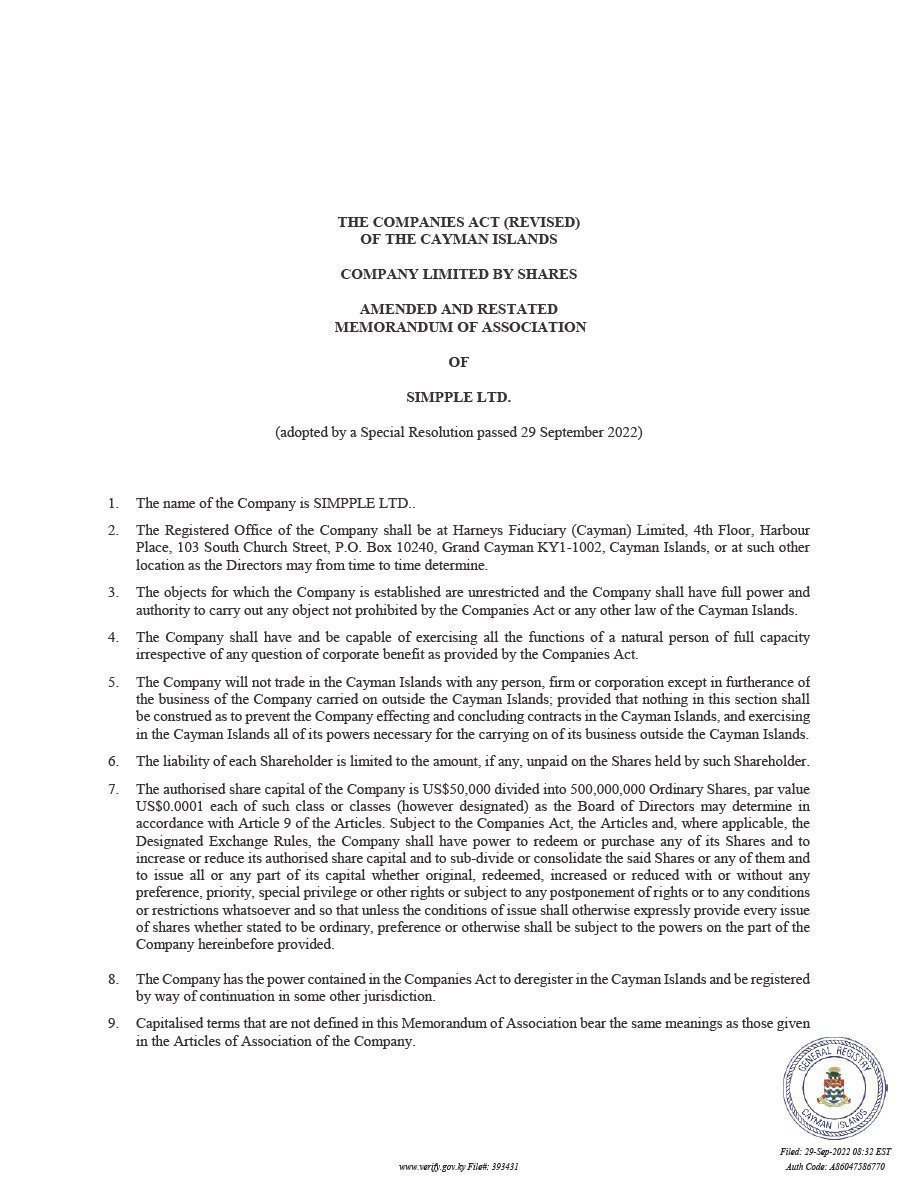
| 1 |
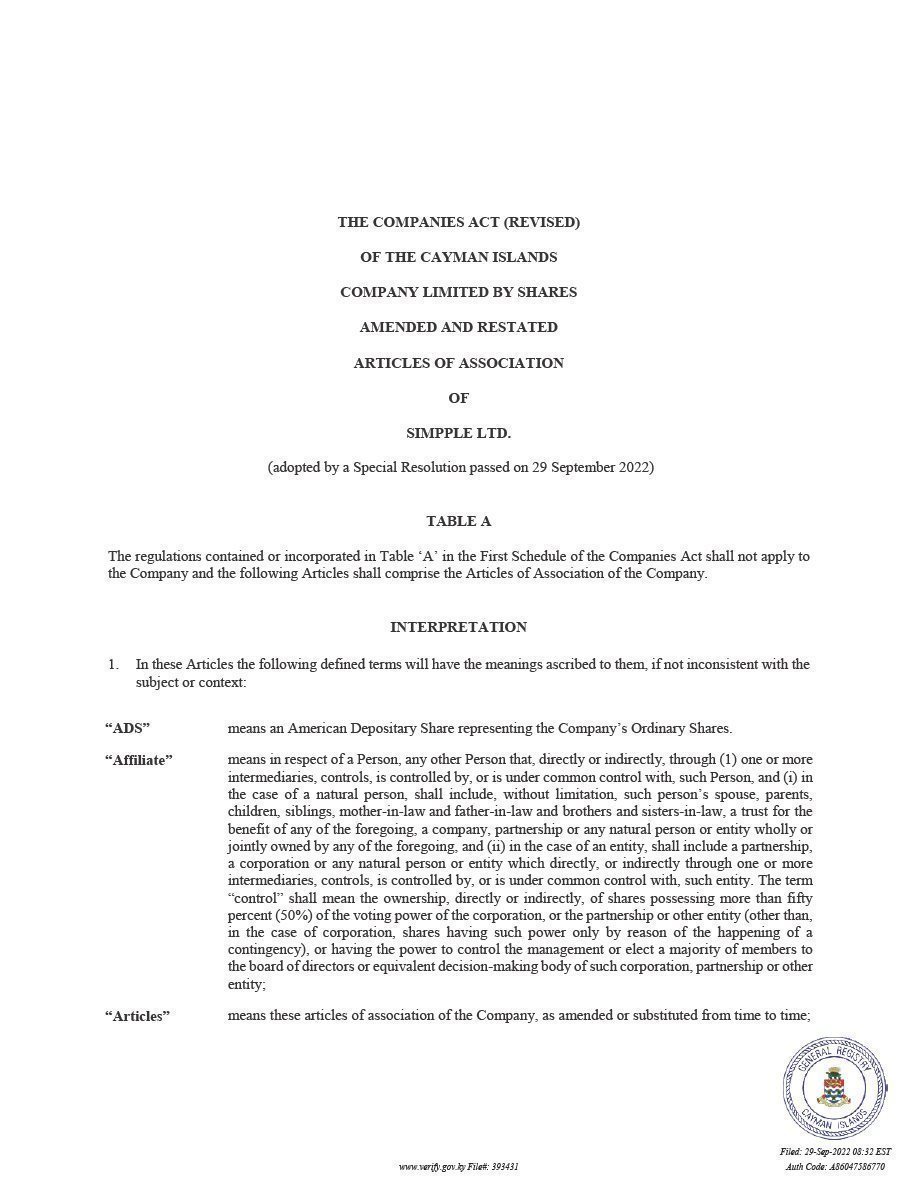
| 2 |
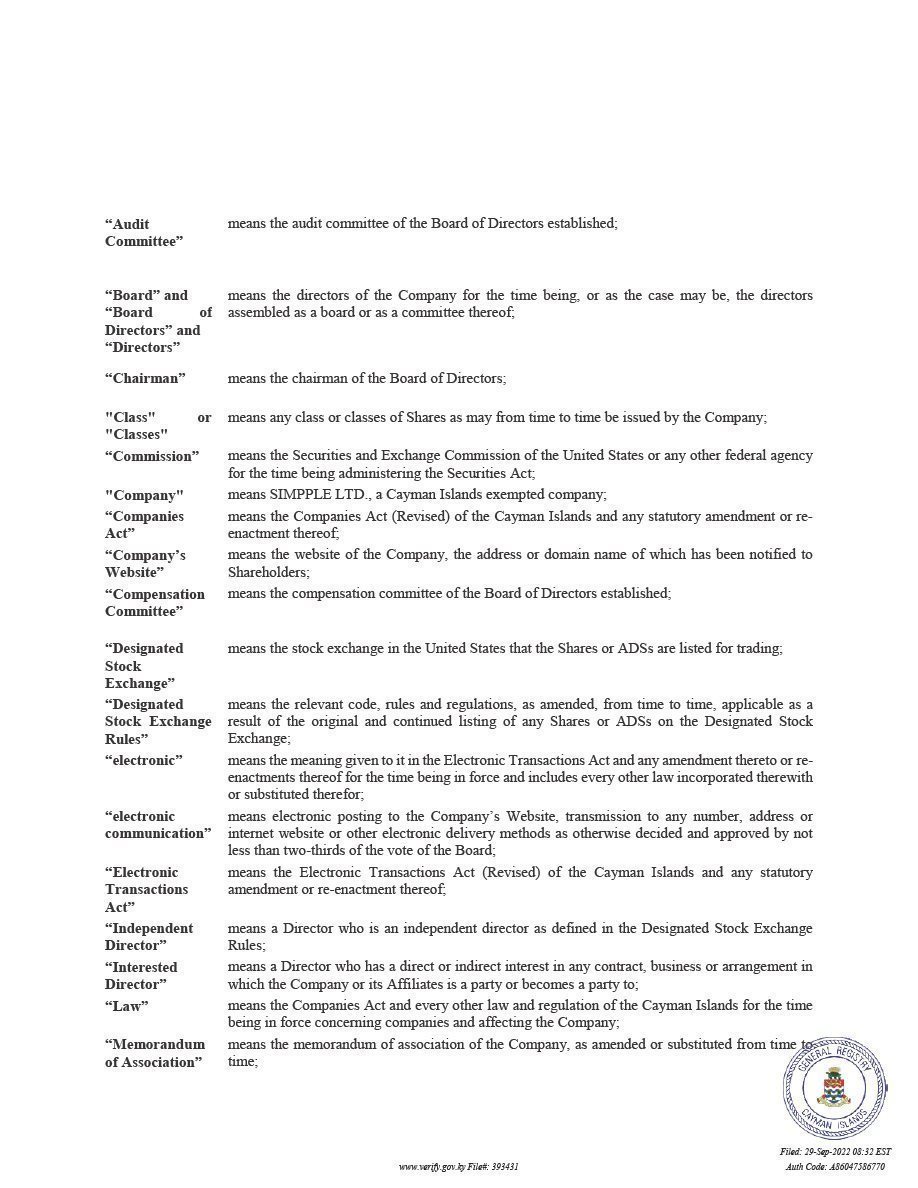
| 3 |
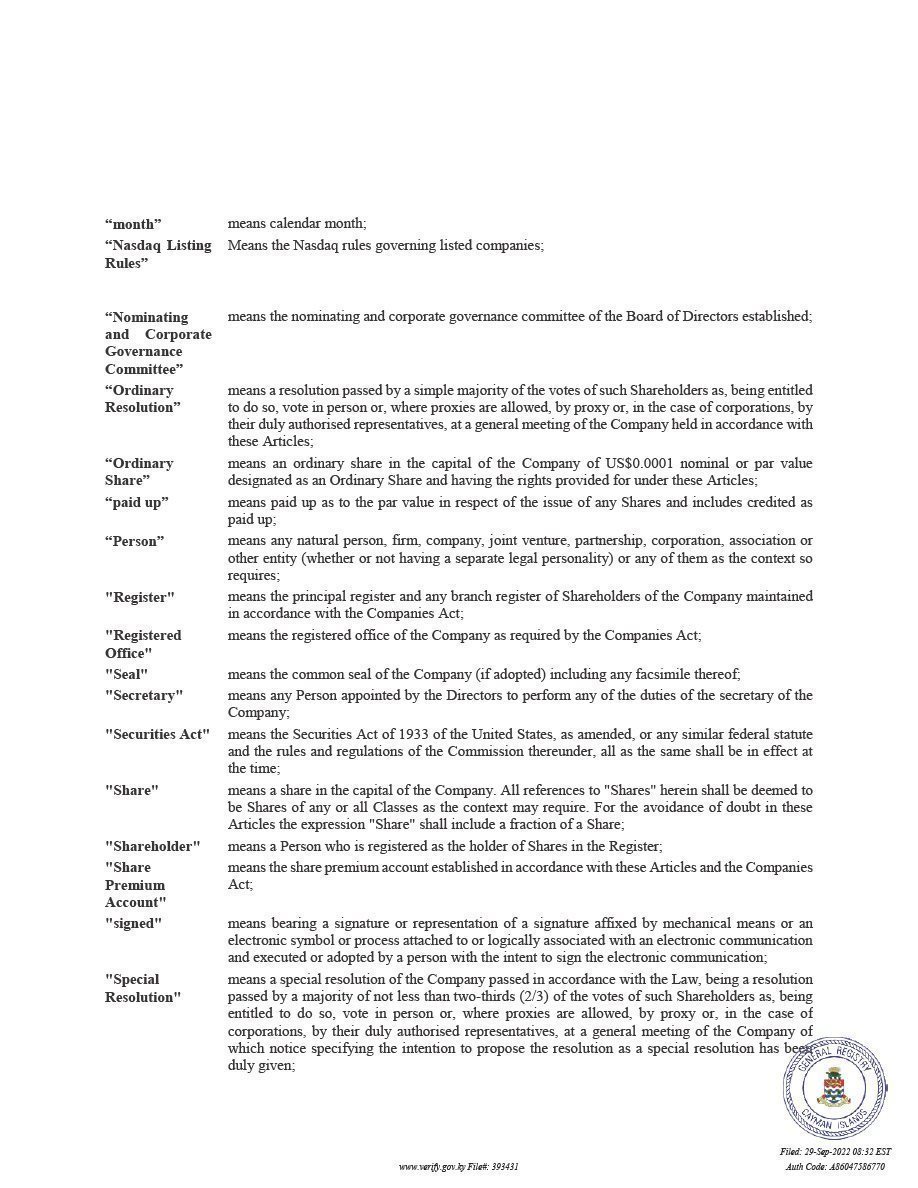
| 4 |
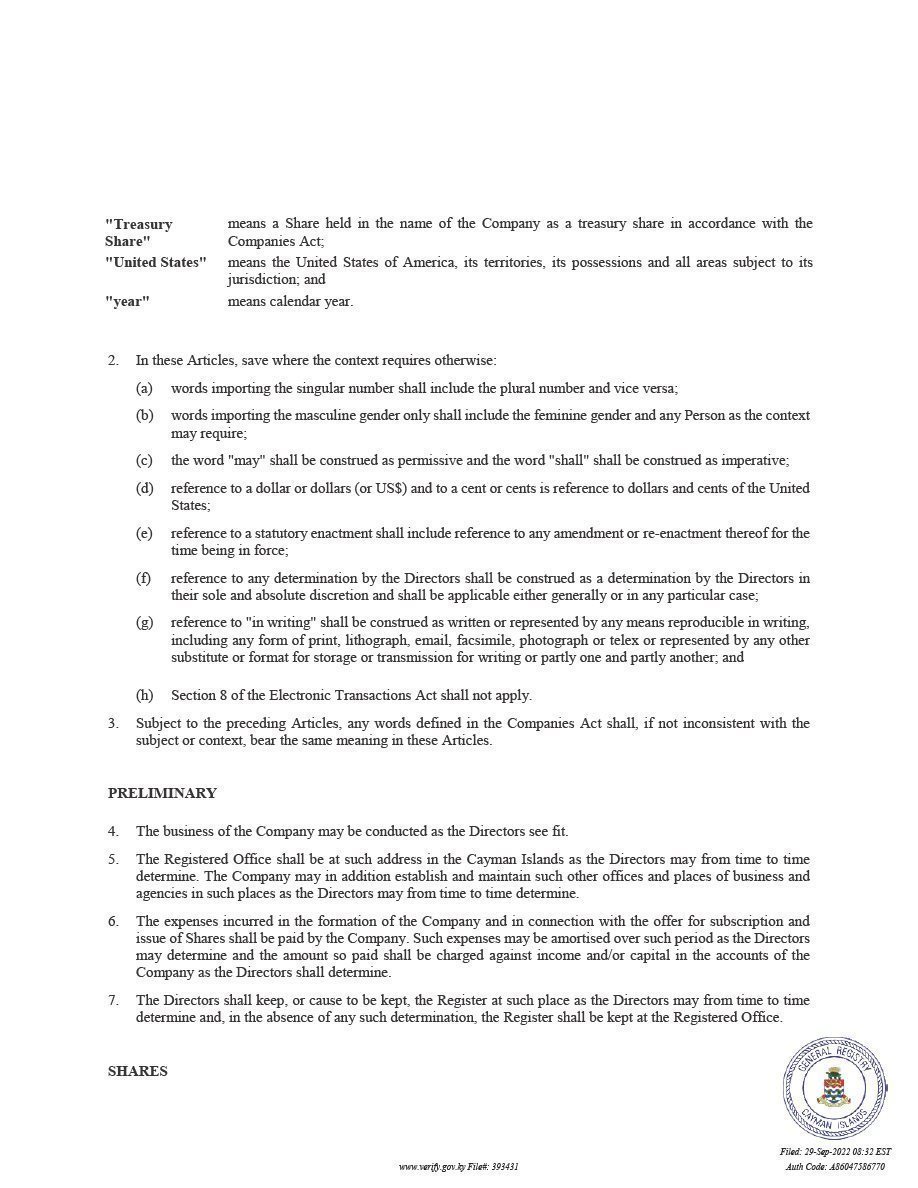
| 5 |
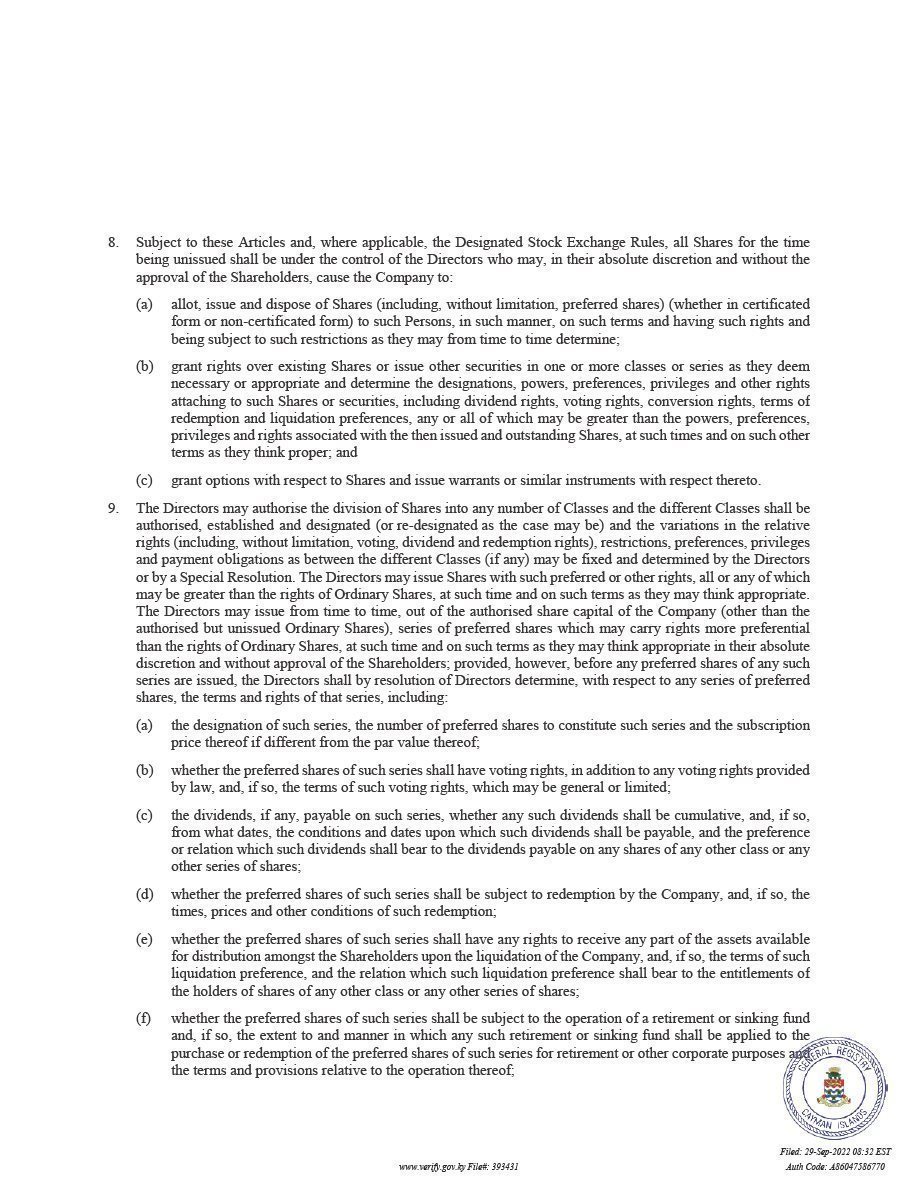
| 6 |
| 7 |
| 8 |
| 9 |
| 10 |
| 11 |
| 12 |
| 13 |
| 14 |
| 15 |
| 16 |
| 17 |
| 18 |
| 19 |
| 20 |
| 21 |
| 22 |
| 23 |
| 24 |
| 25 |
| 26 |
| 27 |
| 28 |
| 29 |
| 30 |
EXHIBIT 5.1

EXHIBIT 10.3
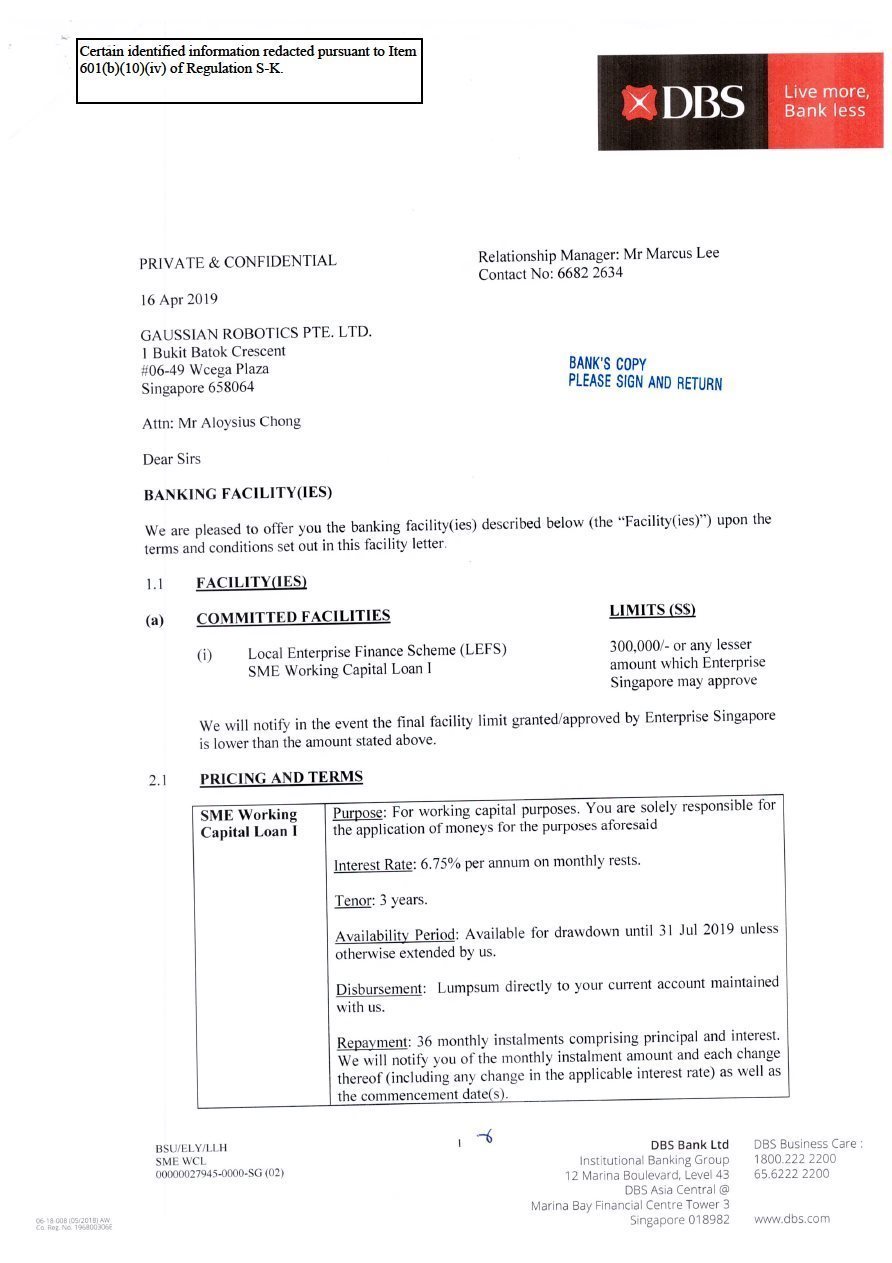
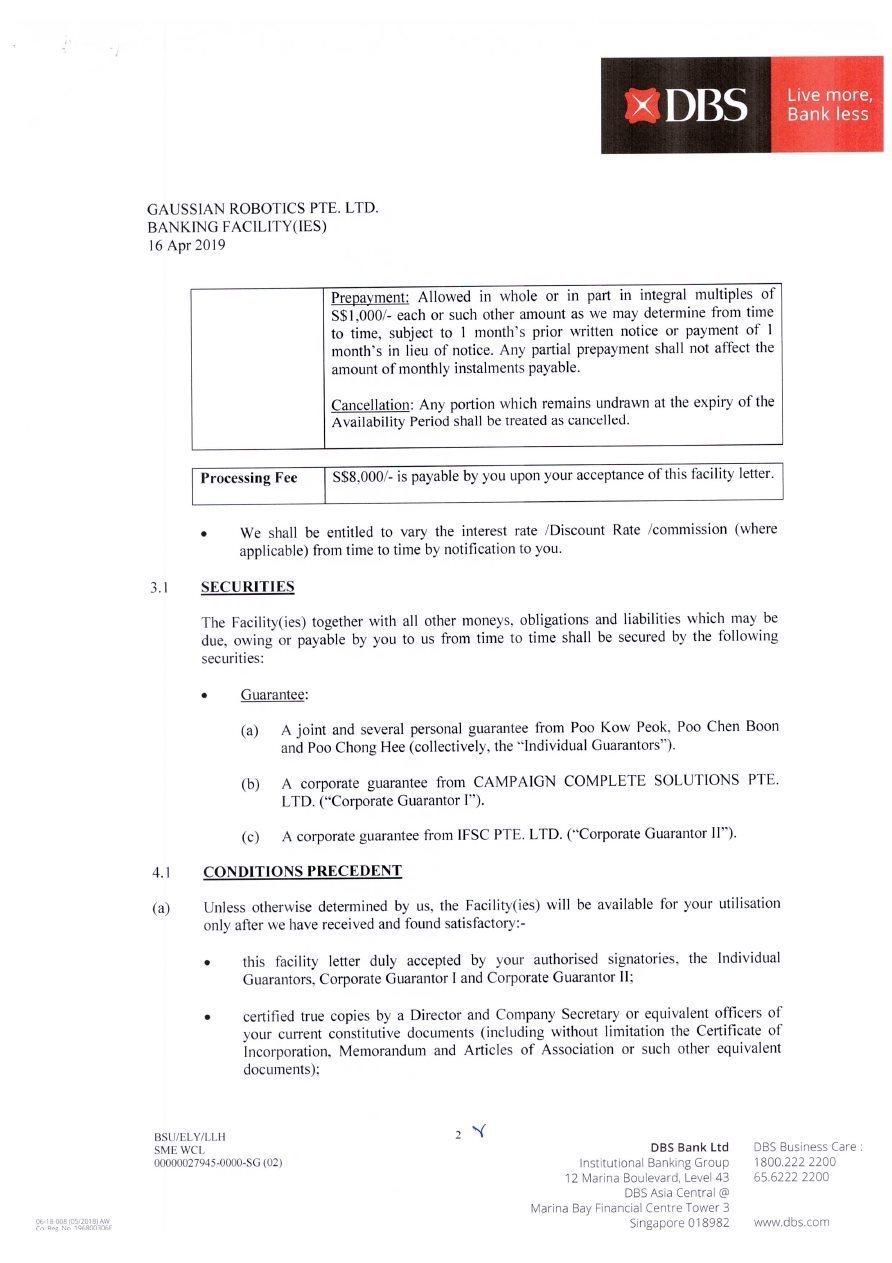
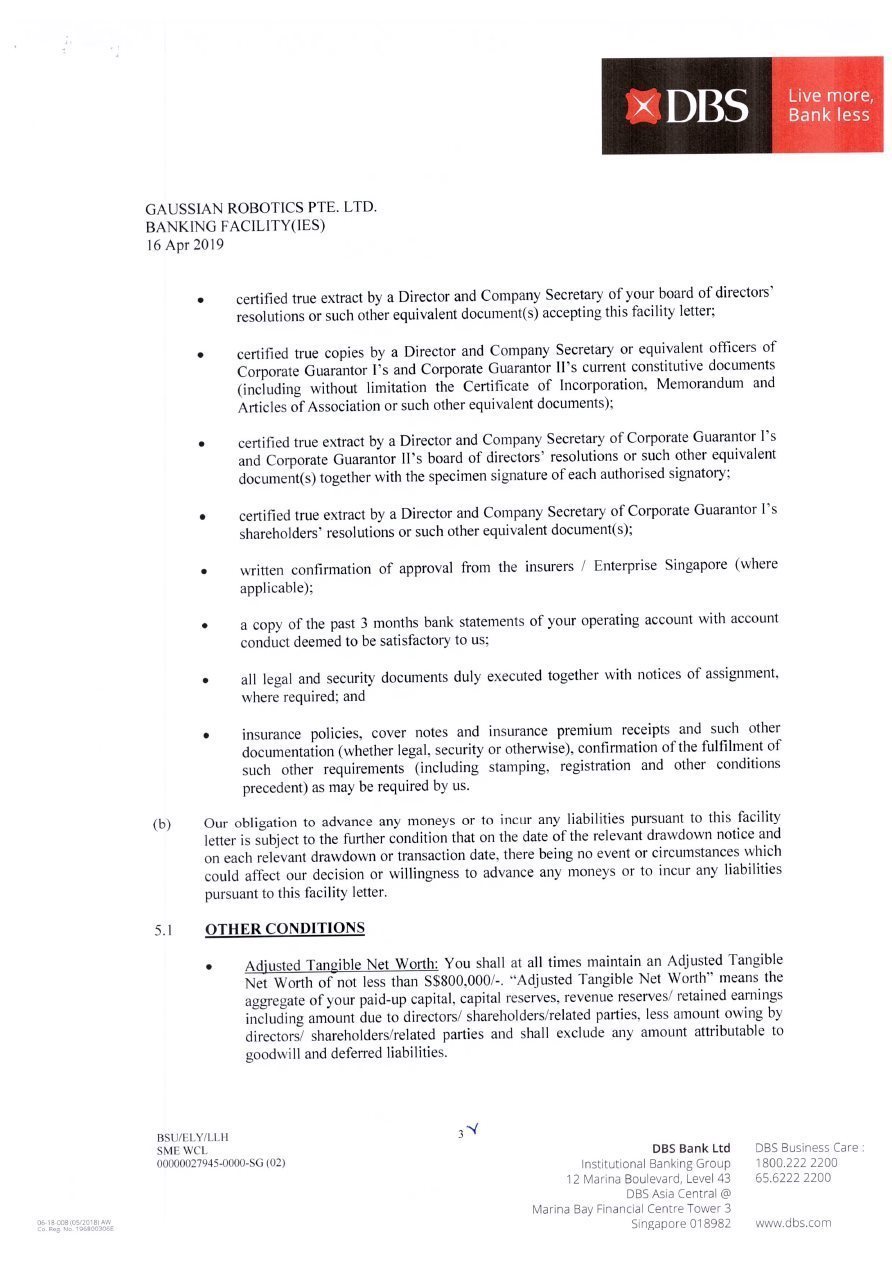
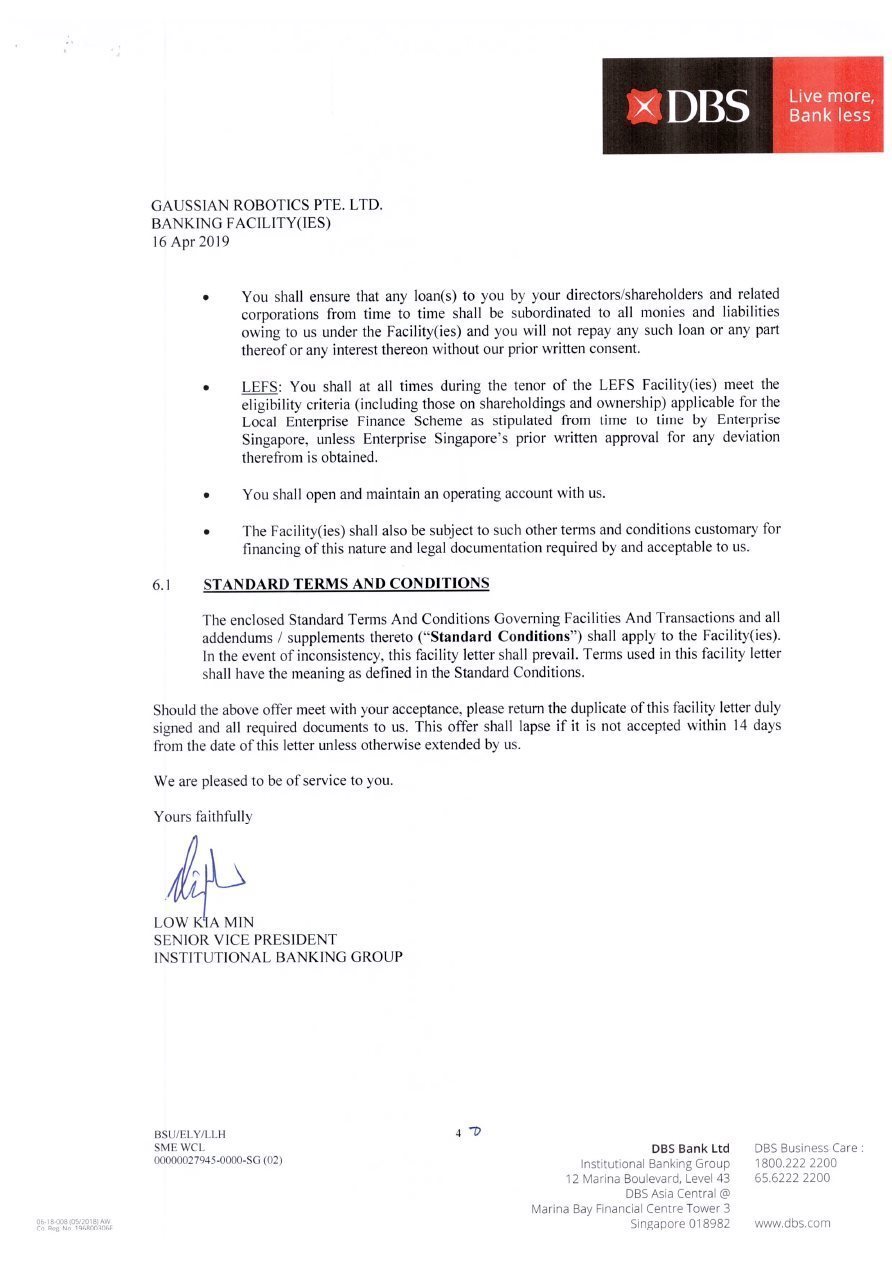
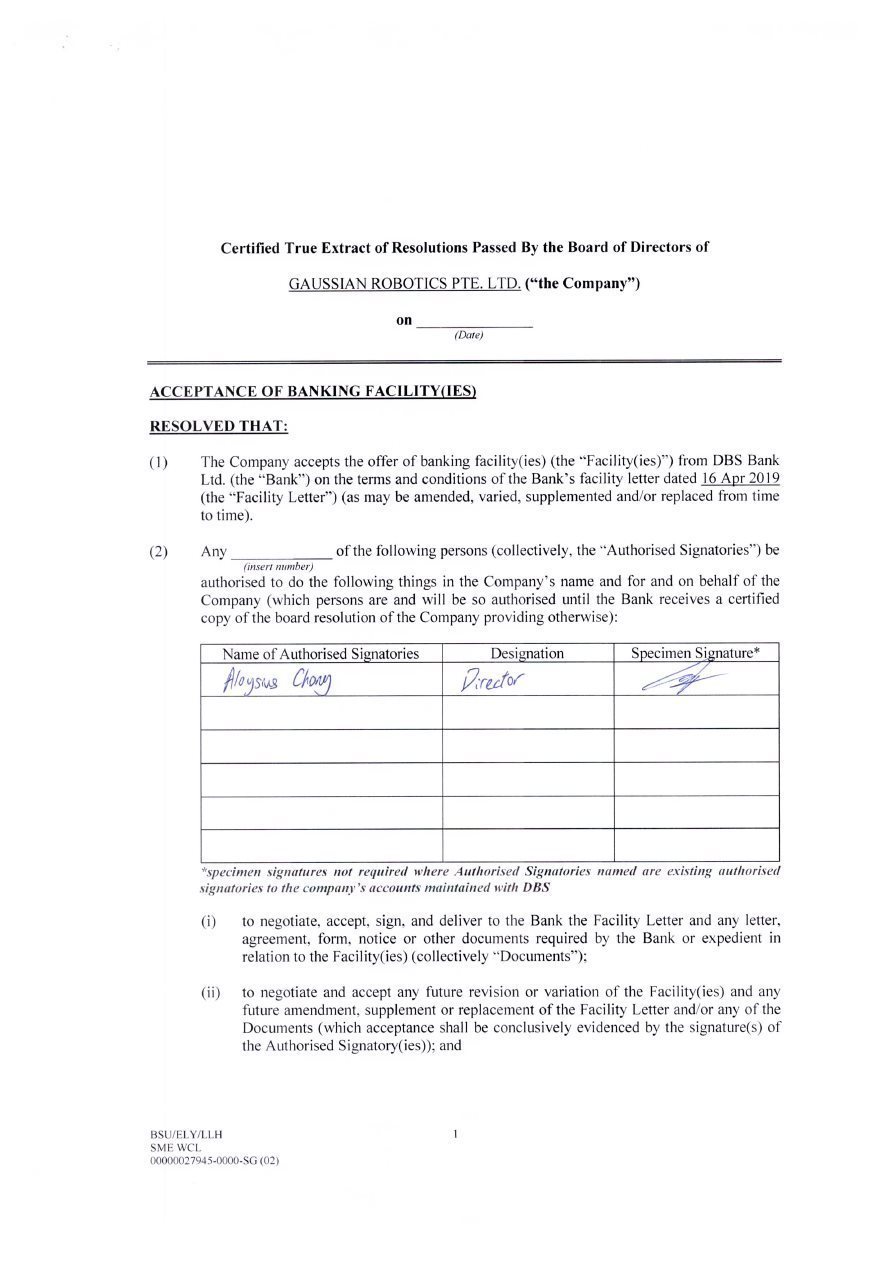
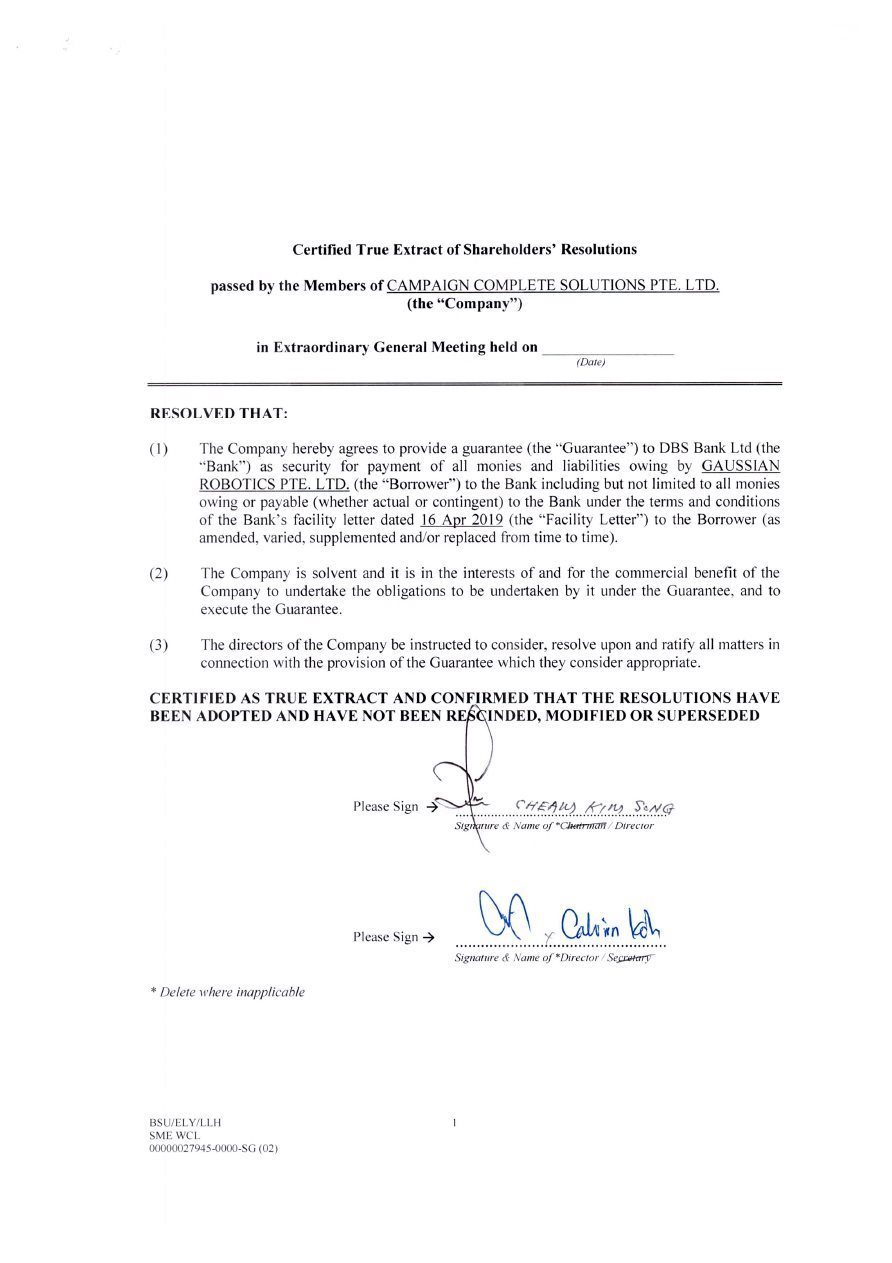
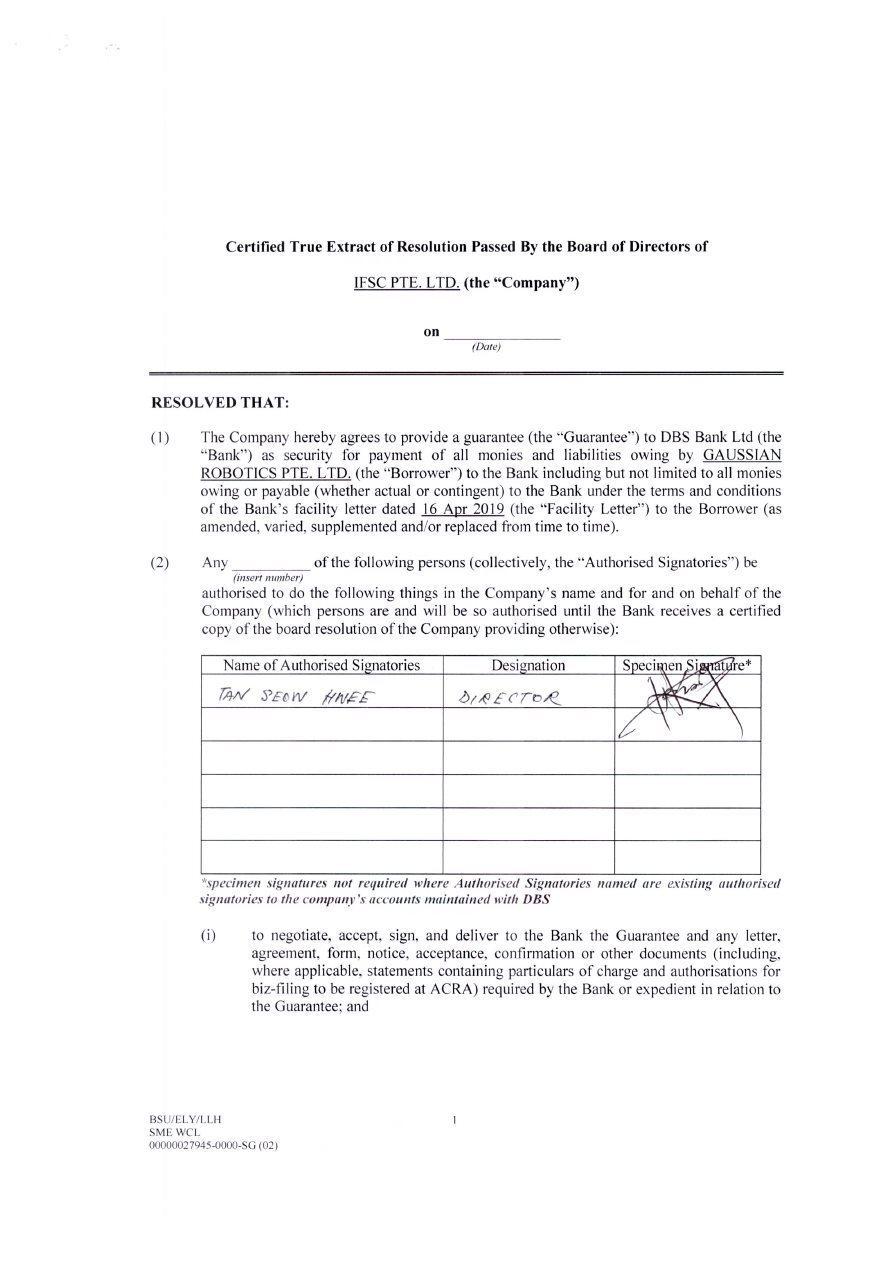
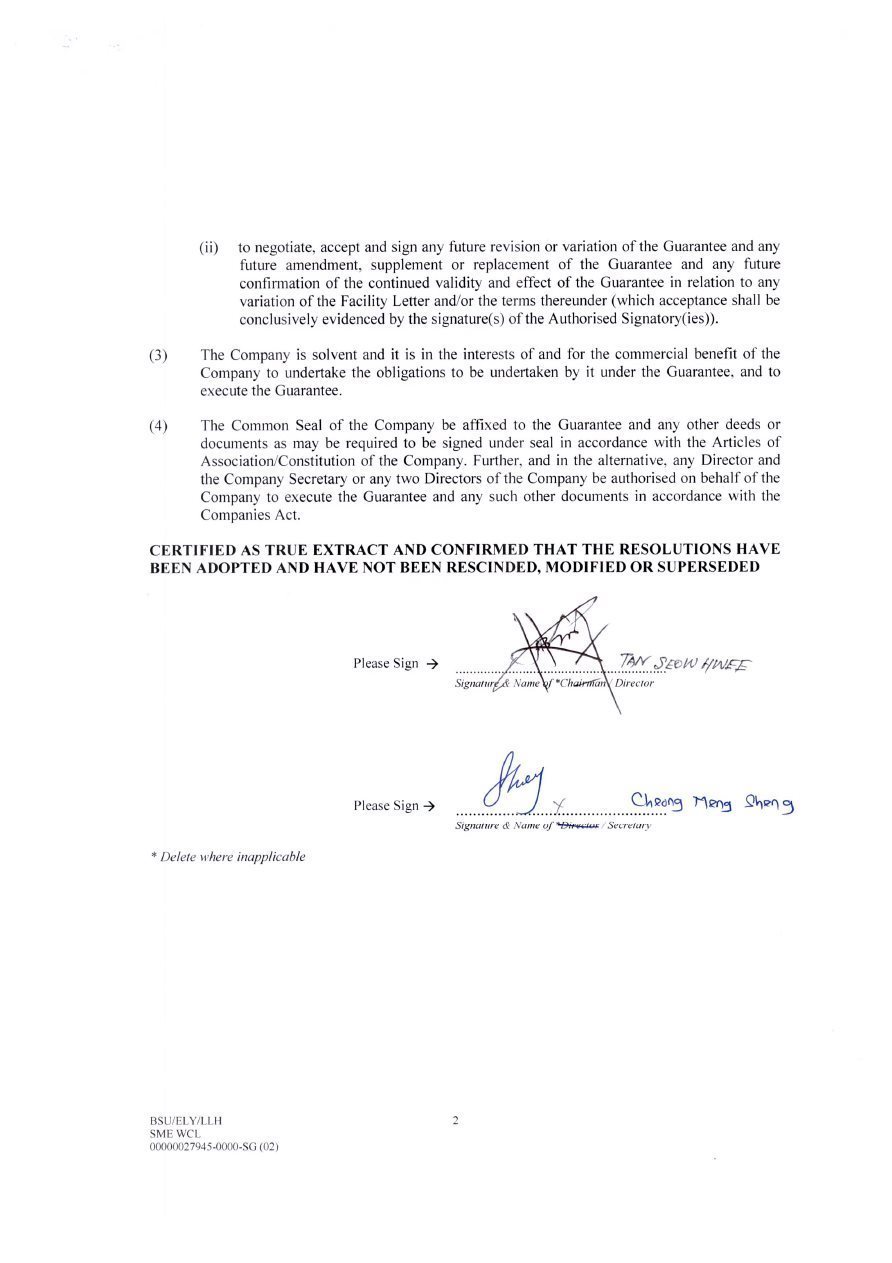
EXHIBIT 10.4
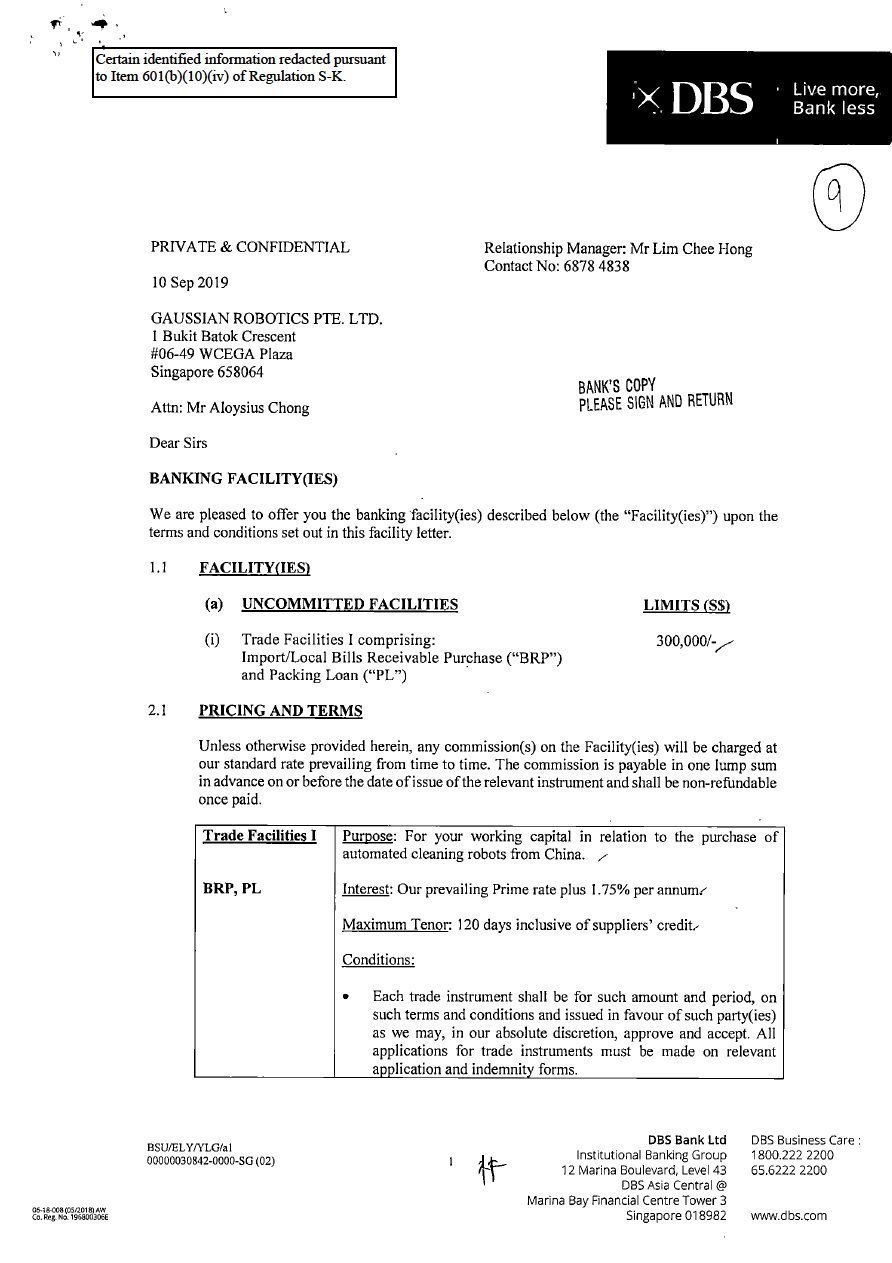
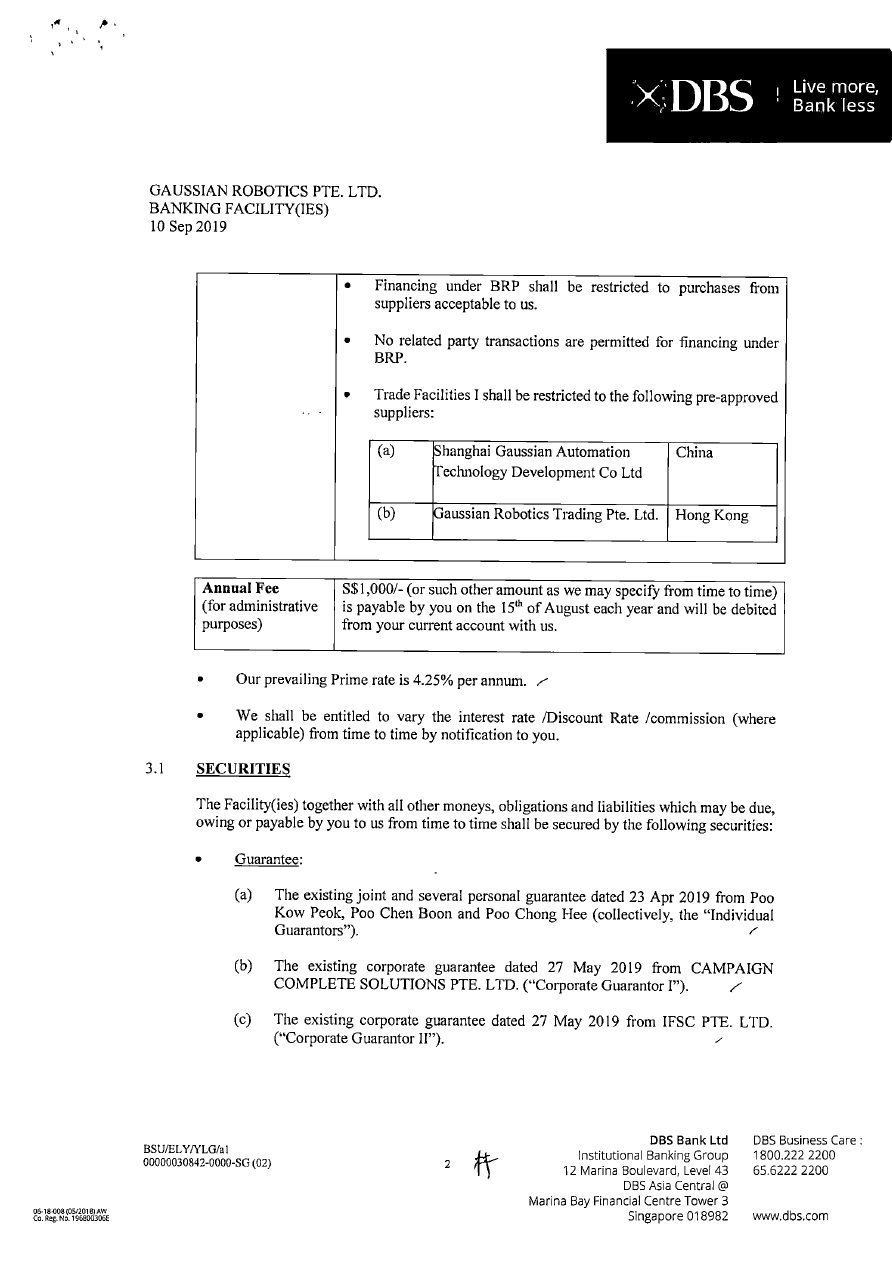
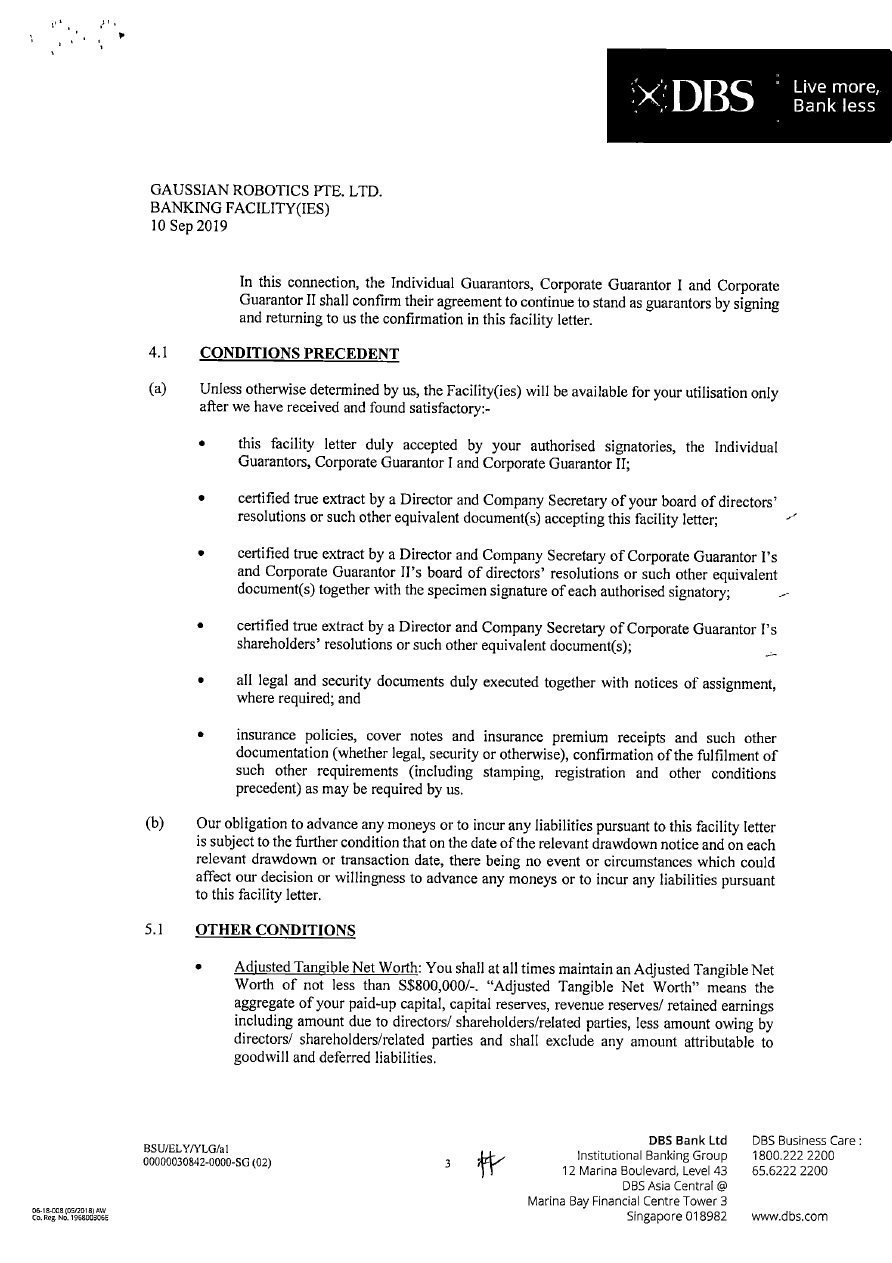
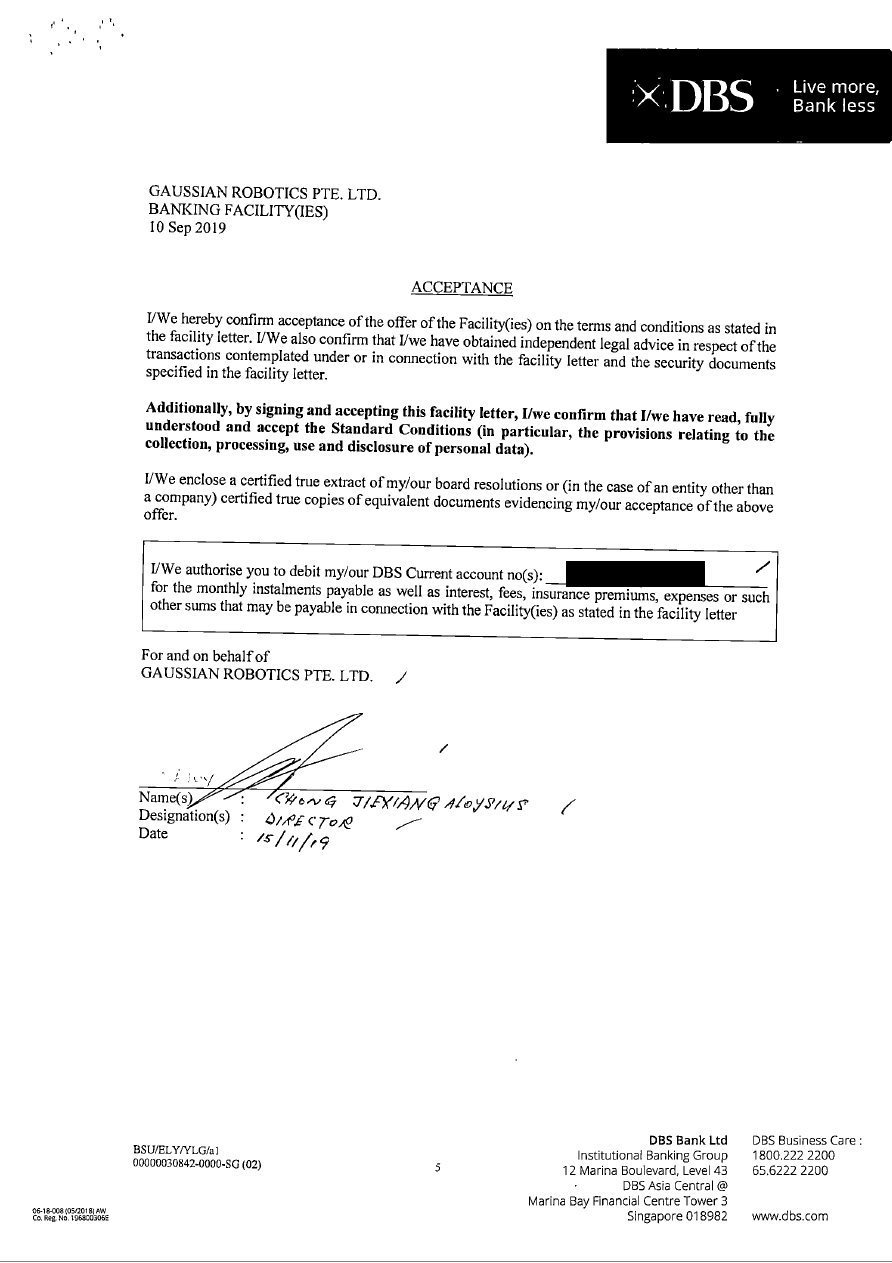
EXHIBIT 10.5
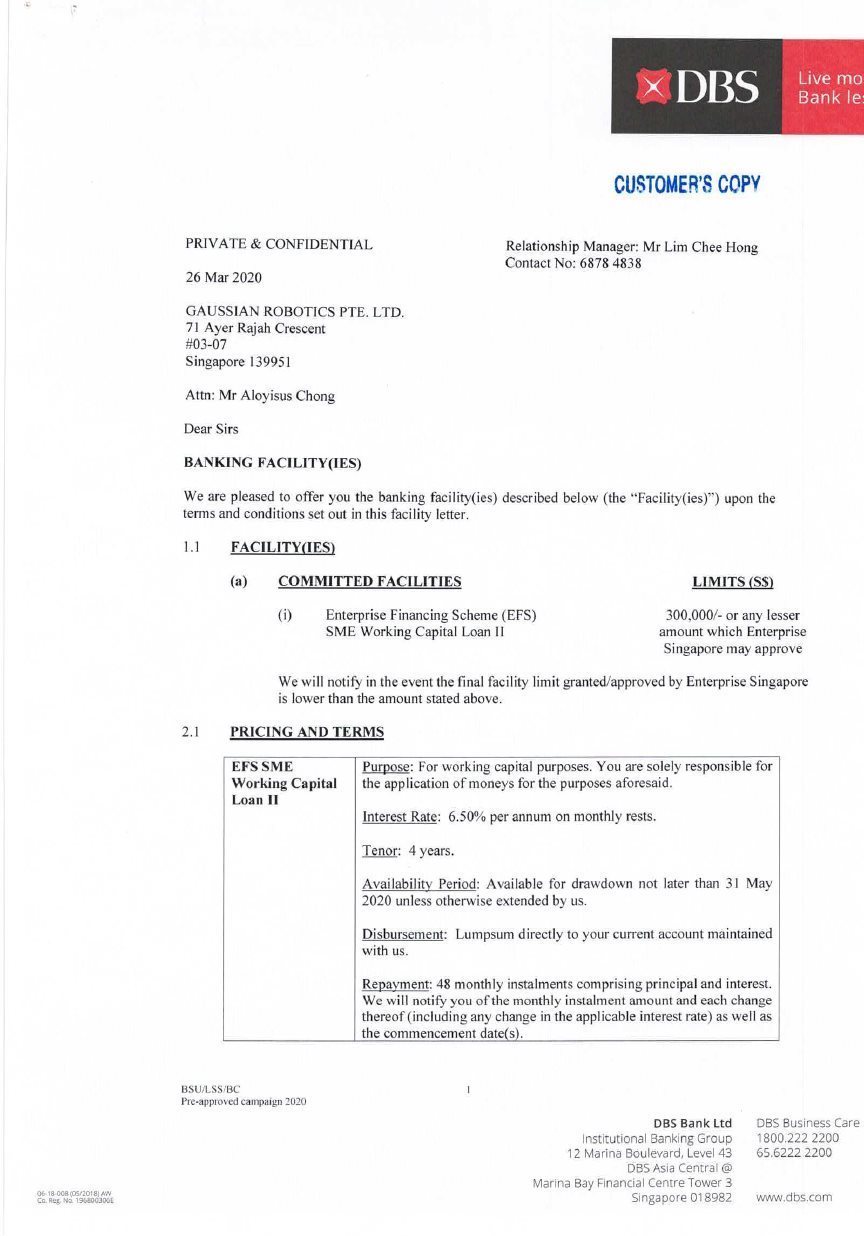
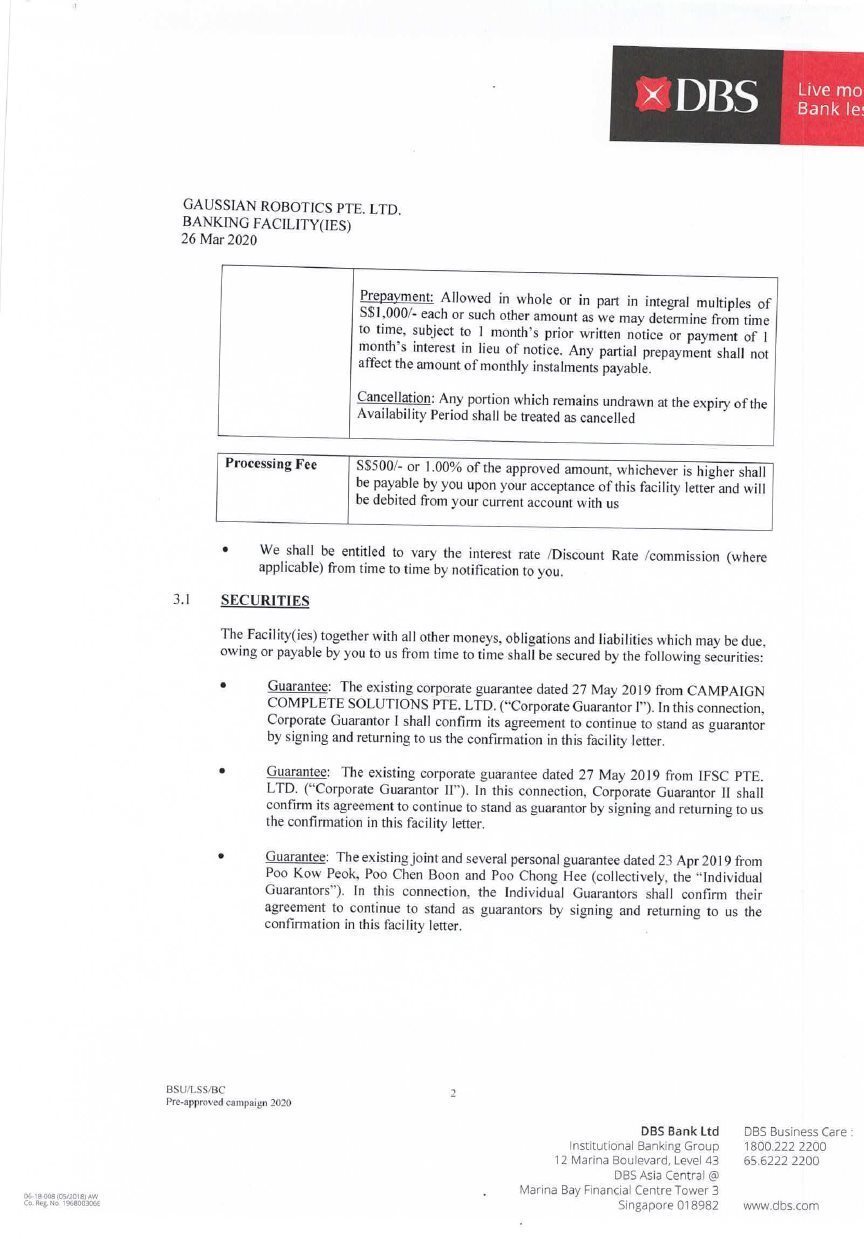
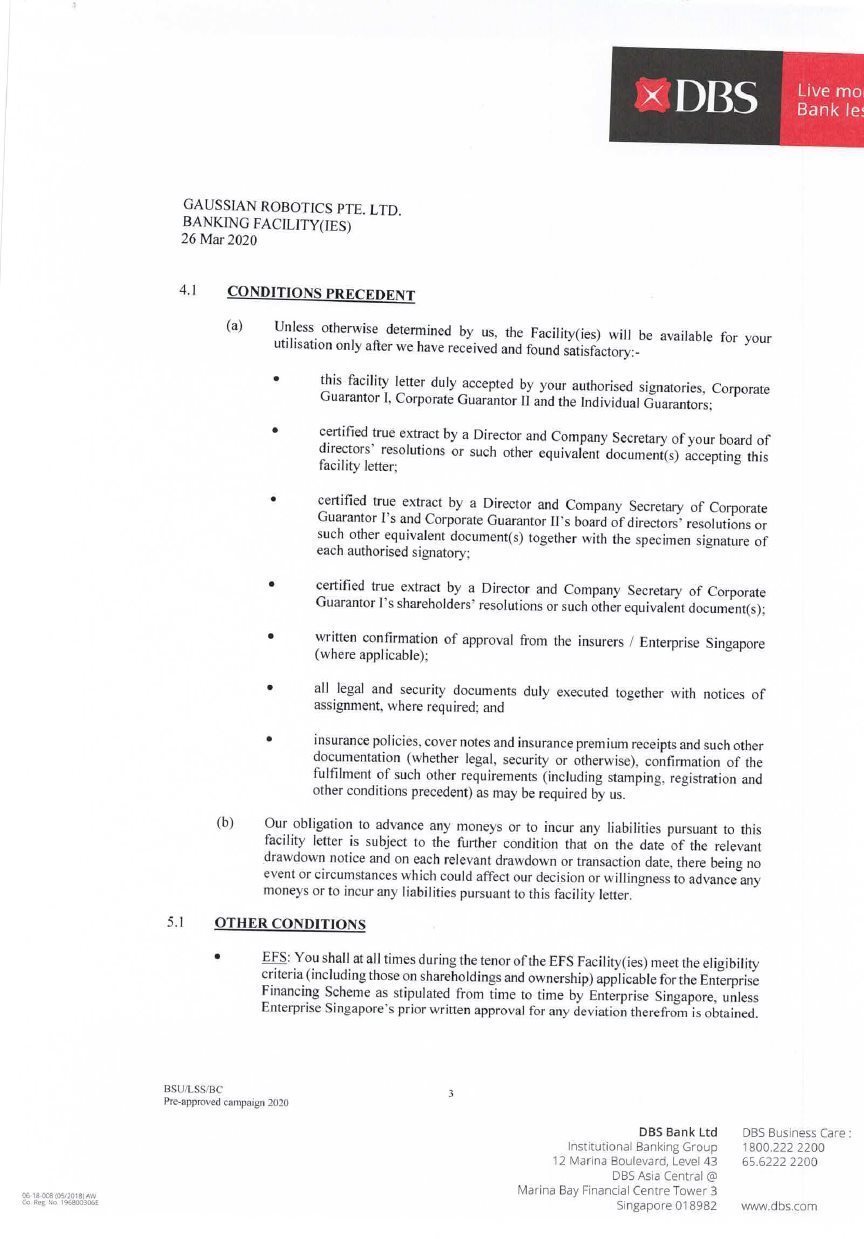
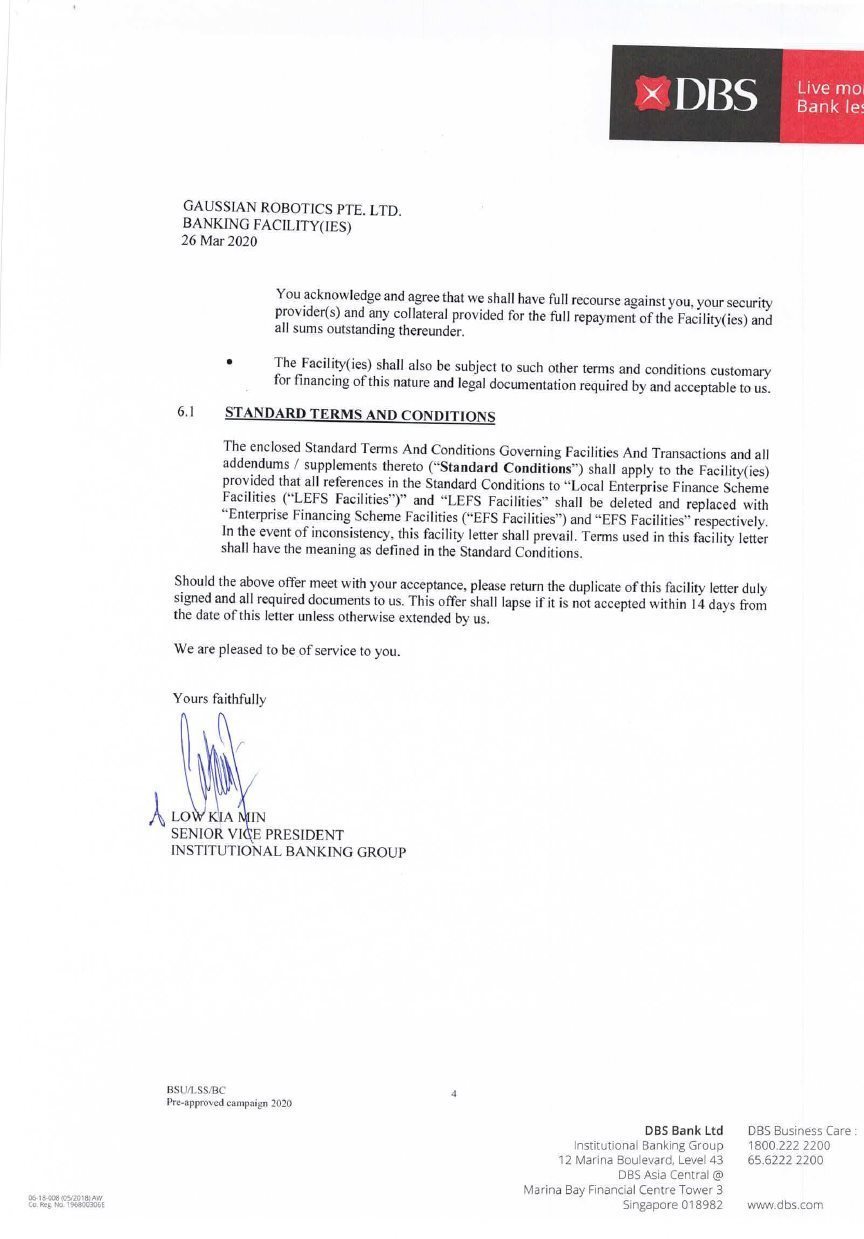
EXHIBIT 10.6
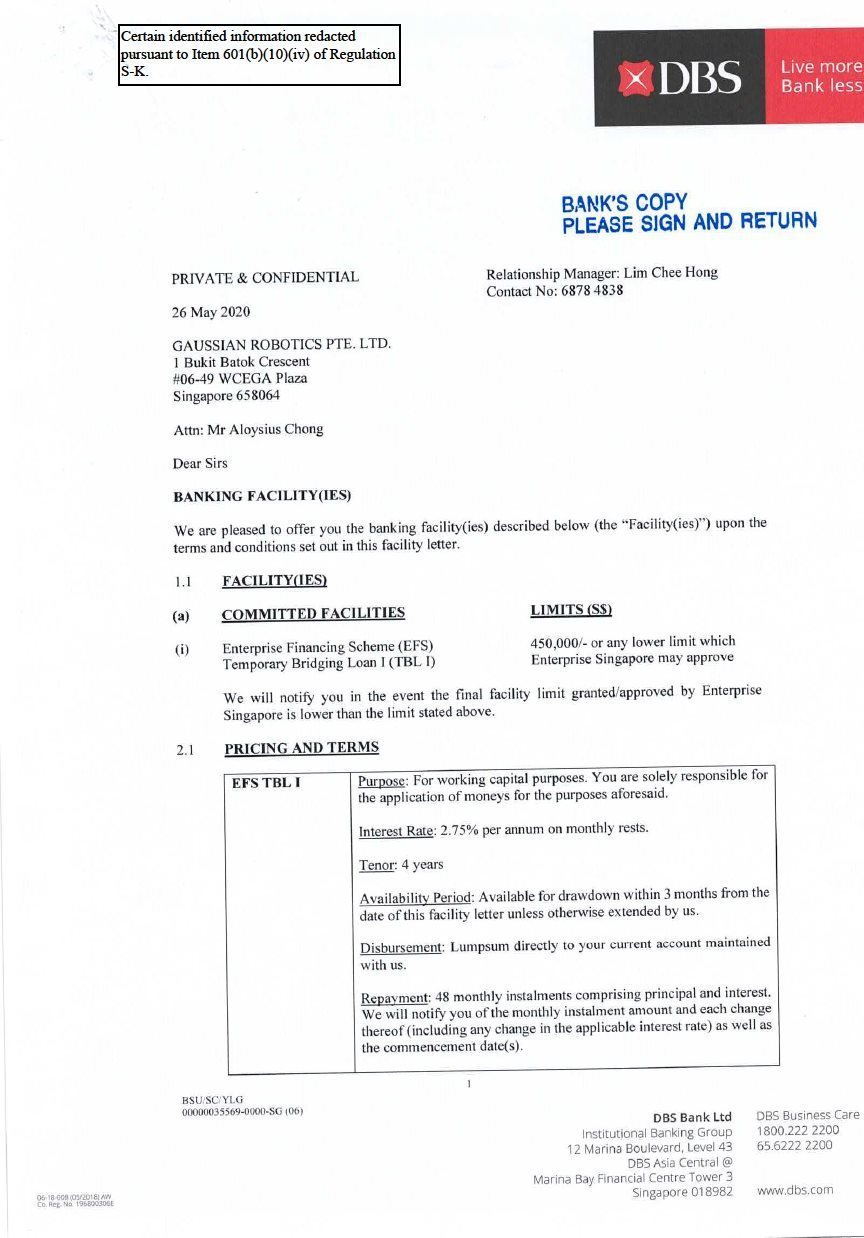
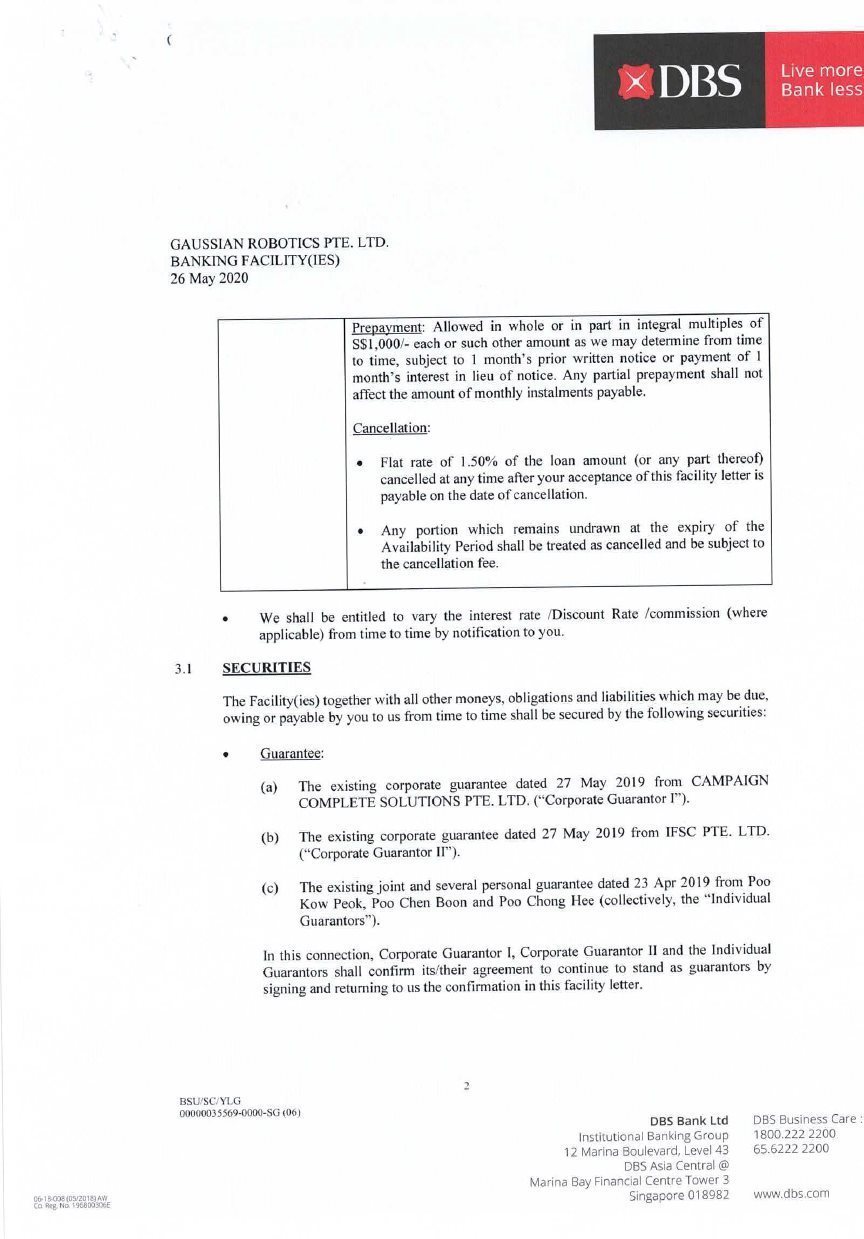
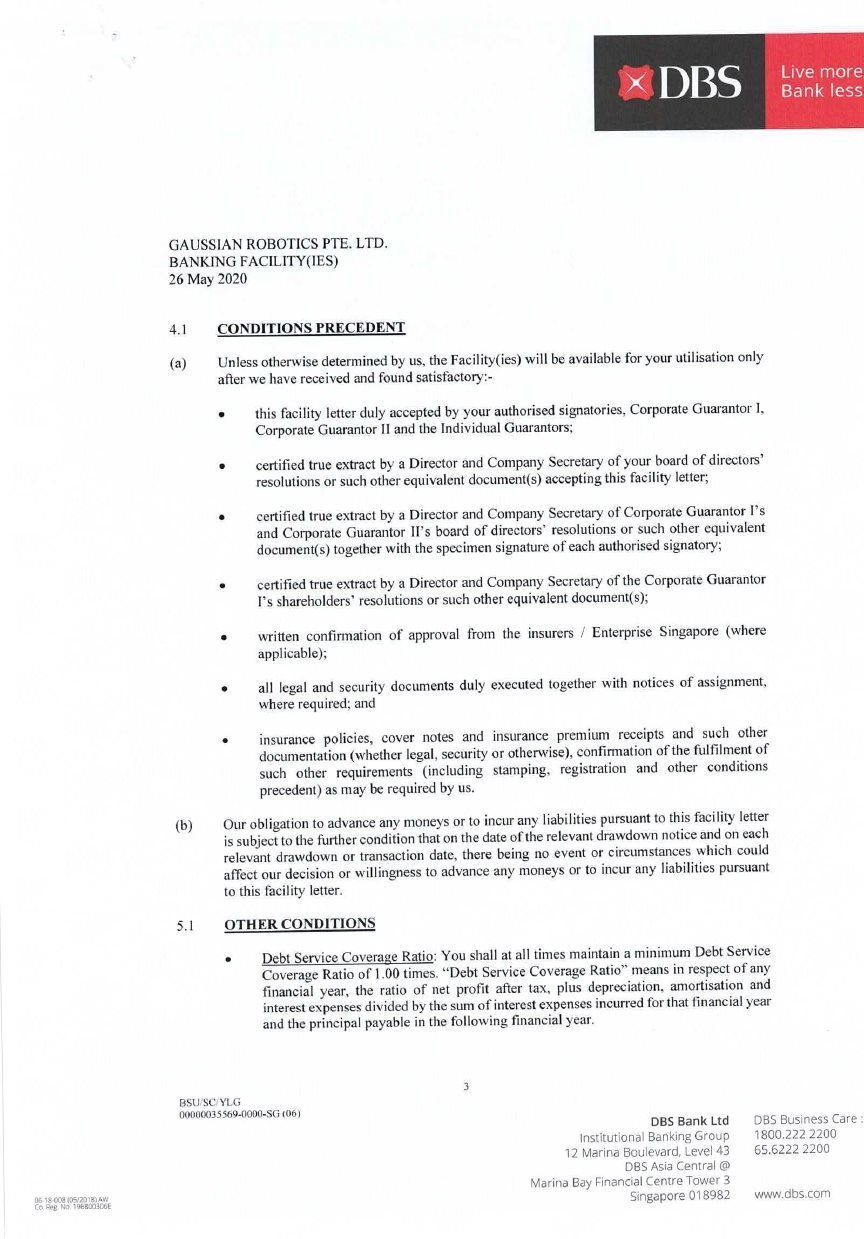
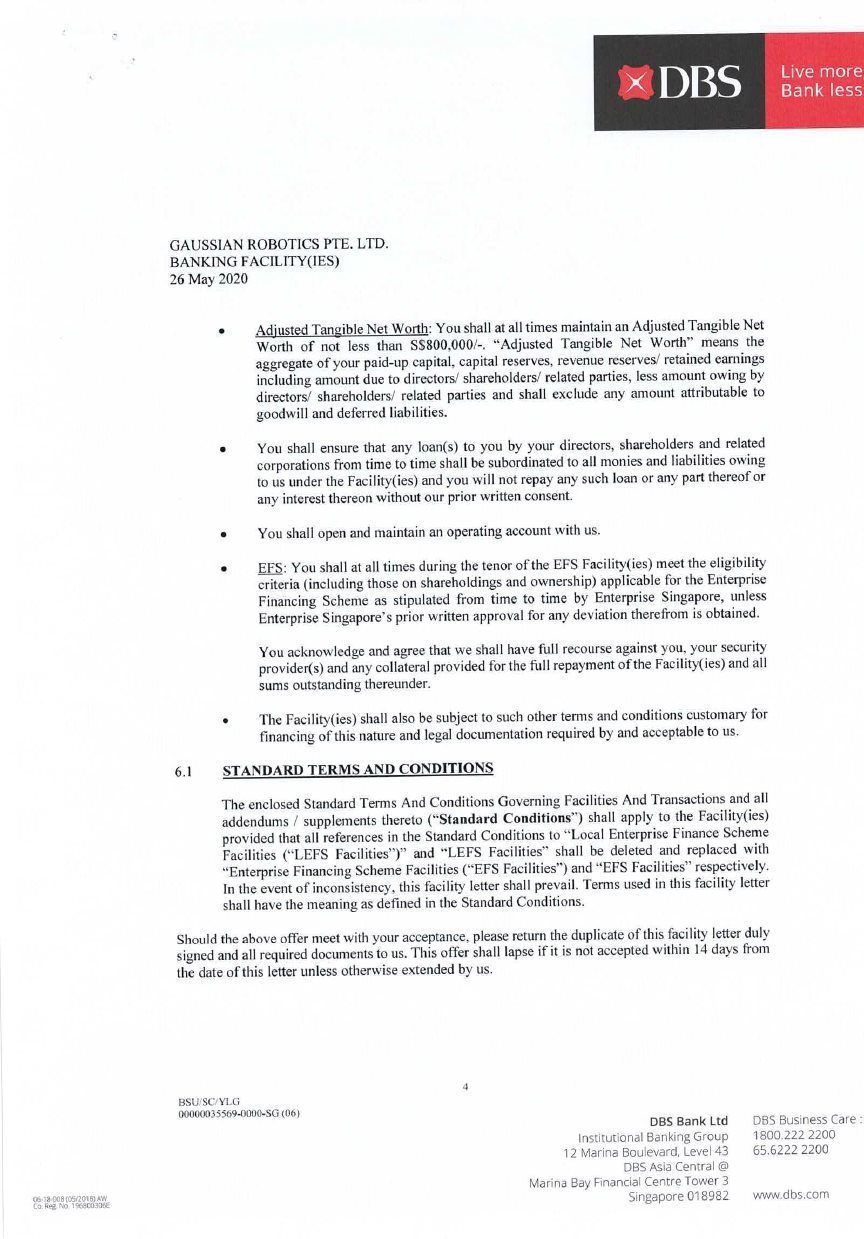
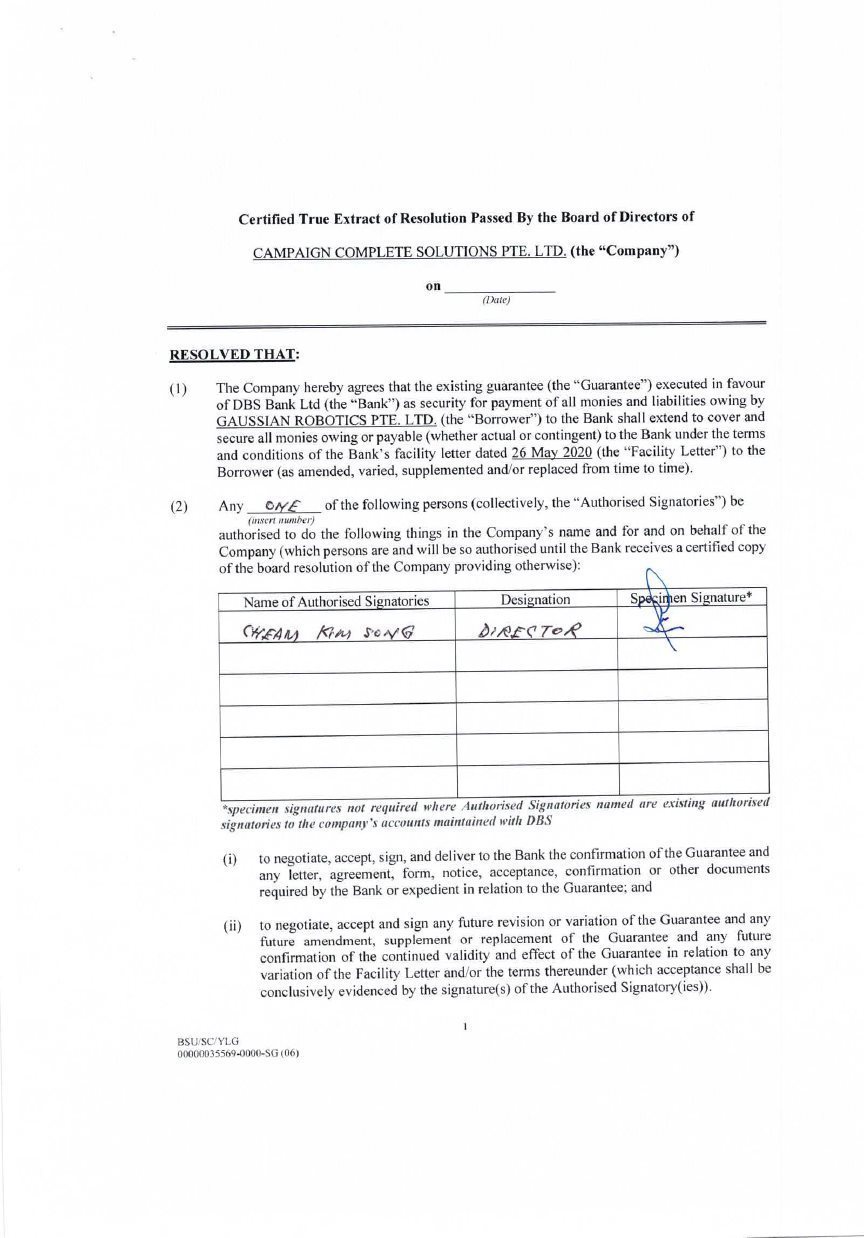
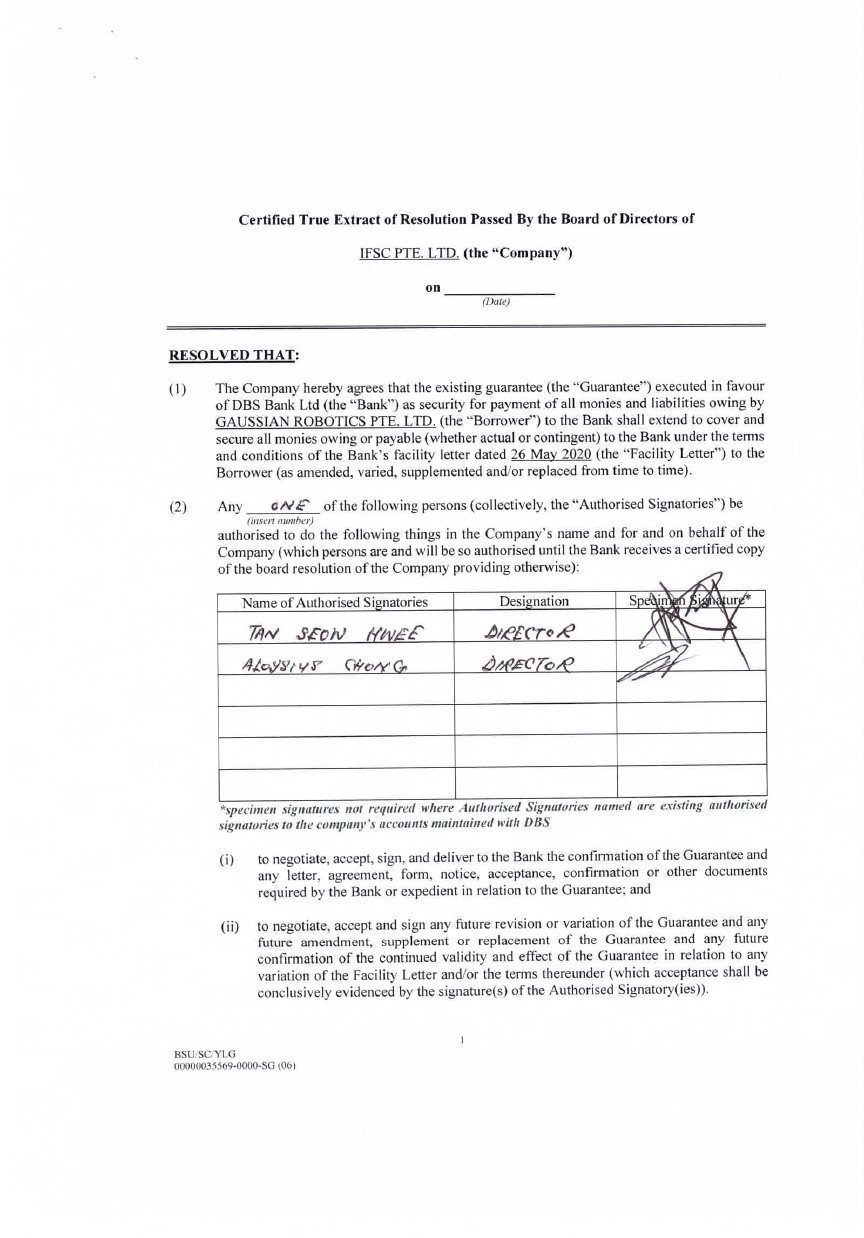
EXHIBIT 10.7
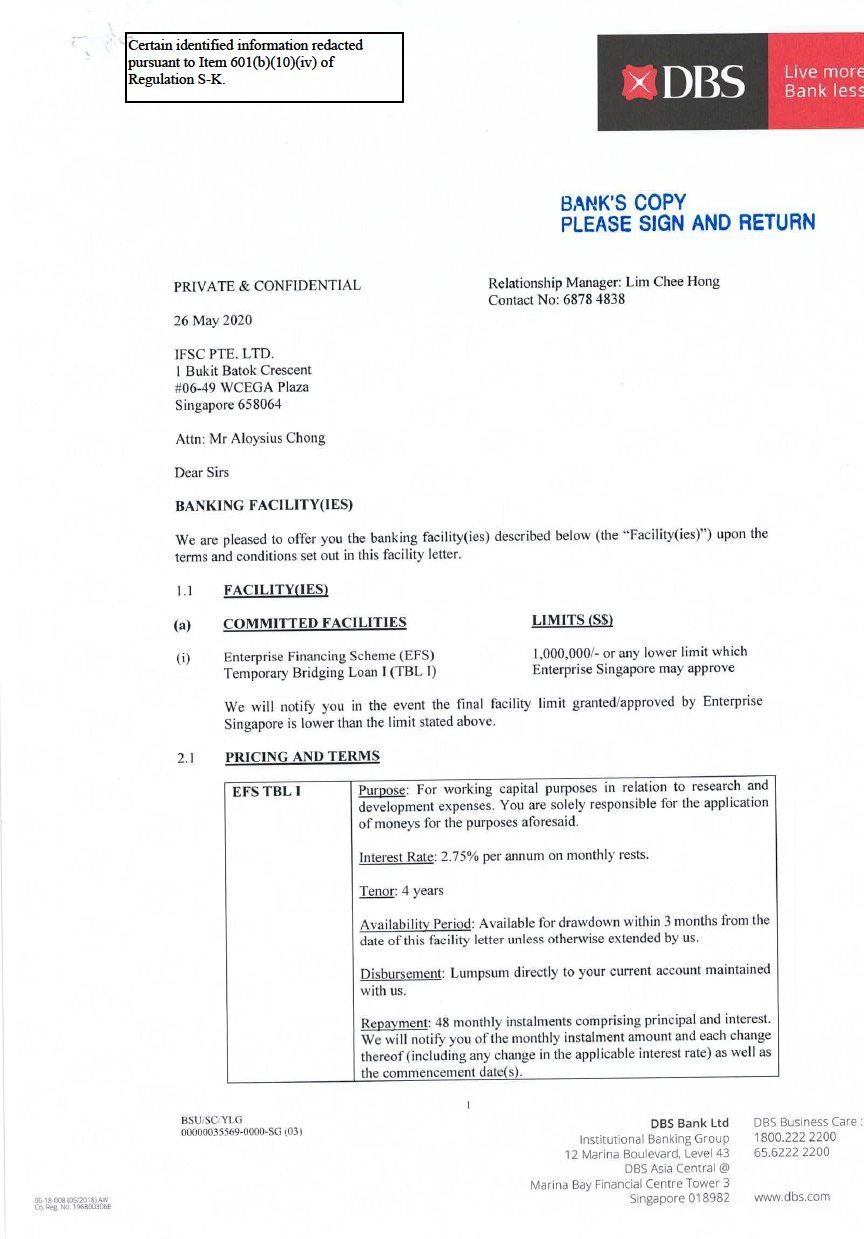
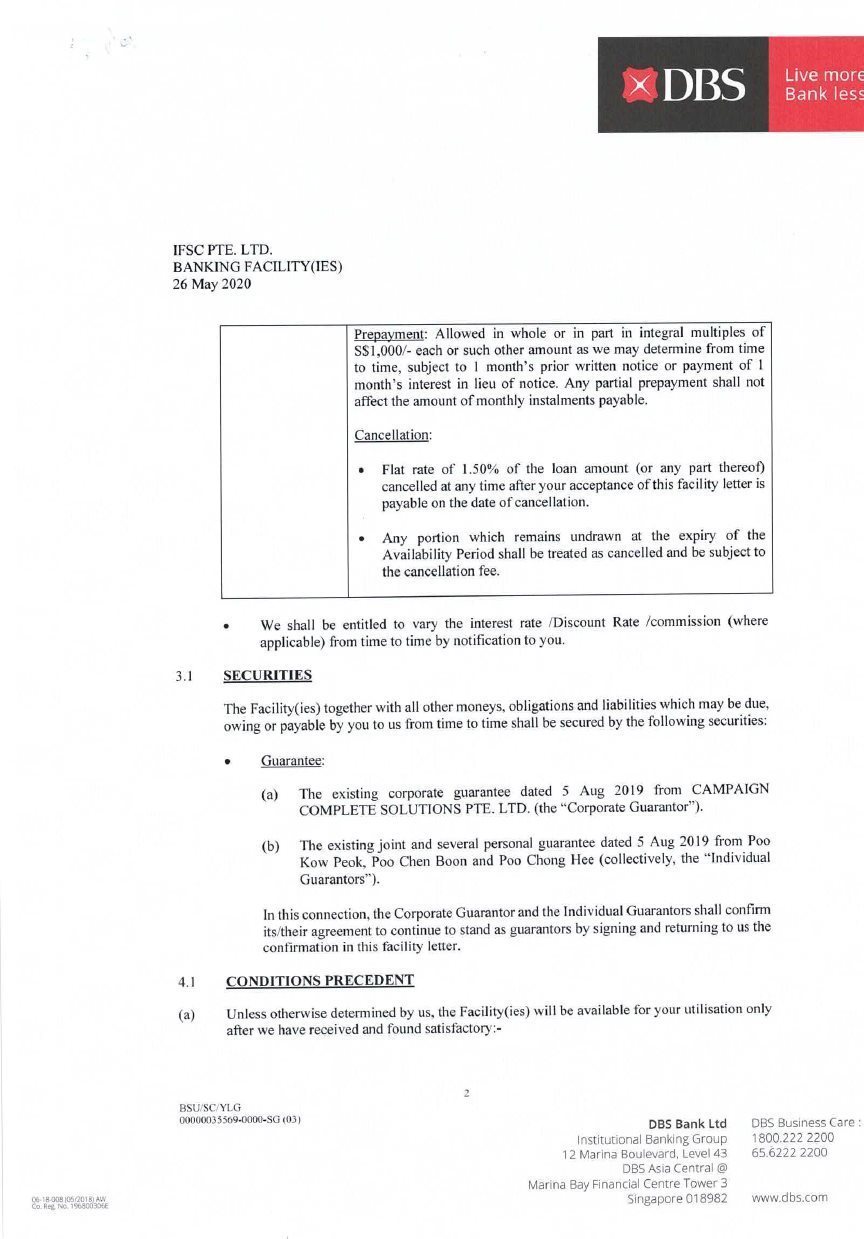
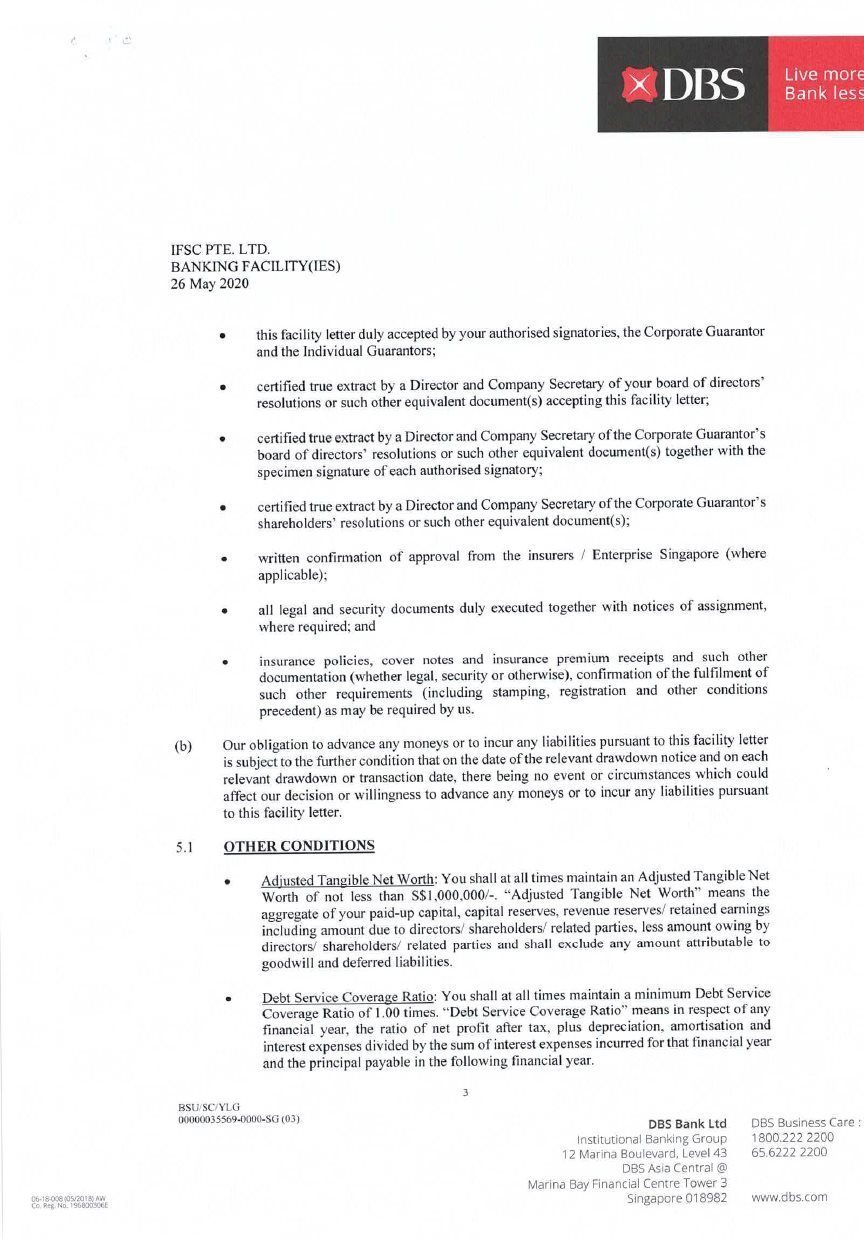
EXHIBIT 10.8
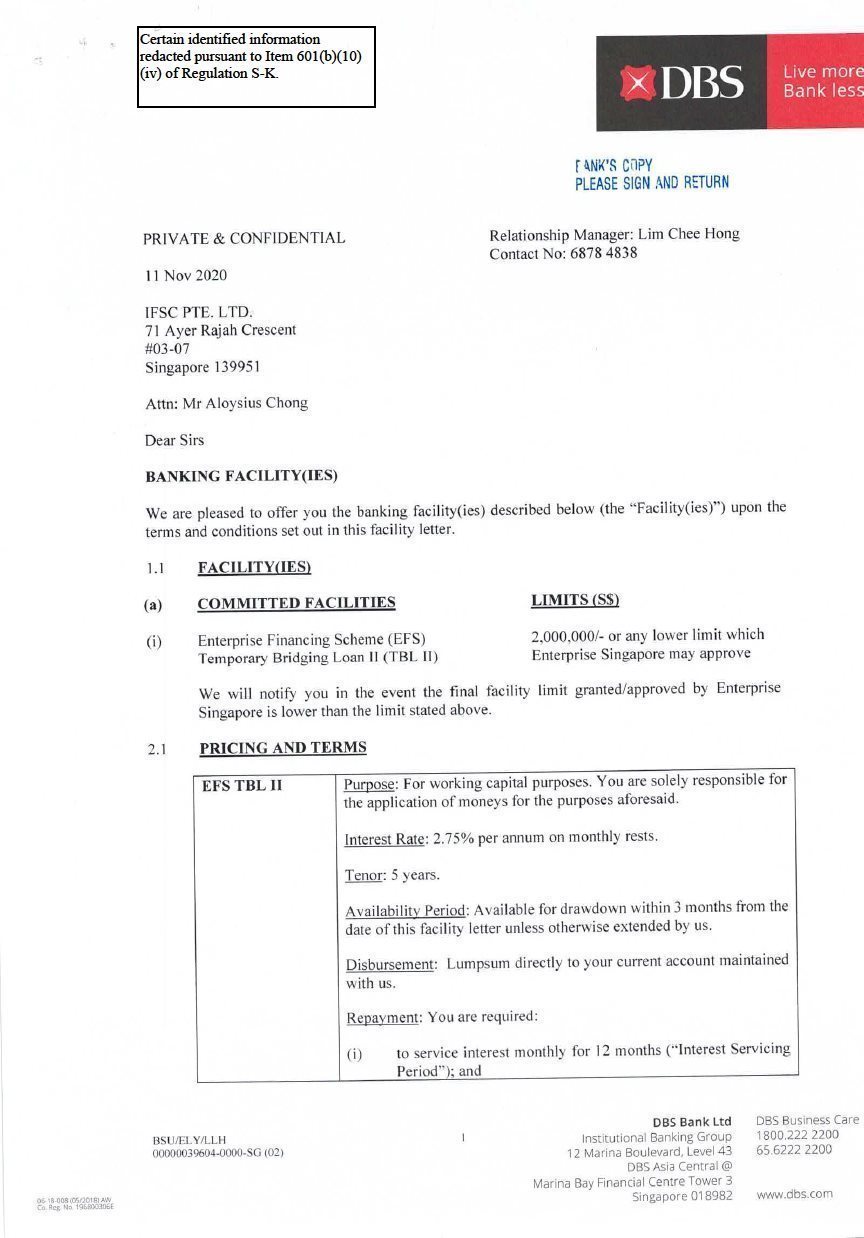
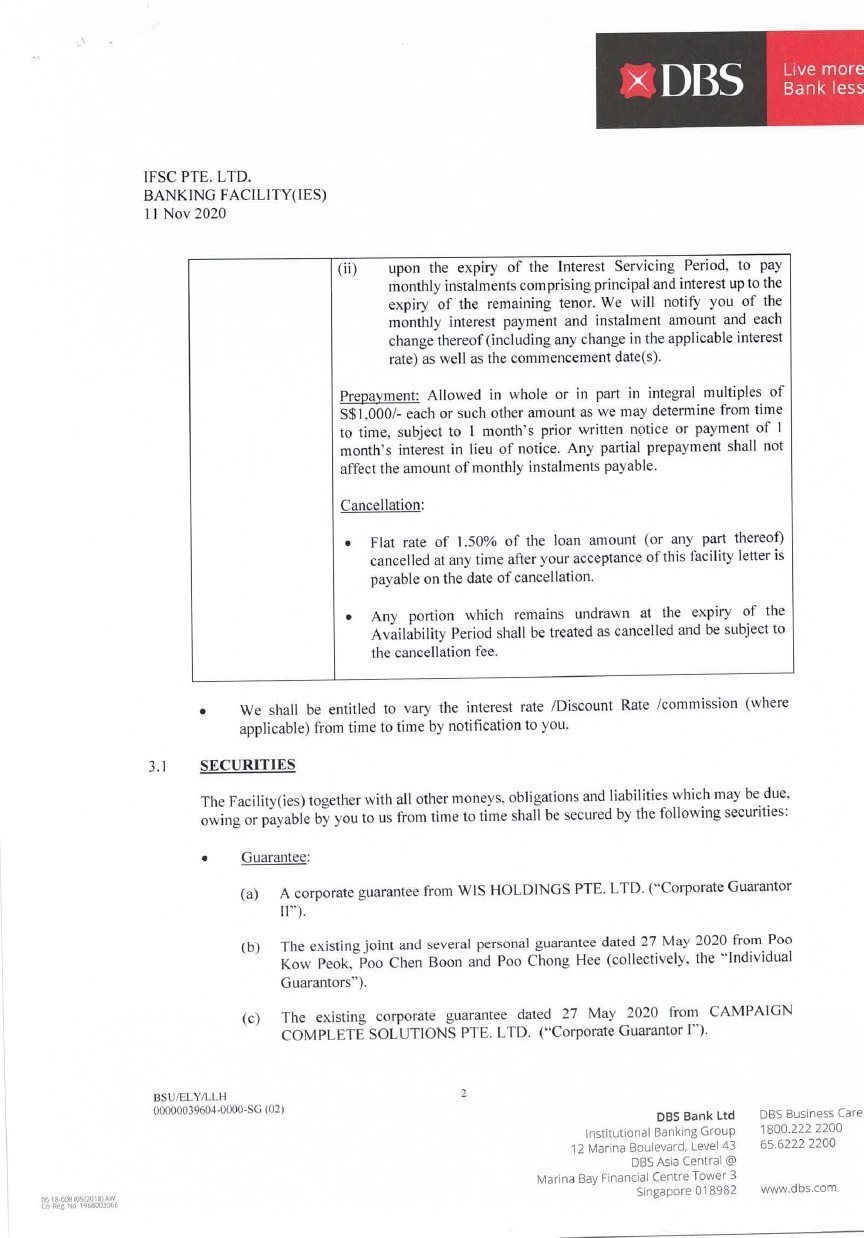
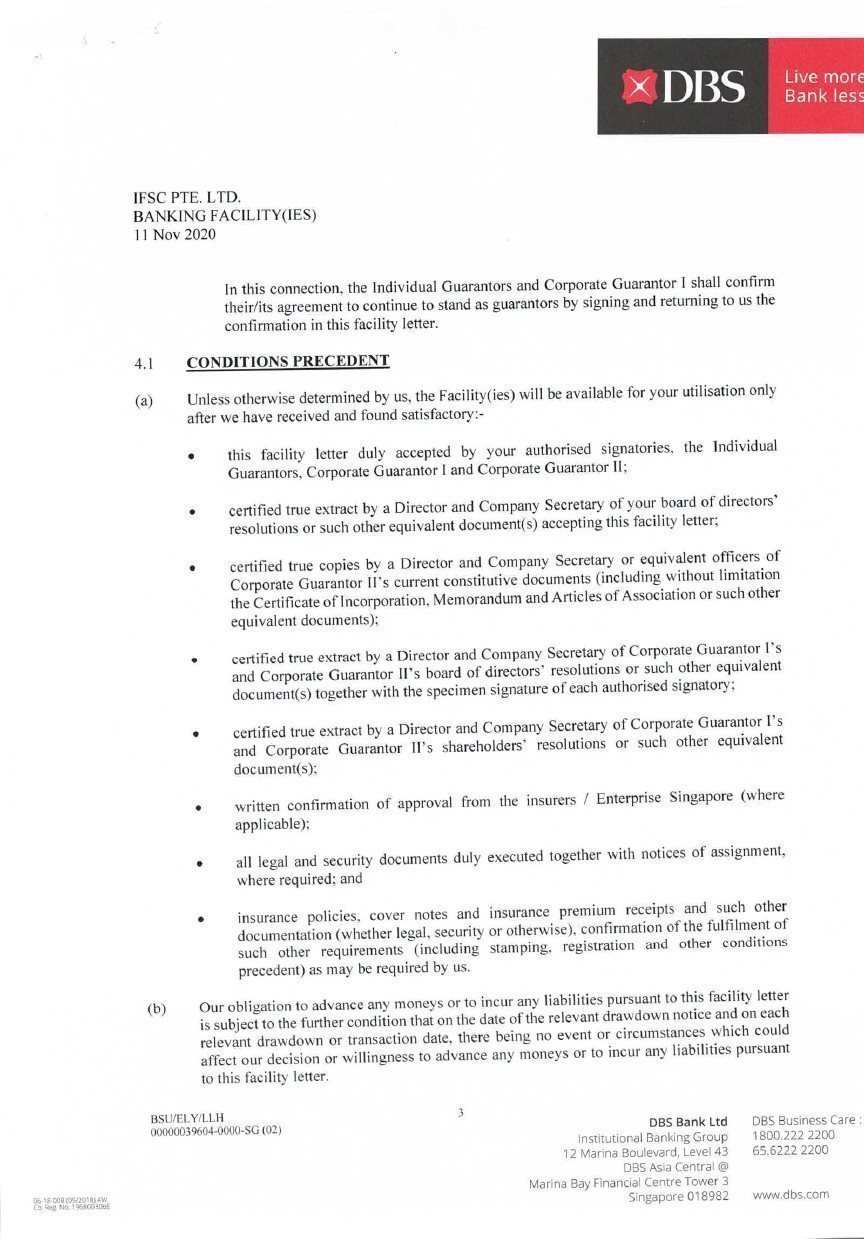
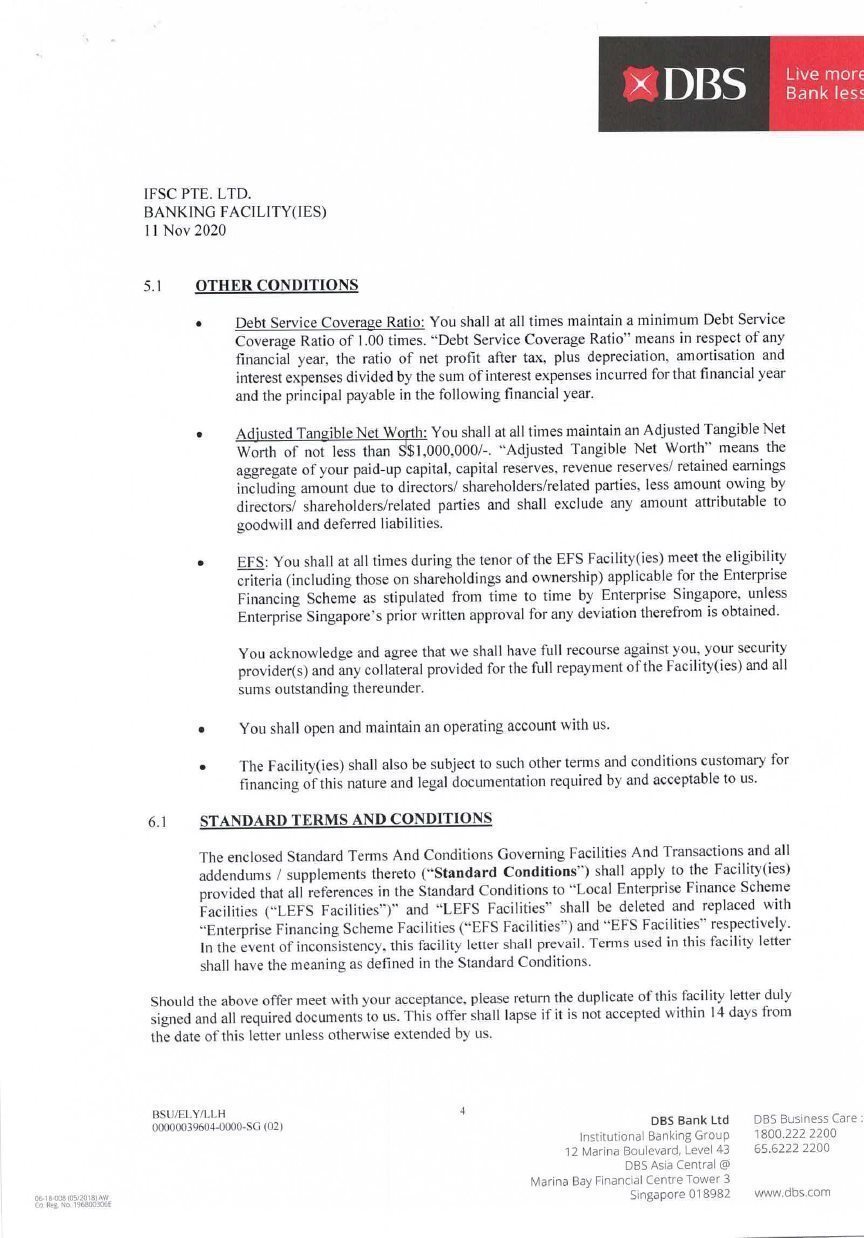

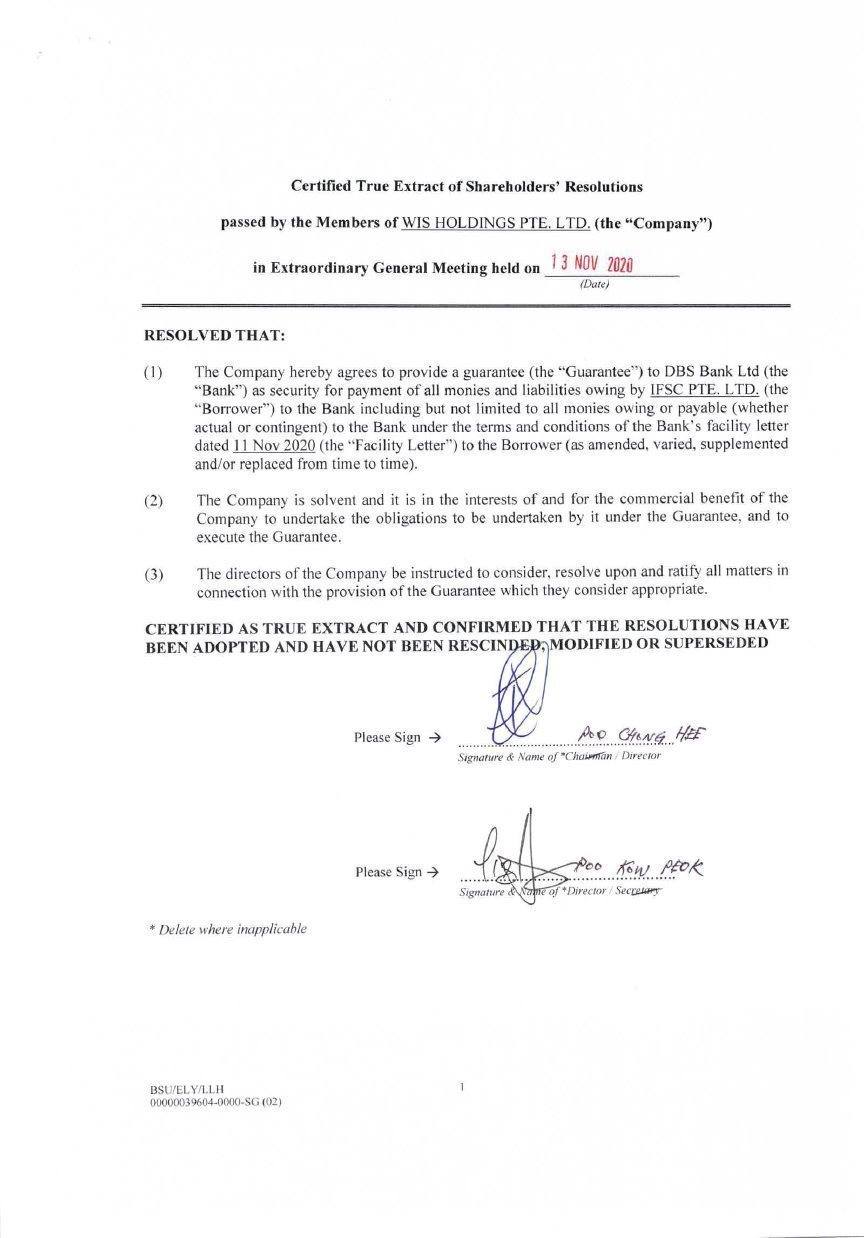
EXHIBIT 10.9
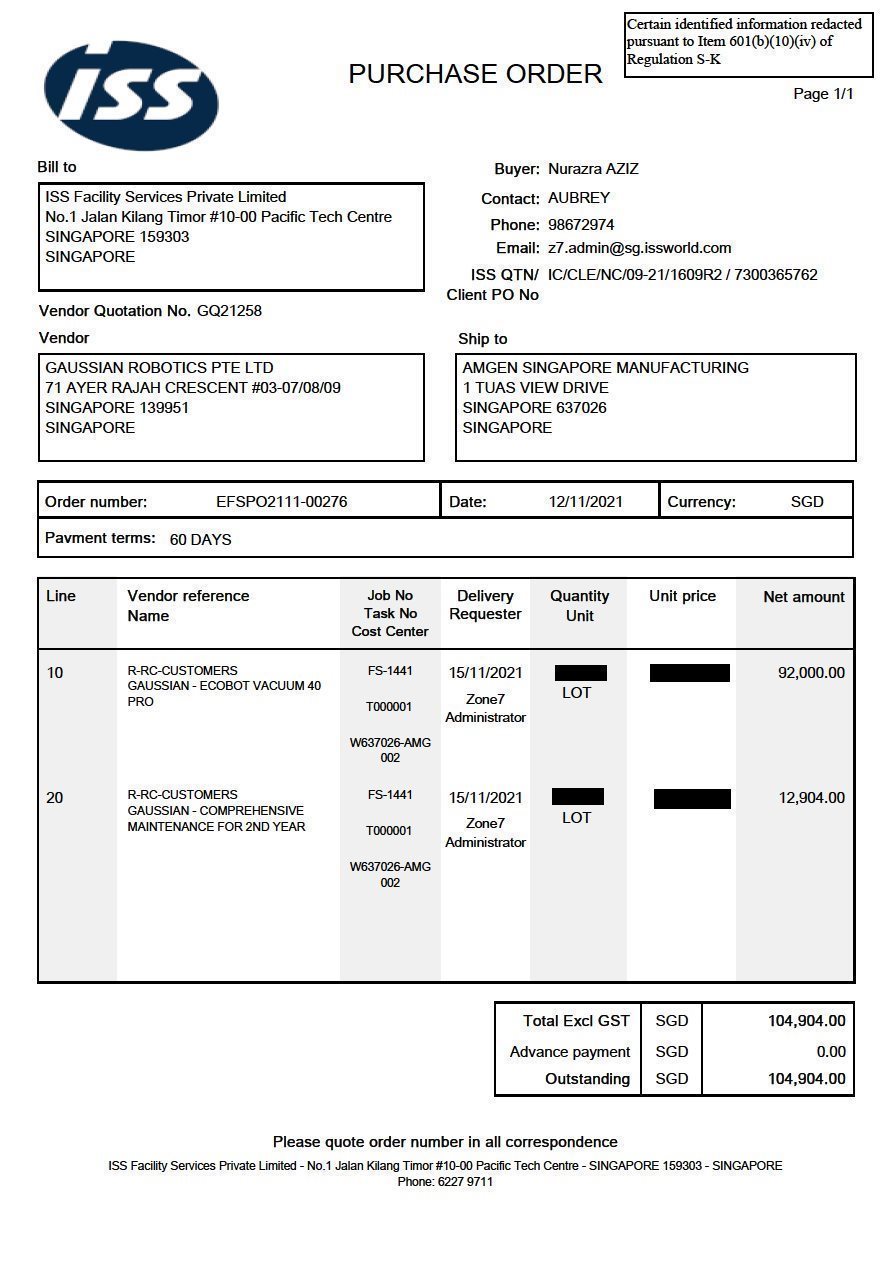
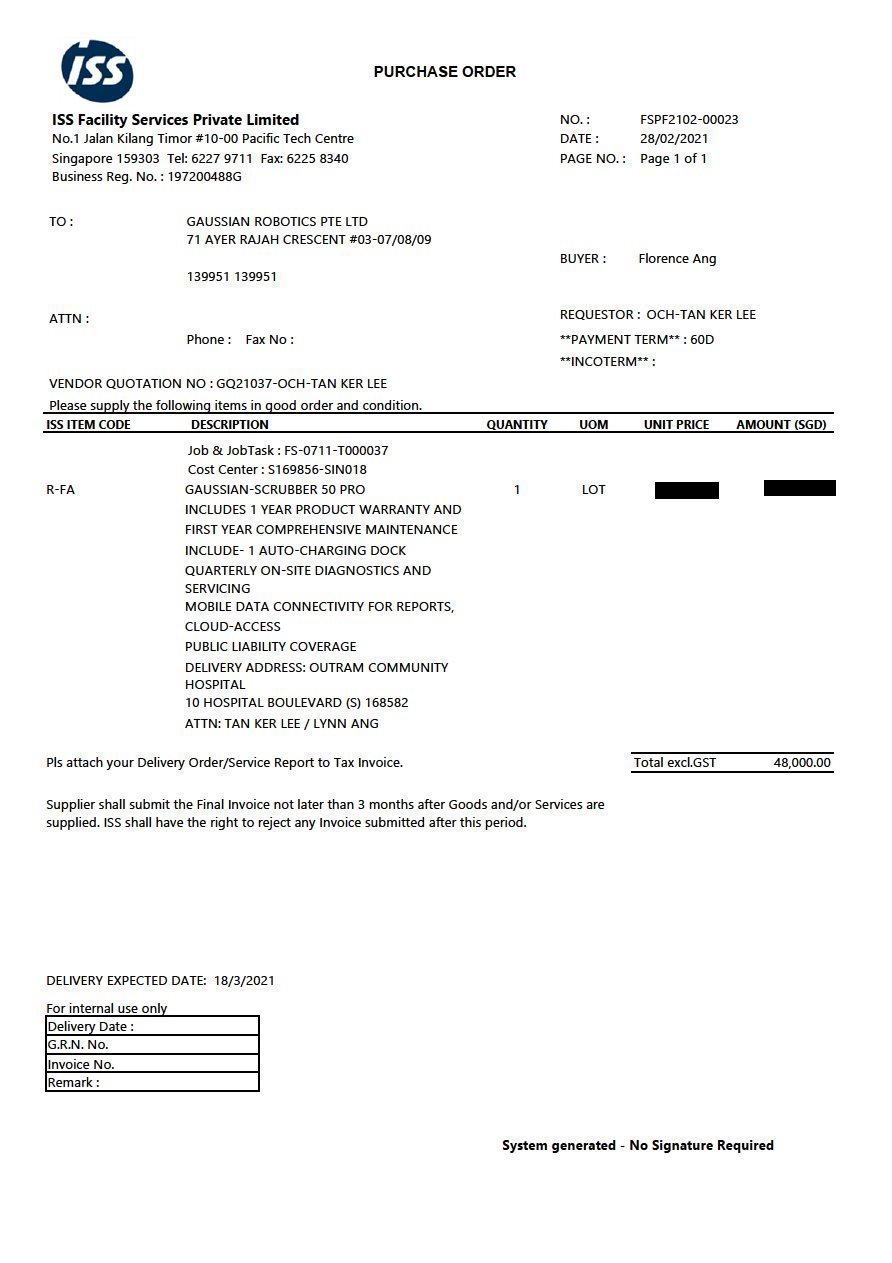
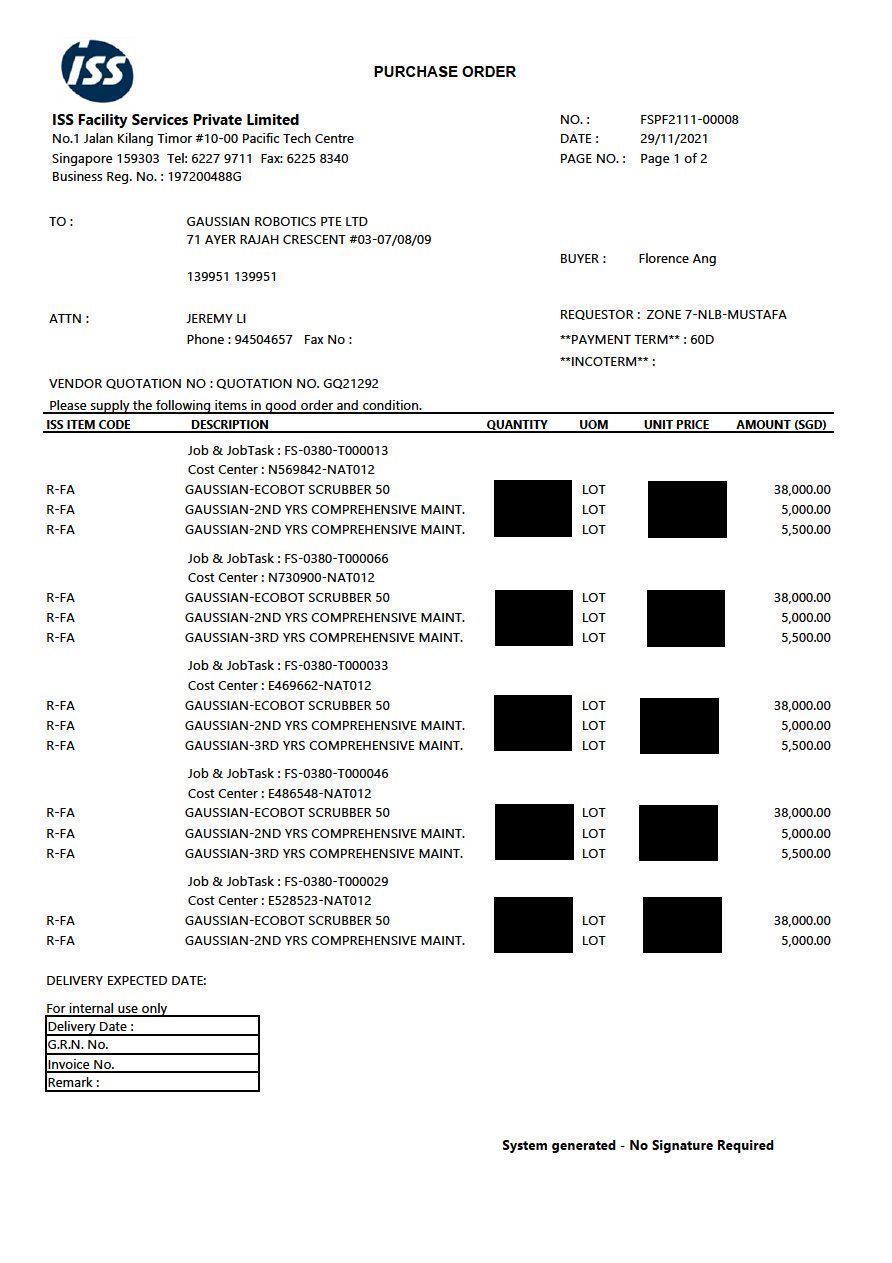
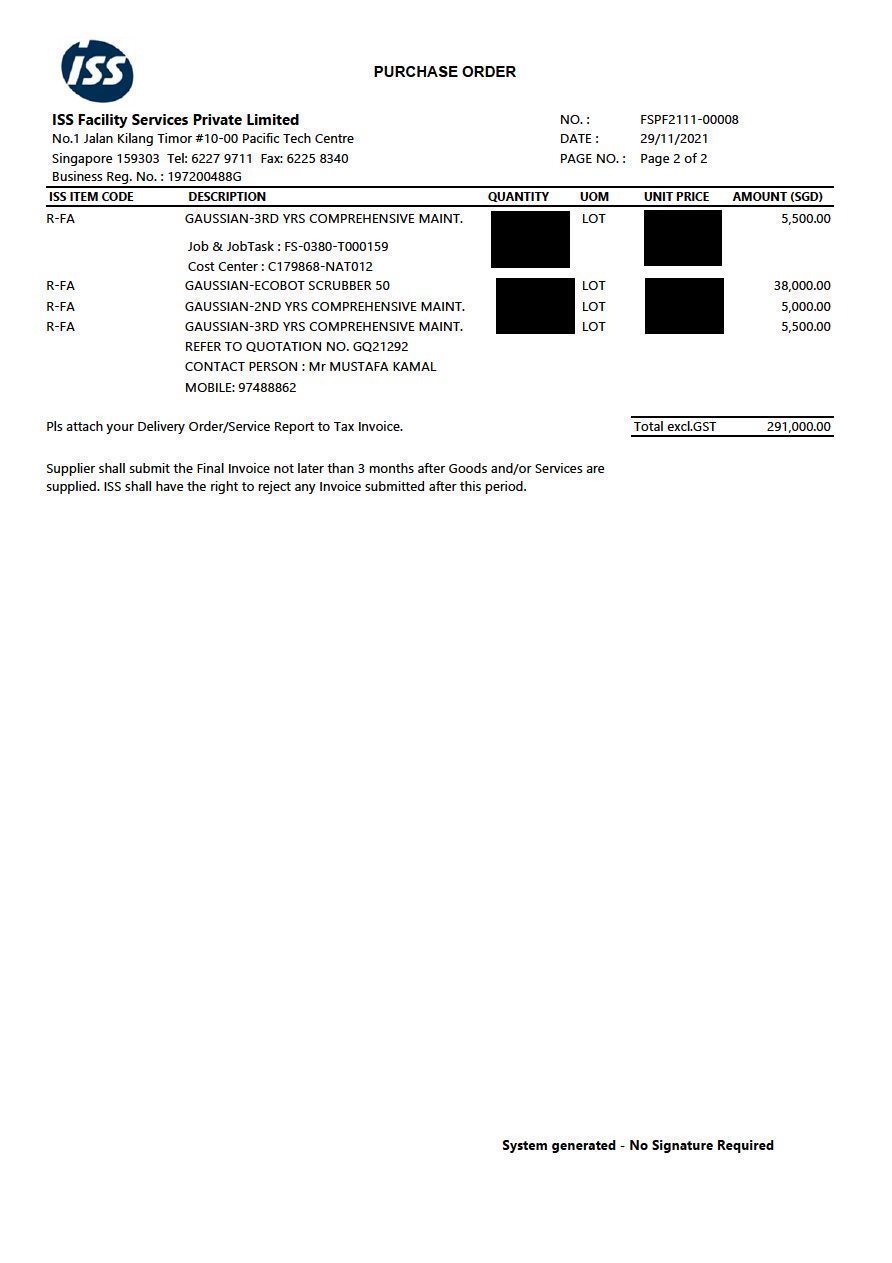
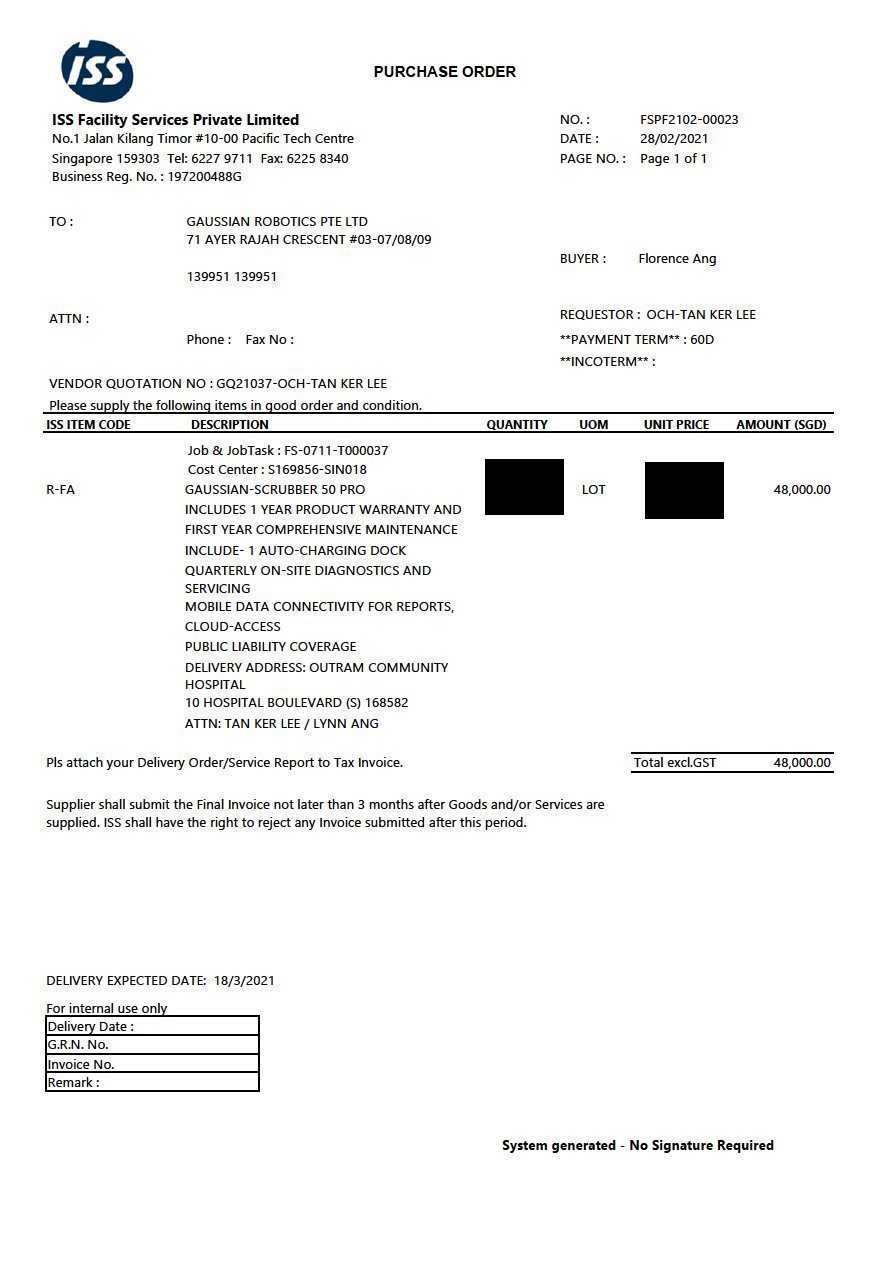
EXHIBIT 10.10
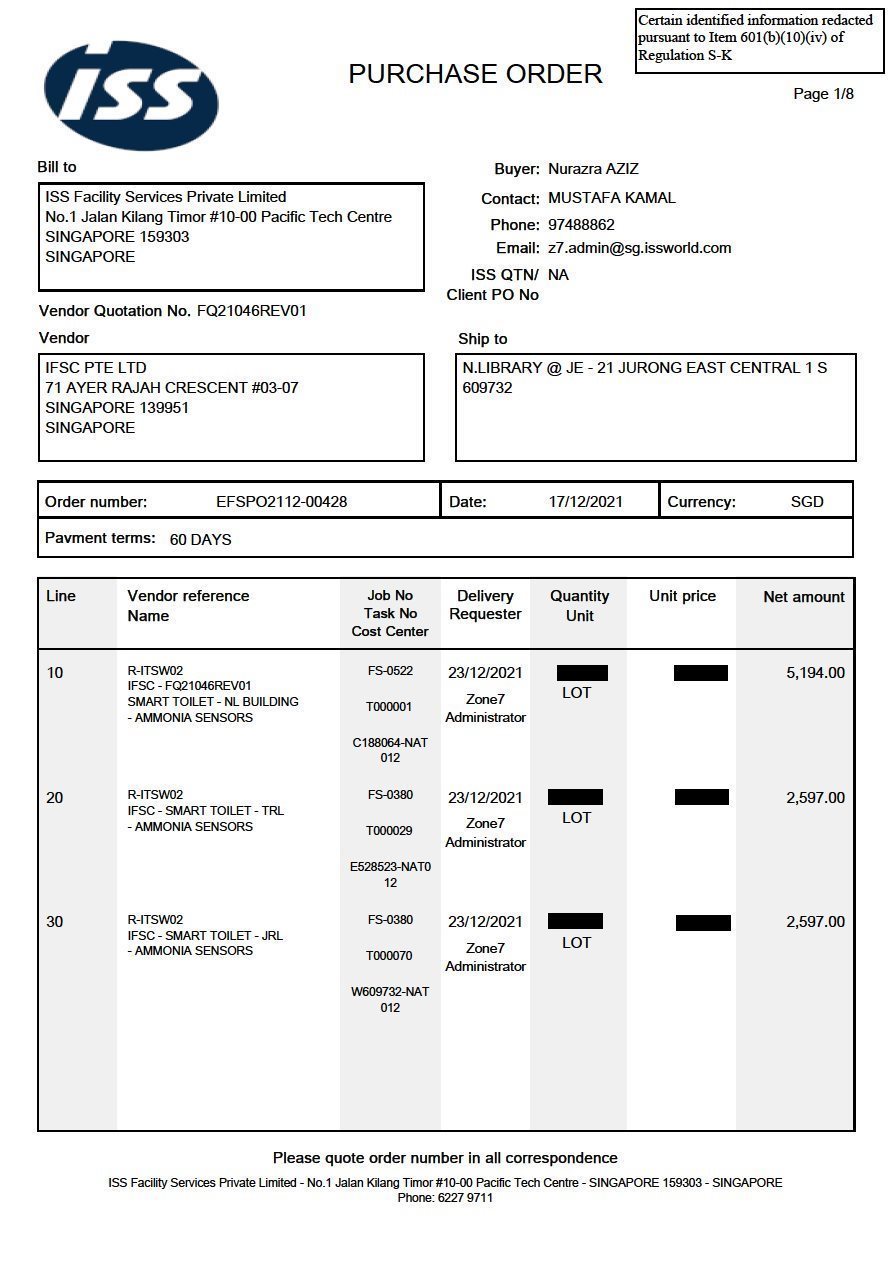
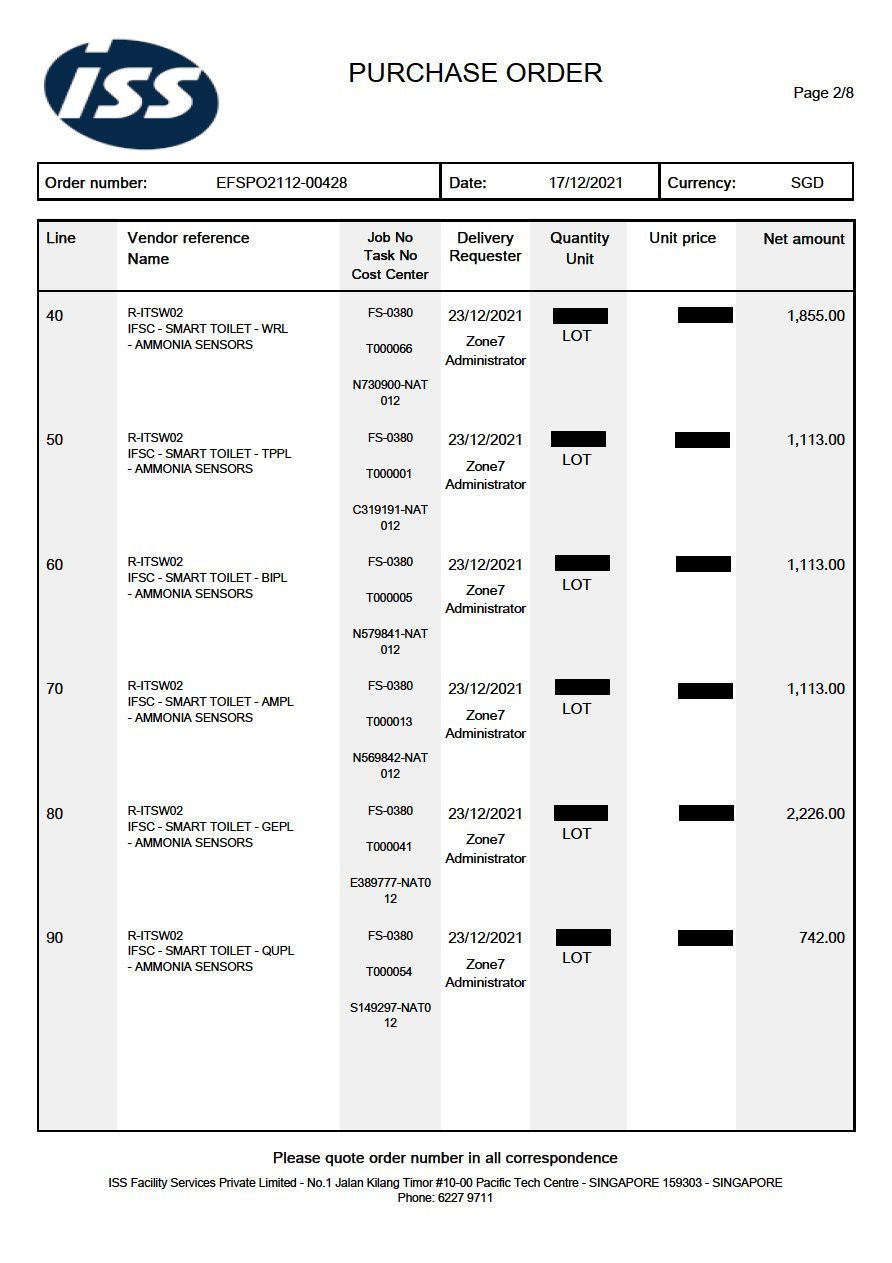
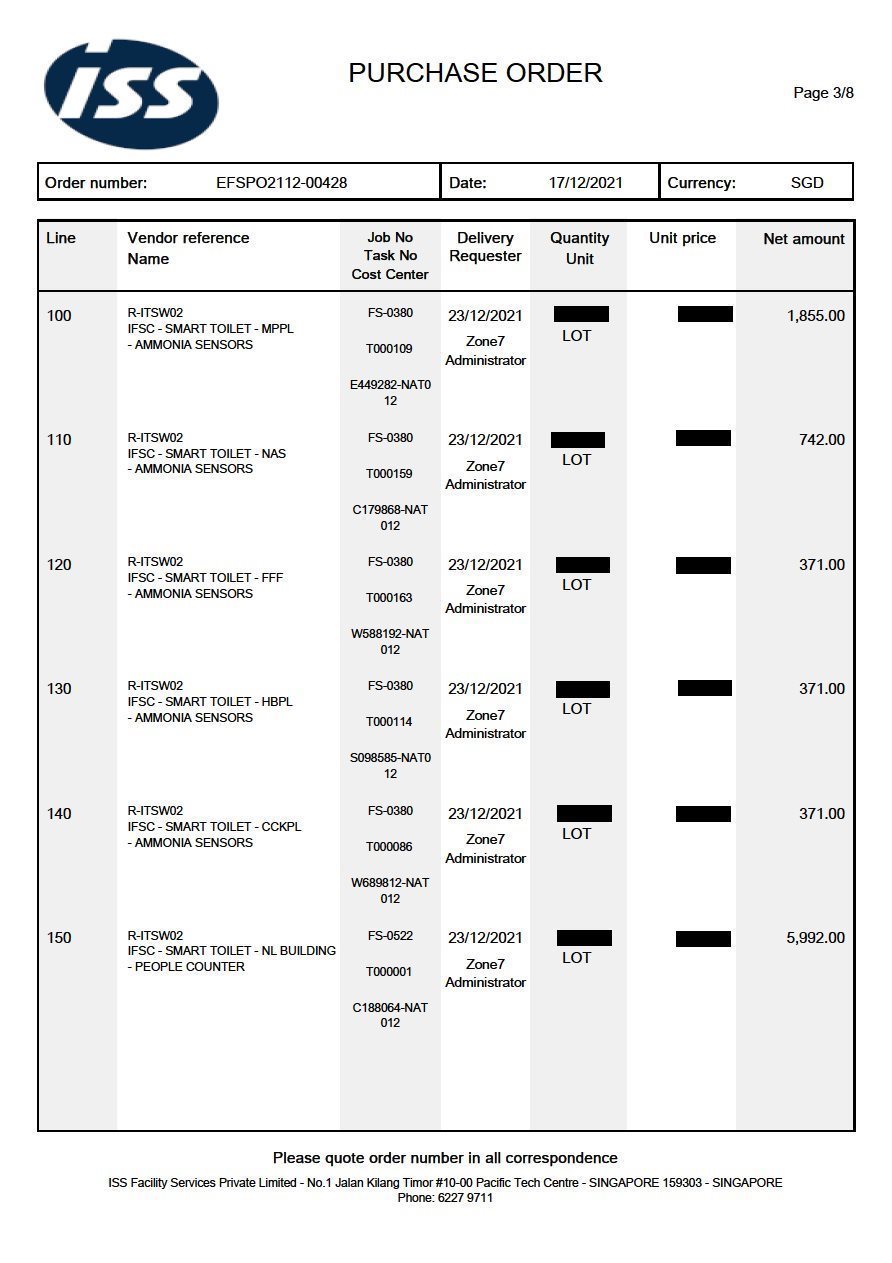
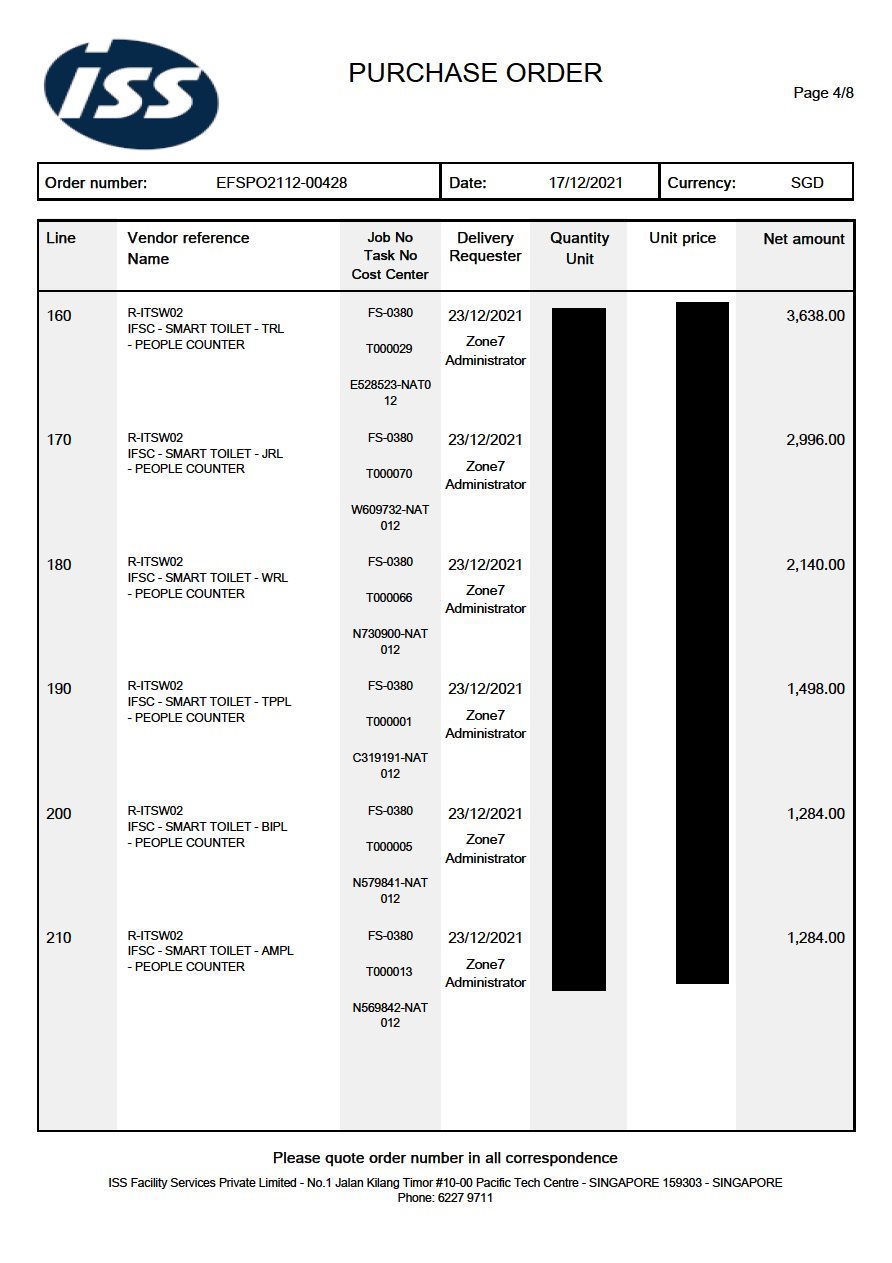
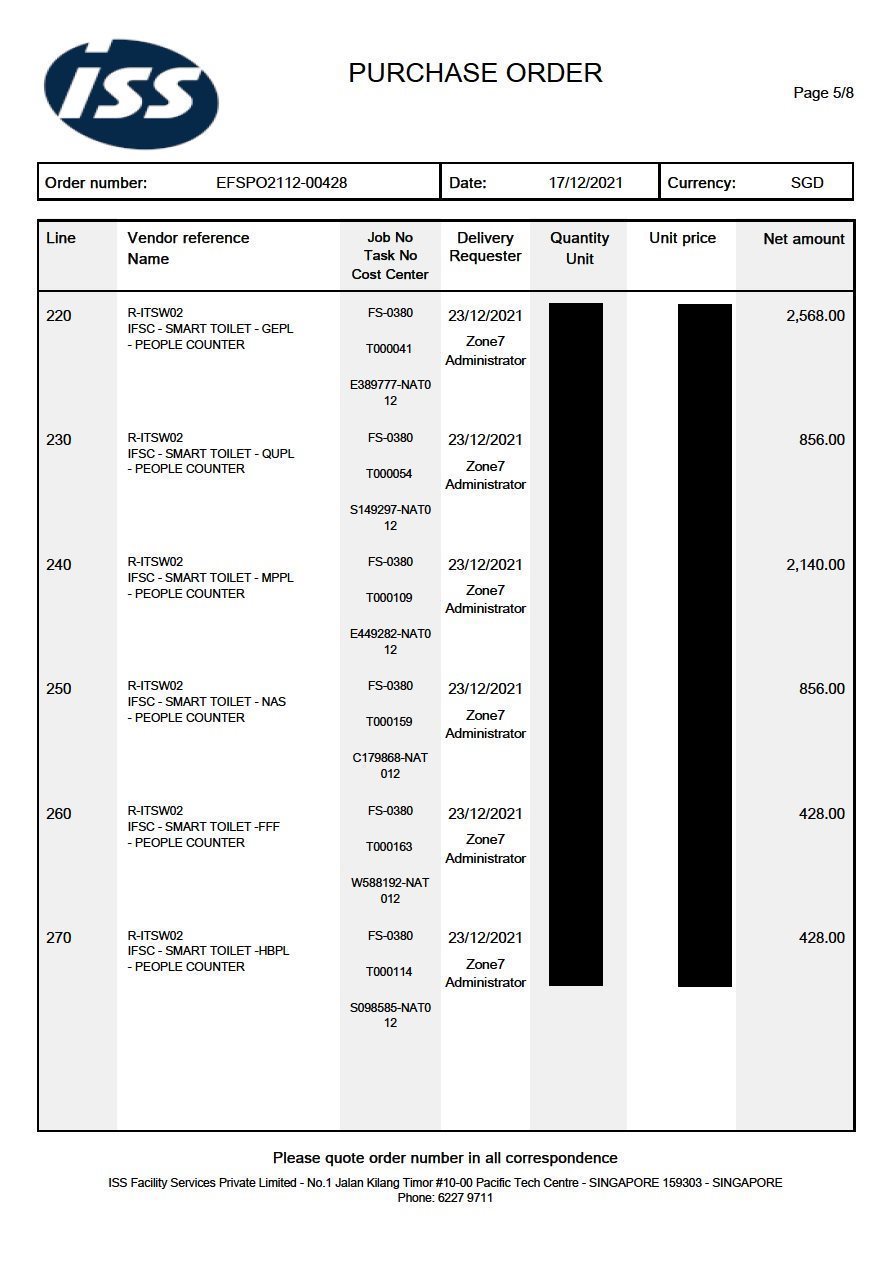
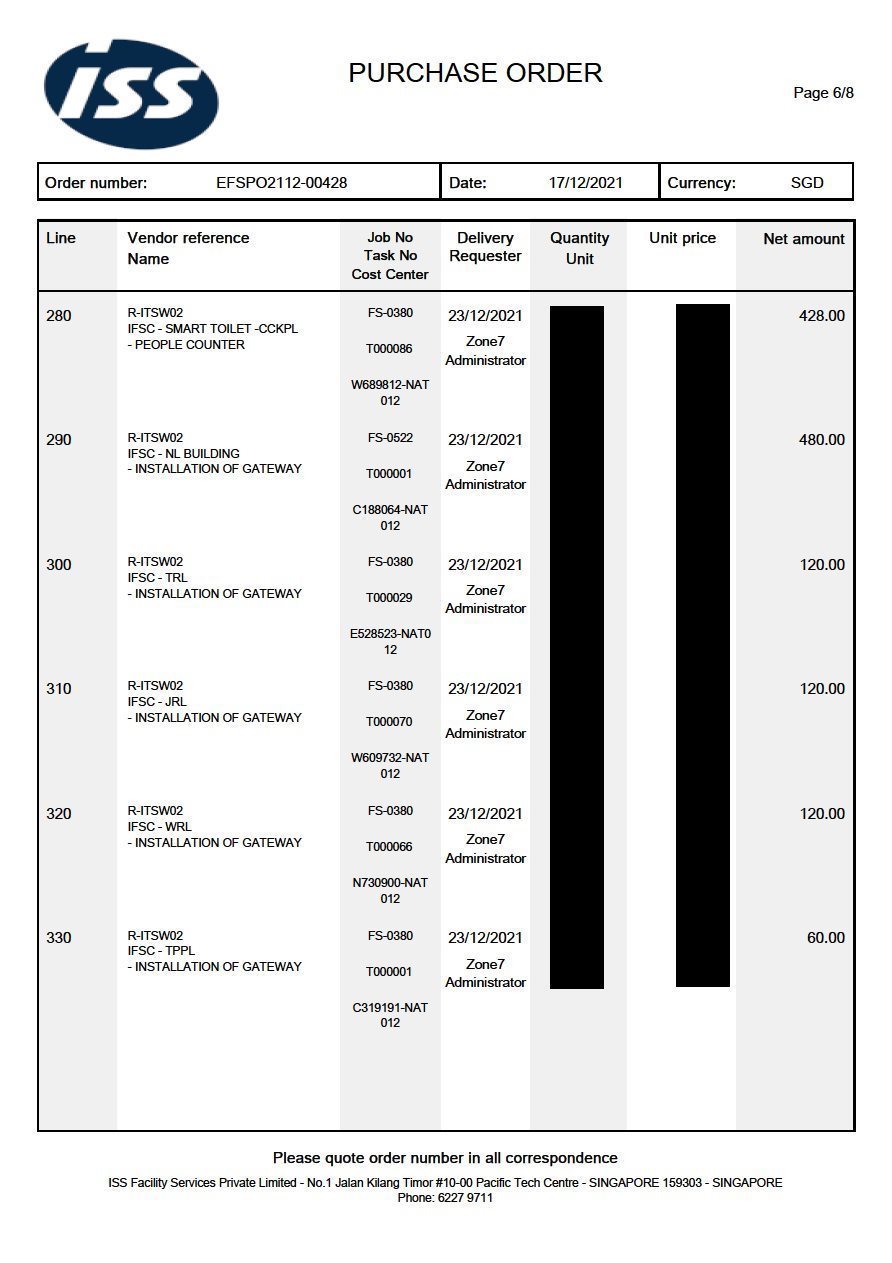
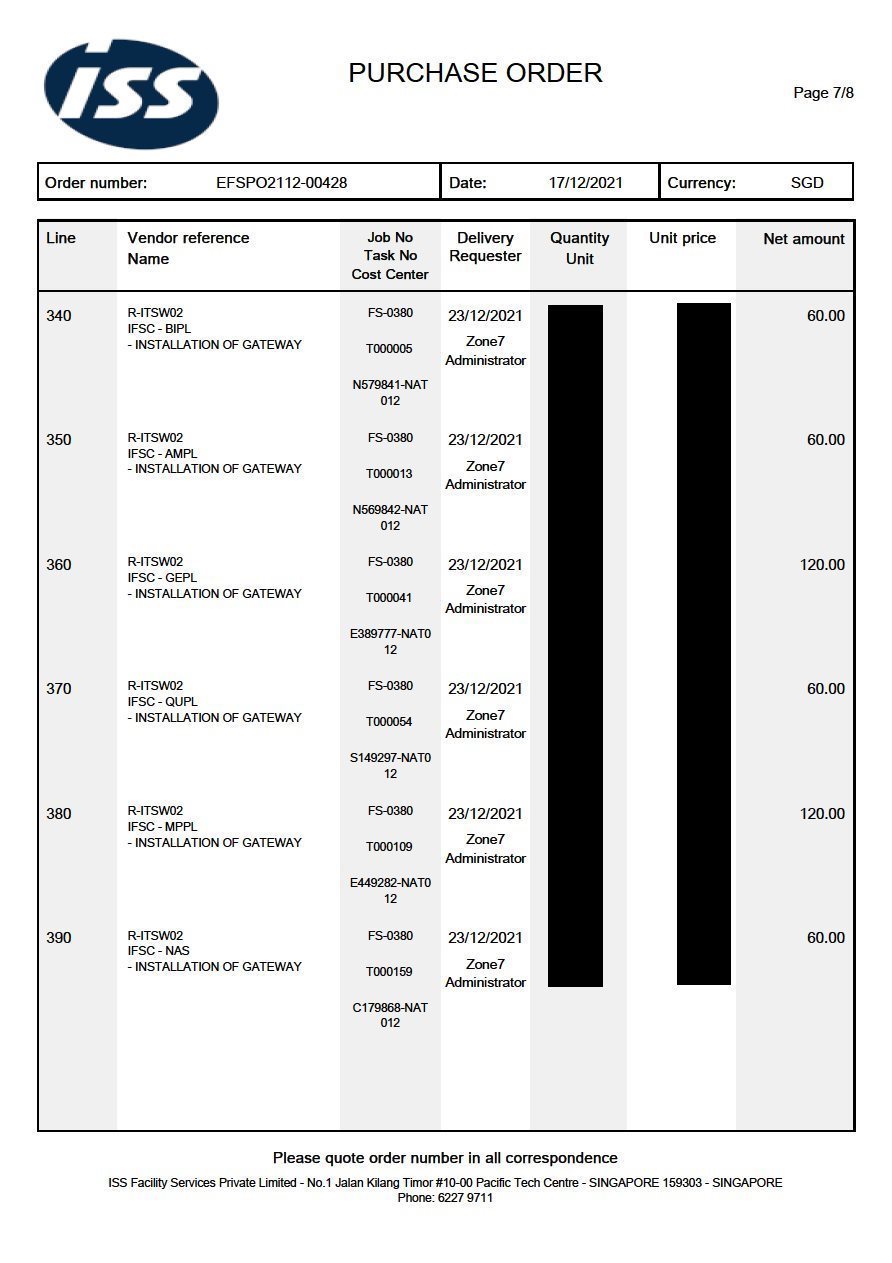
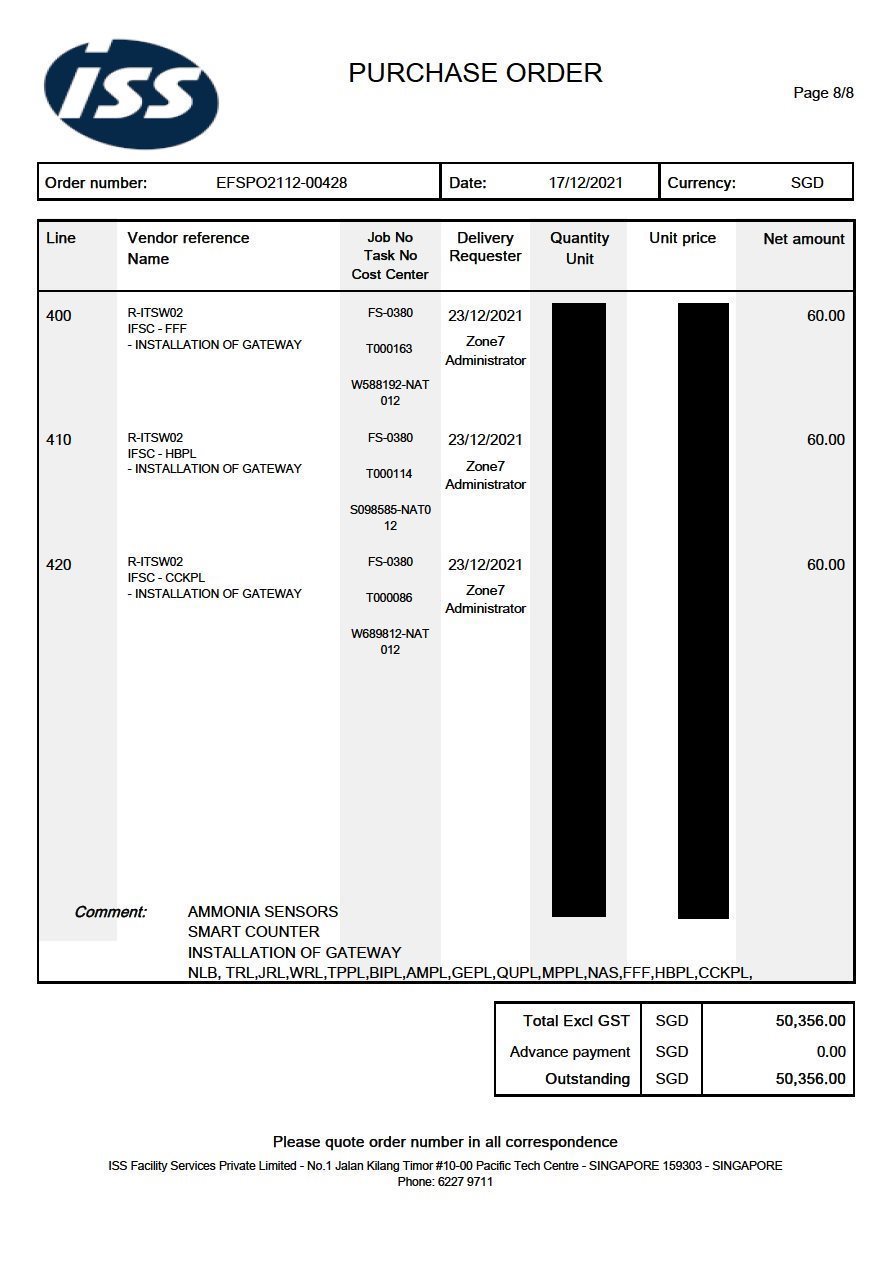
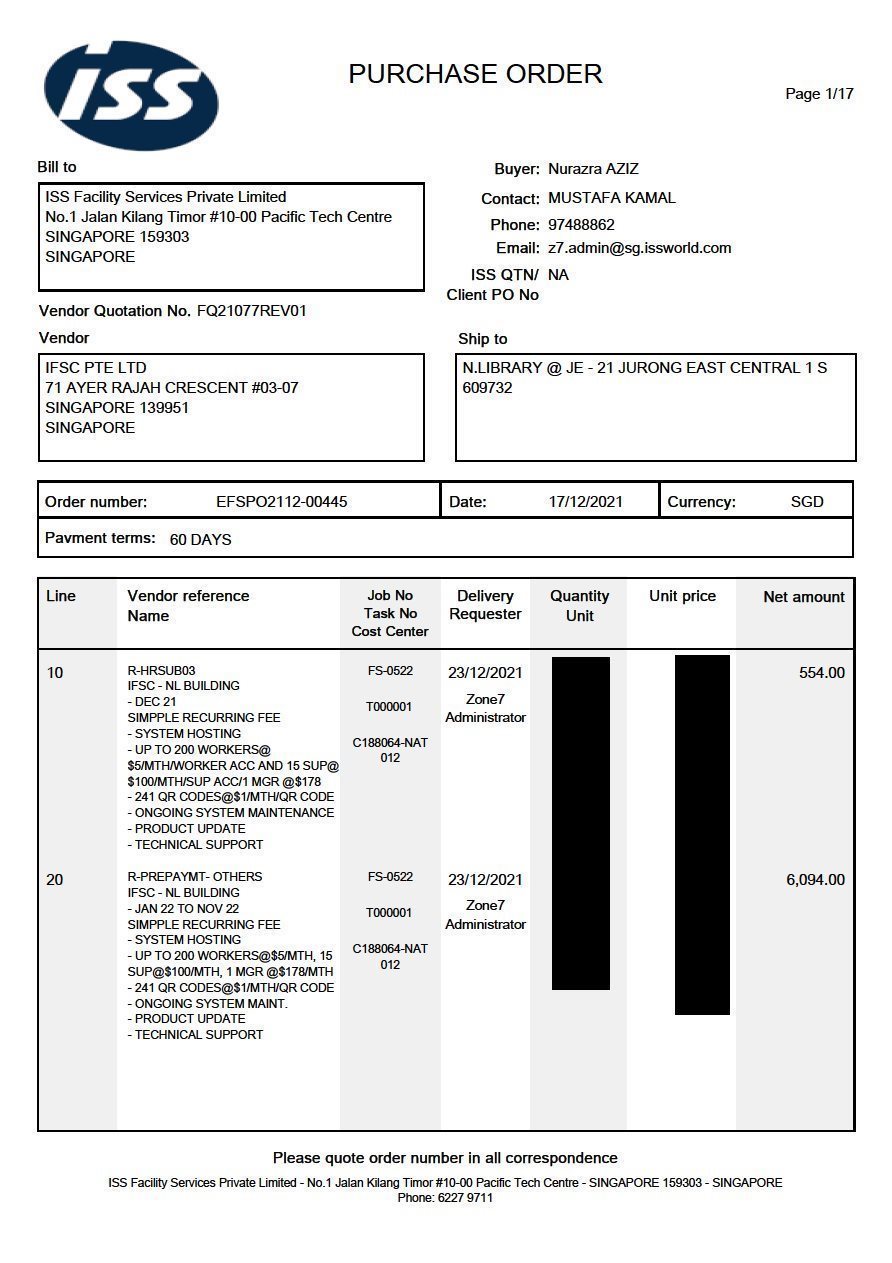
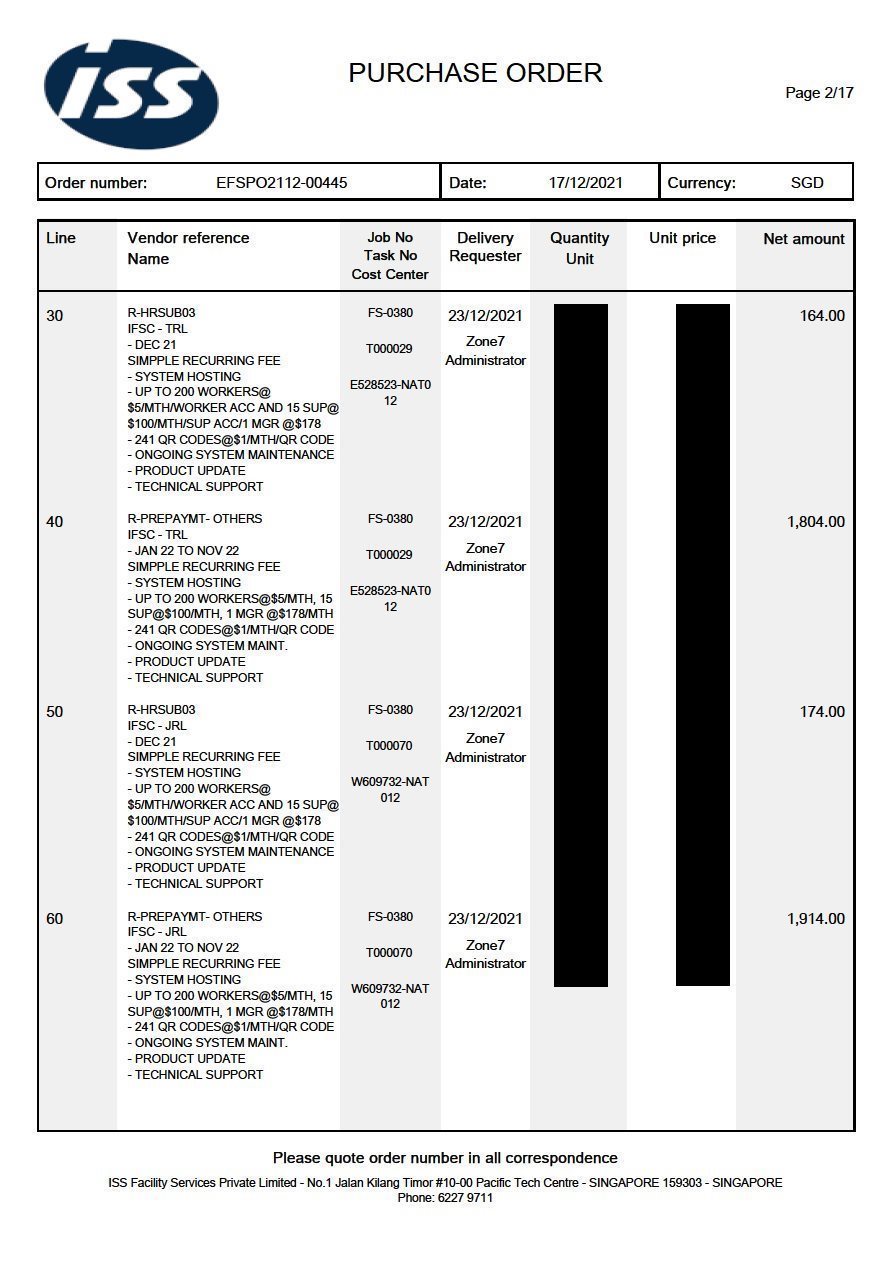
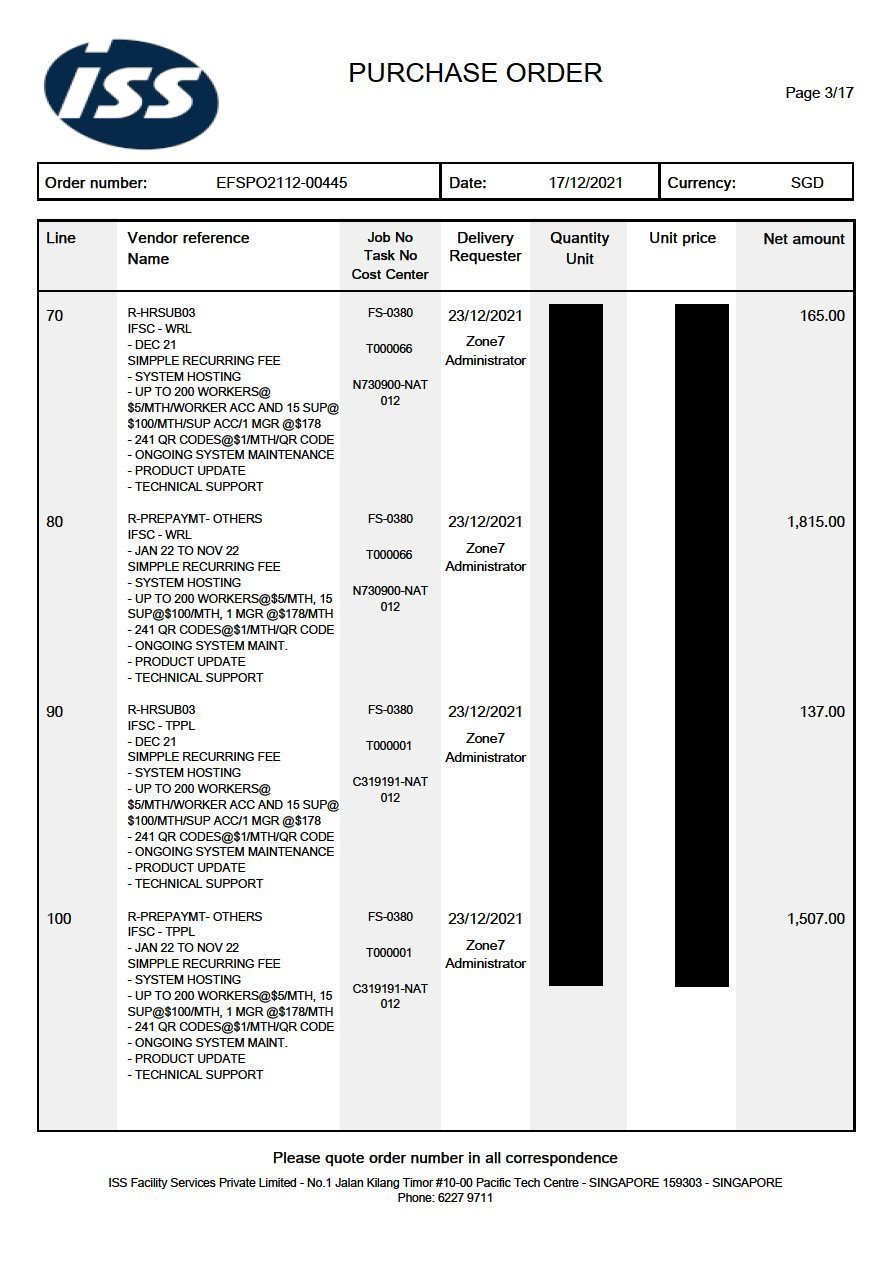
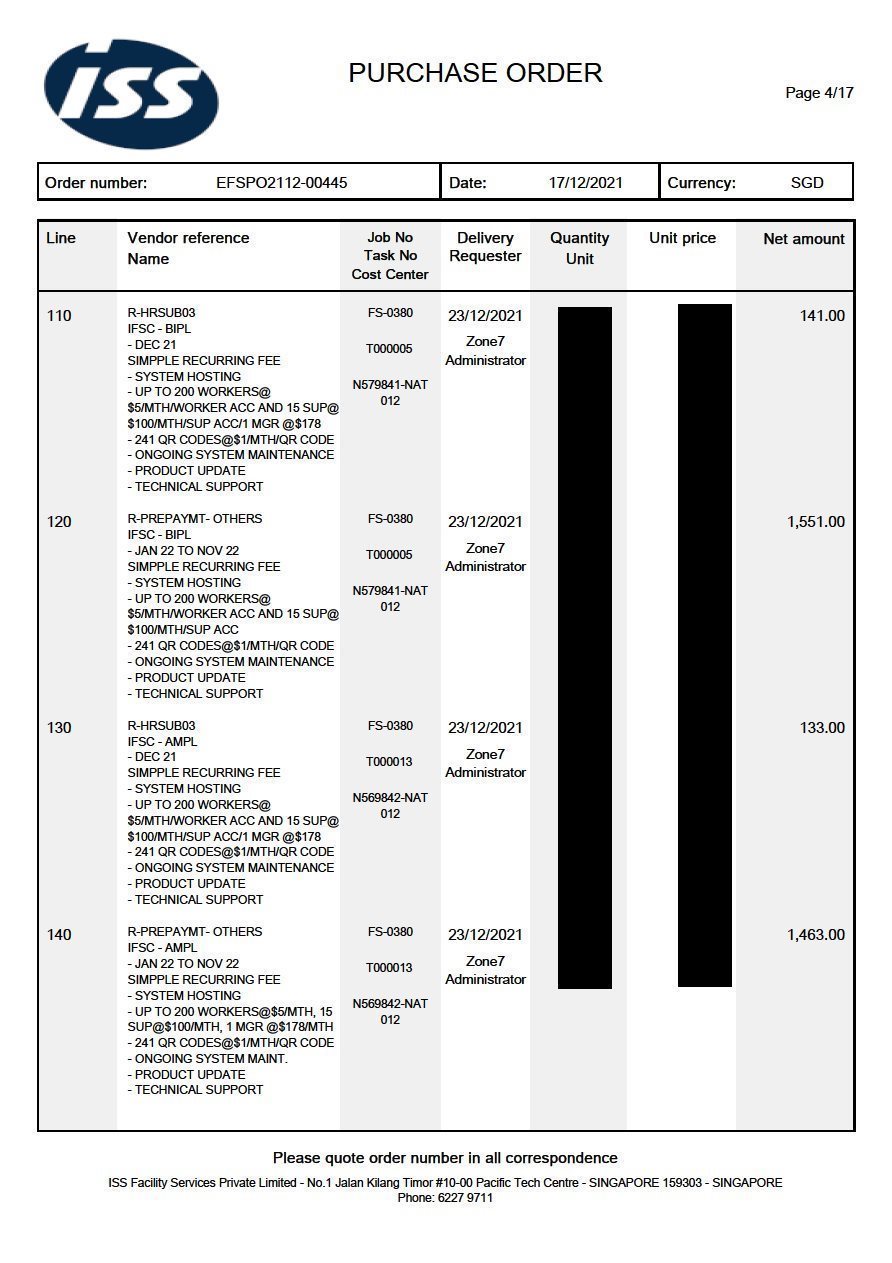
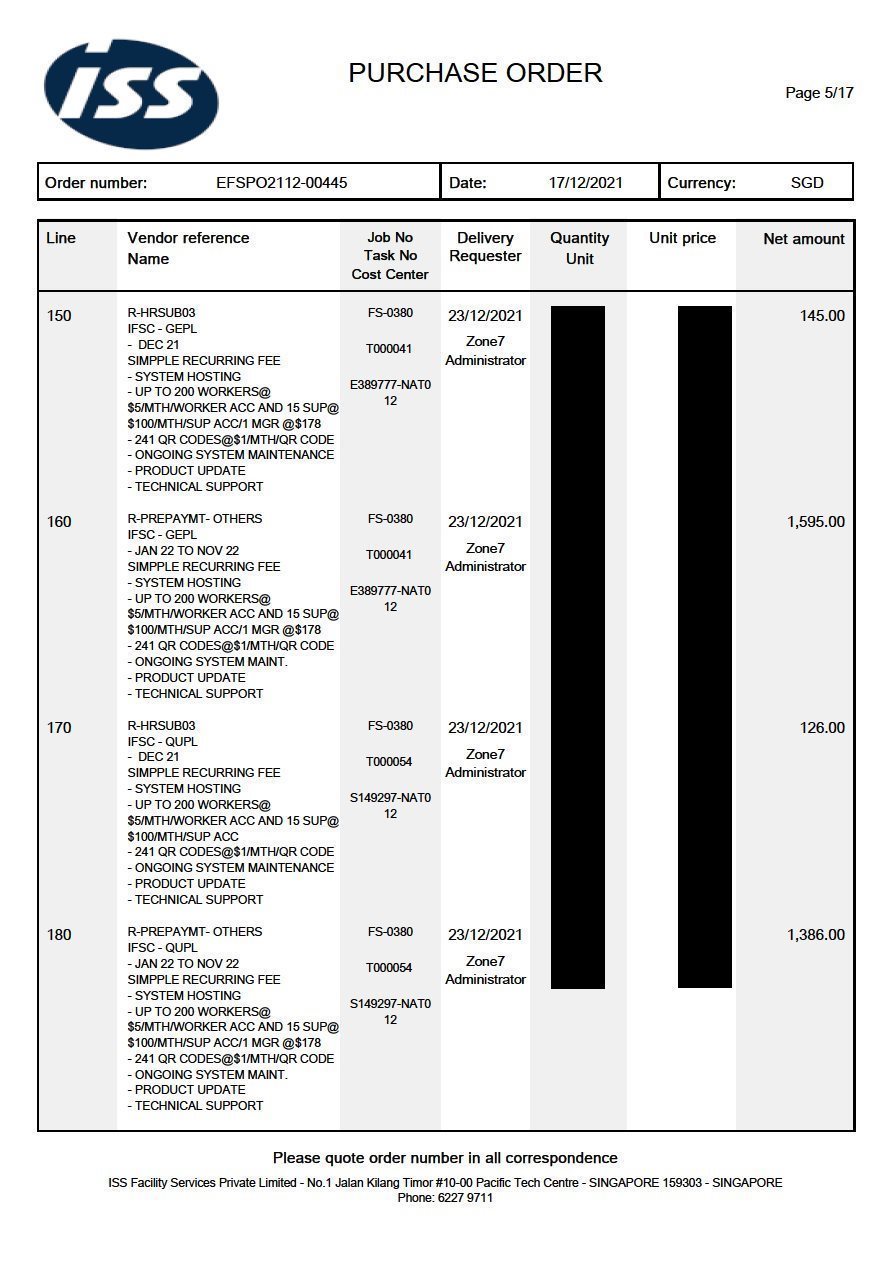
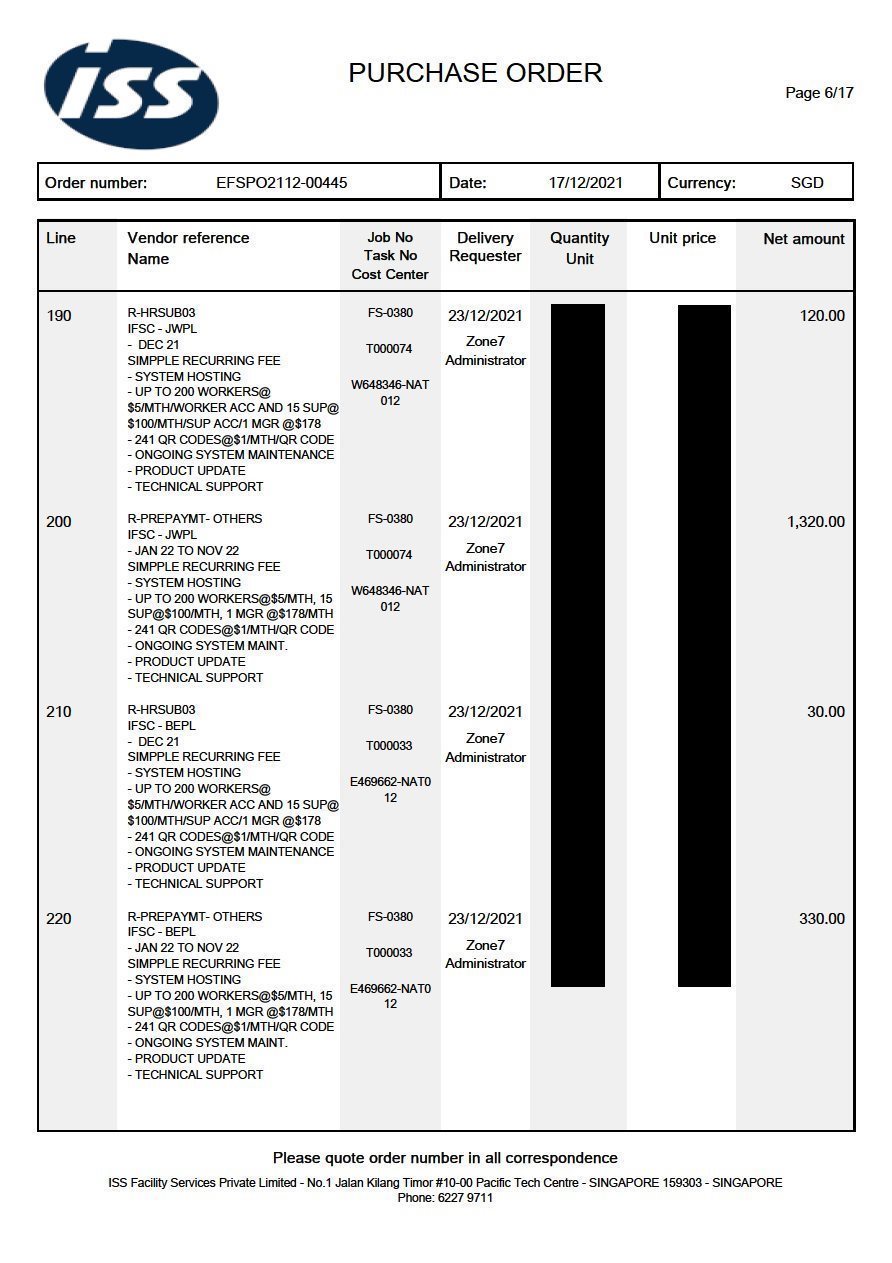
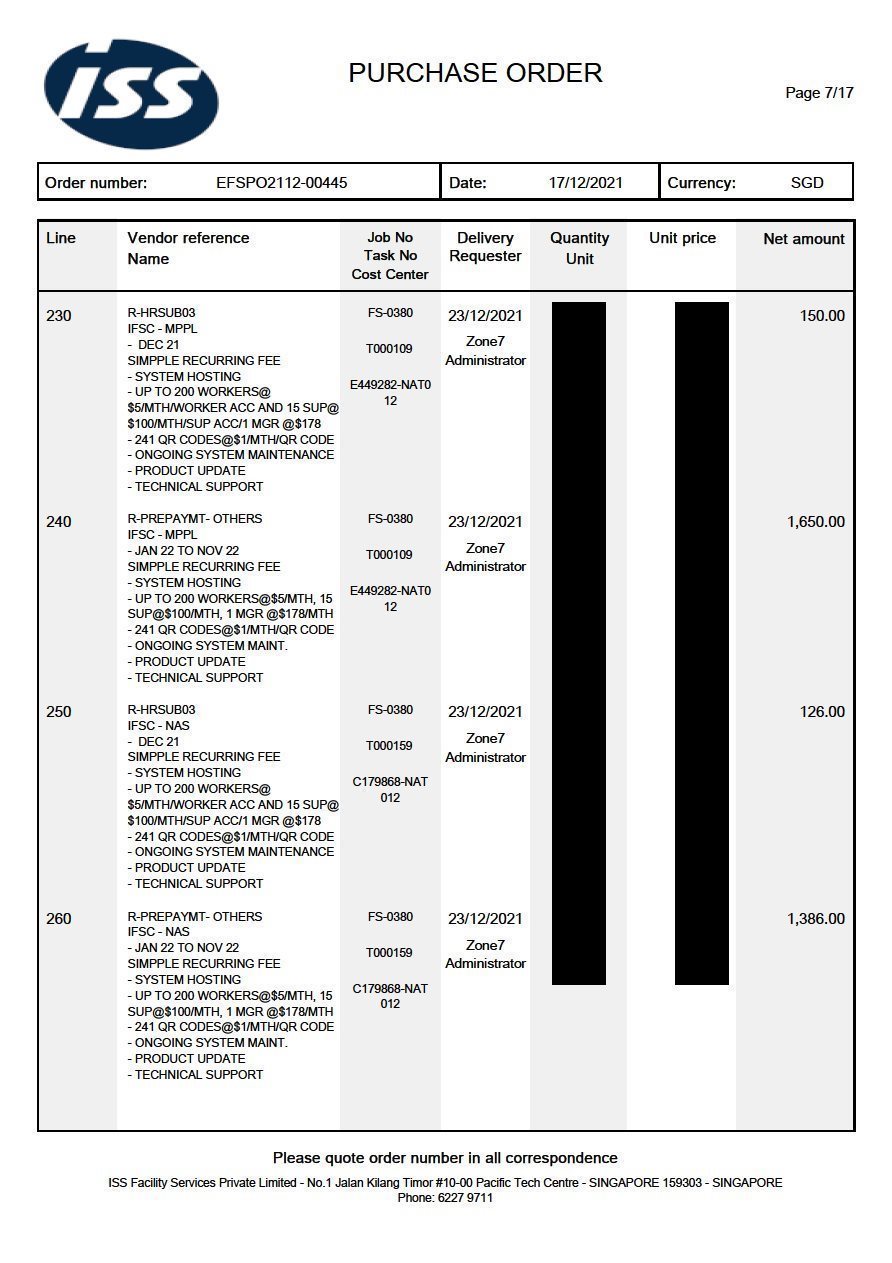
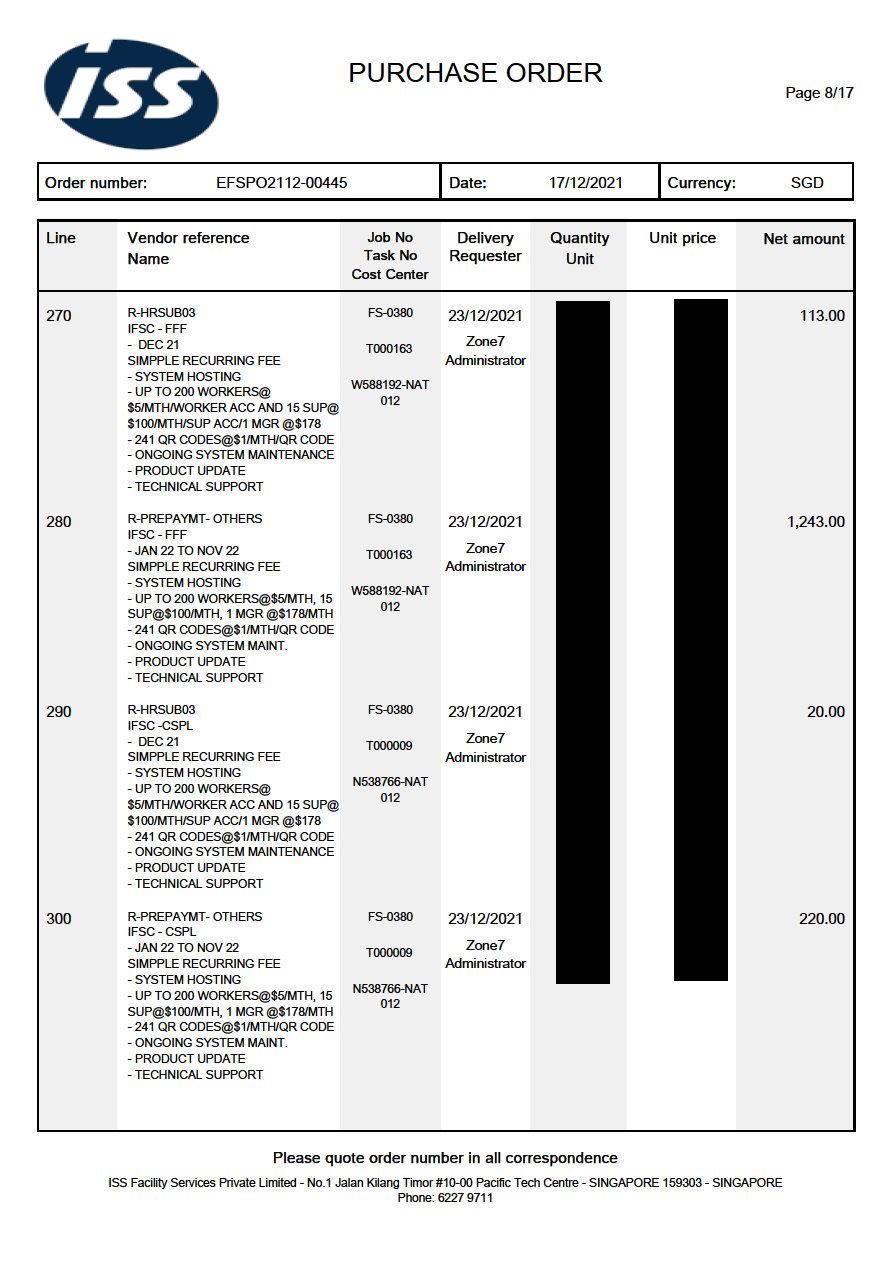
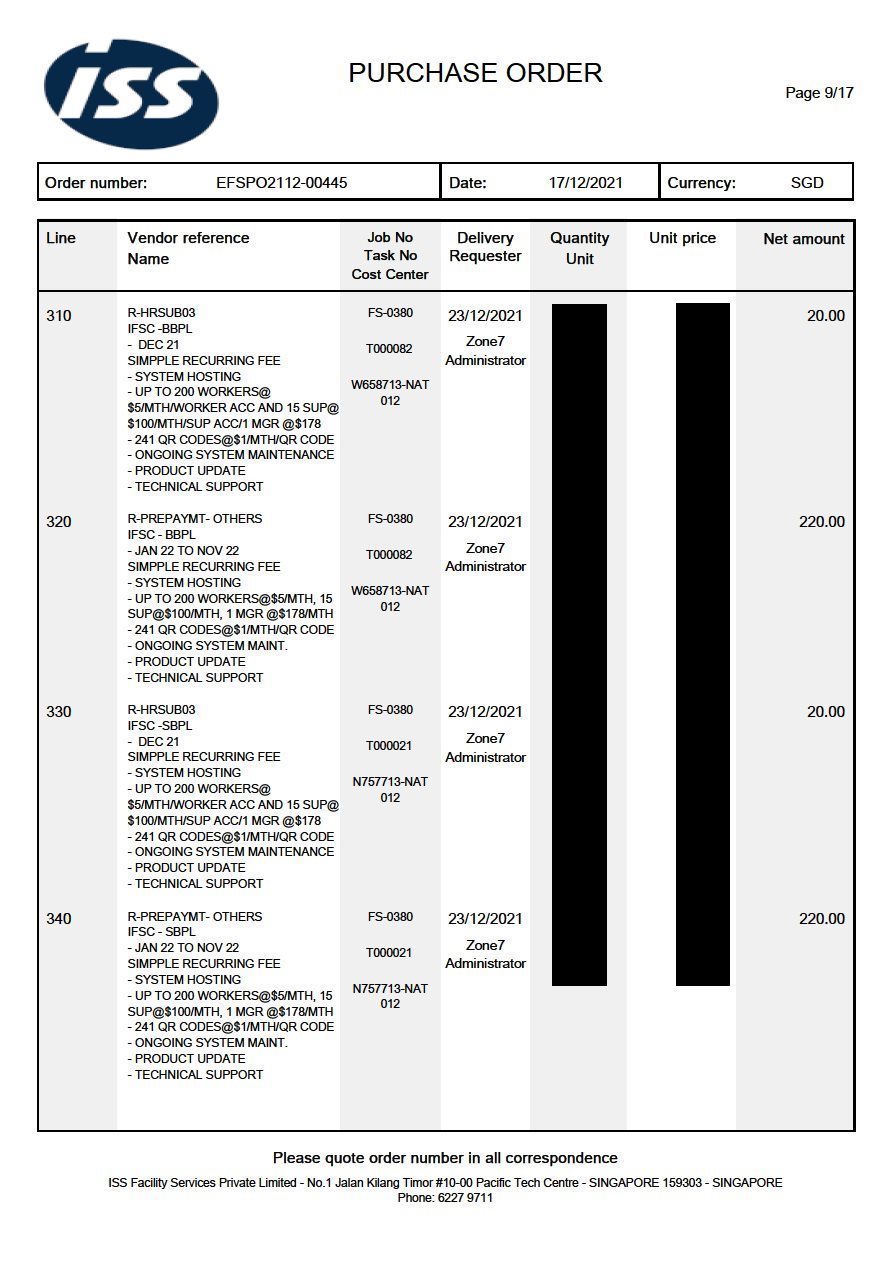
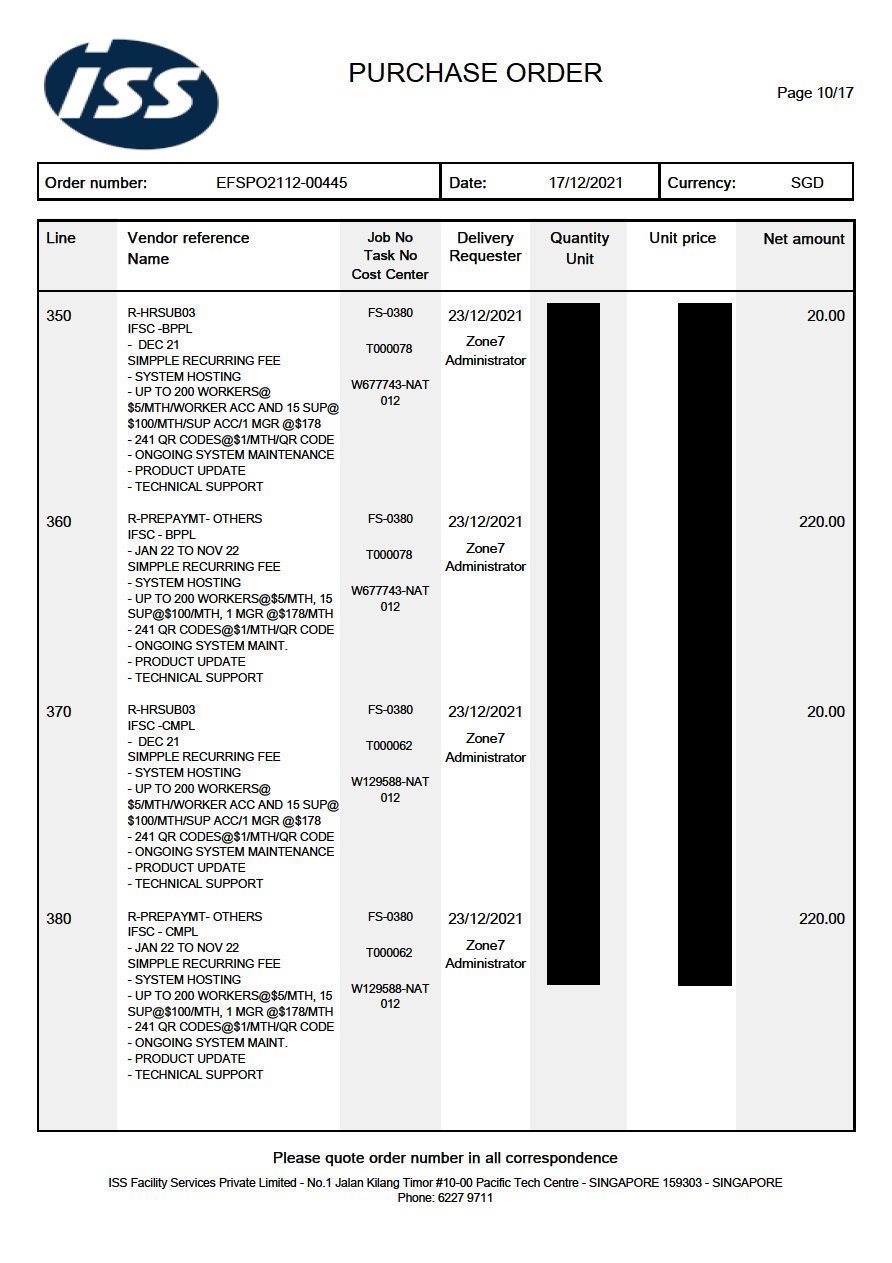
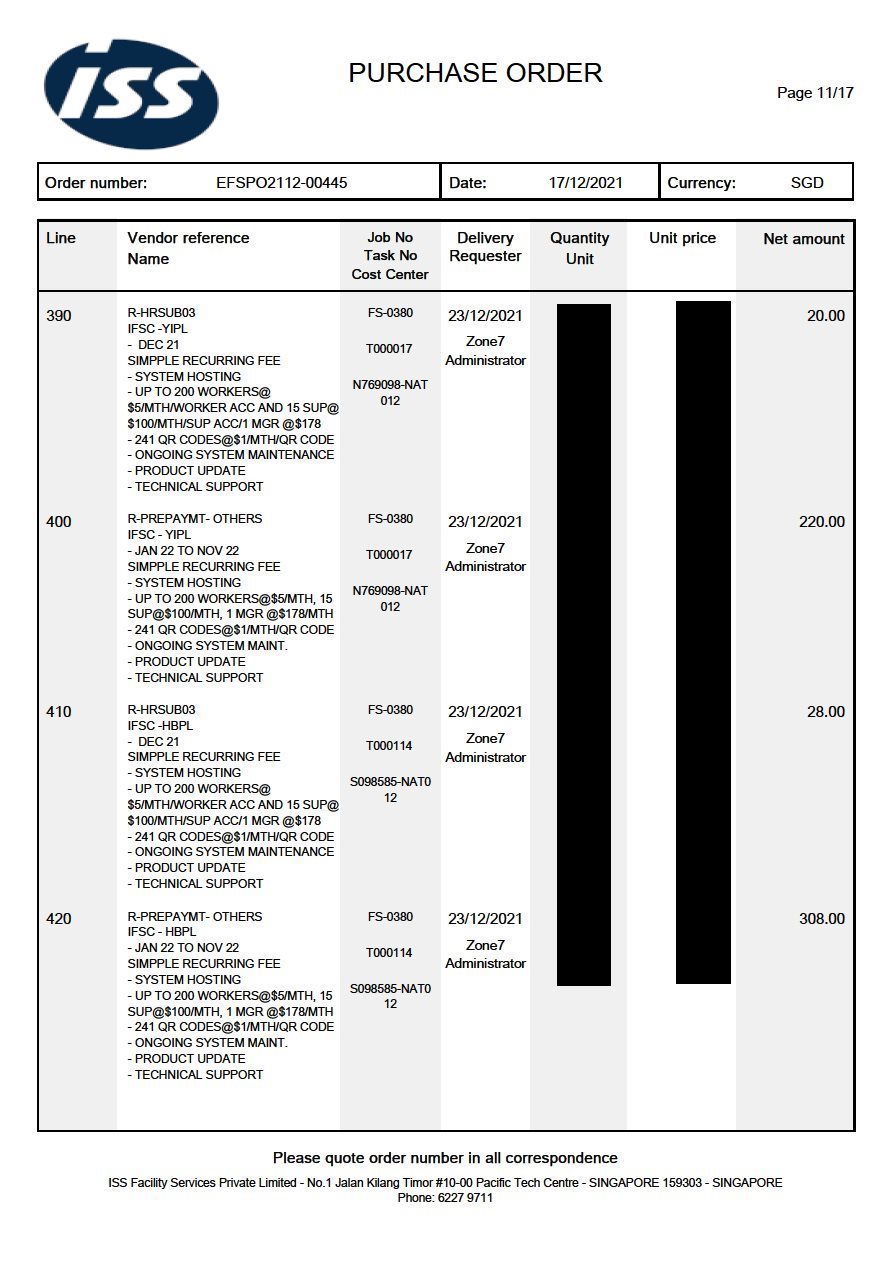
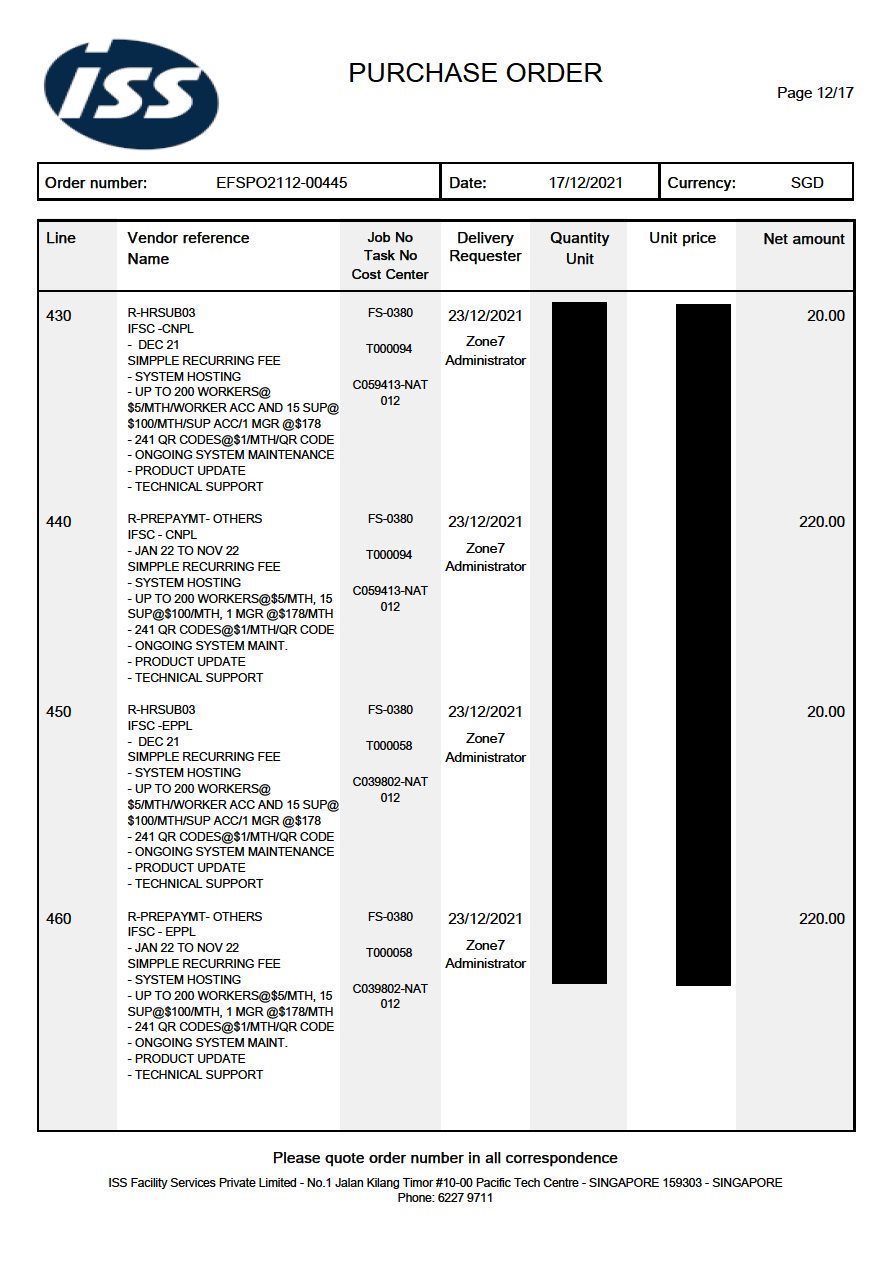

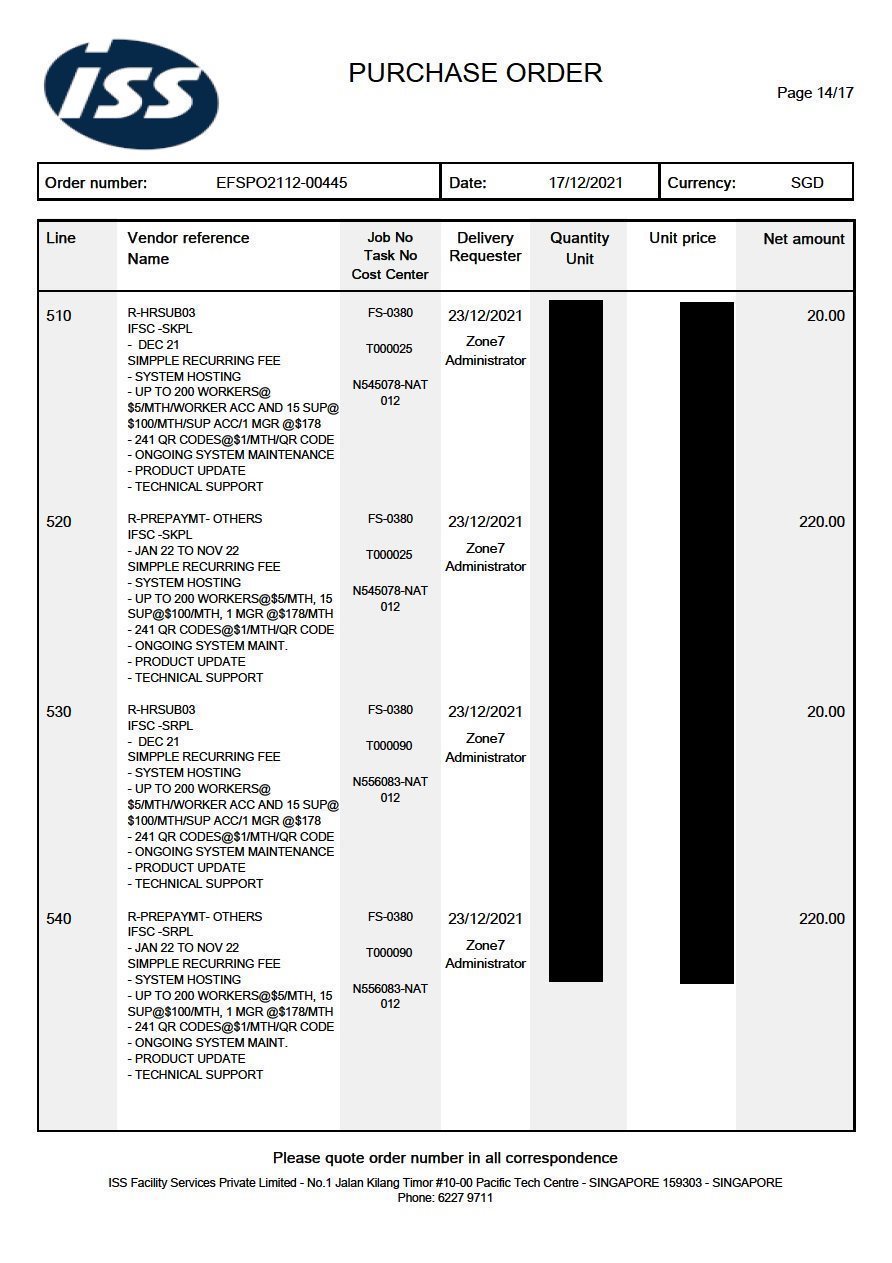
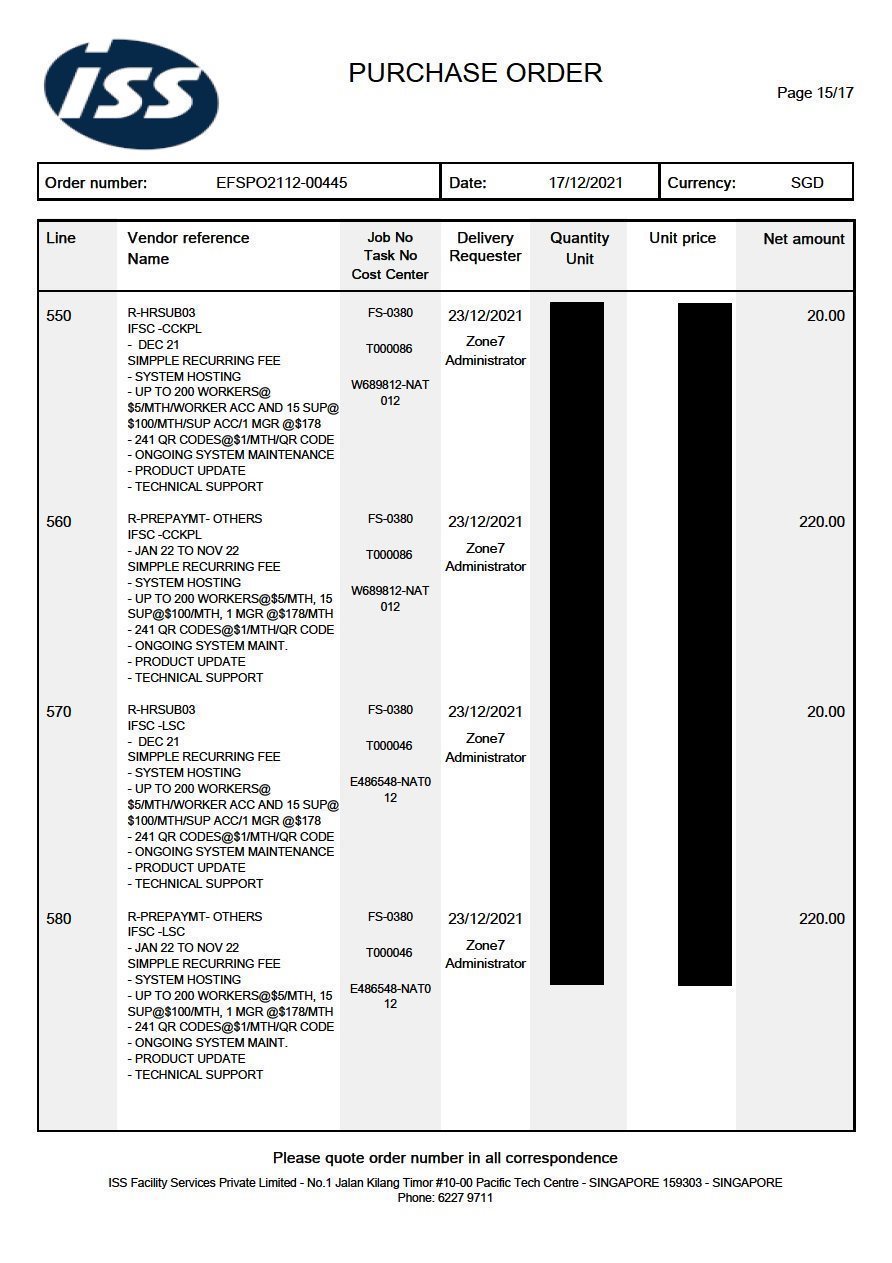
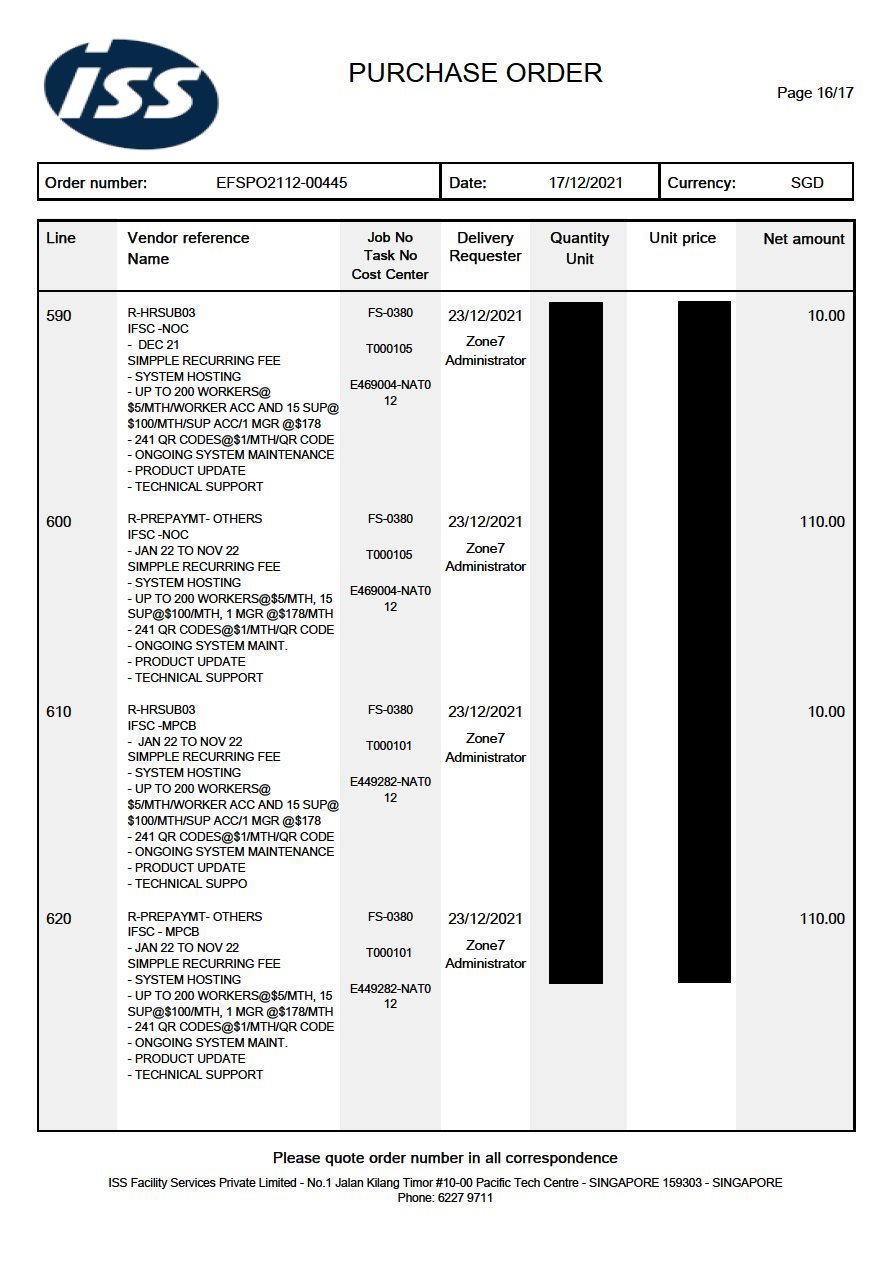
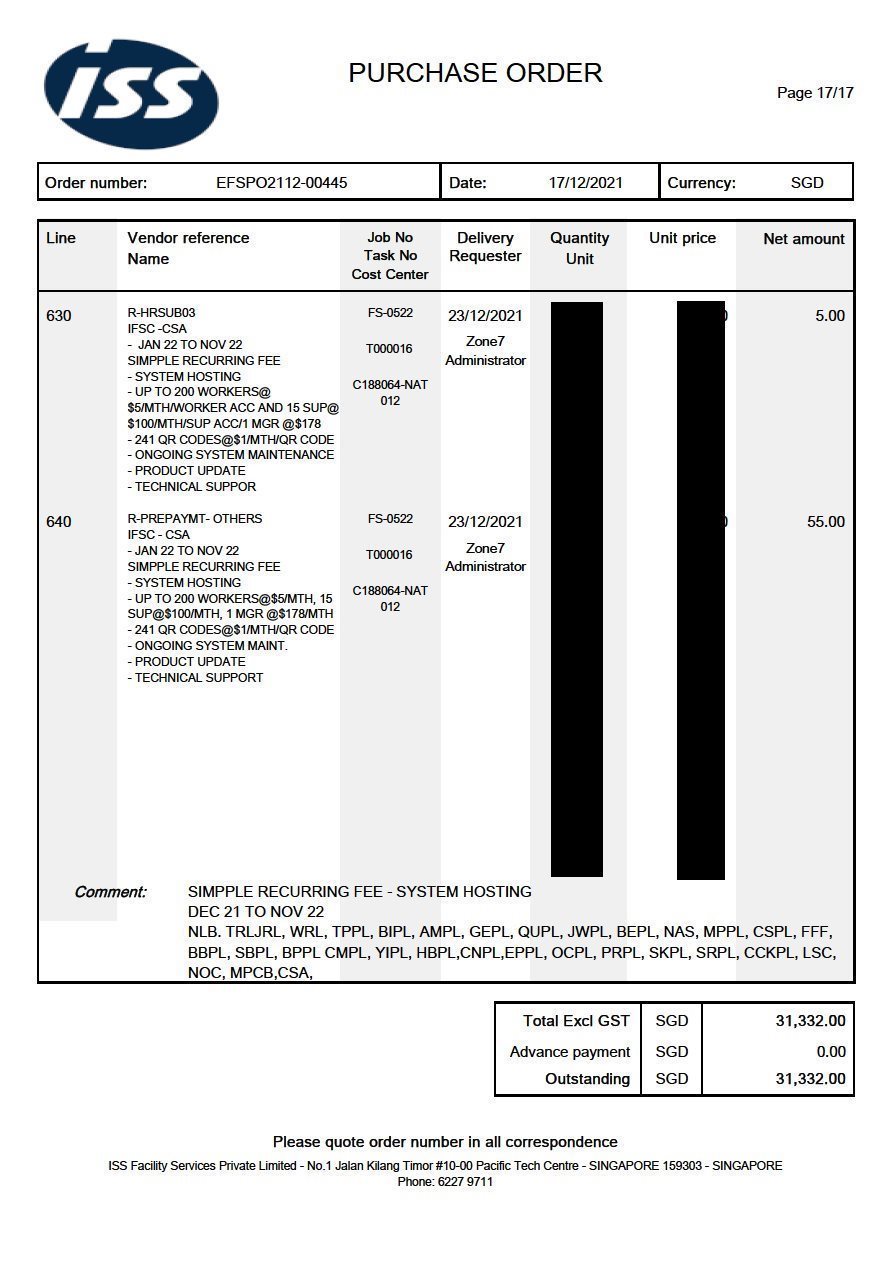
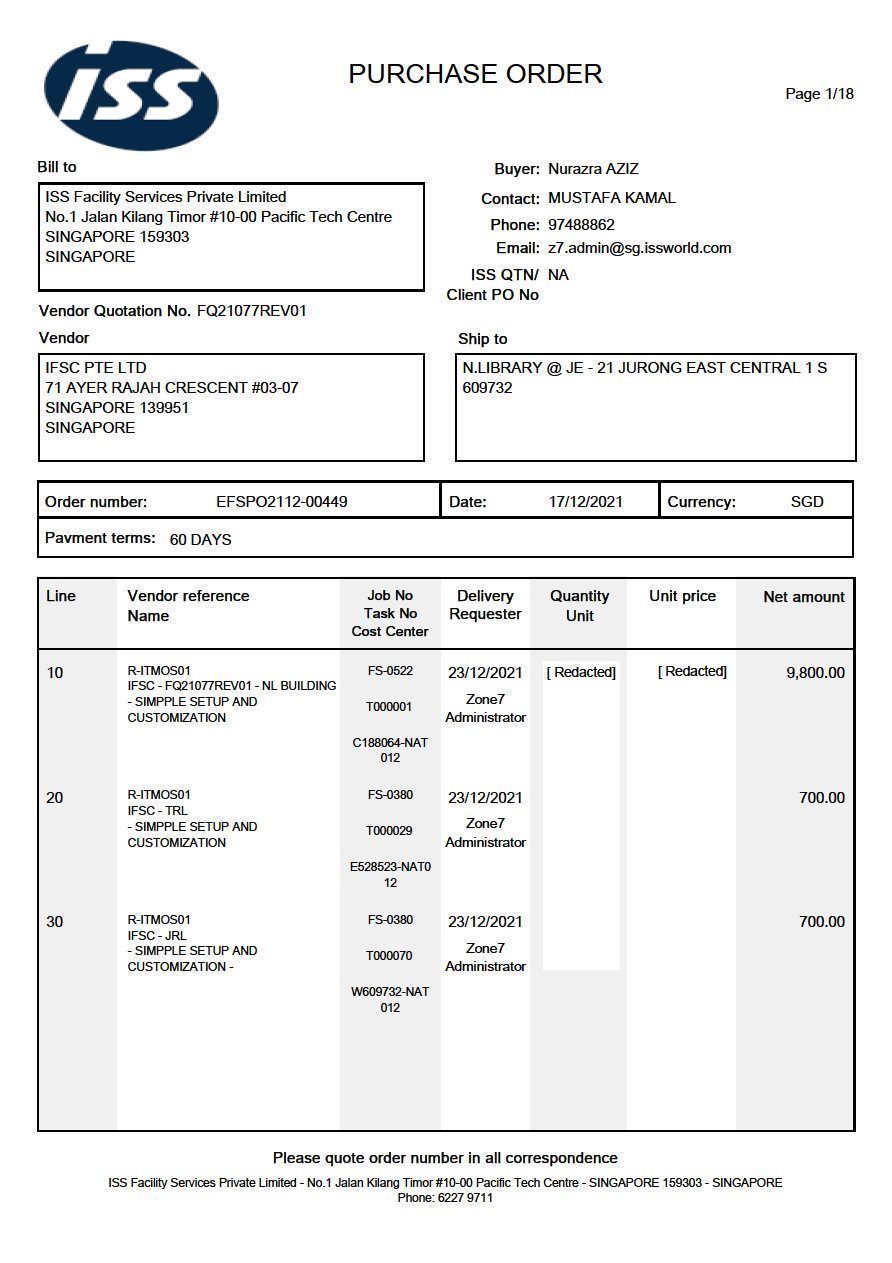
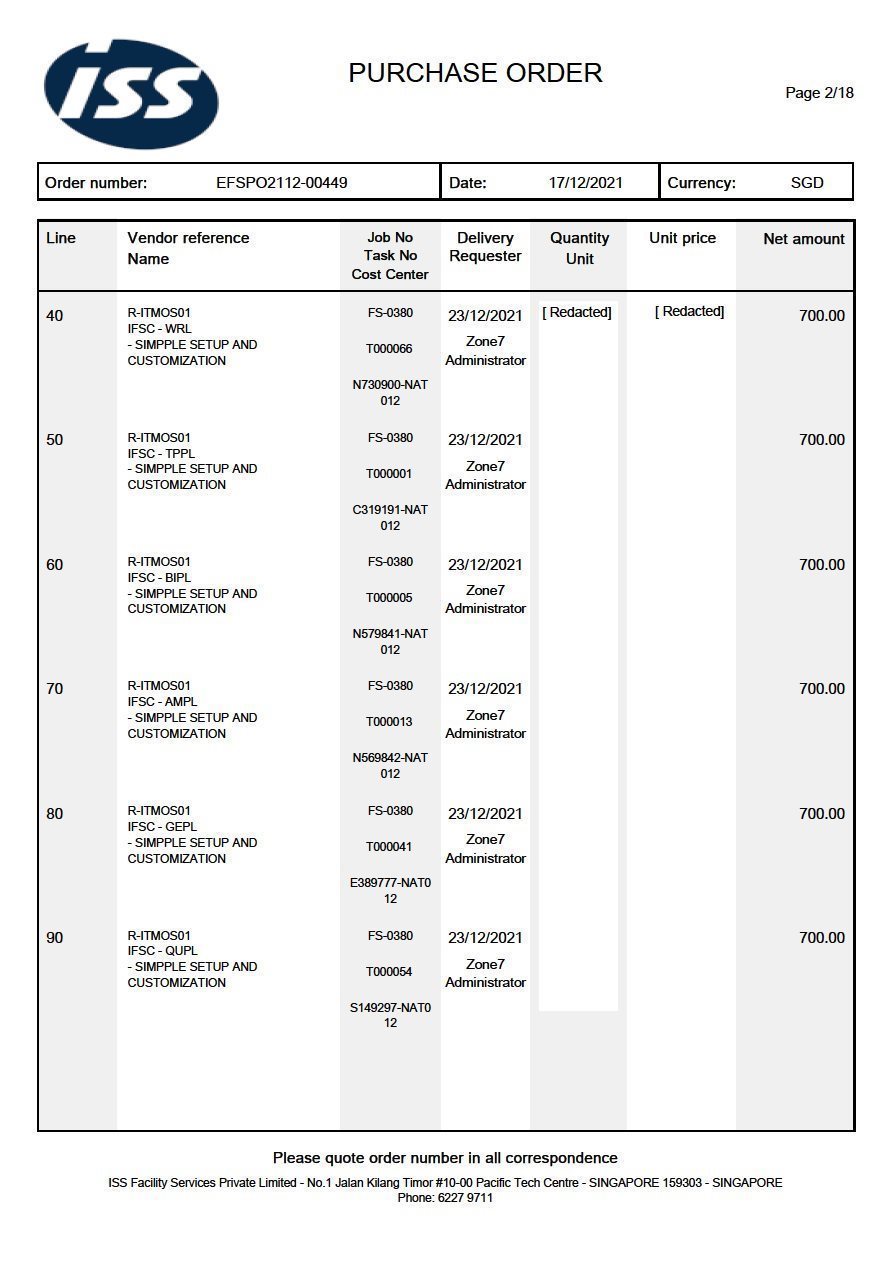
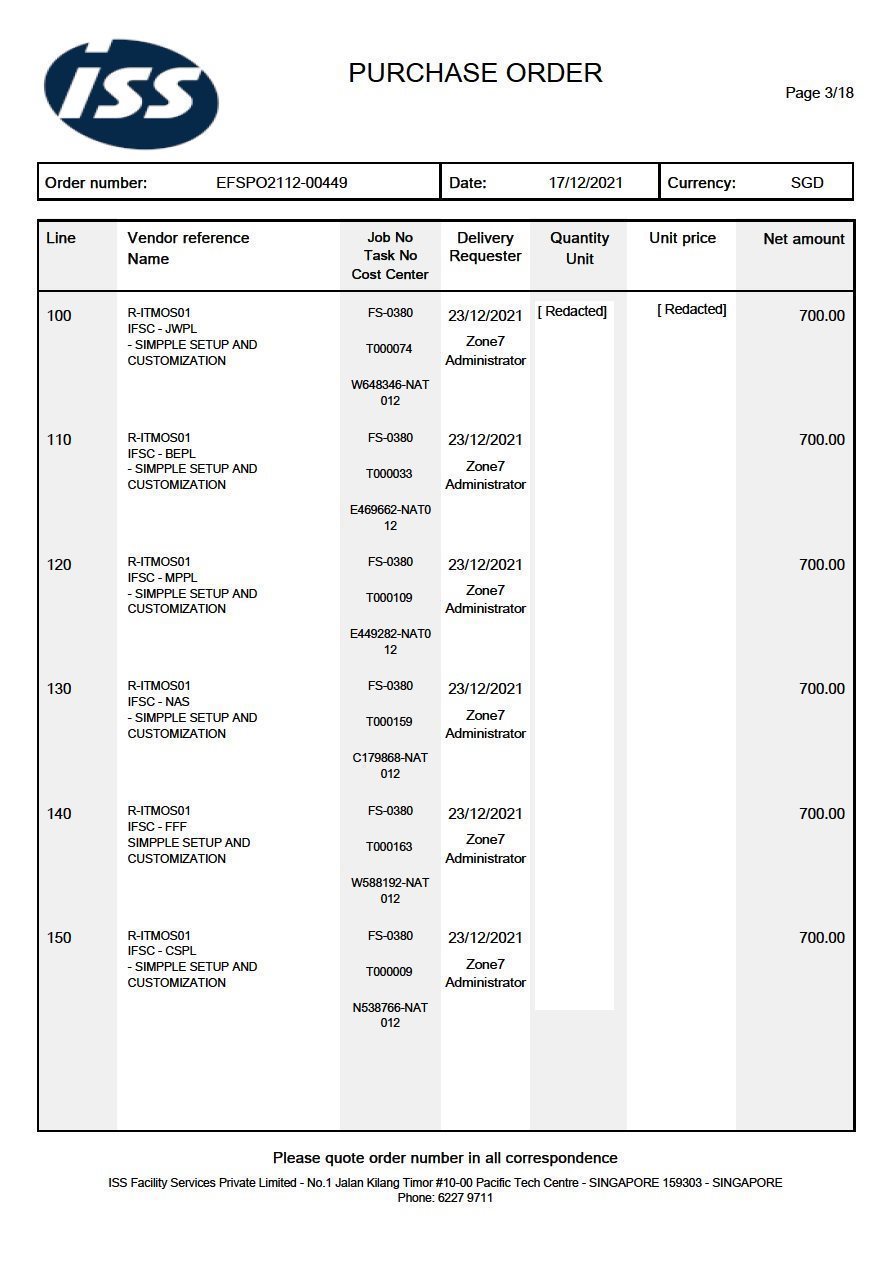
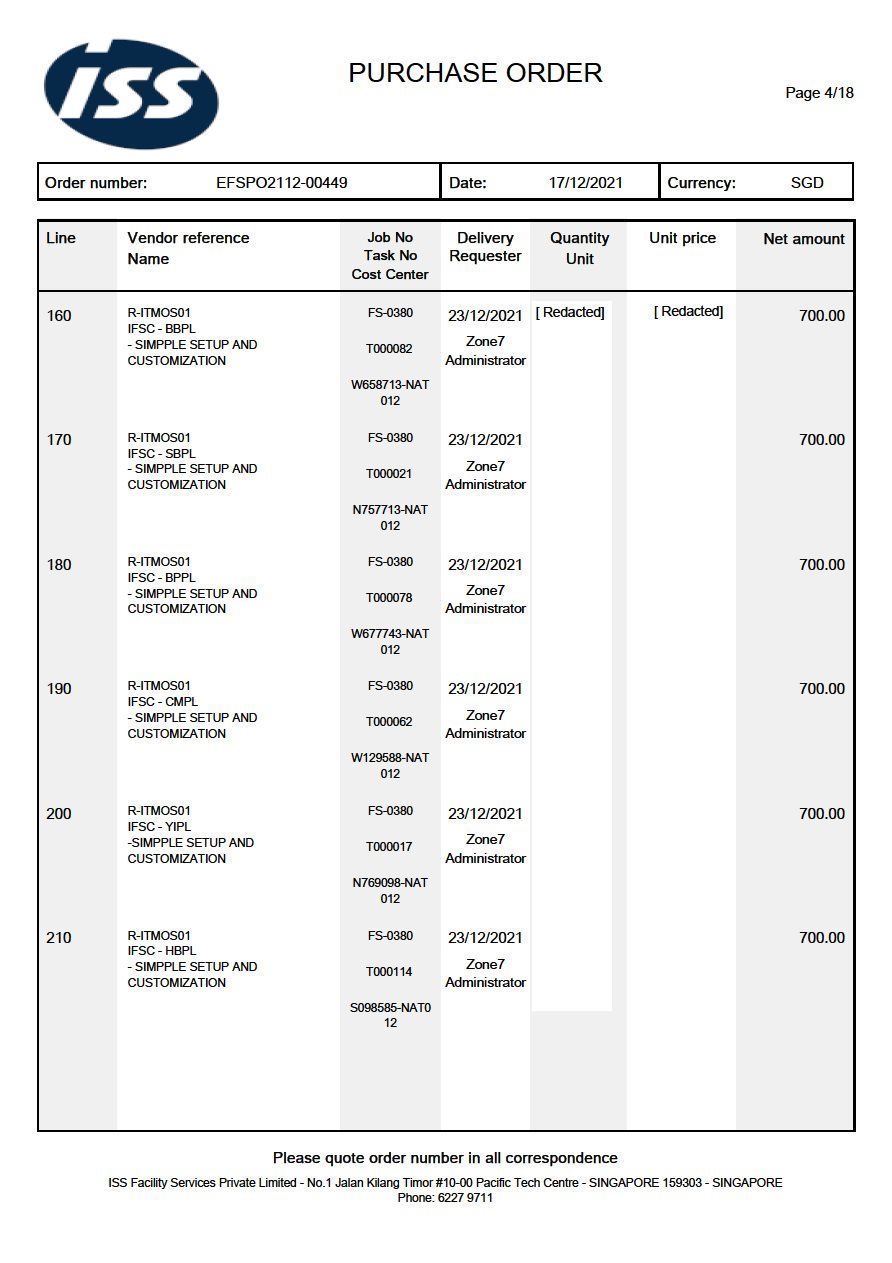
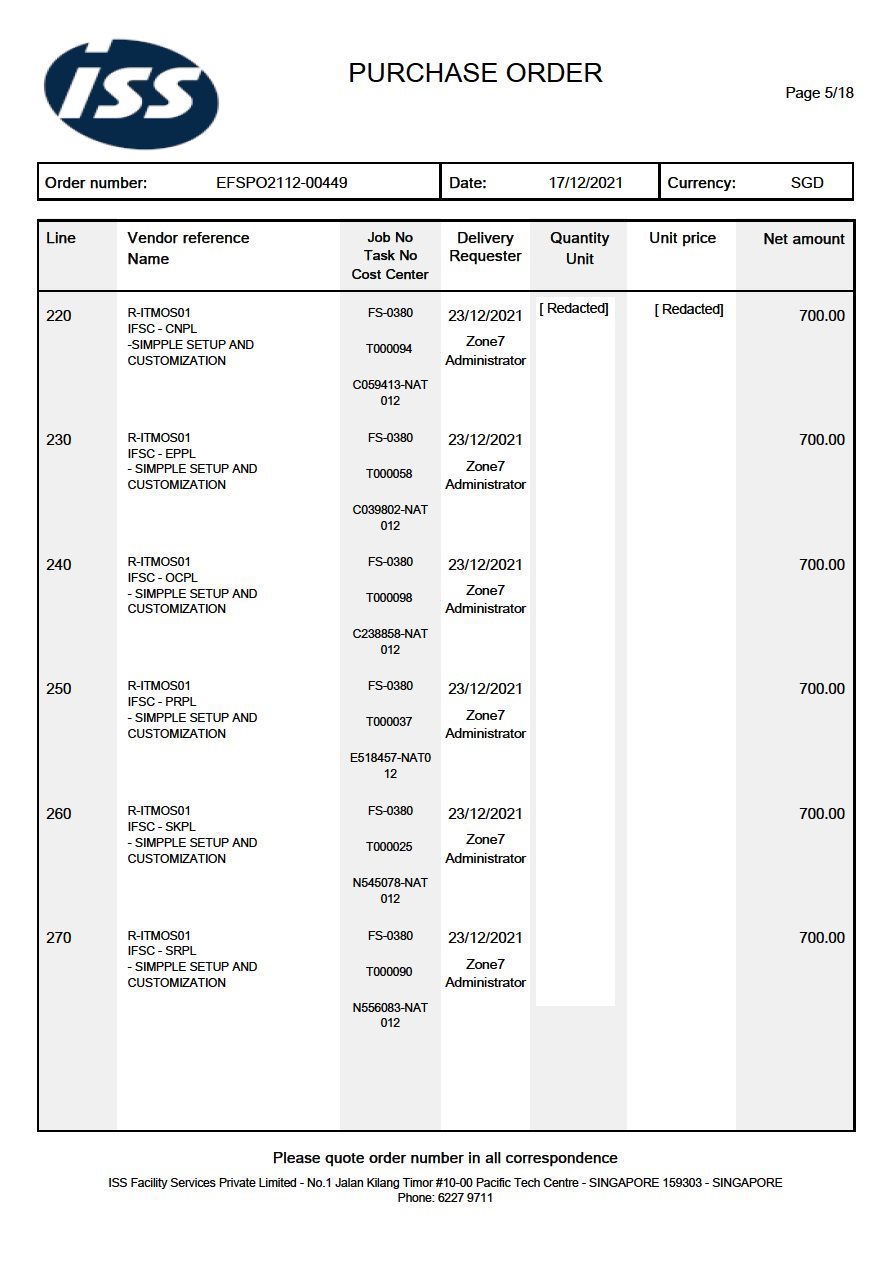
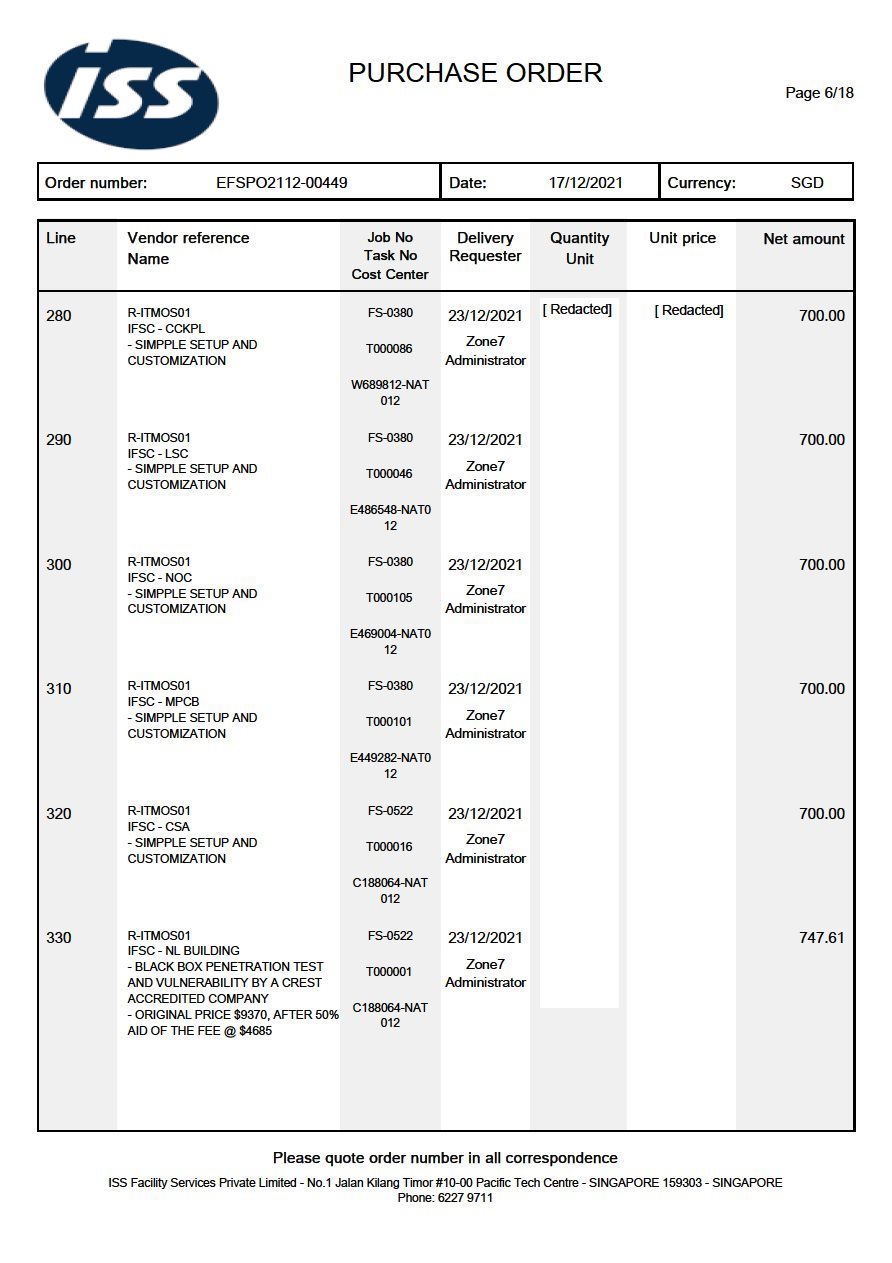
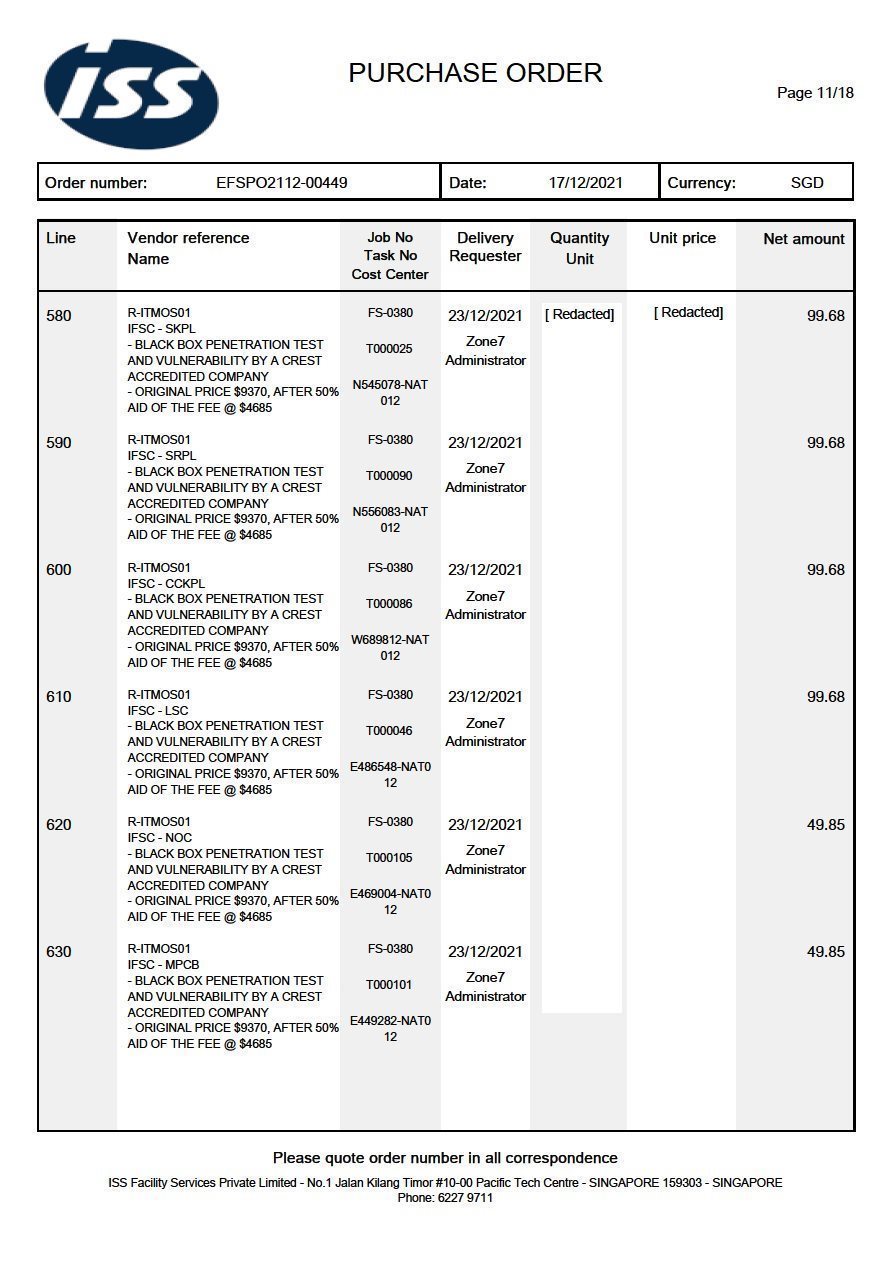
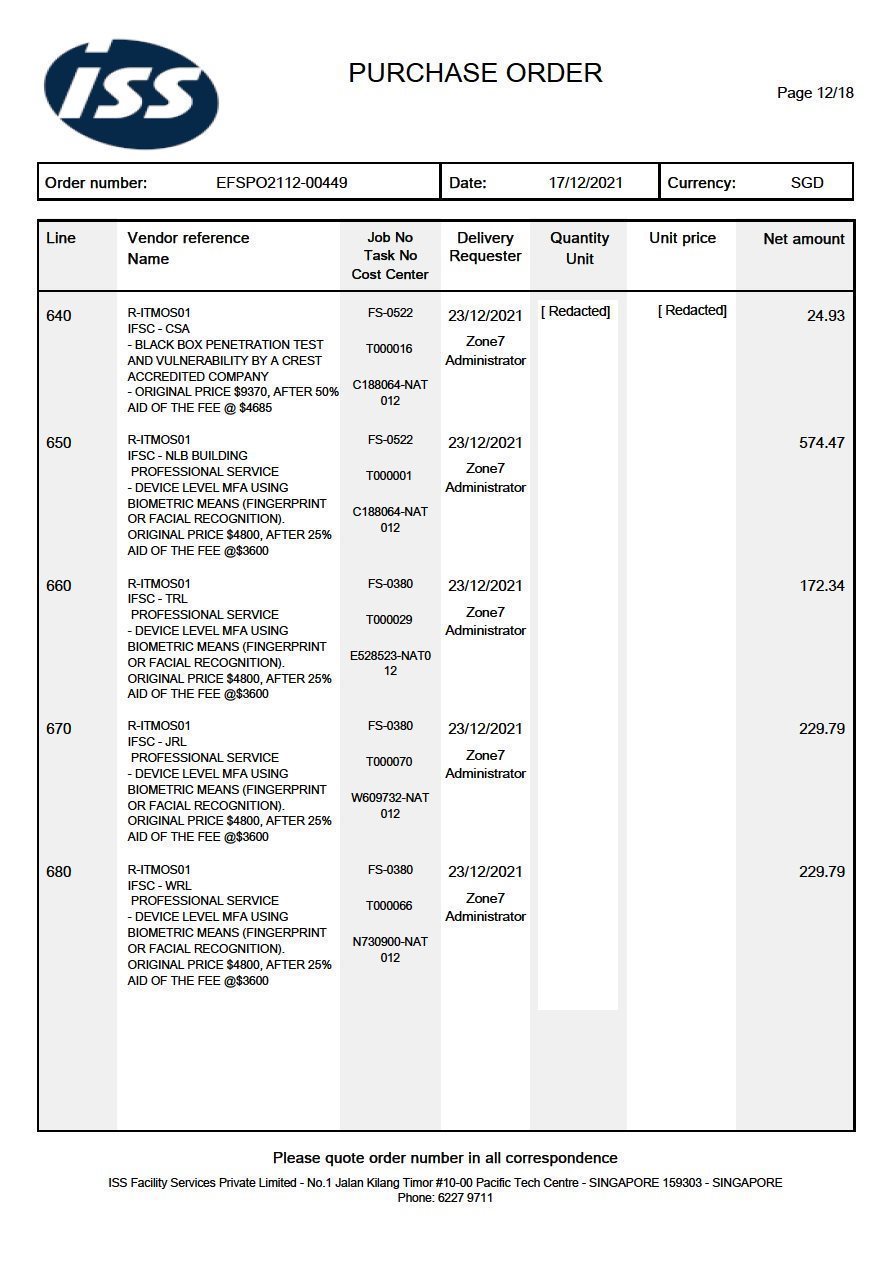
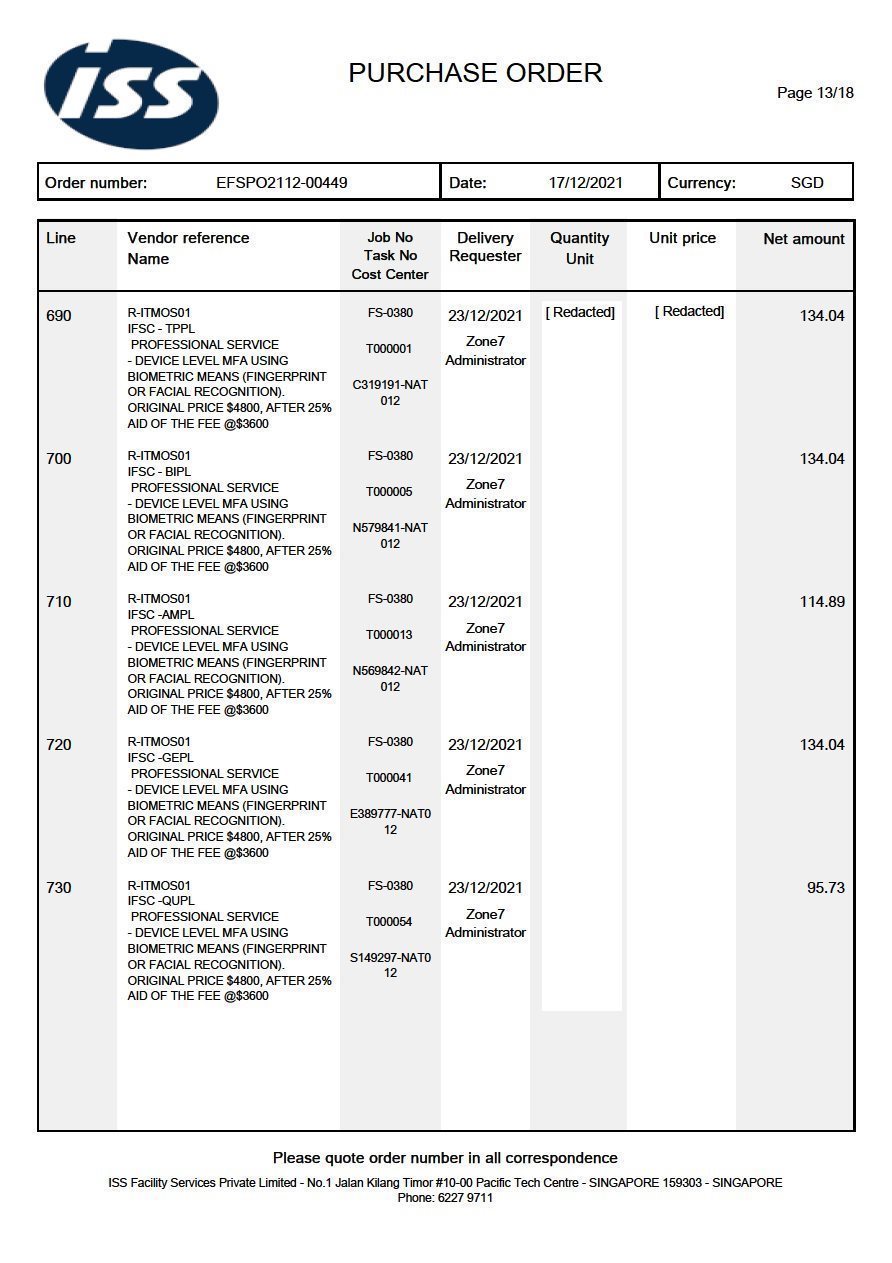
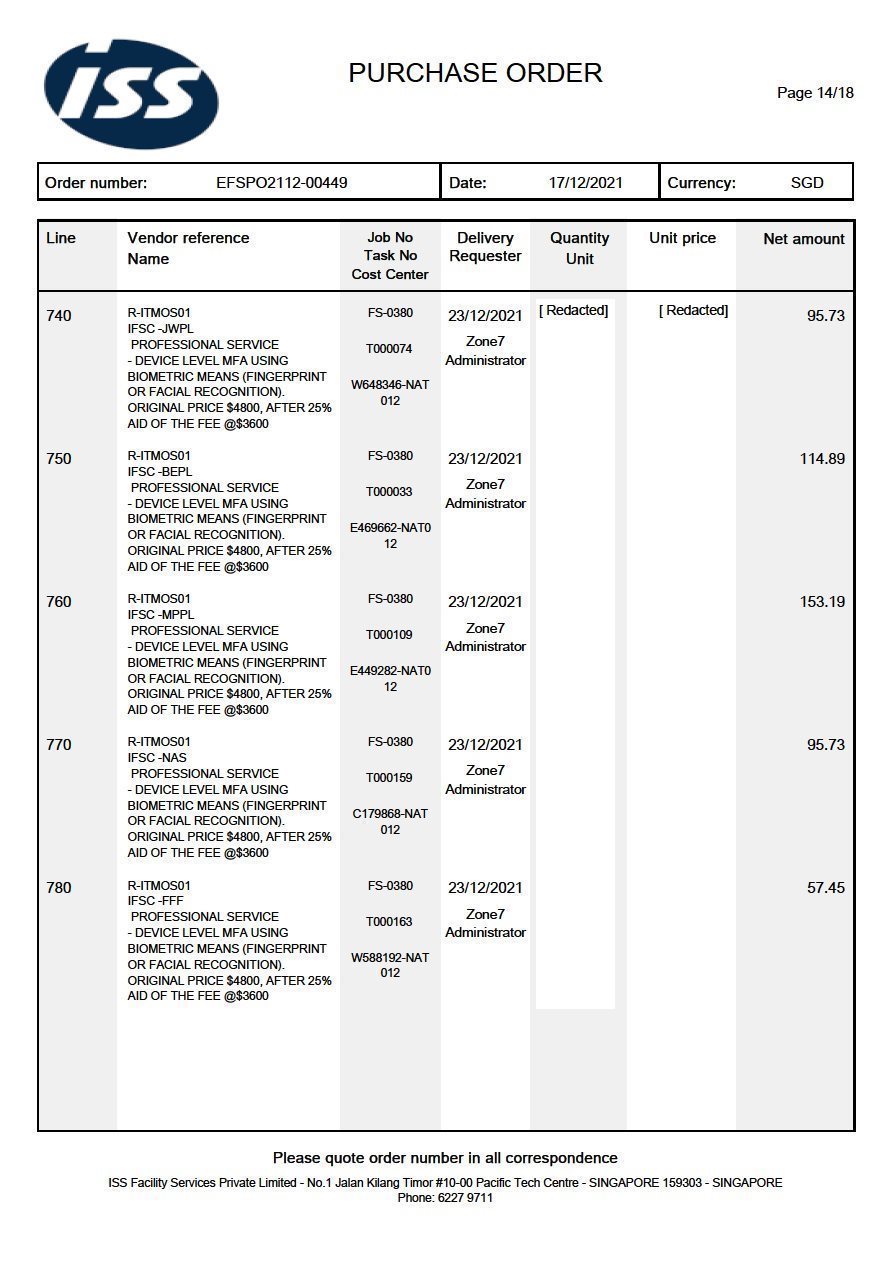
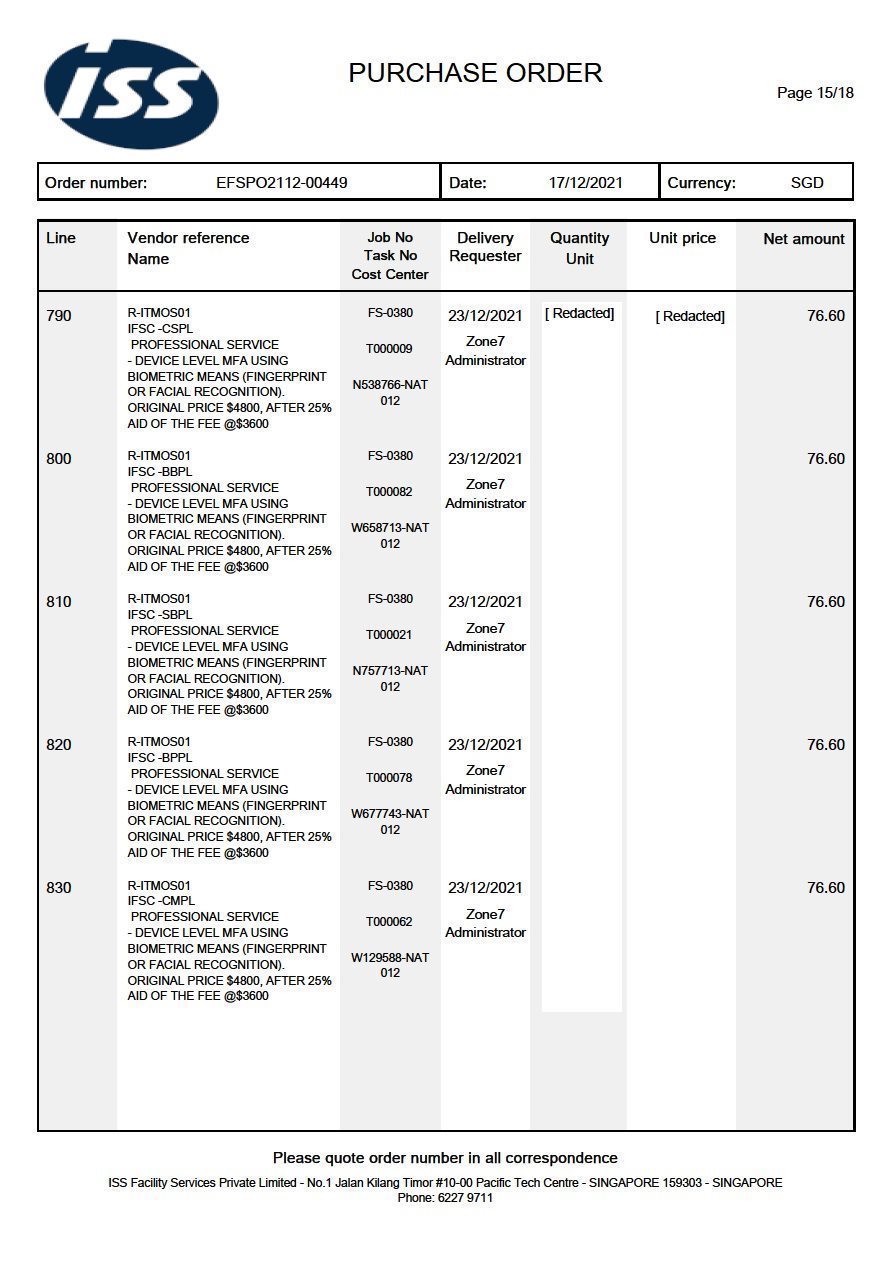
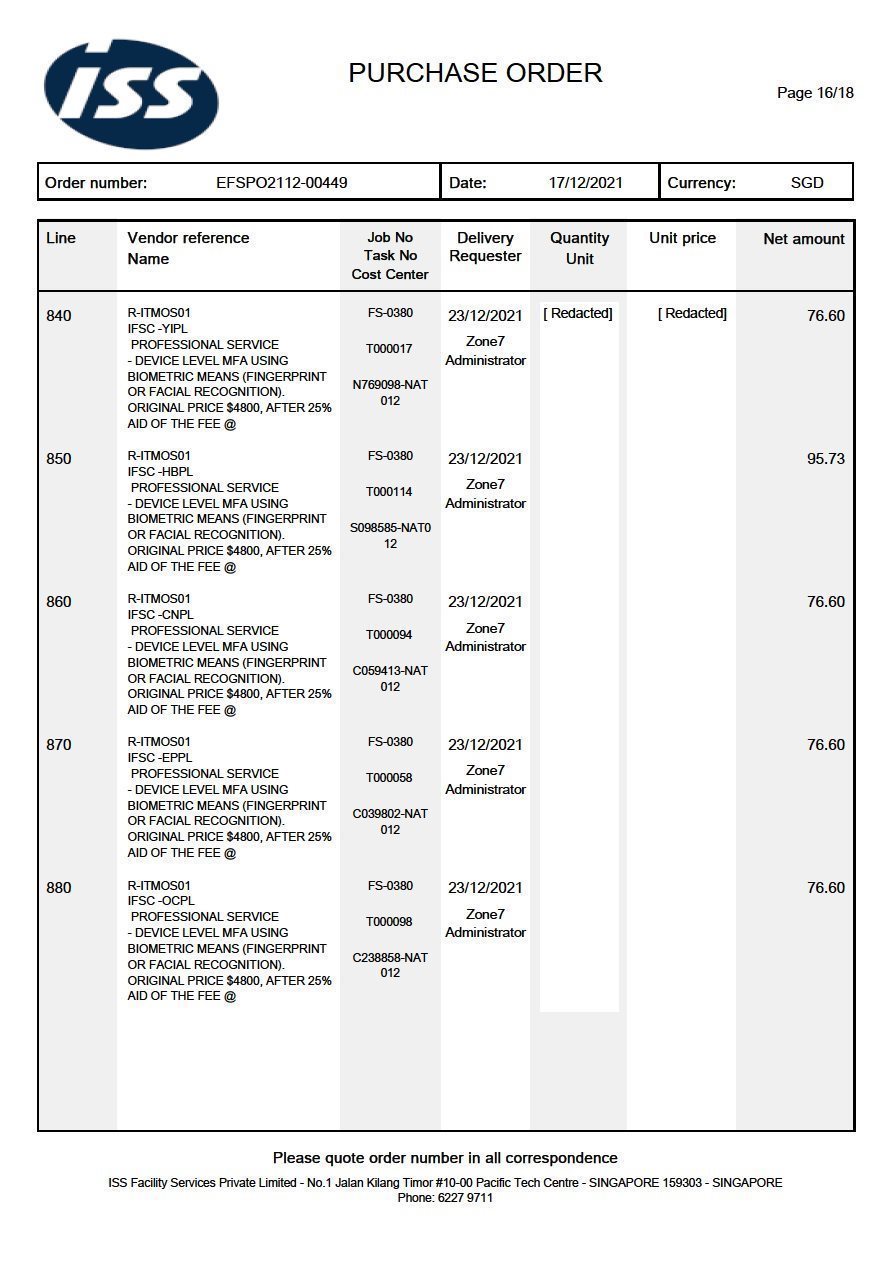
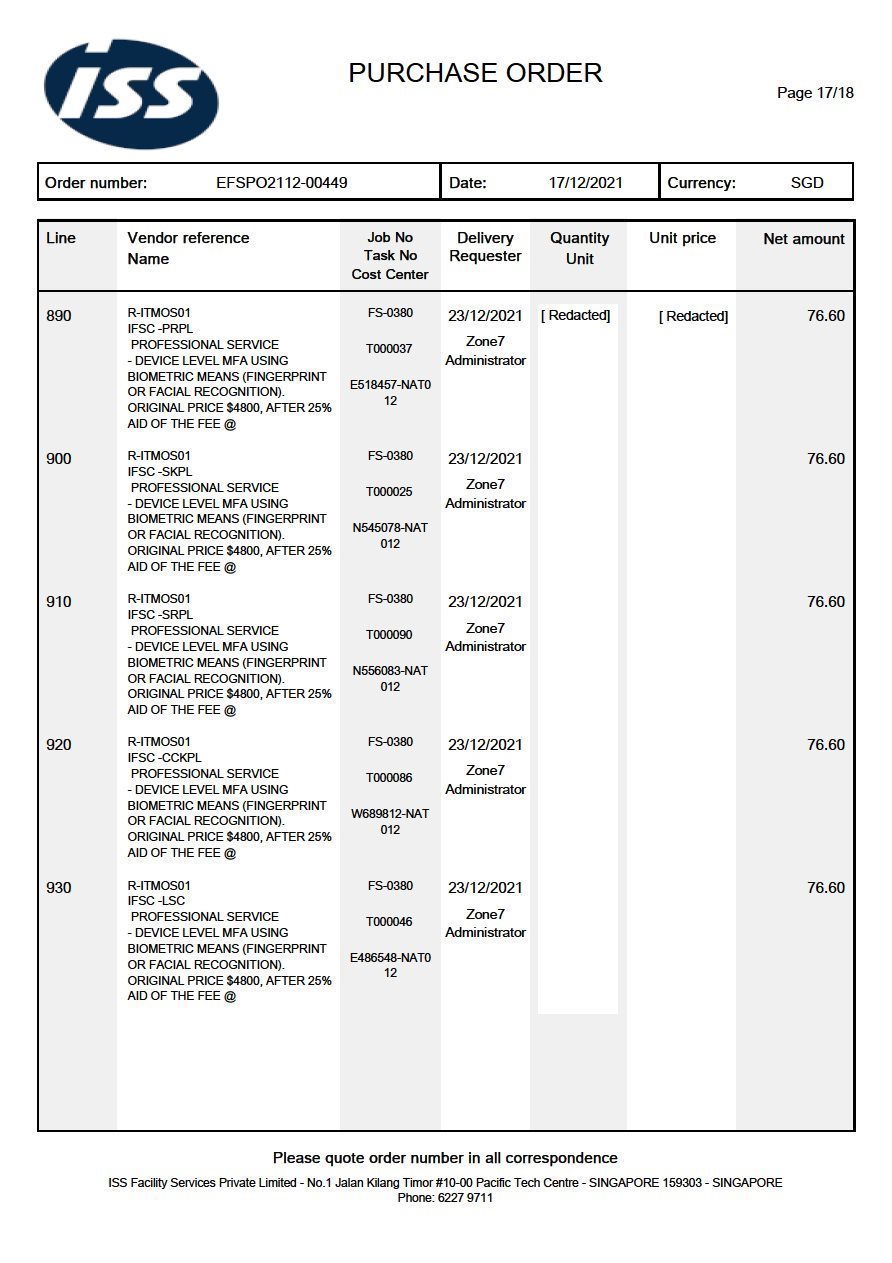
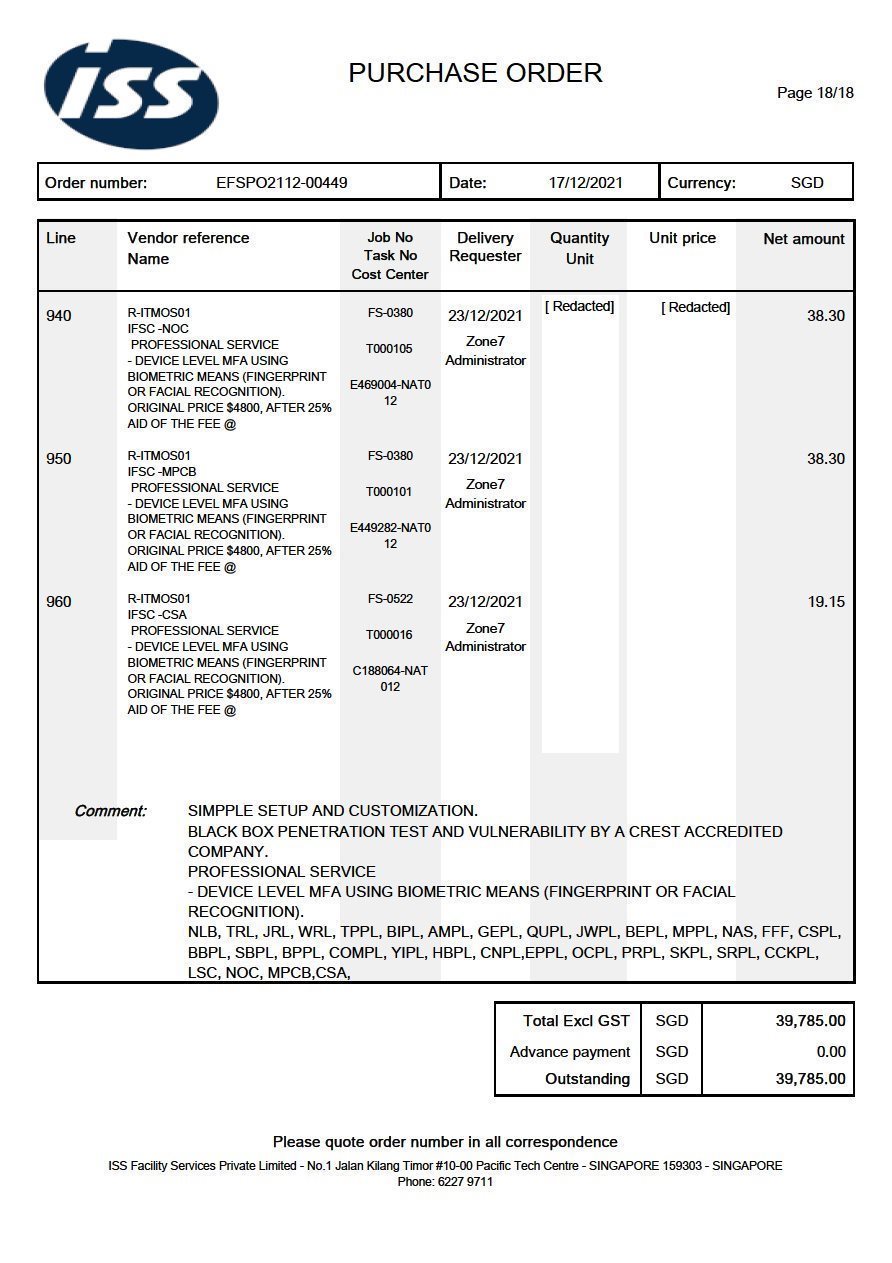
EXHIBIT 10.11
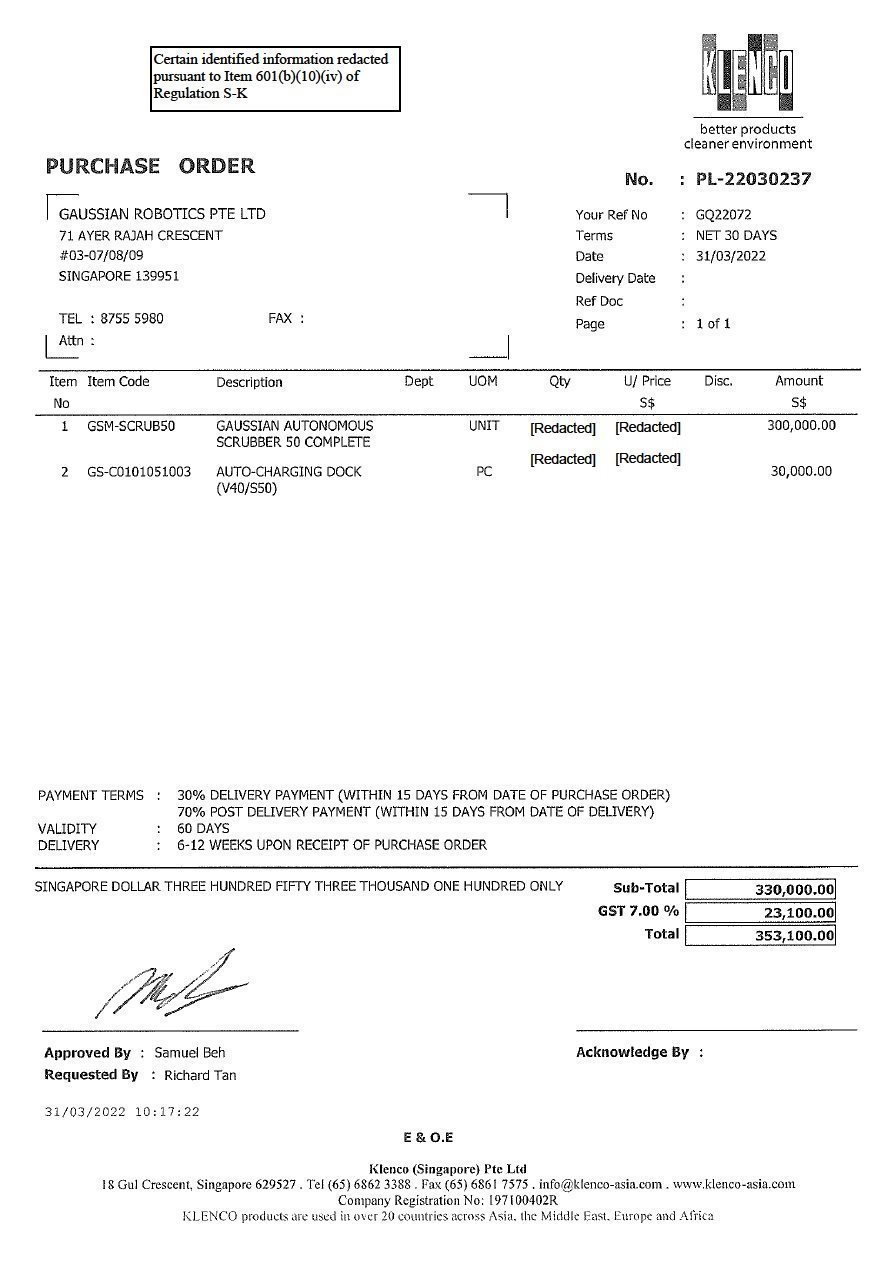
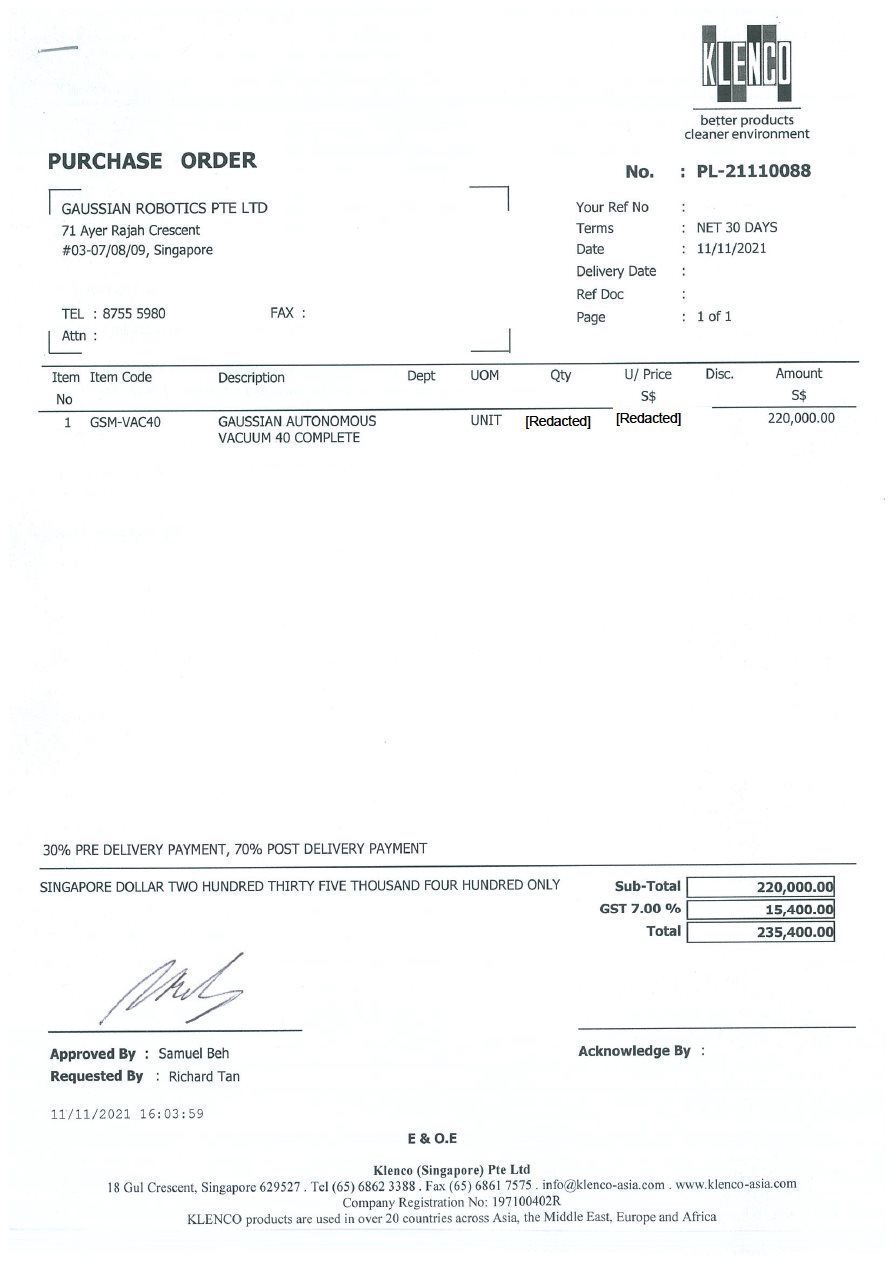
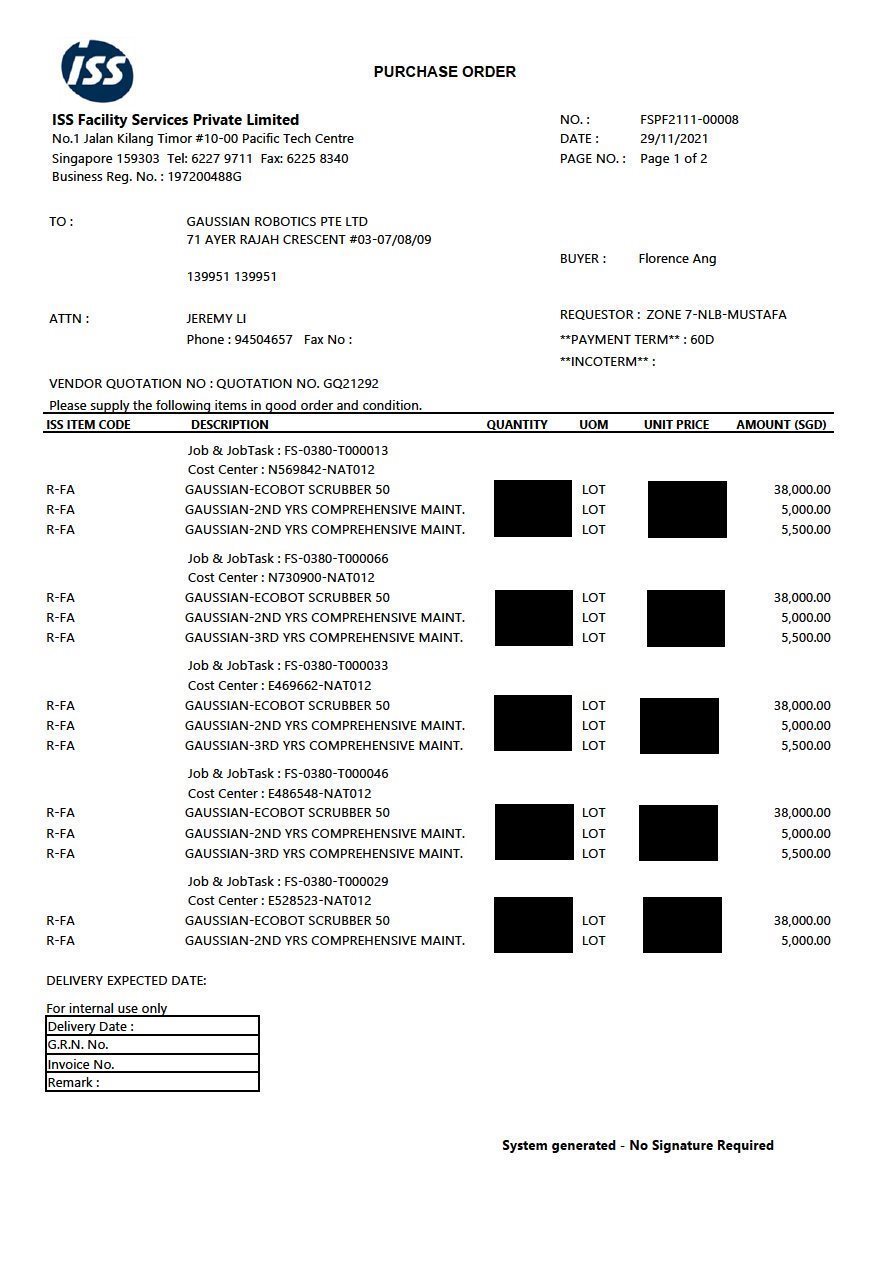
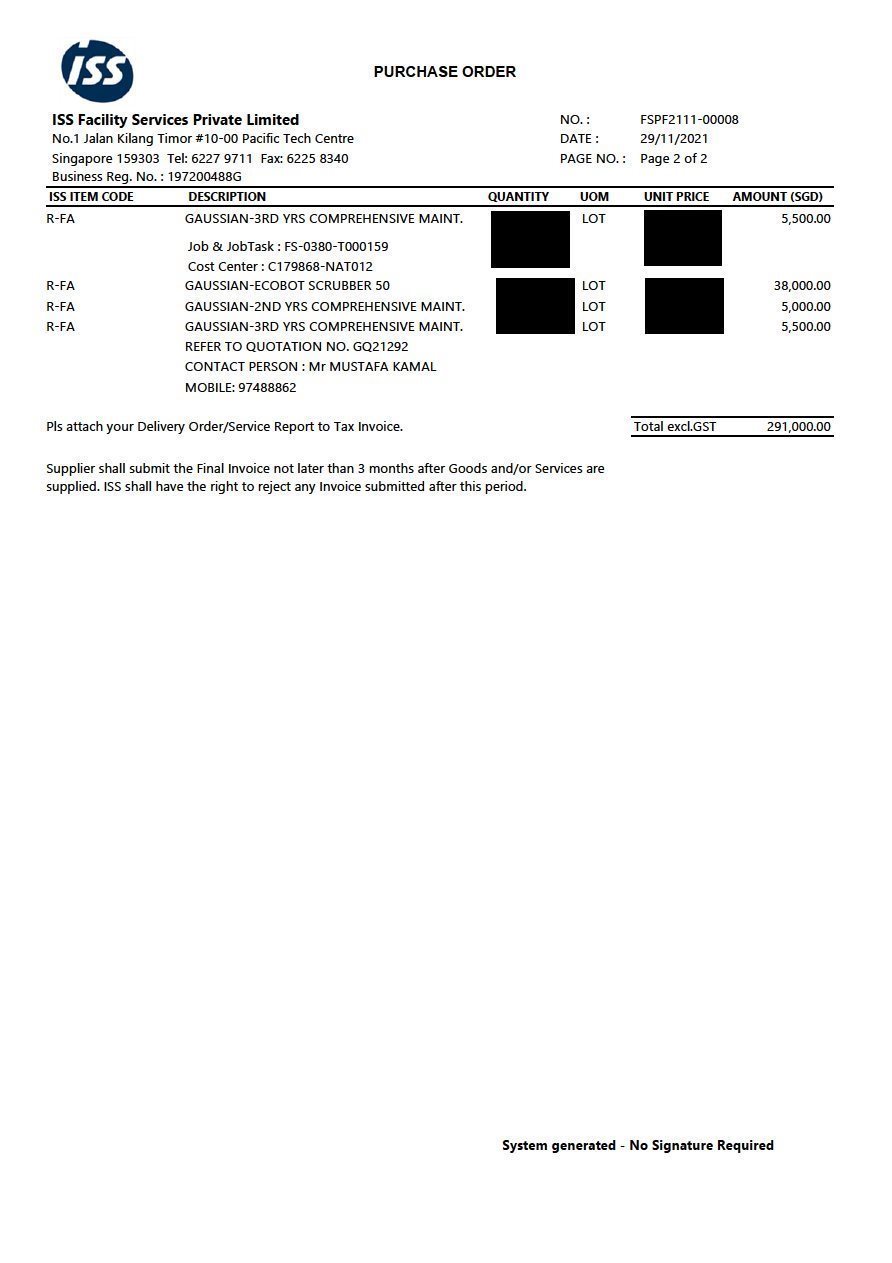
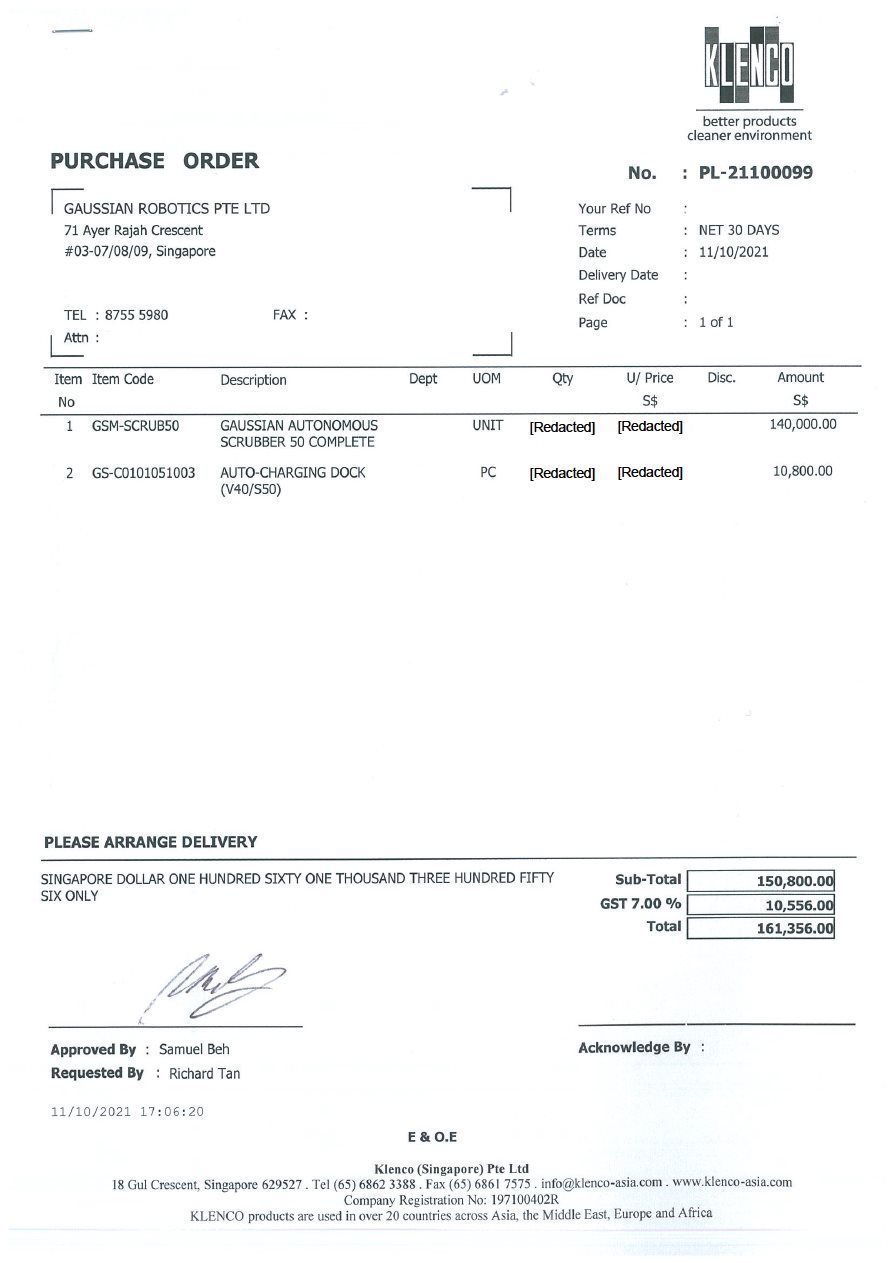
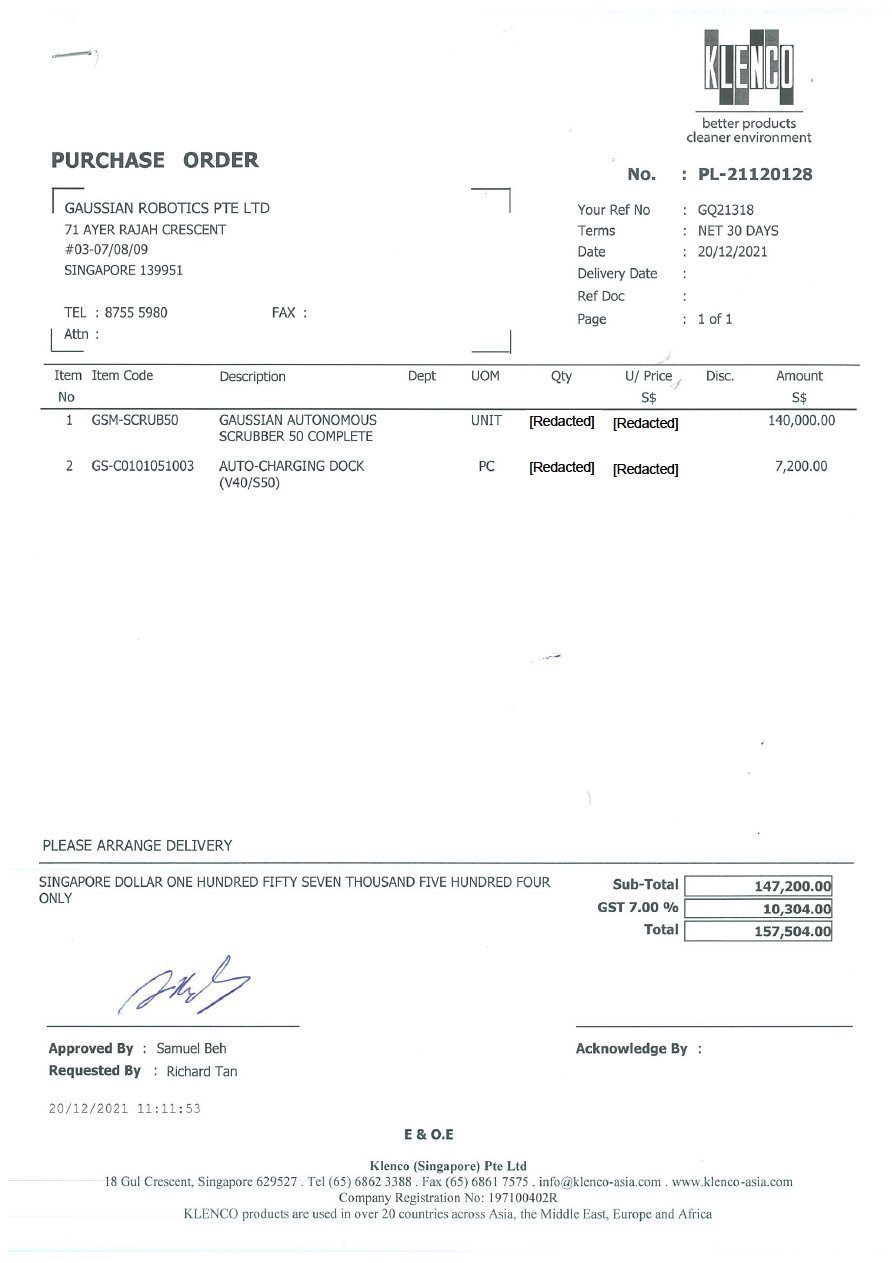
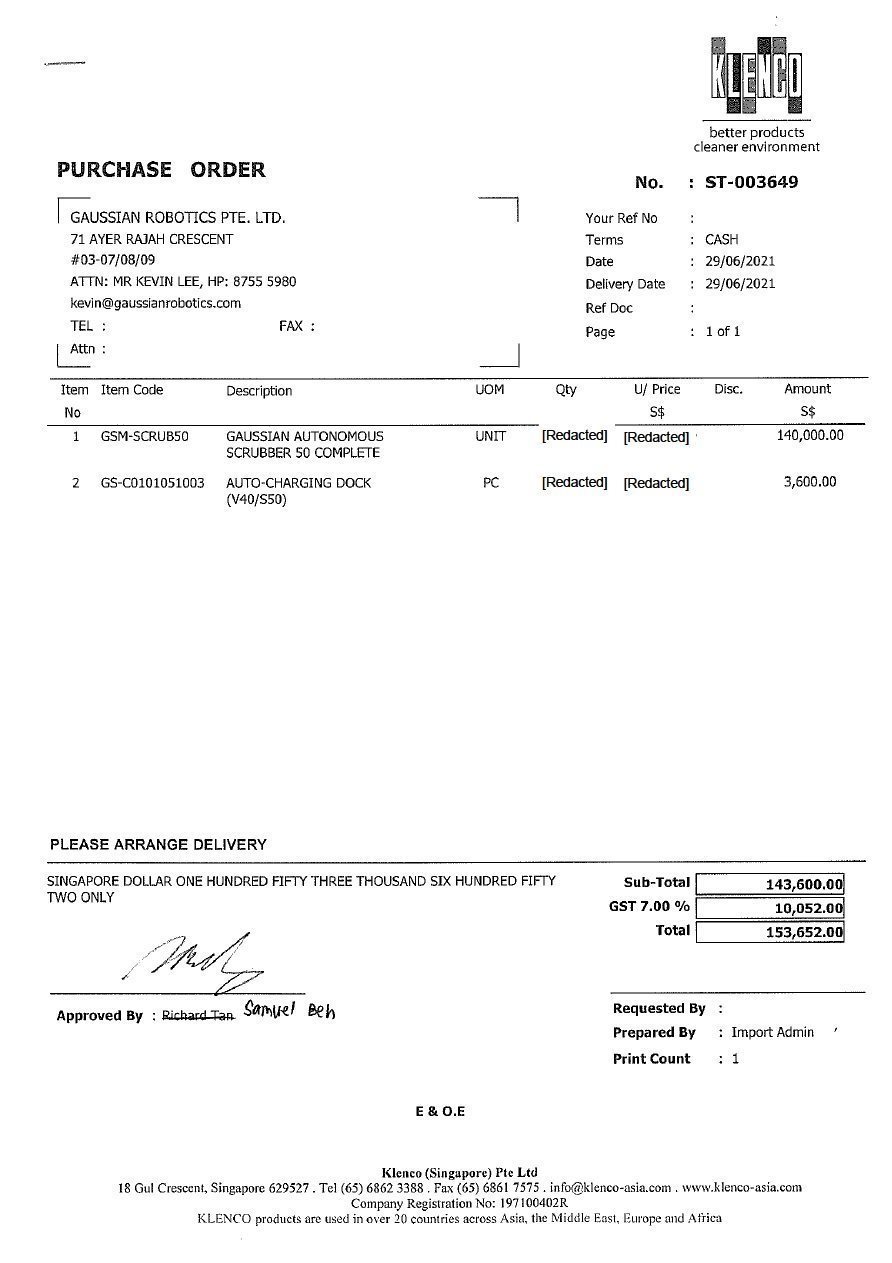
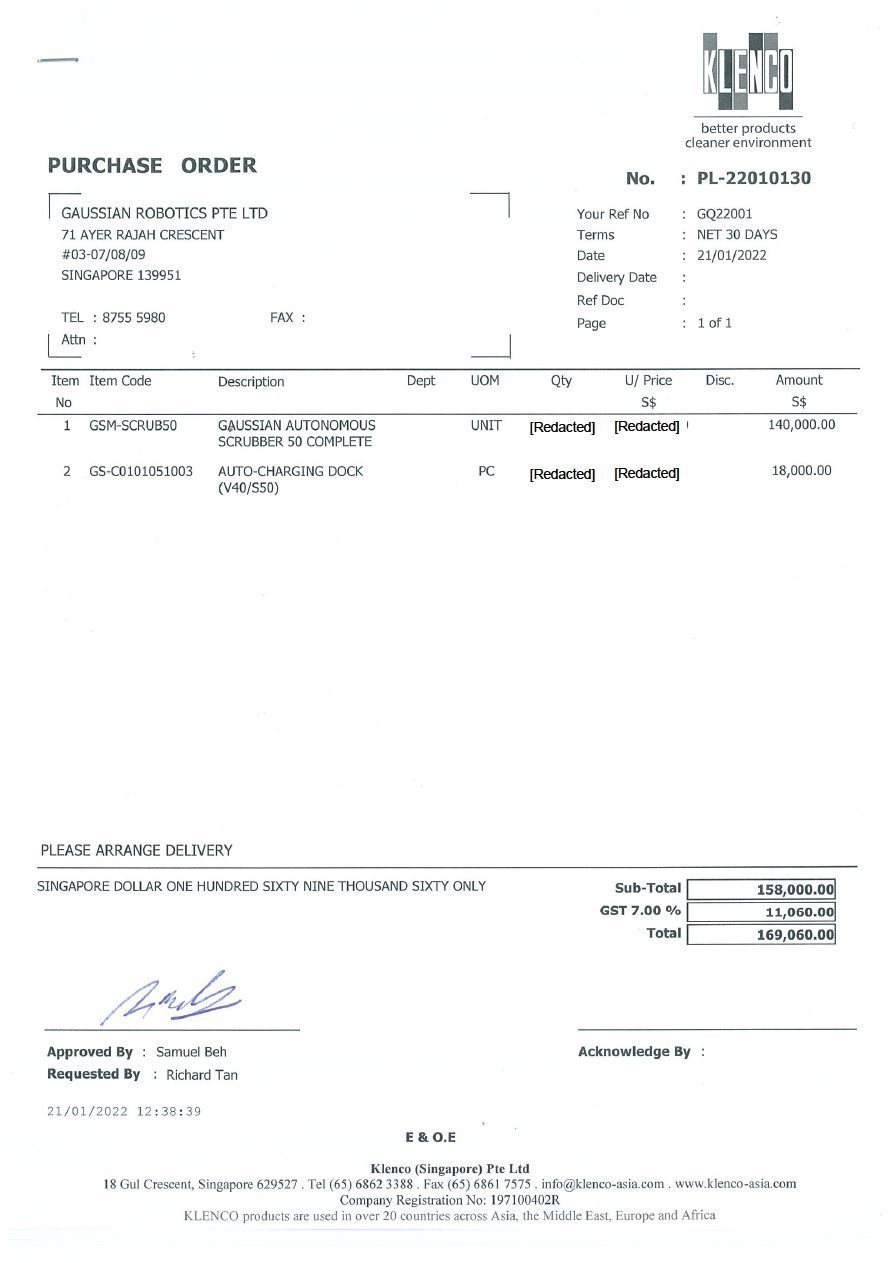
EXHIBIT 10.12
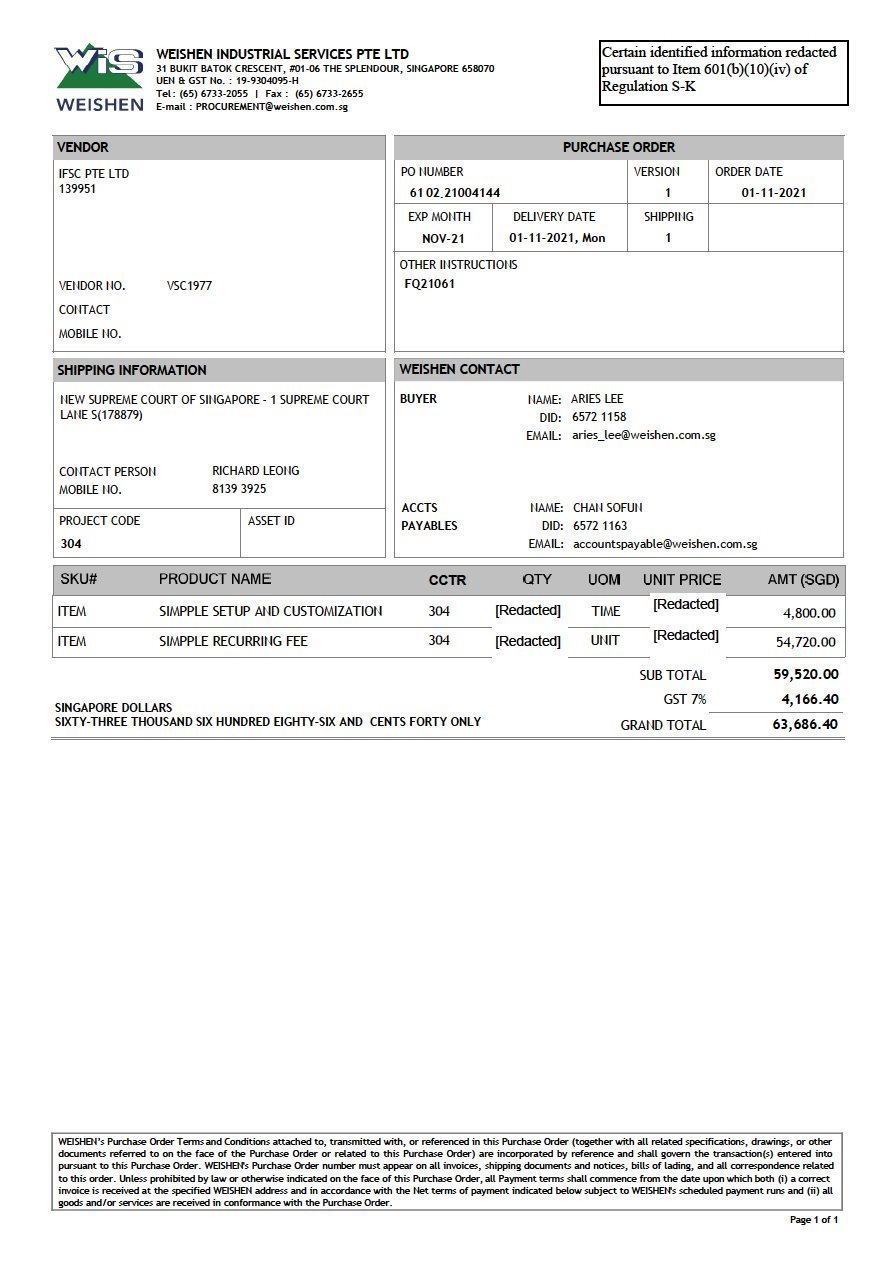
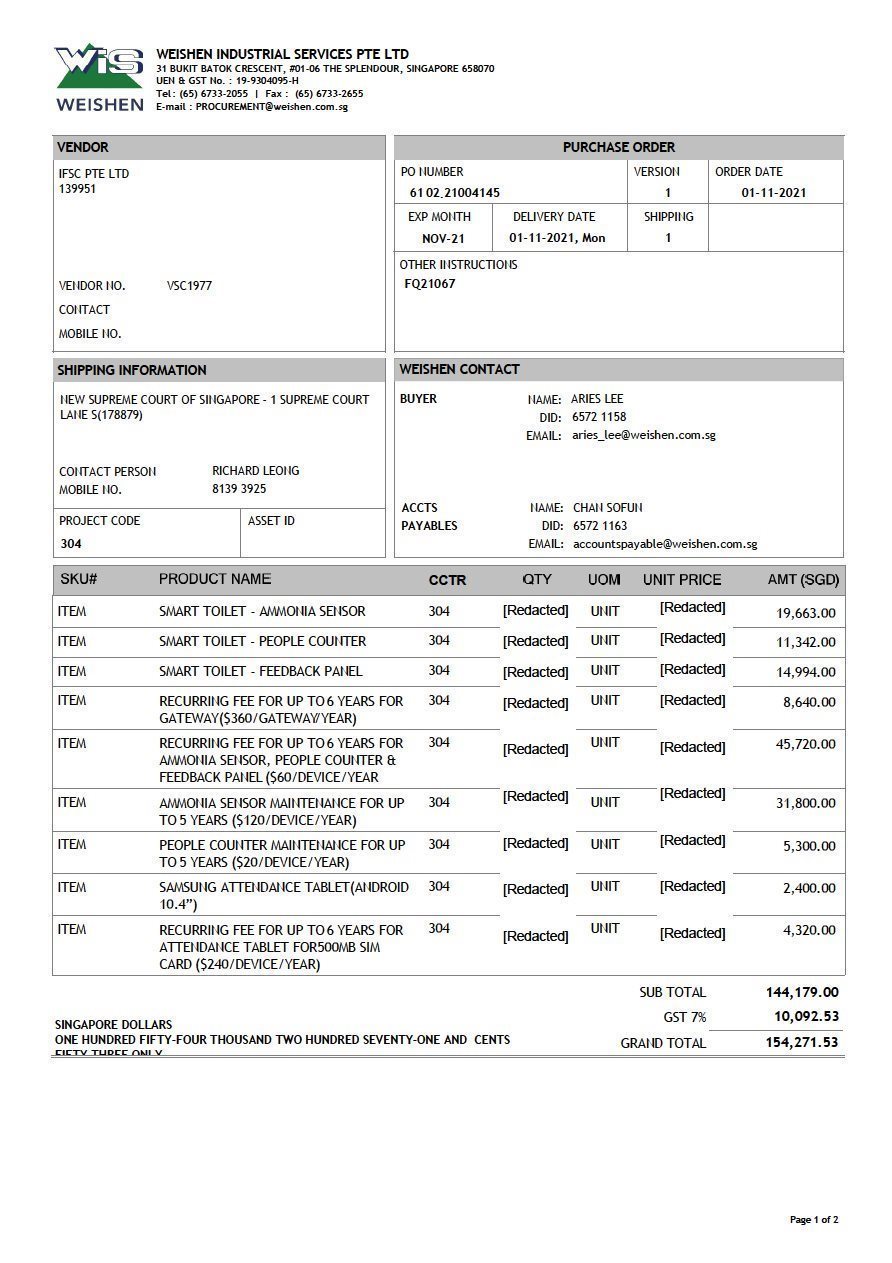
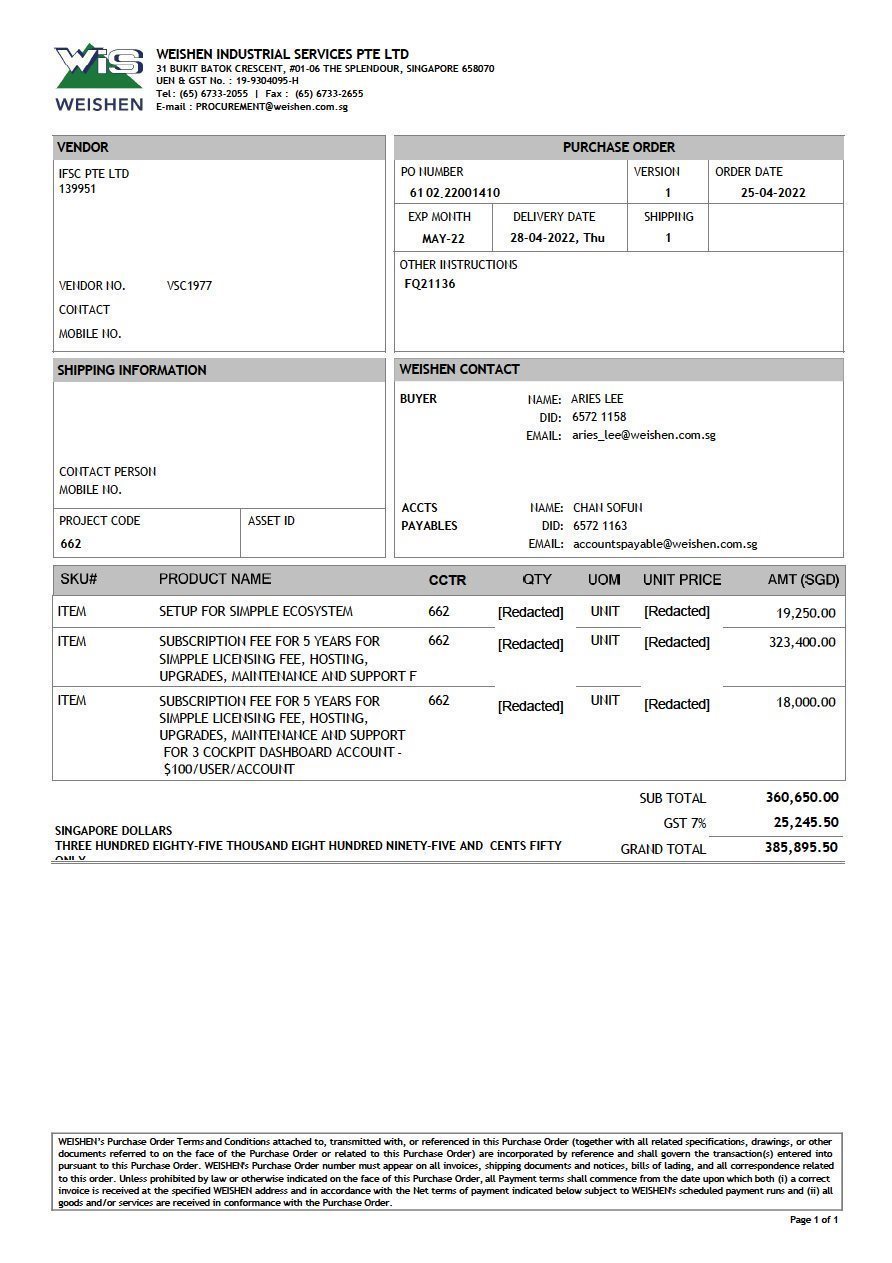
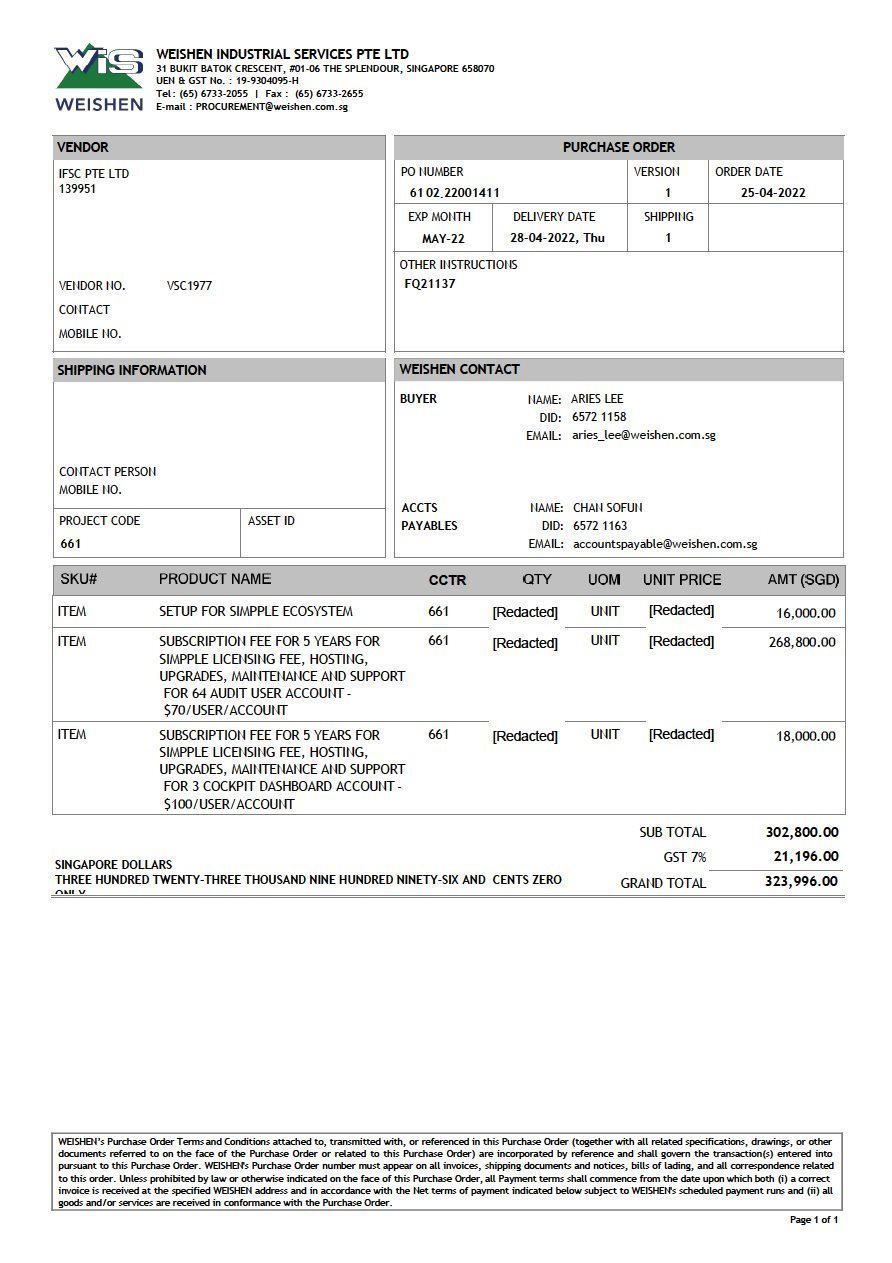
EXHIBIT 10.13

EXHIBIT 10.14
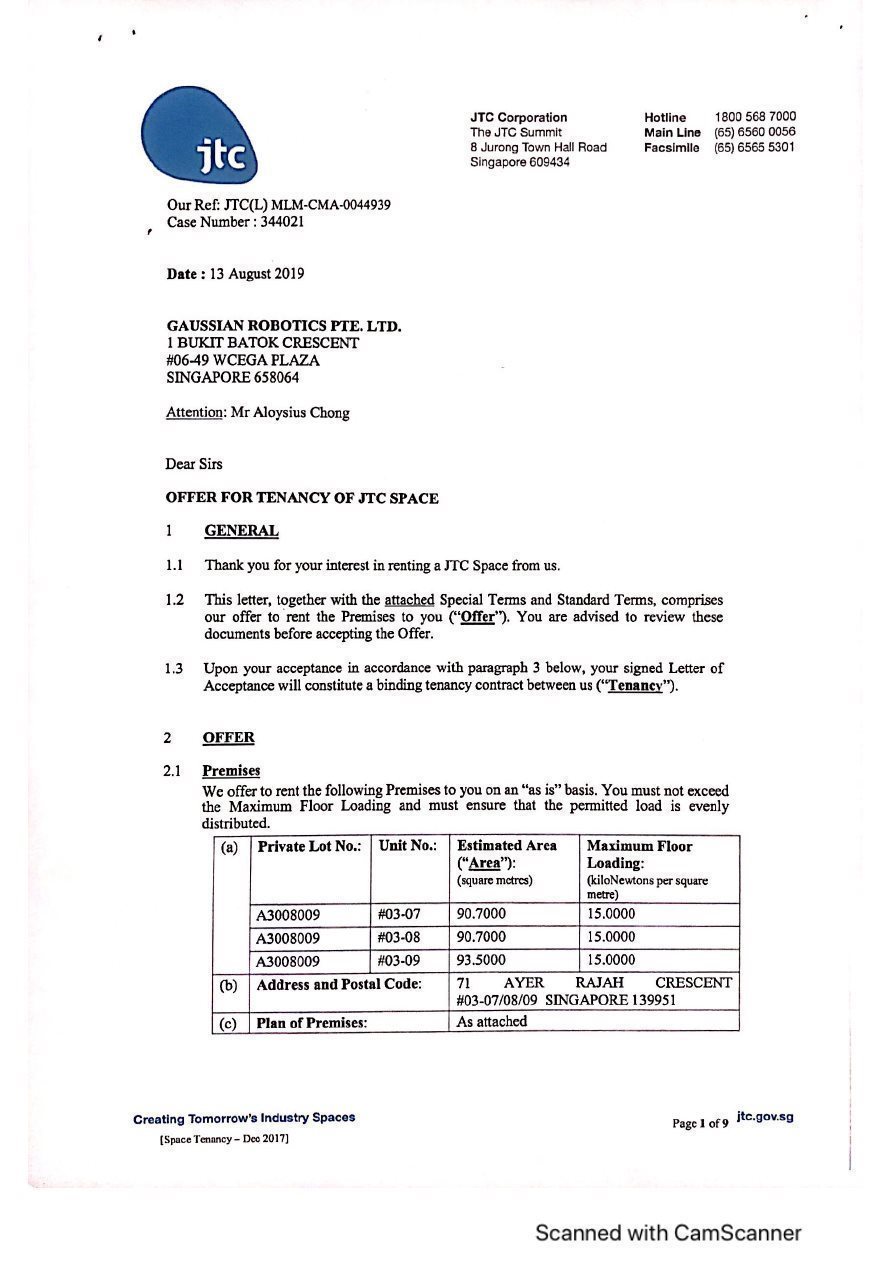
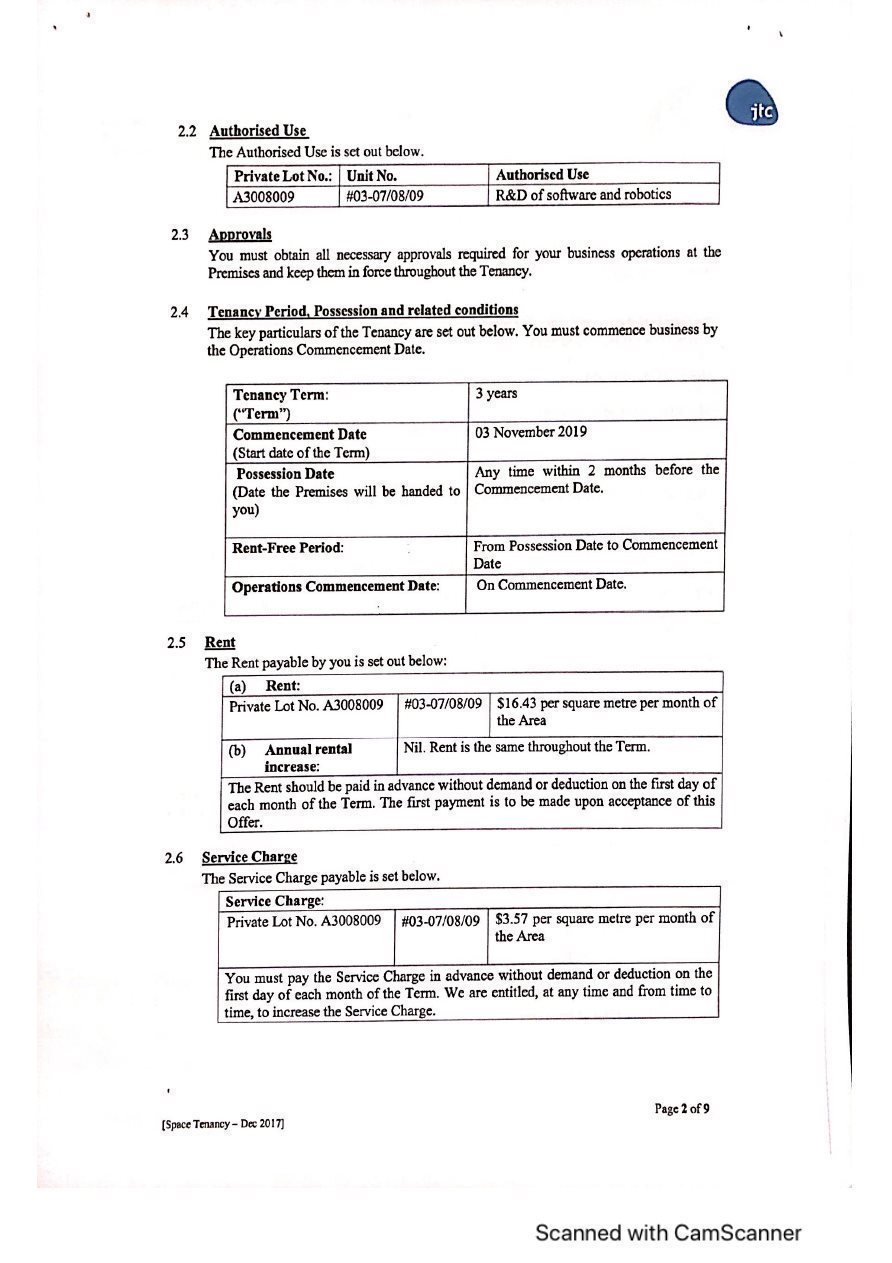
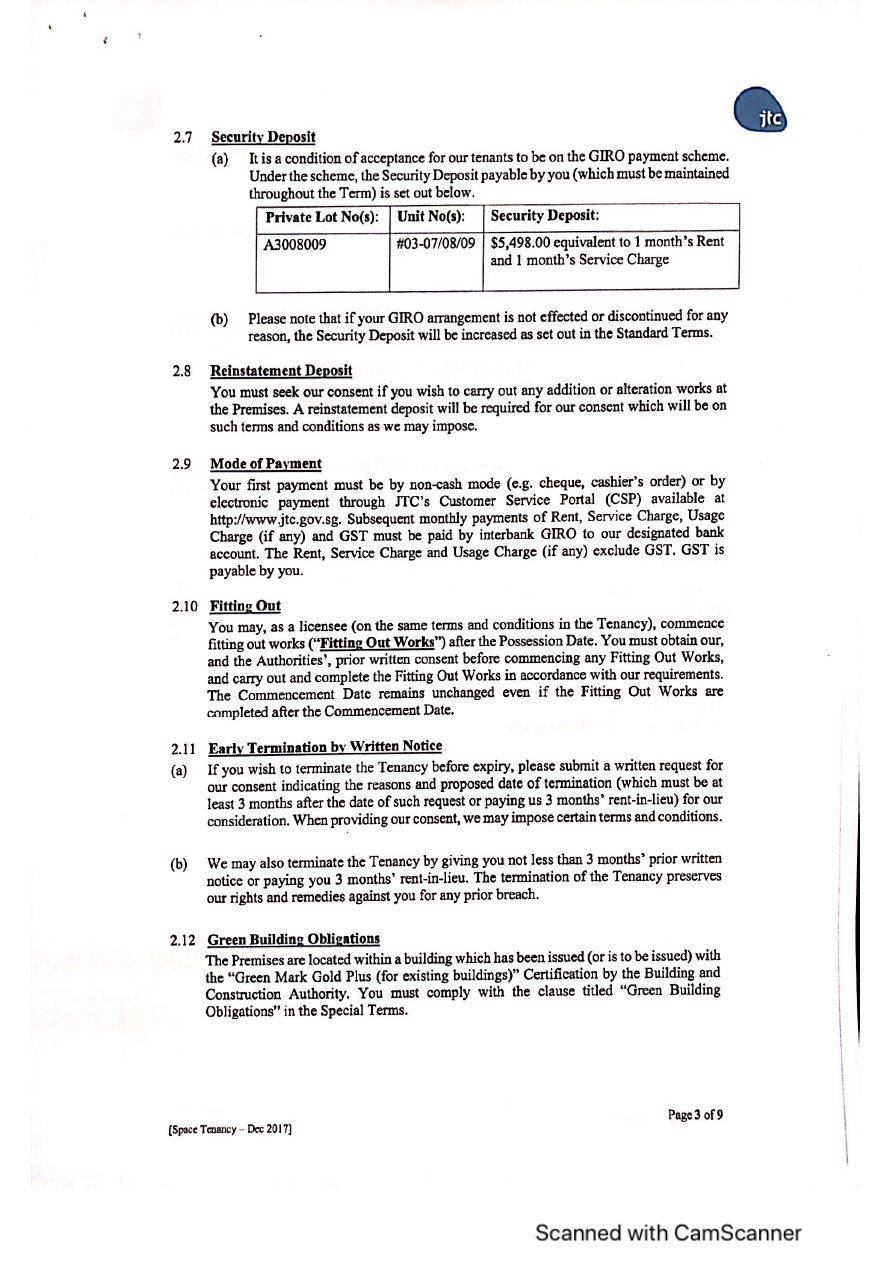
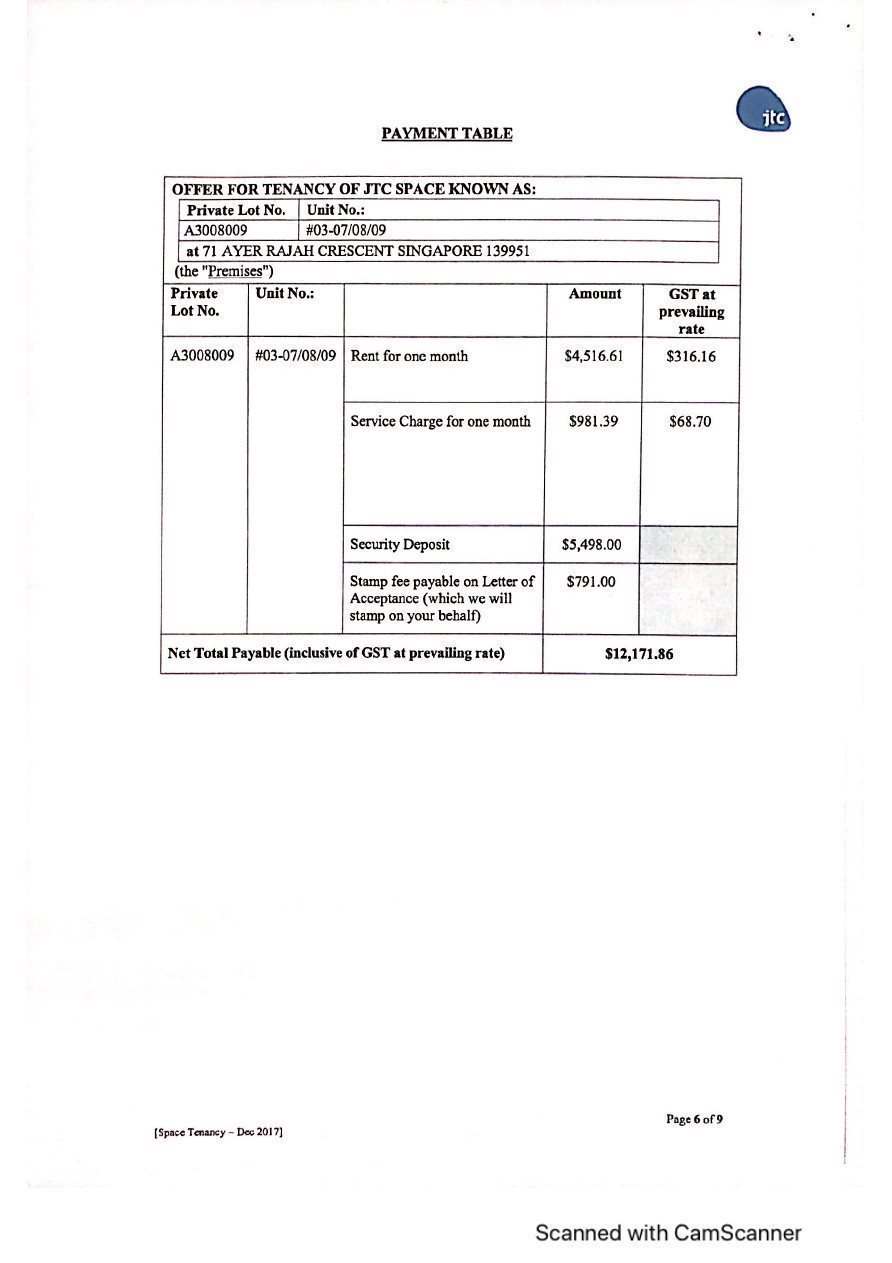
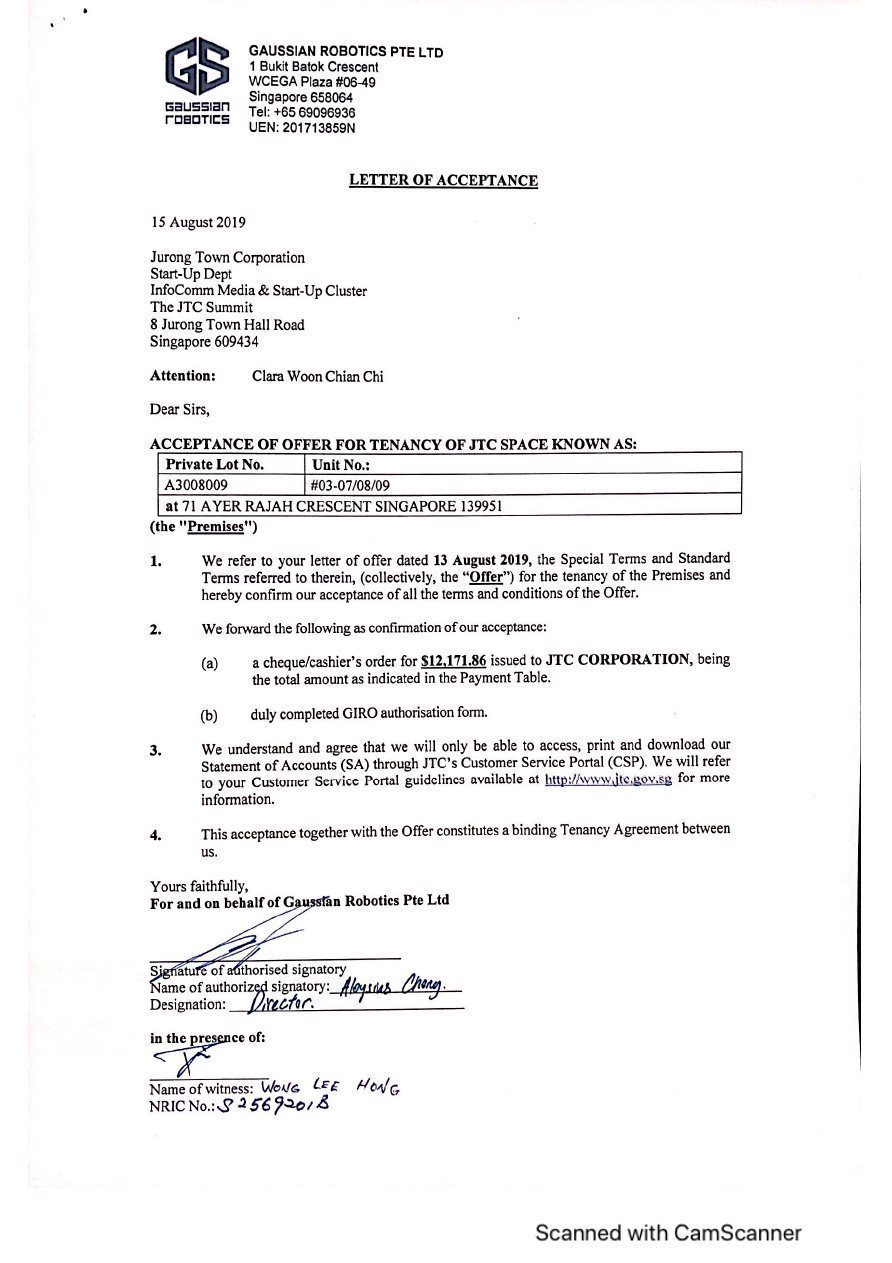

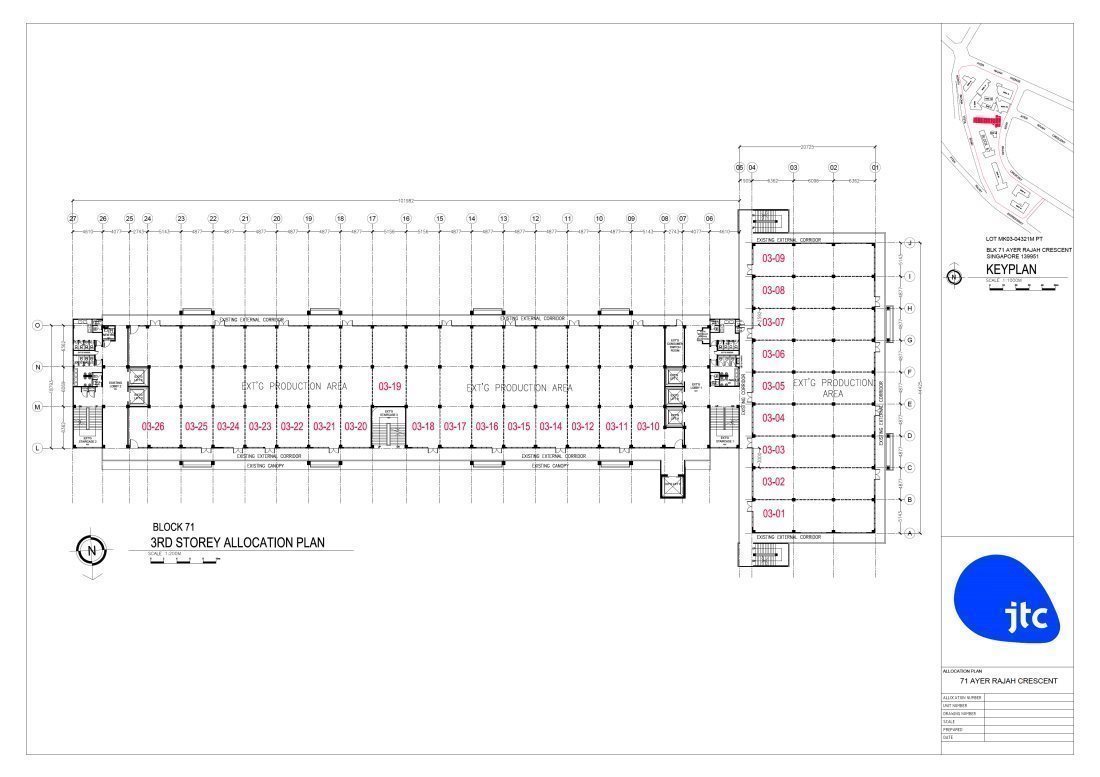
EXHIBIT 10.15
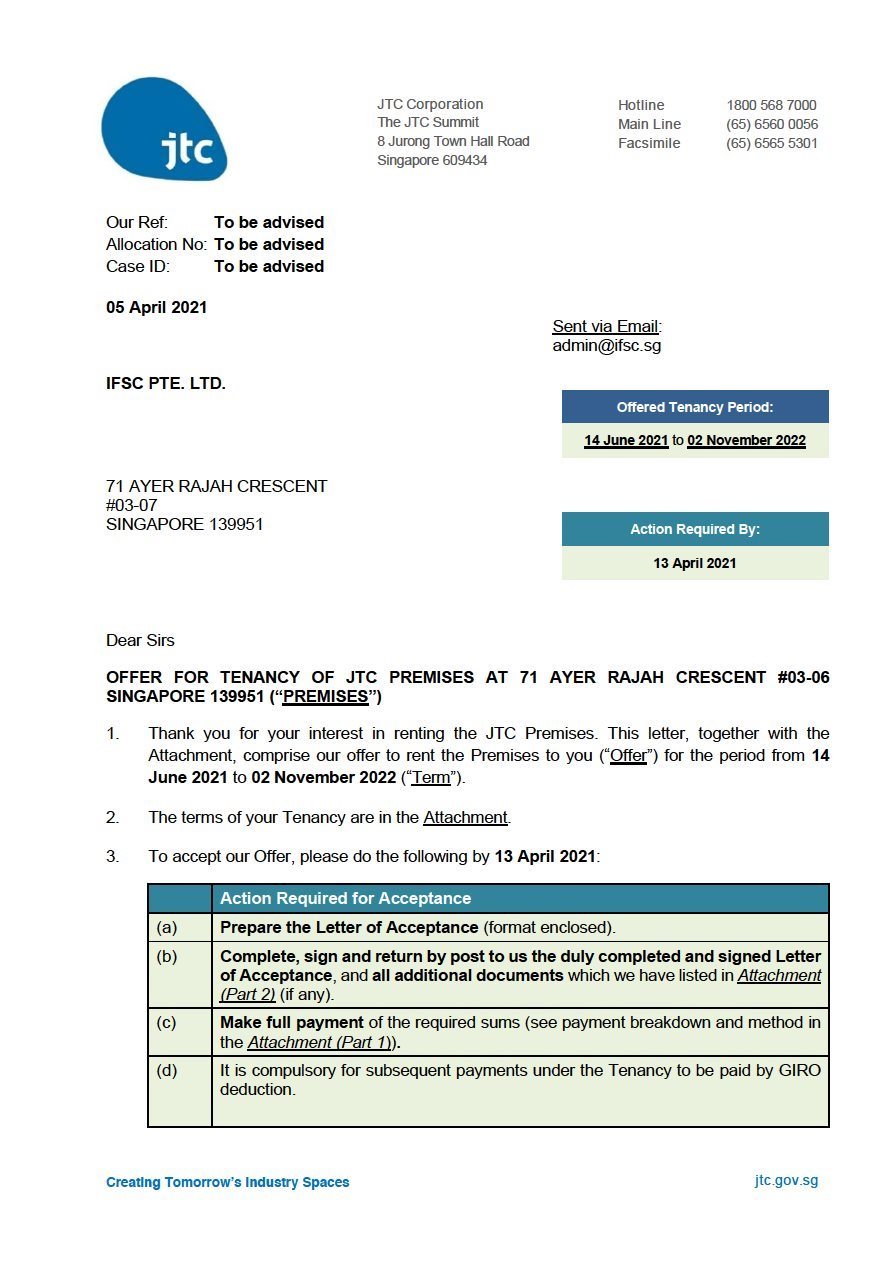
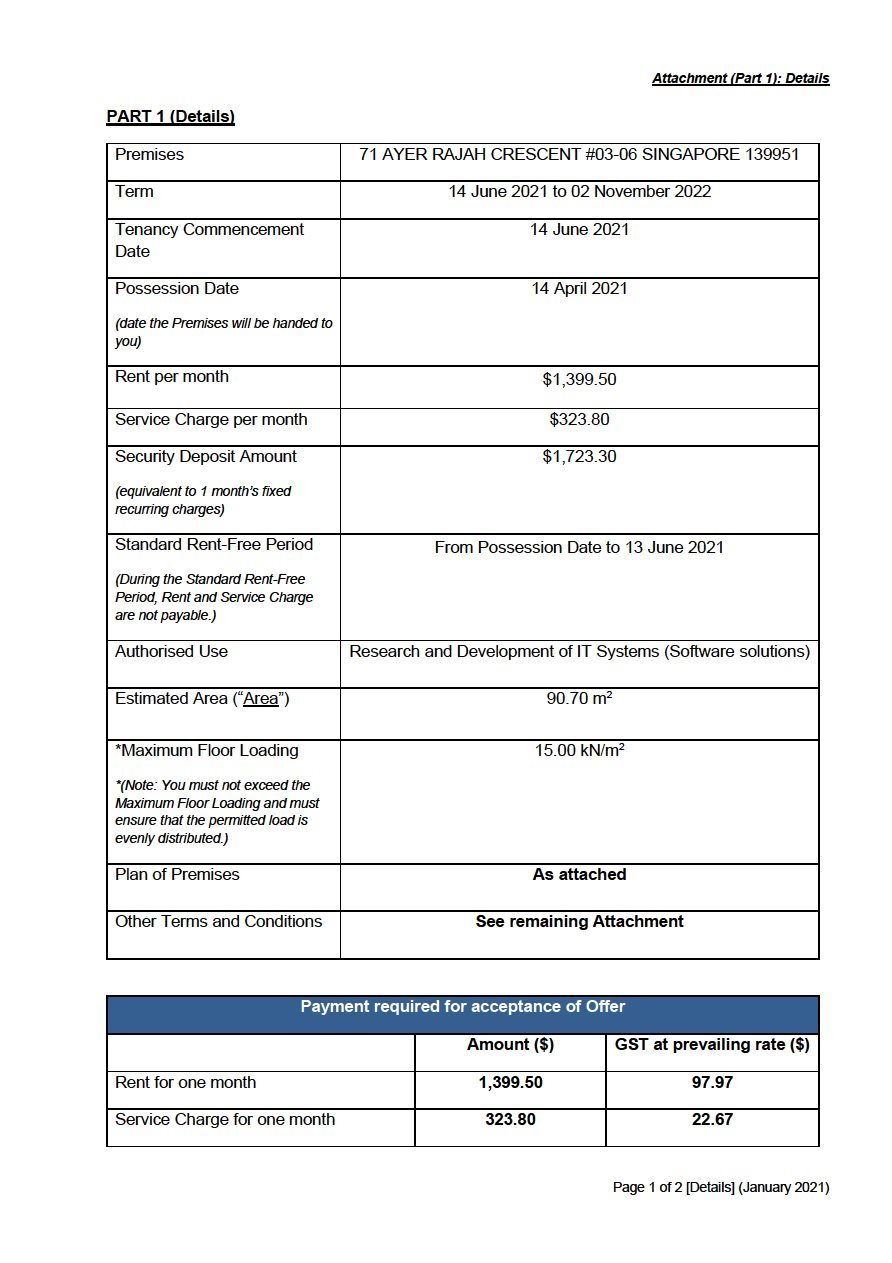
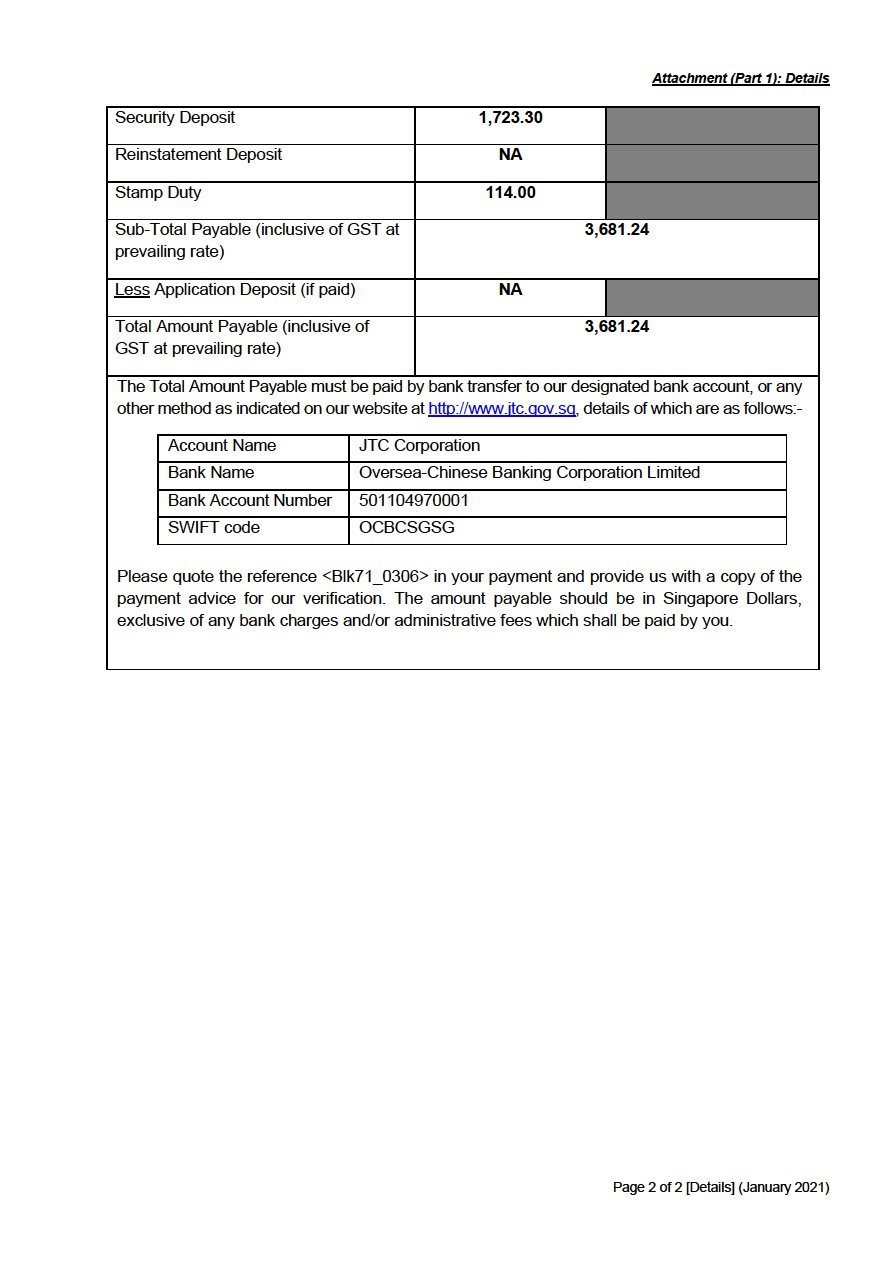
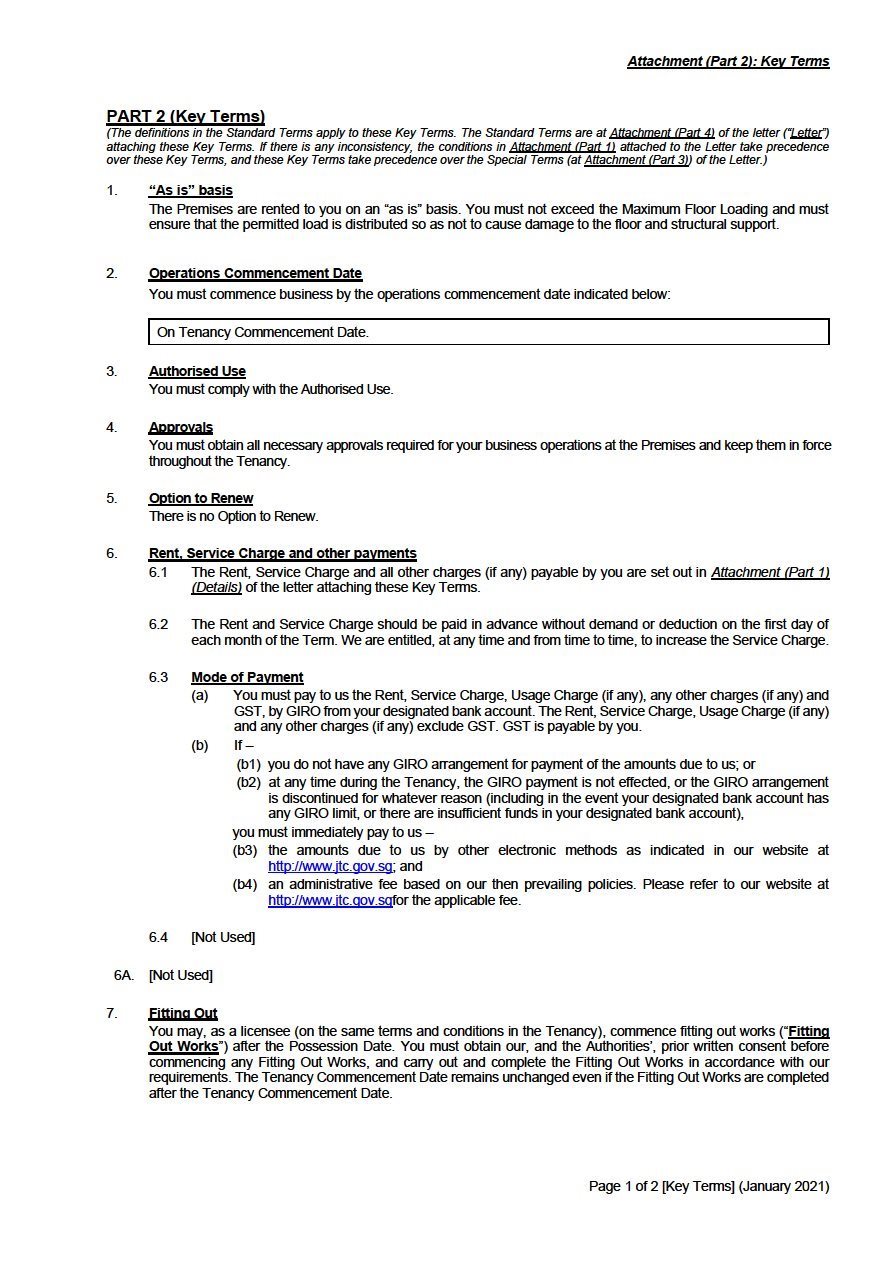
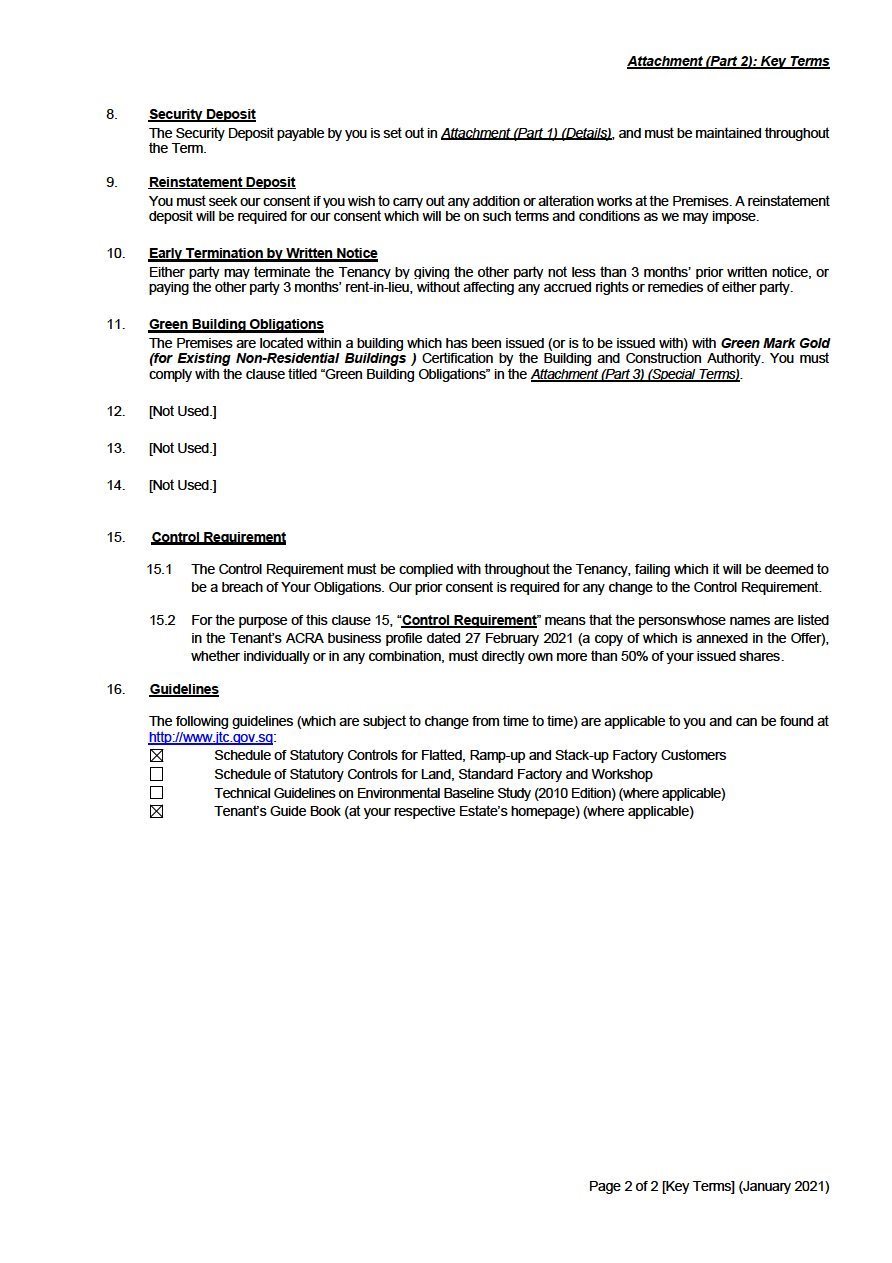
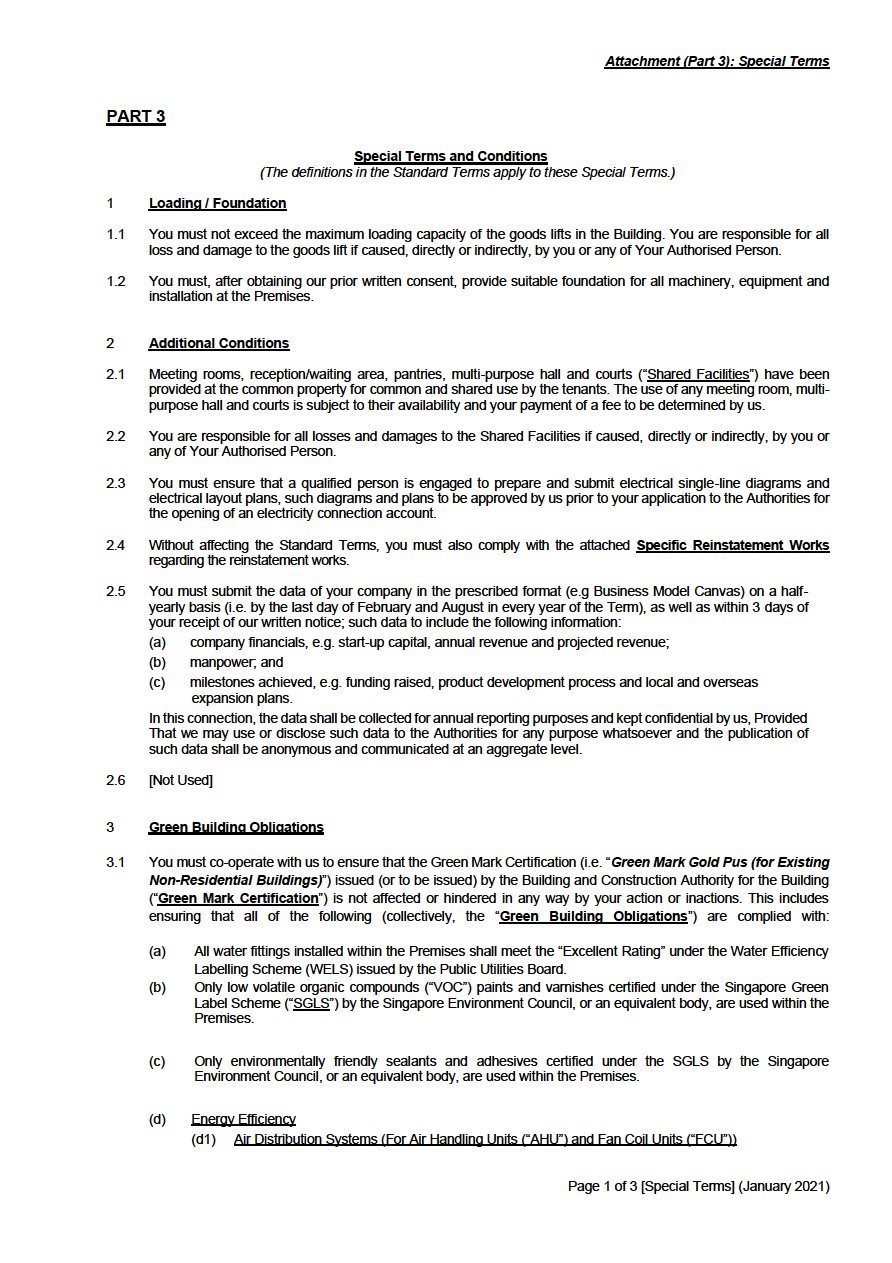

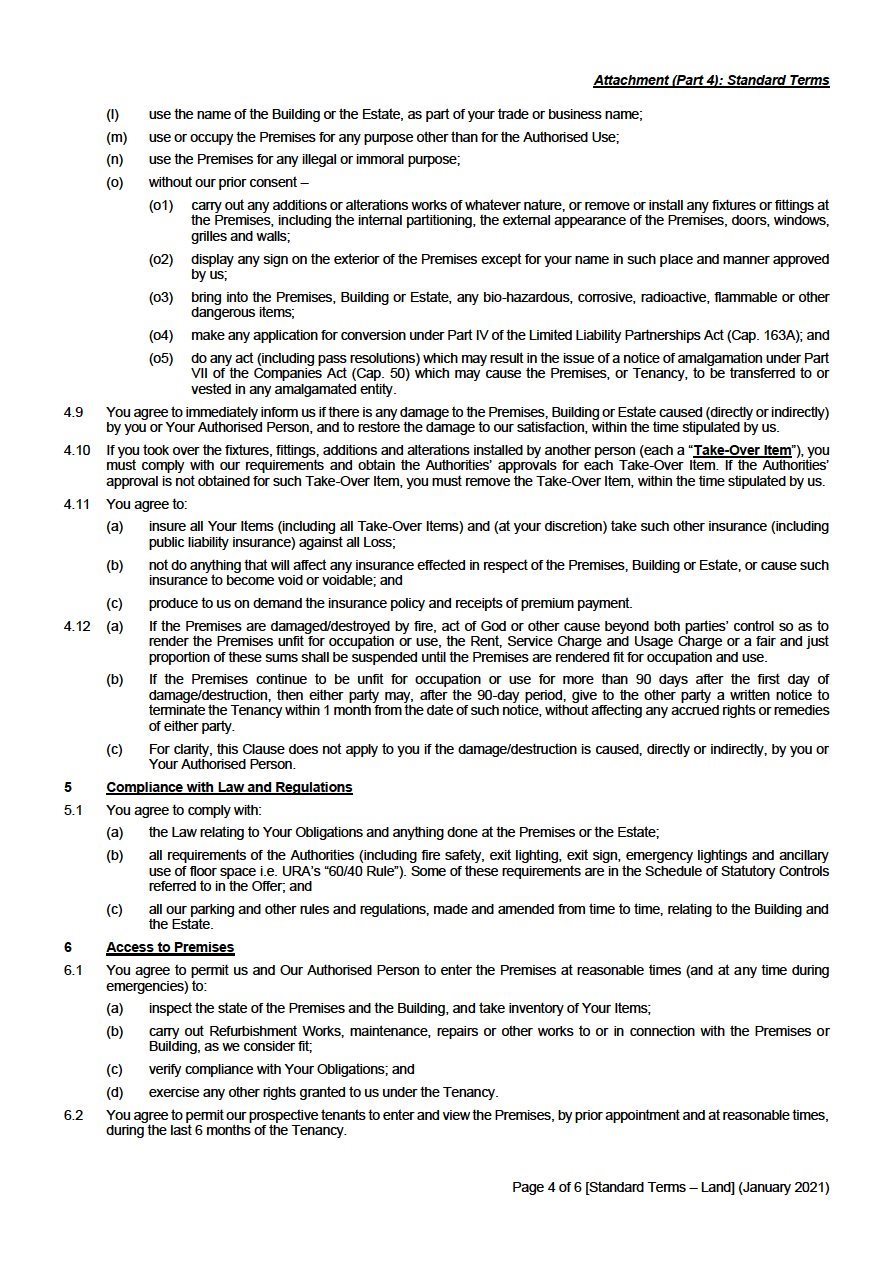
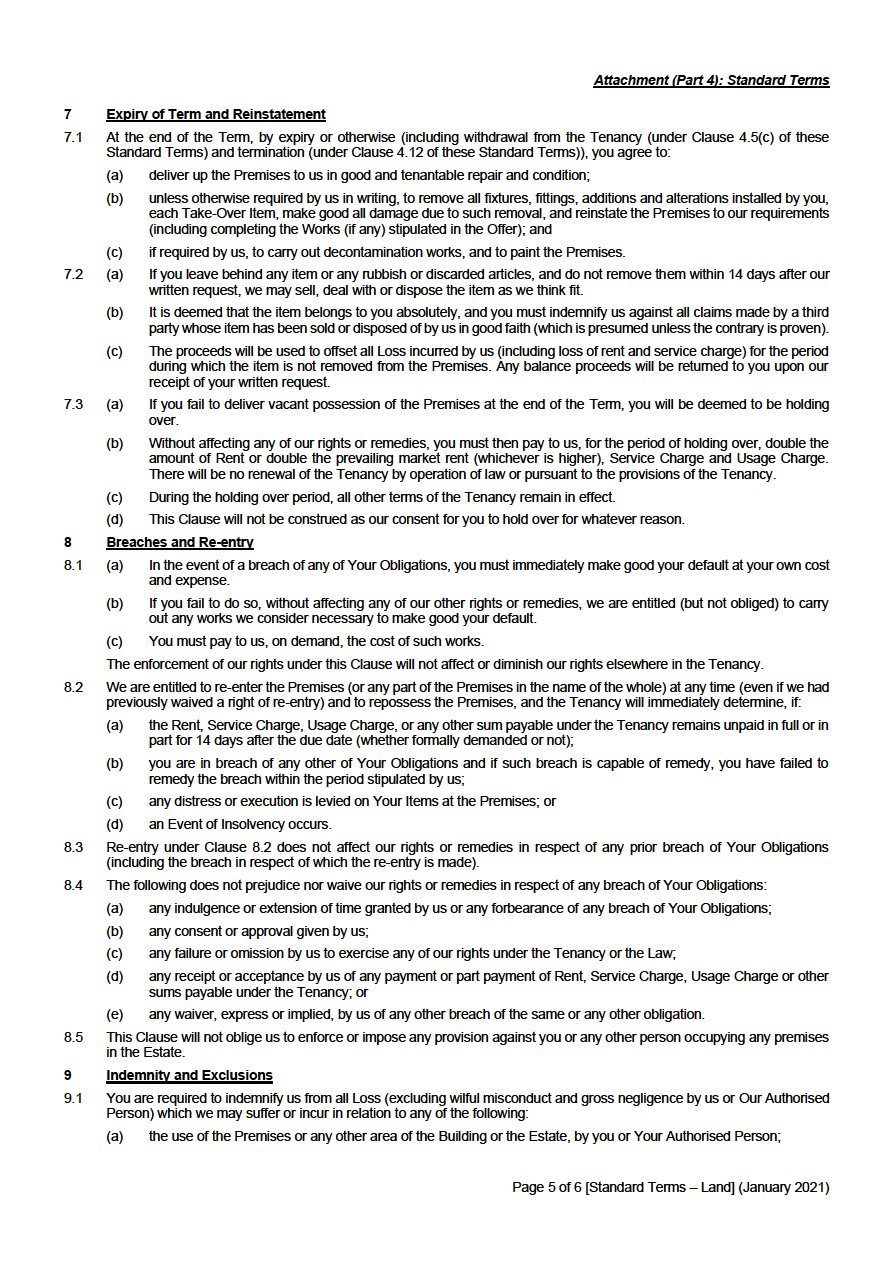
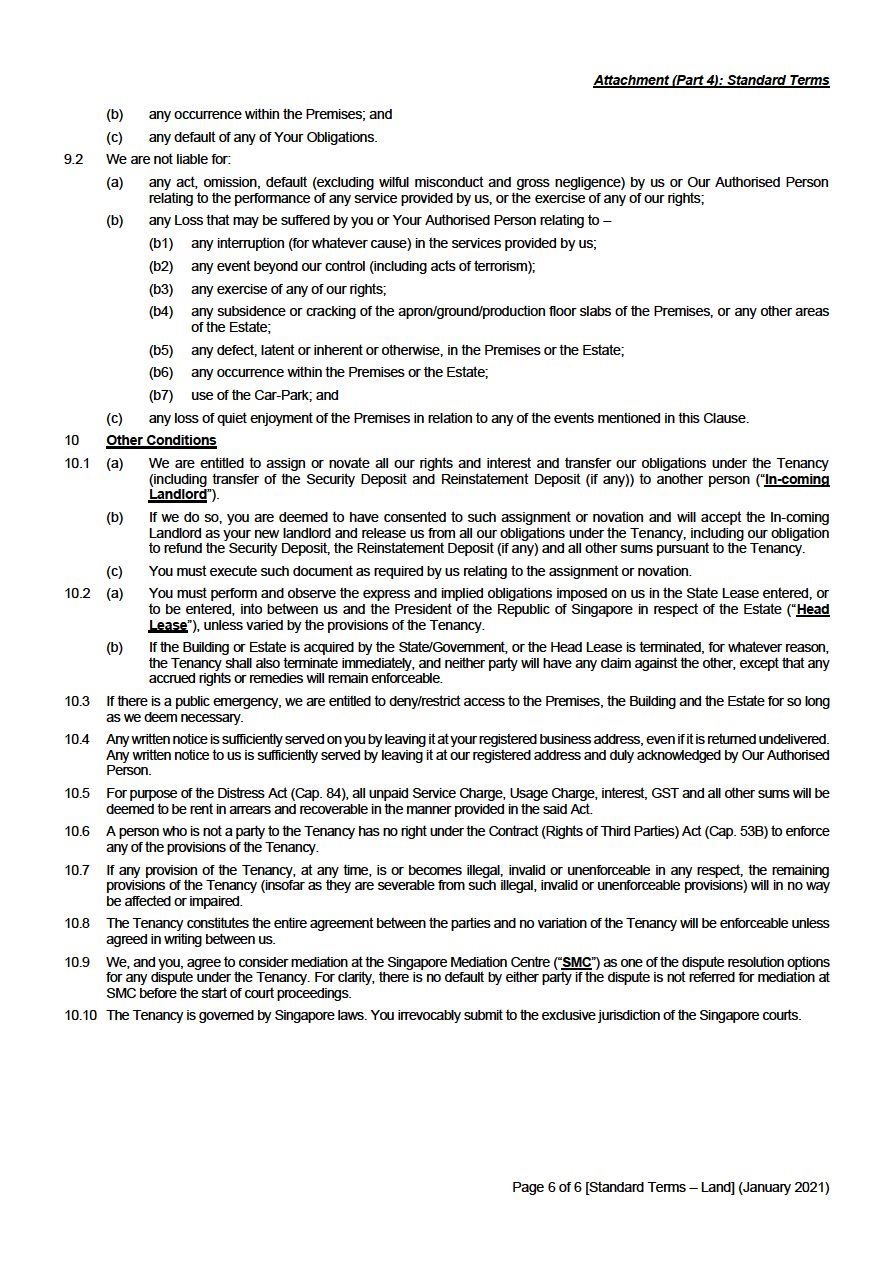
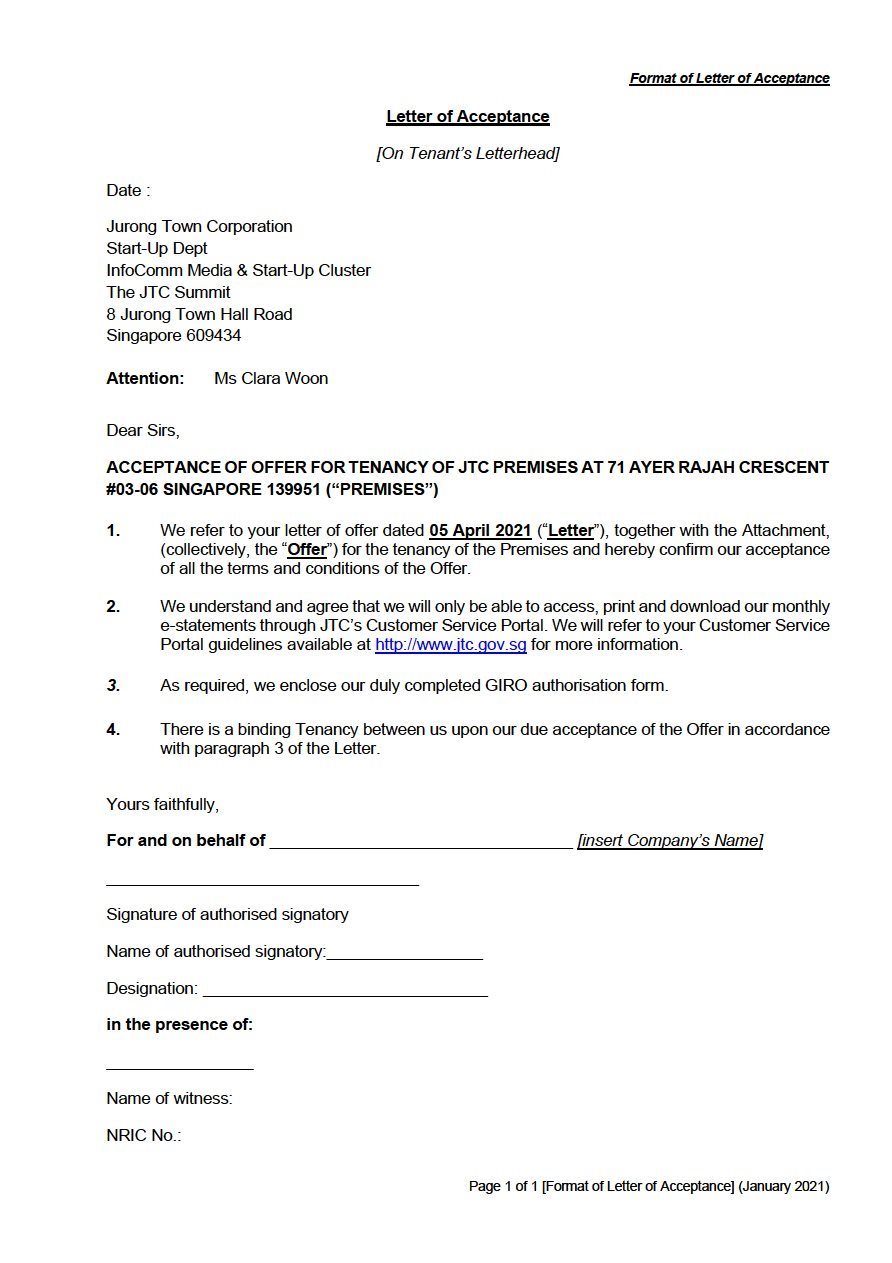
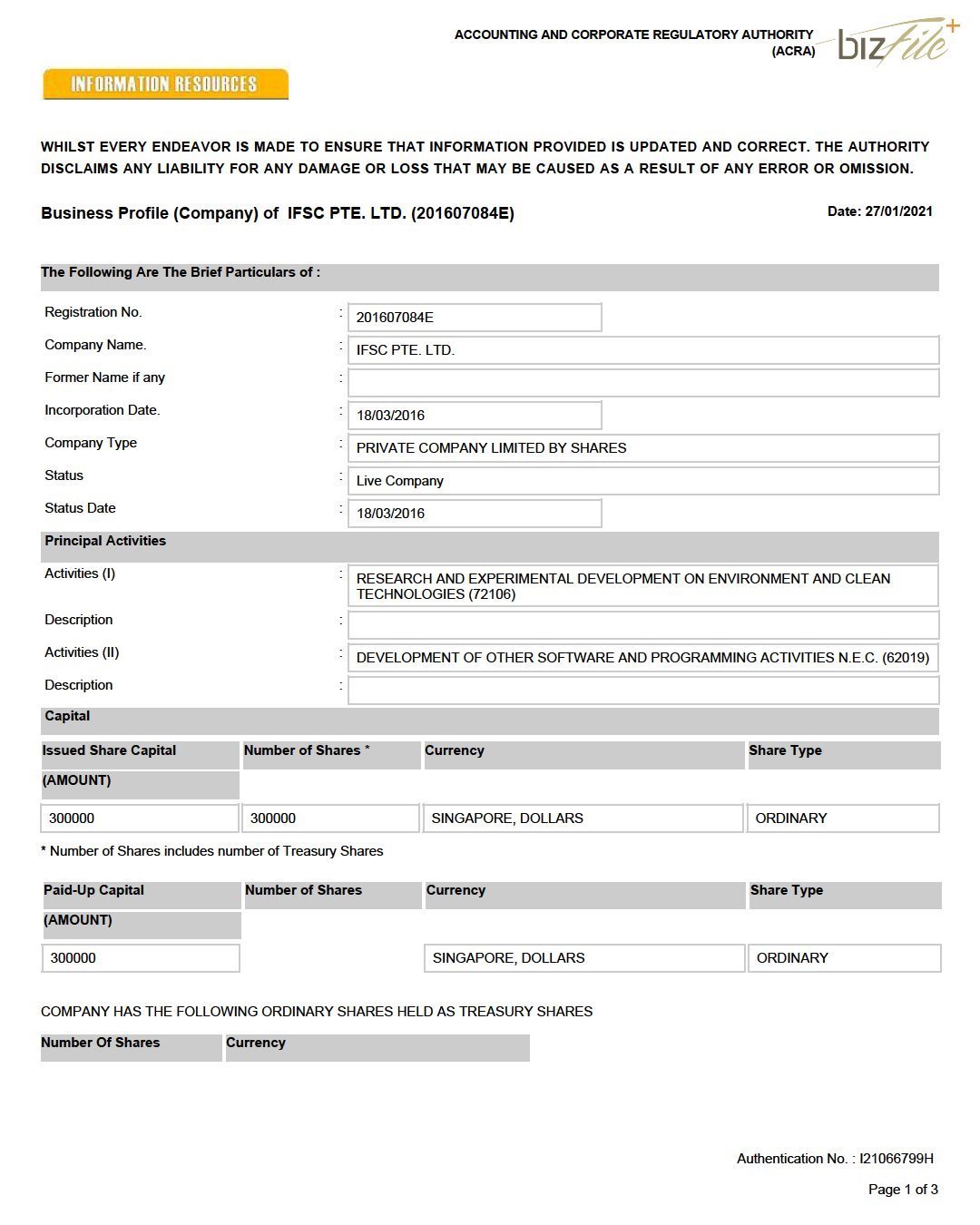
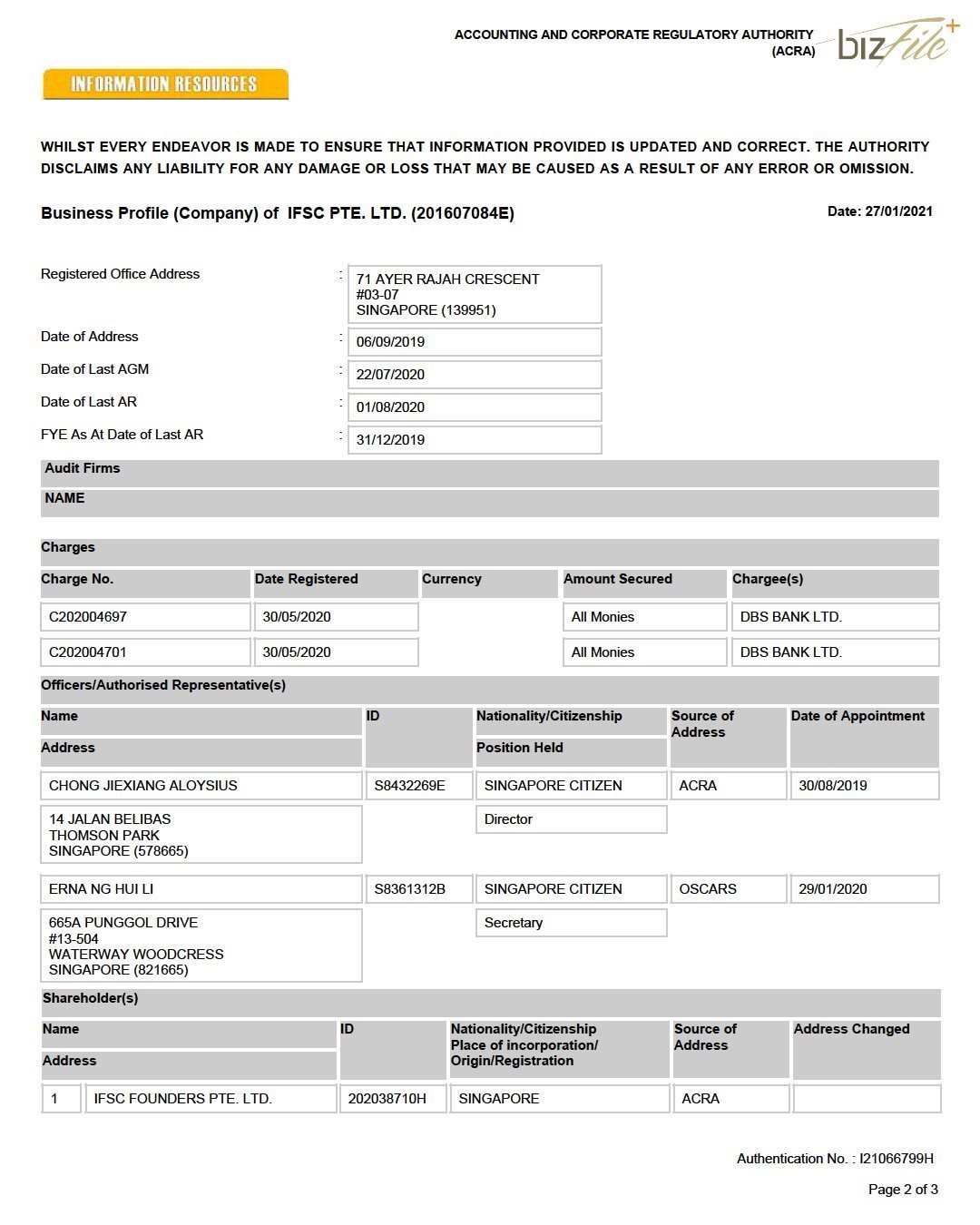
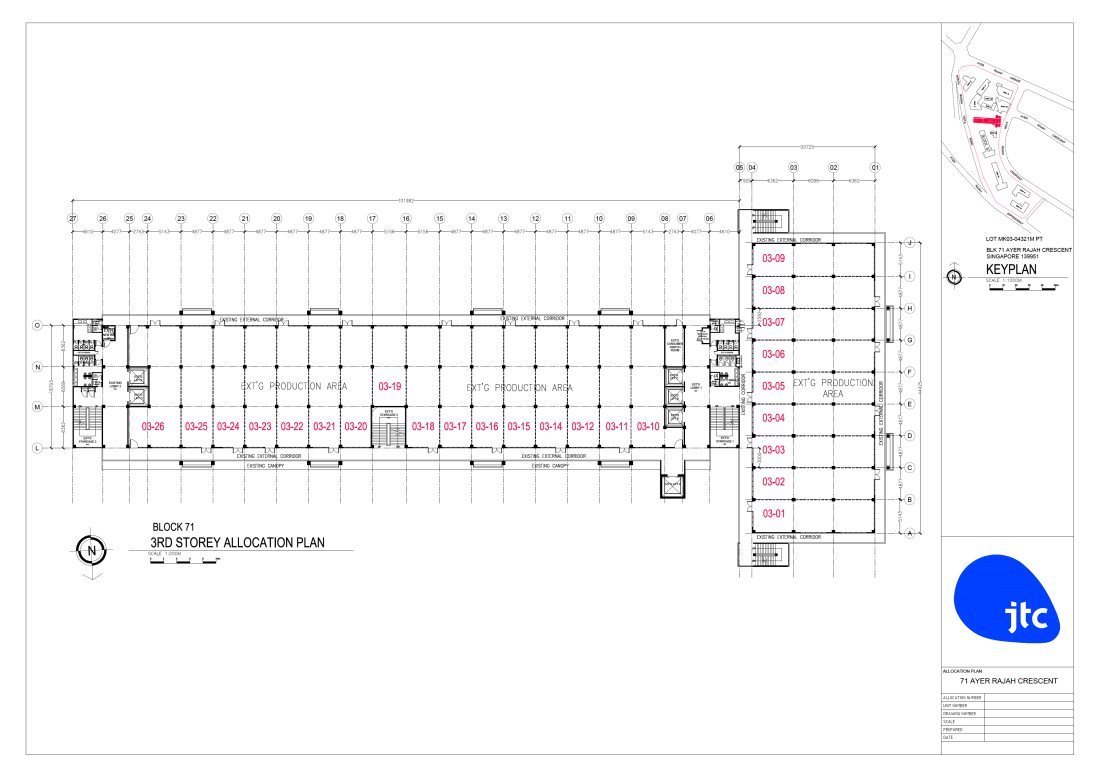
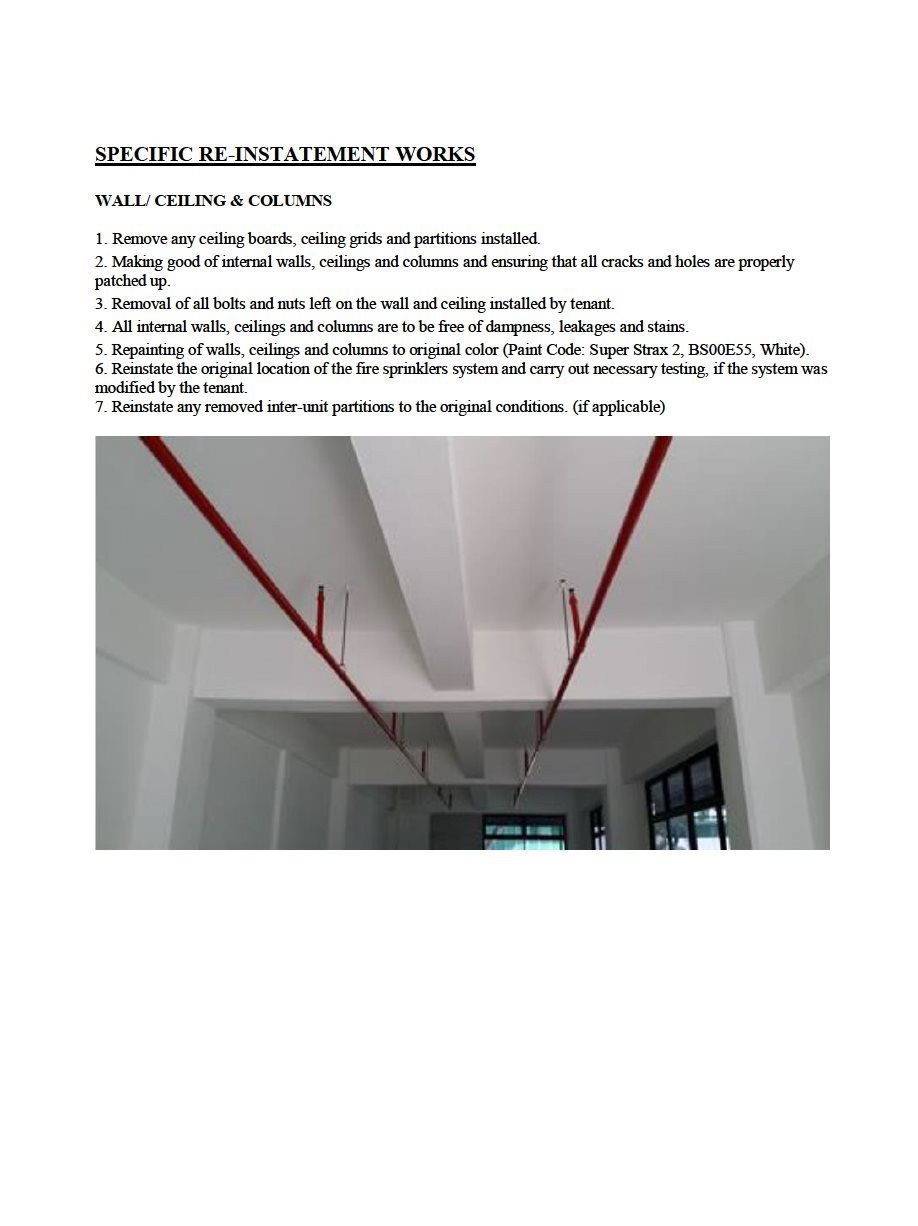
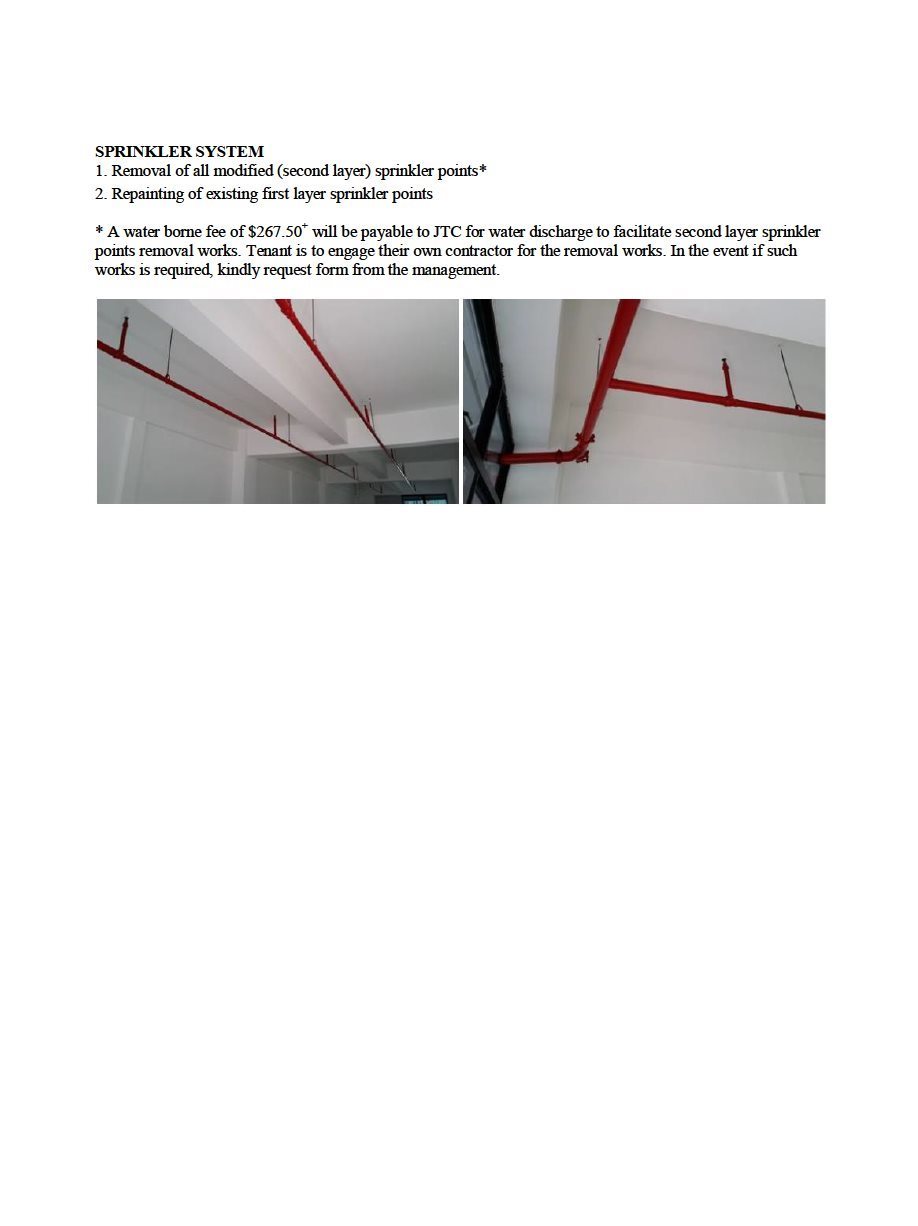
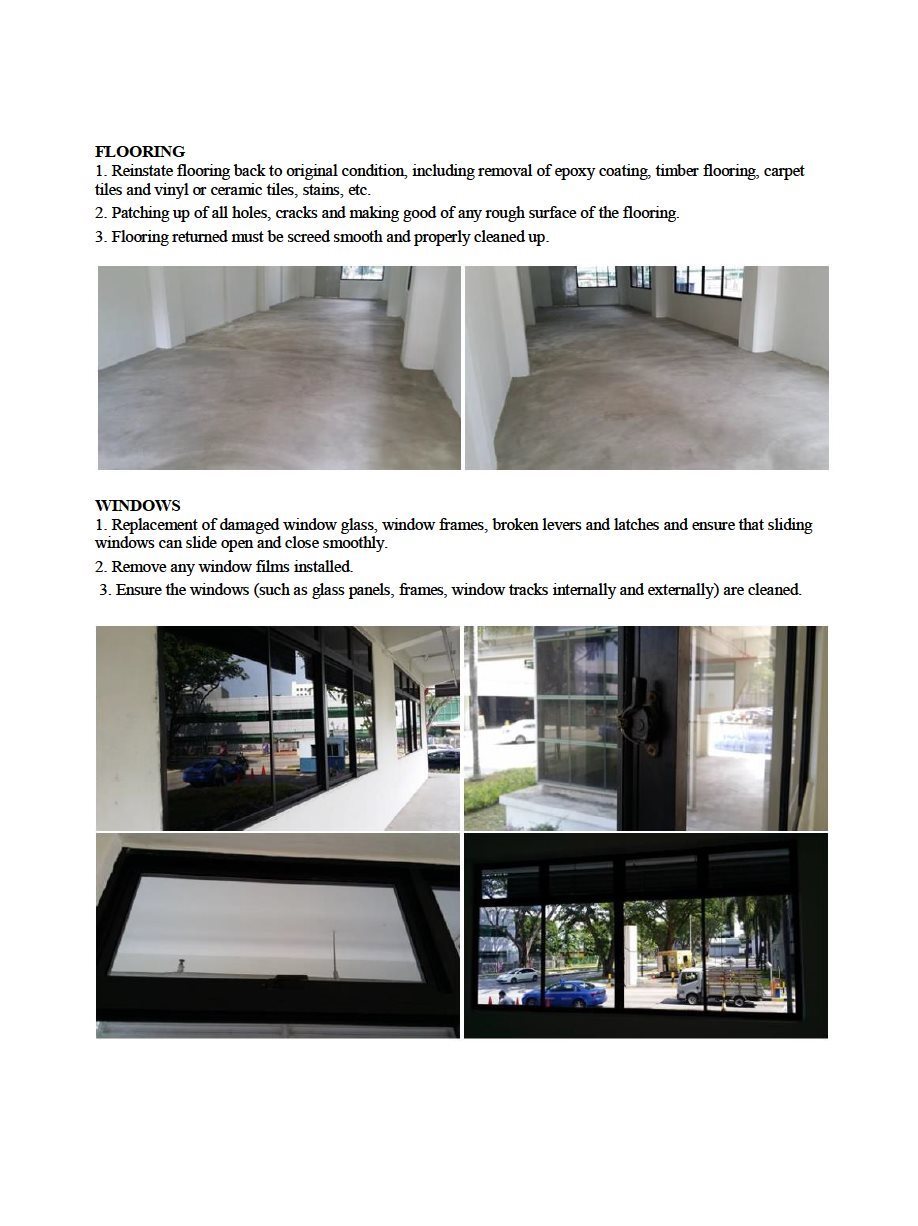
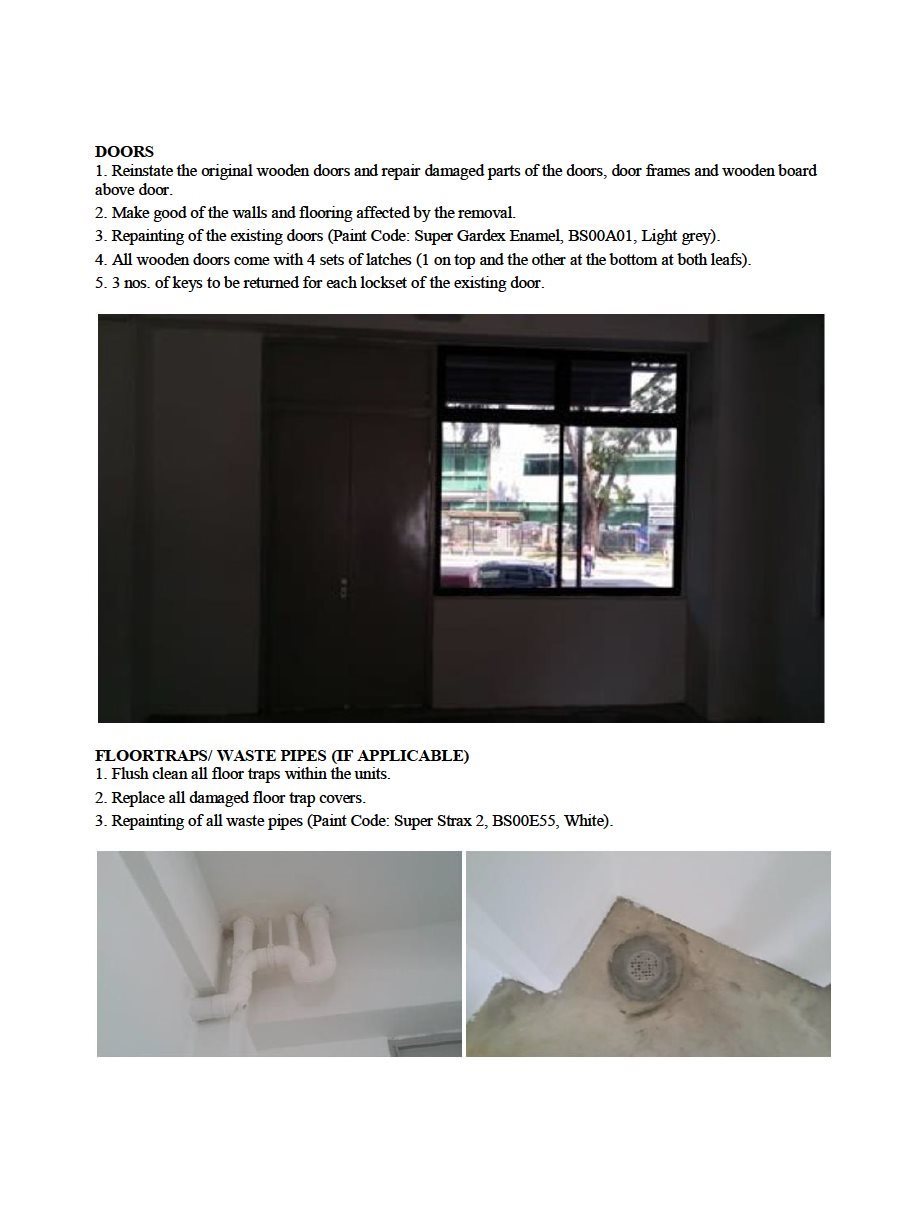
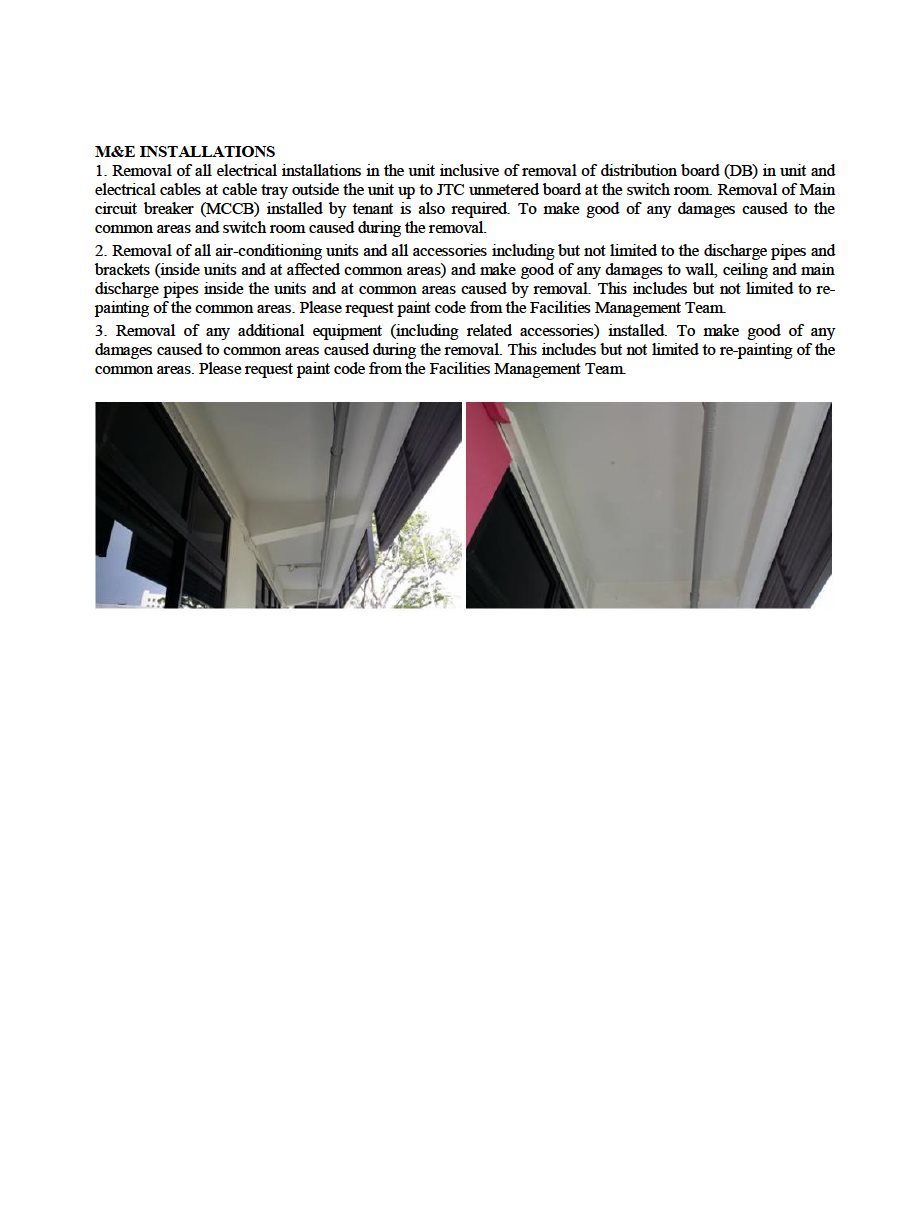
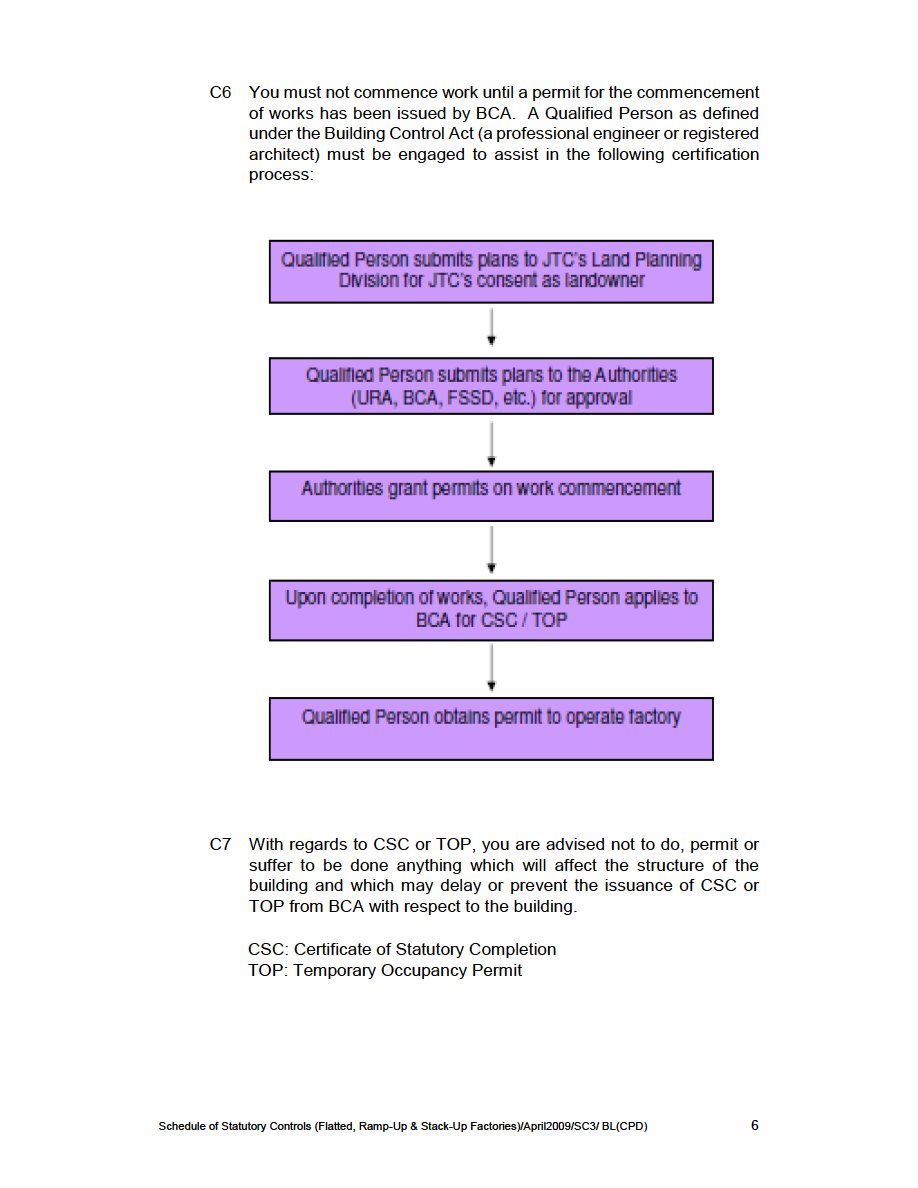
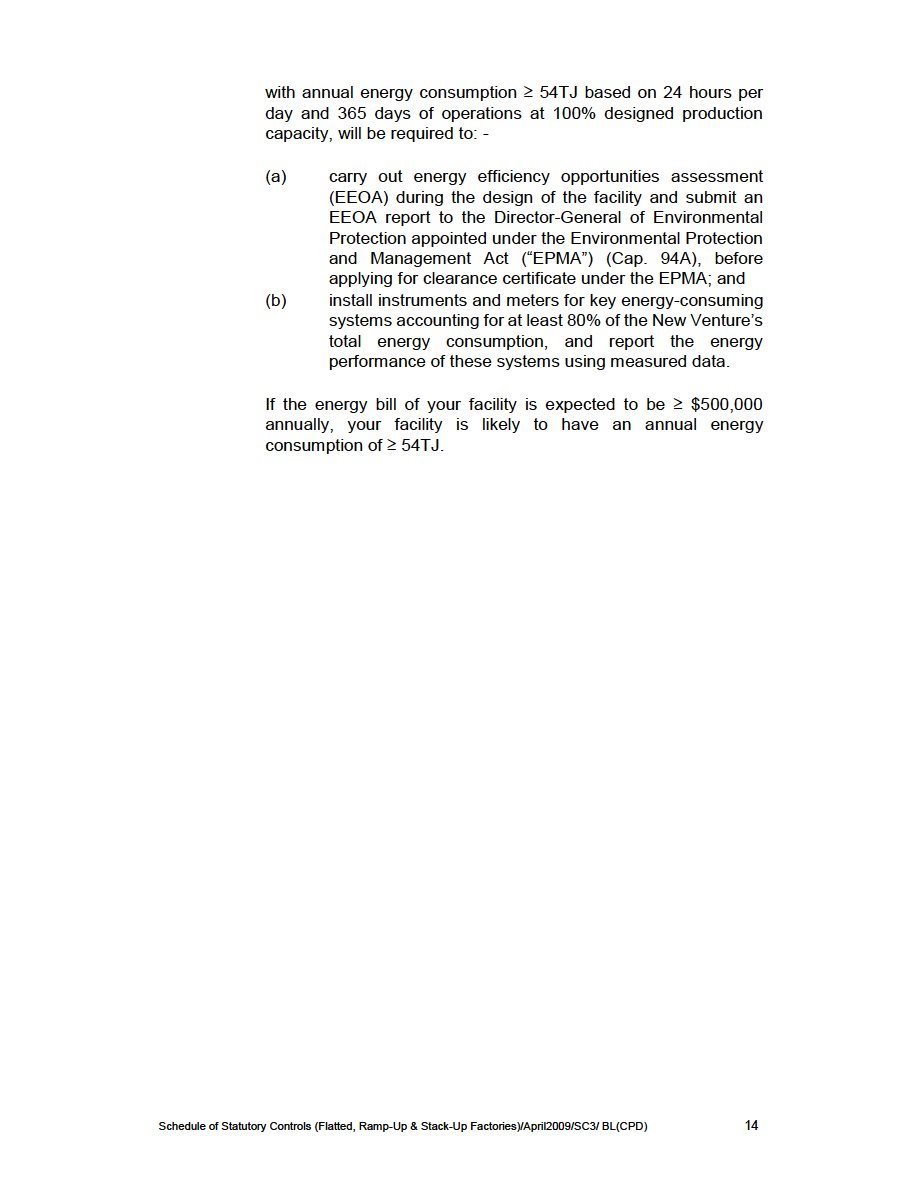
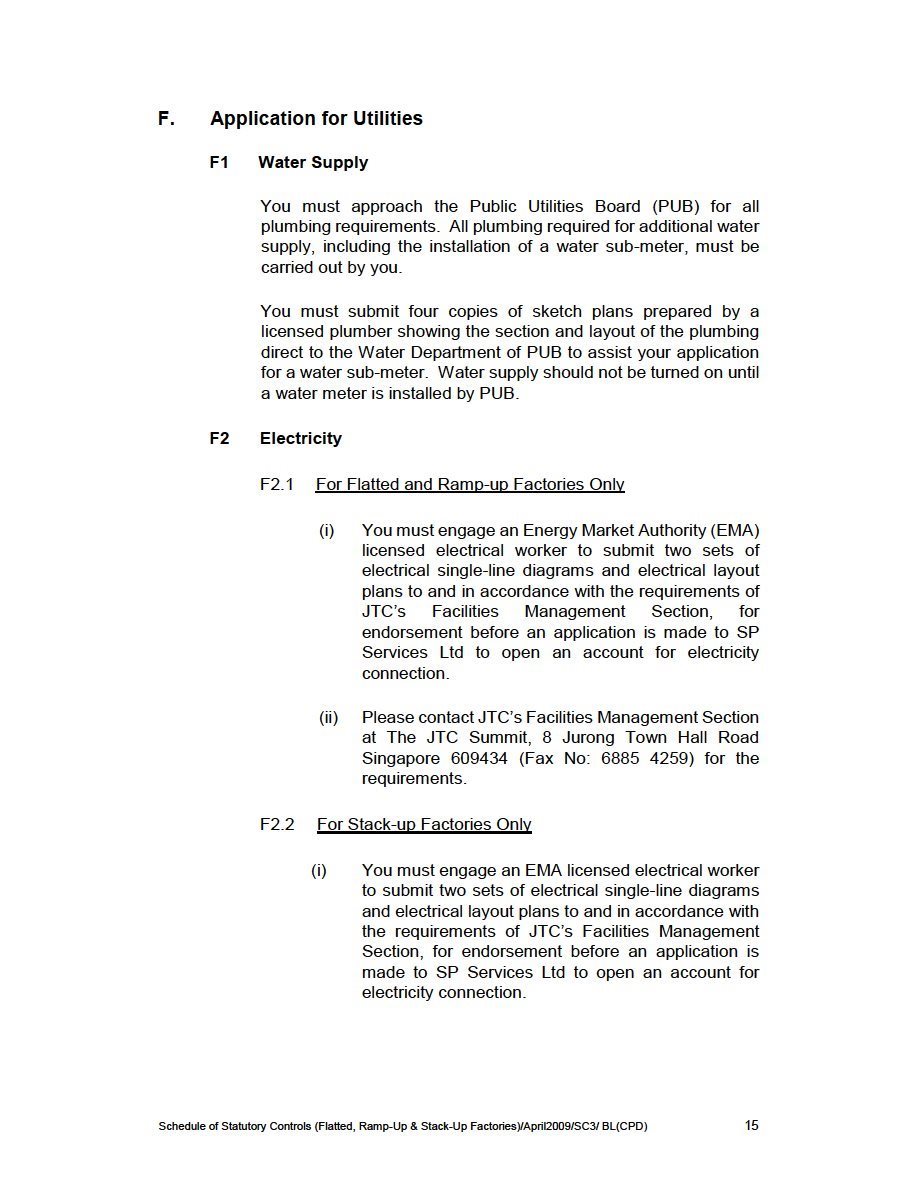
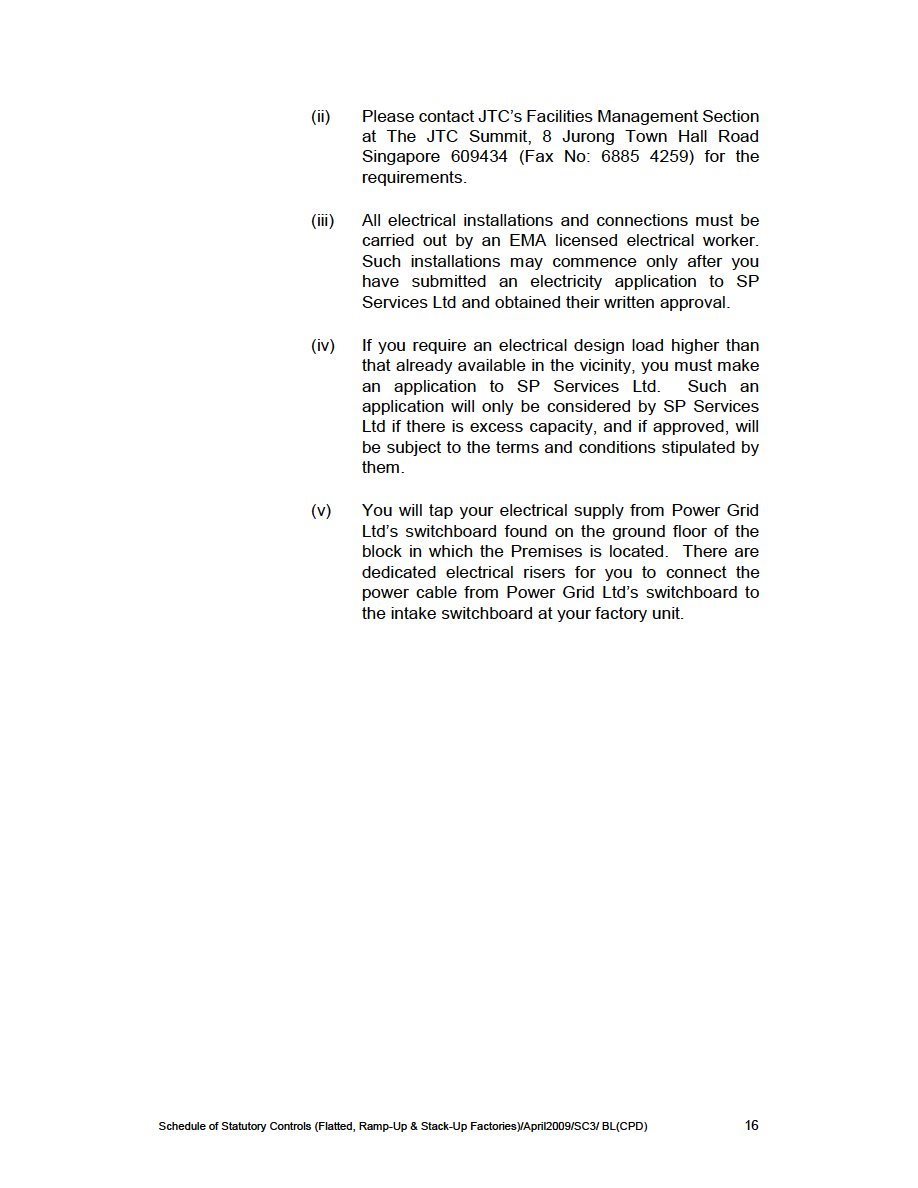
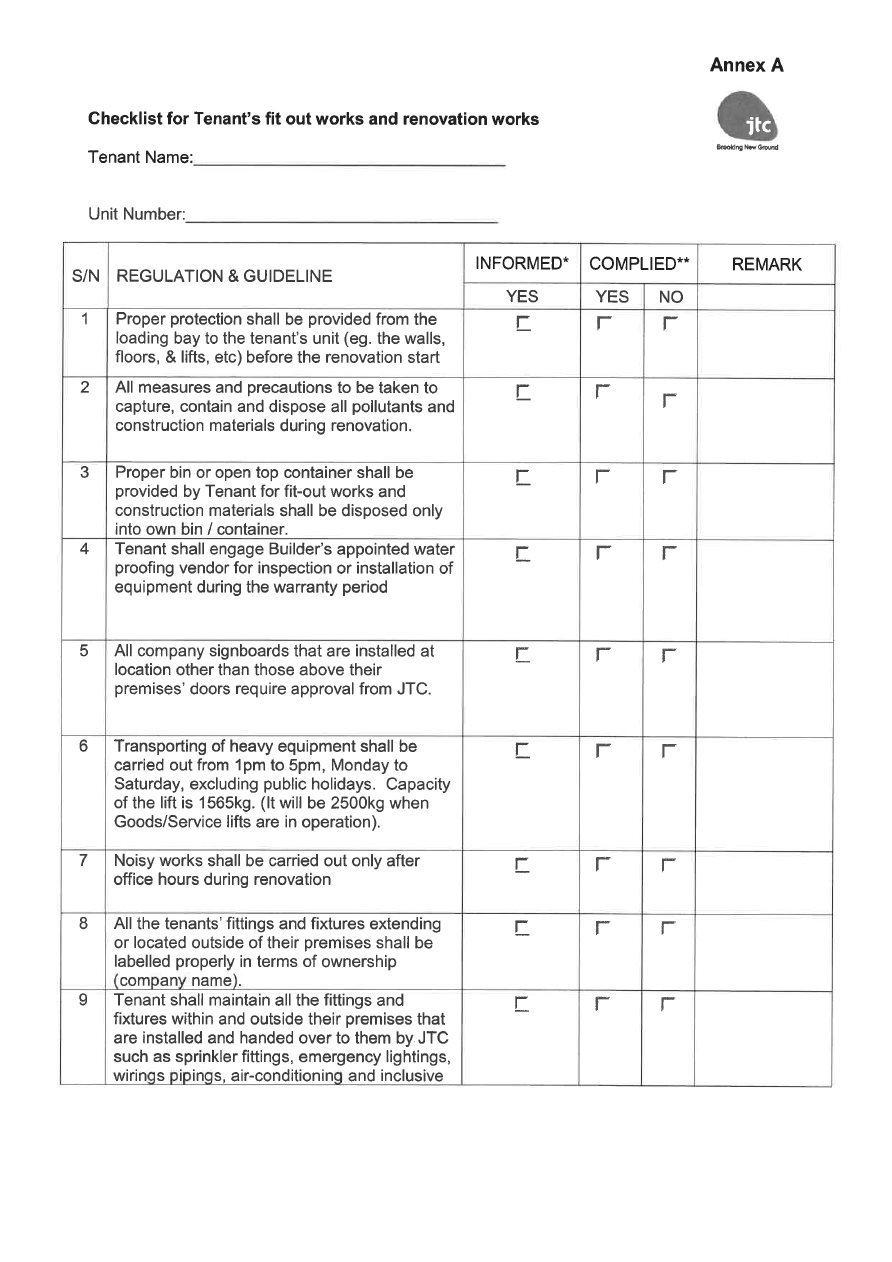

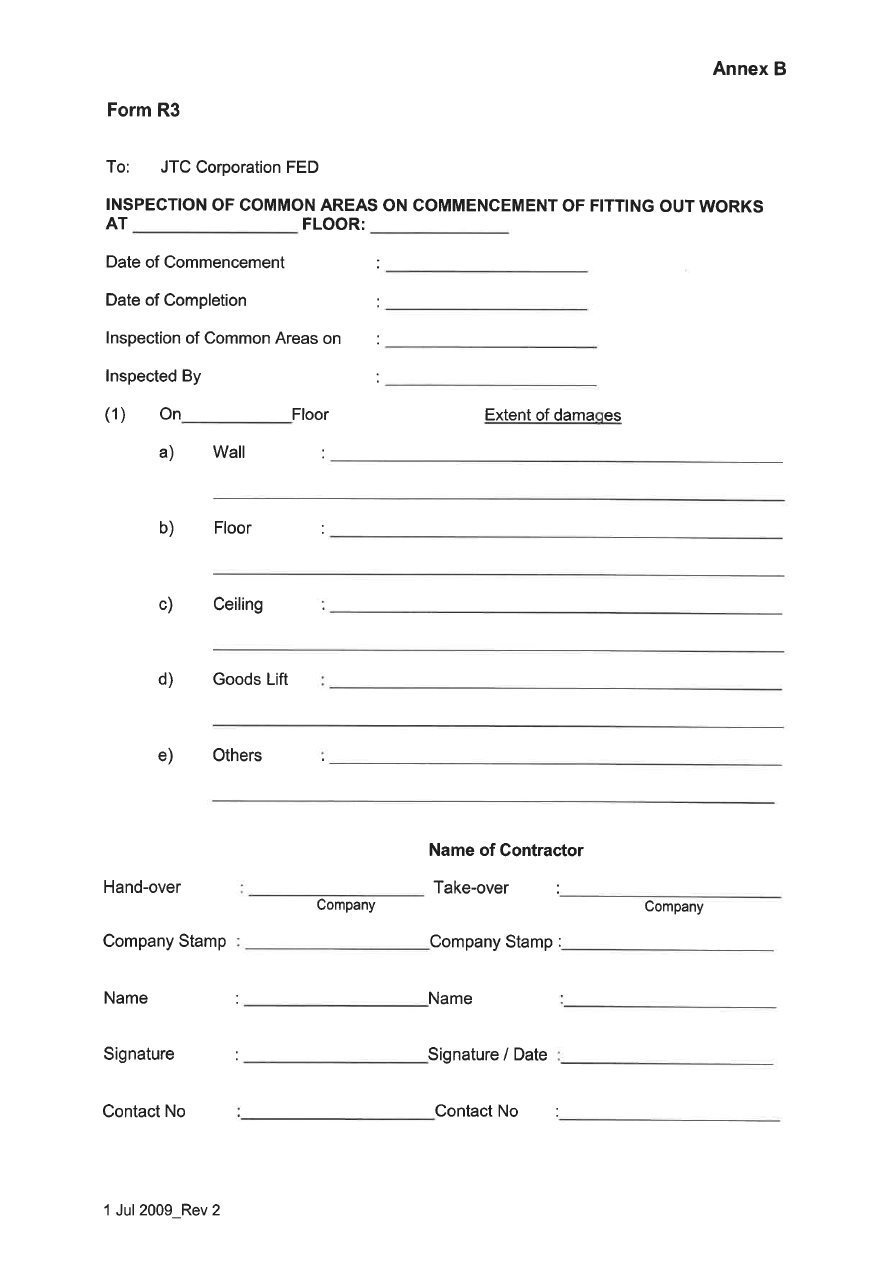
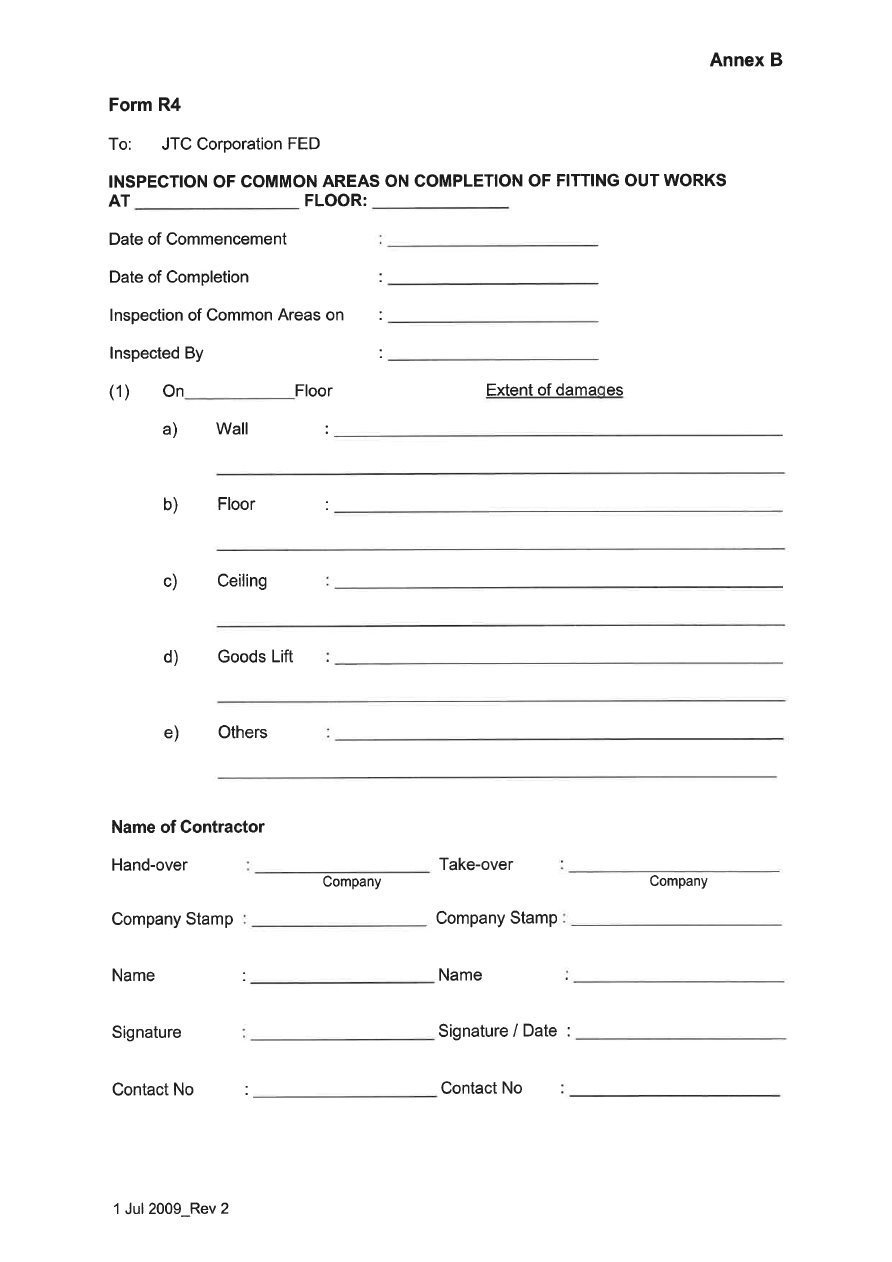
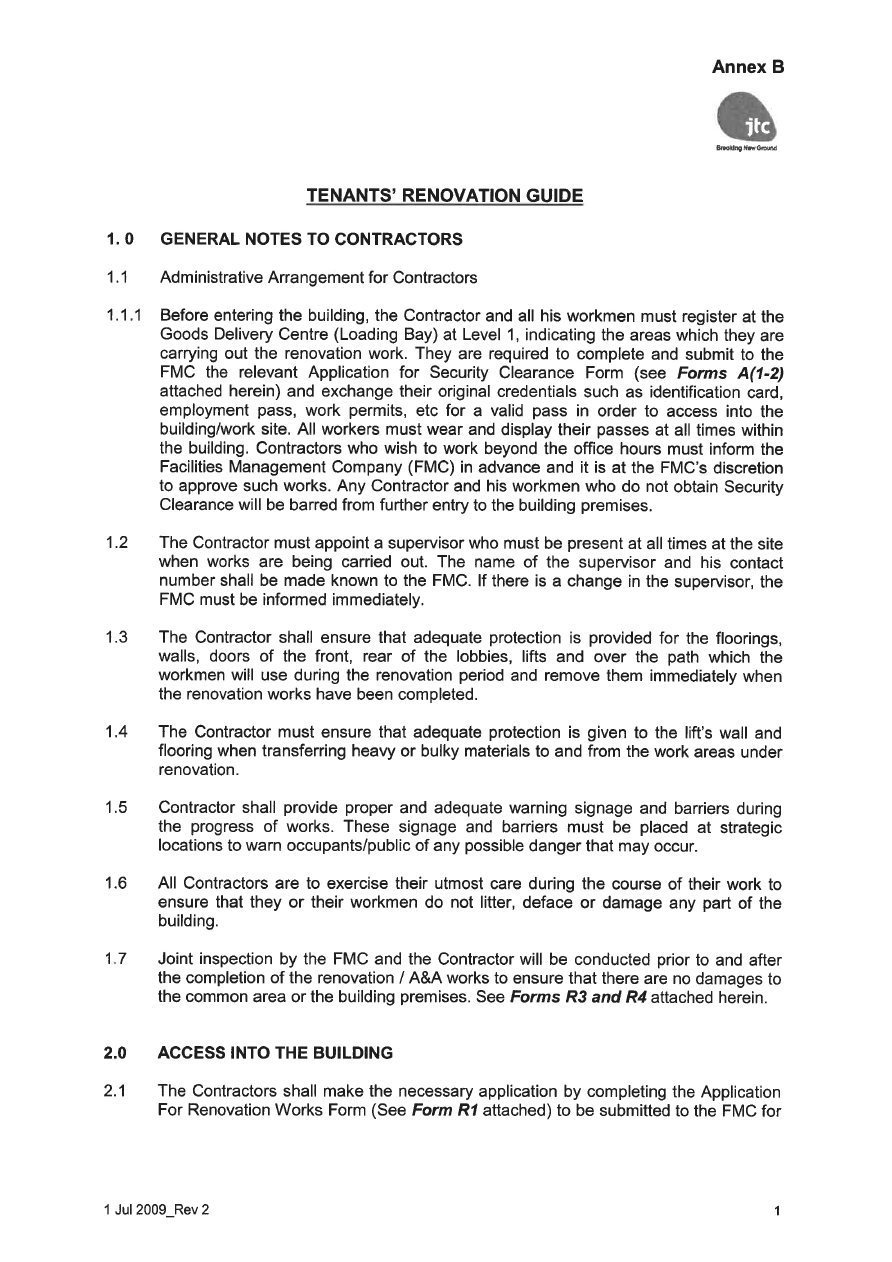
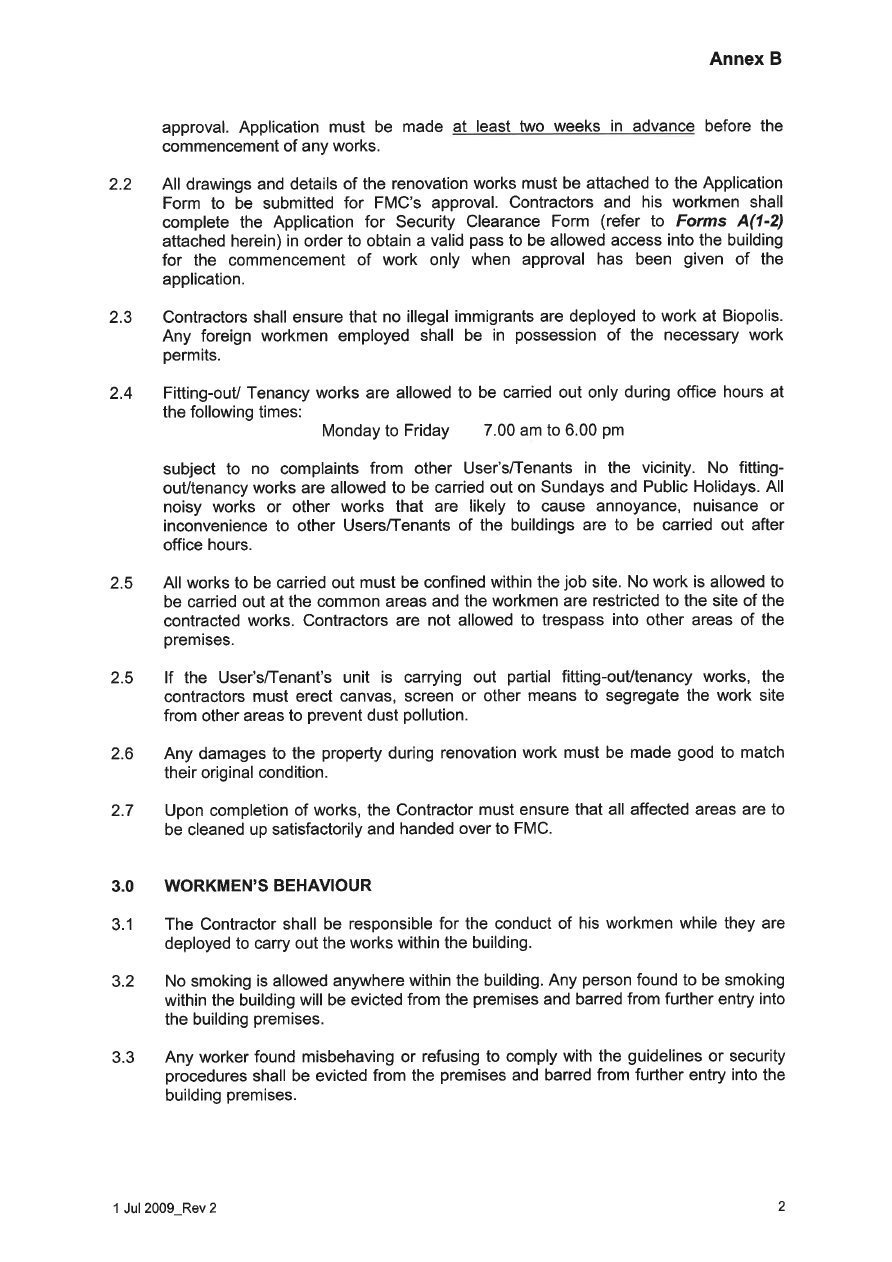

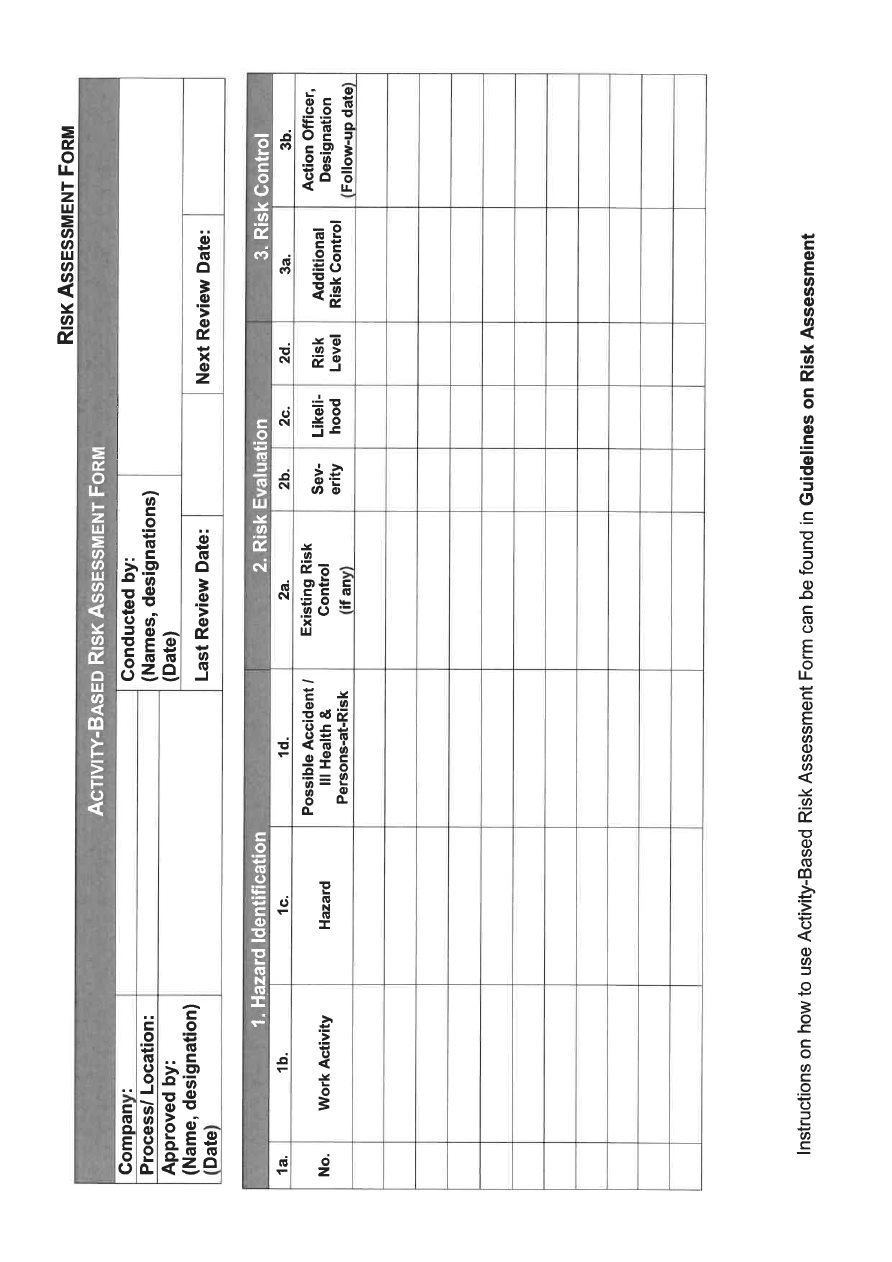

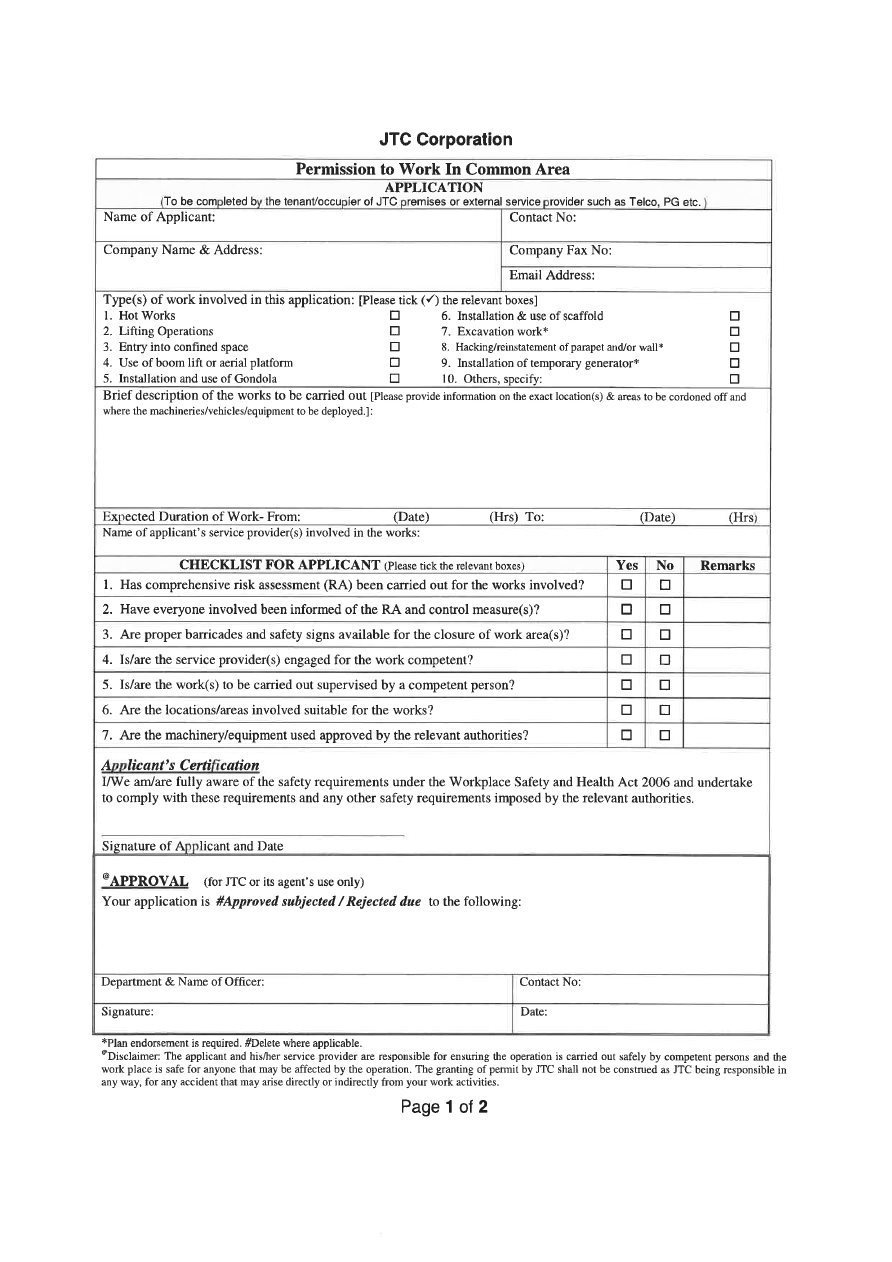
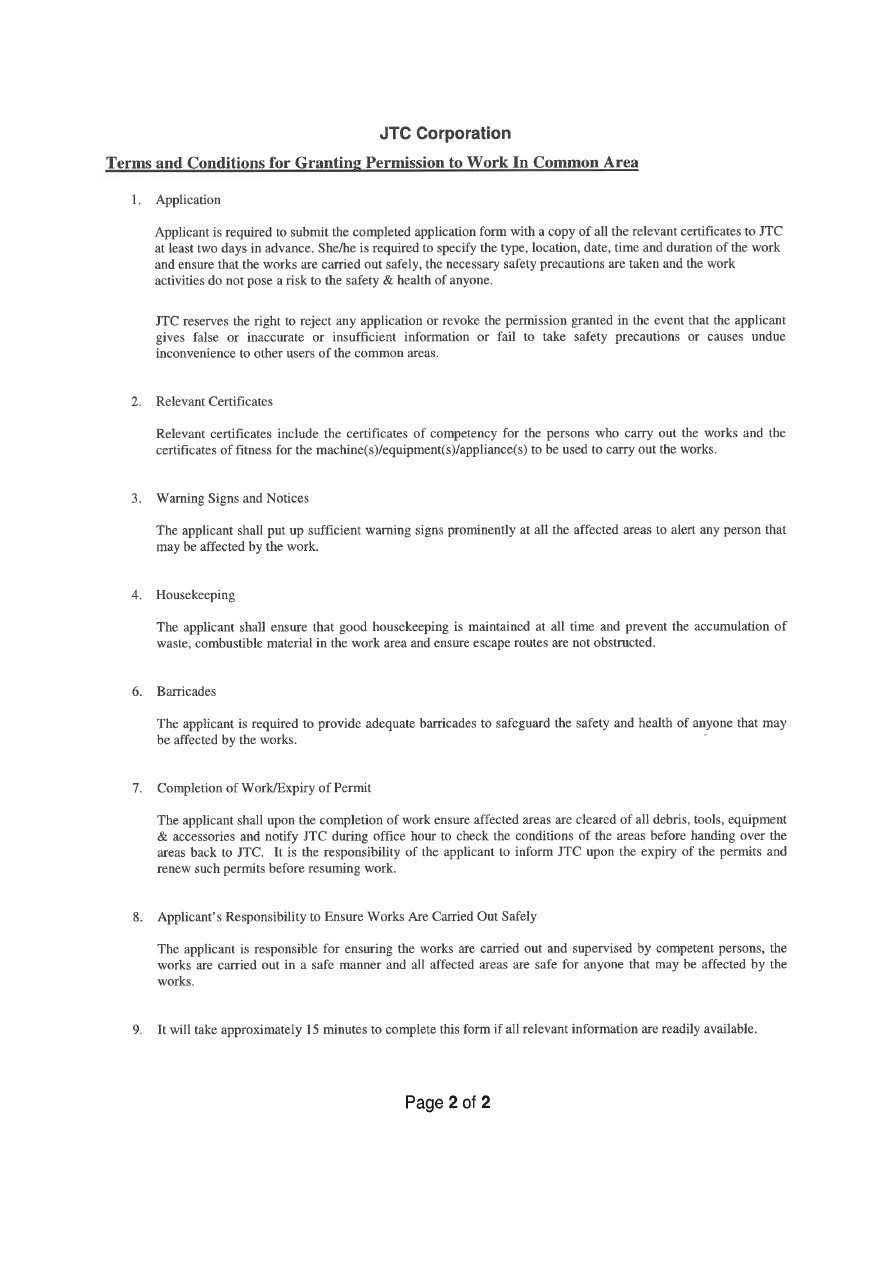
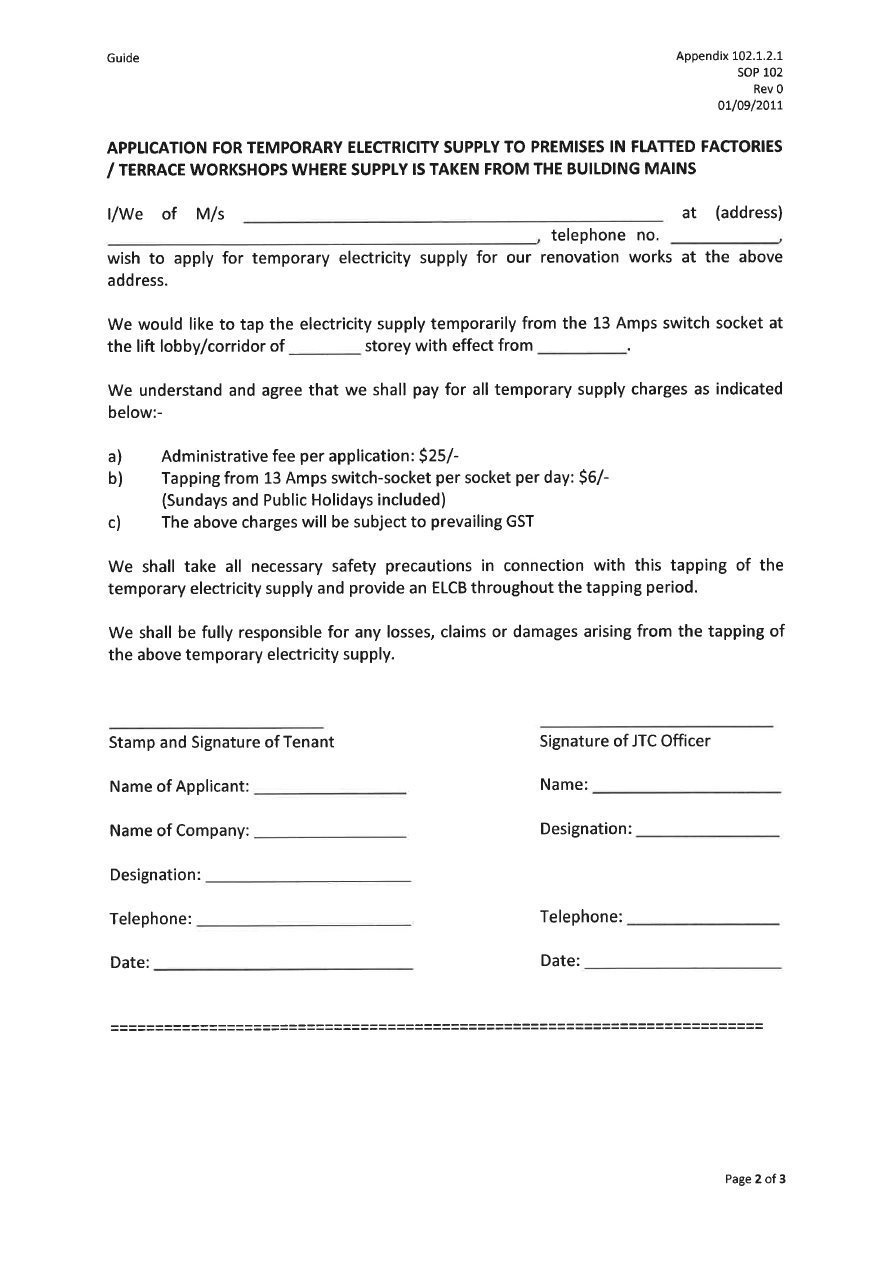






EXHIBIT 10.16
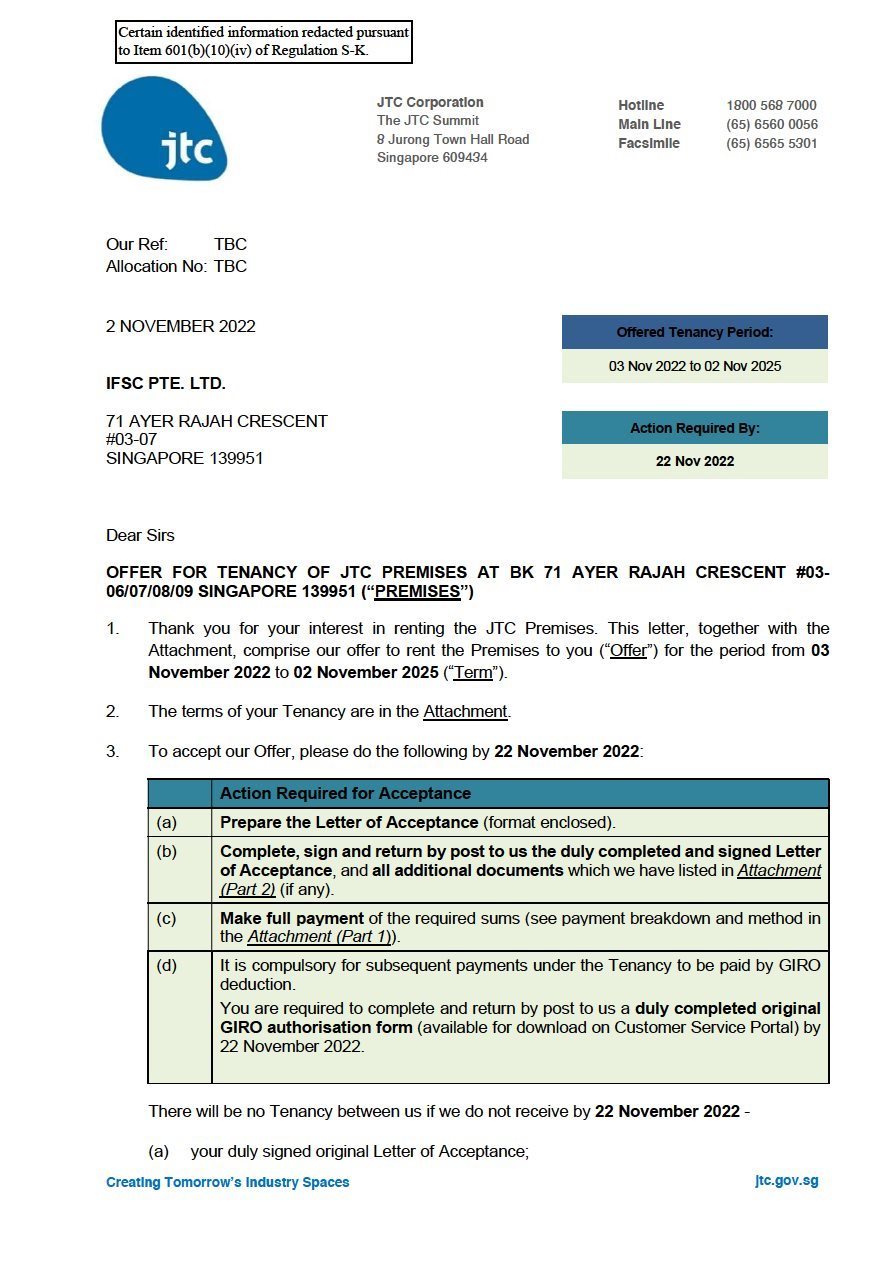
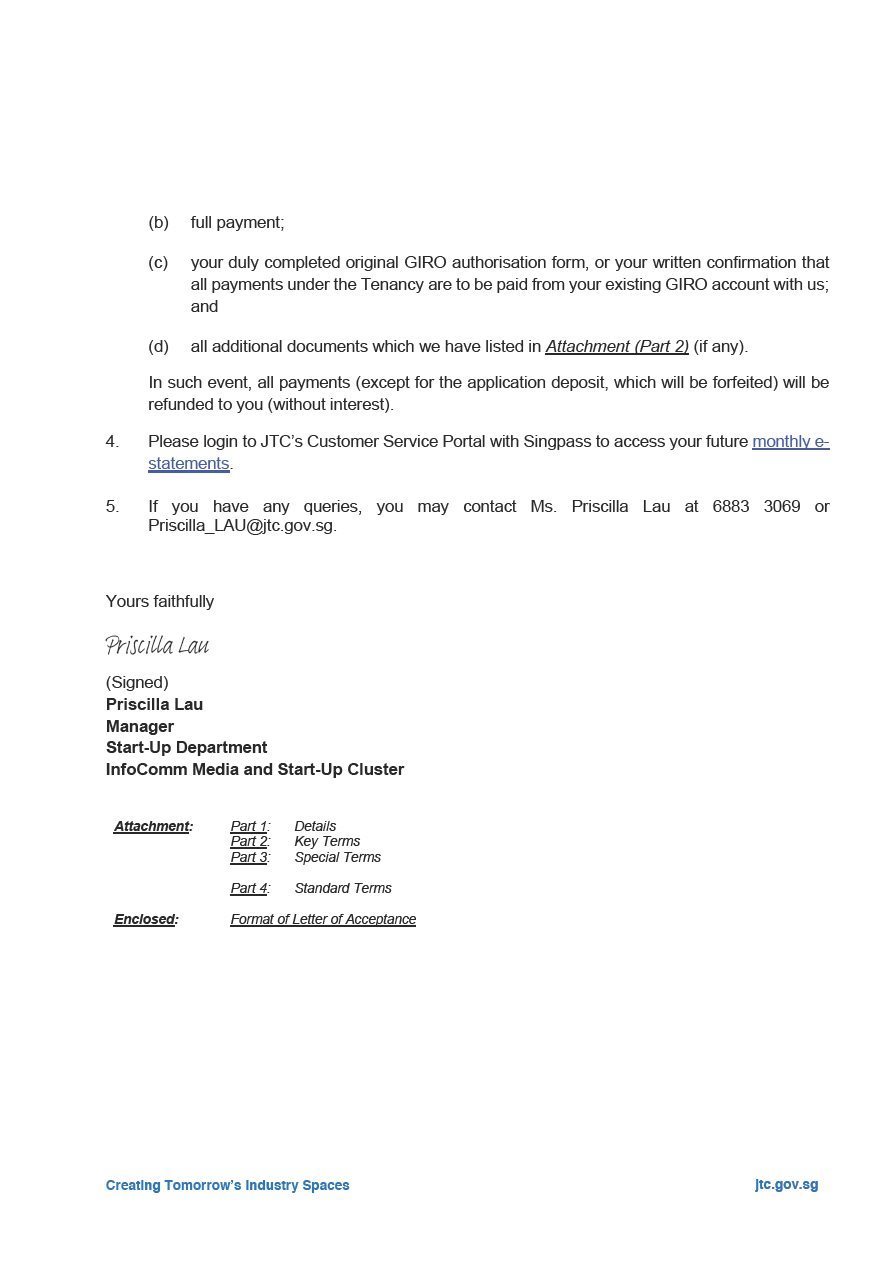
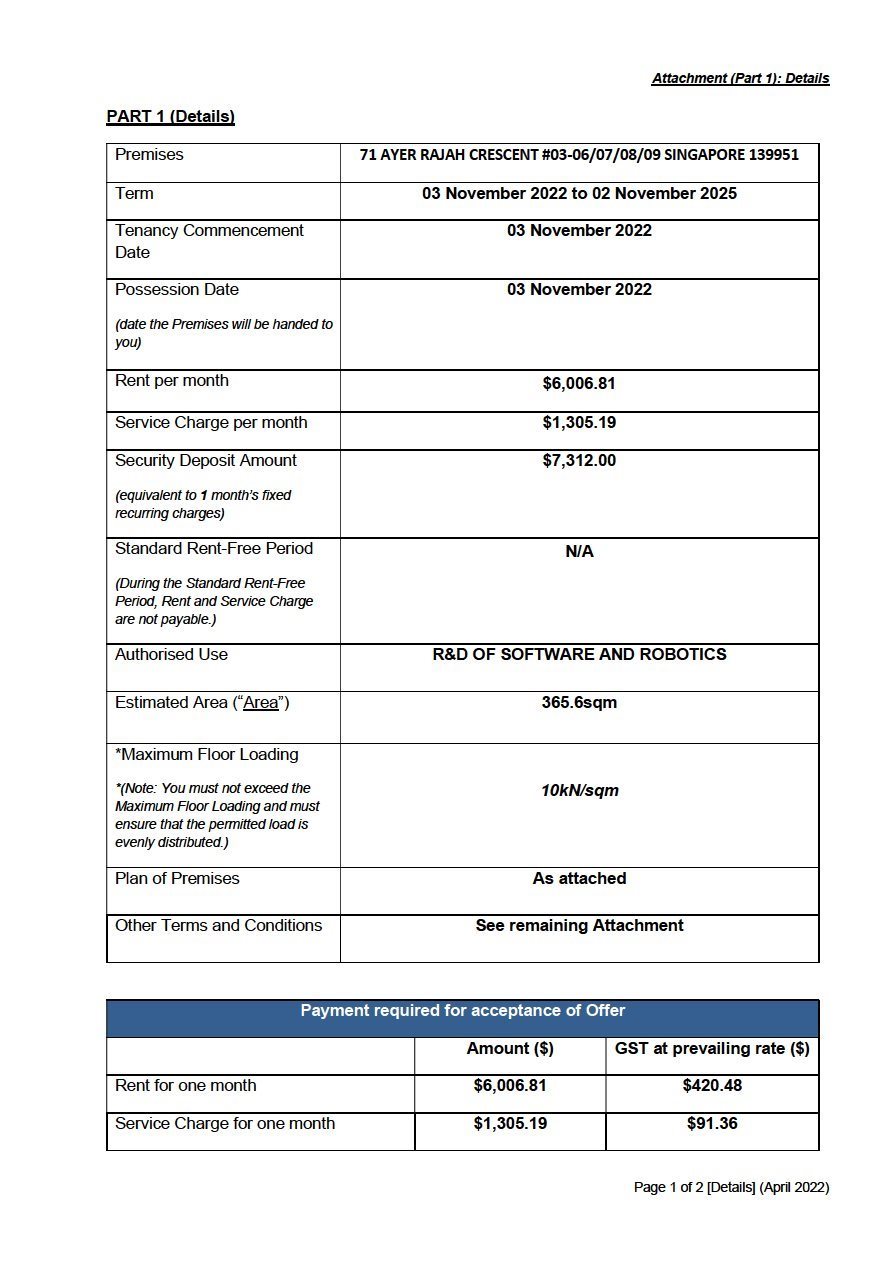
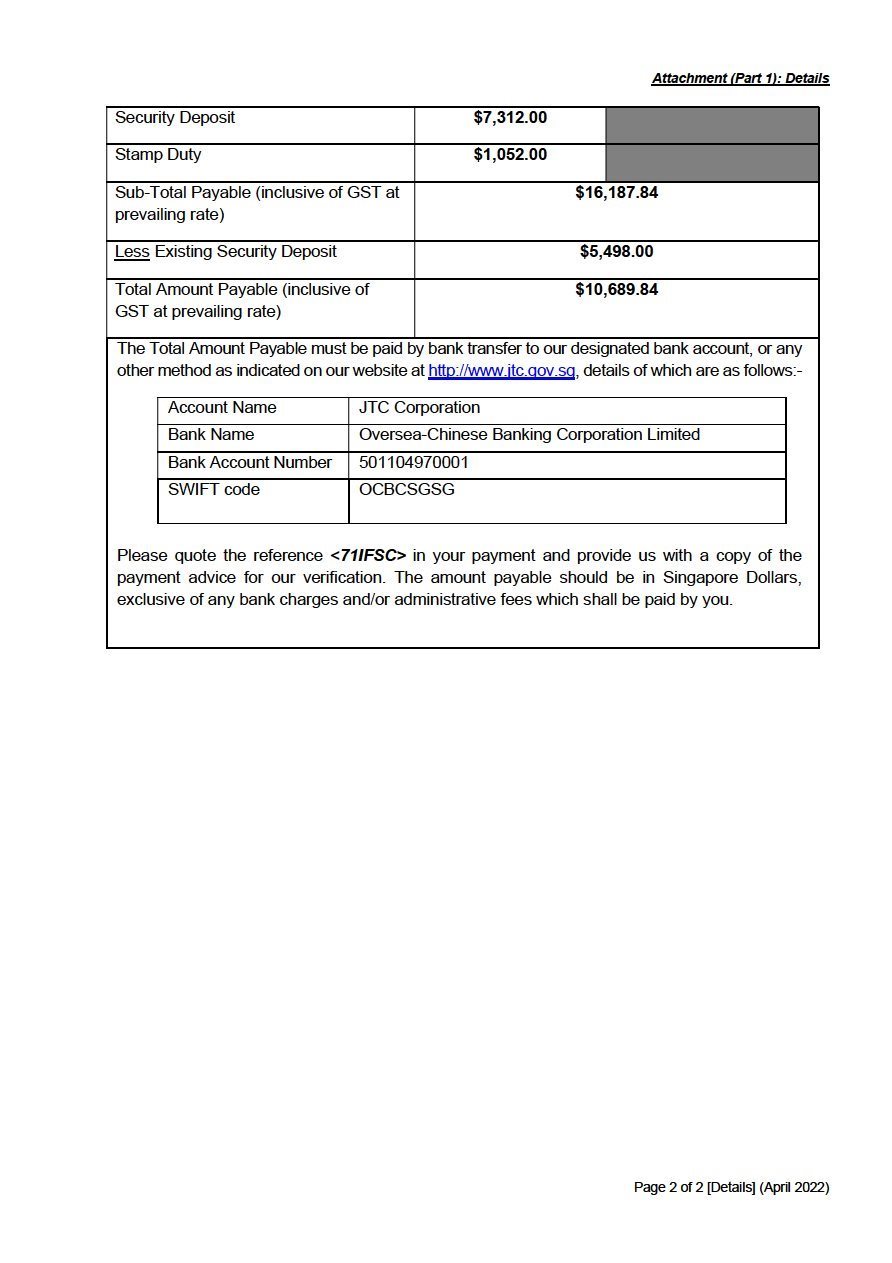
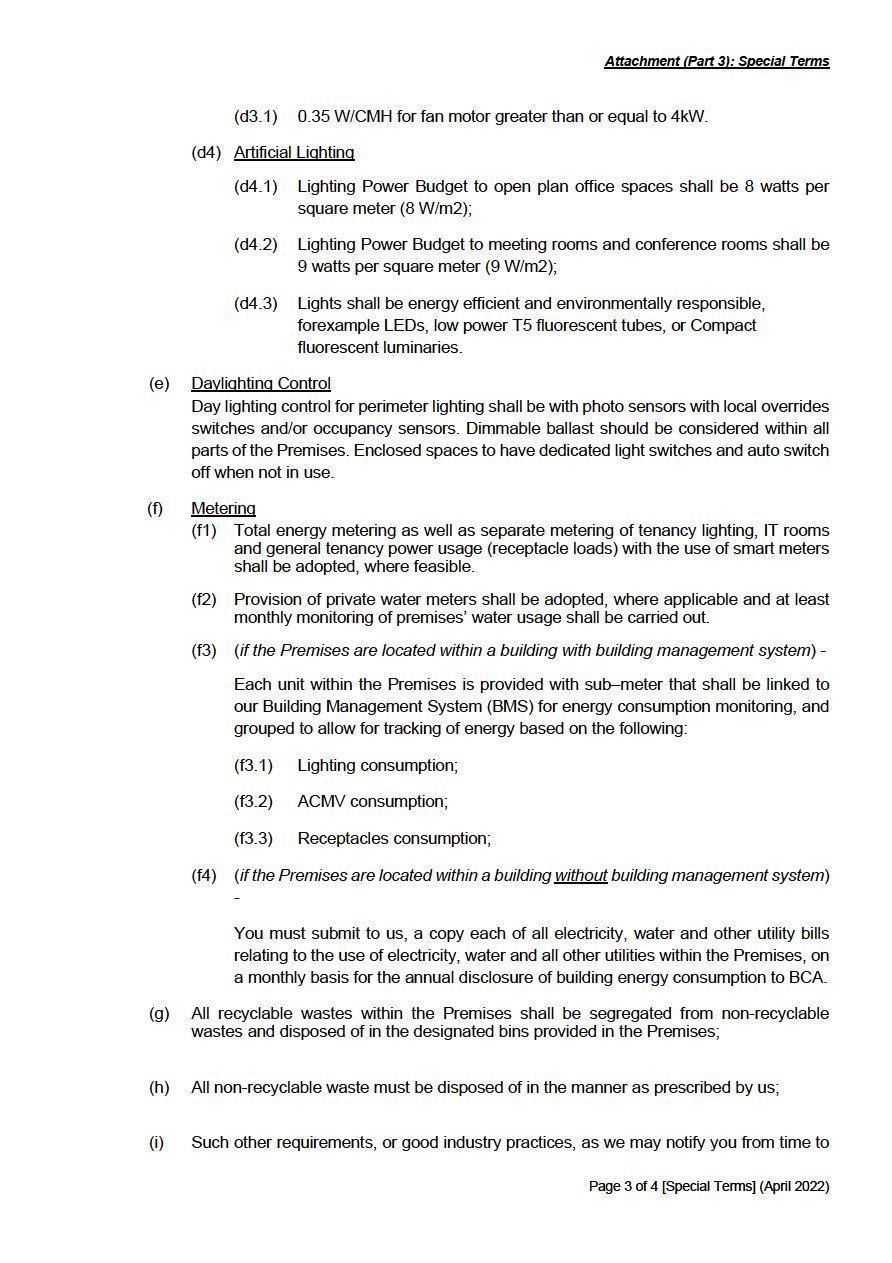

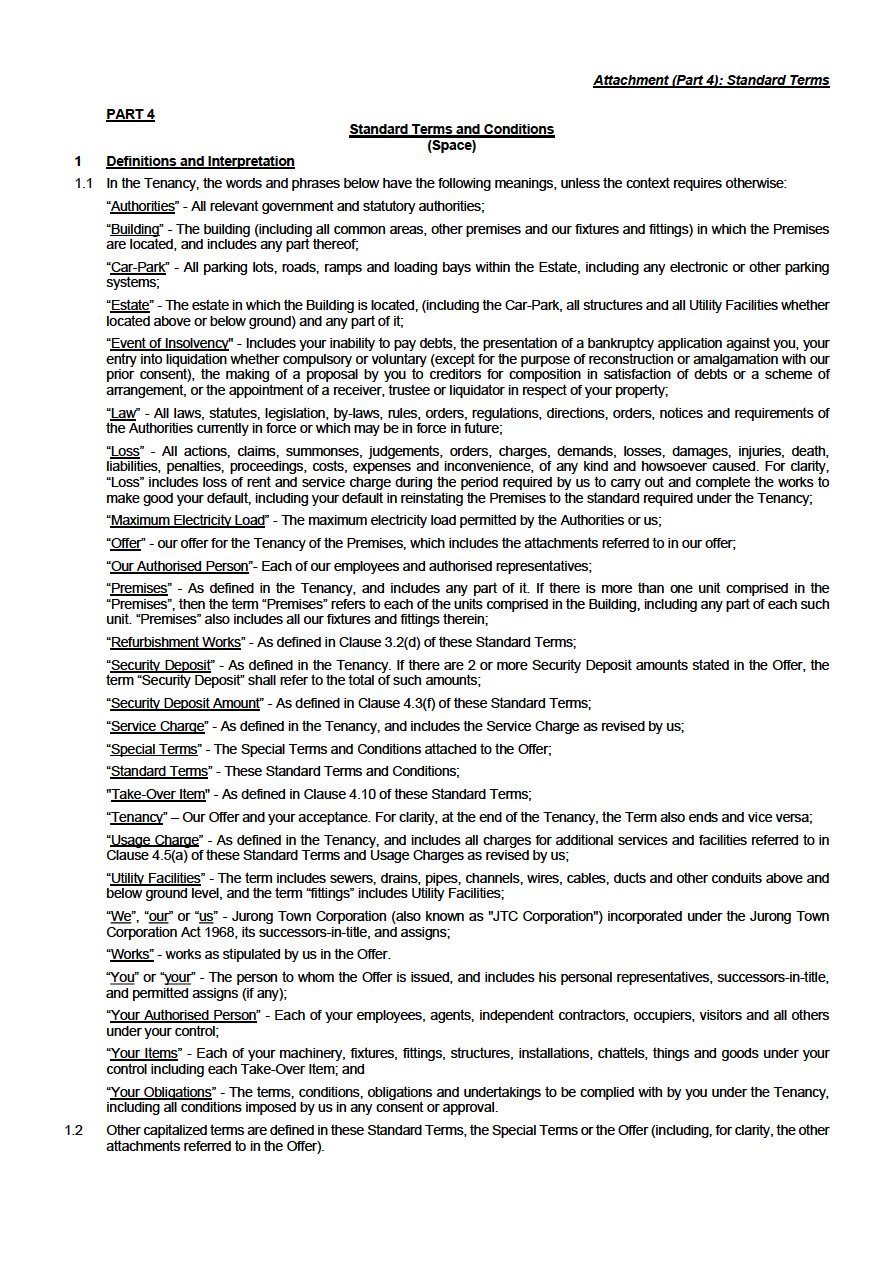

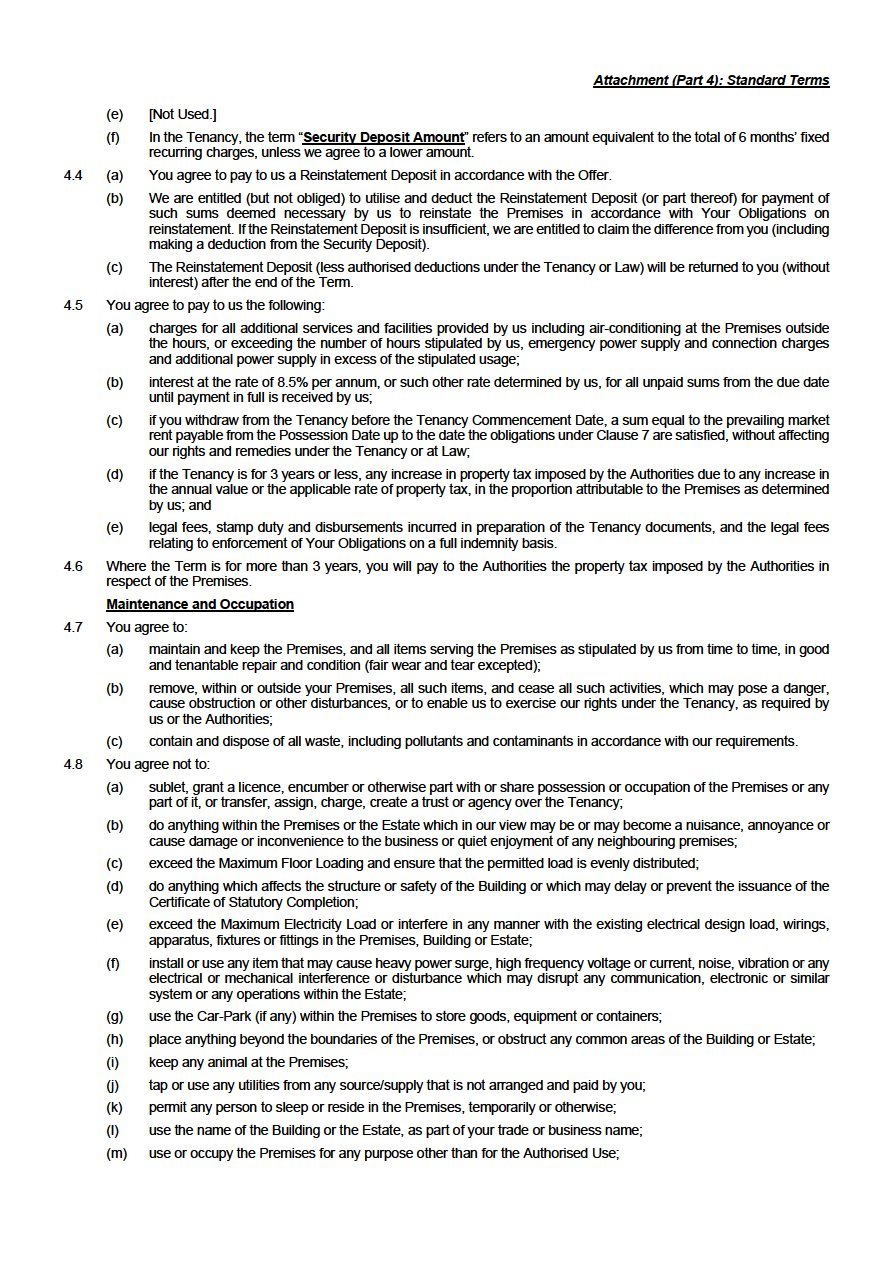
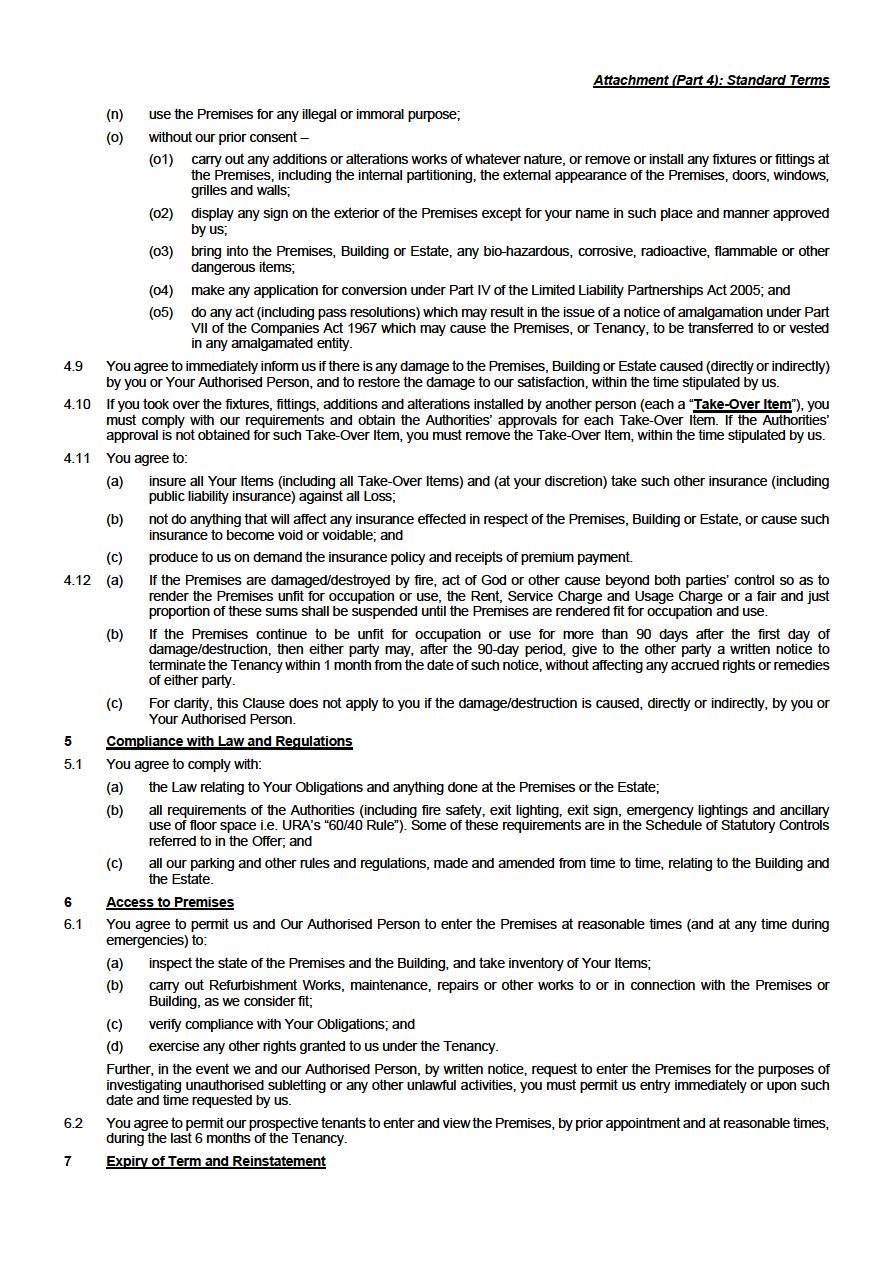
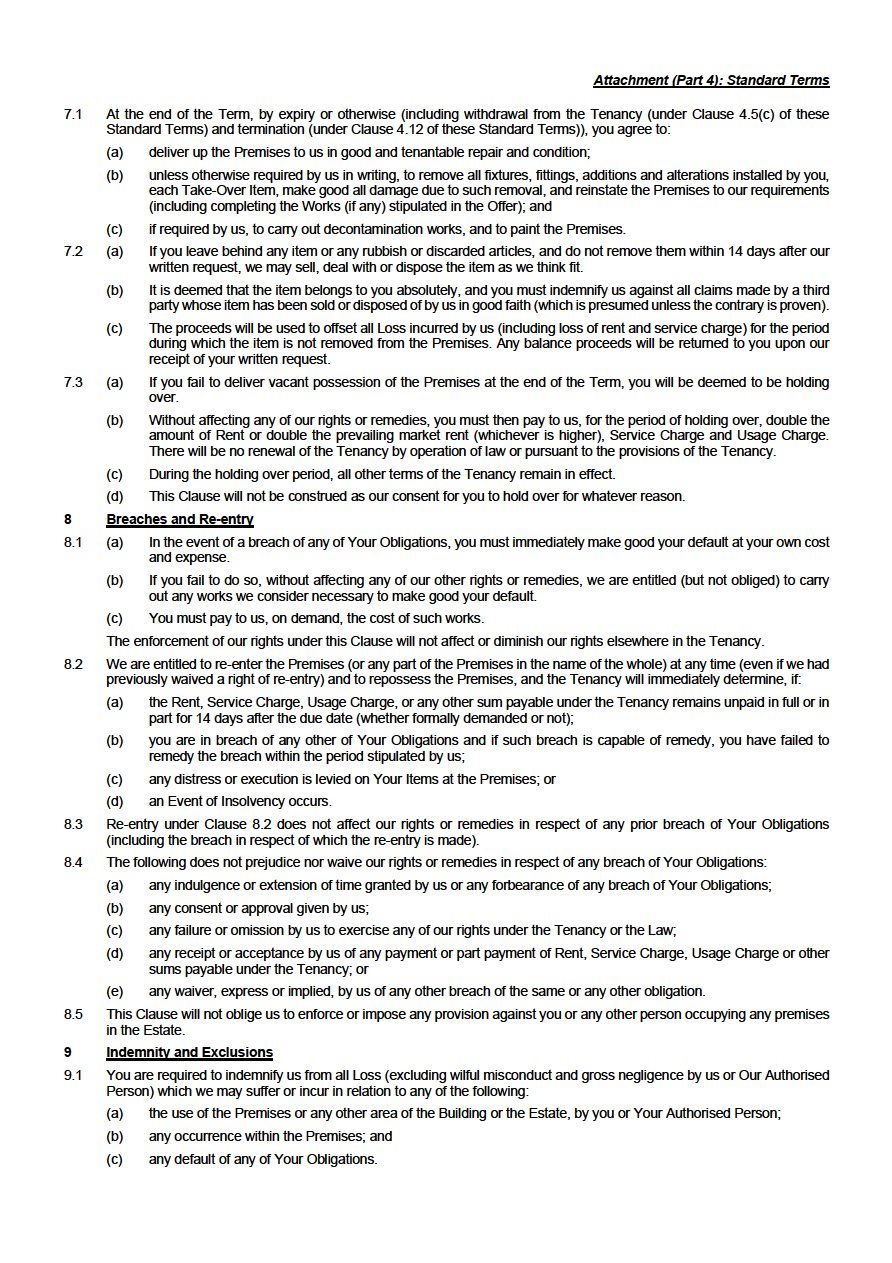
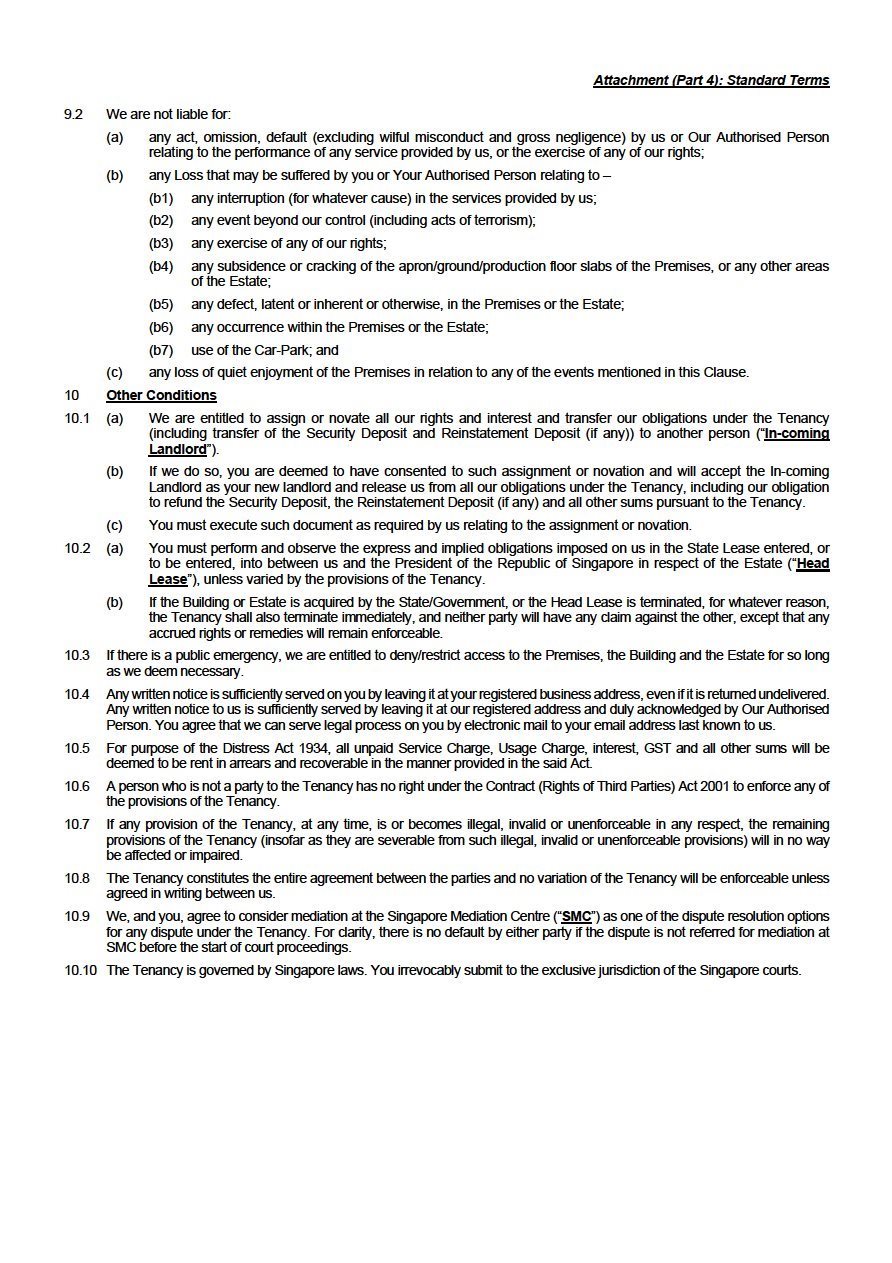
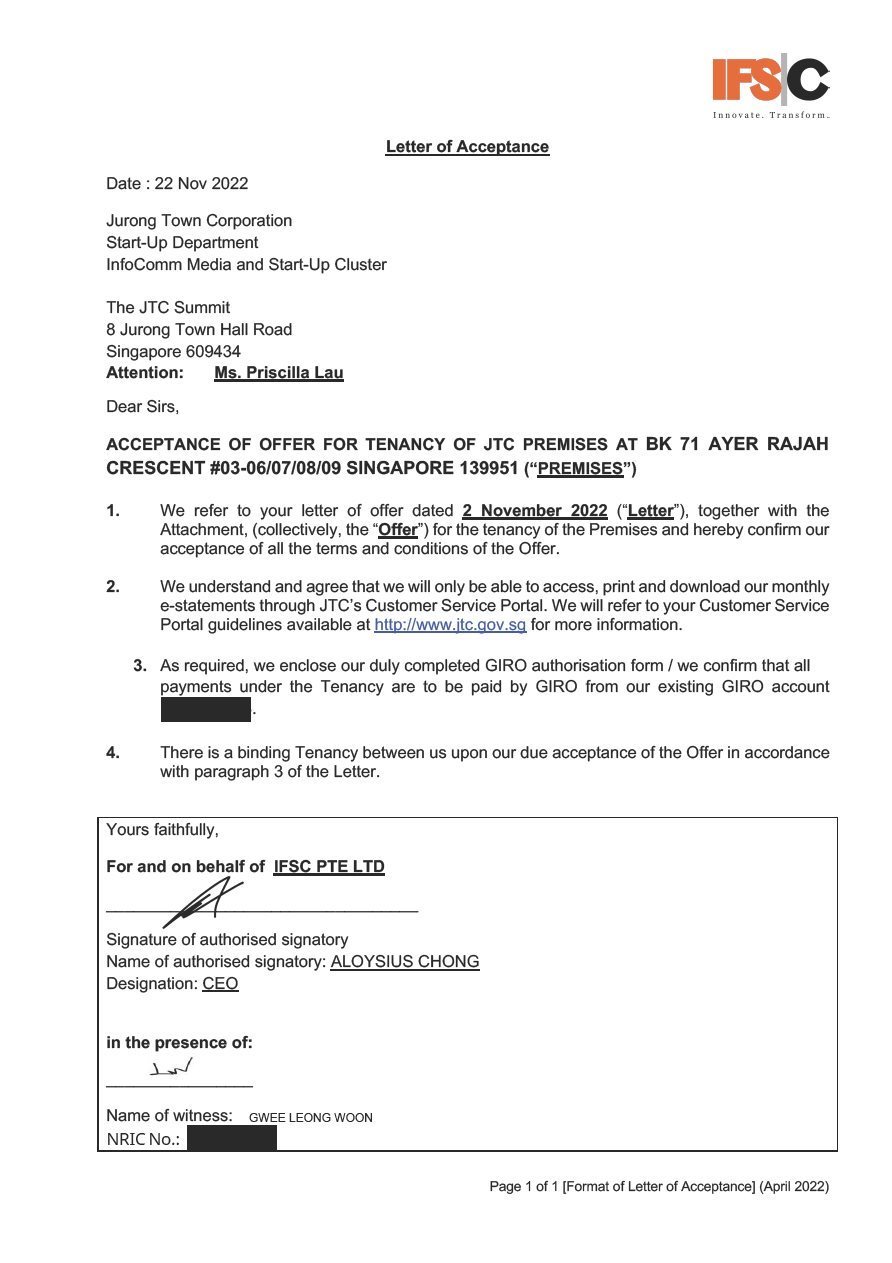
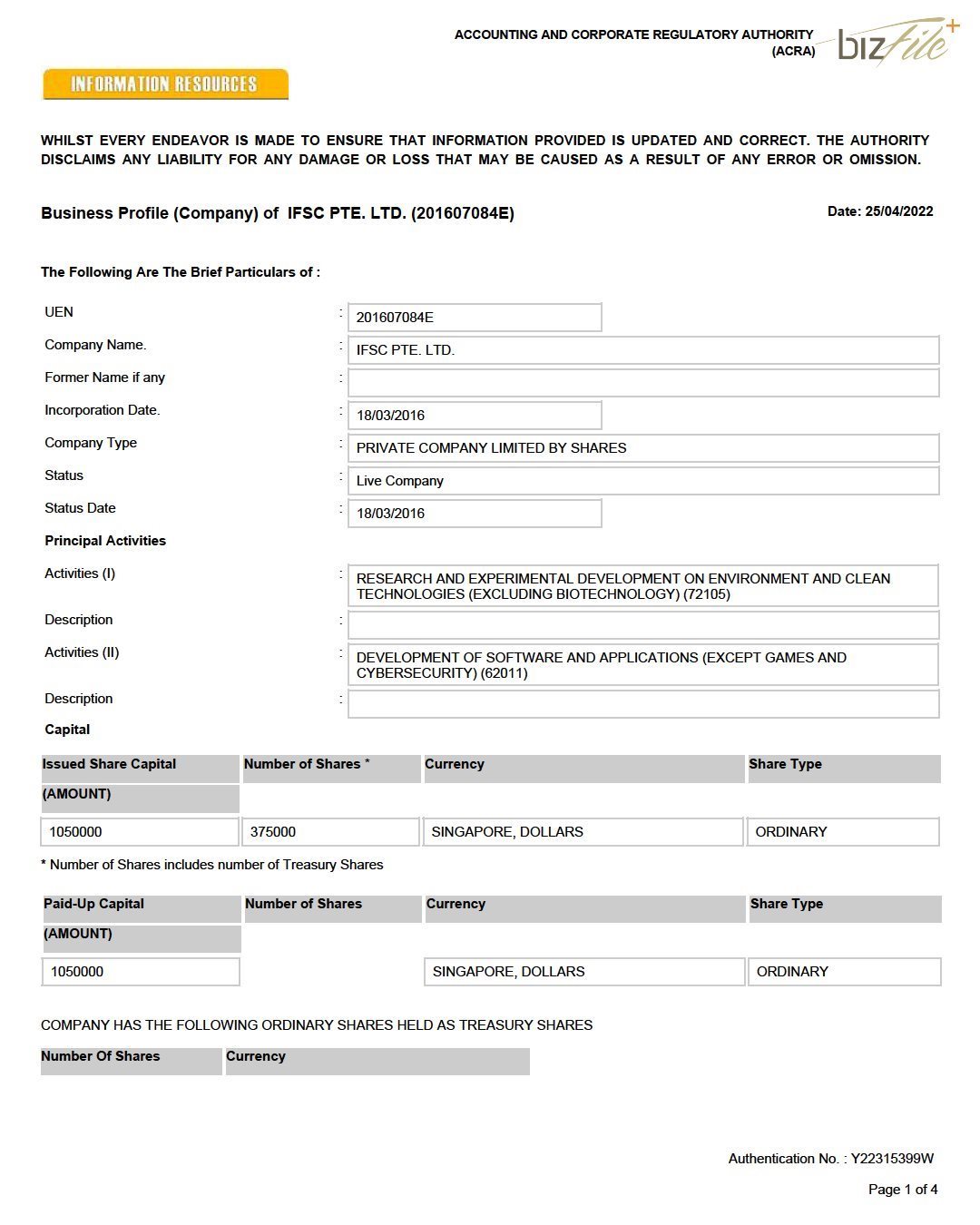
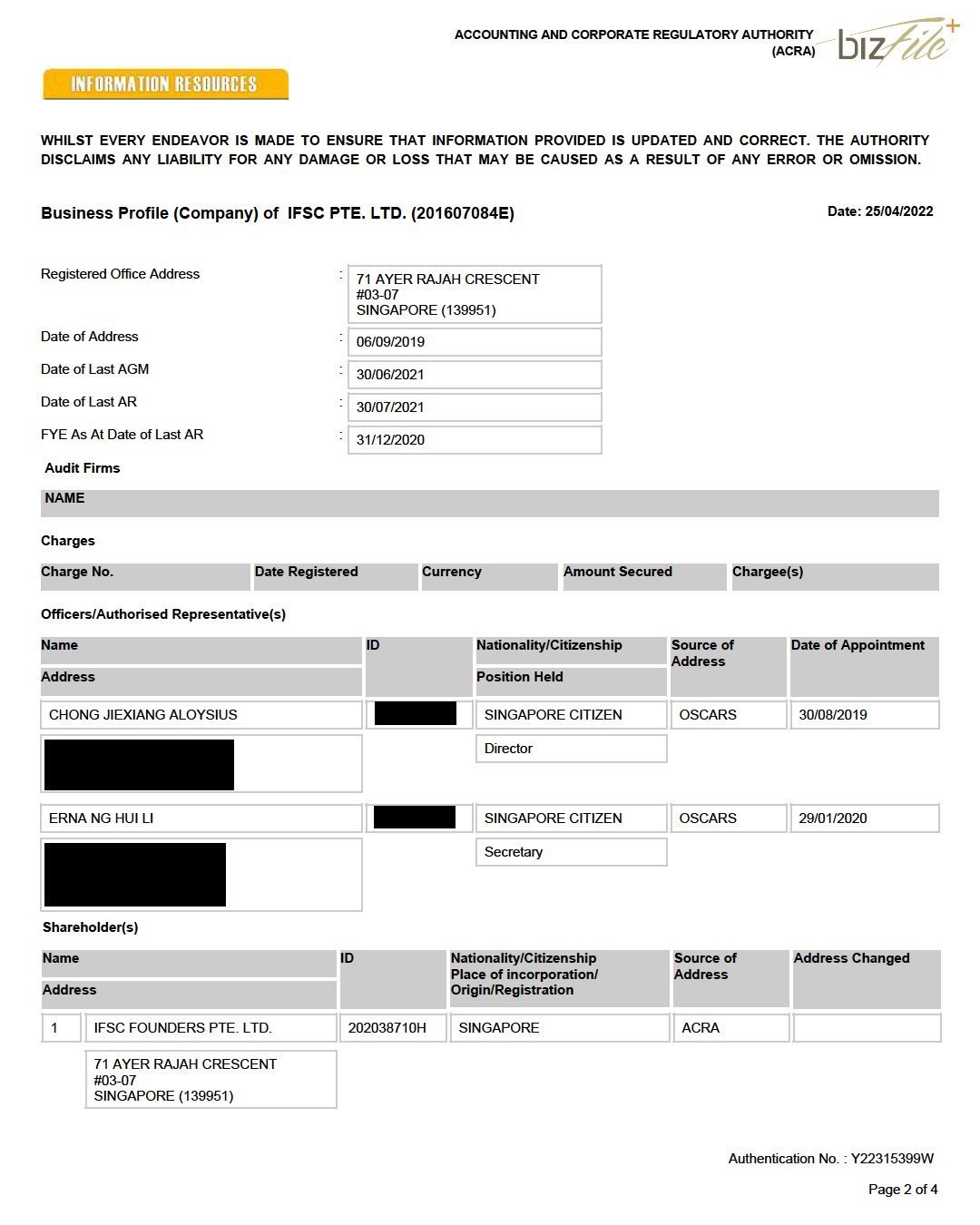
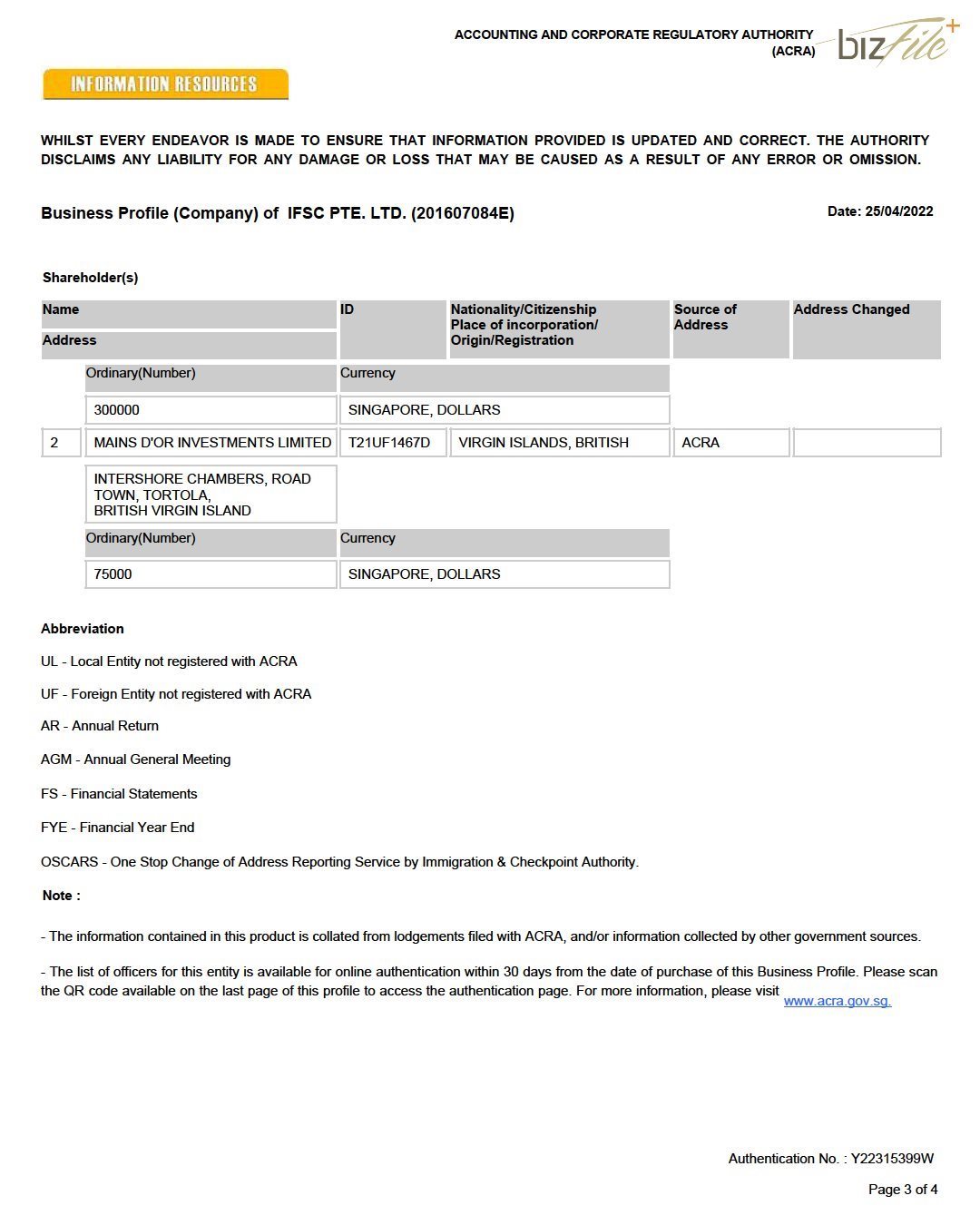
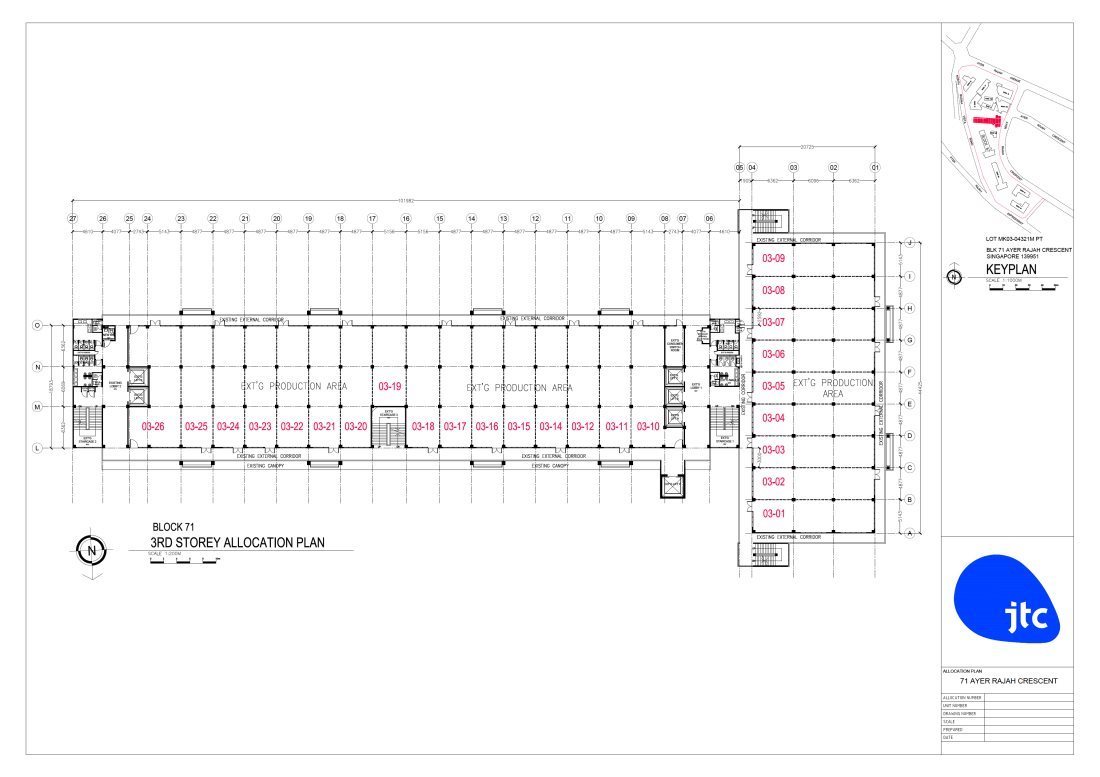
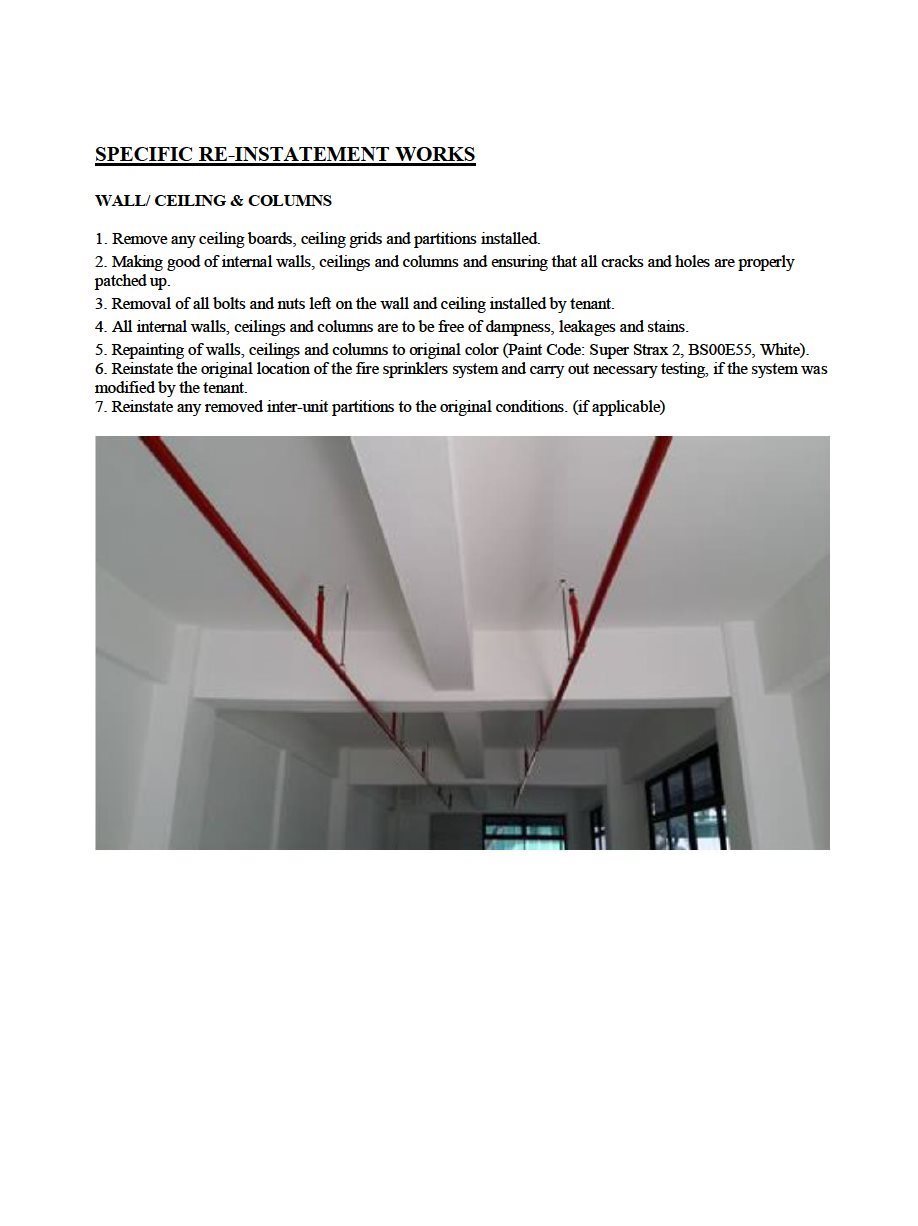
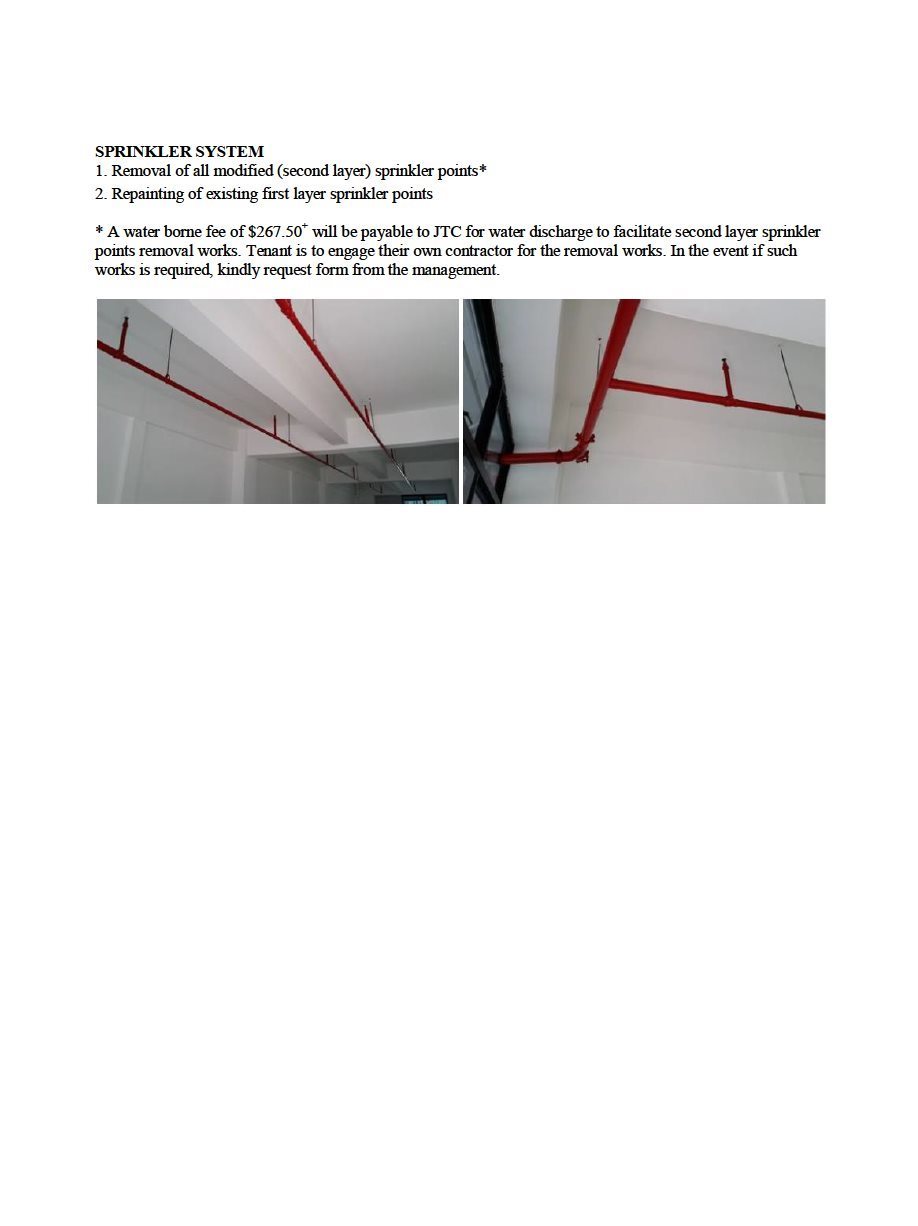
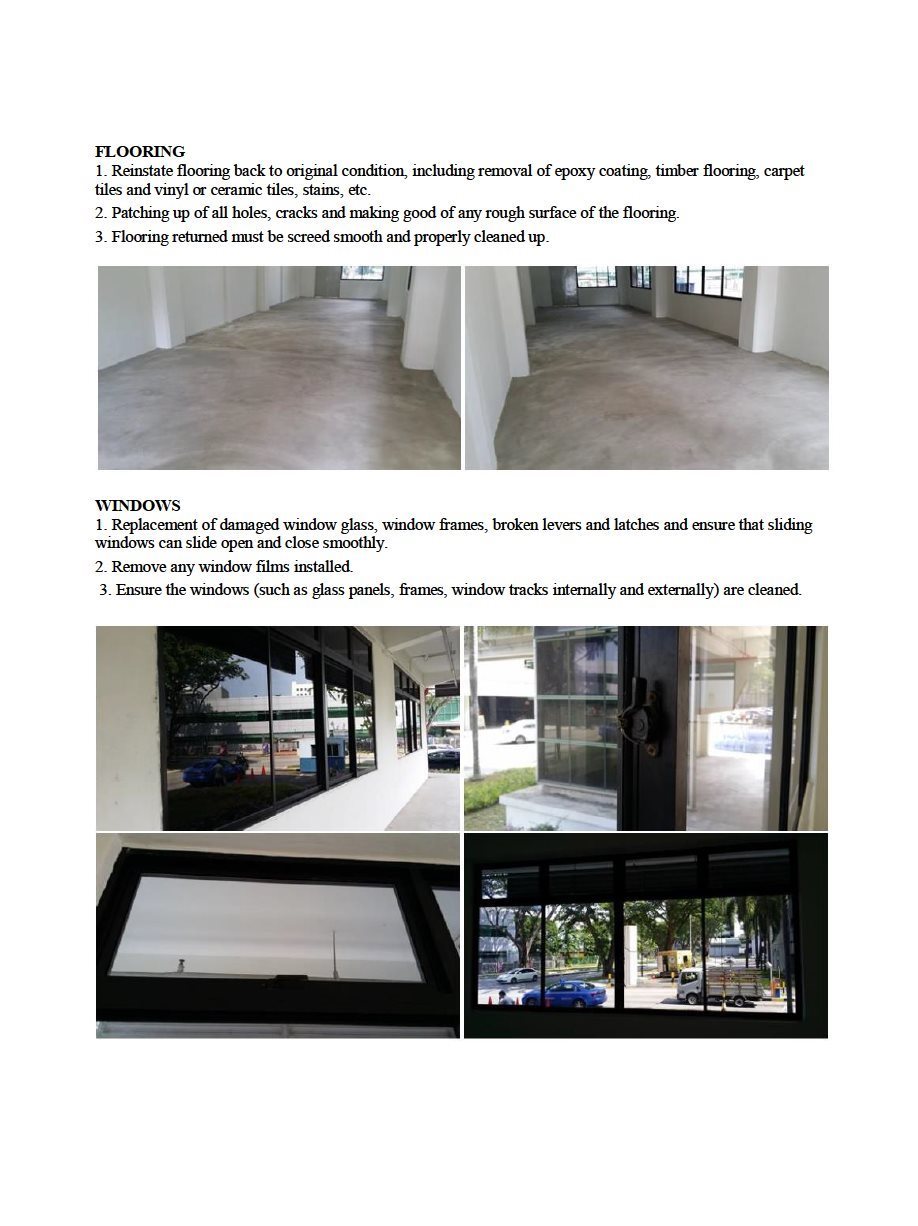
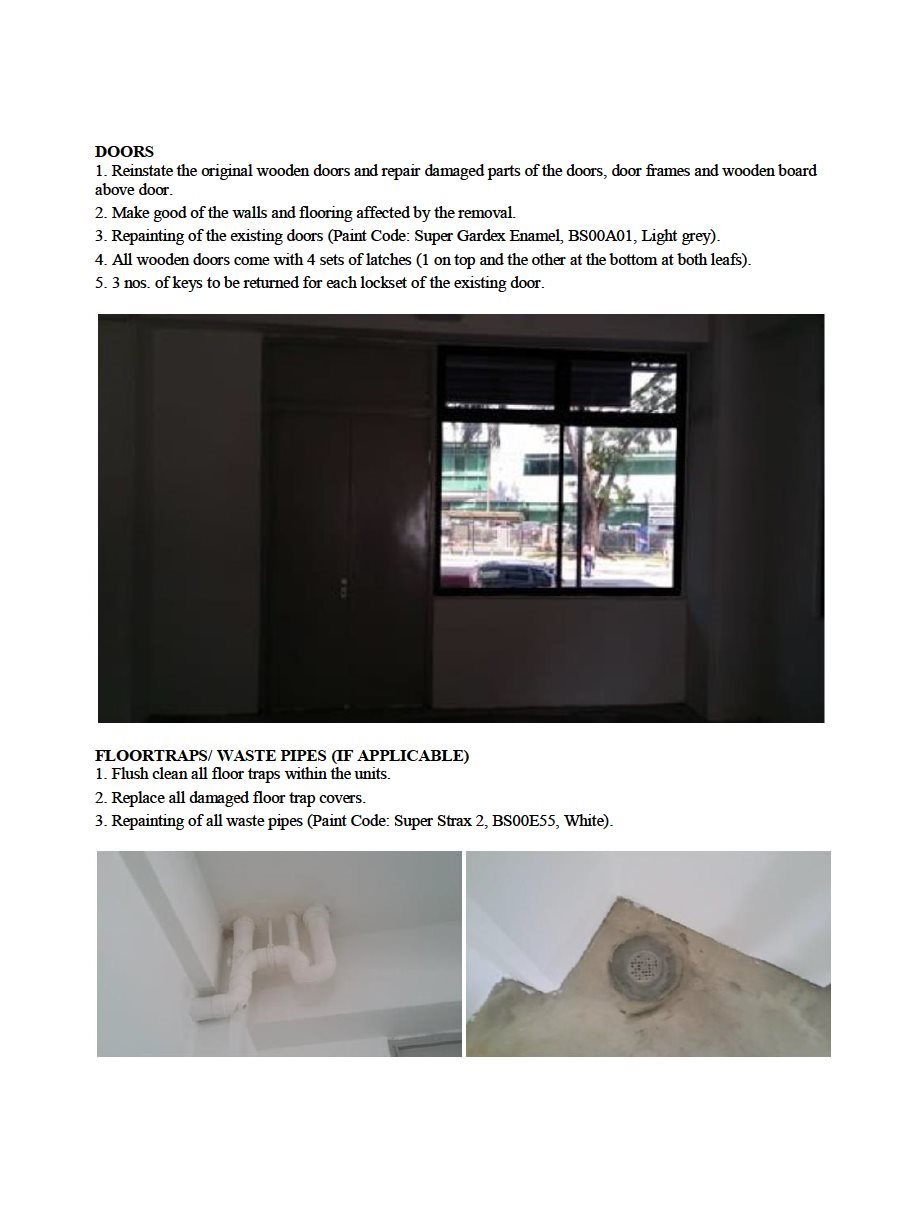
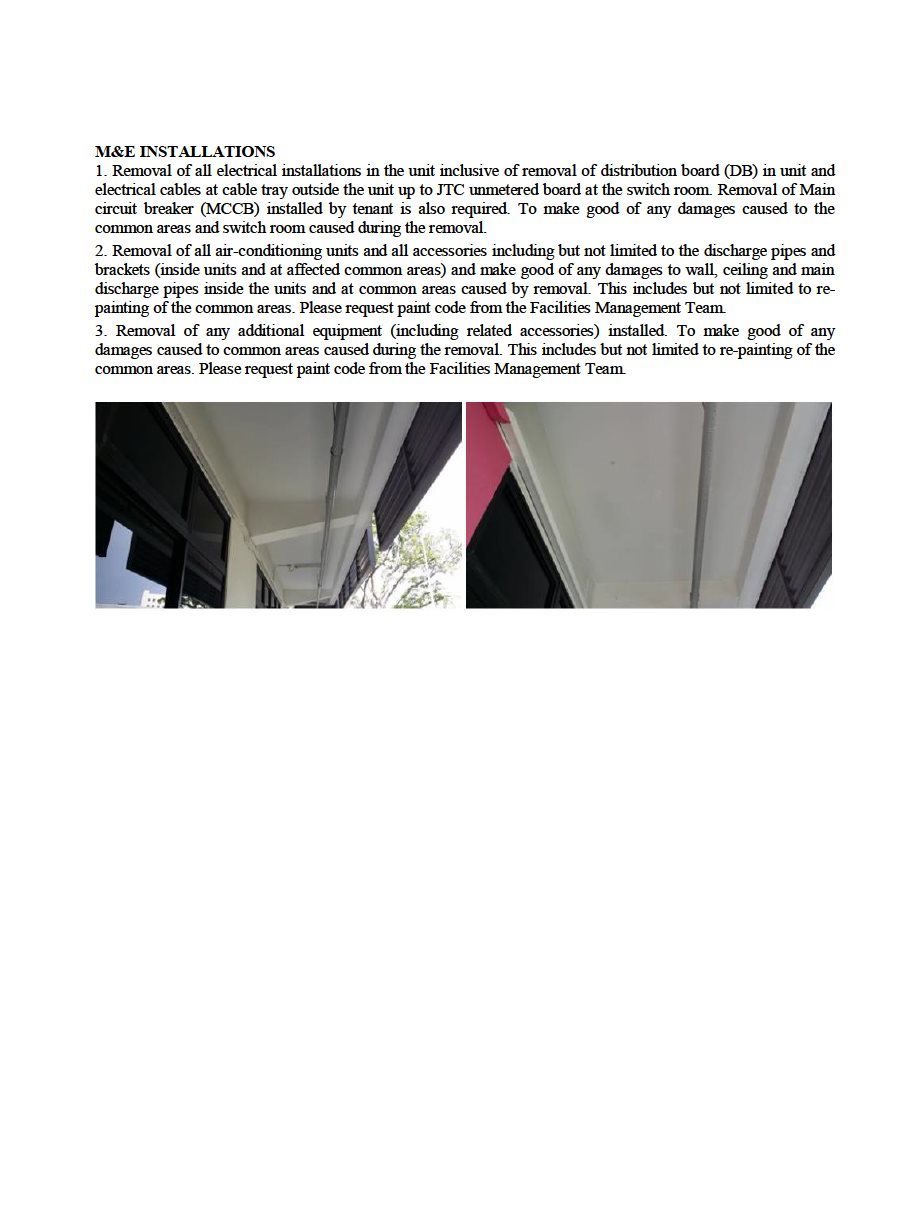
EXHIBIT 10.17
EMPLOYMENT CONTRACT
THIS AGREEMENT is dated 26th October 2022 (the “Agreement”).
Parties
(1) SIMPPLE LTD., (393431), an Exempted Company incorporated in the Cayman Islands with Limited Liability with its registered office at Harneys Fiduciary (Cayman) Limited, 4th Floor, Harbour Place, 103 South Church Street, P.O. Box 10240, Grand Cayman KY1-1002, Cayman Islands (the “Employer” or “we”),
(2) Aloysius Chong Jie Xiang, residing at ***** whose NRIC No. is ***** (referred to as the “Employee” or “you”),
Collectively the “Parties” and each a “Party”.
Background
(A) The Employee had previously entered into an employment agreement with a wholly owned subsidiary of the Employer, namely IFSC Pte. Ltd., dated 19 May 2022 (“Original Employment Agreement”) in connection with the employment of the Employee (“Employment”) commencing on 24 October 2016 (“Commencement Date”).
(B) The Parties desire to amend and restate the Original Employment Agreement on the terms and conditions set forth herein, whereby the Employment shall continue under this Agreement with effect from 1st November 2022 (“Effective Date”).
Agreed terms
1 DEFINITIONS AND INTERPRETATION
1.1 The following definitions and rules of interpretation apply in this Agreement.
Board: board of directors of the SIMPPLE LTD..
Capacity: as agent, consultant, director, employee, owner, partner, shareholder or in any other capacity.
Employment Act: Employment Act 1968 of Singapore.
Group: the Employer, the holding company and its Subsidary(ies) from time to time.
Group Company: any company within the Group, and “Group Companies” means any two or more of such companies within the Group.
Intellectual Property Rights: patents, rights to Inventions, copyright and related rights, trade marks, trade names and domain names, rights in get-up, rights in goodwill or to sue for passing off, unfair competition rights, rights in designs, rights in computer software, database rights, topography rights, rights in confidential information (including know-how and trade secrets) and any other intellectual property rights, in each case whether registered or unregistered and including all applications (or rights to apply) for, and renewals or extensions of, such rights and all similar or equivalent rights or forms of protection which subsist or will subsist now or in the future in any part of the world.
| 1 |
Invention: any invention, idea, discovery, development, improvement or innovation, whether or not patentable or capable of registration, and whether or not recorded in any medium.
Leave Year: twelve (12) complete months from the Commencement Date and subsequent twelve (12)-month periods thereafter in relation to the calculation of leave entitlements.
Restricted Business: those parts of the business of the Employer with which the Employee was involved to a material extent in the twenty-four (24) months before Termination.
Restricted Customer: any firm, company or person who, during the twenty-four (24) months before Termination, was a customer or prospective customer of or was in the habit of dealing with the Employer with whom the Employee had contact or about whom the Employee became aware or informed in the course of employment.
Restricted Person: anyone employed or engaged by the Employer who could materially damage the interests of the Employer if he were involved in any Capacity in any business concern which competes with any Restricted Business and with whom the Employee dealt with in the twenty-four (24) months before Termination in the course of employment.
SIMPPLE LTD.: a company incorporated as an exempted company in the Cayman Islands on August 24, 2022 as a holding company of IFSC Pte. Ltd..
Subsidiary: any company in which (a) the composition of the board is controlled by the Employer; (b) more than half of the voting power is controlled by the Employer; or (c) more than half of the issued share capital is held by the Employer, and “Subsidiary(ies)” means any two or more of such companies.
Termination: termination of the Employment in accordance with Clauses 17 and 18.
1.2 Clause and paragraph headings shall not affect the interpretation of this Agreement.
1.3 Unless the context otherwise requires, words in the singular shall include the plural and in the plural shall include the singular.
1.4 A reference to writing or written includes email.
1.5 Any words following the terms including, include, in particular, for example or any similar expression shall be construed as illustrative and shall not limit the sense of the words, description, definition, phrase or term preceding those terms.
1.6 Unless the context otherwise requires, a reference to one gender shall include a reference to the other genders.
| 2 |
2 COMMENCEMENT OF EMPLOYMENT
2.1 The Employment has commenced on 24 October 2016 pursuant to the Original Employment Agreement and shall continue on the terms and conditions of this Agreement with effect from the Effective Date.
2.2 The Employee hereby agrees that the Employment shall continue on the terms and conditions of this Agreement for a term commencing on the Effective Date and ending on such date either Party terminates the Agreement in accordance with Clauses 17 and 18 (“Termination Date”).
3 PERFORMANCE OF DUTIES
3.1 The Employee shall serve the Employer full-time as Chief Executive Officer or such other role as the Employer and/or the Board may require from time to time having regard to the needs of the business of the Group and the Employee's skills, qualifications and experience.
3.2 The Employee shall perform the following duties, including but not limited to: A) Plan, develop, implement and direct the organization’s fiscal function and performance. B) Act as a strategic partner by developing and implementing the company’s plans and programs. C) Analyze and make recommendation on the impact of long range growth initiatives, planning, and introduction of new strategies and regulatory actions. D) Establish credibility and authority for the finance leadership team by providing accurate analysis of budgets, reports and financial trends and operational procedures. E) Create, improve, enforce policies and procedures of the organization that will improve operational and financial effectiveness of the company. F) Communicate effectively and establish credibility throughout the organization as an effective developer of solutions to business challenges. G) Provide expert financial guidance and manage executive leadership. H) Provide strategic input and leadership on decision making issues affecting the organization; specifically relating to the evaluation of potential mergers, acquisitions or partnerships. I) Optimize the handling of banking relationships and work closely with CFO/FC to foster and grow strategic financial partnerships. J) Work with finance team to develop a solid cash flow projection and reporting mechanism, which includes setting a minimum cash threshold to meet operating needs. K) Act as a strategic advisor and consultant offering expert advice on contracts, negotiations or business deals that the corporation may enter into. L) Evaluate company’s financial, operational, and sales and marketing structures to plan for continual improvements and a continual increase of operating efficiencies. M) Mentor and interact with members of staff at all levels to foster growth and encourage development among senior executive team and all members of staff. N) Be the face of the organisation to external parties. You will also perform such functions and duties as the Employer and/or the Board may from time to time assign to you and fulfil any duties and responsibilities as are required by, inherent in, or consistent with your position or role.
3.3 You are required to faithfully, diligently, and competently execute the tasks and duties assigned to you. You are also required to comply with the Employer's code of conduct or company policy and act in the best interests of the Employer at all times.
3.4 You must not engage in any other business or employment outside your employment with the Employer without the prior approval of the Employer and the Board.
3.5 You may be seconded from time to time to any of the Group Companies.
3.6 You shall report to the Board and comply with the directions made by or under authority of the Board.
| 3 |
4 REMUNERATION
4.1 On or after the Effective Date, the Employee shall be paid a monthly salary of SGD10,350.
4.2 The Employer and/or the Board may in its absolute discretion pay the Employee a bonus of such amount, at such intervals and subject to such conditions as the Employer and/or the Board may in its absolute discretion determine from time to time.
4.3 Any bonus payment to the Employee shall be purely discretionary and shall not form part of the Employee's contractual remuneration under this Agreement. If the Employer makes a bonus payment to the Employee in respect of a particular financial year of the Employer, it shall not be obliged to make subsequent bonus payments in respect of subsequent financial years of the Employer.
Notwithstanding this Clause 4.3, the Employee shall in any event have no right to a bonus or a time apportioned bonus if:
(i) the Employee has not been employed throughout the whole of the relevant financial year of the Employer; or
(ii) the employment terminates for any reason or the Employee is under notice of termination (whether given by the Employee or the Employer) at or prior to the date when a bonus might have otherwise been payable.
4.4 The Employee's salary shall accrue from day to day and be payable monthly (the “Salary Period”) in arrears no later than seven (7) days after the end of Salary Period and an itemised pay slip with the details will be given to the Employee.
4.5 The Employee shall be entitled to the following fixed allowances per Salary Period:
| Item | Fixed allowances (SGD) |
| Mobile Allowance | 150 |
| Transport Allowance | 300 |
| Vehicle Allowance | 700 |
| Performance Allowance | 800 |
4.6 The Employee's monthly salary shall be subjected to the annual review by SIMPPLE LTD.’s Remuneration Committee, and in the event that the Employee is a member of SIMPPLE LTD.’s Remuneration Committee, the Employee shall abstain from voting on any decisions made by the SIMPPLE LTD.’s Remuneration Committee in connection with the amendment of any terms or conditions of, or the renewal of, his employment under this Agreement. The Employer is under no obligation to award an increase following a salary review.
4.7 The Employer shall be entitled to deduct from the Employee’s remuneration (including salary and bonuses) all sums from time to time owing from the Employee to any Group Company.
| 4 |
5 PLACE OF WORK
The Employee's normal place of work will be 71 Ayer Rajah Crescent, #03--07, Singapore 139951 or such other place as the Employer may require to meet its business needs and for the proper performance of the Employee's duties.
6 WORKING HOURS AND WORKING DAYS
6.1 The Employee's normal working hours shall be 9:00 am to 6:00 pm on Monday, Tuesday, Wednesday, Thursday, Friday (i.e. a total of five (5) working days per week). The Employee will not be entitled to receive any additional remuneration for work performed outside of normal office hours.
6.2 The Employee will have a lunch break of one (1) hour(s) on the days specified in Clause 6.1 which will not count toward working hours.
7 PUBLIC HOLIDAYS
The Employee will be entitled to all official public holidays of Singapore on full pay.
8 ANNUAL LEAVE
8.1 The Employee, who has served for at least three (3) months, shall be entitled to paid annual leave of eighteen working days per calendar year, such entitlement to be apportioned to the number of completed months of service in that year for any part of a whole year served by the Employee. Such leave shall be taken during the year to which it relates and at such time or times as the Board may consider most convenient. Neither the whole nor any part of such leave may be accumulated and carried forward beyond the year to which it relates without the written approval of the Board.
8.2 The Employer may at any time require the Employee to take a period of paid leave on full remuneration and benefits and during such leave the Employee shall not be entitled to access to the premises of any Group Company.
9 SICK LEAVE AND MEDICAL BENEFITS
9.1 The Employee will be entitled to paid sick leave and hospitalisation leave in accordance with the provisions of the Employment Act.
9.2 Where the Employee is absent from work due to medical reasons you must notify the Employer as soon as practicable. You must also obtain a medical certificate from a registered doctor proving such medical reasons and provide a copy to the Employer as soon as practicable.
9.3 The Employee will be entitled to the additional medical benefits: Group AIA Insurance.
| 5 |
10 PATERNITY AND CHILDCARE LEAVE
The Employee will be entitled to paternity leave, shared parental leave and childcare leave according to the applicable legislation and regulations in Singapore, provided that the relevant statutory eligibility requirements are met.
11 DEDUCTIONS
Apart from the above Clause 4.7, there shall be deducted from your salary and your bonus (if applicable) all such sums which the Employer is authorised under the laws of Singapore to deduct, such as the Employee's share of Central Provident Fund Contributions, as well as such other sums as may be agreed with you from time to time.
12 EMPLOYEE HANDBOOK
The Employee shall comply with all rules, policies and procedures set out in the Employee handbook as amended from time to time (the “Employee Handbook”), a copy of which has been given to the Employee. The Employee Handbook does not form part of this Agreement and the Employer may amend it at any time. To the extent that there is any conflict between the terms of this Agreement and the Employee Handbook, this Agreement shall prevail.
13 CONFIDENTIAL INFORMATION
13.1 During the course of Employment, the Employee will have access to information (whether or not recorded in documentary form, or stored on any magnetic or optical disk or memory) relating to the organisation, business, products, affairs and finances of any Group Company for the time being confidential to the Employer and trade secrets including, without limitation, technical data and know-how and any process or invention relating to the business of the Employer or any of its business contacts and transactions, information relating to the customers or suppliers (actual or potential) of any Group Company and information in respect of which any Group Company is bound by an obligation of confidence to any third party (the “Confidential Information”).
13.2 The Employee shall use his best endeavours to prevent the publication or disclosure of Confidential Information.
13.3 The Employee shall not, except in the proper course of his duties, either during the Employment or at any time after its termination however arising:
(a) use or disclose to any person, company or other organisation whatsoever any Confidential Information; or
(b) use the Confidential Information for any purpose, other than for the purpose of the Employer.
| 6 |
13.4 This Clause 13 shall not apply to:
(a) any use or disclosure authorised by the Board or required by law; or
(b) any information which is already in, or comes into, the public domain other than through the Employee's unauthorised disclosure.
14 RESTRICTIVE COVENANTS
14.1 In order to protect the Confidential Information and business connections of the Employer to which the Employee acknowledges he has access as a result of his Employment, the Employee covenants with the Employer that he shall not, during his Employment hereunder and for a period of one (1) year after termination of the Employment, do or permit the following to be done in Singapore, United States of America and Australia without the prior written consent of the Employer and prior approval of a resolution of the Board:
(a) solicit or endeavour to entice away from the Employer the business or custom of a Restricted Customer with a view to providing any goods or services to that Restricted Customer in competition with any Restricted Business;
(b) be directly or indirectly engaged or involved in any business concern which is in competition with any Restricted Business as shareholder, employee, director, manager, consultant, agent, advisor, business owner, or otherwise; and
(c) in the course of any business concern which is in competition with any Restricted Business, employ or engage or otherwise entice away or facilitate the employment or engagement of any Restricted Person, whether or not such person would be in breach of contract as a result of such employment or engagement.
14.2 The Employee further agrees with the Employer that he shall not during his Employment and after the termination of his employment with the Employer, for any reason, directly or indirectly, except with the Employer’s prior written consent and the approval of the Board:
(a) use the names “SIMPPLE”, “IFSC”, “Gaussian Robotics” or any colourable imitation thereof in connection with any business other than the business of the Group;
(b) use any Intellectual Property of any Group Company in connection with any business other than the business of the Group; and
(c) use Intellectual Property in such a way as to be capable of being or likely to be confused with the Intellectual Property of any Group Company and shall use all reasonable endeavours to procure that no such Intellectual Property shall be used by any person, firm or company with which he is connected.
14.3 The Employee shall comply with all applicable laws, regulations of NASDAQ and regulations of SIMPPLE LTD. relating to dealings in shares, debentures and other securities. In relation to overseas dealings the Employee shall also comply with all laws of the state and all regulations of the stock exchange, market or dealing system in which such dealings take place.
| 7 |
14.4 The Employee shall not during his Employment and at all times thereafter make any untrue, derogatory or misleading statement about any Group Company or any of its or their employees, officers, goods or services.
14.5 The Employee recognises the importance of the covenants contained in this Clause 14 and acknowledges that based on his past experience and training, the projected expansion of the Group’s business, and the nature of his services to be provided under this Agreement, the restrictions imposed herein are: (i) reasonable as to scope, time and area; (ii) necessary for the protection of the Group’s legitimate business interests, including the Group’s trade secrets, goodwill and its relationship with customers and suppliers; and (iii) not unduly restrictive of the Employee’s rights as an individual. The Employee acknowledges and agrees that the covenants contained in this Clause 14 are essential elements of this Agreement and that but for these covenants, the Employer would not have agreed to enter into this Agreement. Such covenants shall be construed as agreements independent of any other provision of this Agreement.
14.6 If the Employee commits a breach or threatens to commit a breach of any of the provisions of this Clause 14, the Employer shall have the right and remedy, in addition to any others that may be available, at law or in equity, to: (i) have the provisions of this Clause 14 specifically enforced by any court having jurisdiction, through injunctive or other relief, it being acknowledged that any breach or threatened breach will cause irreparable injury to the Employer, the amount of which will be difficult to determine, and that monetary damages will not provide an adequate remedy to the Employer; and (ii) collect all costs of enforcement of this Agreement, including reasonable attorney’s fees, from the Employee.
14.7 It is the intention of the Employer and the Employee that the provisions of this Clause 14 shall be enforced to the fullest extent permissible, and that the unenforceability (or the modification to conform with such laws or public policies) of any provision hereof shall not render unenforceable or impair the remainder of this Clause 14 or this Agreement. In the event that the provisions of this Clause 14 are found to exceed the maximum area, period of time or scope which a court of competent jurisdiction can or will enforce, said area, period of time and scope shall, for purposes of this Agreement, consist of the maximum area or period of time or scope which a court of competent jurisdiction can and will enforce. This Clause 14 shall survive the termination of this Agreement.
15 EMPLOYER PROPERTY
All documents, manuals, hardware and software provided for the Employee's use by the Employer, and any data or documents (including copies) produced, maintained or stored on the Employer's computer systems or other electronic equipment (including mobile phones), remain the property of the Employer or any Group Company (as the case may be) and shall be surrendered by the Employee to a person duly authorised in that behalf at the termination of his Employment or at the request of the Board at any time during the course of his Employment.
| 8 |
16 INTELLECTUAL PROPERTY
16.1 The Employee shall give the Employer full written details of all Inventions and of all works embodying Intellectual Property Rights made wholly or partially by him at any time during the course of the Employment. The Employee acknowledges that all Intellectual Property Rights subsisting (or which may in the future subsist) in all such Inventions and works shall automatically, on creation, vest in the Employer absolutely and free of consideration. To the extent that they do not vest automatically, the Employee holds them on trust for the Employer. The Employee agrees promptly to execute all documents and do all acts as may, in the opinion of the Employer, be necessary to give effect to this Clause 16.1 without consideration.
16.2 The Employee hereby irrevocably waives all moral rights (and all similar rights in any jurisdiction) which he has or will have in any existing or future works referred to in Clause 16.1.
16.3 The Employee irrevocably appoints the Employer to be his attorney in his name and on his behalf to execute documents, use the Employee's name and do all things which are necessary or desirable for the Employer to obtain for itself or its nominee the full benefit of this clause. A certificate in writing, signed by any director or the secretary of the Employer, that any instrument or act falls within the authority conferred by this Agreement shall be conclusive evidence that such is the case so far as any third party is concerned.
16.4 The Employee agrees to take all steps necessary to protect the Intellectual Property Rights and prevent any portion of it from entering the public domain or falling into the hands of others not obligated to maintain the secrecy of the Intellectual Property Rights.
16A PERSONAL DATA
16A.1 For the purposes of this Clause 16A:
“PDPA” means the Personal Data Protection Act 2012 of Singapore, and includes the subsidiary legislation, regulations, rules, codes and/or guidelines promulgated or issued thereunder; and
“Personal Data” means any information or data that constitutes “personal data” within the meaning of the PDPA or applicable data protection legislations in other jurisdictions.
16A.2 By accepting the terms of this Agreement, the Employee consents to the collection, use, disclosure and processing (including the transmission outside of Singapore) of his Personal Data, for purposes of his employment or otherwise related to the business of the Group. The Personal Data of the Employee as referred to in this Clause 16A.2 may be collected by the Employer directly from the Employee or from other sources, and also includes Personal Data about other persons related to the Employee (e.g. his spouse and family members). In relation to Personal Data of such other persons, the Employee warrants that he has obtained consent for the Employer’s collection, use, disclosure and processing of such Personal Data for the abovementioned purposes.
16A.3 The Employee shall comply with the PDPA and applicable data protection legislations in other jurisdictions when handling Personal Data in the course of his employment, including Personal Data relating to any employee, customer, client, supplier or agent of the Employer.
| 9 |
17 TERMINATION BY NOTICE OR PAYMENT
17.1 Either Party may terminate the Employment with thirty (30) day(s) of notice in writing.
17.2 The Employer reserves the right, whether the Employee resigns or is dismissed, to terminate the Employment forthwith and make a payment in lieu of notice.
18 TERMINATION WITHOUT NOTICE
18.1 The Employer may also terminate the Employment with immediate effect without notice and with no liability to make any further payment to the Employee (other than in respect of amounts accrued due at the date of termination) in the following events:
(a) based on due inquiry conducted by the Employer, the Employee is guilty of any misconduct inconsistent with the fulfilment of the express or implied conditions of his service hereunder, including without limitation non-compliance with the directions made by or under authority of the Board;
(b) any wilful breach by the Employee of a condition in this Agreement;
(c) becomes bankrupt or makes any composition or arrangement with or for the benefit of his creditors;
(d) is convicted of any criminal offence (excluding an offence under the road traffic legislation in Singapore or elsewhere for which only a fine or non-custodial penalty is imposed);
(e) is prohibited or disqualified or is removed from holding office as a director of, or holding any office which he holds in, any Group Company or shall resign from any such office without the prior written consent of the Board; or
(f) is of unsound mind or is a patient for any purpose of any statute relating to mental health.
18.2 The rights of the Employer under Clause 18 are without prejudice to any other rights that it might have at law to terminate the Employment or to accept any breach of this Agreement by the Employee as having brought the Agreement to an end. Any delay by the Employer in exercising its rights to terminate shall not constitute a waiver thereof.
18.3 On the termination of the Employment under this Agreement howsoever arising, the Employee shall:
(a) forthwith deliver, transfer or cause to be delivered or transferred to the Employer or as the Employer may direct all books, documents, papers, materials, credit cards, motor cars, club memberships and other property of or relating to the business of any Group Company which may be in his possession or under his power or control or held in his name. The Employee will be liable to reimburse the Employer for any loss of or damage to such property, except for fair wear and tear. The amount of such loss or damage shall be deducted from the Employee’s final salary in the limits provided by the applicable legislation; and
(b) not without the consent of the Board, at any time thereafter represent himself still to be connected with the Employer or any company of the Group or use for any purpose the name of any Group Company or any name capable of confusion therewith.
| 10 |
18.4 The obligations of the Employee under this Clause 18 shall survive the termination of this Agreement.
18.5 The termination of the Employment hereunder for whatever reason shall not affect those terms of this Agreement which are expressed to have effect thereafter and shall be without prejudice to any accrued rights or remedies of the parties.
19 ENTIRE AGREEMENT
This Agreement constitutes the entire agreement between the Parties and supersedes and extinguishes all previous agreements, promises, assurances, warranties, representations and understandings between them, whether written or oral, relating to its subject matter.
20 CHANGES TO TERMS OF EMPLOYMENT
20.1 We reserve the right to make reasonable changes to your duties according to the needs of our operation. This may include change of your work duties, working hours and/or relocating you to a different workplace.
20.2 Any change to your employment terms will only be valid if they are in writing and have been agreed and signed by both Parties.
21 SEVERANCE
If any provision of this Agreement is or becomes invalid, illegal, or unenforceable, it shall be deemed modified to the minimum extent necessary to make it valid, legal, and enforceable. If such modification is not possible, the relevant provision shall be deemed deleted. Any modification to or deletion of a provision under this clause shall not affect the validity and enforceability of the rest of this Agreement.
22 TAX WITHHOLDING
The Employer may withhold from any amounts payable under this Agreement such amounts as shall be required to be withheld pursuant to any applicable law or regulation, including clearance of income taxes by the Inland Revenue Authority of Singapore.
23 NOTICES
23.1 All notices required or permitted by this Agreement shall be in writing and in the English language and shall be sent to the recipient at its address set out above, or as otherwise directed by the recipient by notice given in accordance with this clause.
23.2 Notices shall be delivered by hand or sent by registered post or by courier. If delivered by hand or sent by courier, notice will be deemed given on the date of receipt, on the date of transmission, and if sent by registered post, five (5) days after being posted.
| 11 |
24 GOVERNING LAW
24.1 This Agreement and any dispute or claim arising out of or in connection with it or its subject matter or formation (including non-contractual disputes or claims) shall be governed by and construed in accordance with the laws of the Republic of Singapore.
24.2 The Parties shall use their best endeavours to settle any dispute arising from this Agreement by negotiating an amicable agreement, failing which, in respect of any dispute or difference of any kind arising in respect of this Agreement, the Parties hereby irrevocably submit to the non-exclusive jurisdiction of the Courts in Singapore.
-The remainder of this page is intentionally left blank-
| 12 |
For and on behalf of SIMPPLE LTD.
Signature : /s/ Kelvin Lee Soon Sze
Name : Kelvin Lee Soon Sze
Title : Chairman/Director
Date : 26 October 2022
I have received a copy of the Agreement from the Employer concerning my employment. I have read, considered and understood and hereby accept its terms and conditions. I acknowledge having been given an opportunity to obtain any legal consultation and advice with respect to the terms and conditions herein, and execute this Agreement freely and voluntarily with full understanding of its contents. This Agreement and my employment hereunder have not been induced by any representations of the Employer not contained herein.
Signature : /s/Chong Jiexiang Aloysius
Name : Chong Jiexiang Aloysius
Date : 26 October 2022
| 13 |
Date: 30 November 2022
Dear Mr. Aloysius Chong Jiexiang
1. Appointment as DIRECTOR of SIMPPLE LTD
We are pleased to confirm that the directors (“Board”) of SIMPPLE LTD.. (“Company") has resolved that you be appointed as a Director of the Company and your appointment shall take effect as of ____1 December 2022___________________. The purpose of this letter ("Letter”) Is to confirm the terms of your appointment should you be willing to accept. Please sign and return the attached copy in acknowledgement.
2. Term of Appointment
Your appointment shall be made pursuant to the Company’s Memorandum and Articles of Association as amended and restated (“M&AA”) and shall be subject at all times to the Companies Act (Revised) of the Cayman Islands as amended, supplemented, or modified from time to time (the “Cayman Islands Companies Act”) and the M&AA. Your appointment is initially for the period expiring at the next annual general meeting, at which time the shareholders will consider you for re-election. Upon your re-election, the terms and provisions of this Letter shall remain in full force and effect.
From time to time, you may also be appointed to be a member of various board committees of the Company ("Board Committees”), Including the audit committee, compensation committee and/or nominating and corporate governance committee.
You may resign by notice in writing in accordance with the provisions of the M&AA. Under the M&AA and the rules of the Nasdaq Stock Market LLC governing listed companies ("NASDAQ Listing Rules”), your appointment may cease in certain prescribed circumstances. Upon termination of your directorship (or if you resign for any reason), your directors' fees will be payable only up to and including the date of termination. You will not be entitled to any damages for loss of office.
Role of Director
You will be expected to participate as an active member of the Board in the following:
(a) attending all Board meetings and meetings of the Board Committees which you are a member of.
(b) taking up memberships in Board Committees as appointed from time to time; and
(c) attending general meetings.
In particular, you are expected to fulfil your directorial duties, including being adequately prepared for meetings, attendance and undertaking allocated follow-up tasks, office and site visit(s) if necessary, and being available for ad-hoc discussions from time-to-time.
In your role as a director, you have the same general fiduciary responsibilities to the Company as any other director. Your duties and responsibilities as a director are largely embodied in the common law, the Cayman Islands Companies Act, the M&AA and NASDAQ Listing Rules. The laws and applicable rules may be amended from time to time.
In addition to Board meetings and Board Committee meetings which you would be attending, you may request for all relevant information pertaining to the Company’s affairs as is reasonably necessary in order to assist you in your role. As far as reasonably practicable and in accordance with applicable law, information will be shared with you in a timely manner.
| 14 |
3. Director's fee
As Director, you will be entitled to a director's fee of USD36,000.00 per annum, payable quarterly in arrears, subject to the approval received at the annual general meeting of the Company.
4. Disclosure
To ensure compliance with the Cayman Islands Companies Act, NASDAQ Listing Rules and the M&AA, you are required to make certain disclosures related to and/or which may affect your role as a director. These include:
(a) giving notice to the Board of any relevant or material personal interest or conflict in relation to the affairs or business of the Company; and
(b) promptly advising details of any interests, or changes thereto, in the Company's shares or securities.
You agree to notify the Company as soon as possible if at any time there is any change in circumstances relating to your appointment as a director which may affect the discharge of your duties, including but not limited to matters relating to your qualification as a director, your independence (if applicable), conflict of interests and your ability to continue discharging your duties.
5. Director liability Insurance
The Company maintains directors' and officers’ liability Insurance policies.
6. Company Policies
As a director, you shall act at all times in accordance with the M&AA and comply with the Company's corporate policies and procedures that relate to your role as a director covering such areas as corporate governance, privacy and travel. Copies of these will be provided to you.
7. This Letter shall be governed by, and construed in accordance with, the laws of the Cayman Islands.
8. We look forward to your acceptance of the abovementioned offer.
Yours Sincerely,
/s/ Kelvin Lee
KELVIN LEE
Chairman of the Board
SIMPPLE LTD.
| 15 |
ACKNOWLEDGEMENT
I have read the letter above and hereby accept the terms and conditions set out in the letter in relation to my appointment as Director of the Company.
/s/ Aloysius Chong
Name: Aloysius Chong
Date: 30 November 2022
| 16 |
EXHIBIT 10.18
EXHIBIT 10.19
Date:
Dear [*]
1. Appointment as INDEPENDENT DIRECTOR (ID) of SIMPPLE LTD
We are pleased to confirm that the directors (“Board”) of SIMPPLE LTD.. (“Company") has resolved that you be appointed as a Independent Director of the Company and your appointment shall take effect as of _______________________. The purpose of this letter ("Letter”) Is to confirm the terms of your appointment should you be willing to accept. Please sign and return the attached copy in acknowledgement.
2. Term of Appointment
Your appointment shall be made pursuant to the Company’s Memorandum and Articles of Association as amended and restated (“M&AA”) and shall be subject at all times to the Companies Act (Revised) of the Cayman Islands as amended, supplemented, or modified from time to time (the “Cayman Islands Companies Act”) and the M&AA. Your appointment is initially for the period expiring at the next annual general meeting, at which time the shareholders will consider you for re-election. Upon your re-election, the terms and provisions of this Letter shall remain in full force and effect.
From time to time, you may also be appointed to be a member of various board committees of the Company ("Board Committees”), Including the audit committee, compensation committee and/or nominating and corporate governance committee.
You may resign by notice in writing in accordance with the provisions of the M&AA. Under the M&AA and the rules of the Nasdaq Stock Market LLC governing listed companies ("NASDAQ Listing Rules”), your appointment may cease in certain prescribed circumstances. Upon termination of your directorship (or if you resign for any reason), your directors' fees will be payable only up to and including the date of termination. You will not be entitled to any damages for loss of office.
Role of Director
You will be expected to participate as an active member of the Board in the following:
(a) attending all Board meetings and meetings of the Board Committees which you are a member of.
(b) taking up memberships in Board Committees as appointed from time to time; and
(c) attending general meetings.
In particular, you are expected to fulfil your directorial duties, including being adequately prepared for meetings, attendance and undertaking allocated follow-up tasks, office and site visit(s) if necessary, and being available for ad-hoc discussions from time-to-time.
In your role as a ID, you have the same general fiduciary responsibilities to the Company as any other director. Your duties and responsibilities as a director are largely embodied in the common law, the Cayman Islands Companies Act, the M&AA and NASDAQ Listing Rules. The laws and applicable rules may be amended from time to time.
In addition to Board meetings and Board Committee meetings which you would be attending, you may request for all relevant information pertaining to the Company’s affairs as is reasonably necessary in order to assist you in your role. As far as reasonably practicable and in accordance with applicable law, information will be shared with you in a timely manner.
| 1 |
3. Director's fee
As ID, you will be entitled to a director's fee of USD36,000.00 per annum, payable quarterly in arrears, subject to the approval received at the annual general meeting of the Company.
4. Disclosure
To ensure compliance with the Cayman Islands Companies Act, NASDAQ Listing Rules and the M&AA, you are required to make certain disclosures related to and/or which may affect your role as a director. These include:
(a) giving notice to the Board of any relevant or material personal interest or conflict in relation to the affairs or business of the Company; and
(b) promptly advising details of any interests, or changes thereto, in the Company's shares or securities.
You agree to notify the Company as soon as possible if at any time there is any change in circumstances relating to your appointment as a director which may affect the discharge of your duties, including but not limited to matters relating to your qualification as a director, your independence (if applicable), conflict of interests and your ability to continue discharging your duties.
5. Director liability Insurance
The Company maintains directors' and officers’ liability Insurance policies.
6. Company Policies
As a director, you shall act at all times in accordance with the M&AA and comply with the Company's corporate policies and procedures that relate to your role as a director covering such areas as corporate governance, privacy and travel. Copies of these will be provided to you.
| 7. | This Letter shall be governed by, and construed in accordance with, the laws of the Cayman Islands. |
8. We look forward to your acceptance of the abovementioned offer.
Yours Sincerely,
________________________
KELVIN LEE
Chairman of the Board
SIMPPLE LTD.
| 2 |
ACKNOWLEDGEMENT
I have read the letter above and hereby accept the terms and conditions set out in the letter in relation to my appointment as ID of the Company.
_______________________
Name: [*]
Date: [*]
| 3 |
EXHIBIT 10.20
EMPLOYMENT CONTRACT
THIS AGREEMENT is dated 26th October 2022 (the “Agreement”).
Parties
(1) SIMPPLE LTD., (393431), an Exempted Company incorporated in the Cayman Islands with Limited Liability with its registered office at Harneys Fiduciary (Cayman) Limited, 4th Floor, Harbour Place, 103 South Church Street, P.O. Box 10240, Grand Cayman KY1-1002, Cayman Islands (the “Employer” or “we”),
(2) Chan Sok Fung, residing at ***** whose NRIC No. is ***** (referred to as the “Employee” or “you”),
Collectively the “Parties” and each a “Party”.
Background
(A) The Employee had previously entered into an employment agreement with a wholly owned subsidiary of the Employer, namely IFSC Pte. Ltd., dated 19 May 2022 (“Original Employment Agreement”) in connection with the employment of the Employee (“Employment”) commencing on 15 November 2021 (“Commencement Date”).
(B) The Parties desire to amend and restate the Original Employment Agreement on the terms and conditions set forth herein, whereby the Employment shall continue under this Agreement with effect from 1st November 2022 (“Effective Date”).
Agreed terms
1 DEFINITIONS AND INTERPRETATION
1.1 The following definitions and rules of interpretation apply in this Agreement.
Board: board of directors of the SIMPPLE LTD..
Capacity: as agent, consultant, director, employee, owner, partner, shareholder or in any other capacity.
Employment Act: Employment Act 1968 of Singapore.
Group: the Employer, the holding company and its Subsidary(ies) from time to time.
Group Company: any company within the Group, and “Group Companies” means any two or more of such companies within the Group.
Intellectual Property Rights: patents, rights to Inventions, copyright and related rights, trade marks, trade names and domain names, rights in get-up, rights in goodwill or to sue for passing off, unfair competition rights, rights in designs, rights in computer software, database rights, topography rights, rights in confidential information (including know-how and trade secrets) and any other intellectual property rights, in each case whether registered or unregistered and including all applications (or rights to apply) for, and renewals or extensions of, such rights and all similar or equivalent rights or forms of protection which subsist or will subsist now or in the future in any part of the world.
| 1 |
Invention: any invention, idea, discovery, development, improvement or innovation, whether or not patentable or capable of registration, and whether or not recorded in any medium.
Leave Year: twelve (12) complete months from the Commencement Date and subsequent twelve (12)-month periods thereafter in relation to the calculation of leave entitlements.
Restricted Business: those parts of the business of the Employer with which the Employee was involved to a material extent in the twenty-four (24) months before Termination.
Restricted Customer: any firm, company or person who, during the twenty-four (24) months before Termination, was a customer or prospective customer of or was in the habit of dealing with the Employer with whom the Employee had contact or about whom the Employee became aware or informed in the course of employment.
Restricted Person: anyone employed or engaged by the Employer who could materially damage the interests of the Employer if he were involved in any Capacity in any business concern which competes with any Restricted Business and with whom the Employee dealt with in the twenty-four (24) months before Termination in the course of employment.
SIMPPLE LTD.: a company incorporated as an exempted company in the Cayman Islands on August 24, 2022 as a holding company of IFSC Pte. Ltd..
Subsidiary: any company in which (a) the composition of the board is controlled by the Employer; (b) more than half of the voting power is controlled by the Employer; or (c) more than half of the issued share capital is held by the Employer, and “Subsidiary(ies)” means any two or more of such companies.
Termination: termination of the Employment in accordance with Clauses 17 and 18.
1.2 Clause and paragraph headings shall not affect the interpretation of this Agreement.
1.3 Unless the context otherwise requires, words in the singular shall include the plural and in the plural shall include the singular.
1.4 A reference to writing or written includes email.
1.5 Any words following the terms including, include, in particular, for example or any similar expression shall be construed as illustrative and shall not limit the sense of the words, description, definition, phrase or term preceding those terms.
1.6 Unless the context otherwise requires, a reference to one gender shall include a reference to the other genders.
| 2 |
2 COMMENCEMENT OF EMPLOYMENT
2.1 The Employment has commenced on 15 November 2021 pursuant to the Original Employment Agreement and shall continue on the terms and conditions of this Agreement with effect from the Effective Date.
2.2 The Employee hereby agrees that the Employment shall continue on the terms and conditions of this Agreement for a term commencing on the Effective Date and ending on such date either Party terminates the Agreement in accordance with Clauses 17 and 18 (“Termination Date”).
3 PERFORMANCE OF DUTIES
3.1 The Employee shall serve the Employer full-time as Chief Financial Officer or such other role as the Employer and/or the Board may require from time to time having regard to the needs of the business of the Group and the Employee's skills, qualifications and experience.
3.2 The Employee shall perform the following duties, including but not limited to: A) Develop financial strategy, including risk minimisation plans and opportunity forecasting B) Oversee high level financial operations for the group of companies C) Support CEO/COO in budget and financial forecasting D) Work closely with management and executive teams to update financial reports as well as report variances and compliance issues E) Maintain strong cash flow projection through reporting mechanisms and alert management on required threshold to suit operational needs F) Develop and document business processes and accounting policies to maintain and strengthen internal controls, improving efficiencies and reducing costs across the business G) Manage and comply with tax matters H) Be on top of debt management and collection I) Payroll Processing J) Establish good working relationship with banks for financial support K) Oversee and manage operating budgets for Finance, Admin and HR departments in group of companies.
You will also perform such functions and duties as we may from time to time assign to you and fulfil any duties and responsibilities as are required by, inherent in, or consistent with your position or role.
3.3 You are required to faithfully, diligently, and competently execute the tasks and duties assigned to you. You are also required to comply with the Employer's code of conduct or company policy and act in the best interests of the Employer at all times.
3.4 You must not engage in any other business or employment outside your employment with the Employer without the prior approval of the Employer and the Board.
3.5 You may be seconded from time to time to any of the Group Companies.
3.6 You shall report to the Chief Executive Officer and the Board and comply with the directions made by or under authority of the Board.
4 REMUNERATION
4.1 On or after the Effective Date, the Employee shall be paid a monthly salary of SGD9,000.
4.2 The Employer and/or the Board may in its absolute discretion pay the Employee a bonus of such amount, at such intervals and subject to such conditions as the Employer and/or the Board may in its absolute discretion determine from time to time.
| 3 |
4.3 Any bonus payment to the Employee shall be purely discretionary and shall not form part of the Employee's contractual remuneration under this Agreement. If the Employer makes a bonus payment to the Employee in respect of a particular financial year of the Employer, it shall not be obliged to make subsequent bonus payments in respect of subsequent financial years of the Employer.
Notwithstanding this Clause 4.3, the Employee shall in any event have no right to a bonus or a time apportioned bonus if:
(i) the Employee has not been employed throughout the whole of the relevant financial year of the Employer; or
(ii) the employment terminates for any reason or the Employee is under notice of termination (whether given by the Employee or the Employer) at or prior to the date when a bonus might have otherwise been payable.
4.4 The Employee's salary shall accrue from day to day and be payable monthly (the “Salary Period”) in arrears no later than seven (7) days after the end of Salary Period and an itemised pay slip with the details will be given to the Employee.
4.5 The Employee shall be entitled to the following fixed allowances per Salary Period:
| Item | Fixed allowances (SGD) |
| Mobile Allowance | 150 |
| Transport Allowance | 300 |
4.6 The Employee's monthly salary shall be subjected to the annual review by SIMPPLE LTD.’s Remuneration Committee. The Employer is under no obligation to award an increase following a salary review.
4.7 The Employer shall be entitled to deduct from the Employee’s remuneration (including salary and bonuses) all sums from time to time owing from the Employee to any Group Company.
5 PLACE OF WORK
The Employee's normal place of work will be 71 Ayer Rajah Crescent, #03-07, Singapore 139951 or such other place as the Employer may require to meet its business needs and for the proper performance of the Employee's duties.
6 WORKING HOURS AND WORKING DAYS
6.1 The Employee's normal working hours shall be 9:00 am to 6:00 pm on Monday, Tuesday, Wednesday, Thursday, Friday (i.e. a total of five (5) working days per week). The Employee will not be entitled to receive any additional remuneration for work performed outside of normal office hours.
6.2 The Employee will have a lunch break of one (1) hour(s) on the days specified in Clause 6.1 which will not count toward working hours.
| 4 |
7 PUBLIC HOLIDAYS
The Employee will be entitled to all official public holidays of Singapore on full pay.
8 ANNUAL LEAVE
8.1 The Employee, who has served for at least three (3) months, shall be entitled to paid annual leave of eighteen working days per calendar year, such entitlement to be apportioned to the number of completed months of service in that year for any part of a whole year served by the Employee. Such leave shall be taken during the year to which it relates and at such time or times as the Board may consider most convenient. Neither the whole nor any part of such leave may be accumulated and carried forward beyond the year to which it relates without the written approval of the Board.
8.2 The Employer may at any time require the Employee to take a period of paid leave on full remuneration and benefits and during such leave the Employee shall not be entitled to access to the premises of any Group Company.
9 SICK LEAVE AND MEDICAL BENEFITS
9.1 The Employee will be entitled to paid sick leave and hospitalisation leave in accordance with the provisions of the Employment Act.
9.2 Where the Employee is absent from work due to medical reasons you must notify the Employer as soon as practicable. You must also obtain a medical certificate from a registered doctor proving such medical reasons and provide a copy to the Employer as soon as practicable.
9.3 The Employee will be entitled to the additional medical benefits: Group AIA Insurance.
10 MATERNITY AND CHILDCARE LEAVE
The Employee will be entitled to maternity leave, shared parental leave and childcare leave according to the applicable legislation and regulations in Singapore, provided that the relevant statutory eligibility requirements are met.
11 DEDUCTIONS
Apart from the above Clause 4.7, there shall be deducted from your salary and your bonus (if applicable) all such sums which the Employer is authorised under the laws of Singapore to deduct, such as the Employee's share of Central Provident Fund Contributions, as well as such other sums as may be agreed with you from time to time.
| 5 |
12 EMPLOYEE HANDBOOK
The Employee shall comply with all rules, policies and procedures set out in the Employee handbook as amended from time to time (the “Employee Handbook”), a copy of which has been given to the Employee. The Employee Handbook does not form part of this Agreement and the Employer may amend it at any time. To the extent that there is any conflict between the terms of this Agreement and the Employee Handbook, this Agreement shall prevail.
13 CONFIDENTIAL INFORMATION
13.1 During the course of Employment, the Employee will have access to information (whether or not recorded in documentary form, or stored on any magnetic or optical disk or memory) relating to the organisation, business, products, affairs and finances of any Group Company for the time being confidential to the Employer and trade secrets including, without limitation, technical data and know-how and any process or invention relating to the business of the Employer or any of its business contacts and transactions, information relating to the customers or suppliers (actual or potential) of any Group Company and information in respect of which any Group Company is bound by an obligation of confidence to any third party (the “Confidential Information”).
13.2 The Employee shall use his best endeavours to prevent the publication or disclosure of Confidential Information.
13.3 The Employee shall not, except in the proper course of his duties, either during the Employment or at any time after its termination however arising:
(a) use or disclose to any person, company or other organisation whatsoever any Confidential Information; or
(b) use the Confidential Information for any purpose, other than for the purpose of the Employer.
13.4 This Clause 13 shall not apply to:
(a) any use or disclosure authorised by the Board or required by law; or
(b) any information which is already in, or comes into, the public domain other than through the Employee's unauthorised disclosure.
14 RESTRICTIVE COVENANTS
14.1 In order to protect the Confidential Information and business connections of the Employer to which the Employee acknowledges he has access as a result of his Employment, the Employee covenants with the Employer that he shall not, during his Employment hereunder and for a period of one (1) year after termination of the Employment, do or permit the following to be done in Singapore, United States of America and Australia without the prior written consent of the Employer and prior approval of a resolution of the Board:
(a) solicit or endeavour to entice away from the Employer the business or custom of a Restricted Customer with a view to providing any goods or services to that Restricted Customer in competition with any Restricted Business;
| 6 |
(b) be directly or indirectly engaged or involved in any business concern which is in competition with any Restricted Business as shareholder, employee, director, manager, consultant, agent, advisor, business owner, or otherwise; and
(c) in the course of any business concern which is in competition with any Restricted Business, employ or engage or otherwise entice away or facilitate the employment or engagement of any Restricted Person, whether or not such person would be in breach of contract as a result of such employment or engagement.
14.2 The Employee further agrees with the Employer that he shall not during his Employment and after the termination of his employment with the Employer, for any reason, directly or indirectly, except with the Employer’s prior written consent and the approval of the Board:
(a) use the names “SIMPPLE”, “IFSC”, “Gaussian Robotics” or any colourable imitation thereof in connection with any business other than the business of the Group;
(b) use any Intellectual Property of any Group Company in connection with any business other than the business of the Group; and
(c) use Intellectual Property in such a way as to be capable of being or likely to be confused with the Intellectual Property of any Group Company and shall use all reasonable endeavours to procure that no such Intellectual Property shall be used by any person, firm or company with which he is connected.
14.3 The Employee shall comply with all applicable laws, regulations of NASDAQ and regulations of SIMPPLE LTD. relating to dealings in shares, debentures and other securities. In relation to overseas dealings the Employee shall also comply with all laws of the state and all regulations of the stock exchange, market or dealing system in which such dealings take place.
14.4 The Employee shall not during his Employment and at all times thereafter make any untrue, derogatory or misleading statement about any Group Company or any of its or their employees, officers, goods or services.
14.5 The Employee recognises the importance of the covenants contained in this Clause 14 and acknowledges that based on his past experience and training, the projected expansion of the Group’s business, and the nature of his services to be provided under this Agreement, the restrictions imposed herein are: (i) reasonable as to scope, time and area; (ii) necessary for the protection of the Group’s legitimate business interests, including the Group’s trade secrets, goodwill and its relationship with customers and suppliers; and (iii) not unduly restrictive of the Employee’s rights as an individual. The Employee acknowledges and agrees that the covenants contained in this Clause 14 are essential elements of this Agreement and that but for these covenants, the Employer would not have agreed to enter into this Agreement. Such covenants shall be construed as agreements independent of any other provision of this Agreement.
| 7 |
14.6 If the Employee commits a breach or threatens to commit a breach of any of the provisions of this Clause 14, the Employer shall have the right and remedy, in addition to any others that may be available, at law or in equity, to: (i) have the provisions of this Clause 14 specifically enforced by any court having jurisdiction, through injunctive or other relief, it being acknowledged that any breach or threatened breach will cause irreparable injury to the Employer, the amount of which will be difficult to determine, and that monetary damages will not provide an adequate remedy to the Employer; and (ii) collect all costs of enforcement of this Agreement, including reasonable attorney’s fees, from the Employee.
14.7 It is the intention of the Employer and the Employee that the provisions of this Clause 14 shall be enforced to the fullest extent permissible, and that the unenforceability (or the modification to conform with such laws or public policies) of any provision hereof shall not render unenforceable or impair the remainder of this Clause 14 or this Agreement. In the event that the provisions of this Clause 14 are found to exceed the maximum area, period of time or scope which a court of competent jurisdiction can or will enforce, said area, period of time and scope shall, for purposes of this Agreement, consist of the maximum area or period of time or scope which a court of competent jurisdiction can and will enforce. This Clause 14 shall survive the termination of this Agreement.
15 EMPLOYER PROPERTY
All documents, manuals, hardware and software provided for the Employee's use by the Employer, and any data or documents (including copies) produced, maintained or stored on the Employer's computer systems or other electronic equipment (including mobile phones), remain the property of the Employer or any Group Company (as the case may be) and shall be surrendered by the Employee to a person duly authorised in that behalf at the termination of his Employment or at the request of the Board at any time during the course of his Employment.
16 INTELLECTUAL PROPERTY
16.1 The Employee shall give the Employer full written details of all Inventions and of all works embodying Intellectual Property Rights made wholly or partially by him at any time during the course of the Employment. The Employee acknowledges that all Intellectual Property Rights subsisting (or which may in the future subsist) in all such Inventions and works shall automatically, on creation, vest in the Employer absolutely and free of consideration. To the extent that they do not vest automatically, the Employee holds them on trust for the Employer. The Employee agrees promptly to execute all documents and do all acts as may, in the opinion of the Employer, be necessary to give effect to this Clause 16.1 without consideration.
16.2 The Employee hereby irrevocably waives all moral rights (and all similar rights in any jurisdiction) which he has or will have in any existing or future works referred to in Clause 16.1.
16.3 The Employee irrevocably appoints the Employer to be his attorney in his name and on his behalf to execute documents, use the Employee's name and do all things which are necessary or desirable for the Employer to obtain for itself or its nominee the full benefit of this clause. A certificate in writing, signed by any director or the secretary of the Employer, that any instrument or act falls within the authority conferred by this Agreement shall be conclusive evidence that such is the case so far as any third party is concerned.
| 8 |
16.4 The Employee agrees to take all steps necessary to protect the Intellectual Property Rights and prevent any portion of it from entering the public domain or falling into the hands of others not obligated to maintain the secrecy of the Intellectual Property Rights.
16A PERSONAL DATA
16A.1 For the purposes of this Clause 16A:
“PDPA” means the Personal Data Protection Act 2012 of Singapore, and includes the subsidiary legislation, regulations, rules, codes and/or guidelines promulgated or issued thereunder; and
“Personal Data” means any information or data that constitutes “personal data” within the meaning of the PDPA or applicable data protection legislations in other jurisdictions.
16A.2 By accepting the terms of this Agreement, the Employee consents to the collection, use, disclosure and processing (including the transmission outside of Singapore) of his Personal Data, for purposes of his employment or otherwise related to the business of the Group. The Personal Data of the Employee as referred to in this Clause 16A.2 may be collected by the Employer directly from the Employee or from other sources, and also includes Personal Data about other persons related to the Employee (e.g. his spouse and family members). In relation to Personal Data of such other persons, the Employee warrants that he has obtained consent for the Employer’s collection, use, disclosure and processing of such Personal Data for the abovementioned purposes.
16A.3 The Employee shall comply with the PDPA and applicable data protection legislations in other jurisdictions when handling Personal Data in the course of his employment, including Personal Data relating to any employee, customer, client, supplier or agent of the Employer.
17 TERMINATION BY NOTICE OR PAYMENT
17.1 Either Party may terminate the Employment with thirty (30) day(s) of notice in writing.
17.2 The Employer reserves the right, whether the Employee resigns or is dismissed, to terminate the Employment forthwith and make a payment in lieu of notice.
| 9 |
18 TERMINATION WITHOUT NOTICE
18.1 The Employer may also terminate the Employment with immediate effect without notice and with no liability to make any further payment to the Employee (other than in respect of amounts accrued due at the date of termination) in the following events:
(a) based on due inquiry conducted by the Employer, the Employee is guilty of any misconduct inconsistent with the fulfilment of the express or implied conditions of his service hereunder, including without limitation non-compliance with the directions made by or under authority of the Board;
(b) any wilful breach by the Employee of a condition in this Agreement;
(c) becomes bankrupt or makes any composition or arrangement with or for the benefit of his creditors;
(d) is convicted of any criminal offence (excluding an offence under the road traffic legislation in Singapore or elsewhere for which only a fine or non-custodial penalty is imposed);
(e) is prohibited or disqualified or is removed from holding office as a director of, or holding any office which he holds in, any Group Company or shall resign from any such office without the prior written consent of the Board;
(f) is of unsound mind or is a patient for any purpose of any statute relating to mental health; or
(g) the Employee is absent without cause for more than two (2) continuous days and has no reasonable excuse for the absence or does not inform and does not attempt to inform the Employer of the excuse for the absence.
18.2 The rights of the Employer under Clause 18 are without prejudice to any other rights that it might have at law to terminate the Employment or to accept any breach of this Agreement by the Employee as having brought the Agreement to an end. Any delay by the Employer in exercising its rights to terminate shall not constitute a waiver thereof.
18.3 On the termination of the Employment under this Agreement howsoever arising, the Employee shall:
(a) transfer without payment to the Employer or as the Employer may direct, any qualifying shares of any Group Company provided to him or any shares held by him in trust or as nominee for any Group Company and should he fail to do so, the Employer and/or the Board is hereby irrevocably authorised to appoint some person in his name and on his behalf to sign any documents or do any things necessary or requisite to give effect thereto;
(b) forthwith deliver, transfer or cause to be delivered or transferred to the Employer or as the Employer may direct all books, documents, papers, materials, credit cards, motor cars, club memberships and other property of or relating to the business of any Group Company which may be in his possession or under his power or control or held in his name. The Employee will be liable to reimburse the Employer for any loss of or damage to such property, except for fair wear and tear. The amount of such loss or damage shall be deducted from the Employee’s final salary in the limits provided by the applicable legislation; and
(c) not without the consent of the Board, at any time thereafter represent himself still to be connected with the Employer or any company of the Group or use for any purpose the name of any Group Company or any name capable of confusion therewith.
| 10 |
18.4 The obligations of the Employee under this Clause 18 shall survive the termination of this Agreement.
18.5 The termination of the Employment hereunder for whatever reason shall not affect those terms of this Agreement which are expressed to have effect thereafter and shall be without prejudice to any accrued rights or remedies of the parties.
19 ENTIRE AGREEMENT
This Agreement constitutes the entire agreement between the Parties and supersedes and extinguishes all previous agreements, promises, assurances, warranties, representations and understandings between them, whether written or oral, relating to its subject matter.
20 CHANGES TO TERMS OF EMPLOYMENT
20.1 We reserve the right to make reasonable changes to your duties according to the needs of our operation. This may include change of your work duties, working hours and/or relocating you to a different workplace.
20.2 Any change to your employment terms will only be valid if they are in writing and have been agreed and signed by both Parties.
21 SEVERANCE
If any provision of this Agreement is or becomes invalid, illegal, or unenforceable, it shall be deemed modified to the minimum extent necessary to make it valid, legal, and enforceable. If such modification is not possible, the relevant provision shall be deemed deleted. Any modification to or deletion of a provision under this clause shall not affect the validity and enforceability of the rest of this Agreement.
22 TAX WITHHOLDING
The Employer may withhold from any amounts payable under this Agreement such amounts as shall be required to be withheld pursuant to any applicable law or regulation, including clearance of income taxes by the Inland Revenue Authority of Singapore.
| 11 |
23 NOTICES
23.1 All notices required or permitted by this Agreement shall be in writing and in the English language and shall be sent to the recipient at its address set out above, or as otherwise directed by the recipient by notice given in accordance with this clause.
23.2 Notices shall be delivered by hand or sent by registered post or by courier. If delivered by hand or sent by courier, notice will be deemed given on the date of receipt, on the date of transmission, and if sent by registered post, five (5) days after being posted.
24 GOVERNING LAW
24.1 This Agreement and any dispute or claim arising out of or in connection with it or its subject matter or formation (including non-contractual disputes or claims) shall be governed by and construed in accordance with the laws of the Republic of Singapore.
24.2 The Parties shall use their best endeavours to settle any dispute arising from this Agreement by negotiating an amicable agreement, failing which, in respect of any dispute or difference of any kind arising in respect of this Agreement, the Parties hereby irrevocably submit to the non-exclusive jurisdiction of the Courts in Singapore.
-The remainder of this page is intentionally left blank-
| 12 |
For and on behalf of SIMPPLE LTD.
Signature : /s/ Kelvin Lee Soon Sze
Name : Kelvin Lee Soon Sze
Title : Chairman/Director
Date : 26 October 2022
I have received a copy of the Agreement from the Employer concerning my employment. I have read, considered and understood and hereby accept its terms and conditions. I acknowledge having been given an opportunity to obtain any legal consultation and advice with respect to the terms and conditions herein, and execute this Agreement freely and voluntarily with full understanding of its contents. This Agreement and my employment hereunder have not been induced by any representations of the Employer not contained herein.
Signature : /s/ Chan Sok Fung
Name : Chan Sok Fung
Date : 26 October 2022
| 13 |
EXHIBIT 10.21
SIMPPLE LTD.
2023 EQUITY INCENTIVE PLAN
ARTICLE I
PURPOSE
The purpose of this SIMPPLE LTD. 2023 Equity Incentive Plan (the “Plan”) is to benefit SIMPPLE LTD., an exempted company incorporated in the Cayman Islands (the “Company”) and its shareholders, by assisting the Company and its subsidiaries to attract, retain and provide incentives to key management employees, directors, and consultants of the Company and its Affiliates, and to align the interests of such service providers with those of the Company’s shareholders. Accordingly, the Plan provides for the granting of Non-qualified Stock Options, Incentive Stock Options, Restricted Stock Awards, Unrestricted Stock Awards, or any combination of the foregoing.
ARTICLE II
DEFINITIONS
The following definitions shall be applicable throughout the Plan unless the context otherwise requires:
2.1 “Affiliate” shall mean (i) any person or entity that directly or indirectly controls, is controlled by or is under common control with the Company and/or (ii) to the extent provided by the Committee, any person or entity in which the Company has a significant interest. The term “control” (including, with correlative meaning, the terms “controlled by” and “under common control with”), as applied to any person or entity, means the possession, directly or indirectly, of the power to direct or cause the direction of the management and policies of such person or entity, whether through the ownership of voting or other securities, by contract or otherwise.
2.2 “Award” shall mean, individually or collectively, any Option, Restricted Stock Award or Unrestricted Stock Award.
2.3 “Award Agreement” shall mean a written agreement between the Company and the Holder with respect to an Award, setting forth the terms and conditions of the Award, as amended.
2.4 “Board” shall mean the Board of Directors of the Company.
|
| 23721340.2 240110-10001 |
|
| 1 |
2.5 “Cause” shall mean (i) for a Holder who is a party to an employment or service agreement with the Company or an Affiliate which agreement defines “Cause” (or a similar term), “Cause” shall have the same meaning as provided for in such agreement, or (ii) for a Holder who is not a party to such an agreement, “Cause” shall mean termination by the Company or an Affiliate of the employment (or other service relationship) of the Holder by reason of the Holder’s (A) intentional failure to perform reasonably assigned duties, (B) dishonesty or willful misconduct in the performance of the Holder’s duties, (C) involvement in a transaction which is materially adverse to the Company or an Affiliate, (D) breach of fiduciary duty involving personal profit, (E) willful violation of any law, rule, regulation or court order (other than misdemeanor traffic violations and misdemeanors not involving misuse or misappropriation of money or property), (F) commission of an act of fraud or intentional misappropriation or conversion of any asset or opportunity of the Company or an Affiliate, or (G) material breach of any provision of the Plan or the Holder’s Award Agreement or any other written agreement between the Holder and the Company or an Affiliate, in each case as determined in good faith by the Board, the determination of which shall be final, conclusive and binding on all parties.
2.6 “Change of Control” shall mean, except as otherwise provided in an Award Agreement, (i) for a Holder who is a party to an employment or consulting agreement with the Company or an Affiliate which agreement defines “Change of Control” (or a similar term), “Change of Control” shall have the same meaning as provided for in such agreement, or (ii) for a Holder who is not a party to such an agreement, “Change of Control” shall mean the satisfaction of any one or more of the following conditions (and the “Change of Control” shall be deemed to have occurred as of the first day that any one or more of the following conditions shall have been satisfied):
(a) Any person (as such term is used in paragraphs 13(d) and 14(d)(2) of the Exchange Act, hereinafter in this definition, “Person”), other than the Company or an Affiliate or an employee benefit plan of the Company or an Affiliate, becomes the beneficial owner (as defined in Rule 13d-3 under the Exchange Act), directly or indirectly, of securities of the Company representing more than fifty percent (50%) of the combined voting power of the Company’s then outstanding securities;
(b) The closing of a merger, consolidation or other business combination (a “Business Combination”) other than a Business Combination in which holders of the Shares immediately prior to the Business Combination have substantially the same proportionate ownership of the common stock or ordinary shares, as applicable, of the surviving corporation immediately after the Business Combination as immediately before;
(c) The closing of an agreement for the sale or disposition of all or substantially all of the Company’s assets to any entity that is not an Affiliate;
(d) The approval by the holders of shares of Shares of a plan of complete liquidation of the Company, other than a merger of the Company into any subsidiary or a liquidation as a result of which persons who were shareholders of the Company immediately prior to such liquidation have substantially the same proportionate ownership of shares of common stock or ordinary shares, as applicable, of the surviving corporation immediately after such liquidation as immediately before; or
|
| 23721340.2 240110-10001 |
|
| 2 |
(e) Within any twenty‑four (24) month period, the Incumbent Directors shall cease to constitute at least a majority of the Board or the board of directors of any successor to the Company; provided, however, that any director elected to the Board, or nominated for election, by a majority of the Incumbent Directors then still in office, shall be deemed to be an Incumbent Director for purposes of this paragraph (e), but excluding, for this purpose, any such individual whose initial assumption of office occurs as a result of either an actual or threatened election contest with respect to the election or removal of directors or other actual or threatened solicitation of proxies or consents by or on behalf of an individual, entity or “group” other than the Board (including, but not limited to, any such assumption that results from paragraphs (a), (b), (c), or (d) of this definition).
Notwithstanding the foregoing, solely for the purpose of determining the timing of any payments pursuant to any Award constituting a “deferral of compensation” subject to Code Section 409A, a Change of Control shall be limited to a “change in the ownership of the Company,” a “change in the effective control of the Company,” or a “change in the ownership of a substantial portion of the assets of the Company” as such terms are defined in Section 1.409A-3(i)(5) of the U.S. Treasury Regulations.
2.7 “Code” shall mean the Internal Revenue Code of 1986, as amended, and any successor thereto. Reference in the Plan to any section of the Code shall be deemed to include any regulations or other interpretative guidance under such section, and any amendments or successor provisions to such section, regulations or guidance.
2.8 “Committee” shall mean a committee comprised of two (2) or more members of the Board who are selected by the Board as provided in Section 4.1, and may be the Compensation Committee of the Board of Directors.
2.9 “Company” shall have the meaning given to such term in the introductory paragraph, including any successor thereto.
2.10 “Consultant” shall mean any person, including an advisor, who is (i) engaged by the Company or an Affiliate to render consulting or advisory services and is compensated for such services, or (ii) serving as a member of the board of directors of an Affiliate and is compensated for such services. However, service solely as a Director, or payment of a fee for such service, will not cause a Director to be considered a “Consultant” for purposes of the Plan. Notwithstanding the foregoing, a person is treated as a Consultant under this Plan only if a Form S-8 Registration Statement under the Securities Act is available to register either the offer or the sale of the Company’s securities to such person.
2.11 “Director” shall mean a member of the Board or a member of the board of directors of an Affiliate, in either case, who is not an Employee.
2.12 “Effective Date” shall mean April 14, 2023.
2.13 “Employee” shall mean any employee, including any officer, of the Company or an Affiliate.
2.14 “Exchange Act” shall mean the United States of America Securities Exchange Act of 1934, as amended.
|
| 23721340.2 240110-10001 |
|
| 3 |
2.15 “Fair Market Value” shall mean, as of any date, the value of a share of Stock determined as follows:
(a) If the Stock is listed on any established stock exchange or a national market system, the per share closing sales price for Shares (or the closing bid, if no sales were reported) as quoted on such exchange or system on the day of determination, as reported in The Wall Street Journal or such other source as the Committee deems reliable;
(b) If the Stock is regularly quoted by a recognized securities dealer but selling prices are not reported, the Fair Market Value of a share of Stock will be the mean between the high bid and low asked per share prices for the Stock on the day of determination, as reported in The Wall Street Journal or such other source as the Committee deems reliable; or
(c) In the absence of an established market for the Stock, the Fair Market Value will be determined in good faith by the Committee (acting on the advice of an Independent Third Party, should the Committee elect in its sole discretion to utilize an Independent Third Party for this purpose).
(d) Notwithstanding the foregoing, the determination of Fair Market Value in all cases shall be in accordance with the requirements set forth under Section 409A of the Code to the extent necessary for an Award to comply with, or be exempt from, Section 409A of the Code.
2.16 “Family Member” of an individual shall mean any child, stepchild, grandchild, parent, stepparent, spouse, former spouse, sibling, niece, nephew, mother-in-law, father-in-law, son-in-law, daughter-in-law, brother-in-law or sister-in-law, including adoptive relationships, any person sharing the Holder’s household (other than a tenant or employee of the Holder), a trust in which such persons have more than fifty percent (50%) of the beneficial interest, a foundation in which such persons (or the Holder) control the management of assets, and any other entity in which such persons (or the Holder) own more than fifty percent (50%) of the voting interests.
2.17 “Holder” shall mean an Employee, Director or Consultant who has been granted an Award or any such individual’s beneficiary, estate or representative, who has acquired such Award in accordance with the terms of the Plan, as applicable.
2.18 “Incentive Stock Option” shall mean an Option which is designated by the Committee as an “incentive stock option” and conforms to the applicable provisions of Section 422 of the Code.
2.19 “Incumbent Director” shall mean, with respect to any period of time specified under the Plan for purposes of determining whether or not a Change of Control has occurred, the individuals who were members of the Board at the beginning of such period, but does not include any directors meeting the definition of “independent” or “disinterested” under the rules of the U.S. Securities and Exchange Commission and/or Nasdaq.
|
| 23721340.2 240110-10001 |
|
| 4 |
2.20 “Independent Third Party” means an individual or entity independent of the Company having experience in providing investment banking or similar appraisal or valuation services and with expertise generally in the valuation of securities or other property for purposes of this Plan. The Committee may utilize one or more Independent Third Parties.
2.21 “Non-qualified Stock Option” shall mean an Option which is not designated by the Committee as an Incentive Stock Option.
2.22 “Option” shall mean an Award granted under Article VII of the Plan of an option to purchase Shares and shall include both Incentive Stock Options and Non-qualified Stock Options.
2.23 “Option Agreement” shall mean a written agreement between the Company and a Holder with respect to an Option.
2.24
2.25 “Plan” shall mean this SIMPPLE LTD. 2023 Equity Incentive Plan, as amended from time to time, together with each of the Award Agreements utilized hereunder.
2.26 “Restricted Stock Award” and “Restricted Stock” shall mean an Award granted under Article VIII, the transferability of which by the Holder is subject to Restrictions.
2.27 “Restricted Stock Agreement” shall mean a written agreement between the Company and a Holder with respect to a Restricted Stock Award.
2.28 “Restriction Period” shall mean the period of time for which Shares subject to a Restricted Stock Award shall be subject to Restrictions, as set forth in the applicable Restricted Stock Agreement.
2.29 “Restrictions” shall mean the forfeiture, transfer and/or other restrictions applicable to Shares awarded to an Employee, Director or Consultant under the Plan pursuant to a Restricted Stock Award and set forth in a Restricted Stock Agreement.
2.30 “Rule 16b-3” shall mean Rule 16b-3 promulgated by the Securities and Exchange Commission under the Exchange Act, as such may be amended from time to time, and any successor rule, regulation or statute fulfilling the same or a substantially similar function.
2.31 “Shares” or “Stock” shall mean the ordinary shares of the Company, par value $0.0001 per share.
|
| 23721340.2 240110-10001 |
|
| 5 |
2.32 “Ten Percent Shareholder” shall mean an Employee who, at the time an Option is granted to him or her, owns shares possessing more than ten percent (10%) of the total combined voting power of all classes of shares of the Company or of any parent corporation or subsidiary corporation thereof (both as defined in Section 424 of the Code), within the meaning of Section 422(b)(6) of the Code.
2.33 “Termination of Service” shall mean a termination of a Holder’s employment with, or status as a Director or Consultant of, the Company or an Affiliate, as applicable, for any reason, including, without limitation, Total and Permanent Disability or death, except as provided in Section 6.4. In the event Termination of Service shall constitute a payment event with respect to any Award subject to Code Section 409A, Termination of Service shall only be deemed to occur upon a “separation from service” as such term is defined under Code Section 409A and applicable authorities.
2.34 “Total and Permanent Disability” of an individual shall mean the inability of such individual to engage in any substantial gainful activity by reason of any medically determinable physical or mental impairment which can be expected to result in death or which has lasted or can be expected to last for a continuous period of not less than twelve (12) months, within the meaning of Section 22(e)(3) of the Code.
2.35 “Unrestricted Stock Award” shall mean an Award granted under Article IX of the Plan of Shares which are not subject to Restrictions.
2.36 “Unrestricted Stock Agreement” shall mean a written agreement between the Company and a Holder with respect to an Unrestricted Stock Award.
ARTICLE III
EFFECTIVE DATE OF PLAN
The Plan shall be effective as of the Effective Date, provided that the Plan is approved by the shareholders of the Company within twelve (12) months of such date.
ARTICLE IV
ADMINISTRATION
4.1 Composition of Committee. The Plan shall be administered by the Committee, which shall be appointed by the Board. If necessary, in the Board’s discretion, to comply with Rule 16b-3 under the Exchange Act or relevant securities exchange or inter-dealer quotation service, the Committee shall consist solely of two (2) or more Directors who are each (i) “non-employee directors” within the meaning of Rule 16b-3 and (ii) “independent” for purposes of any applicable listing requirements. If a member of the Committee shall be eligible to receive an Award under the Plan, such Committee member shall have no authority hereunder with respect to his or her own Award.
|
| 23721340.2 240110-10001 |
|
| 6 |
4.2 Powers. Subject to the other provisions of the Plan, the Committee shall have the sole authority, in its discretion, to make all determinations under the Plan, including but not limited to (i) determining which Employees, Directors or Consultants shall receive an Award, (ii) the time or times when an Award shall be made (the date of grant of an Award shall be the date on which the Award is awarded by the Committee), (iii) what type of Award shall be granted, (iv) the term of an Award, (v) the date or dates on which an Award vests, (vi) the form of any payment to be made pursuant to an Award, (vii) the terms and conditions of an Award (including the forfeiture of the Award, and/or any financial gain, if the Holder of the Award violates any applicable restrictive covenant thereof), (viii) the Restrictions under a Restricted Stock Award, (ix) the number of Shares which may be issued under an Award, and (x) the waiver of any Restrictions, subject in all cases to compliance with applicable laws. In making such determinations the Committee may take into account the nature of the services rendered by the respective Employees, Directors and Consultants, their present and potential contribution to the Company’s (or the Affiliate’s) success and such other factors as the Committee in its discretion may deem relevant.
4.3 Additional Powers. The Committee shall have such additional powers as are delegated to it under the other provisions of the Plan. Subject to the express provisions of the Plan, the Committee is authorized to construe the Plan and the respective Award Agreements executed hereunder, to prescribe such rules and regulations relating to the Plan as it may deem advisable to carry out the intent of the Plan, to determine the terms, restrictions and provisions of each Award and to make all other determinations necessary or advisable for administering the Plan. The Committee may correct any defect or supply any omission or reconcile any inconsistency in any Award Agreement in the manner and to the extent the Committee shall deem necessary, appropriate or expedient to carry it into effect. The determinations of the Committee on the matters referred to in this Article IV shall be conclusive and binding on the Company and all Holders.
4.4 Committee Action. Subject to compliance with all applicable laws, action by the Committee shall require the consent of a majority of the members of the Committee, expressed either orally at a meeting of the Committee or in writing in the absence of a meeting. No member of the Committee shall have any liability for any good faith action, inaction or determination in connection with the Plan.
ARTICLE V
SHARES SUBJECT TO PLAN AND LIMITATIONS THEREON
5.1 Authorized Shares. The Committee may from time to time grant Awards to one or more Employees, Directors and/or Consultants determined by it to be eligible for participation in the Plan in accordance with the provisions of Article VI. Subject to any adjustments as necessary pursuant to Article X, the aggregate number of Shares reserved and available for grant and issuance under the Plan shall be 3,293,000 Shares. In the event that (i) any Option or other Award granted hereunder is exercised through the tendering of Shares (either actually or by attestation) or by the withholding of Shares by the Company, or (ii) tax or deduction liabilities arising from such Option or other Award are satisfied by the tendering of Shares (either actually or by attestation) or by the withholding of Shares by the Company, then in each such case the Shares so tendered or withheld shall be added to the Shares available for grant under the Plan on a one-for-one basis. Shares underlying Awards under this Plan that are forfeited, canceled, expire unexercised, or are settled in cash shall also be available again for issuance as Awards under the Plan.
|
| 23721340.2 240110-10001 |
|
| 7 |
5.2 Types of Shares. The Shares to be issued pursuant to the grant or exercise of an Award may consist of authorized but unissued Shares, Shares purchased on the open market or Shares previously issued and outstanding and repurchased by the Company.
5.3 Aggregate Incentive Stock Option Limit. Notwithstanding anything to the contrary in Section 5.1, and subject to Article X, the aggregate maximum number of Shares that may be issued pursuant to the exercise of Incentive Stock Options is 3,293,000.
ARTICLE VI
ELIGIBILITY AND TERMINATION OF SERVICE
6.1 Eligibility. Awards made under the Plan may be granted solely to individuals who, at the time of grant, are Employees, Directors or Consultants. An Award may be granted on more than one occasion to the same Employee, Director or Consultant, and, subject to the limitations set forth in the Plan, such Award may include, a Non-qualified Stock Option, a Restricted Stock Award, an Unrestricted Stock Award, or any combination thereof, and solely for Employees, an Incentive Stock Option.
6.2 Termination of Service. Except to the extent inconsistent with the terms of the applicable Award Agreement and/or the provisions of Section 6.3 or 6.4, the following terms and conditions shall apply with respect to a Holder’s Termination of Service with the Company or an Affiliate, as applicable:
(a) The Holder’s rights, if any, to exercise any then exercisable Options shall terminate:
(i) If such termination is for a reason other than the Holder’s Total and Permanent Disability or death, ninety (90) days after the date of such Termination of Service;
(ii) If such termination is on account of the Holder’s Total and Permanent Disability, one (1) year after the date of such Termination of Service; or
(iii) If such termination is on account of the Holder’s death, one (1) year after the date of the Holder’s death.
Upon such applicable date the Holder (and such Holder’s estate, designated beneficiary or other legal representative) shall forfeit any rights or interests in or with respect to any such Options. Notwithstanding the foregoing, the Committee, in its sole discretion, may provide for a different time period in the Award Agreement, or may extend the time period, following a Termination of Service, during which the Holder has the right to exercise any vested Non-qualified Stock Option, which time period may not extend beyond the expiration date of the Award term.
(b) In the event of a Holder’s Termination of Service for any reason prior to the actual or deemed satisfaction and/or lapse of the Restrictions, vesting requirements, terms and conditions applicable to a Restricted Stock Award, such Restricted Stock shall immediately be canceled, and the Holder (and such Holder’s estate, designated beneficiary or other legal representative) shall forfeit any rights or interests in and with respect to any such Restricted Stock.
|
| 23721340.2 240110-10001 |
|
| 8 |
6.3 Special Termination Rule. Except to the extent inconsistent with the terms of the applicable Award Agreement, and notwithstanding anything to the contrary contained in this Article VI, if a Holder’s employment with, or status as a Director of, the Company or an Affiliate shall terminate, and if, within ninety (90) days of such termination, such Holder shall become a Consultant, such Holder’s rights with respect to any Award or portion thereof granted thereto prior to the date of such termination may be preserved, if and to the extent determined by the Committee in its sole discretion, as if such Holder had been a Consultant for the entire period during which such Award or portion thereof had been outstanding. Should the Committee effect such determination with respect to such Holder, for all purposes of the Plan, such Holder shall not be treated as if his or her employment or Director status had terminated until such time as his or her Consultant status shall terminate, in which case his or her Award, as it may have been reduced in connection with the Holder’s becoming a Consultant, shall be treated pursuant to the provisions of Section 6.2, provided, however, that any such Award which is intended to be an Incentive Stock Option shall, upon the Holder’s no longer being an Employee, automatically convert to a Non-qualified Stock Option. Should a Holder’s status as a Consultant terminate, and if, within ninety (90) days of such termination, such Holder shall become an Employee or a Director, such Holder’s rights with respect to any Award or portion thereof granted thereto prior to the date of such termination may be preserved, if and to the extent determined by the Committee in its sole discretion, as if such Holder had been an Employee or a Director, as applicable, for the entire period during which such Award or portion thereof had been outstanding, and, should the Committee effect such determination with respect to such Holder, for all purposes of the Plan, such Holder shall not be treated as if his or her Consultant status had terminated until such time as his or her employment with the Company or an Affiliate, or his or her Director status, as applicable, shall terminate, in which case his or her Award shall be treated pursuant to the provisions of Section 6.2.
6.4 Termination of Service for Cause. Notwithstanding anything in this Article VI or elsewhere in the Plan to the contrary, and unless a Holder’s Award Agreement specifically provides otherwise, in the event of a Holder’s Termination of Service for Cause, all of such Holder’s then outstanding Awards shall expire immediately and be forfeited in their entirety upon such Termination of Service.
ARTICLE VII
OPTIONS
7.1 Option Period. The term of each Option shall be as specified in the Option Agreement; provided, however, that except as set forth in Section 7.3, no Option shall be exercisable after the expiration of ten (10) years from the date of its grant. If the Option would expire at a time when the exercise of the Option would violate applicable securities laws, the expiration date applicable to the Option will be automatically extended to a date that is 30 calendar days following the date such exercise would no longer violate applicable securities laws (so long as such extension shall not violate Section 409A of the Code); provided, that in no event shall such expiration date be extended beyond the expiration of the option period.
|
| 23721340.2 240110-10001 |
|
| 9 |
7.2 Limitations on Exercise of Option. An Option shall be exercisable in whole or in such installments and at such times as specified in the Option Agreement
7.3 Special Limitations on Incentive Stock Options. To the extent that the aggregate Fair Market Value (determined at the time the respective Incentive Stock Option is granted) of Shares with respect to which Incentive Stock Options are exercisable for the first time by an individual during any calendar year under all plans of the Company and any parent corporation or subsidiary corporation thereof (both as defined in Section 424 of the Code) which provide for the grant of Incentive Stock Options exceeds One Hundred Thousand Dollars ($100,000) (or such other individual limit as may be in effect under the Code on the date of grant), the portion of such Incentive Stock Options that exceeds such threshold shall be treated as Non-qualified Stock Options. The Committee shall determine, in accordance with applicable provisions of the Code, Treasury Regulations and other administrative pronouncements, which of a Holder’s Options, which were intended by the Committee to be Incentive Stock Options when granted to the Holder, will not constitute Incentive Stock Options because of such limitation, and shall notify the Holder of such determination as soon as practicable after such determination. No Incentive Stock Option shall be granted to an Employee if, at the time the Incentive Stock Option is granted, such Employee is a Ten Percent Shareholder, unless (i) at the time such Incentive Stock Option is granted the Option price is at least one hundred ten percent (110%) of the Fair Market Value of the Shares subject to the Incentive Stock Option, and (ii) such Incentive Stock Option by its terms is not exercisable after the expiration of five (5) years from the date of grant. No Incentive Stock Option shall be granted more than ten (10) years from the earlier of the Effective Date or date on which the Plan is approved by the Company’s shareholders. The designation by the Committee of an Option as an Incentive Stock Option shall not guarantee the Holder that the Option will satisfy the applicable requirements for “incentive stock option” status under Section 422 of the Code.
7.4 Option Agreement. Each Option shall be evidenced by an Option Agreement in such form and containing such provisions not inconsistent with the other provisions of the Plan as the Committee from time to time shall approve, including, but not limited to, provisions intended to qualify an Option as an Incentive Stock Option. An Option Agreement may provide for the payment of the Option price, in whole or in part, by the delivery of a number of Shares (plus cash if necessary) that have been owned by the Holder for at least six (6) months and having a Fair Market Value equal to such Option price, or such other forms or methods as the Committee may determine from time to time, in each case, subject to such rules and regulations as may be adopted by the Committee. Each Option Agreement shall, solely to the extent inconsistent with the provisions of Sections 6.2, 6.3, and 6.4, as applicable, specify the effect of Termination of Service on the exercisability of the Option. Moreover, without limiting the generality of the foregoing, a Non-qualified Stock Option Agreement may provide for a “cashless exercise” of the Option, in whole or in part, by (a) establishing procedures whereby the Holder, by a properly-executed written notice, directs (i) an immediate market sale or margin loan as to all or a part of Shares to which he is entitled to receive upon exercise of the Option, pursuant to an extension of credit by the Company to the Holder of the Option price, (ii) the delivery of the Shares from the Company directly to a brokerage firm and (iii) the delivery of the Option price from sale or margin loan proceeds from the brokerage firm directly to the Company, or (b) reducing the number of Shares to be issued upon exercise of the Option by the number of such Shares having an aggregate Fair Market Value equal to the Option price (or portion thereof to be so paid) as of the date of the Option’s exercise. An Option Agreement may also include provisions relating to: (i) subject to the provisions hereof, accelerated vesting of Options, including but not limited to, upon the occurrence of a Change of Control, (ii) tax matters (including provisions covering any applicable Employee wage withholding requirements) and (iii) any other matters not inconsistent with the terms and provisions of the Plan that the Committee shall in its sole discretion determine. The terms and conditions of the respective Option Agreements need not be identical.
|
| 23721340.2 240110-10001 |
|
| 10 |
7.5 Option Price and Payment. The price at which a Share may be purchased upon exercise of an Option shall be determined by the Committee; provided, however, that such Option price (i) shall not be less than the Fair Market Value of a Share on the date such Option is granted (or 110% of Fair Market Value for an Incentive Stock Option held by Ten Percent Shareholder, as provided in Section 7.3), and (ii) shall be subject to adjustment as provided in Article X, but in no event shall such price be lower than the par value of the Shares. The Option or portion thereof may be exercised by delivery of an irrevocable notice of exercise to the Company. The Option price for the Option or portion thereof shall be paid in full in the manner prescribed by the Committee as set forth in the Plan and the applicable Option Agreement, which manner, with the consent of the Committee, may include the withholding of Shares otherwise issuable in connection with the exercise of the Option. Separate share certificates shall be issued by the Company for those Shares acquired pursuant to the exercise of an Incentive Stock Option and for those Shares acquired pursuant to the exercise of a Non-qualified Stock Option.
7.6 Shareholder Rights and Privileges. The Holder of an Option shall be entitled to all the privileges and rights of a shareholder of the Company solely with respect to such Shares as have been purchased and exercised under the Option and for which share have been registered in the Holder’s name in the Company's register of members.
7.7 Options and Rights in Substitution for Stock or Options Granted by Other Corporations. Options may be granted under the Plan from time to time in substitution for stock options held by individuals employed by entities who become Employees, Directors or Consultants as a result of a merger or consolidation of the employing entity with the Company or any Affiliate, or the acquisition by the Company or an Affiliate of the assets of the employing entity, or the acquisition by the Company or an Affiliate of stock or shares of the employing entity with the result that such employing entity becomes an Affiliate. Any substitute Awards granted under this Plan shall not reduce the number of Shares authorized for grant under the Plan.
7.8 Prohibition Against Repricing
7.9 . Except to the extent (i) approved in advance by holders of a majority of the shares of the Company entitled to vote generally in the election of directors, or (ii) as a result of any Change of Control or any adjustment as provided in Article X, the Committee shall not have the power or authority to reduce, whether through amendment or otherwise, the exercise price under any outstanding Option, or to grant any new Award or make any payment of cash in substitution for or upon the cancellation of Options previously granted.
|
| 23721340.2 240110-10001 |
|
| 11 |
ARTICLE VIII
RESTRICTED STOCK AWARDS
8.1 Award. A Restricted Stock Award shall constitute an Award of Shares to the Holder as of the date of the Award which are subject to a “substantial risk of forfeiture” as defined under Section 83 of the Code during the specified Restriction Period. At the time a Restricted Stock Award is made, the Committee shall establish the Restriction Period applicable to such Award. Each Restricted Stock Award may have a different Restriction Period, in the discretion of the Committee. The Restriction Period applicable to a particular Restricted Stock Award shall not be changed except as permitted by Section 8.2.
8.2 Terms and Conditions. At the time any Award is made under this Article VIII, the Company and the Holder shall enter into a Restricted Stock Agreement setting forth each of the matters contemplated thereby and such other matters as the Committee may determine to be appropriate. The Company shall cause the Shares to be issued in the name of Holder, either by book-entry registration or issuance of one or more stock certificates evidencing the Shares, which Shares or certificates shall be held by the Company or the stock transfer agent or brokerage service selected by the Company to provide services for the Plan. The Shares shall be restricted from transfer and shall be subject to an appropriate stop-transfer order, and if any certificate is issued, such certificate shall bear an appropriate legend referring to the restrictions applicable to the Shares. After any Shares vest, the Company shall deliver the vested Shares, in book-entry or certificated form in the Company’s sole discretion, registered in the name of Holder or his or her legal representatives, beneficiaries or heirs, as the case may be, less any Shares withheld to pay withholding taxes. If provided for under the Restricted Stock Agreement, the Holder shall have the right to vote Shares subject thereto and to enjoy all other shareholder rights, including the entitlement to receive dividends on the Shares during the Restriction Period. At the time of such Award, the Committee may, in its sole discretion, prescribe additional terms and conditions or restrictions relating to Restricted Stock Awards, including, but not limited to, rules pertaining to the effect of Termination of Service prior to expiration of the Restriction Period. Such additional terms, conditions or restrictions shall, to the extent inconsistent with the provisions of Sections 6.2, 6.3 and 6.4, as applicable, be set forth in a Restricted Stock Agreement made in conjunction with the Award. Such Restricted Stock Agreement may also include provisions relating to: (i) subject to the provisions hereof, accelerated vesting of Awards, including but not limited to accelerated vesting upon the occurrence of a Change of Control, (ii) tax matters (including provisions covering any applicable Employee wage withholding requirements) and (iii) any other matters not inconsistent with the terms and provisions of the Plan that the Committee shall in its sole discretion determine. The terms and conditions of the respective Restricted Stock Agreements need not be identical. All Shares delivered to a Holder as part of a Restricted Stock Award shall be delivered and reported by the Company or the Affiliate, as applicable, to the Holder at the time of vesting.
8.3 Payment for Restricted Stock. The Committee shall determine the amount and form of any payment from a Holder for Shares received pursuant to a Restricted Stock Award provided such amount shall be no less than the aggregate par value of the Shares to be issued by the Company. In the absence of such a determination, a Holder shall be required to pay a nominal amount equivalent to the aggregate par value of the Shares received pursuant to a Restricted Stock Award.
|
| 23721340.2 240110-10001 |
|
| 12 |
ARTICLE IX
UNRESTRICTED STOCK AWARDS
9.1 Award. Shares may be awarded (or sold) to Employees, Directors or Consultants under the Plan which are not subject to Restrictions of any kind, in consideration for past services rendered thereby to the Company or an Affiliate or for other valid consideration.
9.2 Terms and Conditions.
At the time any Award is made under this Article IX, the Company and the Holder shall enter into an Unrestricted Stock Agreement setting forth each of the matters contemplated hereby and such other matters as the Committee may determine to be appropriate.
9.3 Payment for Unrestricted Stock. The Committee shall determine the amount and form of any payment from a Holder for Shares received pursuant to an Unrestricted Stock Award provided such amount shall be no less than the aggregate par value of the Shares to be issued by the Company. In the absence of such a determination, a Holder shall be required to pay a nominal amount equivalent to the aggregate par value of the Shares received pursuant to an Unrestricted Stock Award.
ARTICLE X
RECAPITALIZATION OR REORGANIZATION
10.1 Adjustments to Shares. The shares with respect to which Awards may be granted under the Plan are Shares as presently constituted; provided, however, that if, and whenever, prior to the expiration or distribution to the Holder of Shares underlying an Award theretofore granted, the Company shall effect a subdivision or consolidation of the Shares or the payment of an Share dividend on Shares without receipt of consideration by the Company, the number of Shares with respect to which such Award may thereafter be exercised or satisfied, as applicable, (i) in the event of an increase in the number of outstanding Shares, shall be proportionately increased, and the purchase price per Share shall be proportionately reduced, and (ii) in the event of a reduction in the number of outstanding Shares, shall be proportionately reduced, and the purchase price per Share shall be proportionately increased. Notwithstanding the foregoing or any other provision of this Article X, any adjustment made with respect to an Award (x) which is an Incentive Stock Option, shall comply with the requirements of Section 424(a) of the Code, and in no event shall any adjustment be made which would render any Incentive Stock Option granted under the Plan to be other than an “incentive stock option” for purposes of Section 422 of the Code, and (y) which is a Non-qualified Stock Option, shall comply with the requirements of Section 409A of the Code, and in no event shall any adjustment be made which would render any Non-qualified Stock Option granted under the Plan to become subject to Section 409A of the Code.
|
| 23721340.2 240110-10001 |
|
| 13 |
10.2 Recapitalization. If the Company recapitalizes or otherwise changes its capital structure, thereafter upon any exercise or satisfaction, as applicable, of a previously granted Award, the Holder shall be entitled to receive (or entitled to purchase, if applicable) under such Award, in lieu of the number of Shares then covered by such Award, the number and class of shares and securities to which the Holder would have been entitled pursuant to the terms of the recapitalization if, immediately prior to such recapitalization, the Holder had been the holder of record of the number of Shares then covered by such Award.
10.3 Other Events. In the event of changes to the outstanding Shares by reason of an extraordinary cash dividend, reorganization, merger, consolidation, combination, split‑up, spin‑off, exchange or other relevant change in capitalization occurring after the date of the grant of any Award and not otherwise provided for under this Article X, any outstanding Awards and any Award Agreements evidencing such Awards shall be adjusted by the Board in its discretion in such manner as the Board shall deem equitable or appropriate taking into consideration the applicable accounting and tax consequences, as to the number and price of Shares or other consideration subject to such Awards. In the event of any adjustment pursuant to Sections 10.1, 10.2 or this Section 10.3, the aggregate number of Shares available under the Plan pursuant to Section 5.1 may be appropriately adjusted by the Board, the determination of which shall be conclusive. In addition, the Committee may make provision for a cash payment to a Holder or a person who has an outstanding Award.
10.4 Change of Control. The Committee may, in its sole discretion, at the time an Award is made or at any time prior to, coincident with or after the time of a Change of Control, cause any Award either (i) to be canceled in consideration of a payment in cash or other consideration in amount per share equal to the excess, if any, of the price or implied price per Share in the Change of Control over the per Share exercise, base or purchase price of such Award, which may be paid immediately or over the vesting schedule of the Award; (ii) to be assumed, or new rights substituted therefore, by the surviving corporation or a parent or subsidiary of such surviving corporation following such Change of Control; (iii) accelerate any time periods, or waive any other conditions, relating to the vesting, exercise, payment or distribution of an Award so that any Award to a Holder whose employment has been terminated as a result of a Change of Control may be vested, exercised, paid or distributed in full on or before a date fixed by the Committee; (iv) to be purchased from a Holder whose employment has been terminated as a result of a Change of Control, upon the Holder’s request, for an amount of cash equal to the amount that could have been obtained upon the exercise, payment or distribution of such rights had such Award been currently exercisable or payable; or (v) terminate any then outstanding Award or make any other adjustment to the Awards then outstanding as the Committee deems necessary or appropriate to reflect such transaction or change. The number of Shares subject to any Award shall be rounded to the nearest whole number.
|
| 23721340.2 240110-10001 |
|
| 14 |
10.5 Powers Not Affected. The existence of the Plan and the Awards granted hereunder shall not affect in any way the right or power of the Board or of the shareholders of the Company to make or authorize any adjustment, recapitalization, reorganization or other change of the Company’s capital structure or business, any merger or consolidation of the Company, any issue of debt or equity securities ahead of or affecting Shares or the rights thereof, the dissolution or liquidation of the Company or any sale, lease, exchange or other disposition of all or any part of its assets or business or any other corporate act or proceeding.
10.6 No Adjustment for Certain Awards. Except as hereinabove expressly provided, the issuance by the Company of shares of any class or securities convertible into shares of any class, for cash, property, labor or services, upon direct sale, upon the exercise of rights or warrants to subscribe therefor or upon conversion of shares or obligations of the Company convertible into such shares or other securities, and in any case whether or not for fair value, shall not affect previously granted Awards, and no adjustment by reason thereof shall be made with respect to the number of Shares subject to Awards theretofore granted or the purchase price per Share, if applicable.
ARTICLE XI
AMENDMENT AND TERMINATION OF PLAN
The Plan shall continue in effect, unless sooner terminated pursuant to this Article XI, until the tenth (10th) anniversary of the date on which it is adopted by the Board (except as to Awards outstanding on that date). The Board may amend, alter, suspend, discontinue, or terminate the Plan or any portion thereof at any time; provided that (i) no amendment to Section 7.8 (repricing prohibitions) shall be made without shareholder approval and (ii) no such amendment, alteration, suspension, discontinuation or termination shall be made without shareholder approval if such approval is necessary to comply with any tax or regulatory requirement applicable to the Plan (including, without limitation, as necessary to comply with any rules or requirements of any securities exchange or inter-dealer quotation system on which the Stock may be listed or quoted); and provided, further, that any such amendment, alteration, suspension, discontinuance or termination that would materially and adversely affect the rights of any Holder or beneficiary of any Award theretofore granted shall not to that extent be effective without the consent of the affected Holder or beneficiary (unless such change is required in order to exempt the Plan or any Award from Section 409A of the Code).
ARTICLE XII
MISCELLANEOUS
12.1 No Right to Award. Neither the adoption of the Plan by the Company nor any action of the Board or the Committee shall be deemed to give an Employee, Director or Consultant any right to an Award except as may be evidenced by an Award Agreement duly executed on behalf of the Company, and then solely to the extent and on the terms and conditions expressly set forth therein.
|
| 23721340.2 240110-10001 |
|
| 15 |
12.2 No Rights Conferred. Nothing contained in the Plan shall (i) confer upon any Employee any right with respect to continuation of employment with the Company or any Affiliate, (ii) interfere in any way with any right of the Company or any Affiliate to terminate the employment of an Employee at any time, (iii) confer upon any Director any right with respect to continuation of such Director’s membership on the Board, (iv) interfere in any way with any right of the Company or an Affiliate to terminate a Director’s membership on the Board at any time, (v) confer upon any Consultant any right with respect to continuation of his or her consulting engagement with the Company or any Affiliate, or (vi) interfere in any way with any right of the Company or an Affiliate to terminate a Consultant’s consulting engagement with the Company or an Affiliate at any time.
12.3 Other Laws; No Fractional Shares; Withholding. The Company shall not be obligated by virtue of any provision of the Plan to recognize the exercise of any Award or to otherwise sell or issue Shares in violation of any laws, rules or regulations, and any postponement of the exercise or settlement of any Award under this provision shall not extend the term of such Award. Neither the Company nor its directors or officers shall have any obligation or liability to a Holder with respect to any Award (or Shares issuable thereunder) (i) that shall lapse because of such postponement, or (ii) for any failure to comply with the requirements of any applicable law, rules or regulations, including but not limited to any failure to comply with the requirements of Section 409A of this Code. No fractional Shares shall be delivered, nor shall any cash in lieu of fractional Shares be paid. The Company shall have the right to deduct in cash (whether under this Plan or otherwise) in connection with all Awards any taxes required by law to be withheld and to require any payments required to enable it to satisfy its withholding obligations. In the case of any Award satisfied in the form of Shares, no Shares shall be issued unless and until arrangements satisfactory to the Company shall have been made to satisfy any tax withholding obligations applicable with respect to such Award. Subject to such terms and conditions as the Committee may impose, the Company shall have the right to retain, or the Committee may, subject to such terms and conditions as it may establish from time to time, permit Holders to elect to tender, Shares (including Shares issuable in respect of an Award) to satisfy, in whole or in part, the amount required to be withheld.
12.4 No Restriction on Corporate Action. Nothing contained in the Plan shall be construed to prevent the Company or any Affiliate from taking any corporate action which is deemed by the Company or such Affiliate to be appropriate or in its best interest, whether or not such action would have an adverse effect on the Plan or any Award made under the Plan. No Employee, Director, Consultant, beneficiary or other person shall have any claim against the Company or any Affiliate as a result of any such action.
12.5 Restrictions on Transfer. No Award under the Plan or any Award Agreement and no rights or interests herein or therein, shall or may be assigned, transferred, sold, exchanged, encumbered, pledged or otherwise hypothecated or disposed of by a Holder except (i) by will or by the laws of descent and distribution, or (ii) where permitted under applicable tax rules, by gift to any Family Member of the Holder, subject to compliance with applicable laws. An Award may be exercisable during the lifetime of the Holder only by such Holder or by the Holder’s guardian or legal representative unless it has been transferred by gift to a Family Member of the Holder, in which case it shall be exercisable solely by such transferee. Notwithstanding any such transfer, the Holder shall continue to be subject to the withholding requirements provided for under Section 17.3 hereof.
|
| 23721340.2 240110-10001 |
|
| 16 |
12.6 Beneficiary Designations. Each Holder may, from time to time, name a beneficiary or beneficiaries (who may be contingent or successive beneficiaries) for purposes of receiving any amount which is payable in connection with an Award under the Plan upon or subsequent to the Holder’s death. Each such beneficiary designation shall serve to revoke all prior beneficiary designations, be in a form prescribed by the Company and be effective solely when filed by the Holder in writing with the Company during the Holder’s lifetime. In the absence of any such written beneficiary designation, for purposes of the Plan, a Holder’s beneficiary shall be the Holder’s estate.
12.7 Rule 16b-3. It is intended that the Plan and any Award made to a person subject to Section 16 of the Exchange Act shall meet all of the requirements of Rule 16b-3. If any provision of the Plan or of any such Award would disqualify the Plan or such Award under, or would otherwise not comply with the requirements of, Rule 16b-3, such provision or Award shall be construed or deemed to have been amended as necessary to conform to the requirements of Rule 16b-3.
12.8 Clawback Policy. All Awards (including on a retroactive basis) granted under the Plan are subject to the terms of any Company forfeiture, incentive compensation recoupment, clawback or similar policy as it may be in effect from time to time, as well as any similar provisions of applicable laws, as well as any other policy of the Company that may apply to the Awards, such as anti-hedging or pledging policies, as they may be in effect from time to time. In particular, these policies and/or provisions shall include, without limitation, (i) any Company policy established to comply with applicable laws (including, without limitation, Section 304 of the Sarbanes-Oxley Act and Section 954 of the Dodd-Frank Wall Street Reform and Consumer Protection Act), and/or (ii) the rules and regulations of the applicable securities exchange or inter-dealer quotation system on which the Shares or other securities are listed or quoted, and these requirements shall be deemed incorporated by reference into all outstanding Award Agreements.
12.9 No Obligation to Notify or Minimize Taxes. The Company shall have no duty or obligation to any Holder to advise such Holder as to the time or manner of exercising any Award. Furthermore, the Company shall have no duty or obligation to warn or otherwise advise such Holder of a pending termination or expiration of an Award or a possible period in which the Award may not be exercised. The Company has no duty or obligation to minimize the tax consequences of an Award to any person.
|
| 23721340.2 240110-10001 |
|
| 17 |
12.10 Section 409A of the Code.
(a) Notwithstanding any provision of this Plan to the contrary, all Awards made under this Plan are intended to be exempt from or, in the alternative, comply with Section 409A of the Code and the authoritative guidance thereunder, including the exceptions for stock rights and short-term deferrals. The Plan shall be construed and interpreted in accordance with such intent. Each payment under an Award shall be treated as a separate payment for purposes of Section 409A of the Code.
(b) If a Holder is a “specified employee” (as such term is defined for purposes of Section 409A of the Code) at the time of his or her termination of service, no amount that is nonqualified deferred compensation subject to Section 409A of the Code and that becomes payable by reason of such termination of service shall be paid to the Holder (or in the event of the Holder’s death, the Holder’s representative or estate) before the earlier of (x) the first business day after the date that is six months following the date of the Holder’s termination of service, and (y) within 30 days following the date of the Holder’s death. For purposes of Section 409A of the Code, a termination of service shall be deemed to occur only if it is a “separation from service” within the meaning of Section 409A of the Code, and references in the Plan and any Award Agreement to “termination of service” or similar terms shall mean a “separation from service.” If any Award is or becomes subject to Section 409A of the Code, unless the applicable Award Agreement provides otherwise, such Award shall be payable upon the Holder’s “separation from service” within the meaning of Section 409A of the Code. If any Award is or becomes subject to Section 409A of the Code and if payment of such Award would be accelerated or otherwise triggered under a Change of Control, then the definition of Change of Control shall be deemed modified, only to the extent necessary to avoid the imposition of any additional tax under Section 409A of the Code, to mean a “change in control event” as such term is defined for purposes of Section 409A of the Code.
(c) Any adjustments made pursuant to Article X to Awards that are subject to Section 409A of the Code shall be made in compliance with the requirements of Section 409A of the Code, and any adjustments made pursuant to Article X to Awards that are not subject to Section 409A of the Code shall be made in such a manner as to ensure that after such adjustment, the Awards either (x) continue not to be subject to Section 409A of the Code or (y) comply with the requirements of Section 409A of the Code.
12.11 Indemnification. Each person who is or shall have been a member of the Committee or of the Board shall be, in the absence of fraud, willful default or willful neglect, indemnified and held harmless by the Company against and from any loss, cost, liability, or expense that may be imposed upon or reasonably incurred thereby in connection with or resulting from any claim, action, suit, or proceeding to which such person may be made a party or may be involved by reason of any action taken or failure to act under the Plan and against and from any and all amounts paid thereby in settlement thereof, with the Company’s approval, or paid thereby in satisfaction of any judgment in any such action, suit, or proceeding against such person; provided, however, that such person shall give the Company an opportunity, at its own expense, to handle and defend the same before he or she undertakes to handle and defend it on his or her own behalf. The foregoing right of indemnification shall not be exclusive and shall be independent of any other rights of indemnification to which such persons may be entitled under the Company’s memorandum and articles of association, by contract, as a matter of law, or otherwise.
|
| 23721340.2 240110-10001 |
|
| 18 |
12.12 Other Benefit Plans. No Award, payment or amount received hereunder shall be taken into account in computing an Employee’s salary or compensation for the purposes of determining any benefits under any pension, retirement, life insurance or other benefit plan of the Company or any Affiliate, unless such other plan specifically provides for the inclusion of such Award, payment or amount received. Nothing in the Plan shall be construed to limit the right of the Company to establish other plans or to pay compensation to its employees, in cash or property, in a manner which is not expressly authorized under the Plan.
12.13 Limits of Liability. Any liability of the Company with respect to an Award shall be based solely upon the contractual obligations created under the Plan and the Award Agreement. None of the Company, any member of the Board nor any member of the Committee shall have any liability to any party for any action taken or not taken, in good faith, in connection with or under the Plan.
12.14 Governing Law. Except as otherwise provided herein, the Plan shall be governed by and construed in accordance with the internal laws of the State of Delaware applicable to contracts made and performed wholly within the State of Delaware, without giving effect to the conflict of law provisions thereof.
12.15 Subplans. The Board may from time to time establish one or more sub-plans under the Plan for purposes of satisfying applicable blue sky, securities or tax laws of various jurisdictions. The Board shall establish such sub-plans by adopting supplements to the Plan setting forth (i) such limitations on the Committee’s discretion under the Plan as the Board deems necessary or desirable and (ii) such additional terms and conditions not otherwise inconsistent with the Plan as the Board shall deem necessary or desirable. All supplements adopted by the Board shall be deemed to be part of the Plan, but each supplement shall apply only to Holders within the affected jurisdiction and the Company shall not be required to provide copies of any supplement to Holders in any jurisdiction that is not affected.
12.16 Notification of Election Under Section 83(b) of the Code. If any Holder, in connection with the acquisition of Stock under an Award, makes the election permitted under Section 83(b) of the Code, if applicable, the Holder shall notify the Company of the election within ten days of filing notice of the election with the Internal Revenue Service.
12.17 Paperless Administration. If the Company establishes, for itself or using the services of a third party, an automated system for the documentation, granting or exercise of Awards, such as a system using an internet website or interactive voice response, then the paperless documentation, granting or exercise of Awards by a Holder may be permitted through the use of such an automated system.
12.18 Broker-Assisted Sales. In the event of a broker-assisted sale of Stock in connection with the payment of amounts owed by a Holder under or with respect to the Plan or Awards: (a) any Stock to be sold through the broker-assisted sale will be sold on the day the payment first becomes due, or as soon thereafter as practicable; (b) the Stock may be sold as part of a block trade with other Holders in the Plan in which all participants receive an average price; (c) the applicable Holder will be responsible for all broker’s fees and other costs of sale, and by accepting an Award, each Holder agrees to indemnify and hold the Company harmless from any losses, costs, damages, or expenses relating to any such sale; (d) to the extent the Company or its designee receives proceeds of the sale that exceed the amount owed, the Company will pay the excess in cash to the applicable Holder as soon as reasonably practicable; (e) the Company and its designees are under no obligation to arrange for the sale at any particular price; and (f) if the proceeds of the sale are insufficient to satisfy the Holder’s applicable obligation, the Holder may be required to pay immediately upon demand to the Company or its designee an amount in cash sufficient to satisfy any remaining portion of the Holder’s obligation.
|
| 23721340.2 240110-10001 |
|
| 19 |
12.19 Data Privacy. As a condition for receiving any Award, each Holder explicitly and unambiguously consents to the collection, use and transfer, in electronic or other form, of personal data as described in this Section 12.19 by and among the Company and its subsidiaries and Affiliates exclusively for implementing, administering and managing the Holder’s participation in the Plan. The Company and its subsidiaries and Affiliates may hold certain personal information about a Holder, including the Holder’s name, address and telephone number; birthdate; social security, insurance number or other identification number; salary; nationality; job title(s); any Stock held in the Company or its subsidiaries and Affiliates; and Award details, to implement, manage and administer the Plan and Awards (the “Data”). The Company and its subsidiaries and Affiliates may transfer the Data amongst themselves as necessary to implement, administer and manage a Holder’s participation in the Plan, and the Company and its subsidiaries and Affiliates may transfer the Data to third parties assisting the Company with Plan implementation, administration and management. These recipients may be located in the Holder’s country, or elsewhere, and the Holder’s country may have different data privacy laws and protections than the recipients’ country. By accepting an Award, each Holder authorizes the recipients to receive, possess, use, retain and transfer the Data, in electronic or other form, to implement, administer and manage the Holder’s participation in the Plan, including any required Data transfer to a broker or other third party with whom the Company or the Holder may elect to deposit any Stock. The Data related to a Holder will be held only as long as necessary to implement, administer, and manage the Holder’s participation in the Plan. A Holder may, at any time, view the Data that the Company holds regarding the Holder, request additional information about the storage and processing of the Data regarding the Holder, recommend any necessary corrections to the Data regarding the Holder or refuse or withdraw the consents in this Section 12.19 in writing, without cost, by contacting the local human resources representative. The Company may cancel Holder’s ability to participate in the Plan and, in the Committee’s discretion, the Holder may forfeit any outstanding Awards if the Holder refuses or withdraws the consents in this Section 12.19.
12.20 Severability of Provisions. If any provision of the Plan is held invalid or unenforceable, such invalidity or unenforceability shall not affect any other provision of the Plan, and the Plan shall be construed and enforced as if such invalid or unenforceable provision had not been included in the Plan.
12.21 No Funding. The Plan shall be unfunded. The Company shall not be required to establish any special or separate fund or to make any other segregation of funds or assets to ensure the payment of any Award. Prior to receipt of Shares pursuant to the terms of an Award, such Award shall represent an unfunded unsecured contractual obligation of the Company and the Holder shall have no greater claim to the Shares underlying such Award or any other assets of the Company or Affiliate than any other unsecured general creditor.
12.22 Headings. Headings used throughout the Plan are for convenience only and shall not be given legal significance.
|
| 23721340.2 240110-10001 |
|
| 20 |
EXHIBIT 14.1
SIMPPLE LTD.
CODE OF BUSINESS CONDUCT AND ETHICS
I. PURPOSE
This Code of Business Conduct and Ethics (the “Code”) contains general guidelines for conducting the business of SIMPPLE LTD., a Cayman Islands exempted company, and its subsidiaries and affiliates (collectively, the “Company”) consistent with the highest standards of business ethics, and is intended to qualify as a “code of ethics” within the meaning of Section 406 of the Sarbanes-Oxley Act of 2002 and the rules promulgated thereunder. To the extent this Code requires a higher standard than required by commercial practice or applicable laws, rules or regulations, the Company adheres to these higher standards.
This Code is designed to deter wrongdoing and to promote:
|
| · | honest and ethical conduct, including the ethical handling of actual or apparent conflicts of interest between personal and professional relationships; |
|
|
|
|
|
| · | full, fair, accurate, timely and understandable disclosure in reports and documents that the Company files with, or submits to, the U.S. Securities and Exchange Commission (the “SEC”) and in other public communications made by the Company; |
|
|
|
|
|
| · | compliance with applicable laws, rules and regulations; |
|
|
|
|
|
| · | strict prohibition of any bribes or kickbacks; |
|
|
|
|
|
| · | prompt internal reporting of violations of the Code; and |
|
|
|
|
|
| · | accountability for adherence to the Code. |
II. APPLICABILITY
This Code applies to all directors, officers, employees and consultants of the Company, whether they work for the Company on a full-time, part-time, consultative or temporary basis (each, an “employee” and collectively, the “employees”). Certain provisions of the Code apply specifically to our chief executive officer, chief financial officer, other chief officers, senior vice presidents, vice presidents, and any other persons who perform management functions that meet certain seniority levels of the Company (each, a “senior employee,” and collectively, the “senior employees”). Certain provisions of the Code apply to relevant third parties in assistance with the Company’s business.
The Board of Directors of the Company (the “Board”) has appointed the Company’s Chief Financial Officer, [*], as the Compliance Officer for the Company (the “Compliance Officer”). If you have any questions regarding the Code or would like to report any violation of the Code, please email the Compliance Officer at [*].
This Code has been adopted by the Board and shall become effective (the “Effective Time”) upon the effectiveness of the Company’s registration statement on Form F-1 filed by the Company with the SEC relating to the Company’s initial public offering.
III. CONFLICTS OF INTEREST
Identifying Conflicts of Interest
A conflict of interest occurs when an employee’s private interest interferes, or appears to interfere, in any way with the interests of the Company as a whole. An employee should actively avoid any private interest that may impact such employee’s ability to act in the interests of the Company or that may make it difficult to perform the employee’s work objectively and effectively. In general, the following are considered conflicts of interest:
|
| · | Competing Business. No employee may be employed by a business that competes with the Company or deprives it of any business. No employee may engage, or assist others (including family members) in engaging, any business activities that compete with the Company or deprive it of any business. An employee should notify the Company promptly if he/she knows that any of his or her family members are employed by or engaged in a competing business. |
|
|
|
|
|
| · | Corporate Opportunity. No employee may use corporate property, information or his/her position with the Company to secure a business opportunity that would otherwise be available to the Company. If an employee discovers a business opportunity that is in the Company’s line of business through the use of the Company’s property, information or position, the employee must first present the business opportunity to the Company before pursuing the opportunity in his/her individual capacity. |
| 1 |
|
| · | Financial Interests. |
|
| (i) | No employee may have any financial interest (ownership or otherwise), either directly or indirectly through a spouse or other family member, in any other business or entity if such interest adversely affects the employee’s performance of duties or responsibilities to the Company, or requires the employee to devote time to it during such employee’s working hours at the Company; |
|
|
|
|
|
| (ii) | No employee may hold any ownership interest in a privately held company that is in competition with the Company; |
|
|
|
|
|
| (iii) | An employee may only hold up to 1% ownership interest in a publicly traded company that is in competition with the Company; provided that if the employee’s ownership interest in such publicly traded company increases to more than 1%, the employee must immediately report such ownership to the Compliance Officer; |
|
|
|
|
|
| (iv) | No employee may hold any ownership interest in a company that has a business relationship with the Company if such employee’s duties at the Company include managing or supervising the Company’s business relations with that company; and |
|
|
|
|
|
| (v) | Notwithstanding the other provisions of this Code, |
(a) a director or any family member of such director (collectively, “Director Affiliates”) or a senior employee or any family member of such senior employee (collectively, “Officer Affiliates”) may continue to hold his/her investment or other financial interest in a business or entity (an “Interested Business”) that:
(1) was made or obtained either (x) before the Company invested in or otherwise became interested in such business or entity; or (y) before the director or senior employee joined the Company (for the avoidance of doubt, regardless of whether the Company had or had not already invested in or otherwise become interested in such business or entity at the time the director or senior employee joined the Company); or
(2) may in the future be made or obtained by the director or senior employee, provided that at the time such investment or other financial interest is made or obtained, the Company has not yet invested in or otherwise become interested in such business or entity;
provided that such director or senior employee shall disclose such investment or other financial interest to the Board;
(b) an interested director or senior employee shall refrain from participating in any discussion among senior employees of the Company relating to an Interested Business and shall not be involved in any proposed transaction between the Company and an Interested Business; and
(c) before any Director Affiliate or Officer Affiliate (i) invests, or otherwise acquires any equity or other financial interest, in a business or entity that is in competition with the Company; or (ii) enters into any transaction with the Company, the related director or senior employee shall obtain prior approval from the Audit Committee of the Board.
|
| · | Loans or Other Financial Transactions. No employee may obtain loans or guarantees of personal obligations from, or enter into any other personal financial transaction with, any company that is a material customer, supplier or competitor of the Company. This guideline does not prohibit arms-length transactions with recognized banks or other financial institutions. |
|
|
|
|
|
| · | Service on Boards and Committees. No employee may serve on a board of directors or trustees or on a committee of any entity (whether profit or not-for-profit) whose interests could reasonably be expected to conflict with those of the Company. Employees must obtain prior approval from the Board before accepting any such board or committee position. The Company may revisit its approval of any such position at any time to determine whether an employee’s service in such position is still appropriate. |
The above is in no way a complete list of situations where conflicts of interest may arise. The following questions might serve as a useful guide in assessing a potential conflict of interest situation not specifically addressed above:
|
| · | Is the action to be taken legal? |
|
|
|
|
|
| · | Is it honest and fair? |
|
|
|
|
|
| · | Is it in the best interests of the Company? |
Disclosure of Conflicts of Interest
The Company requires that employees fully disclose any situations that could reasonably be expected to give rise to a conflict of interest. If an employee suspects that he/she has a conflict of interest, or a situation that others could reasonably perceive as a conflict of interest, the employee must report it immediately to the Compliance Officer. Conflicts of interest may only be waived by the Board, or the appropriate committee of the Board, and will be promptly disclosed to the public to the extent required by law and applicable rules of the stock exchange where the Company’s American depositary shares representing its ordinary shares are listed and traded (the “Stock Exchange”).
| 2 |
Family Members and Work
The actions of family members outside the workplace may also give rise to conflicts of interest because they may influence an employee’s objectivity in making decisions on behalf of the Company. If a member of an employee’s family is interested in doing business with the Company, the criteria as to whether to enter into or continue the business relationship and the terms and conditions of the relationship must be no less favorable to the Company compared with those that would apply to an unrelated party seeking to do business with the Company under similar circumstances.
Employees should report any situation involving family members that could reasonably be expected to give rise to a conflict of interest to the Compliance Officer. For purposes of this Code, “family members” or “members of employee’s family” include an employee’s spouse, parents, children and siblings, whether by blood, marriage or adoption or anyone residing in such employee’s home.
IV. GIFTS AND ENTERTAINMENT
The giving and receiving of appropriate gifts may be considered common business practice. Appropriate business gifts and entertainment are welcome courtesies designed to build relationships and understanding among business partners. However, gifts and entertainment should never compromise, or appear to compromise, an employee’s ability to make objective and fair business decisions.
It is the responsibility of employees to use good judgment in this area. As a general rule, employees may give or receive gifts or entertainment to or from customers or suppliers only if the gift or entertainment is in compliance with applicable laws, regulations and policies, insignificant in amount and not given in consideration or expectation of any action by the recipient. All gifts and entertainment expenses made on behalf of the Company must be properly accounted for on expense reports.
The Company encourages employees to submit gifts received to the Company. While it is not mandatory to submit small gifts, gifts of over US$150 must be submitted immediately to the human resources department of the Company.
An employee should contact the Compliance Officer if he/she has any questions regarding any gifts or entertainment expenses. Bribes and kickbacks are criminal acts, strictly prohibited by law. An employee must not offer, give, solicit or receive any form of bribe or kickback anywhere in the world.
V. ANTI-BRIBERY AND FCPA COMPLIANCE
The U.S. Foreign Corrupt Practices Act (“FCPA”) prohibits giving anything of value, directly or indirectly, to officials of foreign governments or foreign political candidates in order to obtain or retain business. A violation of FCPA does not only violate the Company’s policy but also constitute a civil or criminal offense under FCPA which the Company is subject to after the Effective Time. No employee shall give or authorize directly or indirectly any illegal payments to government officials of any country. While the FCPA does, in certain limited circumstances, allow nominal “facilitating payments” to be made, any such payment must be discussed with and approved by an employee’s supervisor in advance before it can be made.
No employee shall give or authorize directly or indirectly any improper payments to any other person or entity to secure any improper advantage for the company, nor shall any employee solicit any improper payment from any other person or entity in exchange for any improper advantage.
VI. PROTECTION AND USE OF COMPANY ASSETS
Employees should protect the Company’s assets and ensure their efficient use for legitimate business purposes only. Theft, carelessness and waste have a direct impact on the Company’s profitability and are strictly prohibited. Any use of the funds or assets of the Company, whether for personal gain or not, for any unlawful or improper purpose is strictly prohibited.
To ensure the protection and proper use of the Company’s assets, each employee should:
|
| · | exercise reasonable care to prevent theft, damage or misuse of the Company’s assets; |
|
|
|
|
|
| · | promptly report any actual or suspected theft, damage or misuse of the Company’s assets; |
|
|
|
|
|
| · | safeguard all electronic programs, data, communications and written materials from unauthorized access; and |
|
|
|
|
|
| · | use the Company’s assets only for legitimate business purposes. |
Except as approved in advance by the Chief Executive Officer or Chief Financial Officer of the Company, the Company prohibits political contributions (directly or through trade associations) by any employee on behalf of the Company. Prohibited political contributions include:
|
| · | any contributions of the Company’s funds or other assets for political purposes; |
|
|
|
|
|
| · | encouraging individual employees to make any such contribution; and |
|
|
|
|
|
| · | reimbursing an employee for any political contribution. |
| 3 |
VII. INTELLECTUAL PROPERTY AND CONFIDENTIALITY
Employees should abide by the Company’s rules and policies in protecting the intellectual property and confidential information, including the following:
| · | All inventions, creative works, computer software, and technical or trade secrets developed by an employee in the course of performing the employee’s duties or primarily through the use of the Company’s assets or resources while working at the Company shall be the property of the Company. | |
| · | Employees should maintain the confidentiality of information entrusted to them by the Company or entities with which the Company has business relations, except when disclosure is authorized or legally mandated. Confidential information includes all non-public information that might be of use to competitors, or harmful to the company or its business associates, if disclosed. | |
| · | The Company maintains a strict confidentiality policy. During an employee’s term of employment with the Company, the employee shall comply with any and all written or unwritten rules and policies concerning confidentiality and shall fulfill the duties and responsibilities concerning confidentiality applicable to the employee. | |
| · | In addition to fulfilling the responsibilities associated with his/her position in the Company, an employee shall not, without obtaining prior approval from the Company, disclose, announce or publish trade secrets or other confidential business information of the Company, nor shall an employee use such confidential information outside the course of his/her duties to the Company. | |
| · | Even outside the work environment, an employee must maintain vigilance and refrain from disclosing important information regarding the Company or its business, business associates or employees. | |
| · | An employee’s duty of confidentiality with respect to the confidential information of the Company survives the termination of such employee’s employment with the Company for any reason until such time as the Company discloses such information publicly or the information otherwise becomes available in the public sphere through no fault of the employee. | |
| · | Upon termination of employment, or at such time as the Company requests, an employee must return to the Company all of its property without exception, including all forms of medium containing confidential information, and may not retain duplicate materials. |
VIII. ACCURACY OF FINANCIAL REPORTS AND OTHER PUBLIC COMMUNICATIONS
Upon the Effective Time, the Company will be required to report its financial results and other material information about its business to the public and the SEC. It is the Company’s policy to promptly disclose accurate and complete information regarding its business, financial condition and results of operations. Employees must strictly comply with all applicable standards, laws, regulations and policies for accounting and financial reporting of transactions, estimates and forecasts. Inaccurate, incomplete or untimely reporting will not be tolerated and can severely damage the Company and result in legal liability.
Employees should be on guard for, and promptly report, any possibility of inaccurate or incomplete financial reporting. Particular attention should be paid to:
| · | financial results that seem inconsistent with the performance of the underlying business; | |
| · | transactions that do not seem to have an obvious business purpose; and | |
| · | requests to circumvent ordinary review and approval procedures. |
The Company’s senior financial officers and other employees working in the finance department have a special responsibility to ensure that all of the Company’s financial disclosures are full, fair, accurate, timely and understandable. Any practice or situation that might undermine this objective should be reported to the Compliance Officer.
Employees are prohibited from directly or indirectly taking any action to coerce, manipulate, mislead or fraudulently influence the Company’s independent auditors for the purpose of rendering the financial statements of the Company materially misleading. Prohibited actions include but are not limited to:
|
| · | issuing or reissuing a report on the Company’s financial statements that is not warranted in the circumstances (due to material violations of U.S. GAAP, generally accepted auditing standards or other professional or regulatory standards); |
|
|
|
|
|
| · | not performing audit, review or other procedures required by generally accepted auditing standards or other professional standards; |
|
|
|
|
|
| · | not withdrawing an issued report when withdrawal is warranted under the circumstances; or |
|
|
|
|
|
| · | not communicating matters required to be communicated to the Company’s Audit Committee. |
| 4 |
IX. COMPANY RECORDS
Accurate and reliable records are crucial to the Company’s business and form the basis of its earnings statements, financial reports and other disclosures to the public. The Company’s records are a source of essential data that guides business decision-making and strategic planning. Company records include, but are not limited to, booking information, payroll, timecards, travel and expense reports, e-mails, accounting and financial data, measurement and performance records, electronic data files and all other records maintained in the ordinary course of business.
All Company records must be complete, accurate and reliable in all material respects. There is never an acceptable reason to make false or misleading entries. Undisclosed or unrecorded funds, payments or receipts are strictly prohibited. An employee is responsible for understanding and complying with the Company’s recordkeeping policy. An employee should contact the Compliance Officer if he/she has any questions regarding the recordkeeping policy.
X. COMPLIANCE WITH LAWS AND REGULATIONS
Each employee has an obligation to comply with the laws of the cities, provinces, regions and countries in which the Company operates. This includes, without limitation, laws covering commercial bribery and kickbacks, patent, copyrights, trademarks and trade secrets, information privacy, insider trading, offering or receiving gratuities, employment harassment, environmental protection, occupational health and safety, false or misleading financial information, misuse of corporate assets and foreign currency exchange activities. Employees are expected to understand and comply with all laws, rules and regulations that apply to their positions at the Company. If any doubt exists about whether a course of action is lawful, the employee should seek advice immediately from the Compliance Officer.
XI. DISCRIMINATION AND HARASSMENT
The Company is firmly committed to providing equal opportunity in all aspects of employment and will not tolerate any illegal discrimination or harassment based on race, ethnicity, religion, gender, age, national origin or any other protected class. Any comment or conduct related to sexual harassment is also strictly forbidden. For further information, employees should consult the Compliance Officer.
XII. FAIR DEALING
Each employee should endeavor to deal fairly with the Company’s customers, suppliers, competitors and employees. No employee should take unfair advantage of anyone through manipulation, concealment, abuse of privileged information, misrepresentation of material facts, or any other unfair-dealing practice.
XIII. HEALTH AND SAFETY
The Company strives to provide employees with a safe and healthy work environment. Each employee has responsibility for maintaining a safe and healthy workplace for other employees by following environmental, safety and health rules and practices and reporting accidents, injuries and unsafe equipment, practices or conditions. Violence or threats of violence are not permitted.
Each employee is expected to perform his/her duty to the Company in a safe manner, not under the influence of alcohol, illegal drugs or other controlled substances. The use of illegal drugs or other controlled substances in the workplace is prohibited.
XIV. VIOLATIONS OF THE CODE
All employees have a duty to report any known or suspected violation of this Code, including any violation of laws, rules, regulations or policies that apply to the Company. Reporting a known or suspected violation of this Code by others will not be considered an act of disloyalty, but an action to safeguard the reputation and integrity of the Company and its employees.
If an employee knows of or suspects a violation of this Code, it is such employee’s responsibility to immediately report the violation to the Compliance Officer, who will work with the employee to investigate his/her concern. All questions and reports of known or suspected violations of this Code will be treated with sensitivity and discretion. The Compliance Officer and the Company will protect the employee’s confidentiality to the extent possible, consistent with the law and the Company’s need to investigate the employee’s concern.
It is the Company’s policy that any employee who violates this Code will be subject to appropriate discipline, including termination of employment, based upon the facts and circumstances of each particular situation. An employee’s conduct, if it does not comply with the law or with this Code, can result in serious consequences for both the employee and the Company.
The Company strictly prohibits retaliation against an employee who, in good faith, seeks help or reports known or suspected violations. An employee inflicting reprisal or retaliation against another employee for reporting a known or suspected violation will be subject to disciplinary action, including termination of employment.
XV. WAIVERS OF THE CODE
Waivers of this Code will be granted on a case-by-case basis and only in extraordinary circumstances. Waivers of this Code may be made only by the Board, or the appropriate committee of the Board, and may be promptly disclosed to the public if so required by applicable laws and regulations and rules of the Stock Exchange.
XVI. CONCLUSION
This Code contains general guidelines for conducting the business of the Company consistent with the highest standards of business ethics. If employees have any questions about these guidelines, they should contact the Compliance Officer. The Company expects all employees to adhere to these standards. Each employee is separately responsible for his/her actions. Conduct that violates the law or this Code cannot be justified by claiming that it was ordered by a supervisor or someone in higher management positions. If an employee engages in conduct prohibited by the law or this Code, such employee will be deemed to have acted outside the scope of his/her employment. Such conduct will subject the employee to disciplinary action, including termination of employment.
| 5 |
EXHIBIT 21.1
SIMPPLE LTD.
List of Subsidiaries
| Name of Subsidiaries | Jurisdiction of Incorporation or Organization |
| IFSC Pte. Ltd. | Singapore |
| Gaussian Robotics Pte. Ltd. | Singapore |
| Simpple Pte. Ltd. | Singapore |
EXHIBIT 23.1
CONSENT OF INDEPENDENT REGISTERED PUBLIC ACCOUNTING FIRM
We hereby consent to the incorporation in this Registration Statement on Form F-1 of our report dated September 30, 2022, relating to the consolidated financial statements of IFSC Pte. Ltd. as of December 31, 2021 and 2020 and to all references to our firm included in this Registration Statement.

Certified Public Accountants
Lakewood, CO
March 31, 2023
EXHIBIT 23.3
EXHIBIT 99.1
AUDIT COMMITTEE CHARTER
CHARTER OF THE AUDIT COMMITTEE
OF THE BOARD OF DIRECTORS OF
SIMPPLE LTD.
I. PURPOSE OF THE COMMITTEE
The purpose of the Audit Committee (the “Committee”) of the Board of Directors (the “Board”) of the Company is to oversee the accounting and financial reporting processes of the Company and its subsidiaries and the audits of the financial statements of the Company.
II. COMPOSITION OF THE COMMITTEE
The Committee shall consist of three (3) or more directors, as determined from time to time by the Board. Members of the Committee shall be qualified to serve on the Committee pursuant to the requirements of the Nasdaq Listing Rules (or rules of the trading market on which the Company’s securities then trade) (collectively with Nasdaq, the “Trading Market”) and Rule 10A-3 under the Securities Exchange Act of 1934, as amended, and any additional requirements that the Board deems appropriate.
The chairperson of the Committee shall be designated by the Board, provided that if the Board does not so designate a chairperson, the members of the Committee, by a majority vote, may designate a chairperson.
Any vacancy on the Committee shall be filled by majority vote of the Board. No member of the Committee shall be removed except by majority vote of the Board.
Each member of the Committee (i) must be able to read and understand fundamental financial statements, including the Company’s balance sheet, income statement and cash flow statement, (ii) shall not have participated in the preparation of the financial statements of the Company or any current subsidiary of the Company at any time during the past three (3) years, (iii) must not accept any consulting, advisory, or other compensatory fee from the Company other than for board service and (iv) must not be an affiliated person of the Company. In addition, at least one (1) member of the Committee must be designated by the Board who qualifies as an “audit committee financial expert,” under Item 407(d)(5)(ii) and (iii) of Regulation S-K.
III. MEETINGS OF THE COMMITTEE
The Committee shall meet as often as it determines necessary to carry out its duties and responsibilities, but no less frequently than once every fiscal quarter. The Committee, in its discretion, may ask members of management or others to attend its meetings (or portions thereof) and to provide pertinent information as necessary.
A majority of the members of the Committee present in person or by means of a conference telephone or other communications equipment by means of which all persons participating in the meeting can hear each other shall constitute a quorum.
The Committee shall maintain minutes of its meetings and records relating to those meetings.
IV. DUTIES AND RESPONSIBILITIES OF THE COMMITTEE
In carrying out its duties and responsibilities, the Committee’s policies and procedures should remain flexible, so that it may be in a position to best address, react or respond to changing circumstances or conditions. The following duties and responsibilities are within the authority of the Committee and the Committee shall, consistent with and subject to applicable law and rules and regulations promulgated by the U.S. Securities and Exchange Commission (“SEC”), the Trading Market, or any other applicable regulatory authority:
A. Selection, Evaluation, and Oversight of the Auditors
|
| a) | Be directly responsible for the appointment, compensation, retention and oversight of the work of any registered public accounting firm engaged for the purpose of preparing or issuing an audit report or performing other audit, review or attest services for the Company, and each such registered public accounting firm must report directly to the Committee (the registered public accounting firm engaged for the purpose of preparing or issuing an audit report for inclusion in the Company’s Annual Report on Form 20-F (or comparable form) is referred to herein as the “independent auditors”); |
| 1 |
|
| b) | Review and, in its sole discretion, approve in advance the Company’s independent auditors’ annual engagement letter, including the proposed fees contained therein, as well as all audit and, as provided in the Sarbanes-Oxley Act of 2002 (the “Act”) and the SEC rules and regulations promulgated thereunder, all permitted non-audit engagements and relationships between the Company and such independent auditors (which approval should be made after receiving input from the Company’s management, if desired). Approval of audit and permitted non-audit services will be made by the Committee or by one (1) or more members of the Committee as shall be designated by the Committee/the chairperson of the Committee and the person[s] granting such approval shall report such approval to the Committee at the next scheduled meeting; |
|
|
|
|
|
| c) | Review the performance of the Company’s independent auditors, including the lead partner and reviewing partner of the independent auditors, and, in its sole discretion, make decisions regarding the replacement or termination of the independent auditors when circumstances warrant; and |
|
|
|
|
|
| d) | Evaluate the independence of the Company’s independent auditors to ensure compliance with the Act, rules and regulations promulgated by the SEC, as well as the Trading Market rules by, among other things: |
|
| i. | obtaining and reviewing from the Company’s independent auditors a formal written statement delineating all relationships between the independent auditors and the Company; |
|
|
|
|
|
| ii. | actively engaging in a dialogue with the Company’s independent auditors with respect to any disclosed relationships or services that may impact the objectivity and independence of the auditors; |
|
|
|
|
|
| iii. | taking, or recommending that the Board take, appropriate action to oversee the independence of the Company’s independent auditors; |
|
|
|
|
|
| iv. | monitoring compliance by the Company’s independent auditors with the audit partner rotation requirements contained in the Act and the rules and regulations promulgated by the SEC thereunder; |
|
|
|
|
|
| v. | monitoring compliance by the Company of the employee conflict of interest requirements contained in the Act and the rules and regulations promulgated by the SEC thereunder; and |
|
|
|
|
|
| vi. | engaging in a dialogue with the independent auditors to confirm that audit partner compensation is consistent with applicable SEC rules; |
B. Oversight of Annual Audit and Quarterly Reviews
|
| a) | Review and discuss with the independent auditors their annual audit plan, including the timing and scope of audit activities, and monitor such plan’s progress and results during the year; |
|
|
|
|
|
| b) | Review with management, the Company’s independent auditors and the director of the Company’s internal auditing department, the following information which is required to be reported by the independent auditor: |
|
| i. | all critical accounting policies and practices to be used; |
|
|
|
|
|
| ii. | all alternative treatments of financial information that have been discussed by the independent auditors and management, ramifications of the use of such alternative disclosures and treatments, and the treatment preferred by the independent auditors; |
|
|
|
|
|
| iii. | all other material written communications between the independent auditors and management, such as any management letter and any schedule of unadjusted differences; and |
|
|
|
|
|
| iv. | any material financial arrangements of the Company which do not appear on the financial statements of the Company; and |
|
| c) | Resolve all disagreements between the Company’s independent auditors and management regarding financial reporting; |
| 2 |
C. Oversight of Financial Reporting Process and Internal Controls
|
| a) | Review: |
|
| i. | the adequacy and effectiveness of the Company’s accounting and internal control policies and procedures on a regular basis, including the responsibilities, budget, compensation and staffing of the Company’s internal audit function, through inquiry and discussions with the Company’s independent auditors and management; |
|
|
|
|
|
| ii. | the yearly report prepared by management, and attested to by the Company’s independent auditors, if required, assessing the effectiveness of the Company’s internal control over financial reporting and stating management’s responsibility for establishing and maintaining adequate internal control over financial reporting prior to its inclusion in the Company’s Annual Report on Form 20-F; and |
|
|
|
|
|
| iii. | the Committee’s level of involvement and interaction with the Company’s internal audit function, including the Committee’s line of authority and role in appointing and compensating employees in the internal audit function; |
|
| b) | Review with the executive chairperson, chief executive officer, chief financial officer and independent auditors, periodically, the following: |
|
| i. | all significant deficiencies and material weaknesses in the design or operation of internal control over financial reporting which are reasonably likely to adversely affect the Company’s ability to record, process, summarize and report financial information; and |
|
|
|
|
|
| ii. | any fraud, whether or not material, that involves management or other employees who have a significant role in the Company’s internal control over financial reporting; |
|
| c) | Discuss guidelines and policies governing the process by which senior management of the Company and the relevant departments of the Company, including the internal auditing department, assess and manage the Company’s exposure to risk, as well as the Company’s major financial risk exposures and the steps management has taken to monitor and control such exposures; |
|
|
|
|
|
| d) | Review with management the progress and results of all internal audit projects, and, when deemed necessary or appropriate by the Committee, direct the Company’s chief executive officer to assign additional internal audit projects to the director of the Company’s internal auditing department; |
|
|
|
|
|
| e) | Receive periodic reports from the Company’s independent auditors, management and director of the Company’s internal auditing department to assess the impact on the Company of significant accounting or financial reporting developments that may have a bearing on the Company; |
|
|
|
|
|
| f) | Establish and maintain free and open means of communication between and among the Committee, the Company’s independent auditors, the Company’s internal auditing department and management, including providing such parties with appropriate opportunities to meet separately and privately with the Committee on a periodic basis; and |
|
|
|
|
|
| g) | Review the type and presentation of information to be included in the Company’s earnings press releases (especially the use of “pro forma” or “adjusted” information not prepared in compliance with generally accepted accounting principles), as well as financial information and earnings guidance provided by the Company to analysts and rating agencies (which review may be done generally (i.e., discussion of the types of information to be disclosed and type of presentations to be made), and the Committee need not discuss in advance each earnings release or each instance in which the Company may provide earnings guidance); |
D. Miscellaneous
|
| a) | Establish and implement policies and procedures for the Committee’s review and approval or disapproval of proposed transactions or courses of dealings with respect to which executive officers or directors or members of their immediate families have an interest (including all transactions required to be disclosed by Item 404(a) of Regulation S-K); |
|
|
|
|
|
| b) | Establish and implement policies and procedures for the Committee’s review and approval or disapproval of proposed transactions or courses of dealings that may impact a director’s independence, as such term is defined by Item 407 of Regulation S-K and applicable Trading Market rules; |
|
|
|
|
|
| c) | Meet periodically with the general counsel, and outside counsel when appropriate, to review legal and regulatory matters, including (i) any matters that may have a material impact on the financial statements of the Company and (ii) any matters involving potential or ongoing material violations of law or breaches of fiduciary duty by the Company or any of its directors, officers, employees, or agents or breaches of fiduciary duty to the Company; |
| 3 |
|
| d) | Review the Company’s policies relating to the ethical handling of conflicts of interest and review past or proposed transactions between the Company and members of management as well as policies and procedures with respect to officers’ expense accounts and perquisites, including the use of corporate assets, and consider the results of any review of these policies and procedures by the Company’s independent auditors; |
|
|
|
|
|
| e) | Review and pre-approve any proposed transaction between the Company or any of its subsidiaries or consolidated affiliated entities and any of the officers, directors or shareholders of the Company (each, a “Related Party”) and/or any affiliate of a Related Party involving over US$120,000 in a single transaction or a series of related transactions; |
|
|
|
|
|
| f) | Review and approve in advance any services provided by the Company’s independent auditors to the Company’s executive officers or members of their immediate family; |
|
|
|
|
|
| g) | Review the Company’s program to monitor compliance with the Company’s Code of Business Conduct and Ethics (the “Code of Conduct”), and meet periodically with the Company’s compliance officer to discuss compliance with the Code of Conduct; |
|
|
|
|
|
| h) | Establish procedures for (i) the receipt, retention and treatment of complaints received by the Company regarding accounting, internal accounting controls or auditing matters, and (ii) the confidential, anonymous submission by employees of the Company of concerns regarding questionable accounting or auditing matters; |
|
|
|
|
|
| i) | Establish procedures for the receipt, retention and treatment of reports of evidence of a material violation made by attorneys appearing and practicing before the SEC in the representation of the Company or any of its subsidiaries, or reports made by the Company’s chief executive officer or general counsel in relation thereto; |
|
|
|
|
|
| j) | Propose appropriate funding to compensate the Company’s accountants, auditors and advisors employed by the audit committee, to pay for ordinary administrative expenses of the audit committee and to fund or pay any other applicable items so as to satisfy Nasdaq Rule 5605; |
|
|
|
|
|
| k) | Secure independent expert advice to the extent the Committee determines it to be appropriate, including retaining, with or without Board approval, independent counsel, accountants, consultants or others, to assist the Committee in fulfilling its duties and responsibilities, the cost of such independent expert advisors to be borne by the Company; |
|
|
|
|
|
|
| Report regularly to the Board on its activities, as appropriate. In connection therewith, the Committee should review with the Board any issues that arise with respect to the quality or integrity of the Company’s financial statements, the Company’s compliance with legal or regulatory requirements, the performance and independence of the Company’s independent auditors, or the performance of the internal audit function; and |
|
|
|
|
|
| l) | Perform such additional activities, and consider such other matters, within the scope of its responsibilities, as the Committee or the Board deems necessary or appropriate. |
V. EVALUATION OF THE COMMITTEE
The Committee shall, on an annual basis, evaluate its performance. The evaluation shall address all matters that the Committee considers relevant to its performance, including a review and assessment of the adequacy of this Charter, and shall be conducted in such manner as the Committee deems appropriate.
The Committee shall deliver to the Board a report, which may be oral, setting forth the results of its evaluation, including any recommended amendments to this Charter.
VI. INVESTIGATIONS AND STUDIES; OUTSIDE ADVISERS
The Committee may conduct or authorize investigations into or studies of matters within the Committee’s scope of responsibilities, and may retain, at the Company’s expense, such independent counsel or other consultants or advisers as it deems necessary.
* * *
| 4 |
While the Committee has the duties and responsibilities set forth in this charter, the Committee is not responsible for preparing or certifying the financial statements, for planning or conducting the audit, or for determining whether the Company’s financial statements are complete and accurate and are in accordance with generally accepted accounting principles.
In fulfilling their responsibilities hereunder, it is recognized that members of the Committee are not full-time employees of the Company, it is not the duty or responsibility of the Committee or its members to conduct “field work” or other types of auditing or accounting reviews or procedures or to set auditor independence standards, and each member of the Committee shall be entitled to rely on (i) the integrity of those persons and organizations within and outside the Company from which it receives information and (ii) the accuracy of the financial and other information provided to the Committee absent actual knowledge to the contrary.
Nothing contained in this Charter is intended to create, or should be construed as creating, any responsibility or liability of the members of the Committee, except to the extent otherwise provided under applicable federal or state law.
| 5 |
EXHIBIT 99.2
COMPENSATION COMMITTEE CHARTER
CHARTER OF THE COMPENSATION COMMITTEE OF THE BOARD OF
DIRECTORS OF
SIMPPLE LTD.
I. PURPOSE OF THE COMMITTEE
The purposes of the Company’s Compensation Committee (the “Committee”) of the Board of Directors (the “Board”) shall be to oversee the Company’s compensation and employee benefit plans and practices, including its executive compensation plans, and to perform such further functions as may be consistent with this Charter or assigned by applicable law, the Company’s memorandum and articles of association or the Board.
II. COMPOSITION OF THE COMMITTEE
The Committee shall consist of three (3) or more directors as determined from time to time by the Board. Each member of the Committee shall be qualified to serve on the Committee pursuant to the requirements of the Nasdaq, and any additional requirements that the Board deems appropriate. Composition of the Committee shall also comply with any other applicable laws and regulations. In addition, in affirmatively determining the independence of any director who will serve on the Committee, the Board must consider all factors specifically relevant to determining whether a director has a relationship to the Company which is material to that director’s ability to be independent from management in connection with the duties of a Committee member, including but not limited to (i) the source of compensation of such director, including any consulting, advisory or other compensatory fee paid by the Company to such director; and (ii) whether such director is affiliated with the Company, a subsidiary of the Company or an affiliated of a subsidiary of the Company.
The chairperson of the Committee shall be designated by the Board. Any vacancy on the Committee shall be filled by majority vote of the Board. No member of the Committee shall be removed except by majority vote of the Board.
III. MEETINGS AND PROCEDURES OF THE COMMITTEE
The Committee shall meet as often as it determines necessary to carry out its duties and responsibilities, but no less than once annually. The Committee, in its discretion, may ask members of management or others to attend its meetings (or portions thereof) and to provide pertinent information as necessary, provided, that the Chief Executive Officer of the Company may not be present during any portion of a Committee meeting in which deliberation or any vote regarding his or her compensation occurs.
A majority of the members of the Committee present in person or by means of a conference telephone or other communications equipment by means of which all persons participating in the meeting can hear each other shall constitute a quorum.
The Committee shall maintain minutes of its meetings and records relating to those meetings and shall report regularly to the Board on its activities, as appropriate.
IV. DUTIES AND RESPONSIBILITIES OF THE COMMITTEE
A. Executive Compensation
The Committee shall have the following duties and responsibilities with respect to the Company’s executive compensation plans:
|
| a) | To review at least annually the goals and objectives of the Company’s executive compensation plans, and amend, or recommend that the Board amend, these goals and objectives if the Committee deems it appropriate. |
|
|
|
|
|
| b) | To review at least annually the Company’s executive compensation plans in light of the Company’s goals and objectives with respect to such plans, and, if the Committee deems it appropriate, adopt, or recommend to the Board the adoption of, new, or the amendment of existing, executive compensation plans. |
|
|
|
|
|
| c) | To evaluate annually the performance of the Chief Executive Officer in light of the goals and objectives of the Company’s executive compensation plans, and, either as a Committee or together with the other independent directors (as directed by the Board), determine and approve the Chief Executive Officer’s compensation level based on this evaluation. In determining the long-term incentive component of the Chief Executive Officer’s compensation, the Committee shall consider factors as it determines relevant, which may include, for example the Company’s performance and relative shareholder return, the value of similar awards to chief executive officers of comparable companies, and the awards given to the Chief Executive Officer of the Company in past years. The Committee may discuss the Chief Executive Officer’s compensation with the Board if it chooses to do so. |
| 1 |
|
| d) | To evaluate annually the performance of the other executive officers of the Company in light of the goals and objectives of the Company’s compensation plans, and either as a Committee or together with the other independent directors (as directed by the Board) determine and approve the compensation of such other executive officers. To the extent that long-term incentive compensation is a component of such executive officer’s compensation, the Committee shall consider all relevant factors in determining the appropriate level of such compensation, including the factors applicable with respect to the Chief Executive Officer. |
|
|
|
|
|
| e) | To evaluate annually the appropriate level of compensation for Board and Committee service by non-employee directors. |
|
|
|
|
|
| f) | To review and approve any severance or termination arrangements to be made with any executive officer of the Company. |
|
|
|
|
|
| g) | To perform such duties and responsibilities as may be assigned to the Board or the Committee under the terms of any executive compensation plan. |
|
|
|
|
|
| h) | To review perquisites or other personal benefits to the Company’s executive officers and directors and recommend any changes to the Board. |
|
|
|
|
|
| i) | To review compensation arrangements for the Company’s employees to evaluate whether incentive and other forms of pay encourage unnecessary or excessive risk taking, and review and discuss, at least annually, the relationship between risk management policies and practices, corporate strategy and the Company’s compensation arrangements. |
|
|
|
|
|
| j) | To review and approve the description of executive compensation included in the Company’s annual report on Form 20-F. |
|
|
|
|
|
| k) | To perform such other functions as assigned by law, the Company’s memorandum and articles of association or the Board. |
B. General Compensation and Employee Benefit Plans
The Committee shall have the following duties and responsibilities with respect to the Company’s general compensation and employee benefit plans, including incentive compensation and equity-based plans:
|
| a) | To review at least annually the goals and objectives of the Company’s general compensation plans and other employee benefit plans, including incentive-compensation and equity-based plans, and amend, or recommend that the Board amend, these goals and objectives if the Committee deems it appropriate. |
|
|
|
|
|
| b) | To review at least annually the Company’s general compensation plans and other employee benefit plans, including incentive-compensation and equity-based plans, in light of the goals and objectives of these plans, and recommend that the Board amend these plans if the Committee deems it appropriate. |
|
|
|
|
|
| c) | To review all equity-compensation plans to be submitted for shareholder approval under the Nasdaq listing standards, and to review and, in the Committee’s sole discretion, approve all equity-compensation plans that are exempt from such shareholder approval requirement. |
|
|
|
|
|
| d) | To perform such duties and responsibilities as may be assigned to the Board or the Committee under the terms of any compensation or other employee benefit plan, including any incentive-compensation or equity-based plan. |
V. ROLE OF CHIEF EXECUTIVE OFFICER
The Chief Executive Officer may make, and the Committee may consider, recommendations to the Committee regarding the Company’s compensation and employee benefit plans and practices, including its executive compensation plans, its incentive compensation and equity-based plans with respect to executive officers other than the Chief Executive Officer and the Company’s director compensation arrangements.
VI. EVALUATION OF THE COMMITTEE
The Committee shall, no less frequently than annually, evaluate its own performance. In conducting this review, the Committee shall evaluate whether this Charter appropriately addresses the matters that are or should be within its scope and shall recommend such changes as it deems necessary or appropriate to the Board for its consideration. The Committee shall address all matters that the Committee considers relevant to its performance, including at least the following: the adequacy, appropriateness and quality of the information and recommendations presented by the Committee to the Board, the manner in which they were discussed or debated, and whether the number and length of meetings of the Committee were adequate for the Committee to complete its work in a thorough and thoughtful manner.
| 2 |
The Committee shall deliver to the Board a report, which may be oral, setting forth the results of its evaluation, including any recommended amendments to this Charter and any recommended changes to the Company’s or the Board’s policies or procedures.
VII. INVESTIGATIONS AND STUDIES; OUTSIDE ADVISERS
The Committee may conduct or authorize investigations into or studies of matters within the Committee’s scope of responsibilities, and may, in its sole discretion, retain or obtain the advice of a compensation consultant, legal counsel or other adviser. The Committee shall be directly responsible for the appointment, compensation and oversight of the work of any compensation consultant, legal counsel or other adviser retained by the Committee, the expense of which shall be borne by the Company. The Committee may select a compensation consultant, legal counsel or other adviser to the Committee, other than in-house legal counsel, only after taking into consideration all factors relevant to that person’s independence from management, including the following:
|
| a) | The provision of other services to the Company by the person that employs the compensation consultant, legal counsel or other adviser; |
|
|
|
|
|
| b) | The amount of fees received from the Company by the person that employs the compensation consultant, legal counsel or other adviser, as a percentage of the total revenue of the person that employs the compensation consultant, legal counsel or other adviser; |
|
|
|
|
|
| c) | The policies and procedures of the person that employs the compensation consultant, legal counsel or other adviser that are designed to prevent conflicts of interest; |
|
|
|
|
|
| d) | Any business or personal relationship of the compensation consultant, legal counsel or other adviser with a member of the Committee; |
|
|
|
|
|
| e) | Any stock of the Company owned by the compensation consultant, legal counsel or other adviser; and |
|
|
|
|
|
| f) | Any business or personal relationship of the compensation consultant, legal counsel, other adviser or the person employing the adviser with an executive officer of the Company. |
The Committee shall conduct the independence assessment with respect to any compensation consultant, legal counsel or other adviser that provides advice to the Committee, other than: (1) in-house legal counsel; and (2) any compensation consultant, legal counsel or other adviser whose role is limited to the following activities for which no disclosure would be required under Item 407(e) (3)(iii) of Regulation S-K: consulting on any broad-based plan that does not discriminate in scope, terms, or operation, in favor of executive officers or directors of the Company, and that is available generally to all salaried employees; or providing information that either is not customized for the Company or that is customized based on parameters that are not developed by the compensation consultant, and about which the compensation consultant does not provide advice.
Nothing herein requires a compensation consultant, legal counsel or other compensation adviser to be independent, only that the Committee consider the enumerated independence factors before selecting or receiving advice from a compensation consultant, legal counsel or other compensation adviser. The Committee may select or receive advice from any compensation consultant, legal counsel or other compensation adviser it prefers, including ones that are not independent, after considering the six independence factors outlined above.
Nothing herein shall be construed: (1) to require the Committee to implement or act consistently with the advice or recommendations of the compensation consultant, legal counsel or other adviser to the Committee; or (2) to affect the ability or obligation of the Committee to exercise its own judgment in fulfillment of its duties.
* * *
While the members of the Committee have the duties and responsibilities set forth in this Charter, nothing contained in this Charter is intended to create, or should be construed as creating, any responsibility or liability of members of the Committee, except to the extent otherwise provided under applicable federal or state law.
| 3 |
EXHIBIT 99.3
CHARTER OF THE NOMINATING AND CORPORATE GOVERNANCE
COMMITTEE OF THE BOARD OF DIRECTORS OF
SIMPPLE LTD.
I. PURPOSE OF THE COMMITTEE
The purpose of the Corporate Governance and Nominating Committee (the “Committee”) of the Board of Directors (the “Board”) of the Company is to assist the Board in discharging the Board’s responsibilities regarding:
| a) | identification of qualified candidates to become Board members; | |
| b) | selection of nominees for election as directors at the next annual meeting of shareholders (or special meeting of shareholders at which directors are to be elected); | |
| c) | selection of candidates to fill any vacancies on the Board or any committee thereof; | |
| d) | annual review of the composition of the Board in light of the characteristics of independence, experience and availability of the Board members; | |
| e) | oversight of the evaluation of the Board; and | |
| f) | compliance with the Company’s Code of Business Conduct and Ethics, including reviewing the adequacy and effectiveness of the Company’s procedures to ensure proper compliance. |
In addition to the powers and responsibilities expressly delegated to the Committee in this Charter, the Committee may exercise any other powers and carry out any other responsibilities delegated to it by the Board from time to time consistent with the Company’s memorandum and articles of association (collectively, the “Articles”). The powers and responsibilities delegated by the Board to the Committee in this Charter or otherwise shall be exercised and carried out by the Committee as it deems appropriate without requirement of Board approval, and any decision made by the Committee (including any decision to exercise or refrain from exercising any of the powers delegated to the Committee hereunder) shall be at the Committee’s sole discretion. While acting within the scope of the powers and responsibilities delegated to it, the Committee shall have and may exercise all the powers and authority of the Board. To the fullest extent permitted by law, the Committee shall have the power to determine which matters are within the scope of the powers and responsibilities delegated to it.
II. MEMBERSHIP
The Committee shall be comprised of three (3) or more directors, as determined by the Board, each of whom (a) satisfies the independence requirements under the Nasdaq Listing Requirements, and (b) has experience, in the business judgment of the Board, that would be helpful in addressing the matters delegated to the Committee; provided, however, that all but one (1) of the members of the Committee may be exempt from the independence requirements of clause (a) for ninety (90) days from the date of effectiveness of the registration statement for the Company’s initial public offering, and that a minority of the members of the Committee may be exempt from such independence requirements for one (1) year from the date of effectiveness of such registration statement.
The members of the Committee, including the chairperson of the Committee (the “Chair”), shall be appointed by the Board. Committee members may be removed from the Committee, with or without cause, by the Board. Any action duly taken by the Committee shall be valid and effective, whether or not the members of the Committee at the time of such action are later determined not to have satisfied the requirements for membership provided herein.
III. MEETINGS AND PROCEDURES
The Chair (or in his or her absence, a member designated by the Chair) shall preside at each meeting of the Committee and set the agendas for Committee meetings. The Committee shall have the authority to establish its own rules and procedures for notice and conduct of its meetings so long as they are not inconsistent with any provisions of the Company’s Articles that are applicable to the Committee.
The Committee shall meet on a regularly scheduled basis twice per year, or more frequently as the Committee deems necessary or desirable. A meeting of the Committee may be conducted in person or via telephone conference or similar communications equipment where every meeting participant can hear each other.
All non-management directors who are not members of the Committee may attend and observe meetings of the Committee, but shall not participate in any discussion or deliberation unless invited to do so by the Committee, and in any event shall not be entitled to vote. The Committee may, at its discretion, include in its meetings members of the Company’s management, or any other person whose presence the Committee believes to be desirable and appropriate. Notwithstanding the foregoing, the Committee may exclude from its meetings any person it deems inappropriate, including but not limited to, any non-management director who is not a member of the Committee.
| 1 |
The Committee may retain any independent counsel, experts or advisors that the Committee believes to be desirable and appropriate. The Committee may also use the services of the Company’s regular legal counsel or other advisors to the Company. The Company shall provide for appropriate funding, as determined by the Committee, for payment of compensation to any such persons employed by the Committee and for ordinary administrative expenses of the Committee that are necessary or appropriate in carrying out its duties. The Committee shall have sole authority to retain and terminate any search firm to be used to identify director candidates, including sole authority to approve such search firm’s fees and other retention terms.
The Chair shall report to the Board regarding the activities of the Committee at appropriate times and as otherwise requested by the Chairperson of the Board. Minutes of the meetings shall be kept by a person designated by the Chair. Draft and final versions of the minutes of meetings shall be sent to all Committee members for their comments and records respectively, in both cases within a reasonable time after the meetings.
IV. DUTIES AND RESPONSIBILITIES
|
| a) | At an appropriate time prior to each annual meeting of shareholders at which directors are to be elected or re-elected, the Committee shall recommend to the Board for nomination by the Board such candidates as the Committee, in the exercise of its judgment, has found to be well qualified and willing and available to serve. |
|
|
|
|
|
| b) | At an appropriate time after a vacancy arises on the Board or a director advises the Board of his or her intention to resign, the Committee shall recommend to the Board for appointment by the Board to fill such vacancy, such prospective member of the Board as the Committee, in the exercise of its judgment, has found to be well qualified and willing and available to serve. |
|
|
|
|
|
| c) | For purposes of (a) and (b) above, the Committee may consider the following criteria, among others the Committee shall deem appropriate, in recommending candidates for election to the Board: |
|
| (i) | personal and professional integrity, ethics and values; |
|
|
|
|
|
| (ii) | experience in corporate management, such as serving as an officer or former officer of a publicly held company, and a general understanding of marketing, finance and other elements relevant to the success of a publicly-traded company in today’s business environment; |
|
|
|
|
|
| (iii) | experience in the Company’s industry and with relevant social policy concerns; |
|
|
|
|
|
| (iv) | experience as a board member of another publicly held company; |
|
|
|
|
|
| (v) | academic expertise in an area of the Company’s operations; |
|
|
|
|
|
| (vi) | practical and mature business judgment, including ability to make independent analytical inquiries; and, |
|
|
|
|
|
| (vii) | if applicable, for re-election, the director’s past attendance at meetings and participation in and contributions to the activities of the Board. |
|
| d) | The foregoing notwithstanding, if the Company is legally bound by contract or otherwise to permit a third party to designate one or more of the directors to be elected or appointed (for example, pursuant to rights contained in shareholders’ agreement), then the nomination or appointment of such directors shall be governed by such requirements. |
|
|
|
|
|
| e) | The Committee shall advise the Board periodically with respect to significant developments in the law and practice of corporate governance as well as the Company’s compliance with applicable laws and regulations, and make recommendations to the Board on all matters of corporate governance and on any corrective action to be taken. |
|
|
|
|
|
| f) | The Committee shall monitor compliance with the Company’s Code of Business Conduct and Ethics, including reviewing the adequacy and effectiveness of the Company’s procedures to ensure proper compliance. |
|
|
|
|
|
| g) | The Committee shall, at least annually, review the performance of each current director and shall consider the results of such evaluation when determining whether or not to recommend the nomination of such director for an additional term. |
| 2 |
|
| h) | The Committee shall oversee the Board in the Board’s annual review of its performance (including its composition and organization), and will make appropriate recommendations to improve performance; the Committee will also be responsible for establishing the evaluation criteria and implementing the process for such evaluation. |
|
|
|
|
|
| i) | The Committee shall consider, develop and recommend to the Board such policies and procedures with respect to the nomination of directors or other corporate governance matters as may be required pursuant to any rules promulgated by the U.S. Securities and Exchange Commission or otherwise considered to be desirable and appropriate in the discretion of the Committee. |
|
|
|
|
|
| j) | The Committee shall evaluate its own performance on an annual basis, including its compliance with this Charter, and provide the Board with any recommendations for changes in procedures or policies governing the Committee. The Committee shall conduct such evaluation and review in such manner as it deems appropriate. |
|
|
|
|
|
| k) | The Committee shall periodically report to the Board on its findings and actions. |
|
|
|
|
|
| l) | The Committee shall review and reassess this Charter at least annually and submit any recommended changes to the Board for its consideration. |
V. DELEGATION OF DUTIES
In fulfilling its responsibilities, the Committee shall be entitled to delegate any or all of its responsibilities to a subcommittee of the Committee, to the extent consistent with the Company’s Articles and applicable laws, regulations and rules of the markets in which the Company’s securities then trade.
| 3 |
EXHIBIT 107
Calculation of Filing Fee Tables
F-1
(Form Type)
SIMPPLE LTD.
(Exact Name of Registrant as Specified in its Charter)
Table 1: Newly Registered and Carry Forward Securities
|
| Security Type | Security Class Title | Fee Calculation or Carry Forward Rule | Amount Registered | Proposed Maximum Offering Price Per Unit | Maximum Aggregate Offering Price(1)(2) | Fee Rate | Amount of Registration Fee(2) | Carry Forward Form Type | Carry Forward File Number | Carry Forward Initial effective date | Filing Fee Previously Paid In Connection with Unsold Securities to be Carried Forward |
| Newly Registered Securities | ||||||||||||
| Fees to Be Paid | Equity | Ordinary Shares, par value $0.00001 per share(2) | 457(o) | 2,300,000 | $5.00 | $11,500,000 | .00011020 | $1,267.30 |
|
|
|
|
|
| Equity | Underwriter’s Warrants (3)(4) | 457(g) | - | - | - | - | - |
|
|
|
|
|
| Equity | Ordinary Shares underlying Underwriter’s Warrants (3) | 457(g) | 100,000 | $6.00 | $600,000 | .00011020 | $66.12 |
|
|
|
|
|
|
|
|
|
|
|
|
|
|
|
|
|
|
|
| ||||||||||||
| Fees Previously Paid |
|
|
|
|
|
|
|
|
|
|
|
|
| Carry Forward Securities | ||||||||||||
| Carry Forward Securities |
|
|
|
|
|
|
|
|
|
|
|
|
|
| Total Offering Amounts |
|
|
| 2,400,000 |
|
|
|
| |||
|
| Total Fees Previously Paid |
|
|
|
|
|
|
|
| |||
|
| Total Fee Offsets |
|
|
|
|
|
|
|
| |||
|
| Net Fee Due |
|
|
| $1,333.42 |
|
|
|
| |||
| (1) | Estimated solely for the purpose of calculating the amount of the registration fee in accordance with Rules 457(o) under the Securities Act of 1933, as amended. Includes the shares that the underwriters have the option to purchase to cover over-allotments, if any. |
| (2) | Calculated pursuant to Rule 457(o) under the Securities Act based on an estimate of the proposed maximum aggregate offering price. |
| (3) | We have agreed to issue to the Representative and to register herein warrants to purchase up to Ordinary Shares (equal to five percent (5%)) of the Ordinary Shares sold in this Offering and to also register herein such underlying Ordinary Shares. The Representative Warrants may be exercised at any time, and from time to time, in whole or in part, commencing from the commencement of sales of this Offering and expiring five (5) years from the commencement of sales of this Offering. The Representative Warrants are exercisable at a per share price of 120% of the offering price of the Ordinary Shares offered hereby. The Representative Warrants shall not be callable or cancellable. |
| (4) | No separate registration fee required pursuant to Rule 457(g) under the Securities Act. |
| 1 |
Table 2: Fee Offset Claims and Sources
|
| Registrant or Filer Name | Form or Filing Type | File Number | Initial Filing Date | Filing Date | Fee Offset Claimed | Security Type Associated with Fee Offset Claimed | Security Title Associated with Fee Offset Claimed | Unsold Securities Associated with Fee Offset Claimed | Unsold Aggregate Offering Amount Associated with Fee Offset Claimed | Fee Paid with Fee Offset Source |
| Rules 457(b) and 0-11(a)(2) | |||||||||||
| Fee Offset Claims |
|
|
|
|
|
|
|
|
|
|
|
| Fee Offset Sources |
|
|
|
|
|
|
|
|
|
|
|
| Rule 457(p) | |||||||||||
| Fee Offset Claims |
|
|
|
|
|
|
|
|
|
|
|
| Fee Offset Sources |
|
|
|
|
|
|
|
|
|
|
|
| 2 |